Is It Safe to Drive Through Calais Yet?

Truck drivers continue to bear the brunt of the Calais Migrant Crisis, but car drivers have been much less affected, especially recently.

Also, Porsche show of the new purist 911 R in the Swiss Alps. A new ZTL for Palermo. A quarter of Belgian drivers don’t get ‘late merging’. Truck driver robbed in the middle of the night in Luxembourg.

.

IS IT SAFE TO DRIVE THROUGH CALAIS?

The situation has improved a lot in Calais recently though there is still a way to go yet.

12804767_582614091887217_3334910043703413075_n

A truck damaged in Calais on Monday evening. Photo Les Calaisiens en Colere Facebook.

Several readers have contacted @DriveEurope recently asking whether it is safe to drive through Calais.

It doesn’t look good after rioting on Monday as the French authorities cleared the southern portion of The Jungle migrant camp.

Courier company Humber Sameday found themselves caught up as migrants tried to block vehicles on the port access road in the evening.

The firm said on Facebook, ‘Caution to all drivers using the Calais route. One of our Euro Drivers vehicles was attacked with bricks by the immigrants. Luckily he’s ok but it could have been worse!’

It is no consolation for the truck drivers who live with the threat of trouble every day, but such incidents are increasingly rare, certainly compared to the daily attacks last year.

Since the P&O ferry Spirit of Britain was occupied by migrants and activists on Saturday 23 January there has been just one incident.

On Wednesday last week, 1000 migrants tried to reach Eurotunnel through the centre of town.

Reassuringly, police – who have previously been guilty of taking their eye off the ball – were ready for the migrants on this occasion and major disruption was avoided according to local reports.

Meanwhile, the president of the Nord Pas de Calais region is optimistic the end is in sight.

Xavier Bertrand said yesterday, ‘Dismantling the jungle in Calais is the beginning of the end of the problem.’

Bertrand met with British truck associations on 17 February to discuss security at the port. They have both called for the subject to be on the agenda at the Franco-British Summit meeting between David Cameron and Francois Hollande in Amiens this Thursday (since confirmed).

Other signs that security is improving, in Calais at least, include Belgium reimposing border controls to stop migrants establishing new camps along the coast – 600 people have been turned back in the past week – and a new spate of stowaways in Ireland, apparently from Cherbourg (see this new advice for hauliers from Stena Line).

There can be no guarantees but, aside from some incidents when the situation was truly out of control in the summer, car drivers have escaped unscathed in recent months.

Naturally cars and other non-freight vehicles are present during trouble at the port but overwhelming evidence shows migrants are only interested in vehicles they can hide inside.

Those particularly concerned about the situation should avoid Calais in the evening or overnight, or consider the DFDS Dover-Dunkirk service which drops off twenty miles further up the coast, and has seen nothing like the trouble at its neighbour.

Also – interestingly, DFDS has just launched a ‘Night Owls’ special offer on its Dover, Calais and Dunkirk crossings. Book before 15 June and save 25% on regular overnight fares with prices starting at £27 each way.

.

oberaar2

Porsche unveiled the purist 911 R in Geneva yesterday: 500bhp, manual gearbox only, lightweight and no spoilers – everything enthusiasts say they want. The launch was accompanied by a video filmed in the Swiss Alps. This one looks to be parked beside the Oberaar Lake at the top of Grimsel Pass with the Oberaar Glacier in the background. The question is, when could they possibly have filmed it? Grimsel normally closes at the beginning of November. The 911 R must have been sat on the shelf for months…

.

roundup: ITALY. As of yesterday, Sicilian capital Palermo has a much expanded ZTL Zone Traffico Limitato restricted zone reports Urban Access Regulation in Europe. All vehicles, including foreign registered, need to be at least Euro 3 to enter with the zone in place morning and evening Monday to Friday and until lunchtime Saturday. Daily passes start at €5, applied for via the city council. The fine for an ineligible car is €164, or €41 for a car without a permit. BELGIUM. Only 1 in 4 drivers are fully aware of the new ‘zipper rule’ according to a survey by the Belgian Institute for Road Safety. Since March 2014, at lane closures on motorways and dual carriageways, drivers are not allowed to merge with the free lane until the point of the closure. ‘Late merging’ reputedly reduces queues by 50 percent. The fine for early merging – or refusing to let another car in at the lane closure – is €55. Germany and Austria operate a similar system, called ‘Reissverschluss’. LUXEMBOURG. A truck driver asleep in his cab was robbed of personal belongings overnight Sunday-Monday says Wort.lu. The incident happened at Aire de Berchem, on the A3 between Luxembourg City and the French border. Police have launched an investigation though no further incidents seem to have come to light.

.

Facts, Figures and Photos: Last-Minute Skiing in Austria

All the details on our ski trip to Soelden, western Austria. It wasn’t cheap, but All-Season tyres kept the costs down.

.

Pretty busy on the cross-border Germany-Austria B179 Fernpass, but luckily no major delays.

Pretty busy on the cross-border Germany-Austria B179 Fernpass. Map and more photos below.

Basically, the thing that made this trip possible were our All-Season tyres.

Austrian law says tyres need M+S markings – for ‘mud and snow’ – in ‘wintry conditions’, defined as a heavy frost or with slush, ice or snow on the road.

All-Season tyres have the vital M+S marks. It means we don’t have to invest in a separate set of winter tyres which would make the whole exercise too expensive (see more on All-Season tyres here).

Also – since the cross-border B179 Fernpass was closed by snowfall the night before we left, we did try to buy snow chains too but the Austrian shop assistant said it wasn’t worth it. She was right.

Why Soelden?

The embarrassing answer is that Soelden was a location for the latest James Bond film Spectre.

A better reason is that Soelden is also site of the Otztal Glacier Road, the second highest paved road in the Alps at 2830m (9285ft) and the highest road which stays open all year (though not totally reliably).

As a regular venue on the Alpine World Cup circuit, Soelden has lots to keep the hardcore skier happy, on and off-piste.

There are two cable cars up into the mountains, each with ski routes right back into town, and further networks of ski lifts to reach the higher pistes, including the two glaciers Rettenbach and Tieffenbach (though it is quicker and easier to drive up on the glacier road which is toll free for ski pass holders, or from €18 otherwise).

Because of the glacier skiing, snow is guaranteed until May.

Aside from that, BMW holds winter training driving courses at Rettenbach. There is also the futuristic, all-glass Ice Q restaurant, two cable cars up at 3000m, which starred as a psychiatry clinic in Spectre.

Unfortunately, in general, Soelden is not great for beginners (like us). We could cope with the long blue route down into town from the southern cable car station however.

The Route.

At almost exactly 750 miles from London, it would be possible – two up – to drive to Soelden in one day.

To break it up, we stopped off at our regular haunt Maastricht on the way out, and in Brussels on the way back. The optimum way point would be somewhere in the Luxembourg-Trier region.

We left on Sunday and got home the following Saturday after three days in the mountains and 1610 miles in total.

The fastest way is through France via Reims and Metz but that would mean motorway tolls of €112 each way.

Heading via Brussels is actually slightly shorter. From Maastricht we went east on the A4 to Cologne then south on the A61 past the Nurburgring down to the A6 near Hockenheim.

To avoid the jam-prone A8 Karlsruhe-Stuttgart we stayed on the A6 past Heilbronn to the A7 and were rewarded with a brilliantly clear road all the way down to the Fernpass on the Austrian border.

There was a short queue northbound to the German border – which wasn’t there on the way back – though it was slow going southbound on Fernpass on this Monday afternoon in late February.

The good thing about Soelden is the B186 up the Otztal Valley carries on from B179 Fernpass so there are no motorways and consequently no need to buy the Austrian roads vignette.

The route back was more or less the same but on a Friday we ran into several delays, firstly due to an unnecessarily long-winded diversion to Mad King Ludwig’s Neuschwanstein Castle, a few miles outside Fussen at the top of Fernpass, then an accident on the A8 at Stuttgart.

It was also very slow going on A61 back to Cologne in heavy afternoon traffic as the road switched from two lanes to three and back again.

In similar circumstances we’d be tempted to try the A62 and A1 past Trier then A60 over the Belgian border to Liege.

Having left Maastricht just after 9:00 we arrived in Soelden at 18:00 precisely. On the way back we left at 08:30 and arrived in Brussels after 20:00…

Hotels.

Maastricht is a regular staging post because it’s an easy three hours from the Channel. The Crowne Plaza Hotel, the only one beside the river, has a good value special offer at €97.50 including a three course dinner.

For the first time, we had to pay a €40 supplement for a river view room.

The accommodation in Soelden was the Das Central Hotel. As a full-service, five star establishment it was very, very expensive but the package included half-board meals, parking and ski passes.

Importantly, because we booked at the last minute, there was a 30% discount.

Das Central is superbly well organised with very hard working staff who attended to every detail, including bringing part finished bottles back to our permanently reserved table in the restaurant each night.

Meanwhile, the five course gourmet dinner menu was completely different every day.

The hotel ‘ski cellar’ to store boots and skis was a few steps away from the shuttle bus to either of the cable car stations, and we never waited more than a few minutes. There was a ski shop at the end of the road.

Reception organised skiing lessons with a quick phone call, prepared a fully itemised (and receipted) bill, and gave us a pot of jam and a couple of bottles of water for the journey home. Absolutely impossible to fault.

In Brussels the search for the perfect hotel goes on. After trying the too-corporate Amigo off Grand Place last year, the too-chain SAS Radisson previously, and a too-far-out B&B in Ettterbeek before that, this time we tried the high rise The Hotel, on the south east corner of the Pentagon inner ring road in the Louisa district.

It’s a very professionally run outfit, with a respected ‘slow food’ restaurant, but the overt ‘fashion’ theme is a bit naff.

However, the views are fantastic, as is the 28th floor self-service bar.

Crossing the Channel

With plenty of time to enjoy the crossing we indulged with the DFDS Dover-Dunkirk boat on the way out.

It takes two hours, thirty minutes more than Dover-Calais, but it costs the same and drops off 20 miles further up the coast which is handier for Brussels.

Booked three days in advance it cost £39, plus £8 each to use the quiet lounge with free tea, coffee and newspapers.

Interestingly, the Dover-Calais sailings were delayed by bad weather but – as has happened a few times recently – the Dunkirk boat was bang on schedule.

On the way back, with time at a premium, we used Eurotunnel. It cost £90, ten days in advance.

There was some concern about queues at the tail end of half term but – apart from being inexplicably bumped off our crossing for the next one, half an hour later – there were no problems at all.

.

Soelden in south west Austria, a few miles from the Italian border. At the bottom of famous mountain passes the Otztal Glacier Road, and Timmelsjoch, only the latter of which closes in winter.

Soelden in south west Austria, a few miles from the Italian border. At the bottom of famous mountain passes the Otztal Glacier Road, and Timmelsjoch, only the latter of which closes in winter.

The Ice Q restaurant as featured in James Bond Spectre. Open every lunchtime but only on Wednesdays for dinner. Book via Das Central Hotel.

The Ice Q restaurant as featured in James Bond’s Spectre. Open every lunchtime but only on Wednesday evenings for dinner. Book via Das Central Hotel.

Nutty skiers enjoying Soelden off-piste.

Nutty skiers enjoying Soelden off-piste.

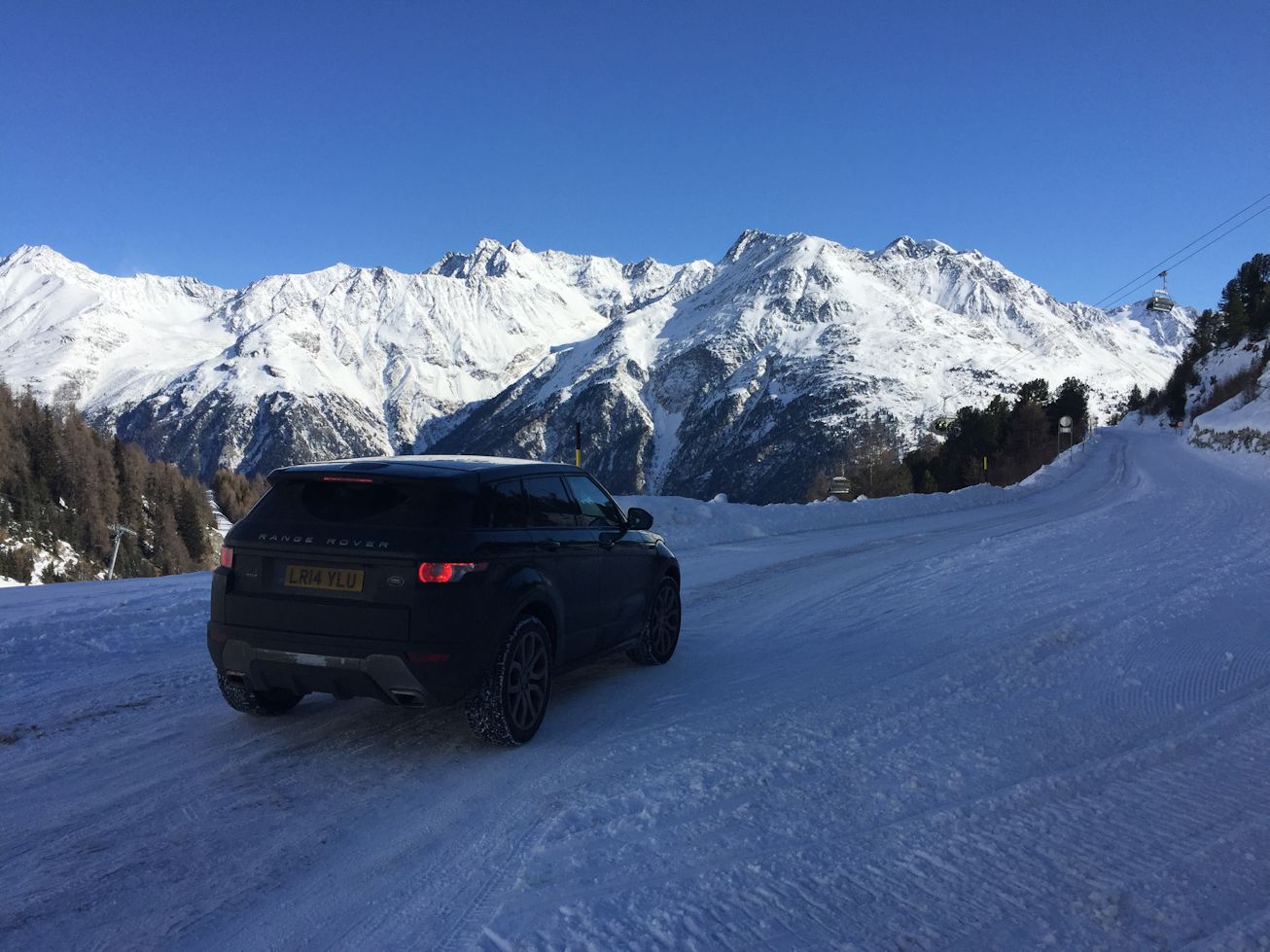
Testing our All-season tyres on the first part of Otztal Glacier Road. See more.

Testing our All-season tyres on the first part of Otztal Glacier Road.

The fairy tale beautiful Neuschwanstein Castle – built by mad King Ludwig in – a few miles from Fussen at the top of Fernpass.

The fairy tale beautiful Neuschwanstein Castle – built by mad King Ludwig of Bavaria in 1870– in Hohenschwangau, near Fussen at the top of Fernpass.

Brussels ‘Palais de Justice’, the biggest building built in the 19th century, from the 28th floor of The Hotel.

Brussels ‘Palais de Justice’, the biggest building built in the 19th century, from The Hotel.

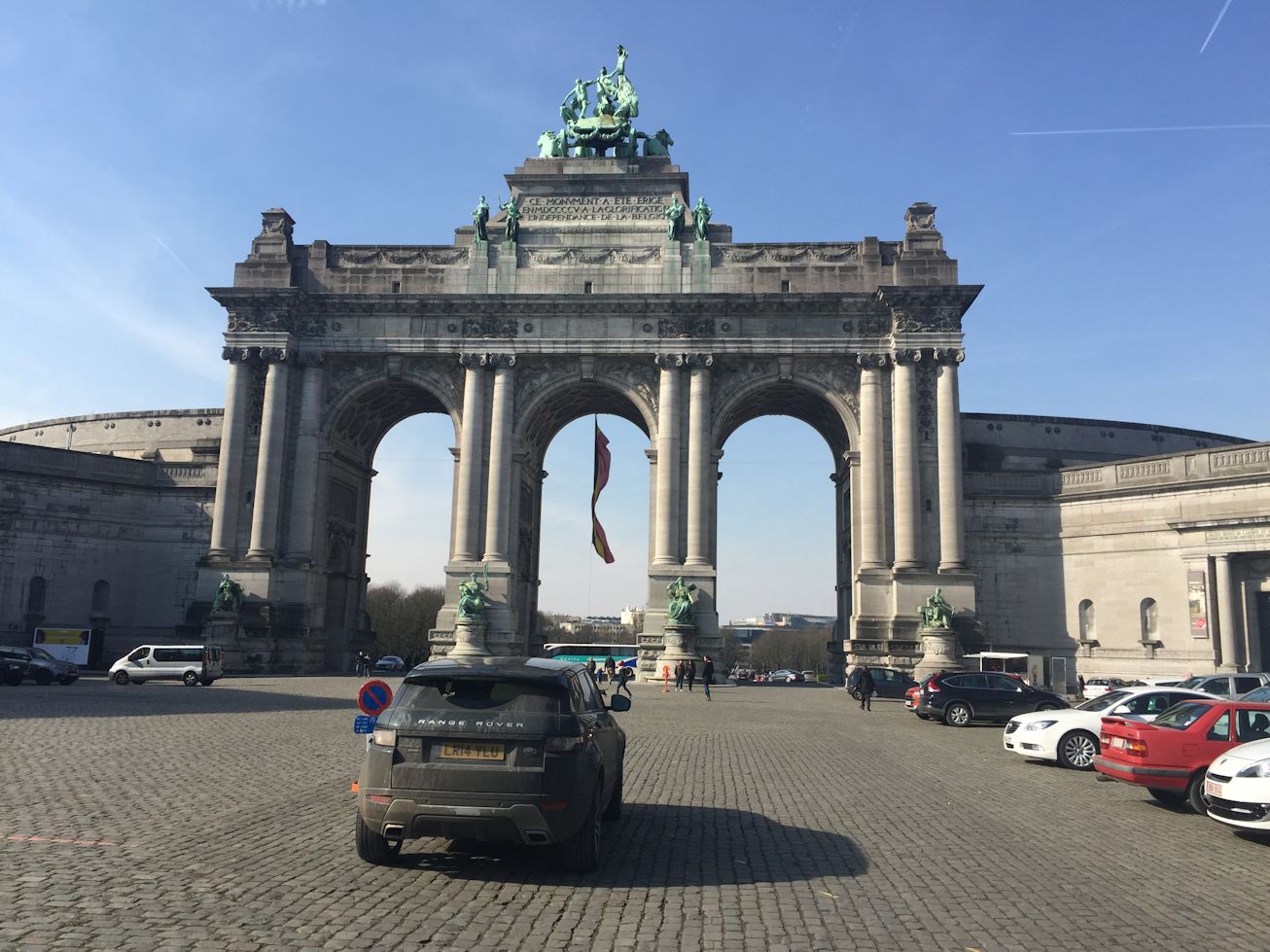
A quick stop off at Cinquintenaire Park east of Brussels city centre, home of the Autoworld Museum.

A quick stop off at Cinquintenaire Park east of Brussels city centre, home of the Autoworld Museum.

.

.

All-Season Tyre Test: Driving on Alp Snow and Ice

It seems we made rare good decision when fitting All-Season tyres: they perform well in wintry conditions, but are also more economical, and durable, than their summer tyre predecessors.

Also, Swiss voters approve second Gotthard Tunnel tube. France foreign speeder fines jumped by a third last year. Yet more multiple trouble for Condor. Investigation continues on Stockholm Indie band canal crash.

.

ALL-SEASON TYRE TEST UPDATE: DRIVING ON SNOW + ICE

Putting compromised All-Season tyres to the ultimate test in the Austrian Alps.

Our All-Season tyre shod Range Rover Evoque on the Otztal Glacier Road, Austria, February 2016

Our All-Season tyre shod Range Rover Evoque on the Otztal Glacier Road, Austria, February 2016

The only quality left to assess of our All-Season tyres was by definition the most important one: performance on snow and ice.

After a trip to the Austrian Alps we can now say with some certainty our All-Season tyres work perfectly well on snow packed surfaces.

The concern had been that since our tyres have only the legal minimum ‘M+S’ (mud and snow) markings needed to drive in most Alpine countries in the winter, that – compromised as they are – they would struggle when confronted with true winter conditions.

But a trip up the 2830m Otztal Galcier Road last week – Europe’s second highest paved road, and (theoretically) open all winter – put our minds firmly at rest.

Unfortunately/fortunately the Rettenbach and Tieffenbach glacier roads themselves were closed but we got to well over 2000m, the last couple of miles on completely snowed over roads.

Obviously this was not a test of extreme cornering or braking ability, but the tyres coped admirably well with inclines and descents of up to 13%, and tight hairpin bends.

There was relief all round when we got back to the bottom.

Meanwhile, fuel economy has dipped again this winter. The car reverted to its solid cold-months average 35.3mpg from the beginning of November. This was down from the regular 37.7mpg we saw for most of last year and compares to the 36.7mpg on the original summer tyre set.

It means economy slips for up to four months of the year and improves for the other eight….

Finally, these All-Season tyres have proved remarkably durable. The original tyres were replaced at 24,500 miles. The car is currently closing in on 60,000 miles, meaning these All-Seasons have so far lasted around fifty percent longer than the originals and – as confirmed by a recent service – are still going strong.

Previously: we fitted All-Season tyres to avoid the hassle and initial outlay of a separate winter tyre set (while still being able to drive in the Alps in winter). Our Continental Cross Contact ATs were actually a few pounds cheaper than a direct replacement for the previous, standard Continental Cross Contacts. Fuel economy dipped immediately but recovered – and then some – as the weather improved. The only real disadvantage has been a slight deterioration in ride quality. One tyre was replaced after a puncture in Ukraine.

.

Switzerland: a national referendum yesterday saw 60 percent of voters in favour of building a second Gotthard Tunnel tube. The highly controversial plan – rejected previously in 2004 - will not see capacity increase on the major Alpine crossing, a notorious bottleneck. Instead, each tunnel will ultimately carry one lane of traffic. Until then, the second tunnel will relieve the original during renovation. The €2.5 billion project should be complete by 2027.

Switzerland: a national referendum yesterday saw 58 percent of voters in favour of building a second Gotthard Tunnel tube. The highly controversial plan – rejected previously in 2004 – will not see capacity increase on the major Alpine crossing, a notorious bottleneck. Instead, each tunnel will ultimately carry one lane of traffic. Until then, the second tunnel will relieve the original during renovation work. Interestingly, the only cantons to reject the initiative were Geneva and Vaud in the west of the country. The two most affected, Uri and Ticino in central Switzerland – north and south of the tunnel respectively – were both in favour, though the majority in Uri was quite narrow at 53:47 according to figures from SwissInfo.ch. Most strongly for were the regions in north central Switzerland and Graubunden in the east. The €2.5 billion project should be completed by 2027. Photo: the existing 17km, two-way, single lane Gotthard Tunnel, @DriveEurope

.

roundup: FRANCE. Speed camera flashes declined from 20.37 million to 20.24 million last year according to autoroute.info, but the number of fines topped 13 million compared to 12.5 million in 2014. Better technology has improved the strike rate to just under 64% from around 60% in 2013 when mainly ‘barely legible’ registration plates saw the majority of drivers get away with speeding offences according to reports. Meanwhile, the number of foreign drivers prosecuted grew from 1.5 million to more than 2 million last year as the EU’s cross-border info sharing directive comes on stream. Italy ratified the rules last month. Such fines do not yet apply to drivers from the UK, Ireland or Denmark. CROSSING THE CHANNEL. Forty four cars were left stranded on board Condor Ferries Clipper all day Saturday after a vehicle ramp became stuck. The vessel arrived in Portsmouth at 07:00 with the cars eventually disembarking at 19:50 after a specialist crane was used. The firm had already said in a statement on Friday, ‘Condor Ferries is acutely aware of the inconvenience and frustration experienced by some customers over recent months,’ after its recently acquired Liberation fast ferry also experienced a technical failure which cancelled sailings until Tuesday. Liberation’s planned double rotations on Saturdays over the summer were withdrawn earlier this month over service reliability fears. SWEDEN. Investigators are no nearer to finding the cause of the tragic accident on 13 February when five members of band Viola Beach were killed after their car fell 25 meters into a canal in Stockholm. No trace of alcohol or drugs were found in the driver’s system reports NME.com though police have declined to say which of the men was at the wheel. The Daily Telegraph revealed on 16 February that a ‘massive’ oil tanker may have steamed over the car after it landed in the canal while The Local Sweden said CCTV footage of the incident was not retained.

.

Trip Log: Lightning Stuttgart Museum Weekend

Two friends from London pull off a very ambitious 1200 mile, weekend round trip to Stuttgart.

The highlights? A ‘Porsche Drive’ 911 GTS, the Mercedes Museum, adaptive cruise control, cheap fuel, and the beer.

.

1

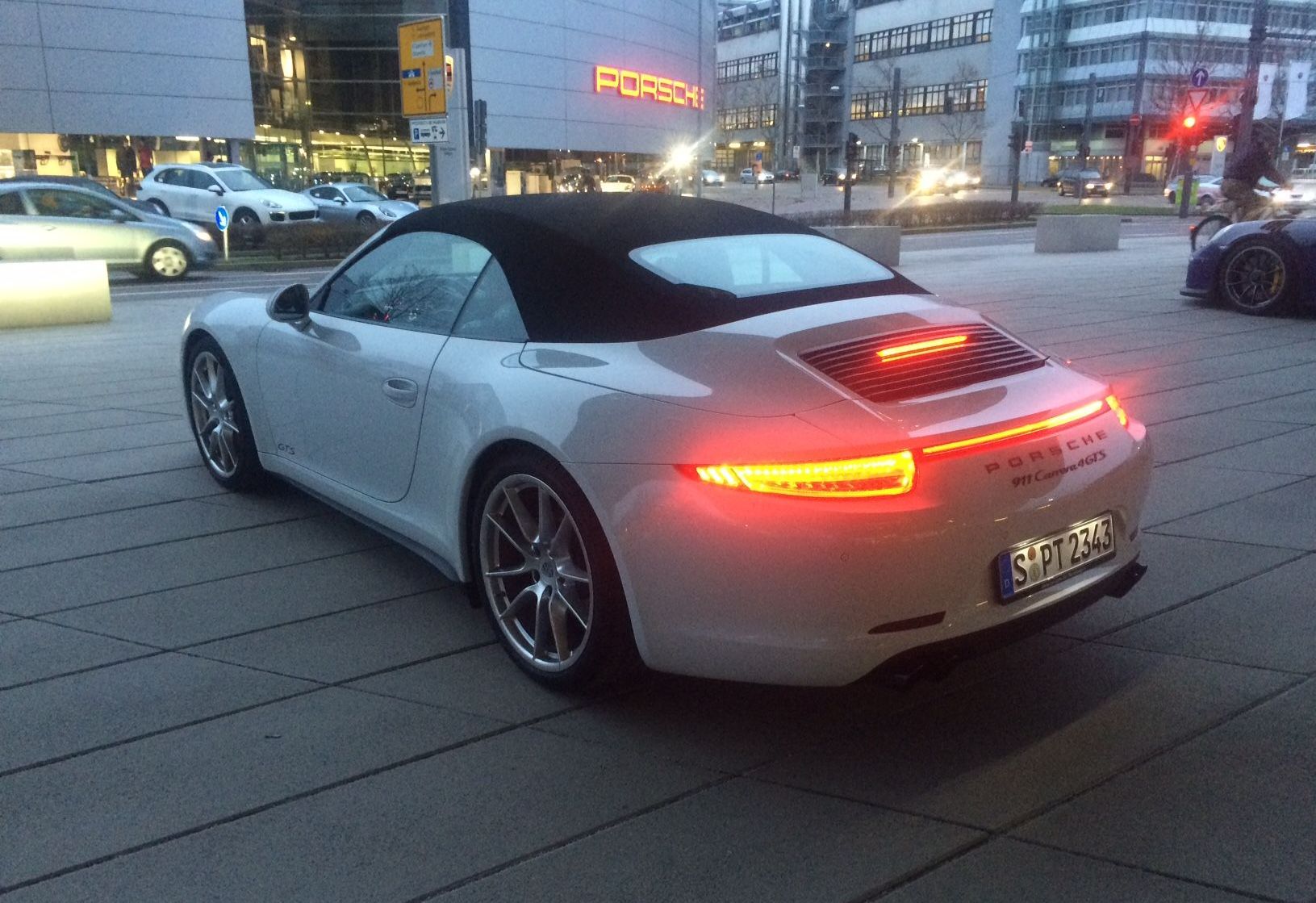
A ‘Porsche Drive’ 911 GTS convertible – not bad for €99 per hour, from the Porsche Museum in Stuttgart. All photos Peter Herridge, @PistOlpierre. More photos and map below.

What made you decide to go for it?

Peter Herridge: when I was a bit younger (nearly 10 years ago now) me and a few friends (including the chap I went to Stuttgart with) used to get invited to car shows in Belgium, Holland and Germany.

I had a Skyline R34 GTT at the time which were pretty scarce in mainland Europe and drew quite a crowd.

These trips generally involved leaving work sharpish on Friday night, making a mad dash for the ferry (including the old Stena Discovery back then – amazing), or tunnel, then heading for some exhibition centre to abandon the car and pick it up Sunday evening for another mad dash back. The locations included Gent, Mechelen, Nurburg, Amsterdam, Zolder and Rotterdam.

Friday night we’d normally spend in the hotel bar. Saturday was a quick look around the car show before exploring the local area and back to sampling the local beers.

Essentially the Stuttgart trip was about recreating this experience, albeit self-financed, and with the car shows swapped for museums.

Did you realise quite what you were taking on?

Sort of. We’ve done the road trips before but I don’t think we’ve ever been quite that far – probably the Nurburgring was about the furthest we’ve been in circa 48 hours.

Munich was an outside chance too but I knew it would have been a lot of work. I contemplated getting the train first thing from Stuttgart but even that was a couple of hours each way.

When we found out about the Mercedes Museum we thought that doing two museums in Stuttgart would still be pretty good. A couple of guys we were speaking to outside a kebab shop in Stuttgart (1am Saturday morning) told us that the Mercedes Museum was very good which was enough to finalise our itinerary.

How were you at work the day after you got back – knackered or was it cope-able?

Monday was tiring but bearable. We got back to London about 6pm on Sunday which for one of these trips wasn’t too bad.

Which route did you take?

I picked up Kris at North Greenwich station at 8am Friday morning – we then drove straight down to Folkestone for the train. On the other side we went Calais-Brussels-Cologne-Stuttgart and the same back – the top route shown on the sat-nav picture (below) – based on your recommendation of avoiding tolls through France.

The route home was pretty much the same. We did 1200 miles in total. Two and a bit tanks of diesel.

Where did you stay?

Friday night we stayed in the Mercure City Centre in Stuttgart. This was a nice hotel with a lot of Mercedes Museum pictures, including in the room. I booked this hotel for two nights with the second night refundable (thankfully).

After realizing that Stuttgart is actually quite a long way away from London I cancelled the second night as soon as we had Wi-Fi access in the room and booked a room in Cologne for the second evening. It was obvious we wouldn’t make Stuttgart to Calais on Sunday without leaving at the crack of dawn.

After this we had a quick walk down the road to the city centre and had dinner in Hans Im Gluck, a burger place which was pretty good (very fortunate I had Google Translate on my phone). We then found another couple of bars including some where you can still smoke inside. I like Europe’s care free attitude towards smoking – not that I smoke myself.

In Cologne we stayed in the Ameron Hotel Regent. I’m sure I read this was a city centre hotel in the description but it soon became apparent that it was actually a good 2.5 miles from anywhere interesting.

We arrived around 10pm and by the time we’d unpacked and got a taxi into town we’d missed most of the action. We found a takeaway and had some (fairly average) currywurst and then headed to Papa Joe’s Biersalon to see the creepy robotic band thing, but it seemed to be closing early that night and the band had already called it a night.

Driving the 911 GTS, was that part of Porsche Drive?

Yes, we saw the Porsche Drive counter was empty and went up and asked if we could take one out. They said normally you have to book but since it was a quiet afternoon we went out straight away.

As we’d checked out of the Stuttgart hotel earlier I had my documentation with me so about fifteen minutes later (and €2500 deposit on my credit card) I was sat in the driver’s seat of a brand new 911 GTS convertible.

“Please let the oil temperature get above 90 degrees before engaging Sport Plus” was the last instruction – and off we went.

Where did you go?

The built-in sat-nav was programmed with three destinations – “country”, “highway” and “home”. We went for the highway and drove round a blind corner straight into back of a traffic jam. Thankfully this cleared quickly and we had a few good blasts between junctions.

Kris kept pressing the ‘Sport Plus’ button which turned the car into an animal. Violent, late gear shifts and incredible noise though all the power seemed to be up the top end of the rev range. I prefer cars with a bit more torque.

The funniest thing was that it had the same start-stop system as the Golf so when you pulled up at a junction everything fell silent.

We had a few quick runs around some country lanes keeping an eye on the time to ensure we didn’t get too far from the centre.

One hour was €99 which I didn’t think was too bad. I managed to get my €2500 deposit back too!

You were originally booked on the DFDS ferry but ended up on Eurotunnel, how come?

I looked at the weather forecast on Wednesday when I was reading updates from DFDS ​saying there were two hour delays and the weather for Friday looked worse.

I’m no shipping expert (although I did work for a shipping company previously) but I took a guess that the delays would be similar. Two hours lost in the middle of the day would have meant getting to Stuttgart around 11pm/12am. This wouldn’t have been much fun.

What were you driving?

A MK7 Golf GTD. I took delivery just before Christmas on a two year lease and thought a nice blast across Europe would loosen the engine up nicely. It performed effortlessly but I don’t think I could have done the drive without the adaptive cruise control which regulates the distance from the car in front.

It’s an incredible system and just enabled whoever was driving to relax a little more than you might normally. Very unusual at first, but once you get used to it you can sit with your feet flat on the floor and the car slows itself down, even if you’re tanking along at 100mph and someone pulls out in front.

What was the best bit of the trip?

The Mercedes Museum is spectacular. The number of cars in there and the layout is brilliant. For €8 including audio guide (and the lanyard which you get to keep) we both thought was amazing value.

Also, everything seemed really accessible – you could get close to the cars and have a really good look around. There’s also a great selection including commercial vehicles. At the time they had a display of all the safety cars from F1 and DTM.

Same with the Porsche Museum. It’s a great place (albeit a lot smaller than the Mercedes one) and again has an audio guide included in the price. Being able to see the evolution of the 911 and walk around a 959 and 918 was great. Driving one was the icing on the cake.

However, nothing is quite as great as the first beer on the Friday night, and the feeling you’ve made it somewhere. Always the best bit I think.

Did anything not go so well?

I wish the hotel in Cologne was slightly closer to the city centre and we’d been there one to two hours earlier to have some proper food. We did have some great food and drink but it was fairly quiet and didn’t really feel like a Saturday night.

I also wish I’d left a couple hours earlier and been able to come back a couple hours later.

Also, I wish Europe opened on Sundays.

I should have paid slightly more attention to my speed through Dunkirk which is now 90kmh where it used to be 110kmh. The cameras work [note: the UK is not yet signed up to the EU directive on cross-border info-sharing on traffic offences].

Anything else worth mentioning?

Diesel in Cologne was around 95 cents a litre meaning a fill-up in the Golf cost £33 (it seems to have a small tank) and we ended up back in London with over 100 miles range still showing.

.

2

‘8am at North Greenwich station. Heading for tunnel after deciding against ferry in Force 9.’

4

Route options: to avoid French tolls head through Belgium. German diesel is so cheap at the moment it’s hardly worth diverting via Luxembourg, especially when every minute might count.

3

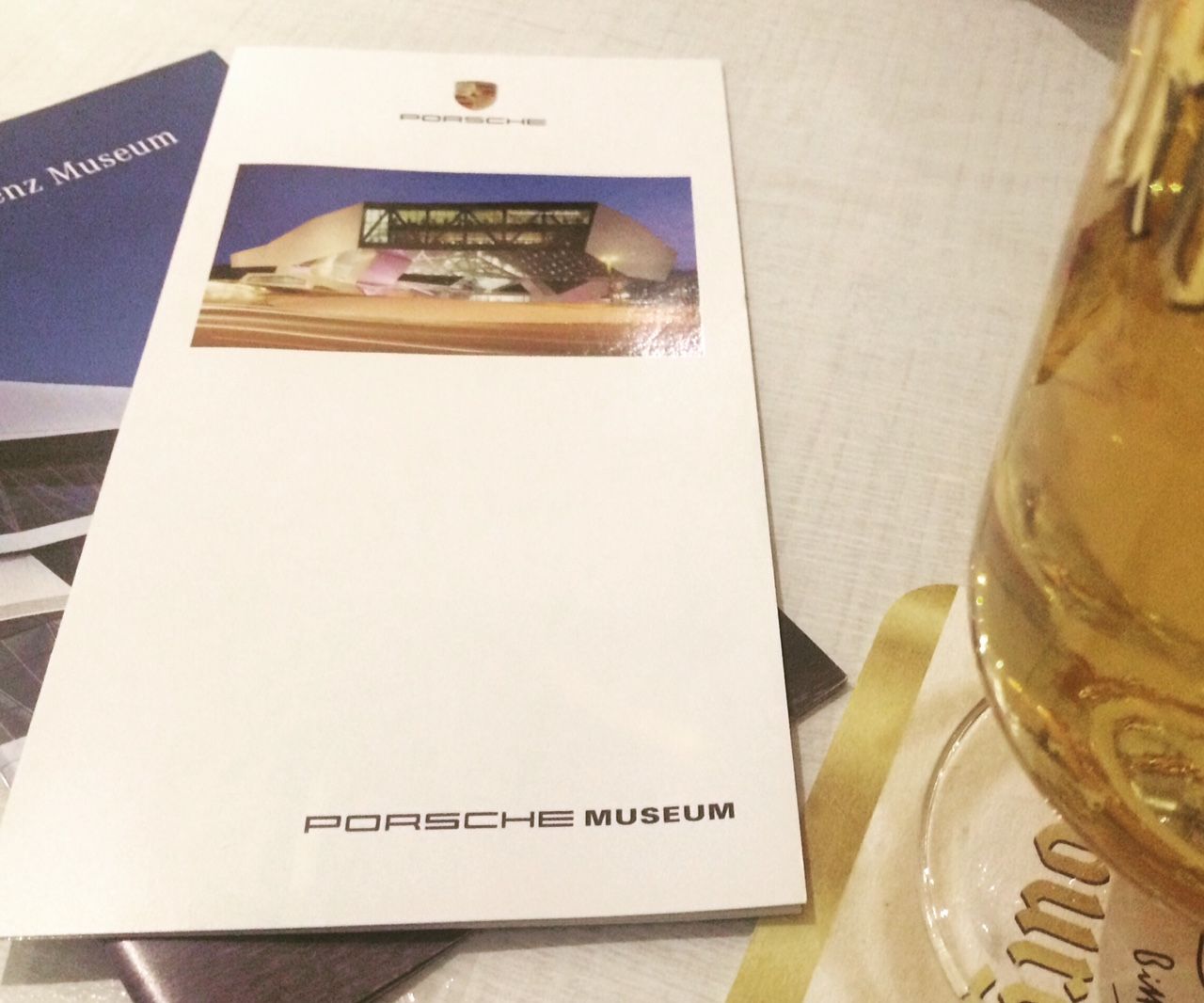
A winning combination: Porsche Museum, Mercedes Museum, and beer.

5a

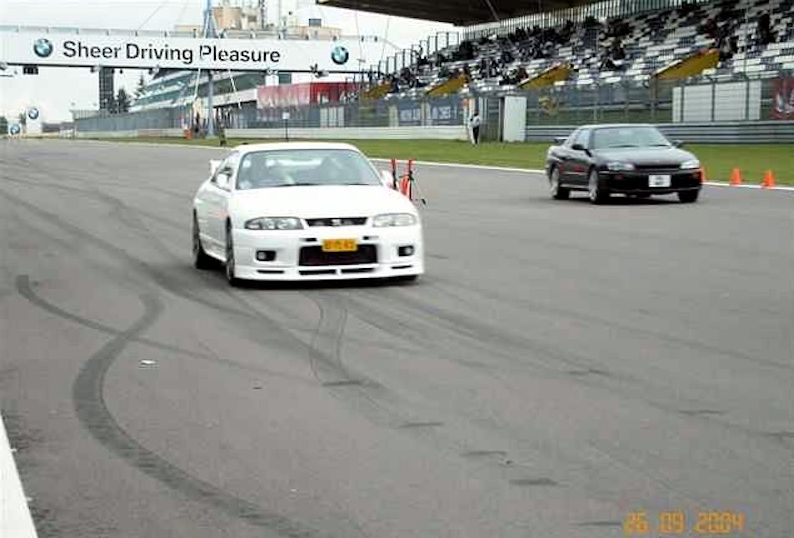
2004: ‘My old 350hp R34 GTT losing against a 600hp R33 GTR in a drag race on the start/finish straight of the Nurburgring GP circuit’.

.

Bulgaria Ditches Plans for Gotthard Tunnel Rival

Just when it seemed Bulgaria was establishing a decent motorway network, plans to build a mega tunnel have been downgraded while suspected corruption sees another major project restarted.

Also, this season’s McLaren-Hondas seem a little underpowered. Switzerland to deport foreign speeders. Tolls and shootings on the A31 in eastern France. Belgian roads are ‘catastrophic’ as mice eat Brussels tunnel plans.

.

BULGARIA DITCHES PLANS FOR GOTTHARD TUNNEL RIVAL

Mega-tunnel cancelled in favour of surface motorway through sensitive Kresna Gorge.

Bulgaria has apparently cancelled plans to build a tunnel through the sensitive Kresna Gorge, between capital Sofia and Greece. More later.

Nose to tail in the Kresna Gorge, Bulgaria, May 2013. See more at Driving in Bulgaria: the Pothole and the Policemen. Photo @DriveEurope

The Bulgaria-Greece border at Kulata-Promachonas has been something of a hot spot recently.

For the past few weeks it has been the primary focus of nationwide Greek farmer blockades.

Yesterday there were 820 trucks, 320 cars and six buses stranded on the Greek side according to Kathimerini, and 1,000 trucks and 500 cars on the other as Bulgarian hauliers carried out a tit-for-tat action.

There may be some signs emerging now of a resolution but the other major transport issue in the area will take considerably longer to sort out, namely the 290km motorway connection between Bulgarian capital Sofia and Thessaloniki on the Greek Aegean coast.

Three of the four lots on the Bulgarian side have been completed but the third section, through the Kresna Gorge, a noted beauty spot and wildlife haven, has been plunged – yet again – back to the design stage.

A Gotthard-rivalling 15.38km tunnel got the go-ahead in February 2014 after twenty five years of tooing and froing, but The Guardian revealed this week the plans have been cancelled for lack of money, despite an EU contribution of €670 million.

Instead the Bulgarian government is leaning back towards building a surface motorway. The final plans will be revealed in two months.

Meanwhile, the first two lots of another Bulgarian motorway have been delayed after an apparently dodgy tender process.

The Hemus motorway will stretch west-east across the north of the country between Sofia and the Black Sea resort Varna.

Losing bidders successfully challenged the original decision after the winning bid was found to be both more expensive and, subsequently, double the original estimate reports Novinite.

With Hemus and Struma, plus the already-built Trakia motorway to the Black Sea at Burgas, and off shoot to the Turkish border at Edirne, Bulgaria will have a basic motorway network in place.

The internationally strategic road, 50km west from Sofia to the Serbian border – linking to the Western Europe network at nearby Nis – got the go-ahead last September.

.

Formula One team McLaren-Honda has taken delivery of 24 brand new Volvo FH trucks to transport the race team and hospitality units around Europe. The vehicles come in three different specifications depending on the use. The engines meanwhile are all 13 litre 540bhp units. For power-obsessed F1 that’s slightly disappointing since the FH is also available with a 16-litre 750bhp unit. There is form here however. Ringmeister Bernie Ecclestone also specified his fleet of Mercedes-Benz Actros at 510bhp, when he could have had 625bhp.

Formula One team McLaren-Honda has taken delivery of 24 brand new Volvo FH trucks to transport the race team and hospitality units around Europe. The vehicles come in three different specifications depending on the use. The engines meanwhile are all 13 litre 540bhp units. For power-obsessed F1 that’s slightly disappointing since the FH is also available with a 16-litre 750bhp engine. There is form here however – F1 boss Bernie Ecclestone specified his fleet of Mercedes-Benz Actros at 510bhp, when he could have had 625bhp.

.

roundup: SWITZERLAND. Possible new deportation rules for convicted foreign offenders include those convicted of speeding offences reports Reuters. It applies just to residents rather than visitors though a simple speeding ticket along with even a minor theft committed within ten years would – without appeal – see those without citizenship sent back to their country of origin (even if they were born in Switzerland). However, the final poll before the referendum vote on 28 February suggests the move will be rejected reports SwissInfo, currently 49% against and 46% in favour with support declining for the measure. Voters will also decide whether to build a second Gotthard Tunnel. FRANCE. Tolls are under discussion on the currently free section of A31 from just south of Nancy up to the Luxembourg border past Thionville reports Wort.lu. It’s an important route for cross-border workers. However, charges are unlikely to see the light of day until 2018. Revenue would pay for ring roads at Nancy and Thionville and widening Metz-Nancy. There are also long term plans to widen a 14km section of the A3-A31 cross-border. Of more immediate concern is a spate of apparent shootings along A31. There have been four incidents so far says Wort.lu. The police investigation continues (update: four children have now been arrested). BELGIUM. The state of Brussels roads and tunnels is ‘catastrophic’ says an engineering consultants group reports Deredactie. The situation in Wallonia in the south is similarly bad with ‘gigantic’ potholes in the motorways. Flanders in the north fares better though 30% of infrastructure is of ‘poor or insufficient quality’. Meanwhile, mice have apparently eaten the original construction plans for Brussels’ beleaguered tunnels reports Reuters. The lack of blueprints is holding up essential maintenance – two major tunnels have shut recently, one long term – with the final bill expected to be around €1 billion.

.

Germany’s €260 Billion Transport Plan

Germany prepares to splurge a quarter of a trillion euros on transport. It’s badly needed, but will they manage to spend it all this time?

Also, Colcorsa has a huge list of current and classic cars available for Continental driving adventures. More choppy European road safety stats. Monthly car-free days for Paris. Summer service cut for Condor.

.

GERMANY’S €260 BILLION TRANSPORT PLAN

Lavish spending promised on beleaguered roads.

German roads: when they are good they are very, very good - like here on the A4 near Chemnitz - but most often they are horrid. Photo @DriveEurope

German roads: when they are good they are very, very good – like here on the A4 near Chemnitz – but when they are bad they are very, very bad. Photo @DriveEurope

Germany’s much-flagged Federal Transport Infrastructure Plan has leaked out early.

According to a draft seen by English-language business daily Handelsblatt, the government is preparing to spend more than a quarter of a trillion euros on transport infrastructure between now and 2030.

More than half is earmarked for roads, at around €15 billion each year, with two thirds to be spent on maintenance.

The German government has clearly been stung by recent harsh criticism of the country’s once world-leading road network.

Figures from 2013 said half of bridges, 20 percent of motorways and 40 percent of federal roads were in need of repair.

While the investment is roughly in line with what was previously announced, albeit €1 billion extra per year, the big change is in how the money is allocated.

Funding was previously doled out dependent on the size of each state’s population. This time cash will go to strategic routes.

North Rhine Westphalia in the west, capital Dusseldorf, and Bavaria in the south east take almost a third of the money between them.

One of the biggest challenges is likely to be finding suitable projects. Motoring club ADAC said last week that only half of the improvements identified in the previous plan 2001-2015 were ultimately realised.

Handelsblatt promises more details in its Global Edition from 12:00CET Wednesday. The official infrastructure plan is due to be published in March.

.

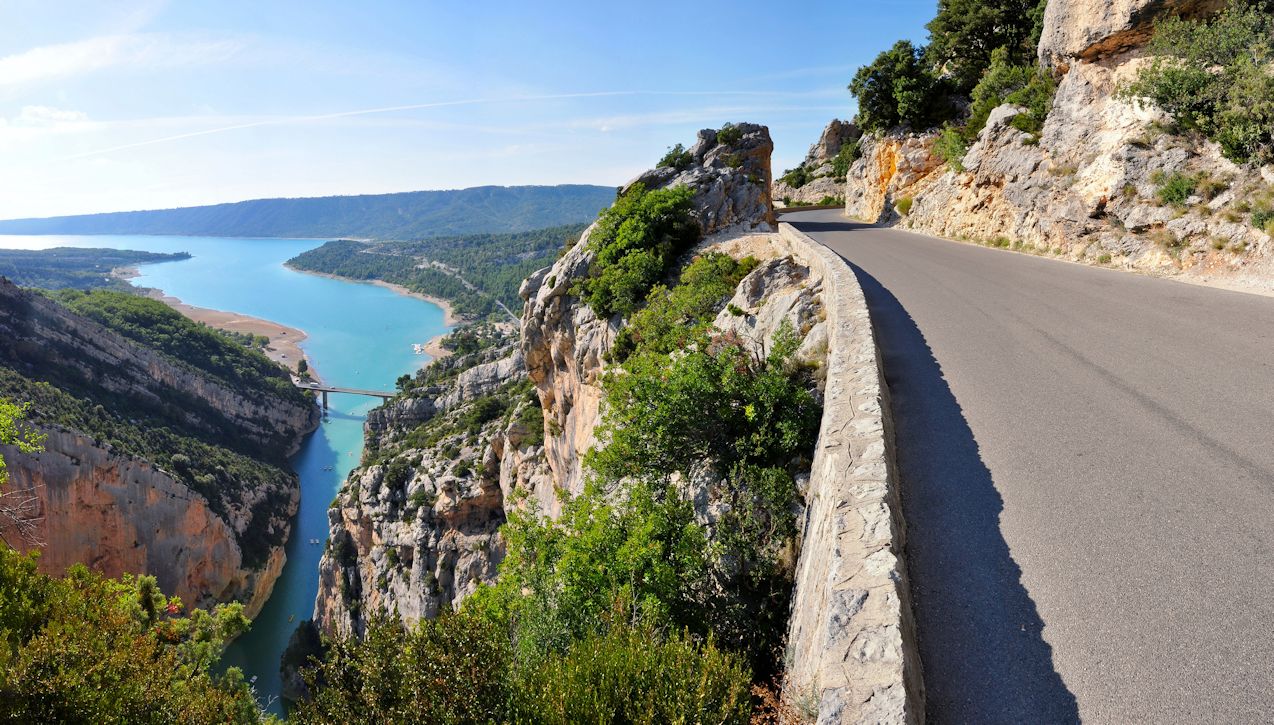
Sara Nase is on a mission to ‘show people the world’s greatest driving roads in the best driver’s cars’. The Finnish-native, formerly with Zurich-based Ultimate Drives, now has her own venture: Colcorsa. The initial collection of tours nails just about every classic road in the Alps, plus Tuscany and the Spanish and French Pyrenees, with a season lasting April to October. Meanwhile, there’s a long list of exotic cars available to hire, both current and classic. Colcorsa is inviting expressions of interest now with prices available in March. See Colcorsa.com. Photo: Gorges du Verdon from ‘Verdon & Alpes Maritimes’.

Sara Nase is on a mission to ‘show people the world’s greatest driving roads in the best driver’s cars’. The Finnish-native, formerly with Zurich-based Ultimate Drives, now has her own venture: Colcorsa. The launch tours nail just about every classic road in the Alps, plus Tuscany and the Spanish and French Pyrenees, with a season lasting April to October. Meanwhile, there’s a long list of exotic cars available to hire, both current and classic. Colcorsa is inviting expressions of interest now with prices available in March. See Colcorsa.com. Photo: Gorges du Verdon from ‘Verdon & Alpes Maritimes’.

.

roundup: ROAD SAFETY. Road deaths apparently increased in Germany last year, for the third year in succession according to figures in Der Spiegel, after falling steadily for the previous 20 years. It’s down to ‘more and more aggressive drivers’ says an instructor. The numbers are estimates based on data January-June. Particularly striking is that the number of accidents has remained pretty constant since 1991, at around 2.5 million each year, though that has started to creep up in recent years . Meanwhile, Denmark did indeed equal its road safety record in 2015 according to stats office Vejdirektoratet (via World Highways). However, laurels so far go to Russia which cut fatalities by an impressive 14.7% to 23,114 versus 26,963 in 2014 says @AGRE_RoadSafety. This represents a fairly shocking 3849 lives saved last year, i.e. twice the entire typical annual death toll in the UK. See more on road safety in Europe 2015. FRANCE. As expected, Paris will have monthly car-free days. Starting Sunday 1 May, the first Sunday in the month will see the Champs Elysees reserved for pedestrians only. The French capital is also set to hold an annual car-free Sunday in September, part of European Mobility Week along with other European cities, though mayor Anne Hidalgo wants a considerably larger area this time, possibly even the entire city, as in Brussels. CONDOR FERRIES. The UK-Channel Islands operator has withdrawn all so-called double rotation crossings from the summer schedule. It means no twice daily round trips on Saturdays. The move comes after a review of sailings in consultation with the States of Jersey and Guernsey, and after feedback from customers and tour operators concerned about too-tight scheduling, knock-on delays and inconvenient departure and arrival times it said in a statement. The cut in services reduces capacity by around 10 percent compared to last year.

.

UNESCO Threat to Dolomites Mountain Passes

Traffic will be barred from Sella Pass this summer as the Dolomites battles to preserve its UNESCO World Heritage status.

Also, Smyril Line stars in the BBC’s latest Nordic drama. And, what does this weekend’s damp squib ‘Black and White Saturday’ mean we can expect for the next supposedly-super-busy Alpine changeover day.

.

UNESCO THREAT TO DOLOMITES MOUNTAIN PASSES

‘Traffic calming’ on Sella Pass this summer followed by other passes next year.

Sella Pass. Photo @DriveEurope

Sella Pass. Photo @DriveEurope

The Dolomites’ UNESCO World Heritage status is under threat if traffic is allowed to continue growing on its famous mountain roads.

The measures begin on Sella Pass this summer before being extended to other roads next year.

In an interview last week with South Tyrol magazine, Florian Zerzner who heads up the working group for ‘Dolomites Passes’, admitted the UNESCO designation was not under imminent threat but said the park would have to provide ‘a credible strategy about traffic calming’ in an official inspection in late summer.

The Dolomites UNESCO website continues, ‘These days commercial and tourist vehicle traffic, motor races and rallies, and the current craze for motorbikes and scooters, and the normal movement of local residents, is making the Dolomite valleys heavily congested. Aside from adversely affecting air quality, this traffic creates noise pollution and presents a hazard for both people and wildlife.’

The idea is to set up so-called ‘window locks’ where roads would close for several hours each day.

SS242 Sella Pass will be first, closed between 11:00-14:00 or 12:00-15:00 each day in July and August with the locks extended to other roads next year.

Sella (2240m) is in a cluster of very high Dolomites roads – among the best in the Alps – between Cortina d’Ampezzo and the Brenner Valley, east of Bolzano.

Other notable roads within just a few miles include Falzarego (2117m), Giau (2236m), Valparola (2192m), Fedaia (2056m), Pordoi (2239m) and Gardena (2137m). See more at PassFinder.

Ominously, Austria’s Grossglockner mountain road – reputedly the country’s second most visited tourist attraction – has just applied for UNESCO World Heritage designation.

However, traffic is already rigorously controlled via the high road toll, currently €35 per car.

.

7170

Some truly epic shots of the Denmark-Iceland ferry from the ten part TV series ‘Trapped’ which started at the weekend. BBC4’s latest Nordic drama begins with a headless torso apparently dropped from the Smyril Line ship as it docks in east Iceland. A terrific storm then traps the townsfolk, and the murderer, hence the title. Smyril Line is the only firm to serve Iceland with weekly 47 hour departures from Hirtshals, with or without a stopover in the Faroe Islands. See Trapped at BBC iPlayer.

.

roundup: BLACK SATURDAY DAMP SQUIB. With a two hour delay on the Alps-bound A43 towards Chambery at 09:30 it looked like a very Black Saturday indeed. But the snow held off – even if the rain didn’t – and, but for a slight blip on the A43 at lunchtime, it was pretty much all over by 14:00. Alpine jams peaked at 450km according to VID – 220km in France – compared to 370km last weekend so it was busy, just not the expected gridlock. The only real problem was the N94 Gap-Briancon which saw major snow on Friday afternoon, and more on Saturday lunchtime, but drivers let the ploughs through without any drama and the road was eventually cleared. This all comes the week after a Red Saturday when there was a three hour delay on the A43 towards Chambery in mid-afternoon, i.e. much busier than forecast. The question now is, what can we expect this coming weekend? Saturday 20 February is set to be another Black Saturday heading up into the French Alps plus much heavier traffic heading back down the mountains. The summer Black Saturdays were similarly underwhelming. Rather than two weekends of really heavy traffic in August, the misery was spread over the entire month (see The Confounding Holiday Traffic of Summer 2015). If that happens this winter too, it means this weekend will be quieter than expected – heading up the Alps anyway – but that the weekend after, when traffic should in theory start to return to normal, will be annoyingly busy too. So much depends on the weather.

.

A Black and White Alpine Saturday

A perfect storm is brewing in the French and Austrian Alps this weekend.

Also, first look at Eurotunnel’s new freight check-in at Folkestone and DFDS’ new terminal in Dunkirk. Copenhagen looks to remove record cars from the road, at least for one day. Very mixed week for road safety in France. danger spots highlighted on Dutch roads. 

.

WEEKEND FERRY, TRAFFIC AND WEATHER WARNINGS

An ominous combination of half term, a Black Saturday in France and potential snow.

Nothing can be done about the weather but there are ways to avoid at least some of the most jam-prone stretches on the way tot he French Alps. Raie 'Aire de Chainage', photo @RadioValdIsere

A layby for drivers to fit snow chains. Raie ‘Aire de Chainage’, photo @RadioValdIsere

Cross-Channel services and Alpine roads will be very busy this weekend as the bulk of schools break up for half term.

A ‘Black Saturday’ is expected on the roads to the French Alps. While there are no particular warnings for Switzerland or Italy, routes to and from the mountains will be busy in Germany and – particularly – western Austria.

Meanwhile, Europe is set for an ‘awful lot of weather’ this weekend according to the BBC, including a bank of rain sweeping in from the west across France which turns to snow in the Alps.

‘Snow is forecast for this weekend,’ says Alpe d’Huez in France. ‘The traffic [road] conditions shouldn’t be too bad but the rain turning into snow may happen at a lower altitude than expected. This means there may be a greater quantity of snow.’

Holiday makers should come fully equipped for snow it says, including warm clothes, food, drinks and easily accessible snow chains which drivers know how to fit.

The advice from Alpe d’Huez continues, ‘Please give the snowploughs plenty of room to pass through to clear the roads. You are not allowed to overtake them while they are clearing the roads.

‘There are some special lay-by areas that are set up specifically for putting on snow chains. Don’t hesitate to make use of them. If you absolutely must stop on the road to put on chains, choose a wide section of the road and pull over as far to the right as you can so that it is safe for you and the other drivers can get through. Don’t forget to put on your yellow reflective safety jacket in both day time and at night.’

Police in the Rhone-Alpes region will step up controls this weekend.

Cross-Channel services are also expected to be particularly busy.

P&O says, ’Rest assured, if there are any queues we will put you onto our next available sailing and get you on your way as soon as possible.’

DFDS says, ‘During busy periods we highly recommend you allow 90 minutes (since increased to 2h00) to complete the check-in process on arrival at port and have your passports ready for inspection.’

See more on what to expect on the roads, and handy routes to avoid the worst queues in France.

.

eurotunnel freight

Eurotunnel freight cut the ribbon this morning on the new access lanes and check-in at the Folkestone Terminal. In addition to five new access lanes, to separate freight and car shuttle customers (who should stay right), there is also a new ‘Freight Driver’s Centre’ for assistance. Meanwhile, more info has come to light on the new terminal at Dunkirk ahead of the official opening on 17 March. The new facilities came into operation overnight 16-17 January, now with separate entry points for light and heavy vehicles according to Dunkerque Port. There also a new reception for DFDS ferry customers, a specially designed security building and improved routes to the boarding area, which has toilets and a ‘giant’ info screen. The last phase is demolition of the old buildings, freeing up space for three ship-loads of vehicles inside the secure area.

.

roundup: DENMARK. Copenhagen has pencilled in 18 September for its first ever Car-Free Sunday, following similar initiatives in Brussels and Paris (and European Mobility Week). The capital’s main street HC Andersons Boulevard will be off-limits plus other major roads in all city districts reports The Copenhagen Post, though not Frederiksberg to the west of the city centre. Denmark and especially the capital are reckoned as poster boys for alternative transport, particularly bikes, though it was revealed last year there have never been more cars on the roads. FRANCE. A very welcome 10.7% decrease in the number of road deaths last month reports Securite Routiere though it’s not much solace after two tragic accidents this week involving school buses in which eight teenagers were killed. It is however a welcome reverse from December when fatalities increased by 7.7%, and hopefully a good omen for 2016 after two torrid years for road safety. NETHERLANDS. Amsterdam’s A10 ring road is the most dangerous stretch of road in the country reports DutchNews.nl. There were more than 900 accidents there last year due to sheer weight of traffic and frequent junctions says traffic monitor VID. Second worst is the A13 Rotterdam-The Hague and third A20 at Rotterdam. Also watch out for the A58 near Roosendaal, the A20 at Kleinpolderplein and A1/A6 junction near Amsterdam.

.

Few Fined Over Sweden’s Partial Mobile Phone Ban

A recent partial ban on using mobile phones behind the wheel in road safety star Sweden has resulted in very few prosecutions.

And, two fatal school bus crashes in two days in France.

.

FEW FINED WITH SWEDEN’S PARTIAL MOBILE PHONE BAN

Sweden has some of world’s safest roads despite allowing drivers to use phones behind the wheel.

Few drivers have been fined over Sweden's new too-difficult-to-police partial mobile phone ban. More later.

Photo Joakim Kling via Trafikverket

It’s striking that the two countries with the most consistently safe roads in Europe – and the world – both commit great big road safety no-nos.

The UK has the highest drink drive limit whereas Sweden allows mobile phone use behind the wheel.

Before 1 December 2013, drivers in Sweden were allowed to use their phones without any restriction. However, since then, the law has been changed to say, ‘When driving on the road with motorized vehicles, drivers should engage in activities such as the use of mobile phones and other communications equipment only if it does not adversely affect the performance of the vehicle.’

Police say the new law is almost unenforceable hence there have been very few prosecutions since.

It emerged last month that only 85 drivers were fined in 2014 and 76 in 2015. The typical fine is 2000SEK (£165).

The head of traffic police in Stockholm Fredrik Ståhle told Swedish Television News (via Radio Sweden), ‘”Why not just ban it completely? It would be much easier, especially if we police officers are to monitor this. I think we would avoid many accidents if we did.’

Despite selling its ‘Vision Zero’ road safety model around the world, Sweden has been struggling with road safety in recent years.

Road deaths increased by 3% between 2010-2014, and by 6% in 2014 according to EU figures, even as the trend is downward elsewhere in Europe.

A 2002 study from the UK Transport Research Laboratory said ‘Reaction times were significantly slower for drivers using phones in comparison to when they had alcohol.’

The UK government is currently consulting on increasing the penalties for the use of mobile devices while driving.

.

rochefort

France school bus-truck crash: six children have died and two people were seriously injured at 07:15 this morning in a collision between a school bus and truck in central Rochefort, south of La Rochelle in western France. The minibus was heading from the island of Oléron to Surgères carrying 17 people, 15 children and two drivers, according to a statement from the Interior Ministry. Initial reports suggest a flap or door came loose from the truck and smashed into the side of the bus. It comes a day after two children were killed in accident involving a school bus in eastern France – the driver in that incident appears in court today charged with driver too fast for the icy conditions.

.

More Than Four Million Drunk Drivers in Europe

There are a horrifying number of apparently drunk drivers in Europe though numbers are falling says a recent police campaign.

Also, EU money for better roads at the Hungarian Sea, and cross-border Slovakia-Poland. The defunct UK-Denmark ferry could have gone much faster alleges a former customer. And, a roundup from France: fake highways cops caught near Paris; new ‘save roadside trees’ video; and, new dummy speed cameras installed in Nord Pas de Calais.

.

MORE THAN FOUR MILLION DRUNK DRIVERS IN EUROPE

Though proportion of offences falls in latest cross-Europe DUI campaign.

A recent drink drive enforcement campaign by European police says there are four million drink drivers in the EU. More later.

Believe it or not but the 15,791 drink drivers detected during a cross-Europe police operation in December was actually good news.

It represents a lower proportion of offences than previous campaigns organised by TISPOL, the European police federation.

TISPOL General Secretary Ruth Purdie says, ‘These figures show a continued decline in the proportion of drivers who fail breath tests, which is good news.

However, if we scale up that proportion to include all the 300 million licence holders across Europe, then we reach an estimate of more than four million drink-drivers.’

Officers conducted 1,134,924 tests in 27 countries from 7-13 December last year with a detection rate of 1.39%.

Interestingly, that is considerably lower than a similar operation in the UK last year which found 5% of drivers in England, 3% in Scotland and 2.6% in Wales tested positive according to Road Safety GB.

However, that is down to better targeting says the National Police Chiefs’ Council.

It comes as the British government considers bringing the UK drink drive limit into line with Scotland and most other members of the EU reports the RAC Foundation*.

Despite having among the safest roads in the world, the UK has the highest limit at 0.8mg per 100ml of blood.

In Europe it is equalled only by Malta (which, incidentally, had the very lowest road deaths per million inhabitants in the EU in 2014).

The default European limit for non-professional drivers is 0.5 though Lithuania is 0.4 and Estonia, Finland, Poland and Sweden are 0.2 according to the EU Going Abroad app.

Bulgaria, Czech Republic, Hungary, Romania and Slovakia have a ‘zero tolerance’ approach to drink driving.

* the DfT told the BBC later on it had ‘no plans’ to lower UK drink drive limits.

.

balaton

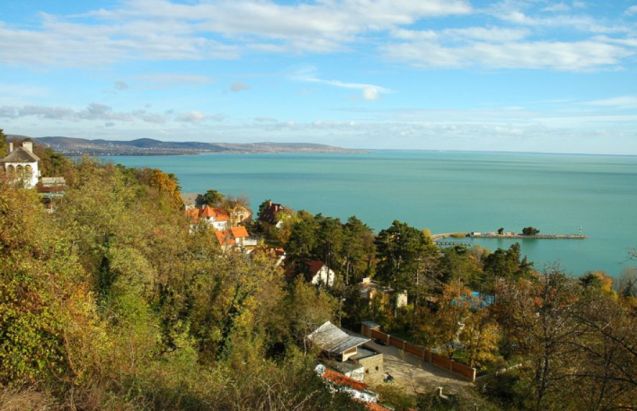
The EU has announced €95 million to improve the roads around Lake Balaton – aka The Hungarian Sea – a popular tourist destination and the largest lake in central Europe. The money will upgrade 27km of road No.8 at the east corner between Veszprém and Székesfehérvárn where it connects to the M7 motorway from Budapest which runs along the southern shore. Another €130.3 million has been allocated to a new 12.3km stretch of the D3 motorway in northwest Slovakia, part of the TEN-T Trans-European Transport Network Baltic-Adriatic Corridor. It will link to the S69 expressway across the nearby Polish border and, eventually, with the east-west D1 motorway around 40km south in Zilina, on the edge of the Carpathians.

.

roundup: SCANDINAVIA FERRY. Interesting quote from a food importer and former user of the now defunct Harwich-Esbjerg ferry in The Copenhagen Post this week. Dave Darlington says, ‘The journey was 19 hours long. They could have made the distance in something closer to 12, but it was conveniently timed to start just before dinner and finish just after lunch. You can drive a long way in 19 hours.’ The Post was writing about a campaign to have a UK-Denmark service reinstated. Since DFDS withdrew the Esbjerg service in September 2014, the UK has been without a Scandinavia ferry link. The firm blamed declining passenger numbers, the change in Duty Free laws and, pointedly, incoming low-sulphur fuel regulations which increased costs. FRANCE. Police Nationale have finally tracked down a ‘fake cop’ gang who preyed on drivers in the Yvelines region to the west of Paris, first reported last May. The force helpfully also tweeted a photo of a genuine police identification card… Campaign group 40 Millions d’Automobilistes have released a video saying new crash barriers would be a better than cutting down the characteristic avenues of trees running along rural roads. Research last year said accidents with trees were involved in nearly 10% of road deaths. It was proposed to cut down trees at accident hot spots though no action has been taken yet… The first ‘dummy radars’ have been installed along a road in Nord Pas de Calais, northern France. Both new portable radars and decoys have been installed along a 37km stretch of the D939 around Berles-Monchel west of Arras, the site of six fatalities and 28 serious injuries in the past five years according to Securite Routiere. The idea is to prevent drivers from suddenly braking or accelerating at radar sites. By the end of this year, 100 hotspot routes will have 500 similar cameras installed and 1000 routes with 5000 cameras by 2020.

.