This article has been updated here.
There are broadly three kinds of ‘road user charging’ in Europe – traditional road tolls paid at a booth after the journey; a vignette allowing cars to use some or all of the road network; and electronic tags that pay tolls automatically when passing through a barrier or control point.
To make it a bit confusing, some countries use a combination of all these methods. We look at each in turn, but first list the countries that do not charge for using the roads.
.
Click the blue links below for the official road charging website for each country, in English.
.
COUNTRIES NOT CHARGING TO USE ROADS

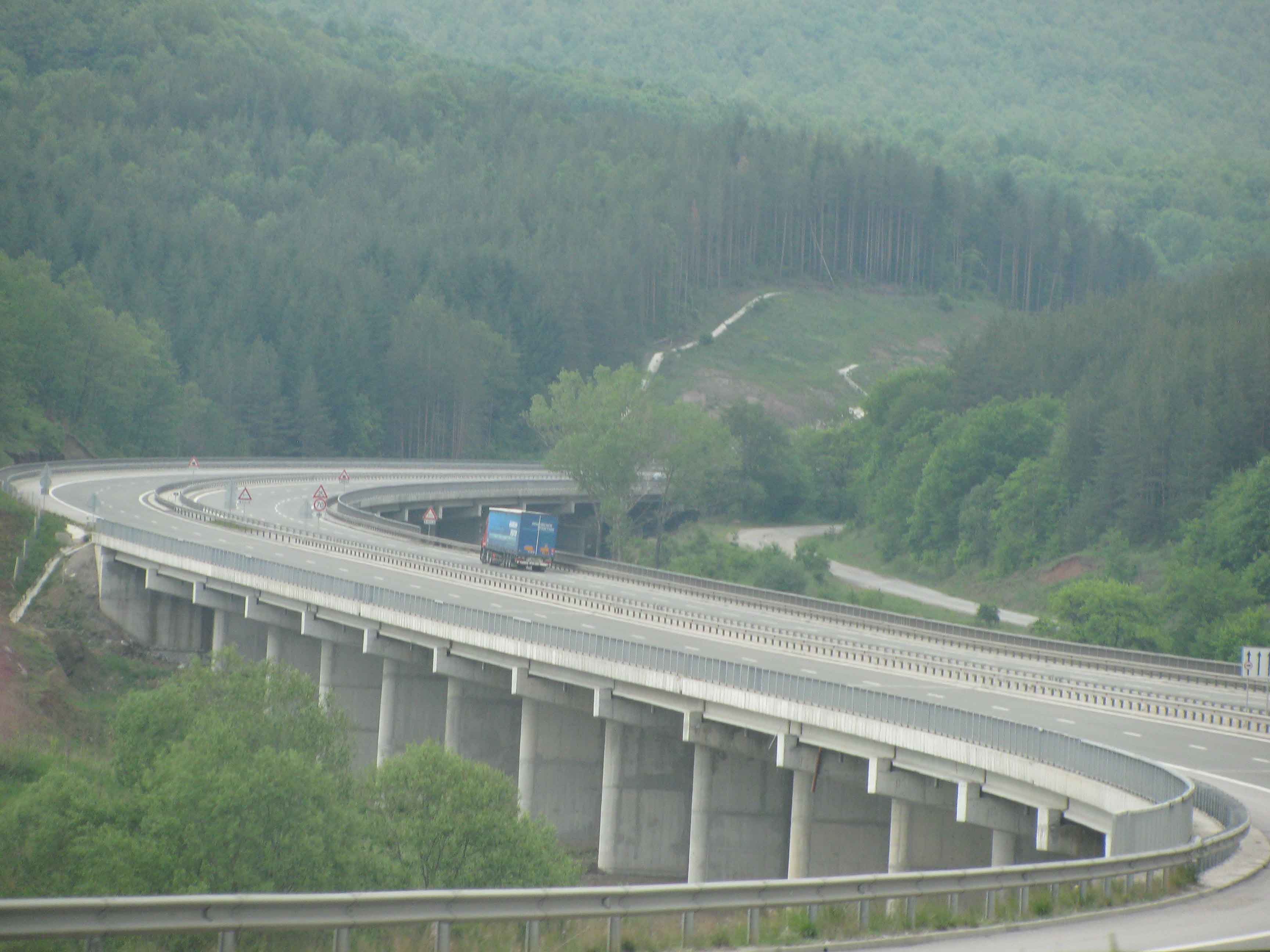
Germany: lovely long motorways, and free too.
.
These countries do not charge to use the roads in general but there might be charges to use certain bridges or tunnels.
In alphabetical order: Belgium, Denmark, UK, Estonia, Finland, Germany, Latvia, Lithuania*,Luxembourg, The Netherlands, Sweden.
*Lithuania – large campervans may need to buy the commercial vehicle vignette. Click for more.
.
TRADITIONAL ROAD TOLLS

Italy: Even Ferrari owners have to scrabble around for change.
.
Road tolls: Bosnia and Herzegovina, Croatia, France, Greece*, Italy, Norway, Poland, Serbia, Spain.
These countries charge by the kilometre to use the motorway network but, because the roads are operated by different companies (in western Europe anyway), there is no set national charge. See below for averages.
There’s no advance preparation for road tolls, just turn up at the booth and pay. Make sure you are in the right lane – there are autopay, cash, card, and commercial vehicles lanes at most Peage these days. Also, keep lots of coins, or your credit/debitcard, handy.
Note: in France, UK drivers have the option to buy an electronic tag to use the fast automatic payment lanes, see below. In Greece, there’s no motorway authority website in English. See here.
Costs: France is the most expensive, on average about 7c per km. In Italy expect to pay around 6.5c per km, in Spain about 5c per km. Norway comes in at about 4c per km.
www.ViaMichelin.co.uk includes toll charges in its route planner, as does www.mappy.com.
Meanwhile, the almost universal lack of receipts means keeping track of tolls on a long trip is difficult. That’s why we generally pay by card.
.
AUTOPAY ELECTRONIC TAGS
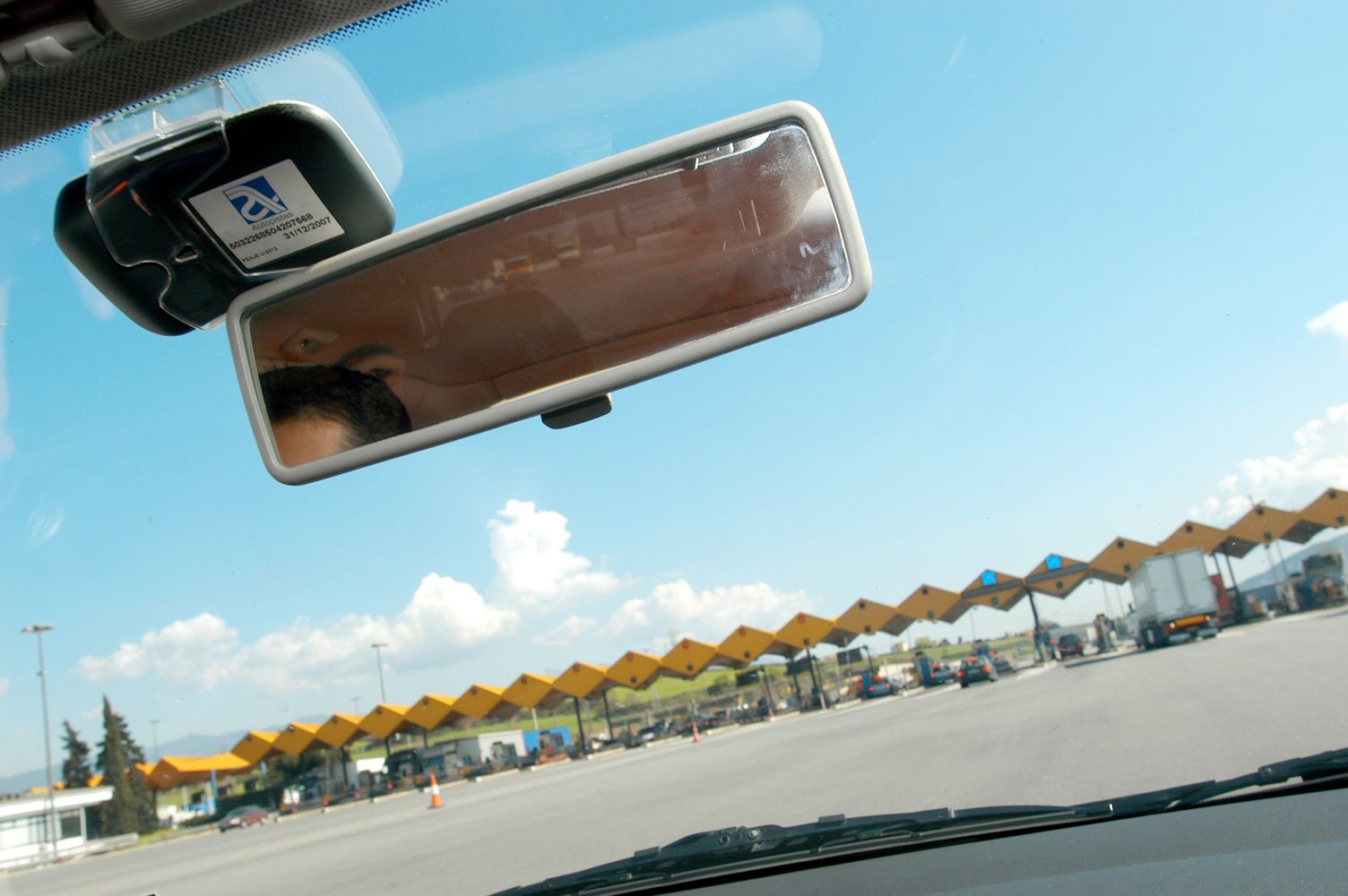
Autopay tags usually attach behind the rearview mirror.
Automatic payment tags are compulsory in Portugal and optional in Norway and France.
Those driving in Portugal should click this official information page or, better still, this page from English language newspaper The Portugal News about driving with a foreign registered vehicle. Briefly, drivers need to rent a tag by registering credit/debit card details at a vending machine (seriously). Money is automatically deducted and the tag returned at the end of the trip.
Over 20,000 British drivers have registered for the French Liber-T tag since the scheme was launched last year. Read our roundup of the pros and cons here.
Foreign drivers have a range of methods to pay road tolls in Norway – prepay, postpay, autotag, cash or card. Read the official run down for the one that suits you best.
.
VIGNETTES
There are two types of vignette, paper or sticker. They apply to the whole road network or just the ‘national network’ of motorways and some dual carriageways.
Vignettes are widely available – from most petrol stations, even in neighbouring countries near the border, or from booths on border crossings themselves. Needless to say, fines for not buying vignettes can be hefty.
.
Vignette Stickers
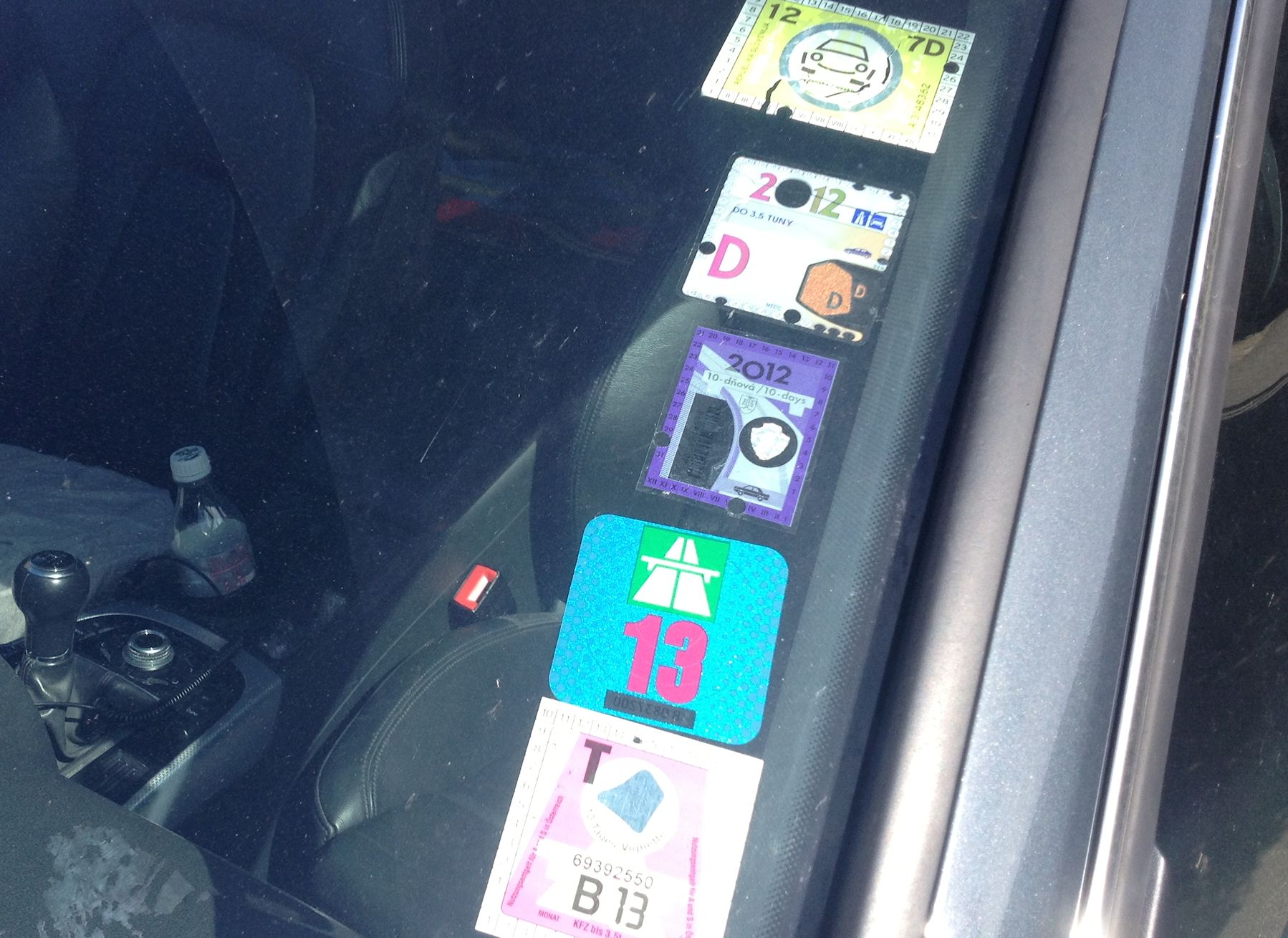
Vignette stickers crowding the windscreen are the bane of every transcontinental driver’s life. It’s quite cool though that all the neighbours can see where you’ve been on holiday and unavoidable because they are deliberately hard to get off (and impossible to re-stick).
Vignette Stickers
Most countries that use vignettes sell a range, depending on how long you will be using the roads. One day transit vignettes used to be widely available but not any more. One week/ten days is the modern minimum, then a month or year. The exception is Switzerland which only sells an annual vignette for 40CHF (€33.33).
Apart from Bulgaria, do not buy a sticker vignette if you are not going to use the motorways.
In addition to a vignette, Austria also uses traditional road tolls on some motorways and tunnels.
Sticker vignettes are not transferable, either physically or legally. Instructions for where to stick them are on the reverse, in English (normally down the opposite side of the windscreen to the driver). You might need to write in your registration (else they are invalid). Keep the counterfoil. Vignette – vinyet – is a widely recognised word, as is toll.
In alphabetical order: Austria (scroll down), Bulgaria, Czech Republic, Slovakia, Slovenia, Switzerland (for ordering only, no English info. includes Liechtenstein. See for more).
Costs: one week normally comes out at around £10 for a car. Slovenia is €15 (but worth it).
.
Paper Vignettes

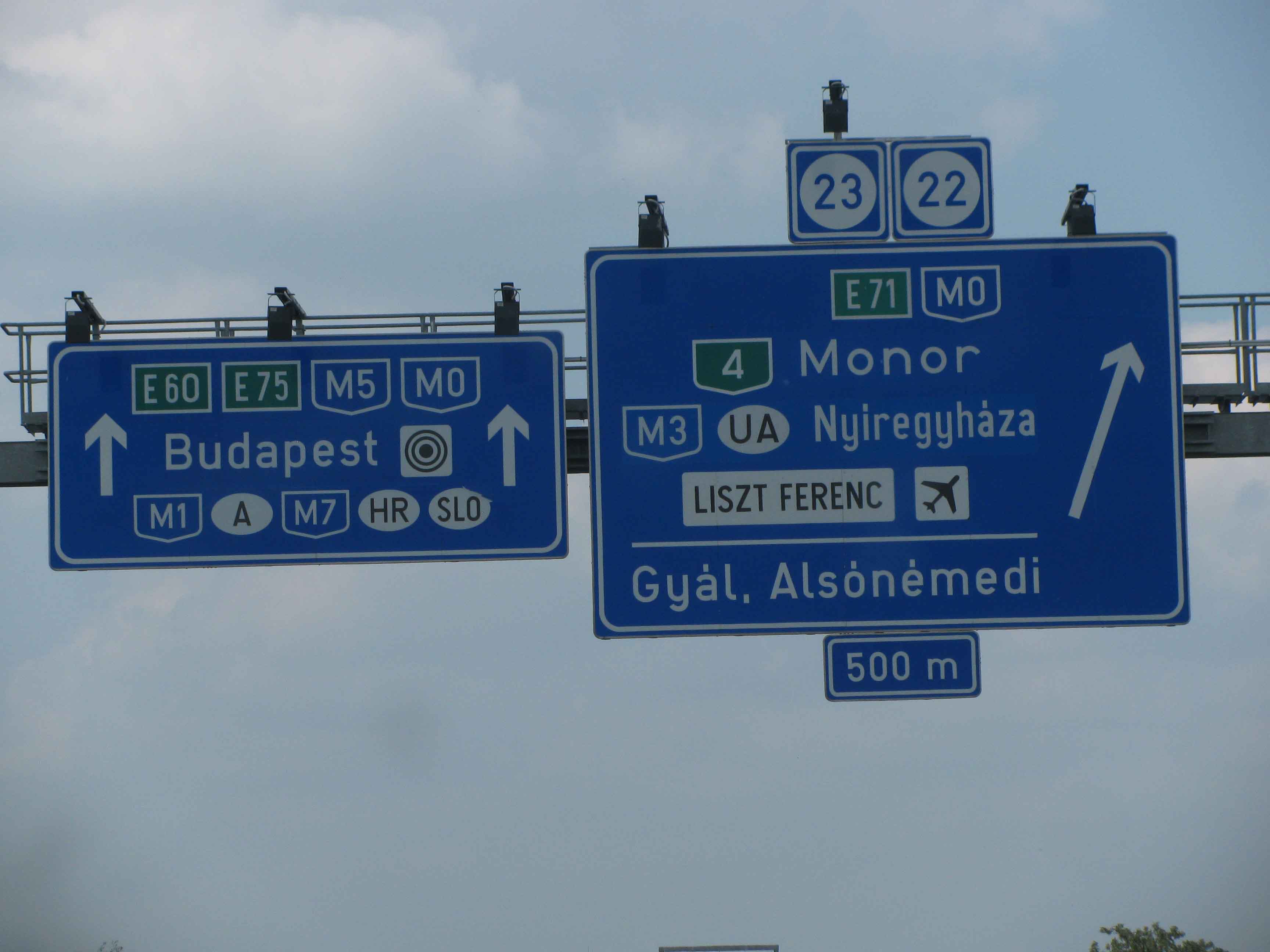
Hungary paper vignette: a week’s driving on Hungarian motorways costs 2,750HUF, or about £8.50. It takes a few minutes to get and you must keep it for one year after expiry – Hungarian authorities can track you down in the UK.
.
Paper Vignettes – Hungary and Romania.
Paper vignettes have to be ‘applied for’ which makes them a hassle even though it’s done as-you-wait. You need your car registration, and maybe some ID too. They also need to kept in a safe place and presented on demand by law enforcement.
The Hungarian vignette should be kept for one year after it expires. It’s in your interest to do so because the authorities can track you down back in the UK. The Romanian vignette is needed to drive on all national main roads.
Costs: Hungary’s minimum vignette is one week. It costs 2,725HUF (£8.50) for a car. For a campervan it’s 13,385HUF (£40) per week. The Romanian ‘Rovingette’ is €3 per week.
.
Finally. The future of road tolling in the European Union…

Greece: €2.40 can take you 100 miles.
.
The European Commission hates vignettes, considering them to be a blunt instrument. It much prefers tolls which can be used to modify driver behaviour (by pricing people out of the market at peak times) to tackle congestion (and pollution).
This is all rather awkward as Belgium’s on-again-off-again road user charging plan will be vignette based and if Germany decides to introduce road user charging its preferred method will be vignettes too.
We all wait with baited breath to hear what the Commission decides after its consultation last year. A pan-EU plan was due to be launched in June but there’s still no word. It’s not difficult to predict however: a variable charge, single account, electronic unit based system of tolls across Europe with a portion of revenues for the Commission, and another portion ring-fenced for investment in the road network. Let’s see.
.















 DriveEuropeNews