Rounding Up the Situation at the Borders

Border queues have improved considerably recently, but drivers still face random checks around France and the Netherlands, and almost certain queues Austria to Germany.

Also, some highlights of this weekend’s Retro Classics in Stuttgart. Very low tolerances for Luxembourg’s new speeding cameras. Big fine for serial French road toll ‘avoider’.

.

ROUNDING UP THE SITUATION AT THE BORDERS

Still substantial queues Austria to Germany; holidaymakers hit hardest.

Rounding up recent border hotspots. More later. Photo Valerio Vincenzo - the Belgian-Luxembourg border, part of a series Borderline, Frontiers of Peace

Photo Valerio Vincenzo – the Belgian-Luxembourg border, part of ‘Borderline, Frontiers of Peace.’

Quite why there is still a regular border control on the E17 into Lille is not clear.

The other two checkpoints on major roads around the city in northern France were removed weeks ago, but drivers heading across the border from Kortrijk still wait a consistent twenty minutes.

Otherwise, the situation at the borders around France has – more or less – returned to how it was before the Paris Attacks last November.

However, drivers crossing from Spain, particularly on the Mediterranean coast AP-7/A9 between Barcelona and Perpignan, have seen occasional checks.

And there have been suspicious queues a few times in past weeks on the A31-A3 crossing between Metz and Luxembourg.

Happily the much-vaunted border checks by the Belgian authorities do not seem to have resulted in many delays, certainly not on the major A16-E40 motorway between Dunkirk and Ostend.

Most interesting are the controls by Dutch police, mainly on the A12-A4 between Antwerp and Bergen op Zoom but also on the A12 around Arnhem, i.e. not restricted to border points.

The place where delays are still felt on a regular basis is between Austria and Germany, especially on the A12-A93 Innsbruck-Munich and A1-A8 Salzburg-Munich.

Drivers can generally expect to wait up to fifteen minutes but that increases considerably at the busiest times.

Holidaymakers heading home from the ski slopes have been stuck for up to ninety minutes over the winter.

The A8-A3 Linz-Passau crossing is much less busy as are main road border points though we did see a half mile queue on the A7-B179 Fernpass in late February (see this map of good and bad Austria-Germany border points from ADAC).

Austria has been threatening to reintroduce checks on the A22-A13 Brenner motorway but has held off so far.

Balkans aside – there are tight controls between Hungary, Serbia and Croatia, Slovenia and Austria and Macedonia and Greece – the only other place to see major delays is Germany-Denmark.

On the big return day on Saturday 20 February for instance, @Widodh was stuck in traffic for virtually the whole 160km between Hamburg and the Danish border.

.

retroc

Retro Classics Stuttgart starting today features an exhibition from photographer Jean-Pierre Hossann – who snapped the Roger Baillon collection last year – and eight select cars from the Louwman Museum in Den Haag, the world’s largest private collection. Starring is the Mercedes-Benz Nürburg 500 made for Kaiser Wilhelm II while in exile. As well as light armour it has underfloor heating and a unique communication system where instructions could be given to the chauffeur without speaking. Buttons on a console told the driver to speed up, slow down, turn right, left or stop, or go home.

.

roundup: LUXEMBOURG. The Grand Duchy’s first ever fixed speed cameras caught 1650 drivers yesterday, their first day in operation. Ten cameras have been installed around the country, mainly on national roads (see the map). Ten more will be installed next year says Wort.lu. Tolerances are quite low, just 4kmh according to Wort.lu’s fine checker, e.g. 74kmh in a 70kmh zone is a €49 fine; 94kmh or more is €145; 108kmh or higher means a judge gets involved. Like neighbouring Belgium, Luxembourg is an outlier on road safety in Western Europe: 64 and 65 deaths per million inhabitants in 2014 compared to 42 in Germany. It will be interesting to see whether the new cameras make any difference. Update 18 March: total prosecutions in the first 24 hours actually reached 1887 according to Wort.lu, including a ‘surprisingly high’ number of buses and trucks. The head of one road safety group said he was ‘stunned’ by the figures given all the publicity but another said, ‘It meets what I expected. Luxembourg has the image of a lawless state in terms of excessive speeds in both domestic as well as foreign drivers. This high number is the best proof that the speed cameras were needed.’ FRANCE. A Romanian driver landed a €10,000 fine and a one year suspended sentence for an incredible 267 counts of ‘avoiding’ road tolls over a three year period. The man was arrested after apparently skidding on a wet road and crashing through a peage in the Pyrenees-Orientale region, though he eventually admitted he had done it deliberately according to Autorouteinfo.fr. He was also banned from driving in France for three years.

.
Coastguard Detains Condor Liberation in Poole

From bad to worse for Condor Ferries as flag ship detained by coastguard for ‘substantial deficiencies’ – though ship should return to service on Saturday there have been some further developments.

Also, remedial plan for fifty-failure New Botlek Bridge. Two Brits caught at 250kmh in France. First semi-autonomous real-life vehicle trial in the Netherlands as UK announces similar. Paris mayor leads Euro-city charge on diesel emissions.

.

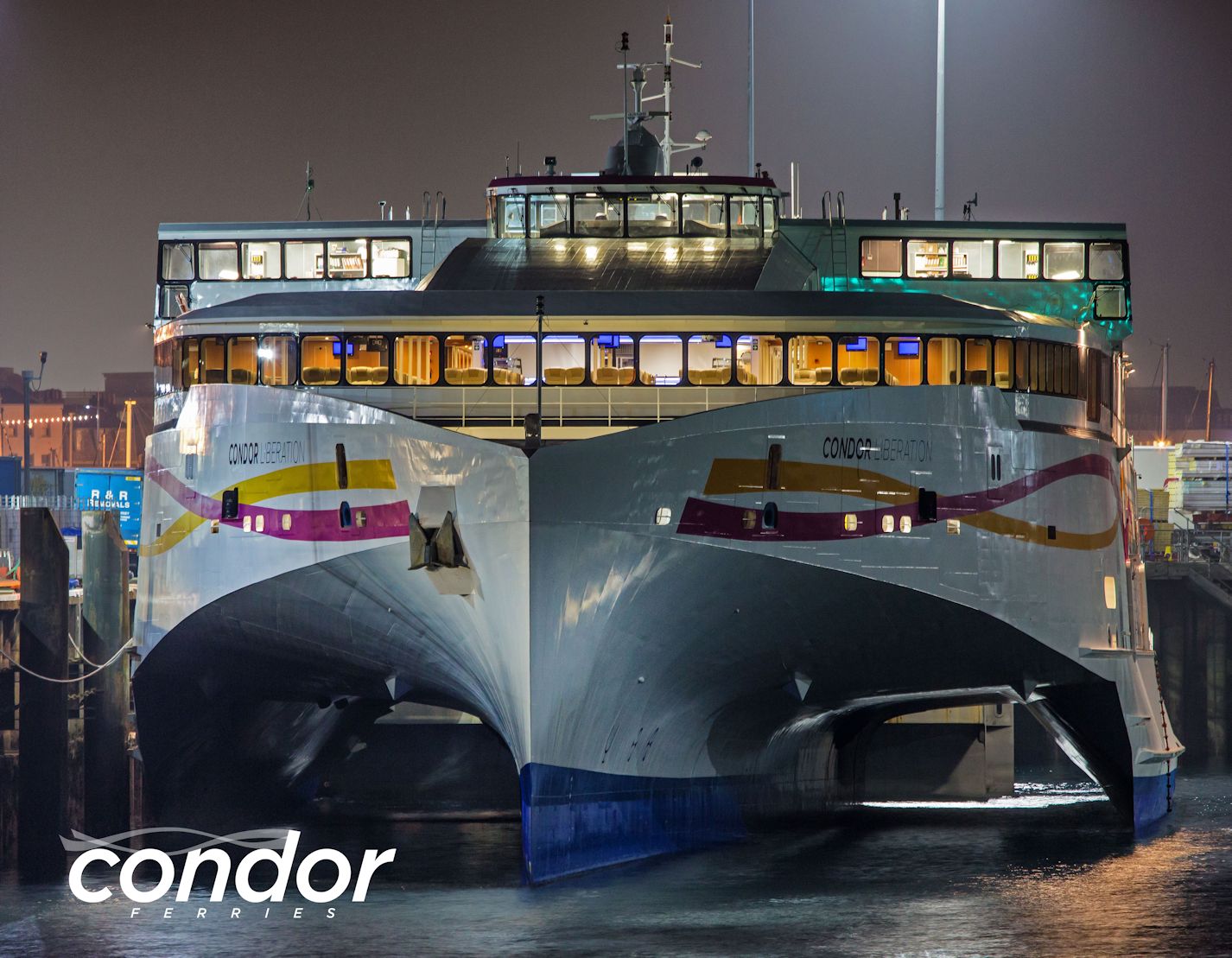
CONDOR LIBERATION ‘DETAINED’ IN POOLE

Coastguard finds ‘substantial deficiencies’ on Condor Ferries ship.

con lib

Condor’s Liberation was supposed to mark a new era for the company, of improved mechanical reliability and weather hardiness.

Instead things have gone from bad to worse since the £50 million vessel went into service last March, culminating in a detention order issued today by the MCA Marine & Coastguard Agency.

In a statement, the MCA said, ‘Following a joint EU inspection by the Southampton Marine Office and French Affairs Maritime Port State Control colleagues, the Condor Liberation has been detained at Poole after substantial deficiencies were observed by MCA inspectors.

Following formal detention, the flag state and their recognised organisation are responsible for primary oversight and rectification of deficiencies. Once they are content, they will invite the Port State (MCA) to re-attend to verify the same.’

In reply, Condor Ferries said, ‘Condor’s engineers have been working on non-sailing days to rectify the faults on Condor Liberation which have affected recent sailings. This includes work on the propulsion and steering systems.

The MCA and Affairs Maritimes conducted a joint, routine inspection on Tuesday 15 March whilst this repair work was underway and as a result issued a Detention Order. Until the issues identified are resolved and the repairs are complete, the ship is unable to sail.’

Liberation has only recently returned from three weeks in dry dock annual maintenance over January and February.

Meanwhile, a ‘last-chance’ meeting last week with government ministers from Jersey and Guernsey apparently went well.

Update 14:00, Condor Ferries says the need for re-inspections after the completion of repairs means the sailing schedule will be disrupted for at least part of the weekend.

It continues, ‘Liberation is expected to return to service in a matter of days; the exact return to service date is expected to be confirmed tomorrow (Thursday 17 March).’

Condor says it has enacted contingency plans including rescheduling its conventional ships to provide alterative sailings, bringing in a charter ship for freight services and rescheduling Liberation sailings once it is back in service.

Update 17 March: in a statement this afternoon, Condor said the issues highlighted by MCA have been rectified. Subject to subsequent inspections, Liberation will return to service on Saturday.

It says the contingency plan is in place with a charter ship on the way for freight while Clipper will concentrate on passengers.

The new schedule for Friday and Saturday sees freight services unaffected, but only 70% of passengers will travel on their chosen day, many of them on a different ship and/or different time.

Update 18 March: after journalist @GaryBurgessITV published the engineer’s report last night, with a long list of Liberation’ technical faults, Condor said it understood why customers would be concerned but could not comment until after the inspection process was finished.

.

Within five months of opening last July, the New Botlek Bridge on the A15 between southern Rotterdam and Europoort notched up its fiftieth failure (and there have been several more since). It makes the introduction of Condor’s Liberation look plain sailing. The fault has now been traced to the locking bolts and cable tensioning system according to an independent engineer’s report via infrastructure manger Rijkswaterstraat. Work starts immediately to implement the report’s recommendations with high hopes of an end to the frequent, embarrassing failures.

Within five months of opening last July, the New Botlek Bridge – on the A15 between southern Rotterdam and Europoort – notched up its fiftieth failure (and there have been several more since). It makes the introduction of Condor’s Liberation look plain sailing. The fault has now been traced to the locking bolts and cable tensioning system according to an independent engineer’s report, via infrastructure manger Rijkswaterstraat. Work starts immediately to implement the report’s recommendations with high hopes of an end to the frequent, embarrassing failures.

.

roundup: FRANCE. A British-registered Ferrari California and Lamborghini Gallardo were caught at 250kmh (155mph) on the A26 near Troyes. ‘Two new pedestrians!’ tweeted @Gendarmerie. It’s not clear if the cars were confiscated though that is a distinct possibility. Two drivers from Jersey were caught at up to 150mph on the way back to St Malo last August reported the Jersey Evening Post – their cars and licences were taken away until the court case some weeks later at which they were both fined €2000. Speeding at more than 50kmh above the speed limit is the cut-off point for the harshest penalties. NETHERLANDS. As the British Chancellor confirms autonomous truck trials in the UK later this year, and cars next – and a new £15 million smart corridor on the M/A20 London-Dover trialling V2X vehicle-to-infrastructure communication – the first real-life trial of semi-autonomous cars gets underway on the A2 between Amsterdam and Beesd. Fifty cars from five manufacturers made the 120km roundtrip in an experiment described as a success by transport minister Melanie Schulz. Drivers were not able to fully disengage – which would be against the law as it stands – but the cars could brake, accelerate and change lanes automatically. Next on the Dutch agenda is the European Truck Platooning Challenge starting next Thursday with groups of vehicles from around the Continent heading to Rotterdam. CITIES. Paris mayor Anne Hildalgo, who has been at the forefront of the anti-urban diesel movement, even before the VW scandal, is the lead signatory on an open letter today attacking ‘weak’ EU limits on nitrogen oxide pollution. Co-signers include mayors from nineteen other European cities, but not Berlin, Rome or London according to The Guardian. MEPs failed to veto a proposal to water down targets last month. ‘It is unacceptable to introduce emissions thresholds, only to allow them to be violated,’ the letter says. ‘It cannot be right to impose a duty upon public authorities to comply with air pollution standards, while at the same time giving the automotive industry the green light to infringe them.’

.

City Congestion Increases But Jams Fall in Countries

Congestion increased last year in most European cities, but declined overall in most countries says INRIX.

Also, Germany’s tallest viaduct wins design prize. Road closed to crashed Dakota site in Iceland. Nearly 2CHF billion to spend on Swiss roads this year. €1 million cash netted in Bulgaria roads corruption raid.

.

CITY CONGESTION INCREASES BUT JAMS FALL IN COUNTRIES

London most congested city and Belgium most congested country.

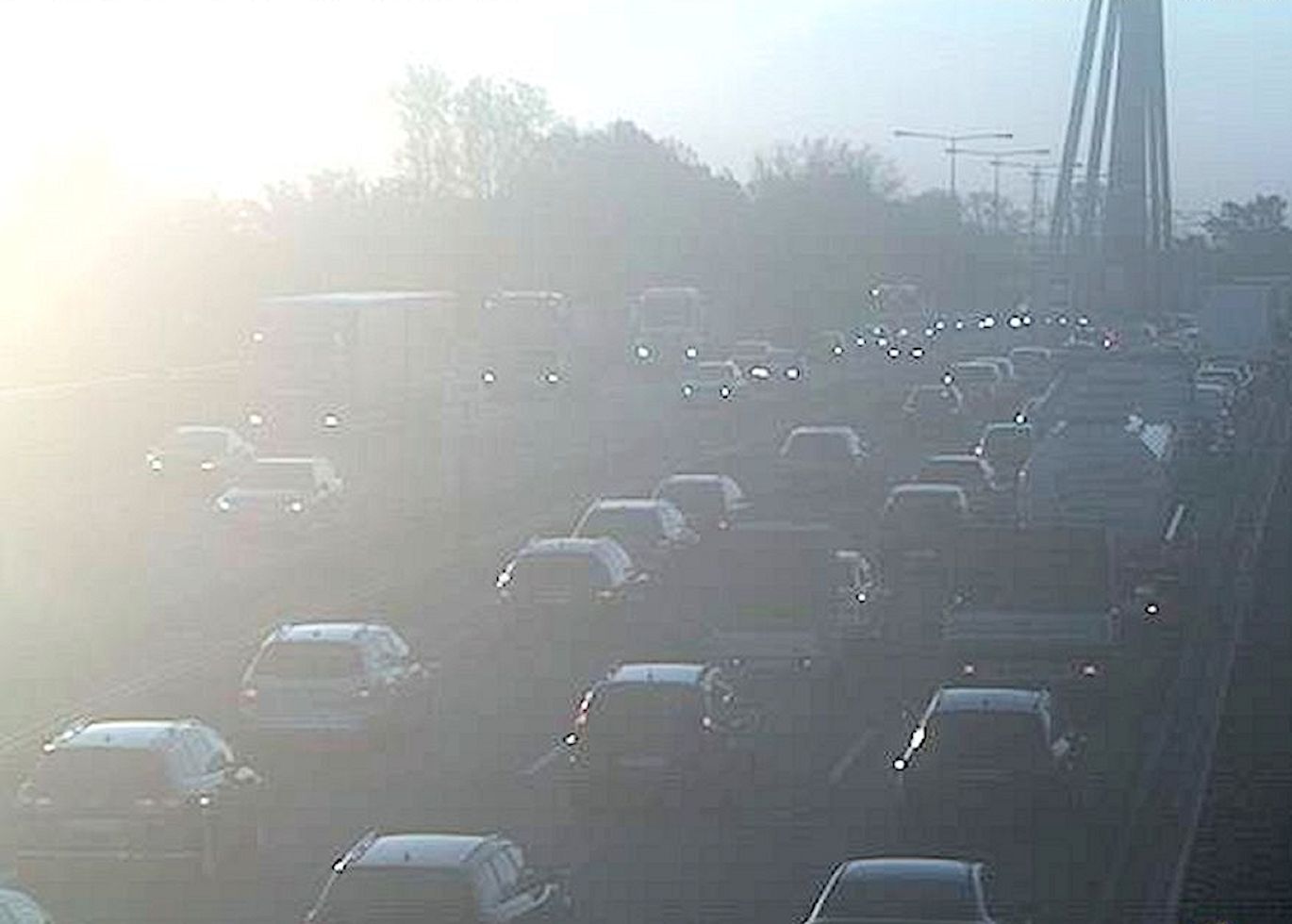
Jams were dow in Brusselsand in Belgium overall though it is still Europe's most congested country. Photo @DriveEurope

Jams were down in Brussels and in Belgium overall though it is still Europe’s most congested country.

As is widely reported today, London is the world’s most congested city.

Traffic analysis firm INRIX published its latest annual Traffic Scorecard, looking at jams in thirteen European countries.

Drivers in the British capital lost 101 hours to congestion, the first time to 100 hour barrier has been breached.

In second place is Stuttgart with 73 hours, the biggest riser at +14% thanks to more car commuters and cheap fuel.

Antwerp is tied with Cologne for third at 71 hours though the Belgian city, up 10 percent, is moving up the list while Cologne – last year Germany’s most congested city – is falling down despite a 7.9% increase in jams (a move which ties in with ADAC findings last month).

Brussels rounds out the top five at 70 hours lost per commuter – though that represents a decline of 5.7%, thanks to new rail services – followed by Moscow, Karlsruhe, Munich, Utrecht and Milan, all with losses between 50-60 hours.

Jams in Milan fell by nearly 9%, presumably due to new road openings in the area.

Meanwhile, Belgium tops the charts for most congested country though delays fell by a significant 6.3 hours year-on-year says INRIX, to an average 44 hours lost.

Next is the Netherlands (39), Germany (38) Luxembourg (33) and Switzerland (30).

Of those, only Switzerland saw increased congestion. Though jams grew in 61% of cities, in general drivers benefited from a ‘sluggish’ Europe-wide economy. See the full listings

.

2016-Kochertalbruecke-Pfeilerinstandsetzg-LAP x

Germany’s Kochertalbrucke has won the German Bridge Design Award 2016 it was announced today. Opened just before Christmas 1979, it underwent a 30 month rehabilitation which finished in December. The judges said the ‘innovative and minimally invasive’ restoration techniques were an outstanding engineering achievement. In a country where forty percent of bridges reportedly need some kind of maintenance or repair, they will be valuable lessons as the country embarks on an enormous infrastructure overhaul. Kochertalbrucke runs 1.128km over the River Kocher on the A6 at Geislingen between Heilbronn and Nuremberg in Baden Wurttemberg, southwest Germany. At 185m it is the country’s highest viaduct, and the highest so-called ‘simply supported’ beam bridge in the world. The Bridge Museum in Geislingen is open by appointment.

.

roundup: ICELAND. Road access to the famous wrecked Douglas Dakota has been closed by the land owners reports Iceland Review. The crashed US Navy aircraft on Sólheimasandur beach on the southern tip of the country, 3km from Ring Road 1, is a popular tourist attraction. The road has been closed due to unauthorised off-road driving – a repeated bugbear of the locals, and strictly illegal on public land, with harsh penalties. SWITZERLAND. Nearly 2CHF billion (€1.8 billion) will be invested in roads this year, around 70 percent in the western French-speaking part of the country according to ASTRA Federal Roads Office. Major projects include extending the A9 in Valais between Martigny and Brig, completing the A16 ‘Transjurance’ between Bern and Belfort (F), widening the A1 Zurich bypass and – by June – finishing the Kublis Tunnel on the A28 in eastern Switzerland, speeding traffic to Davos and the awesome mountain roads in the region such as Albula, Fluela and Ofenpass (see more at PassFinder). BULGARIA. A man was caught attempting to smuggle €1 million in cash out of an office during an anti-corruption raid on a road builder. The company involved last year won tenders to build parts of the struggling Sofia-Greece Struma motorway reports Novinite.com – though the owner says the firm has been unfairly targeted thanks to a lack of political protection. Contracts on another stretch of motorway, the east-west Hemus Highway, were recently torn up after a dubious tender process. Meanwhile, an interesting development in road safety reports Sofia Globe. Police are now accepting dashcam footage as evidence in alleged traffic code breaches and have already issued fines as a result. After a 15% overall cut in traffic fatalities since 2010, 2014 saw an increase of 9% putting Bulgaria second only to Latvia for having the most dangerous roads in Europe. See more on driving in Bulgaria.

.

Germany’s Busiest Day of the Year Incoming

Europe’s roads will see some bumper traffic over Easter, none more so than Germany – but possibly also Switzerland.

Also, Land Rover puts a monkey in the driving seat of the new Evoque Convertible in the French Alps. New threat to historic Newhaven-Dieppe ferry route – but some rare good news for Condor Ferries. Major works on the A9 Nuremberg-Munich.

.

GERMANY’S BUSIEST DAY OF THE YEAR INCOMING

Looking to beat last year’s 8000km jams on next week’s Maunday Thursday.

maunday

The busiest day on German roads last year was Maunday Thursday, called Gründonnerstag locally, ahead of Good Friday and the long Easter Weekend.

That date fell on 2 April in 2015 but this year lands on 24 March, i.e. next Thursday.

Busy days on German roads really are something to behold.

Last year the jams – if laid end to end – would have stretched 8000km according to motoring club ADAC.

For those with no choice more detailed advice will be available next week, but otherwise avoid driving in Germany next Thursday if possible.

Friday will be busy too but Wednesday and Sunday are set to be much quieter.

After Easter roads settle back to the recent pattern of busy weekends before tailing off mid-April ahead of a busy May.

Over in France the roads will be much less busy than half term – there are no Black Saturdays for instance – but the big getaway day is Friday 25 March followed by the return on Monday 28 March.

Meanwhile, every Saturday in April will see raised traffic levels during the school holidays.

Switzerland is the country to be particularly beware of, starting this Saturday.

Last weekend saw the first queues at the Gotthard Tunnel since the summer despite no particular warnings.

Ominously, Thursday-Friday 24-25 March, Monday 28 and the following Friday, Saturday and Sunday 1-3 April will be as crowded as it gets on Swiss roads.

It quietens off then until the end of the month and a monstrously busy first half of May.

In Austria too Saturday to Monday, 26-28 April will see packed roads too though it’s an island of congestion in what will otherwise be a quiet few weeks until the hordes descend again in early May.

As ever, constructing an overall Easter traffic forecast for Italy is next to impossible thanks to the road operating companies all making their own and publishing at different times, if at all.

However, the bellweather A22 Brennero in the Dolomites only has a warning for Monday 28 March heading south.

It will be much busier however – ‘molto intense’ – on the coastal A12 between Pisa and Genoa on both Saturday 26 March and Monday 28, though quiet again until late April.

Spanish roads will inevitably be crowded too but for the entire period Friday 18 March to Monday 28 March there are only ‘unfavourable’ times to drive rather than the ‘very unfavourable’ seen in the summer. See more at DGT.es.

.

rr_evqc_born_richard_orlinski_sculpture_110316_01_LowRes

After static displays in cities around the world, the latest stop for Land Rover’s Evoque wire frame is Courcheval in the French Alps, part of an installation with artist Richard Orlinski. With one of Orlinski’s signature gorilla sculptures in the driver’s seat, the ensemble is meant to reflect the key values of the Evoque: ‘a car born in the wild but adapted for the city’. The artwork marks the Land Rover sponsored BORN AWARDS, for excellence in design strategy and execution and due to be awarded in Courcheval. BORN is a crowdfunding platform for design enterprises. Meanwhile, journalists are enjoying first drives of the imminent Evoque Convertible: the unfortunate consensus – considering we have one on order – is that it is overweight, impractical and thirsty, though all that is not expected to impact on runaway sales…

.

roundup: CROSSING THE CHANNEL. More uncertainty for the historic Newhaven-Dieppe ferry route, running now for more than 150 years. After years of wrangling over the operating contract, subsidised by French authorities, it was thought the route was secure after a new agreement was struck last December. But a reported legal challenge by Eurotunnel was upheld last week reports the Brighton Argus – now the contract has to be re-written and the route re-tendered. DFDS will continue to operate the Transmanche-branded ferries in the meantime. A local MP says the route is not under threat but DFDS says it will only tender for the service if the conditions are right. Meanwhile, relief all-round at Condor Ferries surely after a last-chance meeting with Jersey and Guernsey’s Chief Ministers apparently went well. A statement afterwards said they were both ‘encouraged by the breadth and depth of the remediation plan’ and the operator’s ‘commitment’ to improve according to ITV News, but ‘disappointed’ by some of the abuse staff had received in person and on-line. The Channel Islands operator will reveal details of the remediation plan later this month. GERMANY. A 17km section of the A9 southbound between Nuremberg and Munich undergoes major work for most of the rest of this year reports ADAC. One of the busiest roads in Germany – the major north-south road down the east part of the country – the A9 sees an average 100,000 vehicles each day, and much more on high days and holidays as drivers head to and from the Alps and Adriatic. The work includes remaking the hard shoulder which means a contraflow lane on the northbound carriageway between Holledau and Allershausen. The whole lot is limited to 80kmh. The work also includes renovating 27 bridges. It starts on Monday 4 April and lasts until the end of October.

.

Lots of New Roads Opening in Italy

PM Matteo Renzi takes the credit for an extraordinary array of new roads recently opened or opening across Italy.

Also, migrants from nearby camp seen around A16 near Dunkirk. Another yo-yo month for road safety in France. Foreign visitors make up a third of Iceland’s road deaths last year. Stockholm indie band crash not deliberate say police.

.

LOTS OF NEW ROADS OPENING IN ITALY

Mezzogiorno A3 about to join new alternative A1, and Milan ring roads.

A section of A3 Salerno-Reggio Calabria in-build. Photo Strade ANAS

A section of A3 Salerno-Reggio Calabria in-build. Photo Strade ANAS

All the big wigs were present today at the breakthrough of a new tunnel on the A3 in southern Italy.

Described by state roads agency ANAS as ‘one of the most important works of the last yard of the A3 Salerno-Reggio Calabria’, the 2.3km tunnel at Mormanno is one of five on this 20km stretch plus eleven viaducts.

Long an opponent of German-backed austerity, PM Mateo Renzi pointedly said, ‘It would be better in Europe if there was more talk of investments. Countries would work better’.

The Mormanno tunnel should be ready to use in December along with the rest of the rehabilitated A3 which runs for 440km from Salerno south of Naples to Reggio Calabria, on the toe of Italy across from Sicily.

Almost entirely realigned to take out the sharp bends which previously denied it full ‘motorway’ status, with at least two lanes in each direction, the new A3 will reduce chronic holiday congestion to and from Sicily and otherwise open up ‘Mezzogiorno’, the ‘almost entirely tourist-free’ part of Italy.

The vast majority is now in use though 58km in three stretches will undergo maintenance this year.

The decades-long work on A3 is called ‘a symbol of slow and Mob-plagued infrastructure projects in southern Italy’ by ANSA news agency.

It hit the news last year after sub-standard works saw collapses in several places which forced trucks on long detours.

Since assuming office in February 2014, Renzi has presided over an exceptional period of road openings in Italy.

The A35 BreBeMi shortcut between Milan and Brescia opened in July 2014 followed by the TEEM Tangenziale Est Esterna Milano which links the major east-west A4 and north-south A1, and A35, to the east of Milan.

Meanwhile the second section of A36 Pedemontana Lombarda, from A8 to A9 across north Milan, opened in November.

Work is on-going on the A59 to the south of Como – two free-flow Dartford Tunnel-like toll sections opened in November – and the A60 ring at Varese.

Most impressive is the new A1 Variante di Valico which Renzi opened with a flourish just before Christmas.

The new 32km stretch – almost all in tunnels – cuts the journey time between Bologna and Florence by 30% and leaves the original A1 as the quieter, scenic alternative.

However, progress is much slower on a new tube for the Colle di Tende tunnel reports The Local Italy.

Originally opened in 1882 as the longest road tunnel in the world, at 3km, Colle di Tende is the cross-border link on the 130km road between Cuneo and Nice, on the French Riviera.

Work started last November but despite 24 hours a day construction, the tunnel has advanced by an average 50cm per day since thanks to unexpectedly soft rock. However it is still expected to be in service by July 2017.

.

Ski world speed record - training in the Austrian Alps behind a Jaguar XE. More later.

Jaguar is helping Graham Bell train for an attempt on the skiing world speed record. The former British champion and five time Olympian is being towed – or skijored – behind a 4WD Jaguar XE at 100mph in the Austrian Alps. The firm is also designing the aerodynamic suit Bell will wear. During the attempt early next year at Jaguar’s cold weather testing centre at Arjeplog northern Sweden, Bell will be initially skijored before firing up two micro jets that will hopefully take him to 160mph – the existing downhill speed record stands at 156mph.

.

roundup: CALAIS MIGRANTS. Migrants have already been spotted around the A16 after the new Grand Synthe camp near Dunkirk opened on Monday reports La Voix du Nord. The camp, clearly visible from and right alongside the motorway near junction 54, was not endorsed by national or local government precisely because of its proximity to the A16. Calais police are currently clearing the Jungle camp away from the port access road after repeated attempts to board trucks queuing for ferries by blocking the road. The Grand Synthe camp was set up by Doctors Without Borders with the capacity to hold 2500 migrants. Drivers should be extra cautious in the area. FRANCE. Another yo-yo month for road deaths in February: fatalities increased by a significant 8.4% according to Securite Routiere (after falling by 10.7% in January, and increasing by 7.7% in December). The numbers were skewed by the two school bus fatalities in which eight teenagers died (as in 2015 when the Puisseguin disaster bumped up the overall increase from 1% to 2.4%). Even discounting these tragic incidents there were still 12 more deaths last month than February 2015. The rise is accounted for by a sharp rise in pedestrian deaths, and lesser increases for motorbike riders and car drivers. Meanwhile, in ICELAND, of the 16 people who died on the roads last year, five were foreign tourists reports Iceland Review. Concerns about inexperienced visiting drivers were raised repeatedly last year (the classic scenario is catching wheels at the edge of an icy road). As if to underline the point, three American tourists got into trouble on Wednesday night after their car was stuck in snow in southern Iceland. They continued on foot through snow, heavy rain and high winds and were eventually forced to break into a cabin at 03:00. Fortunately there were no injuries. SWEDEN. Police have officially refuted a suggestion from one investigating officer that the Viola Beach crash in Stockholm last month, in which five men died, was deliberate. A spokesperson told Radio Sweden today, ‘We can say right now that it was an accident and an unfortunate incident. There’s nothing pointing to anything else.’ Also despite reports, the investigation continues for at least another week. Meanwhile, the car’s black box failed to yield useful information, and the search for the taxi whose wing mirror was apparently smashed by the Viola Beach car also continues. The current theory is that the driver was knocked unconscious after hitting a barrier, sending the car out of control.

.

Catching up with Bentley’s £15k Extraordinary Drive

A look at Bentley’s reassuringly expensive Extraordinary Drive to Verbier in the Swiss Alps – a positive bargain by high end road trip standards.

Also, haulier diverts via Holland after £15,000 damage in Calais. EU postpones vote on extra €3 million for limos and drivers. Italian police make a scenic arrest in central Rome. Not everyone is happy with the new Brussels pedestrianisation.

.

CATCHING UP WITH BENTLEY’S £15K EXTRAORDINARY DRIVE

Bargain luxury drive to the Swiss Alps includes a free watch.

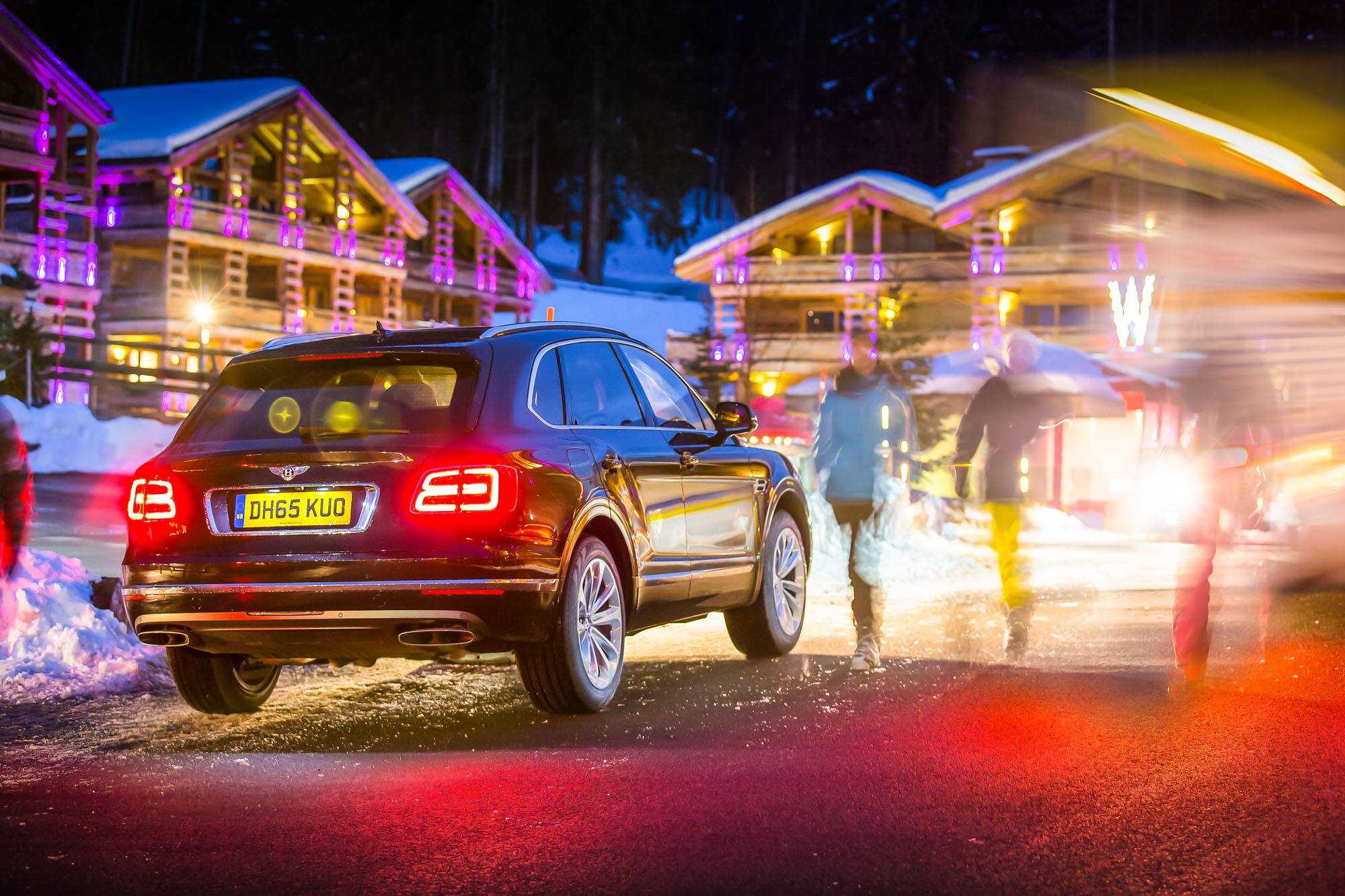
Lucky Bentley owners went on a reassuringly expensive

Bentley’s Extraordinary Drive in Verbier – photo Bentley Motors

Ultra-expensive road trips are all the rage at the moment.

Abercrombie & Kent’s three week, five continent and eight country ‘Most Luxurious Road Trip on Earth’ comes in at £100,000 per person (based on two sharing).

However, even that pales beside Auto Vivendi’s three month ‘Round the World by Supercar’ experience which costs up to £6 million per person.

In this context, Bentley’s recent £14,995 Extraordinary Drive looks stunning value by comparison.

Ten lucky couples drove down to the Swiss Alps last month with several special stops along the way.

It was an amazing trip,’ said one man afterwards.

Interestingly they crossed the Channel on the overnight Stena Line Harwich Hook of Holland boat –to dodge potential trouble at Calais, but also thanks to the operator’s impressive 100% reliability record we understand.

The dark wood interiors and leather sofas in the public areas also approach what your typical Bentley driver is used to. Accommodation was in the Captain’s Class cabins and suites.

Before the crossing, the trip started with dinner at Le Talbooth in Dedham, fifteen miles from Harwich.

After nearly 300 miles the next day, the first overnight stop was the Abbaye de Dom Perignon in the hills above Reims, where champagne was first invented, for a tour of the vineyard and dinner.

Day three was another 300 miles, across the Jura to La Chaux-de-Fonds near Neuchatel, home of Bentley’s watchmaking partner Breitling, where the main driver of each car was given a limited edition watch.

Via a stop off in Gruyeres on day four, the road trip part ended after another 120 miles in Verbier for two days skiing, staying at the ultra-exclusive Chalet 14.

Hiring the entire place – thirteen rooms and fourteen staff, including three drivers and two chefs – costs £80,000 per week in high season, though the rooms can be booked individually.

The next Bentley Extraordinary Drive is in northern Italy next month – six days around Lake Como, Monza, Milan and Florence for a bargain £12,995 per couple.

.

di stato

Police parked up beside the Arch of Constantine and Colosseum today having arrested a young Somali Imam asylum seeker. They say, ‘Maybe he was planning an attack in Rome?’ @PoliziadiStato is a handy account for travelling in Italy with tweets often in English.

.

roundup: CALAIS MIGRANT CRISIS. A truck sustained damage after coming under attack from migrants in Calais early this morning. Driver Adam Robinson, owner of AJ Road Haulage in Liverpool, told us, ‘I have multiple chips on the windscreen, and need a new headlight and driver’s side wing mirror and case. I nearly hit a few too as they ran in front of the truck. The police were there but the migrants just moved up the motorway. I thought 5am would be a safe time to cross..’ UPDATE 14 March: the damage to AJ Road Haulage vehicles eventually totalled more than £15,000 with Adam Robinson’s truck accounting for €2400 we were told today. Unsurprisingly, he tells us the firm will run through Holland now instead. EU. Spectacularly bad timing for the European Commission to lavish an extra €3 million each year on limousines and drivers for officials. Nothing goes down so badly with the British public as bureaucrat’s snouts in the trough. The Commission’s plan says its needs to bring the car service in-house to ensure better security according to Politico Europe. Costs include €116,000 each year on chauffeur uniforms – but not ‘security scanners’ and IT equipment, likely to add further to the total €10.5 million annual bill. Update: the vote was subsequently delayed. BRUSSELS. Pollution has fallen by 64% since the introduction of the pedestrian zone in June says the city council, littering has improved thanks to new bins and the new circulation plan did not lead to increased congestion (after the first few days). ‘Despite all the criticism, we can proudly say that the capital has made the final transition to a modern, accessible city with a high quality of life,’ said mayor Yvan Mayeur to The Bulletin earlier this month. Several changes have been made, principally to improve access to the Metropole Hotel in the north while Maurice Lemmonierlaan – the southern section of the road which did run right across the city centre – is now accessible from the R20 ‘Pentagon’ ring in the south. More changes might be made before the end of the initial eight month evaluation period. A shopkeeper on nearby Grand Sablon square told @DriveEurope last week the pedestrianisation was a great idea, worked very well and she wished it would be extended. Not everyone is happy however – two local business associations have lodged applications to prevent the no-car zone being made permanent, again according to The Bulletin.

.

Opinion Split on Best Way London to Stuttgart

Do you cough up for French road tolls, or suffer Belgian roads and German traffic? Real drivers have their say on the best way from London to Stuttgart.

Also, a quick look at Land Rover’s new three day off-road course near Barcelona. Also, last chance saloon for Condor Ferries. Consultation on better cross-Channel truck security. Secret agents red-faced after off-road Kiel Canal blunder.

.

OPINION SPLIT ON BEST WAY LONDON TO STUTTGART

French tolls or Belgian roads and German traffic?

Photo Peter Herridge

Photo Peter Herridge

Thanks to a very dense motorway network there are plenty of variations on the route, but broadly speaking there are three options when driving from London to Stuttgart.

Through France, via Belgium and Luxembourg for cheap fuel, or via Belgium to the autobahns as soon as possible.

The quickest is through France – just over ten hours driving, according to Google maps, past Reims and Metz, crossing the German border near Karlsruhe.

The shortest route is via Belgium and Luxembourg, on the so-called ‘bottom road’ E42 through Lille and Charleroi before turning onto the A4 at Namur for the Grand Duchy and into Germany by Saarbrucken.

Despite being 30 miles less it takes an extra thirty minutes over the French way, but saves the substantial road toll: €112 each way according to autoroutes.fr (the A16 from Calais and A25 to Lille are both toll-free).

The other alternative is the E40 through Brussels then Liege, Aachen to pick up the A61 near Cologne then down past Koblenz to Mannheim.

Notionally that takes the same time as the E42 route, and is easier to navigate, but – depending on the time of day – could put drivers in the clutches of the notorious Brussels R0 ring road.

Peter Herridge, who started the discussion off with his recent trip to the Mercedes and Porsche museums in Stuttgart, is firmly in favour of the Belgian route: ‘No road tolls,’ he says, ‘and less likely to see police (not that it matters of course!)’

Funnily enough, Wort.lu, the English-language Luxembourg newspaper, agrees: ‘Belgium, with no road tolls :-),’

(By the way, unleaded95 currently sells for €1.004/l in Luxembourg and diesel at €0.856.)

The managing editor of EVO magazine Stuart Gallagher is another Belgium fan, though it sounds like he’s found the quickest route of all: ‘Always went through Belgium: Liege – Spa – Prum – outskirts of Saarbrucken – Mannheim – Karlsruhe – Stuttgart. 5hr 30mins. The Panamera diesel could just do it on a single tank of fuel.’

Because of likely heavy traffic however, he adds: ‘The night is best for heading east, early morning heading west.’

Traffic sees his colleague on Autocar favour the French motorways. Europe editor Greg Kable says, ‘France! Higher average speed on the autoroutes and, usually, less traffic.’

Meanwhile, practiced Continental driver Chris Pointon also prefers France: ‘Always the French route for me, better roads, less speed cameras and nicer places to stop for lunch, Reims, Metz and Strasbourg.’

The road tolls are not a problem either. ‘It’s worth paying the extra for that route,’ he says.

Cath Greenway is another one with no doubts about the best way to go: ‘France definitely. Belgian roads are rubbish compared to French motorways (see more on the state of Belgian roads).’

And the road tolls? ‘Actually I don’t mind. Compare French tolls per mile to the M6 Toll. I pay for UK roads too and they’re dismal.’

Finally, keen skier Louise Little heads through France on her regular trips to south west Germany and beyond -though she has an interesting qualification.

‘We do UK to Basel and prefer the French route having tried both,’ she says. ‘There’s less traffic and the road conditions are good. It’s a practical journey for us so gets the job done! The other way was more interesting admittedly!’

However, because keeping a close eye on costs and journey times is a fundamental part of his business, the last word should probably go to James McCann from McCann Transport Services in Gateshead.

‘Belgium every time,’ he says, ‘Either Lille along the bottom road, or time Brussels right!’

.

Go off-roading with Land Rover in Spain in September. The three day course centres around the multi-peaked Montserrat mountain near Barcelona. It also includes the Les Comes Estate, site of the annual 4x4 Festival with 60km of tracks used in the qualifying stages of the Camel Trophy and G4 Challenge. Overnight at Can Bonastre Wine Resort, the mediaeval Parador de Cardona and the El Palace Hotel in Barcelona. From £3995 per person based on two sharing, including meals. Organised by Abercrombie & Kent.

Go off-roading with Land Rover in Spain in September. The three day course centres around the multi-peaked Montserrat mountain near Barcelona. It also includes the Les Comes Estate, site of the annual 4×4 Festival with 60km of tracks used in the qualifying stages of the Camel Trophy and G4 Challenge. Overnight at Can Bonastre Wine Resort, the mediaeval Parador de Cardona and the grand El Palace Hotel in Barcelona. From £3995 per person. Organised by Abercrombie & Kent.

.

roundup: CONDOR FERRIES has been given two weeks to sort out its service says the Jersey Evening Post. Condor and its customers have had a torrid year since the introduction of the new €50 million Liberation fast ferry with regular technical and operational problems. Matters, it seems, have come to a head. The firm’s services to and from the Channel Islands are regulated by an operating agreement with the States. What with all the disruption, the firm is said to be in breach of its contract. The Chief Minister and others will meet with Condor and owners Macquarie Bank on Wednesday. CALAIS TRUCKS. The British government is consulting on what it calls ways to ‘improve the clandestine civil penalty regime’. This includes the highly controversial £2000 fine for the truck driver and operator for each illegal migrant brought into the UK. Part of the focus is on truck security – the Home Office says it recognises most hauliers secure vehicles properly but a significant number do not, one third according to a recent exercise. It wants to ‘incentivise’ operators to improve security. British drivers account for 7% of the penalties despite making up 14% of cross-Channel traffic. The Freight Transport Association says it is pleased the government is working with the industry to combat illegal immigration. The consultation started on 7 March and runs for six weeks, see more. GERMANY. Two armed Mossad secret agents got stuck in the mud while driving through a forest near Kiel in mid-December reports Haaretz.com. A suspicious local called police who left without taking any action after reviewing diplomatic passports and firearms permits. However, firemen failed to free the pair’s Ford Focus so a farmer had to be called in. A bill for €1263 has now been sent to the Israeli Embassy in Berlin. The agents were apparently keeping an eye on a submarine due to be dispatched to Israel but got stuck on the banks of the Kiel Canal.

.

Real-Life Self-Drive Vehicle Trials Start Across Europe

After preliminary trials in Germany last year, a number of large scale self-driving vehicle tests prepare to get underway around Europe.

Also, second Snowmageddon for the Ardennes. And, disturbing allegations the 2012 Sierra coach disaster in Switzerland was deliberate. Roads in northern Belgium are better than the south says survey, except at night. More Paris pedestrianisation, and a new tyre scam targets the elderly.

.

REAL-LIFE SELF-DRIVE VEHICLE TRIALS START ACROSS EUROPE

Cars in Sweden and trucks in the UK, Benelux, Germany and Scandinavia.

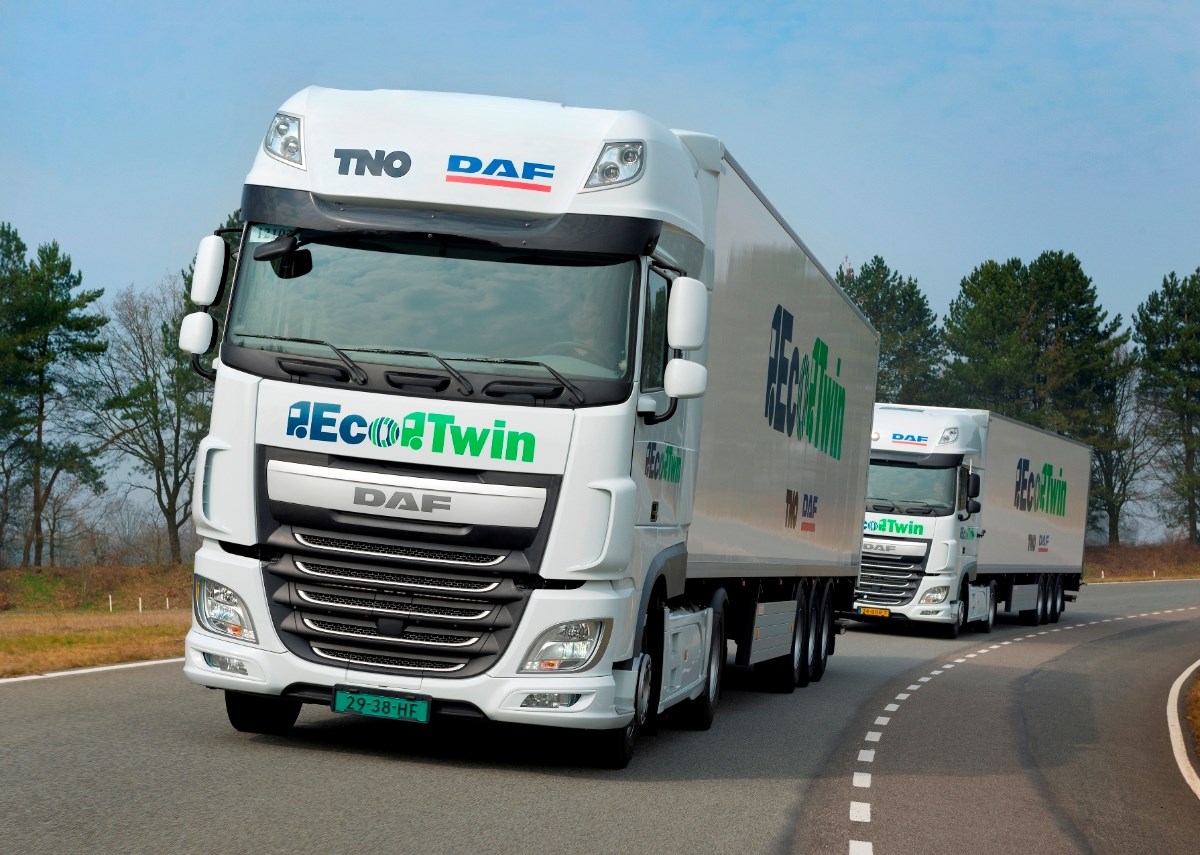
Photo via the European Truck Platooning Challenge.

Photo via the European Truck Platooning Challenge.

Volvo is recruiting 100 commuters to test its self-driving cars in Gothenburg.

The real world experiment takes place next year on specially selected roads which avoid cycle and pedestrian routes according to the BBC.

Importantly, the routes all have clear lane markings which the technology needs to work.

The Swedish manufacturer says it wants participants to avoid focusing on the road during the tests.

The vehicles are fitted with back-up systems and will not pass control back to the human sat behind the wheel in the event of a mishap.

After preliminary trials in Germany last year, the Swedish test is one of a number of large scale autonomous, or self-driving, vehicle experiments preparing to get underway around Europe.

At the weekend, a ‘truck-platooning’ experiment was announced in the UK.

Convoys of up to ten, closely-spaced self-driving trucks will ply the M6 near Carlisle later this year. More details are due on 16 March from Chancellor George Osborne.

Meanwhile, the European Truck Platooning Challenge starts on Thursday 31 March.

Six platoons of two vehicles each will converge on Rotterdam in the Netherlands – from Belgium, Denmark, Germany, Finland, the Netherlands and Sweden – finishing on Wednesday 6 April.

The project is organised under the current Dutch EU Presidency.

Platooning will also feature at the subsequent Intertraffic exhibition in Amsterdam, and will be on the agenda of the Informal Transport Council on 14 April.

.

bettie

Luxembourg PM Xavier Bettel was one of those caught up in heavy snow on E411 this morning – though he still made it on time to the Brussels EU Council meeting on migrants. There were long delays in both directions all day for the second time this year. It makes the Belgian Ardennes the hardest hit European region this year outside the Alps. Also particularly badly affected was the A4 between Metz and Strasbourg. Meanwhile, the major roads around Dusseldorf were gridlocked first thing, with jams peaking at 300km according to Welt.de, despite Germany’s winter tyres rules. Snow was forecast, but for northern France and western Belgium. Photo @Xavier_Bettel

.

roundup: BELGIUM. An investigative journalist thinks the Sierre coach crash in Switzerland in March 2012 – in which 28 people died, 22 of them children – was deliberate. Douglas de Coninck says the driver was taking controversial anti-depressant Seroxat. He presented his findings, along with some of the parents, at the launch of a book ‘The Sierra Bus Crash: 1 pill, 28 dead’ in Brussels today. The cause of the accident has never been officially explained. Also, a new poll says motorways in the northern, Dutch-speaking Flanders region are much better than the roads in the French-speaking Wallonia in the south. The survey from motoring group VAB says 65% think Flemish roads are ‘comfortable’ but that dips to 48% in Wallonia. The difference is even more marked for the secondary road network reports Brussels Times. However, the lack of road lighting in the north sees Wallonia come out on top for visibility at night (also see Another Pounding for Belgium’s Poor Roads). FRANCE. Seven squares in Paris will be partly pedestrianised in the next four years reports The Connexion, including Place de la Bastille, Nation, Italie, Panthéon, Madeleine, Gambetta and Place des Fêtes. However, the redevelopment budget has been cut from €30 million to €24 million. Deputy mayor and man responsible for transport Christophe Najdovski says the next objective is 100 hectares of car-free woods in the Bois de Vincennes in south east Paris, just outside the peripherique. Meanwhile, police are warning about a new scam where thieves tamper with tyres then come to the victim’s aid. A typical scenario involves them asking for some money – they then steal cashpoint card details, other valuables and even the vehicle itself. The elderly have been particularly targeted. It follows the arrest of a couple in Marseille, thought to be responsible for 25 offences.

.

Live: Snowmageddon Averted, Almost

Switzerland takes the brunt of Saturday’s mini-Snowmageddon but pretty bad in France and Italy too.

Also, conspiracy theories smouldering after Polish President’s car swerves off motorway. Poland passengers sign codes of conduct on Sweden ferries. Police scrabble for answers on Stockholm indie band tragedy.

.

LIVE: SNOWMAGEDDON AVERTED, ALMOST

Switzerland epicentre of Saturday snow storm.

Switzerland: the A2 heading south to the Gotthard Tunnel via TCS.

Switzerland: the A2 heading south to the Gotthard Tunnel via TCS.

There was not quite the snowmageddon predicted but several areas were hit by heavy snow overnight Friday-Saturday.

Worst affected was the high ground across south eastern France to North West Italy and up into the Swiss Alps.

The A26 and A7 autostradas between Milan and Genoa were strictly no-go first thing.

Meanwhile, the A2 up from Lugano almost to Altdorf via the Gotthard Tunnel in Switzerland continued to see very difficult driving conditions all day despite repeated attempts to clear the roads.

Truck driver @YouareParsons was parked up by the authorities at Gotthard. Even as traffic resumed in Italy after lunch, even heavier snow fell in southern Switzerland. 

Trucks were eventually allowed to leave the A2 late afternoon but stayed parked on the A13 Chur-Bellinzona until Sunday morning.

Snow chains and/or snow tyres were needed to reach ski resorts, especially in the southern French Alps.

Access to Isola 2000 was restored mid-morning after an avalanche overnight but conditions stayed almost impossible on Col de Montegenevre near Briancon.

Overall however, the major routes in France held up.

Paris missed out entirely. Lower speed limits and restrictions on trucks were called off first thing without being used.

The region to the north of Ile de France – A16, A29 Amiens-Abbeville – saw some snow but it was efficiently cleared by mid-morning.

Drivers on the A40 Macon-Geneva were delayed briefly around trouble spot Nantua in the morning and afternoon but nothing like the delays seen during last year’s Black + White Saturday.

The Austrian Alps were very quiet, except for more traffic than expected on B179 Fernpass. Snow started to fall in the west in the afternoon, particularly on the S16 Bregenz-Innsbruck, but the storm had clearly blown out as it moved east.  

Daylight finished with a smattering in south east Germany, but heavier snow on the A22 Brennero between Bolzano and Trento.

In the evening the Mont Blanc Tunnel was closed for a time after several instances of vehicles across the approach roads but was soon reopened, albeit with warnings about potential delays through the night.

.

Not quite snowmageddon this morning but significant snow fell overnight north of Paris, and in southern French Alps and across the border into Italy and up into Switzerland. More later. Photo @RadioValdIsere

The road up to Val d’Isere in the French Alps this morning via @RadioValdIsere

.

roundup: POLAND. A full investigation is underway after the President’s official car swerved off the A4 motorway on Friday following an apparent blow out reports TheNews.pl. Andrzej Duda’s BMW 7-series armoured limo was reportedly equipped with BMW’s staple run-flat tyres which should allow the driver to retain control in such circumstances. No-one was injured. Incidents like this are very sensitive after the loss of a former president in a, some-still-say, murky air crash in Russia in 2010. Duda’s now governing party has recently reopened the investigation into the air crash, and also championed highly controversial new restrictions on state media. Meanwhile, Polish passengers on Stena Line’s Sweden-bound ferries are now being asked to sign ‘codes of conduct’ reports The Local Sweden. ‘Poles are not used to travelling by boat and are not always informed about the safety rules that they have to abide to on a ferry. That is why we want to remind this group in particular,’ said a spokesperson. That’s hilarious – or especially worrying – considering how rowdy, in our experience, some homeward Swedes can be on-board. SWEDEN. Police are still at a loss to explain the crash which claimed the lives of five men from indie band Viola Beach reports Radio Sweden. The car drove past two traffic booms, and through a gap in the open drawbridge, before falling eighty feet into a canal early on 13 February. Tests for alcohol and drugs on the still unnamed driver came back negative. It would seem investigators’ final hope are possible leads gleaned from the ‘black box’ data recorder from band’s rental Nissan Qashqai, though they are yet to hear back from the manufacturer.

.

Another Pounding for Belgium’s Poor Roads

Belgium is squandering its natural advantages due to lack of investment in transport and roads says the European Commission. But is that really fair?

Also, a quick look at France’s windy Mont Aigoual. And, a road and a rail bridge for Sicily’s Messina Strait insists Renzi. Classic confusion over Paris old-car ban + A1 bus and taxi lane reinstated. Finland top cop in monster speeding fine.

.

ANOTHER POUNDING FOR BELGIUM’S POOR ROADS

The European Commission throws in its own tuppence worth, but unfortunately barely more than that.

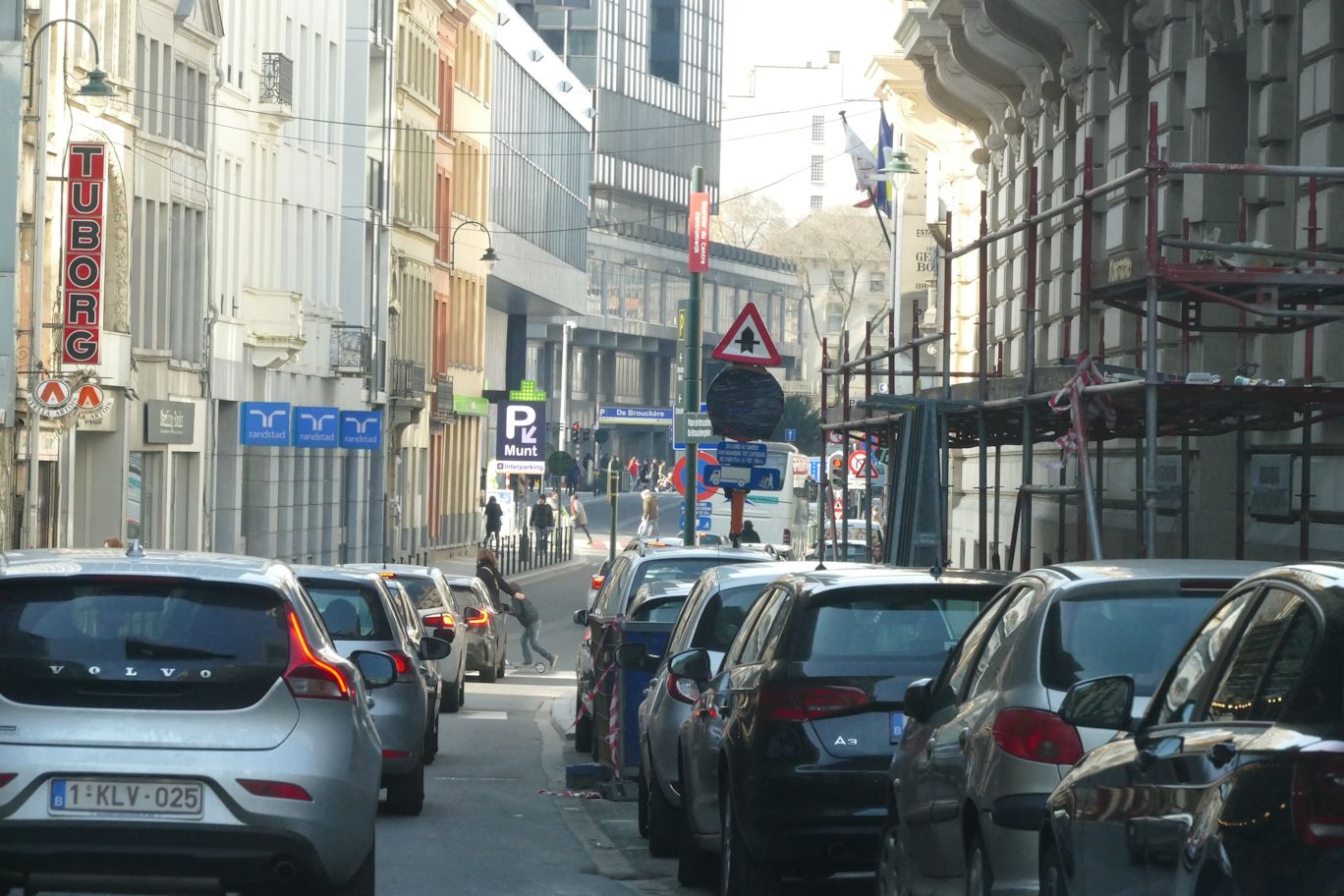
Central Brussels, February 2016. Photo @DriveEurope

Central Brussels, February 2016. Photo @DriveEurope

Poor old Belgium has been at the receiving end of some harsh criticism recently, especially on transport.

It kicked off with a scathing report in the Guardian last year – ‘Five reasons Belgium has the worst traffic in Europe’ – followed by a spectacularly ungrateful rant by an uppity Brussels expat in October – ‘The city that doesn’t give a damn’.

Last month a group of engineering consultants called the state of the roads and tunnels in Brussels ‘catastrophic’ while the rest of the country hardly fared any better.

Now the European Commission has had a go.

In its Country Report Belgium 2016, published last week, the Commission says, ‘The transport network represents the most acute investment gap.’

It says the country’s advantages – like its central location and port infrastructure – are ‘threatened by increasing road congestion, the lack of adequate road maintenance, missing links, and road safety issues.’

According to the report, Belgium spends less on new roads and maintenance than the EU average, now lower as a percentage of GDP than the 1990s, and is the undisputed congestion capital of Europe, particularly around Brussels and Antwerp during peak hours.

Furthermore, it asserts, the new electronic truck toll due to start next month ‘will not have a significant impact on congestion, because cars are the main users of road infrastructure.’

The report also criticises the lack of progress on completing the Antwerp R1 ring road, and says the planned upgrade to the northern Brussels R0 ring is only likely to attract more congestion.

In an irony that escapes no-one, the European Commission, with its highfalutin transport ambitions, is long-headquartered in a country with such a troubled record.

But the fundamental fact overlooked by many is that Belgium is the ultimate EU transit country, attracting heavy traffic not just to its own ports, but between the English Channel and Eastern Europe, and between the Netherlands and France too. No wonder it struggles.

Perhaps the Commission should look to itself first. It’s happy to spend transport billions in the so-called Cohesion countries, and rightly so, but one of Europe’s highest priorities is considerably closer to home.

.

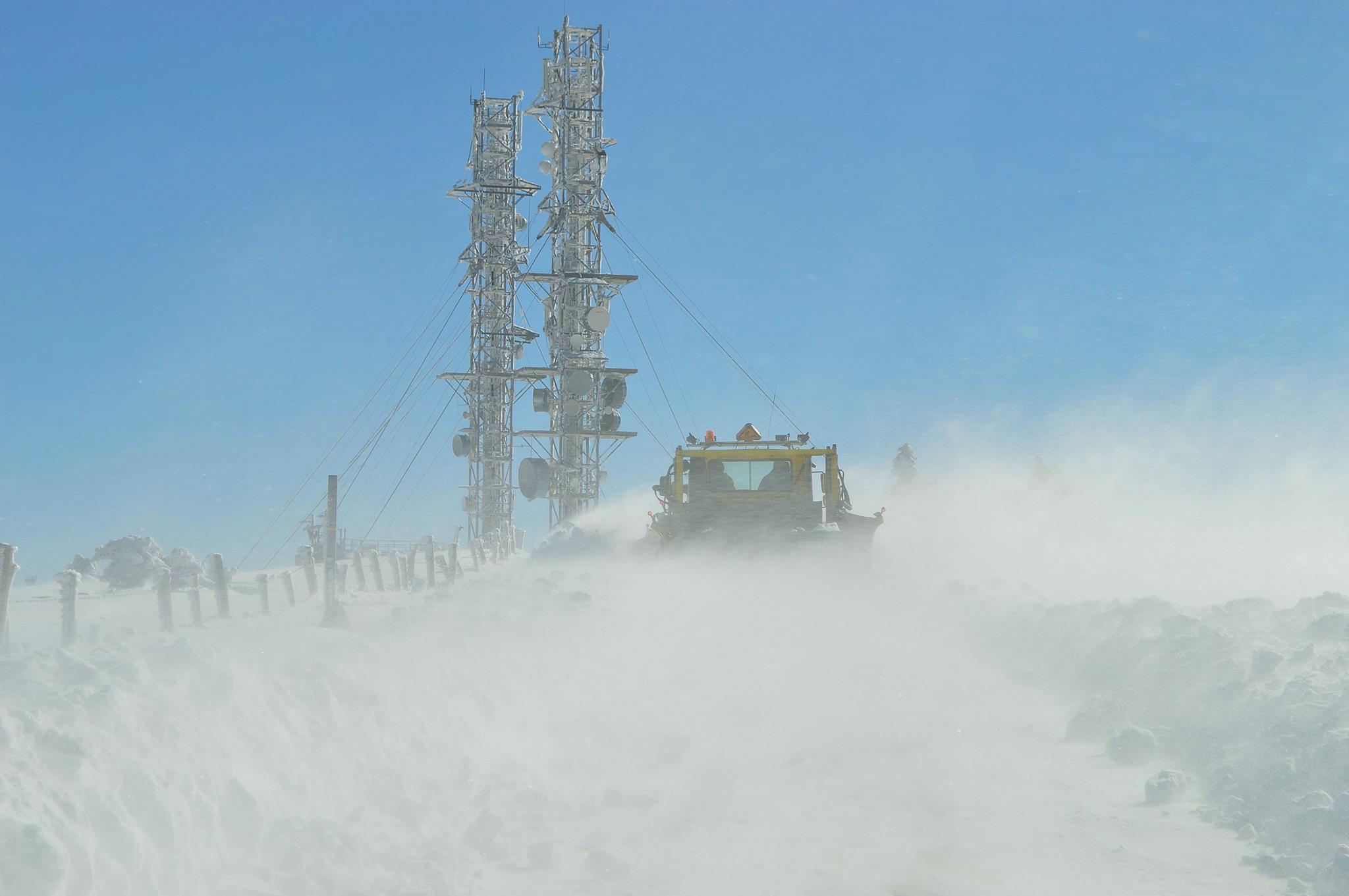
Tour de France regular 1912m Mont Ventoux is thought of as the windiest place in France – Venteux means windy - but 1567m Mont Aigoual, on the other side of the A7 at Avignon in southern France, is where the highest wind speeds have been measured – 360kmh in 1966 – and where MeteoFrance keeps a monitoring station. Already today speeds of 135kmh have been reached, and that on not a particularly windy day. Aigoual is served by twisty roads from the A75 Millau Viaduct, 60km west, or Ales at 80km east. On a clear day, Mont Blanc in the Alps, the Mediterranean and Pyrenees are all visible. Be warned, like Ventoux, Aigoual’s roads are frequently closed by high winds (or indeed snow). Photo Mont Aigoual Facebook.

Tour de France regular 1912m Mont Ventoux is thought of as the windiest place in France – Venteux means windy – but 1567m Mont Aigoual, almost due west, on the other side of the A7 past Avignon, is where the highest wind speeds have been measured – 360kmh in 1966 – and where MeteoFrance keeps a monitoring station. Already today speeds of 143kmh have been seen, and this is not a particularly windy day. Aigoual is served by twisty roads from the A75 Millau Viaduct, 60km west, or Ales at 80km east. On a clear day, Mont Blanc in the Alps, the Mediterranean and Pyrenees are all visible. However, be warned – like Ventoux, Aigoual’s roads are frequently closed by high winds (or indeed snow). Photo Mont Aigoual Facebook.

.

roundup: ITALY. The long-discussed bridge to Sicily will carry both cars and trains said Premier Matteo Renzi today reports ANSA.it. A junior coalition party tried to insist last November the Messina Strait crossing – also called Ponte Stretto – should be rail only. The outstanding question is when: as previously, Renzi insists the bridge will only be built when surrounding infrastructure is up to scratch. He called some roads in the region ‘indecent’. The government is spending €2 billion on upgrades in Sicily over the next five years only after which the bridge will be addressed. PARIS. Conflicting info over the past few days over the upcoming old vehicle ban in central Paris which, as of 1 July, applies to petrol vehicles registered before 1997 (and to diesel before 2001) on pain of a €35 fine. A Change.org petition this week from ‘Free Wheels’ (French only) wants Mayor Anne Hidalgo to exclude classic cars. However, News d’Anciennes insists it has already obtained an exemption for vehicles more than 30 years old (see also Jalopnik). An application to allow ‘young-timers’ between 20-30 years has apparently already been turned down. Meanwhile, the bus + taxi lane inbound on the A1 has been reinstated reports Le Parisien. Suspended last June during legal action by chauffeur’s association VTC, the flipside to the new flat rate deal for journeys to Charles de Gaulle airport is that taxis will have the dedicated lane reopened. It operates between 06:00-10:30 on the left (fast) lane for 5km between Courneuve and Stade de France, as per a red X overhead lane closure and roadside signs. The fine is €135, but it’s not clear yet how soon it will be applied. Interestingly, authorities say the system is flexible and can be switched off immediately in the case of major congestion. VTC says it will appeal again. FINLAND. The deputy police chief for Eastern Finland was fined €3740 for speeding today reports Finland Times. Jarmo Nykänen was caught at 132kmh in an 80kmh zone in Juva before Christmas. The penalties for non-custodial sentences are based on an offender’s daily disposable income – a complicated calculation – called a ‘day-fine’, multiplied by the severity of the crime according to gubbins supplied by The Guardian. The multimillionaire fined £39,000 last year for 103kmh in an 80kmh zone was assessed to pay eight day-fines of €6750 each; Nykänen paid 55 day-fines of €68.

.