Ultra modern museums: Behrensbau, Frankfurt

Expressionism: an artistic movement originating in early twentieth century Germany – inspired by paintings like Edvard Munch’s The Scream – emphasising feeling and mood over objective reality.

Part one of our tour of five ultra modern museums starts near Frankfurt, at Peter Behrens’ literally awe inspiring Technical Administration Building.

Very few people have ever seen it because it’s only open for twelve hours each year.

Behrensbua: not your average office block.© 2000 Infraserv GmbH & Co. Höchst KG

Behrensbau: not your average office block.
© 2000 Infraserv GmbH & Co. Höchst KG

Adding colour to Fritz Lang’s monochrome vision

Fritz Lang’s classic 1926 Expressionist film Metropolis was intended as a grim warning. It turned out to be an eerily accurate prophesy.

It showed a future where industrialists lived in magnificently sinister tower blocks while the workers slaved underground.

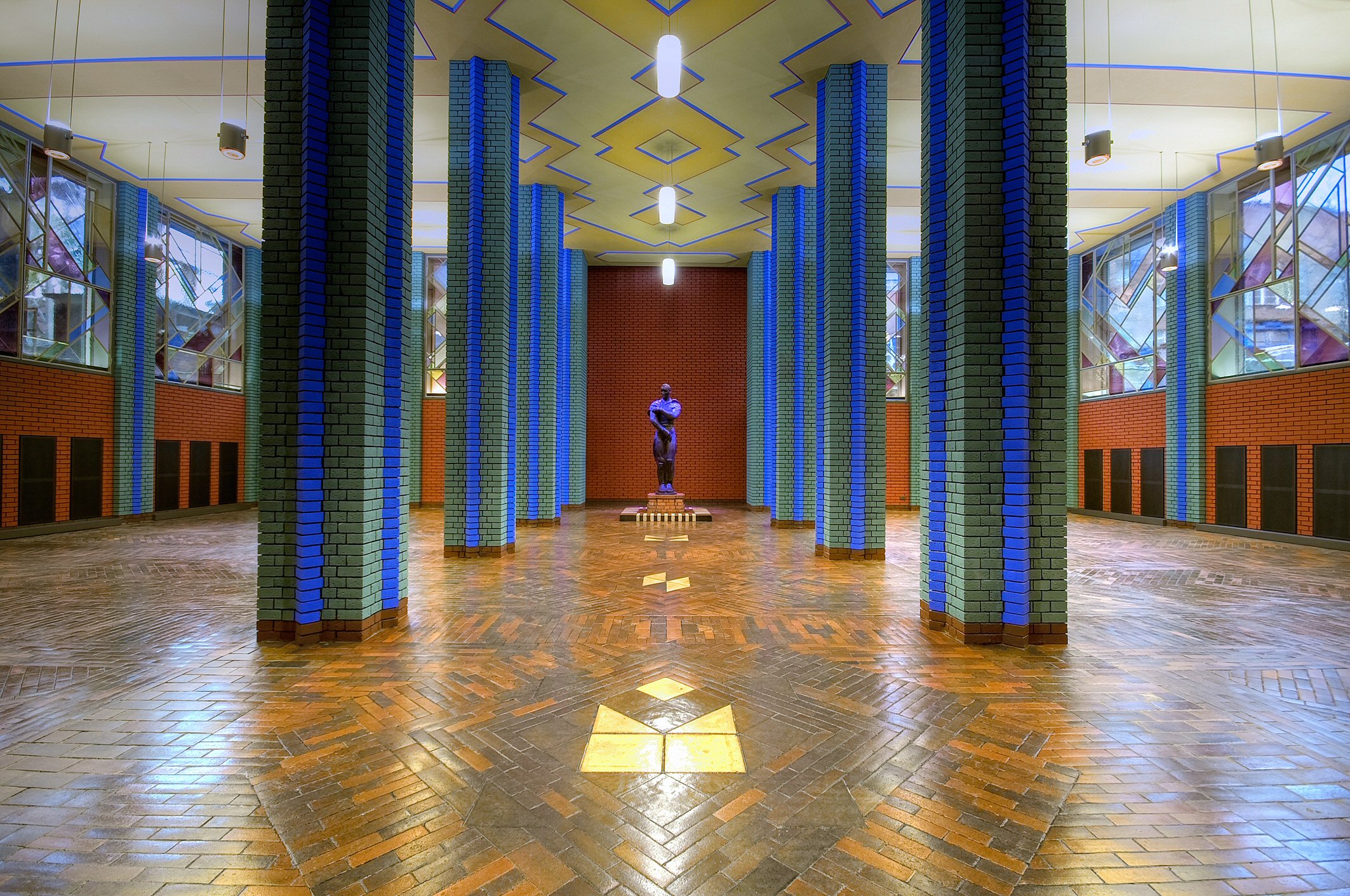
Peter Behrens’ 1924 Technical Administration Building could be a set from that film. Built for the Hoechst chemical company, ‘Behrensbau’ is a cathedral of bricks picked out in disquieting, odd colours. It unambiguously channels the overwhelming power of big business.

A year after its completion, Hoechst became part of IG Farben, the notorious chemical conglomerate that made the Zyklon B poison gas used in the Holocaust and employed slave labour, often in underground factories.
© 2000 Infraserv GmbH & Co. Höchst KG

© 2000 Infraserv GmbH & Co. Höchst KG

Highly Restricted Access

Hoechst had nothing to do with poison gas but according to the company history, 9,000 ‘forced workers’ were employed on the site which straddles the Rhine, seven miles west of Frankfurt.

The strange colours evoke Hoechst’s origins as an industrial dye manufacturer.

Demerged from IG Farben at the end of the war, Hoechst is now part of pharmaceutical giant Sanofi-Avensis. The building, fully restored in the last decade, these days houses the management of the now 1,250 acre industrial park (which coincidentally celebrates its 150th anniversary this year).

Access is highly restricted. It’s only open four Friday afternoons a year, for three one hour guided tours (click here, German only). You cannot book in advance or take any photos. Just turn up at the east gate (Tor Ost) ten minutes before the off. It is however free to see.

We lucked in with a friend who worked there. It took a few days to get over the immediate shock. This year it opens March 22, June 28, September 27 and December 13.

© 2000 Infraserv GmbH & Co. Höchst KG

© 2000 Infraserv GmbH & Co. Höchst KG

A Complicated Legacy

Peter Behrens was the first industrial designer. In 1907 he conceived the entire corporate identity of electrical manufacturer AEG, from the logo to the factory buildings, pulling it all together into the first brand.

Behrensbau clocktower and bridge were also incorporated into the stylised ‘h’ in Hoechst’s own logo.

Behren’s employed some of the future greats of 20th century architecture including Walter Gropius (founder of the Bauhaus), Mies van der Rohe and Le Corbusier. As such he is seen as the early driving force behind the International Style, the starkly functionalist ‘machines for living’ using lavish, luxury materials.

His legacy though has been tarnished by a too close association with the Nazi Party. He joined in Austria in 1934 when it was still illegal – despite designing the Zilina Synagogue in Slovakia in 1928 – and was working on a monumental headquarters for AEG along Albert Speer’s infamous three mile long Berlin North-South Axis when he died in 1940.

Considering when and where they were built a spooky number of Behrens’ buildings are still standing. Behrensbau was only mildly damaged in an RAF raid in September 1944. The Zilina Synangogue is undergoing a protracted restoration. Incredibly, his 1907 AEG Turbine Hall in Moabit, a western suburb of Berlin, is still used for its original purpose – as is the only British example of his work, a 1926 family house on the A4500 Wellingborough Road in Northampton, ‘New Ways’.

Frankfut © DriveEurope

Frankfurt © DriveEurope

Sweet dreams

Frankfurt has an impressive modern cityscape and some well restored parts of the old town but it’s not really a city break kind of place.

Not far outside, to the north and west, is the hilly Taunus district, one of the richest parts of Germany. It’s a haven for the healthy and wealthy with discreet, private clinics tucked away in the heavily wooded hillsides.

There are a few very grand hotels here too – the Schlosshotel Kronberg and the Kempinski Villa Rothschild – but the one with this view, and marginally cheaper, is the Falkenstein Grand Kempinski in Konigstein.

Rooms with the city view start at around €270 B&B weekends low season…
© DriveEurope

© DriveEurope

To – or, in this case, from – Frankfurt

Our friend insisted on a long, late, lavish breakfast while we shifted in our seats because we’ve got to drive to Calais. Don’t be silly he said, it’ll only take you a few hours.

It’s another reminder that our continental colleagues have a different conception of distance than we do.

For him, the 370 mile zig zag almost due west to Calais was a morning’s work, mainly conducted at 140mph with a frustrating latter half, through Belgium, where he’d have to peg it back to a hundred.

Crossing the low Eiffel Mountains the scenery is not amazing though you pass within a few miles of the Nurburgring race track. If you have the time, a great scenic drive is down the Rhine Valley from Cologne to Koblenz. The Ehrenbreitstein Fortress at Koblenz is a spectacular lunch spot, overlooking – from 120m – ‘Deutsches Eck’ (German Corner) the confluence of the Rhine and Moselle.

Even for us, more comfortable at 90mph+, the trip – via Koblenz, Aachen and Brussels – took an hour less than the five and a half hours it said on the trip planner. These days we’d save thirty miles by catching the boat from Dunkirk. It only takes an extra thirty minutes to cross back to Dover and the fare is the same (via DFDS).

Next: the Porsche Museum in Stuttgart, a mercifully less imposing example of German corporate architecture, via the Odenwald and Heidelberg.
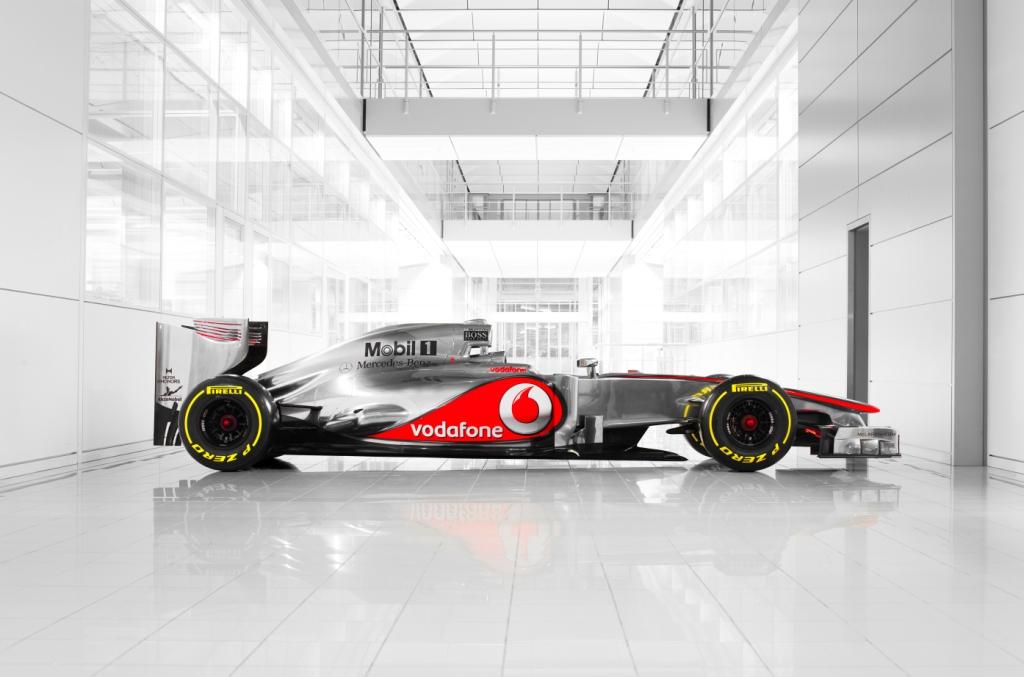
Can McLaren pull it off?

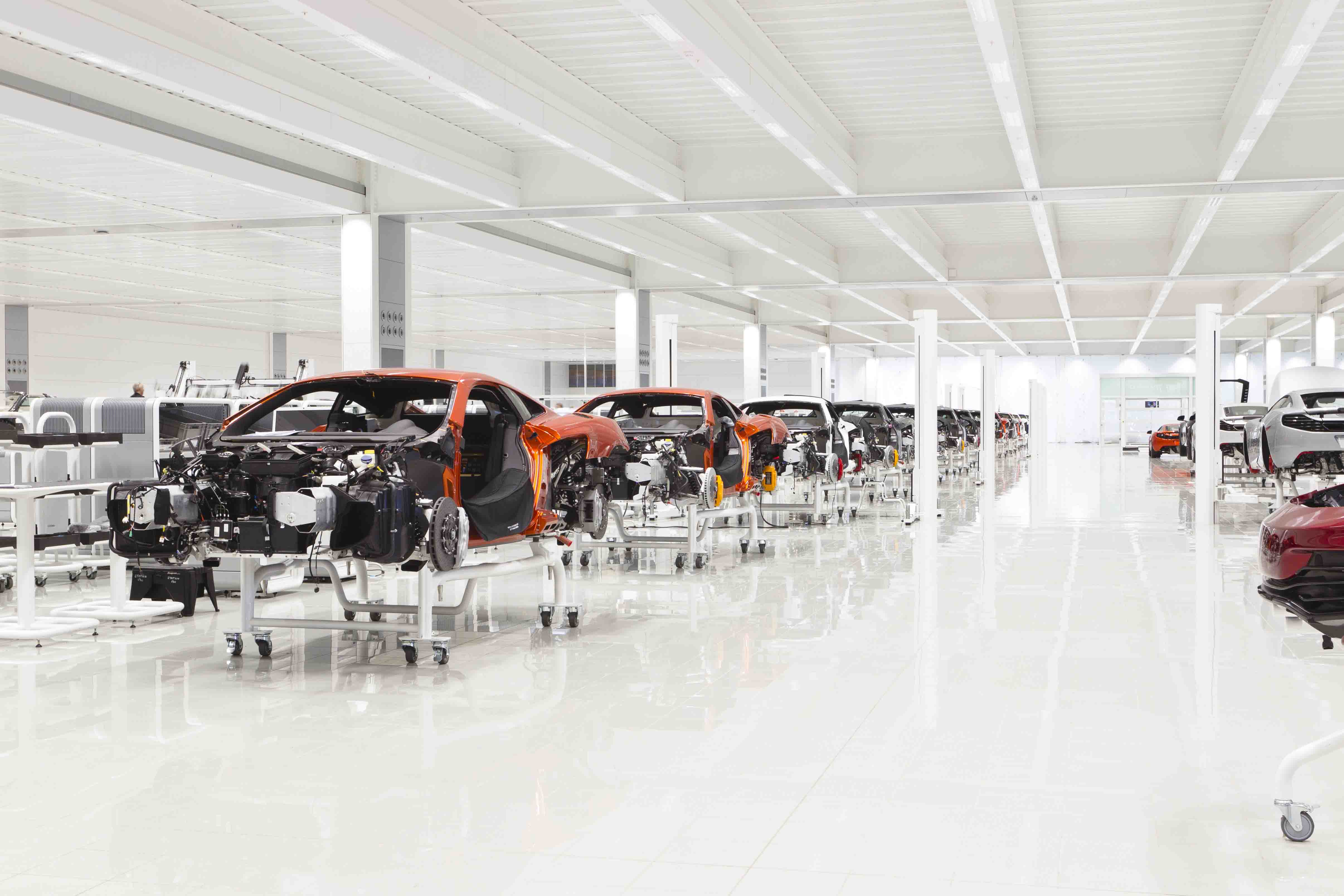
Trouble at the Formula One team and birthing anxieties at the big money road car business see McLaren fans on the edge of their seats.

Instead of updating last year's winning car the team opted for a rdical overhaul and seem to be paying the price.

Instead of updating 2012’s winning car the team are paying the price for starting again from scratch

This month’s launch of the P1 hypercar in Geneva contrasted painfully with the F1 team’s performance at last week’s Australian Grand Prix.

Instead of a straightforward update of its useful 2012 contender, McLaren designed a radical all-new car, trailed around in the race and finished either side of the points.

To add insult to injury, the electronic control units designed and manufactured by a McLaren subsidiary – and used by all of the formula one teams – proved inadequate for the job.

$75m title sponsor Vodafone had just already announced it was moving on, only months after the loss of superstar driver Lewis Hamilton and technical director Paddy Lowe to Mercedes.

There are still doubts over whether lead driver Jenson Button is capable of driving the team forward week after week. Bigger question marks hang over new recruit Sergio Perez, openly rumoured to have been signed purely because he’s backed by Carlos Slim, the world’s richest man.

Force India’s Paul di Resta hinted darkly recently he missed out on the McLaren seat because the team needed a pay driver.

While McLaren has won 182 races in its 50 year history, it’s painfully apparent it isn’t so good at world championships: no constructor’s trophies since 1998 and only three drivers titles in the time since.

Manufacturing cars is a notorious money pit

Manufacturing cars is notoriously expensive

Despite the monolith image, it’s all too easy to imagine why McLaren could be feeling the pinch.

Anybody who grew up in 1970s Britain knows exactly what money pits car companies can be. They certainly haven’t got any cheaper to make since.

The size of the high end sports car market and its vulnerability to recession make the hair stand on end while McLaren’s last foray into the business resulted in a loss on every car made.

The company admits it hasn’t sold all of the P1s despite limiting production to 375 cars. And it’s widely considered to have lost the PR war with Ferrari by too heavily trailing the P1 in advance.

That P1 is left hand drive only because the money was better spent on R&D rubs in the point the company is not awash with cash like it used to be.

Even the otherwise tremendously exciting news the company is developing an entry level car to debut in 2015 adds to the anxiety the McLaren group could easily overstretch itself.

Buyers have not yet been found for all 375 McLaren P1s.

Buyers have not yet been found for all 375 McLaren P1s.

Yesterday’s news that McLaren Automotive sold 1,400 cars last year therefore comes as a huge relief.

Overall losses were cut to around £12m in 2012 from £69m the year before. The company expects to be in profit next year.

Formula One writer Joe Saward was right to point out this morning that the team’s title sponsorship has only come up twice since 1974 and that some big companies will look on it as a huge opportunity.

In a confident statement, McLaren says it will announce its new title sponsor on December 2nd 2013.

Ferrari’s Fernando Alonso showed last year a poor car in the early races is no bar to a later challenge for the championship. At the absolute least, team principal Martin Whitmarsh will be highly motivated.

It would be miraculous if starting a sports car company in the middle of a depression didn’t put extraordinary stress on McLaren Group finance and management.

In a way, surely it’s all part of the fun for inveterate risk takers like overall boss Ron Dennis and business partner Mansour Ojjeh?

Meanwhile, it’s an encouraging sign that 2012 was a record year for arch competitors Porsche and Ferrari.

Dare we, should we, keep the faith?

Air quality: the back door to car bans?

2013 is the European Year of Air. The Commission has launched a crackdown on countries in breach of air pollution limits. There’s a long list of miscreants and an obvious culprit (or should that be scapegoat?)

.

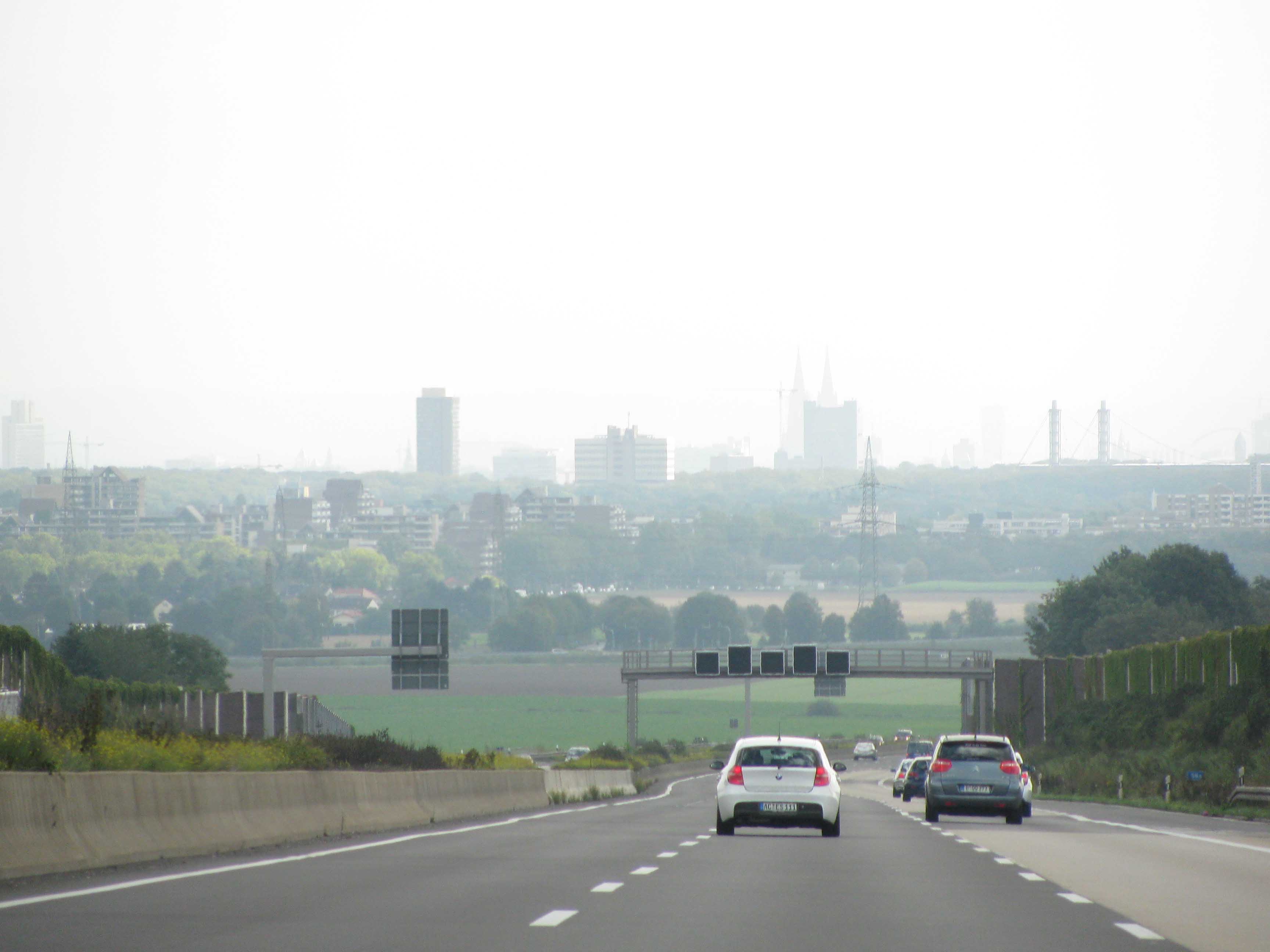
Approaching Cologne in September 2011, the twin spires of the city's famous cathedral visible through - we think - early morning haze.

Dropping into Cologne, September 2011, the twin spires of the city’s famous cathedral just visible through – we thought – early morning haze.

.

The French were first. On February 6, Ecology minister Delphine Batho announced the Paris ring road speed limit would be cut to 70kph and new Low Emission Zones (LEZ) introduced across the country.

Although she didn’t say so, this was all in direct response to a call made two weeks earlier – by the European Commissioner for Environment Janez Potocnik – for ‘a new approach to air quality’.

Immediate legal action would be taken against countries in serious breach of the rules he said – namely Bulgaria, Latvia and Slovenia – while another fourteen countries – France, Germany, Austria, Belgium, the Czech Republic, Greece, Spain, Italy, Hungary, Portugal, Poland, Romania, Sweden and Slovakia – were put on notice.

Germany followed France on February 28. Headlines in mass market daily Bild proclaimed that 33 cities were in breach of EU air quality rules and that drivers faced more restrictive LEZs, or even complete bans on cars in urban centres.

This, despite a significant ramping up of the country’s already extensive LEZ system on 1 January 2013 – the results of which are naturally yet to be determined – and an official report in 2012 which said that air quality by some measures was actually worse than before the LEZs were introduced in 2008. It blamed intensive farming, the weather, traffic and particularly the fashion for log burning fires.

.

Despite not being on the European Commission’s blacklist, the UK – or more precisely, London – still felt the need for action on air pollution.

In the midst of the French and German headlines – on 13 February – London mayor Boris Johnson make a shock announcement: the world’s first Ultra Low Emission Zone.

By 2020 he said, ‘My vision is a central zone where almost all the vehicles running during working hours are either zero or low emission. This would deliver incredible benefits in air quality and stimulate the delivery and mass use of low emission technology.’ (London has operated an LEZ for many years though it hasn’t applied to passenger cars.)

Read the small print however, and the mayor’s announcement is actually a masterpiece of ifs and maybes: ‘[The mayor] has asked Transport for London to prepare plans to look at introducing a scheme that would aim to ensure all vehicles driving in the centre of the capital during working hours would be zero or low emission, and the feasibility of introducing such a scheme from 2020.’

The press release also makes clear however that the current LEZ has not reduced at least one pollutant as much as hoped: ‘It has emerged that Euro vehicle standards have not actually reduced NOx emissions for vehicles operating in urban environments to the level that was forecast.’

Where next?

France says the Peripherique speed limits will be reduced before the summer, and that it will publish plans for more LEZs by the end of 2013. We’re still waiting to hear exactly what Germany will do, or the other twelve countries in the Commission’s sights.

It’s inevitable they will have to announce restrictions on cars in major towns and cities. Can air quality-driven Low Emission Zones succeed where controversial Congestion Charge Zones have so far failed?

.

Loo roll Austria

Two thousand people use an Austrian service station’s toilets each day. Collection plates withdrawn. State owned loos still free.

State owned ASFINAG rest stop toilets will still be free.

State owned ASFINAG rest stop toilets will still be free.

The format is by now well established in Europe. At service stations in Germany, Belgium, Denmark and the Netherlands, customers pay 50c to use the toilet then redeem the ticket in the shop or café.

So ‘successful’ has the idea become that it is being adopted across the rest of the Continent. They system is under consideration in Norway, Czech Republic, Poland, Hungary, Switzerland and Spain and is about to be introduced in Austria.

The first twelve of Austria’s 90 motorway service stations will be converted by the end of April with the remainder to follow this year.

The toilets in the 36 ‘quick stop’ rest areas owned by ASFINAG, the state road operator, however will continue to be free.

The Austrian system is slightly more user friendly than other countries. The voucher is fully redeemable, even against fuel. Up to five vouchers can be used per transaction, they are valid for one year and can be used at any Austrian service station, regardless of brand. Collection plates for toilet staff will be removed.

Children under ten and the disabled can use the toilets for free.

The authorities say 2,000 people use the toilets at each service station per day costing €100,000 a year.

We also hear unconfirmed rumours the price in Germany will rise to 70c, only 50c of which will be redeemed, and not for fuel.

Bulgaria. Roads go-ahead despite political instability

Trakia: east west motorway linking Sofia to the Black Sea coast finished for the summer.

Struma: north south 100 mile E79 Sofia-Greece border gets go ahead with help from the EU.

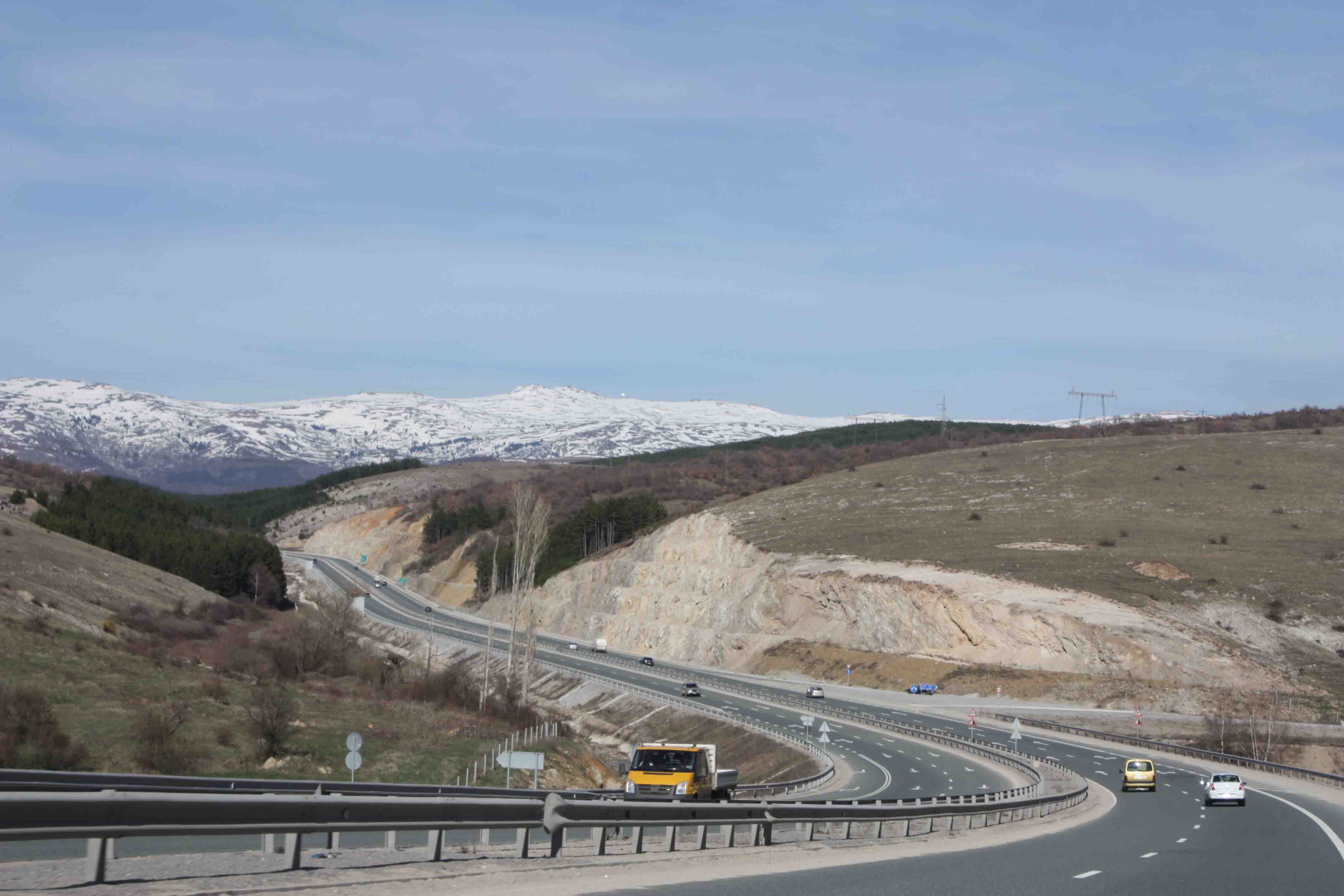
The Trakia Highway near Nova Zagora. Photo © Bikerboy-93, Wikicommons licence.

The Trakia Highway near Nova Zagora. Photo © Bikerboy-93, Wikicommons licence.

Out-going ministers insist construction of Bulgaria’s motorway network will continue despite the political upheaval in recent weeks.

The final parts of the Trakia Highway, from Sofia (map) to the Black Sea at Burgas – 225 miles – opens at the end of May. The final 20 mile section is nearing completion. A link road to the Hemus Highway into Sofia should be ready by early June.

Trakia will allow tourists a straight run east-west to and from the coast. Of more strategic importance is the north-south Struma highway from Sofia to the Greece border.

A 10 mile section from Pernik, south west of Sofia, is already in use. The remainder, about 90 miles, has been split into four separate ‘lots’, some already under construction.

The Struma highway heading north near Sofia. Photo © Apostoloff, wikicommons licence.

The Struma highway heading north near Sofia. Photo © Apostoloff, Wikicommons licence.

Lots 1,2 and 4 are funded, with contracts now signed. Lot 1, a 15 mile continuation of the existing road to Dupnitsa, is on course to finish at the end of this year.

Lot 2, twenty miles from Dupnitsa to Blagoevgrad, will open in 2015. The final stretch, Lot 4, from Sandanski to the border will open March 2014.

The longest stretch, the forty mile Lot 3, Blagoevgrad-Sandanski, which crosses the stunning Kresna Gorge, is still in the planning and preparation stages.

In more good news it was announced last week that Google Street View is now available in Bulgaria. For background on the political crisis click here.

Parking in Amsterdam now €1,000/ month. Plus, big cars to pay more

The next generation of car park technology, testing in the Netherlands, will charge cars depending on their size. Fees are already shockingly expensive.

sdg jdjgj jfjjfgjfg

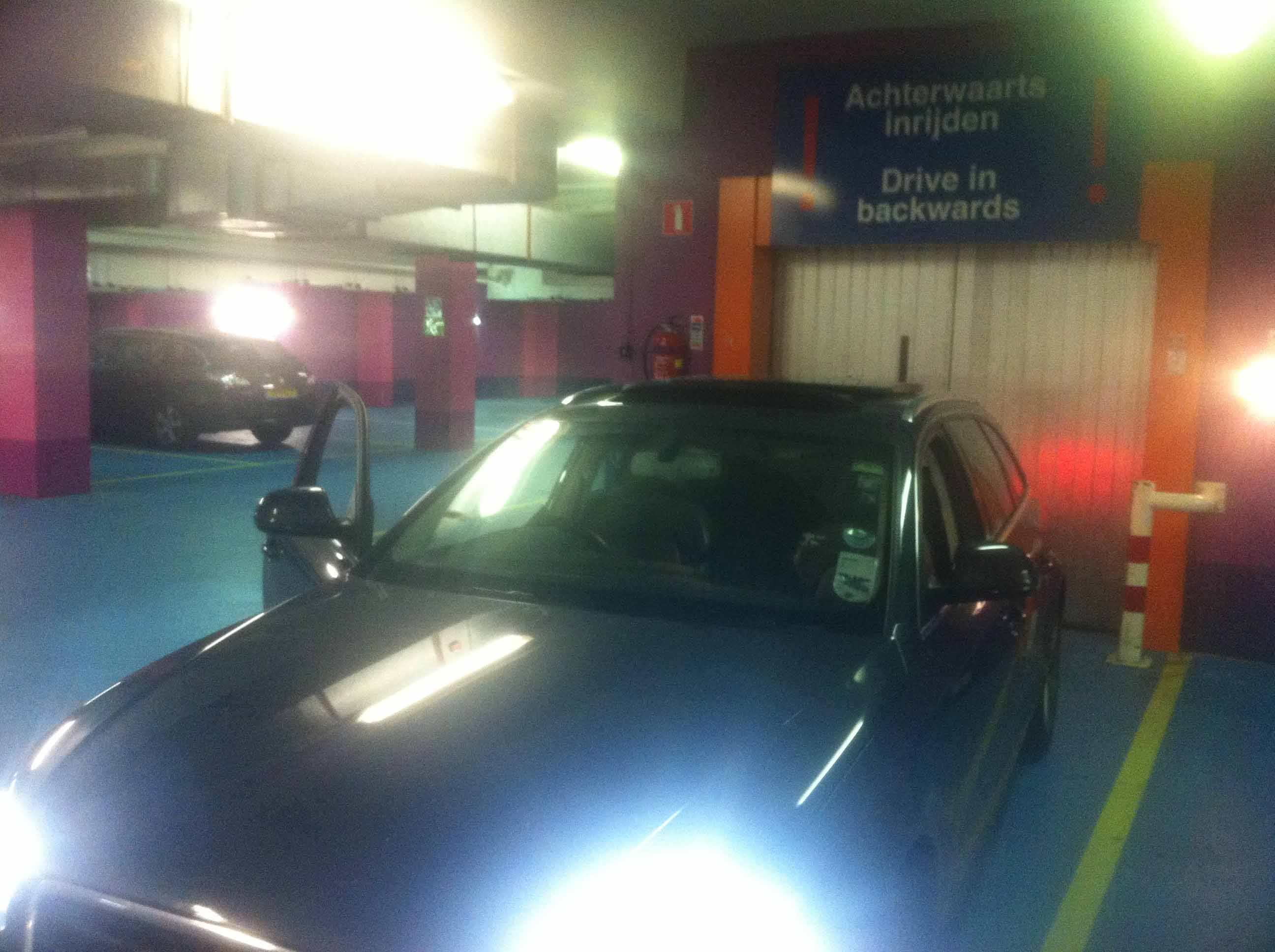
Early morning driving test. Reversing into the ultra tight car lift at Geelvinck Parking in central Amsterdam, Sept 2012. €45 per day.

Underground and multi-story car parking in the Netherlands is generally high quality – safe, secure, well lit and well organised. Even heated and/or air conditioned.

But it can be very expensive, in Amsterdam particularly, while the ante is being upped on a regular basis.

IT specialist TKH Group from Enschede starts trials this year of new system using Number Plate Recognition Cameras (NPR) to charge cars according to their size.

Bosses say the new tech will be widely available within three years. Similar systems are already proven in America.

There is no word yet on how the system will cope with foreign registered vehicles.

You see lots of nice cars parked up in Amsterdam, probably because their owners are the only ones who can afford it.

You see lots of nice cars parked up in Amsterdam, probably because their owners are the only ones who can afford it.

Meanwhile a survey by a Dutch retail association found average parking fees across the country, already expensive even by UK standards, rose by 9% last year.

Charges at The Plaza garage in Rotterdam doubled to a maximum daily rate of €27.

That is good value compared to Amsterdam. Last September we paid €45 per day at Geelvinck Parking in the city centre. The same ticket is now €48.

Monthly parking fees during office hours in central Amsterdam can reach €700. Permanent parking in the central ring is now nearly €1000 per month.

Parking EVs

Q-Park in The Hague has installed the first fast charger for electric vehicles in a car park in Holland (possibly Europe). Via the charger, EVs can get 80% of their full charge in 15-30 minutes. Nissan Leaf owners can charge for free until May.

Speeding

Average speed traps caught twice the number of motorists in 2012 as 2011, nearly 15% of all violations: 1.4m out of 9.6m fines in total. The main culprits were the north-south A2/E35 Amsterdam-Maastricht between Holendrecht and Maarssen south of the capital, and the A12/E25 near Utrecht. The overall number of traffic fines however fell. In January reports said traffic officers were reluctant to impose fines they thought too high.

New Swiss tourist vignette still bad value for visiting drivers. Maybe.

AN UPDATED ROUNDUP OF EVERYTHING YOU NEED TO KNOW ABOUT THE SWISS MOTORWAY VIGNETTE HAS BEEN POSTED HERE.

.

Terrified their reserve fund for road maintenance will dip below 1,000,000,000,000CHF, the Swiss authorities will nearly quadruple the price of the annual motorway sticker.

The vignette costs 40CHF (€33.33 – you can pay in euros) and can be bought from border staff. For how to avoid buying the Vignette in Switzerland see below.

With the referendum on the price rise due tomorrow (24 November 2013) an updated version of this story can be seen here.

.

The chargeable Swiss rad netork. In 2015 more roads will be taken into the scheme.

The chargeable Swiss road network. In 2015 more roads will be taken into the scheme.

.

In 2016 the cost of using Switzerland’s motorways each year rises from 40CHF (€33, £28) to 100CHF (€80, £70).

A new short stay vignette will be available for the first time, a two month sticker costing 40CHF.

The windscreen sticker allows access to the national road network, motorways and expressways. Motorists caught without the sticker face a fine of 200CHF (€160, £140) plus the cost of a vignette.

The controversial* increase, previously defeated in December, has been brewing for some time. It is the first increase in twenty years. Like the UK and Germany, Switzerland has been considering how to put road finance on a sustainable footing as it improves and expands the network.

.

You don't have to buy the motorway vignette to drive in Switzerland. Even the major motorway border points have backstreet detours. If you get caught in the vignette queue, in our experience border staff are happy to direct you. Photo: The Swiss suburban border point at Basel, May 2012. Now unused since Switzerland joined the Schengen Area.

You don’t have to buy the motorway vignette to drive in Switzerland, it only applies to the national road network. Even the major motorway border points have backstreet detours. If you get caught in the vignette queue, in our experience border staff are happy to redirect you. Photo: The Swiss suburban border point at Basel, May 2012. Now unused since Switzerland joined the Schengen Area.

.

Crucially, the price increase is dependent on the national roads reserve fund falling below one billion Swiss francs, though nobody expects that not to happen.

While the new short stay vignette means tourists escape the rise, previously the cost could be ameliorated over several trips. Two trips however will still be cheaper than the annual sticker.

The annual vignette is valid from the beginning of December to the end of January the year after – fourteen months in total. It can be bought at the border or in advance from Swiss Railways (no discount!).

.

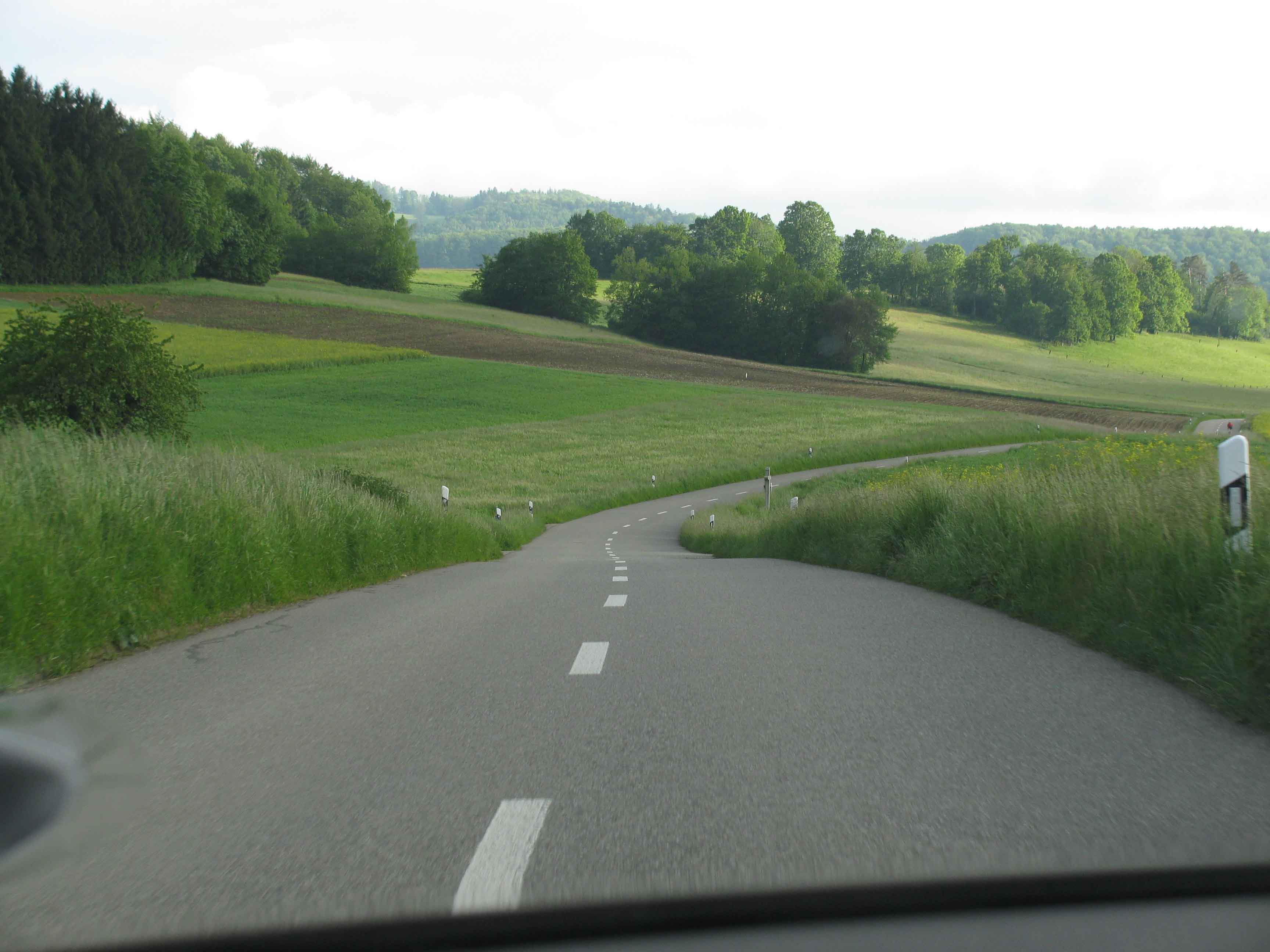
Why drive on the motorways when the back roads are so pretty? Photo: literally ten minutes from the centre of Basel towards Reinach.

Why drive on the motorways when the back roads are so pretty? Photo: literally ten minutes from the centre of Basel towards Reinach.

.

Avoiding the Vignette

Only drivers using Swiss motorways need pay the vignette. It does not apply to single lane main roads and some dual carriageways (see above). A trip across Switzerland by back roads is highly recommended.

Switzerland as a country is also avoidable. Crossing France – to Italy for example – is equally expensive because of pay as you go road tolls, about €80 each way.

Trips to Italy and south east Europe via Germany and Austria are only a bit longer. German motorways are free-at-the-point-of-use. Austrian tolls are relatively cheap.

.

* At the Brussels Road Pricing conference in December, the Swiss Roads Ministry admitted the vignette subsidises Swiss railways. A number of ambitious projects are underway, like the 35 mile Gotthard Base Tunnel opening in 2016. Because of this the Swiss road lobby is vehemently opposed, as are their German counterparts.

.

Cayman party preview.

Huge excitement as Porsche reveals the new Cayman to potential customers. But why stress the advantages of mid-engines to an audience of 911 owners?

967a

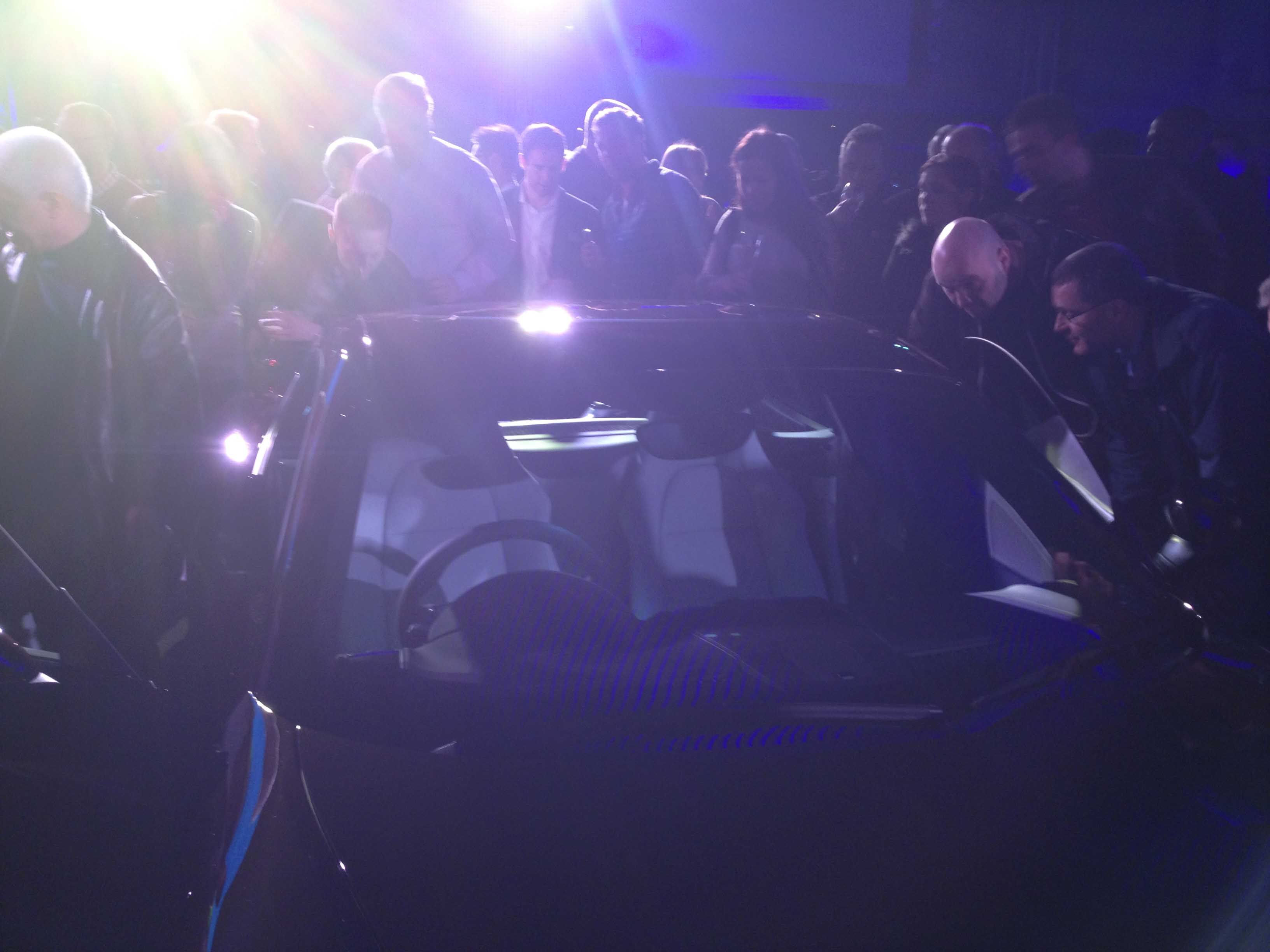
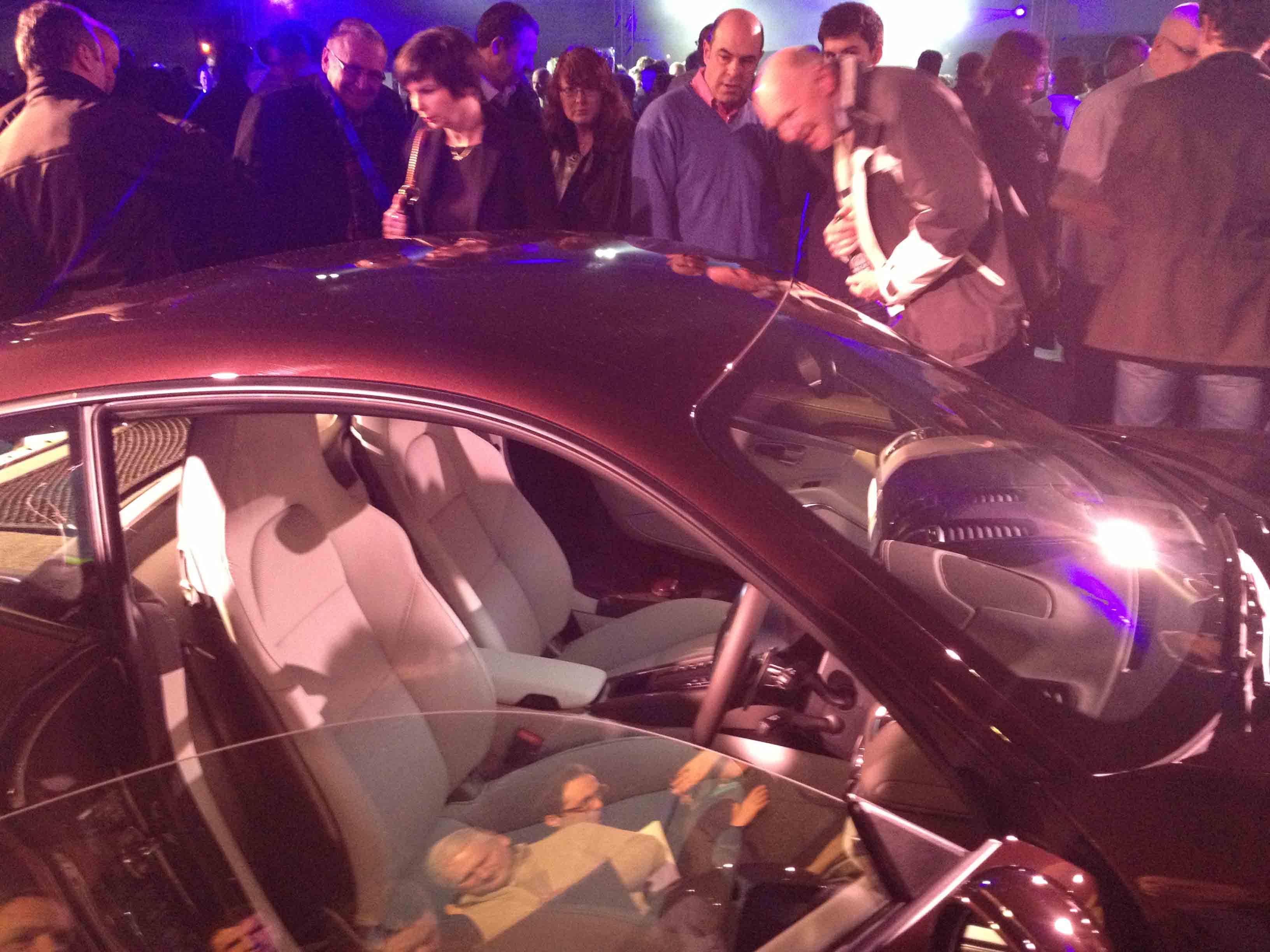
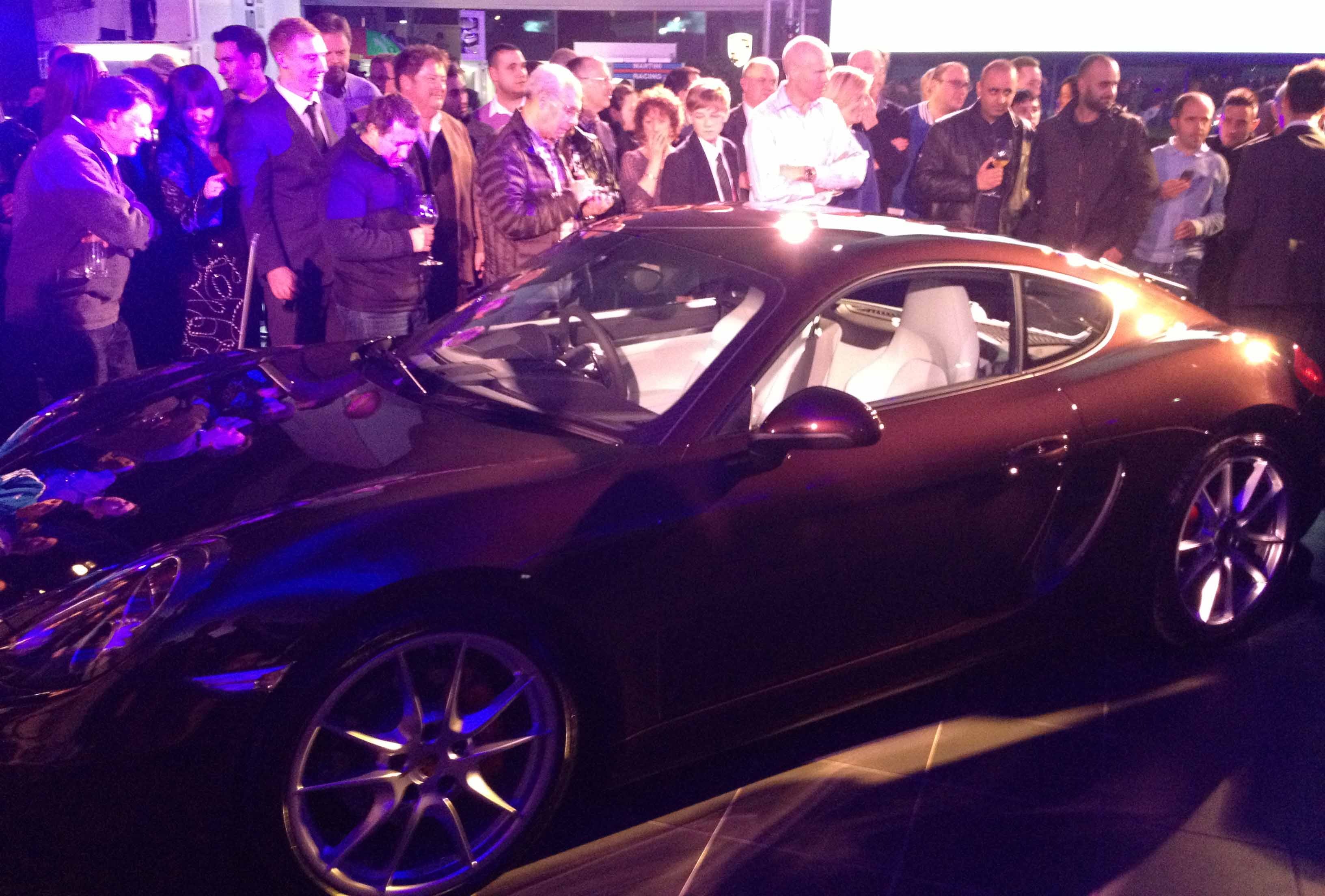
No, not the Geneva Motorshow. Porsche really pushed the boat out on Monday night. A laser light show, smoke machines, a cocktail bar, DJ, unlimited champagne (we think, very nice anyway) endless hot and cold hors d’oeuvres. Not forgetting a display of three famous competition cars including the 1970 Le Mans winning 917K. All for a customer preview of the new Cayman at its Hatfield dealership.

After historic footage of oversteering racing 911s, and a long speech on the benefits of the mid-engine configuration, the covers slipped off to reveal the car itself.

It’s quite big. Only four centimetres longer than the old one – a centimetre lower and 30kgs lighter – but the volume of metal has increased substantially. The back is concave where it used to be quite dramatically scooped out. Gone is the delicacy of the finely sculpted rear haunches. It’s more of a man’s car this time. We look forward to getting a clear view.

970a

When we say Porsche played footage of oversteering racing 911s we really mean it. There weren’t just a few shots of wild Porkers it was almost continuous, including a few spins.

The speech, by a chap from head office, really laboured the point about mid-engines – all the weight within the axles, easier to change direction, etc, etc. Given we didn’t see any Caymans in the car park, didn’t he realise – or care – that probably half of the audience owned a 911, Porsche’s rear-engined performance flagship?

But bearing in mind 911 customers have proven hardily immune to insults – the engineers would have killed it off years ago – maybe emphasising the new car’s engine location isn’t such a foolhardy strategy. Especially considering the Cayman’s likely competition.

Porsche 917K - Kurzheck - winner of the 1970 Le Mans 24 Hours, the race that provided the backdrop to Steve McQueen's film Le Mans. Driven by Hans Herrmann and Richard Attwood. Powered by a 580bhp 4.5 litre V12. Kurzheck means short tail.

Porsche 917K – Kurzheck – winner of the 1970 Le Mans 24 Hours, the race that provided the backdrop to Steve McQueen’s film Le Mans. Driven by Hans Herrmann and Richard Attwood. Powered by a 580bhp 4.5 litre V12. Kurzheck means short tail.

Jaguar claims to stake out the land between the Boxster/ Cayman and 911 with its new F-TYPE. Meanwhile, Pistonheads’ Richard Aucock writes convincingly about how the F-TYPE is aimed at the 911. But is Porsche seizing the initiative somewhat by pitching the Cayman full tilt at Jaguar’s unmistakably front-engined two-seater?

The list price of the Cayman S might be £48,783 but spec it with typical options – sports exhaust, PDK, gismos, wheels, electric seats, SatNav – and it costs over £60,000.

That’s bang on F-TYPE money. The six cylinder convertible infamously starts at £58,500.

The big question now is, will the still-unannounced F-TYPE coupe cost more or less than its drop top sibling?

965a

In an inversion of usual practice Porsche’s Cayman coupe costs £3,400 more than the convertible Boxster.

If the F-TYPE coupe is cheaper than its stablemate then it suddenly looks much better value. Most of the essential Porsche options are standard fit on the Jaguar (convertible, anyway).

Now there’s only the weight to worry about. The F-TYPE so far weighs a hefty 247kg more than the Cayman.

Even if the tin top F-TYPE is more expensive than the drop top it’s likely to be lighter. But by how much?

The Best Back Seats in the Business

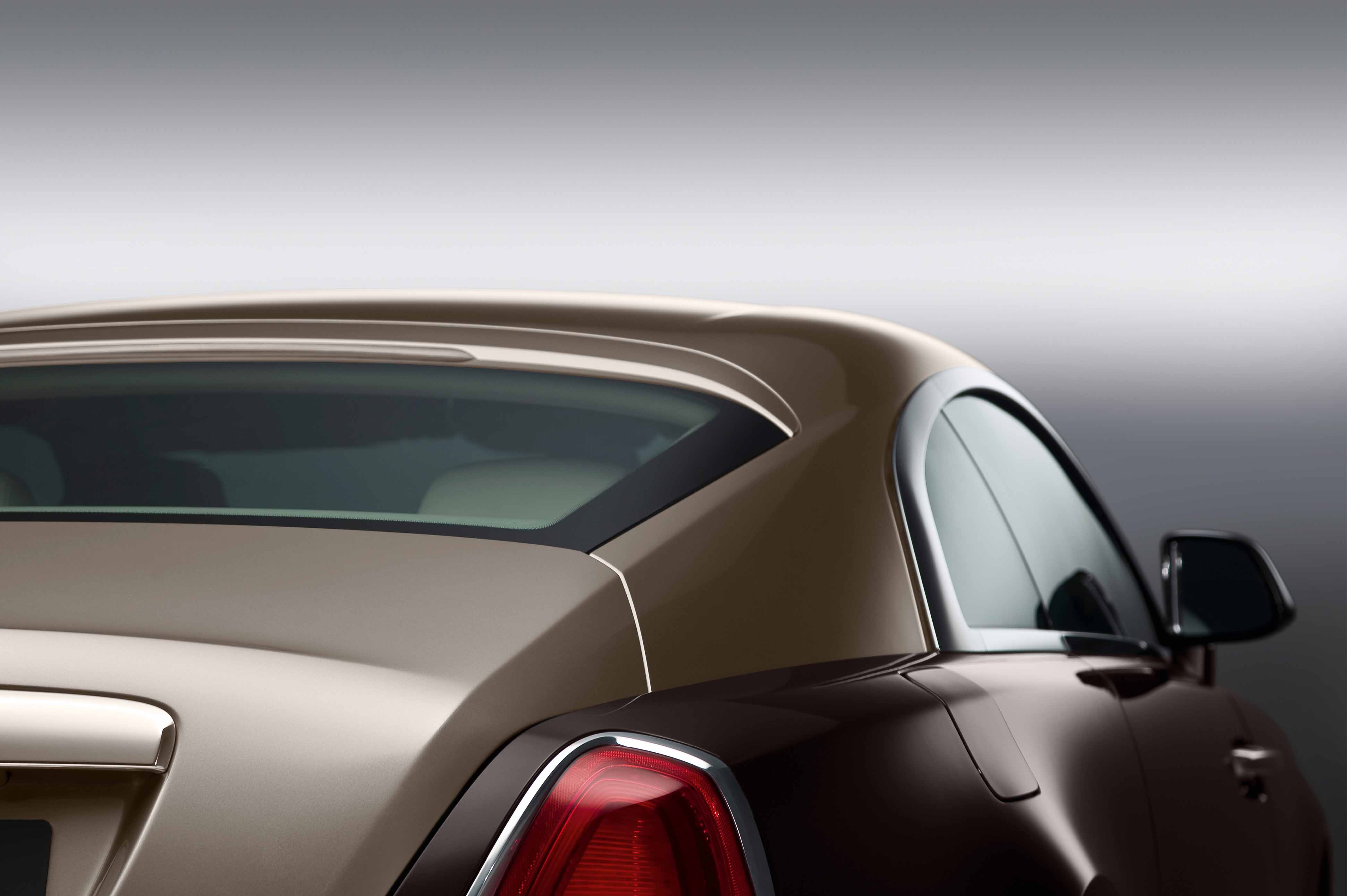
The striking new Rolls-Royce Wraith features some intriguing details, not least its wood panelling, inspired by the town in the South of France where Henry Royce lived and worked.

The house he built there still stands though sadly it hasn’t fared as well as his company. Amazingly it’s available for holidays.

.

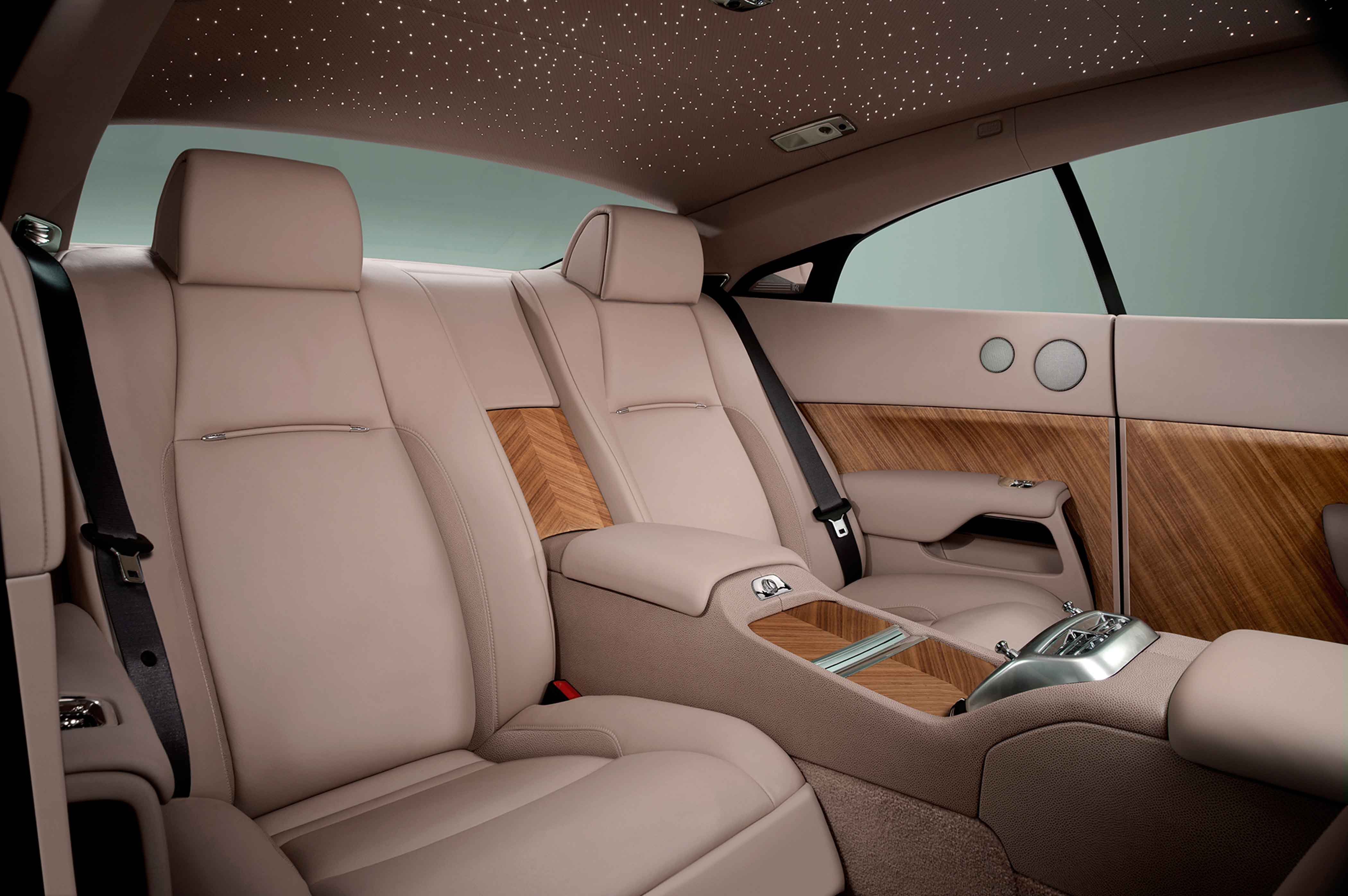
The ravishing rear seats of the Rolls-Royce Wraith, defined with striking new ‘Canadel Panelling’.

The ravishing rear seats of the Rolls-Royce Wraith, defined with ‘Canadel Panelling’.

This textured open pore - or open grain - wood is noted for its chatoyance, a shimmering 3D effect as light reflects off the fine ridges.

This textured open pore – or open grain – wood is noted for its chatoyance, a shimmering 3D effect as light reflects off the fine ridges.

Six woods are offered as standard. This is Royal Walnut - Juglans Regia - or English walnut, brought from Persia by the Romans. It’s best known as Common Walnut though we understand why they don’t call it that in the brochure.

Six woods are offered as standard. This is Royal Walnut – Juglans Regia – or English walnut, brought from Persia by the Romans. It’s best known as Common Walnut though we understand why they don’t call it that in the brochure.

The grain is angled at 55° along the centre line of the car to make the occupants feel like ‘an arrow sat within a bow waiting to be fired’.

The grain is angled at 55° along the centre line of the car to make the occupants feel, ‘like an arrow sat within a bow waiting to be fired’.

The name comes from Rayol-Le-Canadel, a town between Hyères and St Tropez on the western Côte d’Azur where Henry Royce lived and worked from 1910.

The name of the panelling comes from Rayol-Le-Canadel, a town between Hyères and St Tropez on the western Côte d’Azur where Henry Royce lived and worked from 1910.

In a shocking oversight, the massage and ventilation seats offered as an option for front seat passengers are not available in the rear.

(In a shocking oversight, the massage and ventilation seats offered as an option for front seat passengers are not available in the rear.)

.

Villa Mimosa, the house Henry Royce built at Rayol-le-Canadel in 1910, still stands today. Considering its provenance – and six bedrooms, an uninterrupted view of the bay – weekly rental from €1,500 sounds eminently reasonable.

.

Across the Sea of Marmara with Our Man in Istanbul.

Crossing the Channel is just the first step. To celebrate National Ferry Fortnight, we look at some of Europe’s 1,000 other ferry routes.

Consul General Leigh Turner generously allows DriveEurope to hitch a ride on a drive and sail from Izmir to Istanbul, partly on a British-owned ship.

We don’t know what car the Consul-General was driving. Security! This 1955 Cadillac Series 60 Special Fleetwood Sedan - Elvis’ original Pink Cadillac - is an exhibit at the Antique Car Museum at ESBAŞ, the Aegean Free Zone business park. Leigh Turner is also Director-General for Trade & Investment for Turkey, Central Asia and the South Caucasus.

We don’t know what the Consul-General drives. Security! This 1955 Cadillac Series 60 Special Fleetwood Sedan – Elvis’ original Pink Cadillac – is an exhibit at the Antique Car Museum at ESBAŞ, the Aegean Free Zone business park near Izmir. Leigh Turner is also Director-General for Trade & Investment for Turkey, Central Asia and the South Caucasus.

The Consul-General was in Ìzmìr for meetings about the city’s bid for the 2020 Expo World Fair. But also for the Edinburgh World Writers’ Conference and meetings with local students. Izmir’s Clock Tower, in the main Konak Square, was actually built by a French architect in 1901. The clock was a gift from German Emperor Wilhem II.

In Ìzmìr for meetings about the city’s bid for the 2020 Expo World Fair, Leigh Turner also took in the Edinburgh World Writers’ Conference and seminars with local students. Izmir is the most westerly city in Turkey, on the Aegean coast. The city’s Clock Tower, in the main Konak Square, was actually built by a French architect in 1901. The clock was a gift from German Emperor Wilhem II.

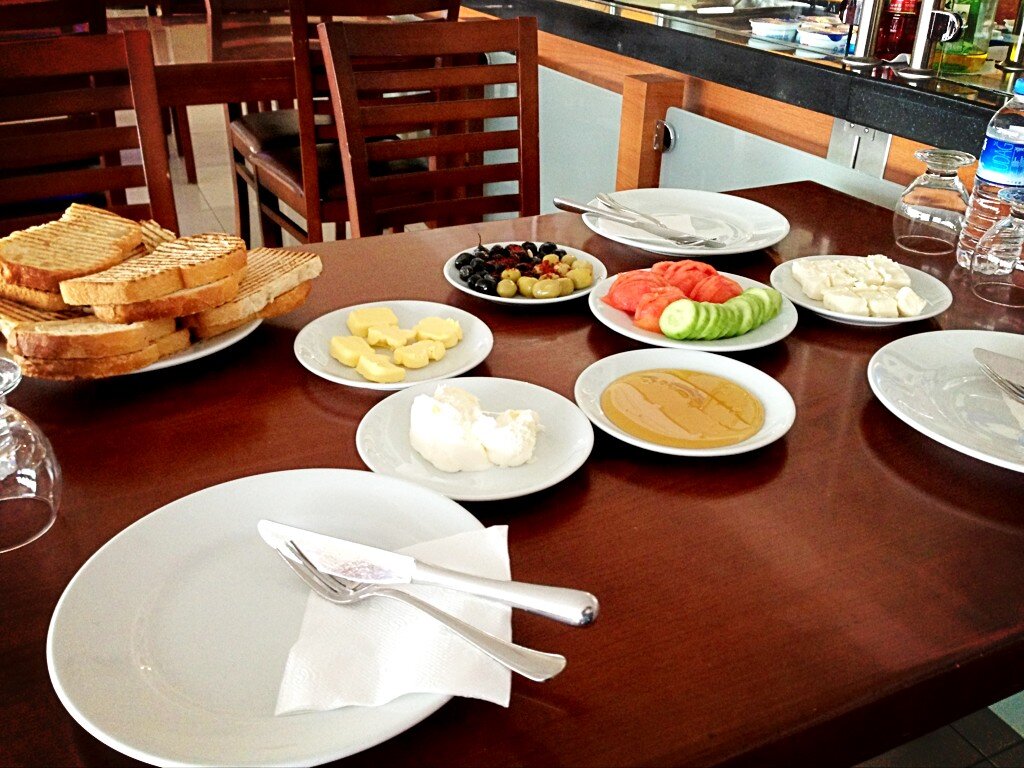
A 6am meant that by daybreak it was time for breakfast at a service station: olives, white cheese, salad, honey and kaymak (clotted cream).

After two days it’s time to head back to Istanbul. The first leg is a 250 mile cross country drive heading north east to the southern shore of the Sea of Marmara at Yalova. A 6am start means that by daybreak it’s time for (a service station) breakfast: olives, white cheese, salad, honey and kaymak (clotted cream).

Wind turbines near Balikesir after around 110 miles. One of Emperor Hadrian’s towns, and a holiday spot during the Byzantine Empire, Balikesir (pop. 330k) is also known as the ‘Anatolian Tiger’. Troy is only about 100 miles away, near the coast.

Wind turbines near Balikesir after around 110 miles. Founded by Hadrian, industry-oriented Balikesir (pop. 330k) is now the ‘Anatolian Tiger’. The region was also a holiday spot for Byzantine Emperors (what other recommendation do you need?) The excavated, ancient ruins of Troy are 100 miles south west, on the coast, via some very interesting-looking mountain roads.

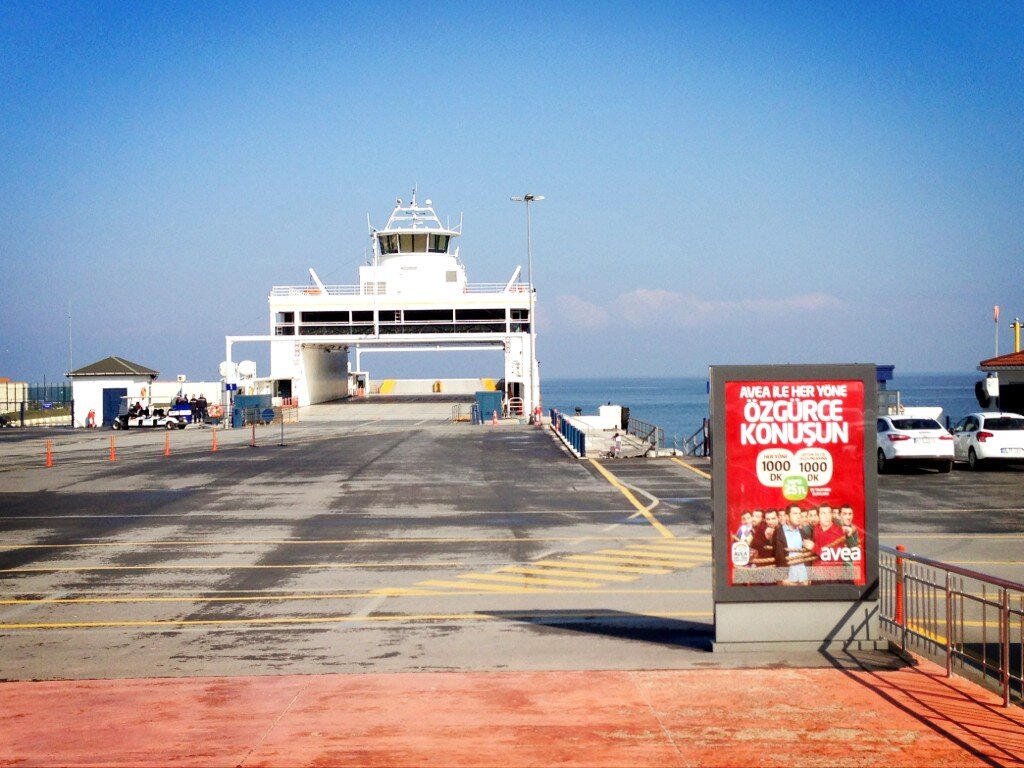
10:30am: where’s the ferry? Its there all right. Sea of Marmara ferries are often flat decked roll-on roll-off. The 250 mile trip, including the stop for breakfast, took four and a half hours (an hour quicker than the mappy.com route planner says). The road is mainly dual-carriageway but there’s a motorway planned.

10:30am, Yalova: where’s the ferry? It’s there all right. Sea of Marmara ferries are often flat decked roll-on roll-off. In total the drive took four and a half hours, an hour quicker than calculated by the mappy.com route planner. The road is mainly dual-carriageway but there’s a motorway planned. The speed limit is 68mph dual carriageway, 74mph motorway. The problem for UK drivers is insurance. Turkey is one of the few European countries for which insurers still issue a Green Card. It means you have the legal minimum cover in the UK and is the basis to negotiate insurance when you arrive. Look out for a TTOK office.

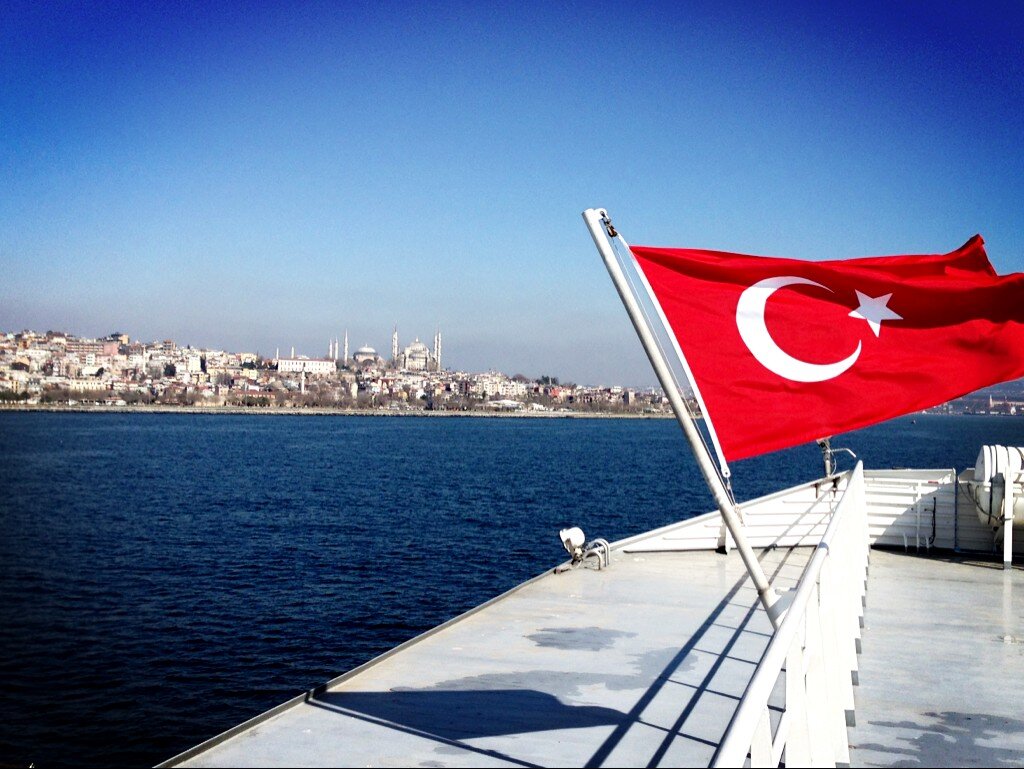
Steaming out of Yalova on ido ferry istanbul - ‘Yalova is my city,’ said Mustafa Kemal Atatürk, the founder of modern Turkey. It’s also well known for its hot springs.

Steaming out of Yalova. ‘Yalova is my city,’ said Mustafa Kemal Atatürk, the founder of modern Turkey, who retired there. It’s also well known for hot springs.

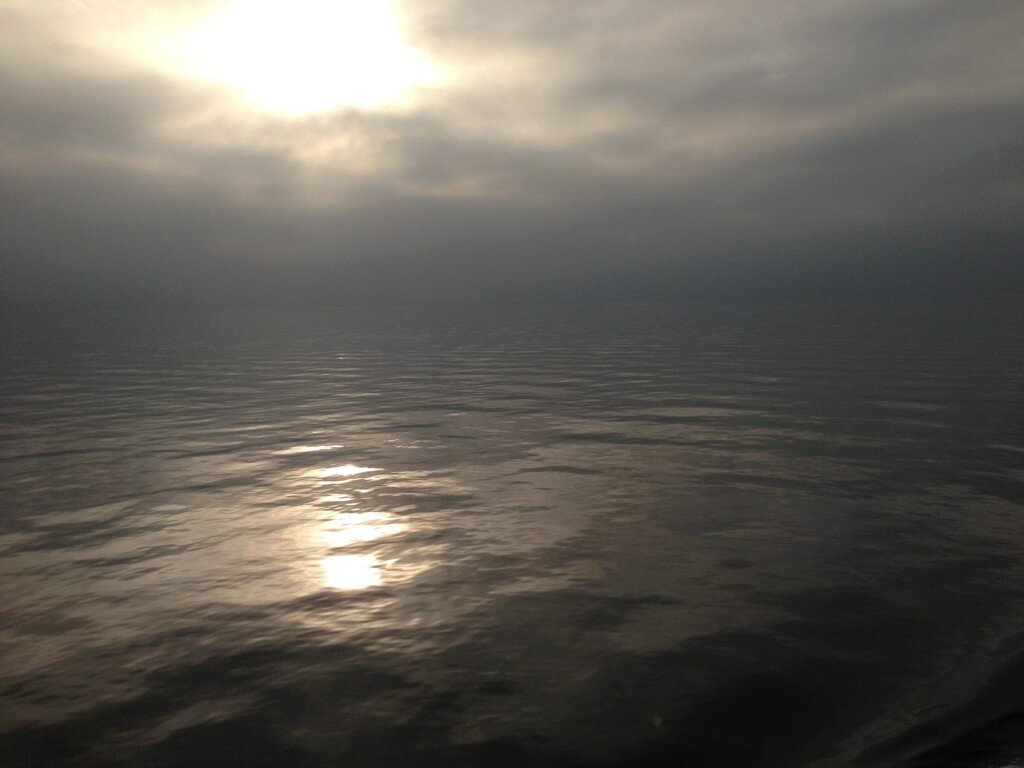
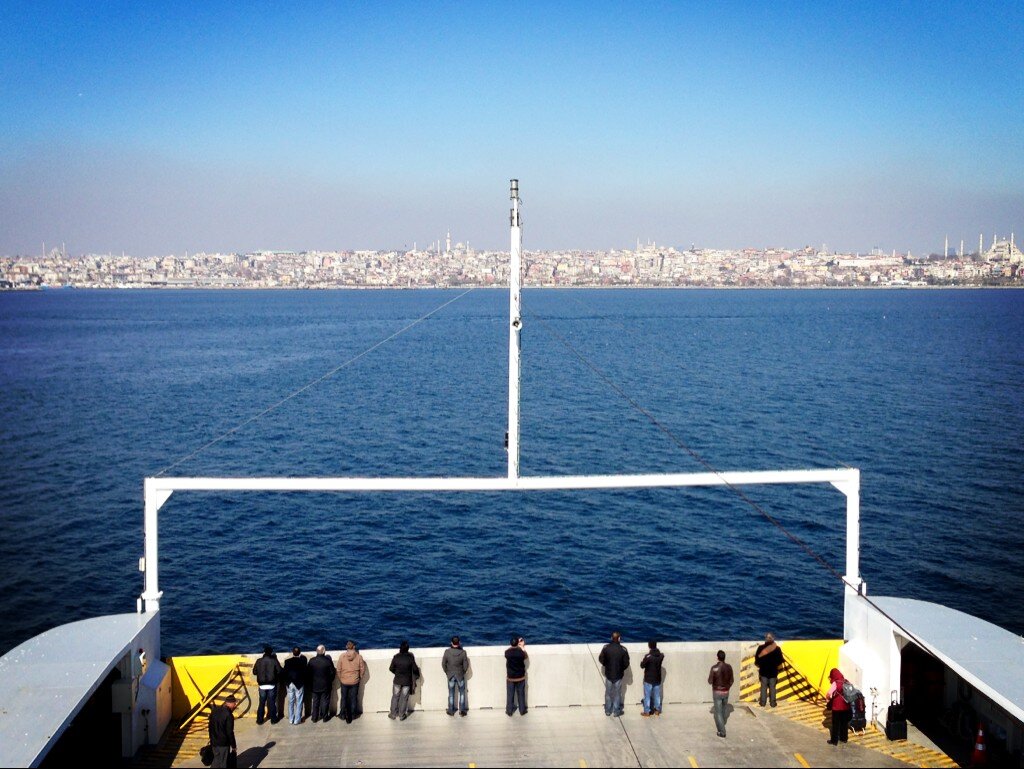
‘Ethereal beauty of Sea of Marmara’ The Sea of Marmara, 170 miles by 50 miles, sits between the Black Sea and the Aegean (Mediterranean), separating Turkey into its European and Asian (Anatolian) parts. Marmara comes from the Greek word for marble. The sea played a starring role in Jason and the Argonauts. It connects to the Aegean by the Dardanelles strait. Where the Dardanelles opens out into the Sea of Marmara, is Gallipoli.

‘Ethereal beauty of Sea of Marmara’ The Sea of Marmara, 170 miles by 50 miles, sits between the Black Sea and the Aegean, separating Turkey into its European and Asian (Anatolian) parts.
Marmara comes from the Greek word for marble. The sea played a starring role in Jason and the Argonauts. It connects to the Aegean by the Dardanelles strait. Where the Dardanelles opens out into the Sea of Marmara sits Gallipoli.

The Captain and crew of IDO ferries Kanuni Sultan Süleyman. You didn’t think the Consul-general would schlep it out in the public lounge did you? IDO is part-owned by Stagecoach boss Sir Brian Souter since its privatisation in 2011. As ever with Sir Brian - a long time investor in Turkey - the deal wasn’t without controversy. A price hike saw a rival start up last year (www.IstanbulLines.com) on what were thought to be IDO-exclusive routes. Still, one-way two+car Yalova-Istanbul is under £15.

The Captain and crew of IDO ferries Kanuni Sultan Süleyman.
You didn’t think the Consul-General would schlep it out in the public lounge did you? IDO is part-owned by Stagecoach boss Sir Brian Souter since being privatised in 2011. IDO is one of the world’s largest ferry operators. It’s website ido.com.tr is also in English. As ever with Sir Brian – a long time investor in Turkey – the deal was controversial. A price hike saw a rival start last year (www.IstanbulLines.com) on what were thought to be IDO-exclusive routes. Still, one-way two+car Yalova-Istanbul is under £15 for the one hour fifteen minute crossing.

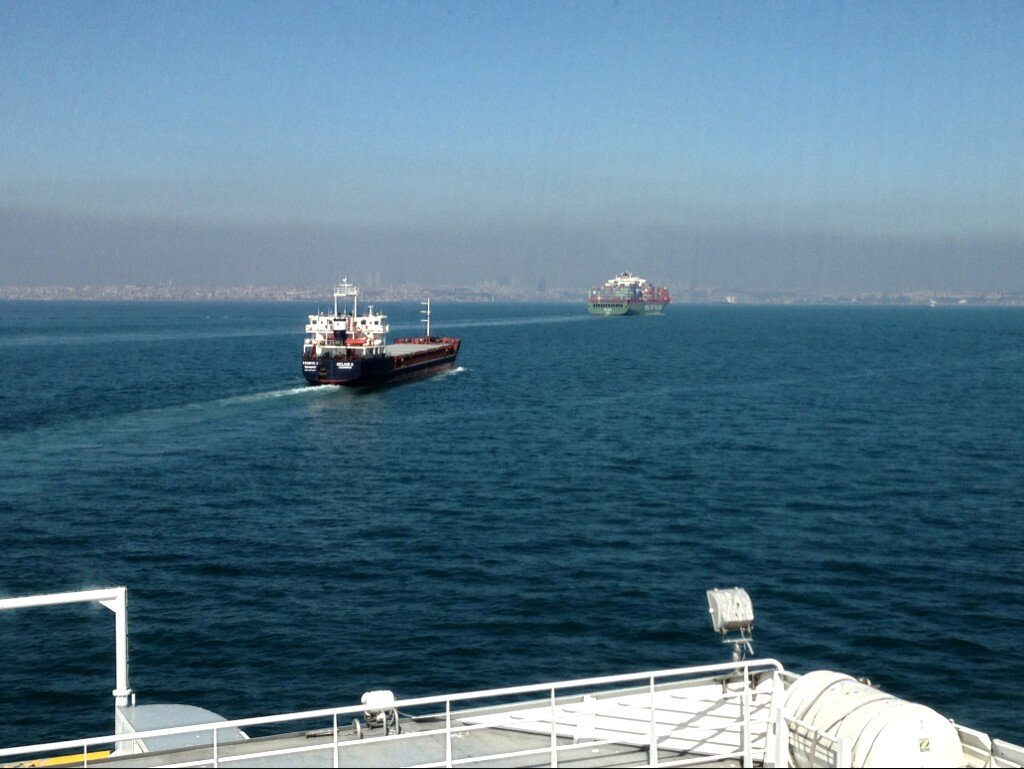
Ships heading for Bosphorus Strait - At the other end of the Sea of Marmara is Istanbul. Splitting the city is the Bosphorus Strait to the Black Sea. A hugely important trade route. Major Black Sea ports include Odessa, Sevastopol - and 2014 Winter Olympics host Sochi.

Ships heading for Bosphorus Strait. At the other end of the Sea of Marmara is Istanbul. Splitting the city is the Bosphorus Strait, the water way into the Black Sea, and hence Bulgaria, Romania, Ukraine, Russia and Georgia. Major Black Sea ports include Odessa, Sevastopol and – 2014 Winter Olympics/ Formula One host – Sochi.

If you don’t fancy the 1,700 mile overland drive to Istanbul - why not?! - there are options. The direct ferry from Ancona (Italy) to Çeşme, 60 miles west of Ìzmìr stopped in 2010. It’s still possible to sail most of the way but involves connections, sailing from Ancona or Brindisi to Igoumenitsa or Patras/ Piraeus/ Rhodes/ Marmaris (click for map). For the full run down see www.aferry.co.uk or www.directferries.co.uk. We sailed overnight from Brindisi to Corfu in, er, 1987 and slept out on deck. The biggest issue for Uk drivers in turkey is insurance. It’s one of the only european countries

If you don’t fancy the 1,500 mile overland drive to Istanbul – why not?! – there are options. The direct ferry from Ancona (Italy) to Çeşme, 60 miles west of Ìzmìr, stopped in 2010 but it’s still possible-ish to sail to Turkey. Ships leave from Ancona or Brindisi to Igoumenitsa (six hour drive to Istanbul) or sail/ drive via Patras-Piraeus(Athens)-Rhodes-Marmaris (click for map). An expensive hassle or trip of a lifetime? For the full run down see aferry.co.uk or directferries.co.uk. We sailed overnight from Brindisi to Corfu in, er, 1987 and slept out on deck.

So what does a Consul general do?

Leigh Turner joined the Foreign Office in 1983. Postings include Vienna, Moscow, Bonn and Berlin. He was previously HM Amassador to Ukraine. He has a huge patch. The South Caucasus is Georgia, Armenia and Azerbaijan. Central Asia is the ‘five -stans’: Kazakhstan, Kyrgyzstan, Tajikistan, Turkmenistan and Uzbekistan. We recommend you follow FCO staff on Twitter. With their impeccable connections they go to some very interesting places.

All photographs © @LeighTurnerFCO/ Twitter. Huge thanks to Leigh Turner for his help.