SIS II live; Rush trailer; M11 protester dies; Danube 1 re-opens

News roll for Tuesday 9 April 2013

random pic: inching towards a deserted Port de Larrau (5,100ft) on the border between Spain-France.

random pic: inching towards a deserted Port de Larrau (5,100ft) on the border between Spain-France.

France – three police officers filmed taping over speed cameras near Lyon have been ‘disciplined’. One of the three said he objected to being a tax collector for the treasury department. Last month we reported how Dutch policement refused to levy traffic fines they thought too expensive. France – More evidence that French police are really cracking down on speeding – or that the speed season has really started. A 16 year old boy was caught by a speed camera at 221kph (137mph) on Sunday near Montpelier after nicking his dad’s car. Also, a biker was caught at 276kph (171mph) on the RN80 in central France – the highest speed recorded for 20 years apparently. The bike and his licence were both confiscated.

The second generation Schengen Information System (SIS II) goes live today. The new system is an all round enhancement of the original, faster and with more criteria, etc, and is now one of the world’s biggest IT systems. Alerts can be created for people or property and flashed immediately to all border points. The UK is not part of Schengen but has access to most of SIS II apart from alerts about people previously refused entry to the zone. Controversially, the number of agencies granted access to SIS II has increased.

© Twitter/ Ron Howard @RealRonHoward

© Twitter/ Ron Howard @RealRonHoward

An absolutely cracking trailer for Rush, a film about the rivalry between Niki Lauda and James Hunt in the 1976 Grand Prix season. Have to wait until September for the film though…

Italy – An armed robbery on the carriageway of the A9/E35 yesterday, between Como and the Swiss border, netted €10m (UK papers say now £1.6m) in cash.

Russia – The Guardian reports that a journalist campaigning against the new M11 Moscow-St Petersburg motorway has died. Mikhail Beketov lead protests over the M11’s route through Khimki Forest, between Moscow and Sheremetyevo Airport. The paper describes road building as ‘one of the most corrupt sectors of Russia’s economy’.

Romania/Bulgaria – latest report says the ban on trucks over 10 tonnes is now lifted on the E75/E80 Giurgiu-Rusu bridge over the Danube. Lighter vehicles are allowed on a single lane. A large pothole appeared in the surface of the 60 year old bridge at the weekend. According to reports, it is the only bridge along the 500km Danube border between the two countries. Another, at Calafat further west, should open in May. For the latest click here: trucks over 10 tonnes can use the ferry at Svishtov.

Across the Kattegat Sea, from Denmark to Sweden

We toy with pottering around Jutland for longer but catch the ferry to Sweden as planned.

Who knew the Kattegat Sea has been such a productive stretch of water for the Brits?

October 2010. Click for a map.

Hotel Jutlandia, Frederikshavn, Denmark

Hotel Jutlandia, Frederikshavn, Denmark

The guide book says the Danish Royal Family stay at the Hotel Jutlandia.

‘Not for a while,’ admits the person behind the reception desk.

It would have been the height of modernist steel, glass, stone and leather luxury but not any more. Reception has been gussied up but the room is tired and worn*.

Jutlandia is however right opposite the port and costs 900dkk B&B (£100) plus 60dkk parking (£6.75). They book us on the 14:00 Stena Line ferry to Gothenburg the next day. The three and a half hour crossing costs £127.

There’s no quaint seafront so dinner is back at the hotel restaurant. It’s rank here too, and almost deserted on a Friday night, but overlooks the harbour from the top floor.

The local speciality, breaded ‘Frederikshavnr’ plaice, served with tinned new potatoes, follows starters of cauliflower soup and Skagen Skinke ham. With a bottle of Cava and two beers the bill comes to 819dkk (£92).

bdmnfsbdmb

The low lying winter sun was a blessing then a curse then a blessing again.

We’re woken at 7am by a boatload of screaming teenagers. They’re off to Læso, an island just off the coast. Known from Norse Legends as ‘Feasting Place of the Gods’. We could do with some of that. Breakfast is unbearable. Cold coffee, eggs and bacon hours past their best with low winter sun piercing right into our eyes.

It’s annoying because we could easily have stayed in Denmark’s most popular holiday spot Skagen only thirty miles away at the top of Jutland.

On the other hand, it’s reassuring to see that not all Denmark is created out of glossy magazine pages. It has depressed, time warp places like everywhere else. We were worried there for a minute.

The side loading Stena Danica.

The side loading Stena Danica.

Big signs at the terminal entrance proclaim, in English, ‘One Way to Gothenburg from £50.’

Our helpful receptionist had booked us a flexible ticket costing an extra £77. All signs are in English, even the boarding card. We could have booked on Stena’s UK website. The procedure is exactly like Channel ferries.

Stena Line also operates the other Denmark-Sweden ferry. It sails from Grenaa, 125 miles south of Frederikshavn, to Varberg, 45 miles south of Gothenburg, takes four and a half hours and costs from £70 each way.
Frederikshavn - previously known as Flatstrand - flat beach - was renamed in xxxx after xxxx.

Frederikshavn – previously known as Fladstrand (flat beach) – was renamed after King Frederik IV in 1818. Badly affected by shipyard closures in 1999, the economy is steadily rebuilding. The town retains its naval base – previously home to Nordic hero Peter Torstenkjold – but little of history remains bar the Gunpowder Tower. These days the beach is planted with palm trees that can withstand -20 degrees. There is though an intruiging plan to generate 100% of the town’s energy from renewable sources, including transport fuels, by 2015.

A week after Rudolf Hess’ flight to Scotland, a month before the invasion of Russia, the following message lead to possibly the greatest naval chase in history: ‘Most immediate. Kattegat today 15.00. Two large warships, escorted by three destroyers, five escort craft passed Marstrand course north-west 205/20th May 1941.’

The brand new battleship Bismarck had been spotted on her maiden mission, on her way to attack supply convoys in the North Atlantic. Eight days later, just when it seemed she would escape, a fluke torpedo launched from a WW1 biplane left her a sitting duck and she was sunk.

The big mistake was sailing around Jutland instead of slipping away via the Kiel Canal, an error not repeated when sister ship Tirpitz put to sea in 1942.

The Kattegat Sea

The Kattegat Sea, the outflow of the Baltic Sea between Denmark and Sweden. Between Denmark and Norway it becomes the Skaggerak Sea.

Almost exactly 140 years before Bismarck, another fearsome force, this time under British command, sailed the other way.

The Battle of Copenhagen, April 1801, saw the British Navy launch an audacious and successful attack to stop Baltic states trading with Napoleon. The then Vice Admiral Horatio Nelson famously ignored the order to withdraw by holding a telescope to his blind eye.

At the second Battle of Copenhagen six years later the British Navy seized almost the entire Danish-Norwegian fleet.

By chance two days later on the Swedish coast we come across the graves of British sailors killed in those battles.

Sailing is the Swedish national sport.

Sailing is Sweden’s national sport.

Apparently 1 in 5 Swedish people own a boat. This widely quoted statistic makes sense. Dotted around the Southern Gothenburg Archipelago there are lots of traditional ‘Falun Red’ cabins, most with their own landing stages (and flag poles). No wonder Volvo sponsors the Great Ocean Race.

We think we’re really cool for driving to Sweden but some Brits sail here. The Göta Canal, linking Gothenburg on the west coast with Stockholm on the east coast, makes for a route right around southern Sweden and includes the vast visible-from-space lakes, Vänern and Vättern.

The Göta Canal was built by Thomas Telford in 1832 so ships could avoid the Sound Dues in the Danish Straits. Shipping taxes had made up 70% of Denmark’s income for four centuries but only lasted another 25 years.

The Alvsborg Bridge was the finishing line for the 2006 Volvo Ocean Race.

The Alvsborg Bridge.

The ferry is a great way to arrive in Gothenburg, you sail up the Göta Älv river right into the city centre.

The big party, raging fairly solidly in the forward lounge for the whole journey, is completely out of control. Massive, drunken youths stagger around the dance floor. The DJ hugs the speakers, poor bloke.

The families sitting around however are completely unmoved and nobody bothers us.

It’s not just that alcohol is expensive in Sweden. The hard stuff is only sold in state owned off-licences, Systembolaget, with limited opening hours, in out of the way places. Ironically this makes the Swedish state the World’s Biggest Buyer of Booze.

The drink driving limit though is a quarter of the UK level. It’s designed as a margin for what was downed the night before rather than to allow a swift pint with lunch.

First sight Gothenburg.

First sight Gothenburg.

It takes a while to realise all the bellowing cries of ‘Hurtaborry!’ are actually the Swedish pronunciation of Gothenburg: Göteborg.

The spelling and pronunciation of Sweden‘s second city is a sensitive issue. The city council tried to phase out Gothenburg in 2003 but it was officially reinstated in 2009.

Göteborg is derived from the Götar tribe, Geats not Goths, who ruled southern Sweden until the 10th century.

Beowulf was King of the Geats. He’s buried at Skalunda, on the shore of Lake Vänern, about 70 miles from Gothenburg.

Plenty of time in the queue off the boat to take in our surroundings.

Plenty of time in the queue off the boat to take in our surroundings.

At the head of the interminable queue off the boat is a policeman, Sig Sauer P228 pistol clipped to his belt, demanding to know why we’re here, where we’re going, how long we’re staying and, particularly, where we’ve been. It’s a surprise because Sweden is in the borderless Schengen Area.

Moments later we’ve got other things to think about among the downtown Gothenburg road system. It’s like a smaller version of Spaghetti Junction with airborne carriageways twisting and turning and exits appearing without warning. We’re too far out of SatNav range for it to be any use.

Plans to drive around while talking on the mobile phone, still legal in Sweden for the time being, are shelved since both hands were needed on the wheel.

At 18:00 precisely we arrive at Hotel Gothia Towers. The 23 storey, tri-tower, 704 room hotel almost guarantees a room, and a view.

* Prices have increased with inflation. According to Trip Advisor Hotel Jutlandia has not changed at all.

Tragedy on the Via Carpathia

Europe wasn’t built in a day but even so, at least twenty years is a long time to wait for the first north-south road in the East.

Via Carpathia – from the Baltic to the Aegean through seven countries – has so far failed to find favour with the European Commission.

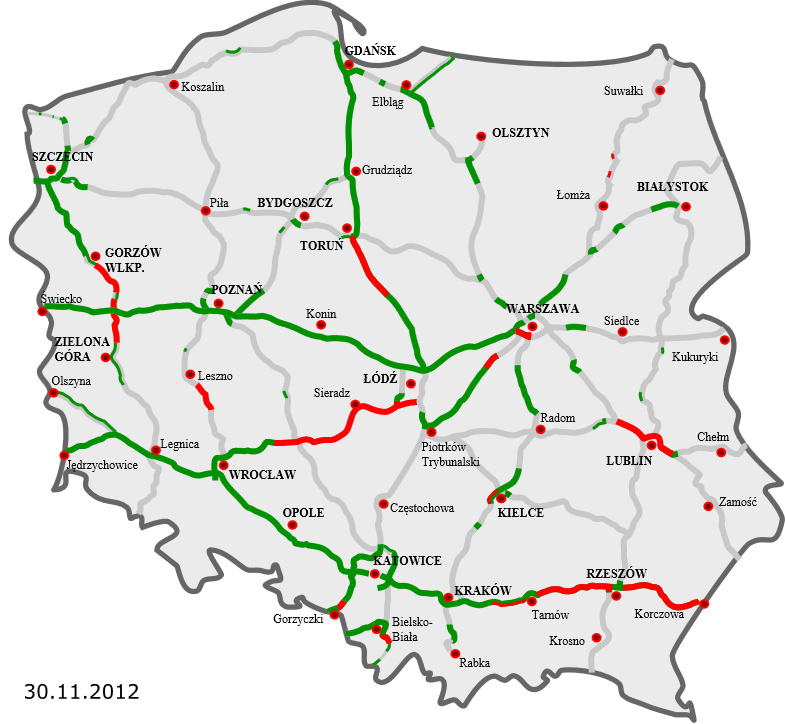
Poland: green roads complete; red under construction and grey planned.

Poland: green roads complete; red under construction and grey planned.

‘Poland will be a massive building site from 2015-2020,’ said the delegate to the European Commission’s road charging conference in December.

The start of Poland’s second decade since joining the EU will be a push to complete a road network first sketched out in 1939.

One road not under construction however will be S19, an expressway cutting down the east of the country – through Bialystok, Lublin and Rzeszow – the Polish section of Via Carpathia.

(The latest plans suggest S19 might not even be dual carriageway if and when it is eventually built.)

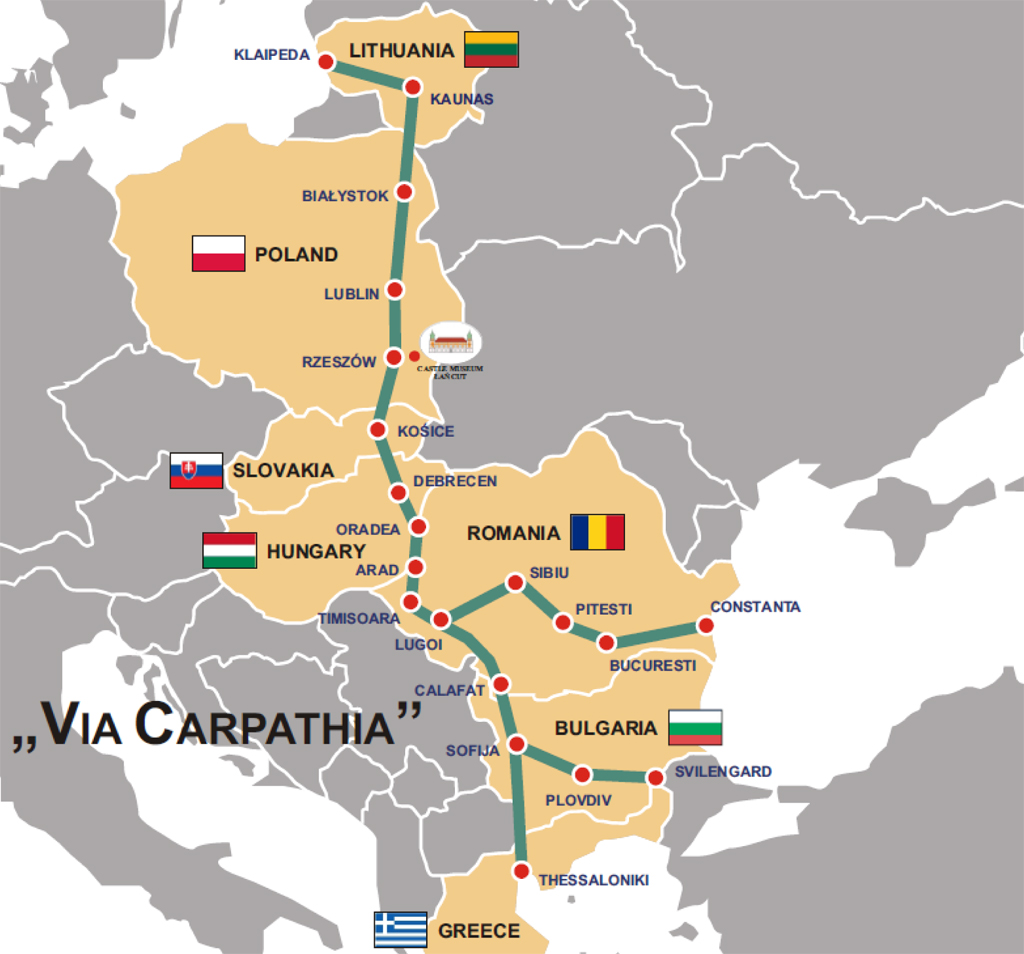
Since 2006, seven eastern European nations have been jointly developing the 1,500 mile Via Carpathia, an almost direct north-south link between the Baltic and the Aegean.

Via Carpathia - seven countries, 1,500 miles.

Via Carpathia – seven countries, 1,500 miles.

The first leg, starting at the Lithuanian port Klaipeda, twists awkwardly past the Russian Federation annexe, but from then on it heads on unencumbered clipping both Slovakia (Kosice) and Hungary (Debrecen) before continuing down through Romania and Bulgaria to finish at Thessaloniki, on the shores of the Aegean.

The plans include two east-west off-shoots towards the Black Sea, in Bulgaria and Romania where it links with another ambitious project, the Black Sea Ring Highway.

Just before Christmas last year however an application to have Via Carpathia included on the Continent’s core transport network – and built by 2030 – was rejected by the European Parliament Transport Committee.

Despite enquiries, we are struggling to come up with a clear reason why, though a quote from a Commission official at a conference on the subject in October is perhaps a clue: ‘Member States and regions have to prove that they can reliably apply for and reliably spend the money acquired under the funds’. Besides this there are vague murmurs the road may be adopted in the 2030-50 plan.

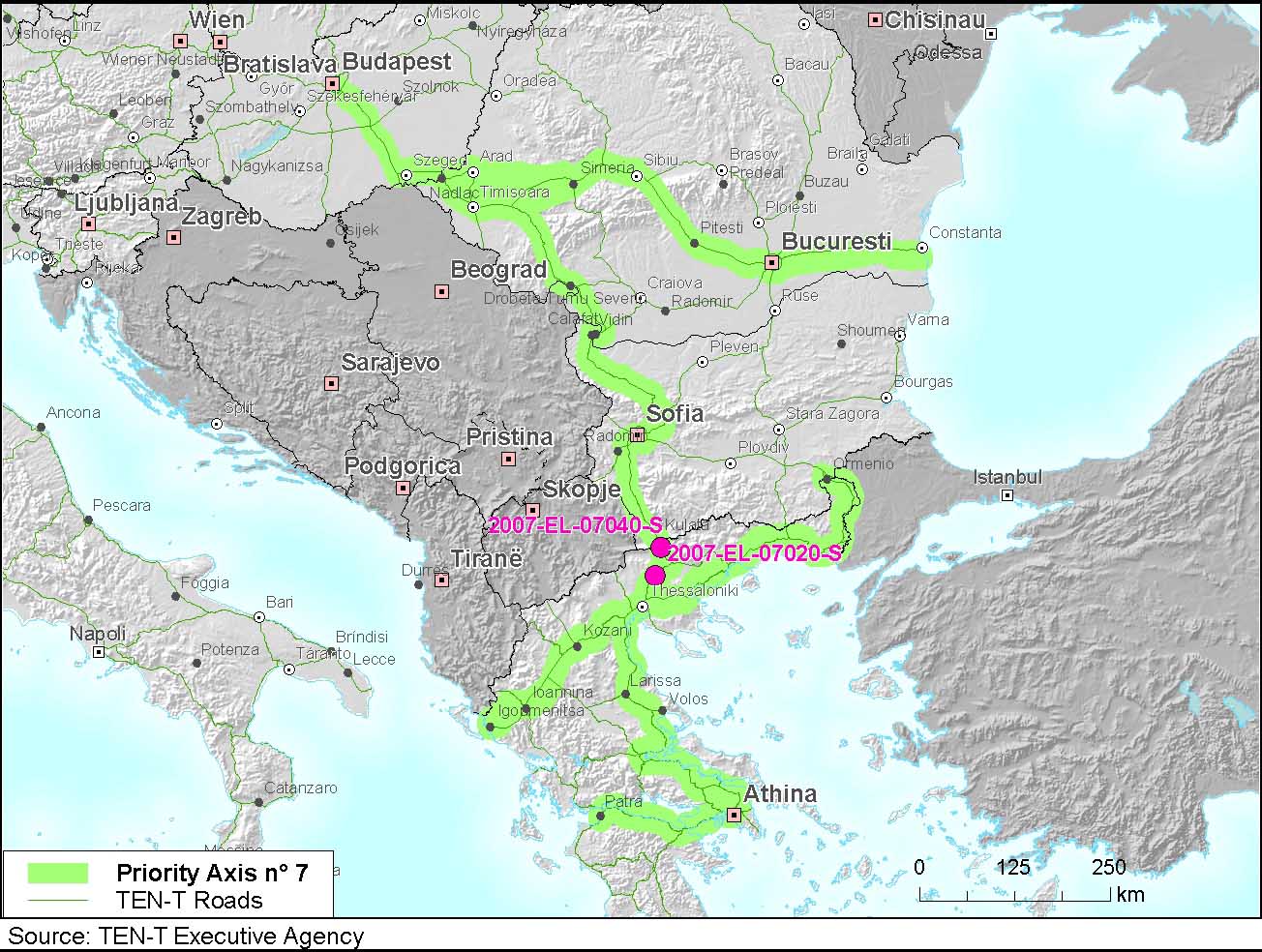
European Commission plans for roads in the very south east of Europe. Note the date.

European Commission plans for roads in the very south east of Europe. Note the date.

The Commission has its own ideas, including major upgrades for the roads in the very south linking to Budapest. Between Timisoara and the Baltic however is a dead zone, through Europe’s poorest and most deprived region. Meanwhile there are no north-south roads planned in the east at all.
Europe wasn’t built in a day. But as the network matures in the west it increases the disparity with the east.

The seven countries involved could theoretically build Via Carpathia themselves. Bulgaria is well advanced with its east-west spur from Sofia to the Black Sea coast for example. But the lack of co-ordination on a such a big project would – at the very least – increase the costs for countries already at full stretch. Realistically it isn’t going to happen.

The last hope for Via Carpathia for the foreseeable future is to get the plan aired in a full European Parliament session. A previous attempt in February was cancelled but the backers tell us there could be an opportunity later this month.

The M4 toll scare

George Osborne deals a mortal blow to UK road tolls.

See, some people enjoy paying road tolls.

See, it’s possible to enjoy paying road tolls.

They say don’t believe what you read in the newspapers but even so, pity poor old Oliver Wright from the Independent. Despite protestations from the Transport secretary last week that road tolls were off the agenda, Mr Wright felt able to confidently assert on Monday that a new M4 relief road in Wales would be paid for by tolls.

However, the next day a Welsh government source told the BBC, ‘We have no plans to introduce tolls on any Welsh road.’

Then yesterday, Chancellor George Osborne – coincidentally on a visit to Wales – told reporters the story has been ‘misreported’, continuing, ‘It’s certainly never anything I’ve considered, so I was reading about it in the press and couldn’t work out where it had come from.’

This was surprising to hear considering how keen the new Commercial Secretary to the Treasury Lord Deighton is on road tolls.

And last November we mentioned in passing how Welsh First Minister Carwyn Jones had actually called for toll roads in Wales in a speech to the London School of Economics.

For the avoidance of doubt we quote the relevant part in full:

‘The UK Government believes we require a revenue stream separate from the block grant before we can borrow. Tax devolution offers one potential way forward. But there is an additional, substantial, potential revenue stream, which flows from the row of toll booths on the Welsh side of the Severn Crossings.

At present, the Crossings are privately operated, and motorists are charged some £90 million in toll revenue to enter Wales each year; this revenue will grow as traffic flows increase. But in 2018 the current concessions will come to an end and the UK Government’s Department for Transport will determine what happens next about the tolls.

It would be politically unacceptable for the UK Government to levy tolls on the Crossings at anything close to the current rates beyond 2018; there would be a strong perception that drivers coming into Wales were continuing to be being charged for no obvious benefit when the bridges have been paid for. Such an outcome would be completely unacceptable.

Those of you who are familiar with Welsh history will be aware of the famous ‘Rebecca riots’ of the 19th century, when toll gates were attacked and burned by gangs of men dressed as women. Rest assured there is no danger of Rebecca’s sons and daughters taking a similar approach to the Severn Crossings, but surely the fair-minded motorist would view the situation I have described as an injustice.

We need a different way forward. I believe there is a very strong case for replacing the tolls from 2018 with a new road user charge. The revenues from this charge would help to improve the M4 in south Wales, with benefits accruing to the economy of both Wales and the south west of England. The road user charge would provide a source of income against which the Welsh Government could borrow and thus spread the upfront costs of the investment over a much longer period. This proposal offers a route to devolving borrowing powers swiftly and delivering economic benefits to the UK. And, Rebecca, I’m sure, would approve.’ (read the whole speech here)

True or not, the M4 toll scare had the clear ring of plausibility. But by backing off so quickly and so definitively, you have to say Osborne has done the idea of road user charging lasting if not terminal damage. So where does that leave Lord Deighton? More particularly, where does it leave the government’s plans to build, finance and maintain the roads?

At least we won’t have to write about it anymore.

Bike blight in Belgium and Holland

Bike parking is so congested, commuters are considering cars again

Haphazardly chained bikes are a common feature of the Amsterdam street scape

Haphazardly chained bikes are a common feature of the Amsterdam street scape

The number of bikes in Dutch cities is growing by up to 5% each year according to daily newspaper Trouw.

Official figures for Amsterdam say there are 880,000 bikes, up 44% since 1990.

The problem of where to park them is becoming so acute – in student cities, and around train stations particularly – the authorities are forced to consider drastic action.

Meanwhile, dedicated underground bike parks are often empty says the paper.

A cycling lobby group in Utrecht told Trouw the problem was so bad that commuters will start using cars again.

It's virtually impossible to take a picture in Amsterdam without a gaggle of bikes appearing somewhere

It’s virtually impossible to take a picture in Amsterdam without a gaggle of bikes appearing somewhere

Belgian city Leuven, to the east of Brussels – also a popular student centre – is to take tough action.

Its underground bike park in the city centre, opened last September, with annual running costs of €483,000, has an average of just 18 of its 560 spaces occupied each day.

Bikes are so densely congregated that a major crossroads has been blocked for emergency services.

The authorities have now decided that any badly parked bikes will be taken away.

‘The cycle park will soon fill up once we’ve cleared the square a few times,’ says the mayor.

Just to be clear, we didn't go to Amsterdam to take photos of bike

Just to be clear, we didn’t go to Amsterdam to take photos of bike

Comment

Wherever you look in the Low Countries, bikes are everywhere. It’s a good thing, obviously. But in Amsterdam last year we couldn’t help but notice it was getting ridiculous. After dark the railings around the canals were so encrusted with bikes, often several deep, it made manoeuvring the car difficult. We’re not surprised the emergency services have problems.

It’s not taking long for bikes to achieve the same nuisance level as cars. Banning cars from cities was a simple solution for many people. Restricting bike use however will not be so easy. By that point we will have to confront the unfortunate reality that it is not cars or bikes that are the problem but people. And what then?

Gothenburg’s congestion zone under fire

A series of determined protests wins a referendum on Gothenburg’s new congestion zone.

In the news round up: new laws to ban mobile phones while driving, plus the investigation into Sweden’s worst ever accident blames drivers error.

central Gothenburg

central Gothenburg

Perhaps January 1st wasn’t the best date to introduce Gothenburg’s new congestion charge zone.

The average high temperature in Sweden’s second city in January is 1° C. The record low is -26° C.

Not the best time to be nudging the natives from behind their heated steering wheels to stamp their feet and clap their hands at the bus stop, or slither down ice packed city streets, briefcases in hand.

Far better, surely, to introduce the zone in the summer when 30° C is not unusual, and the nearby archipelago becomes an idyllic holiday playground.

Weekend cabins on the craggy coast and islands of the Southern Gothenburg archipelago.

Weekend cabins on the craggy coast and islands of the Southern Gothenburg archipelago, half an hour from the city centre even by public transport.

Maybe it’s no coincidence that this year, when winter goes on and on, that opposition to the scheme continues to mount.

Last month well over 1,000 people gathered in the city’s main square to protest them being denied the referendum Stockholm was granted on its congestion zone.

Then came a spate of paintball attacks on the number plate recognition cameras used to police the system. The latest incident involved over a quarter of the city’s forty stations, with seven out of action for over 24 hours.

Now a petition of 90,000 signatures has, under Swedish law, compelled the city council to grant the referendum though no date, or question, has yet been set.

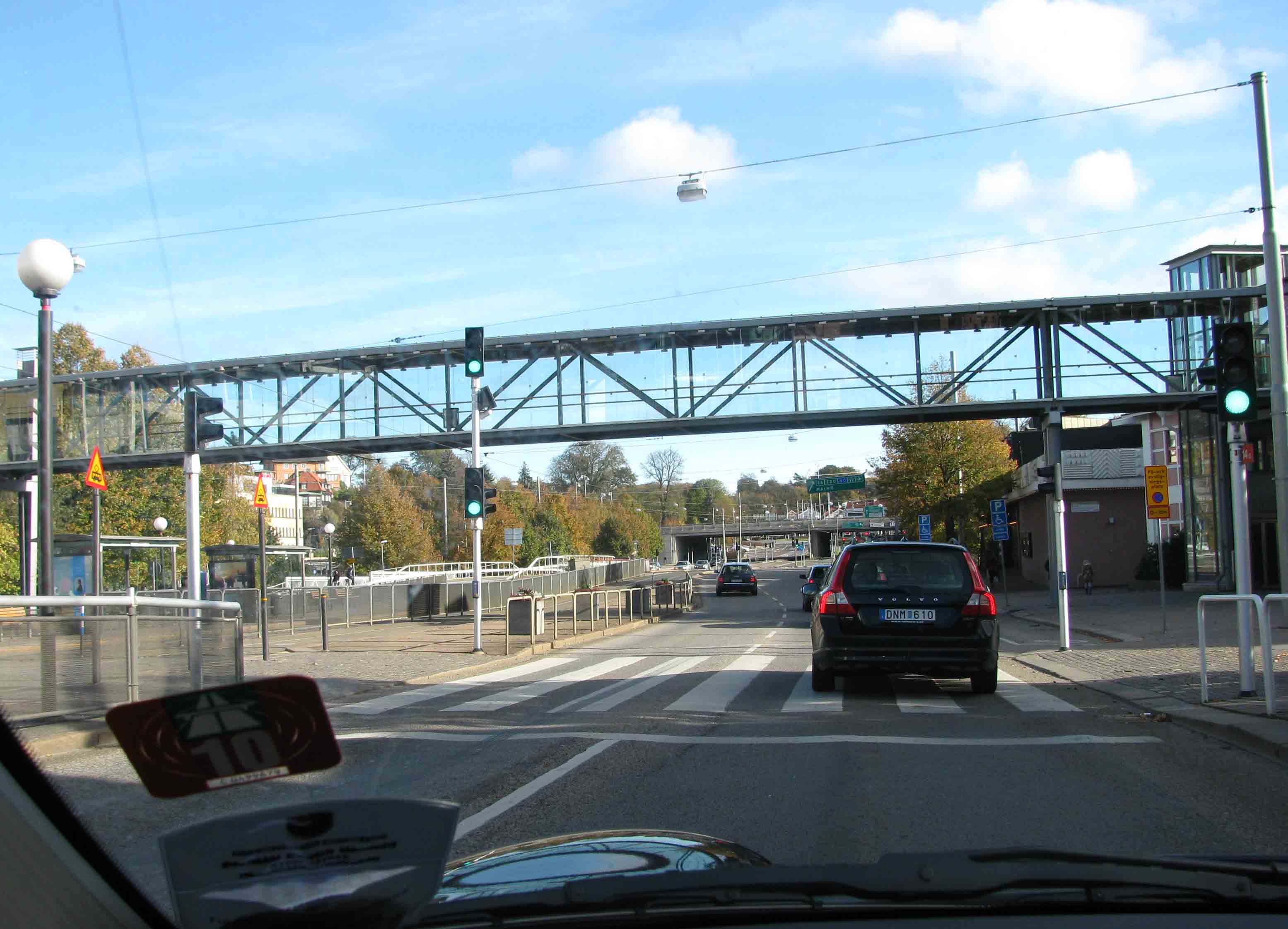
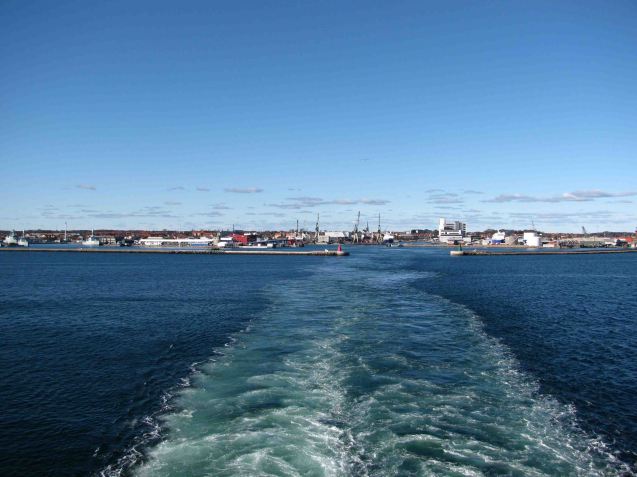
Gothenburg from the Stena Line ferry from Frederikshavn in Denmark. The 3.5 hour sailing costs about £50 each way and docks in the city centre.

Gothenburg from the Stena Line ferry from Frederikshavn in Denmark. The 3.5 hour sailing costs about £50 each way and docks in the city centre.

Traffic fell by 20% in the month following the zone’s introduction though the drop in February compared to the year before was 17%. March’s figures are awaited with interest. Just 30% of the motorists given free public transport passes for January have continued to use the trams and buses.

The zone only applies on weekdays during office hours with a maximum charge of £6 per day. It doesn’t apply during July. We reported last month that previously exempt foreign registered cars would be included in the scheme from next year.

The Stockholm Vote

The referendum on the Stockholm scheme in October 2006 became an issue in the national election held the same day.

Narrowly accepted by the citizens of the city itself (53:47) the zone was rejected by all surrounding municipalities that held a vote.

The winning opposition party had pledged to include votes from all voting areas but decided to implement the zone anyway after redirecting the revenues – which had been intended to improve public transport – to road maintenance instead.

A picture pinched from

A random picture pinched from Trafikverket, the Swedish roads agency.

Other News

The Swedish government has finally decided to ban driving while using a hand held phone. Sweden is the only EU country where driving and texting or talking is currently allowed. Any improvements in the country’s safety record would be bad news for Britain. We currently vie for the title of safest roads in Europe, if not the world. We beat them on deaths, they shade us on serious injuries.

The investigation into Sweden’s worst ever road traffic accident in January pins the blame collectively. The crash on the E4 near Helsingborg in mid-January involved 38 trucks and 33 cars. One man died. Police say eight drivers, seven truckers – and five of them Swedish – failed to leave enough space between vehicles in the icy conditions. Early theories that blamed relaxed new winter tyre laws have been dismissed.

Half price on the brand new A63 Route de la Côte Basque

The many-named RN10 between Bordeaux in south west France and the Spanish border is getting a major upgrade, including another new name, an extra lane and some shiny new toll booths.

.

A63 Bordeaux-Baronne. Opens six months ahead of schedule.

A63 Bordeaux-Baronne. Opening in May, six months ahead of schedule.

RN10 is called the Route de la Côte Basque because it links the Spanish and French Basques regions, and Le cimetière des Portugais because it was so hazardous for Portuguese migrants back in the day.

Most famously it’s part of Autoroute des Estuaires which crosses the Garonne, the Loire, the Seine and the Somme on its way around France to Belgium – avoiding Paris – dating from when the ‘Royal Netherlands’ was ruled by Spain.

It’s also part of the north-south European route E05 from Greenock to Algeciras, and the east west E70 from La Coruña to Poti on the Black Sea.

The dual carriageway RN10 has historically been free to use to because Les Landes, the corner of south west France it runs across – landes means moorland – is sparsely populated with few roads as alternatives.

We used it in 2006 on a 1,000km marathon from Biarritz to Calais. It was a bit scruffy even then. In desperate need of an upgrade since it‘s a major commercial route, a deal to upgrade the road was done with a private operator in 2011. The new road – now the A63 – opens in May, six months ahead of schedule.

For the first time it will be tolled. To sweeten the pill it will be half price for the first six months – €3.15 to travel the whole 104km – while drivers using exits between the two toll booths will not be charged.

When the third lane opens next January the full charge applies. Even then it will be cheap by French standards at €0.6 per km. Avoiding the toll between Bordeaux and the Spanish border means diverting through Mont de Marsan (see map below) and an extra 80km.

Interestingly, despite Vinci operating all other roads in the region – including the existing A63 which tops and tails the new road – the contract has been awarded to a start-up operator, Atlandes. One of the shareholders is the interestingly named HSBC European Motorways Fund 1.

atlandes

Other news: The French have overhauled laws governing car sharing. Drivers are only entitled to cover their costs not make a profit – though costs could include insurance, depreciation, tyre wear, etc. Also, a ban on smoking in cars when children are present is under discussion, as in the UK. It is already illegal in Cyprus with Ireland expected to follow suit soon.

Spain: no motorway Ronda-San Pedro

A plan to replace the famous Ronda-San Pedro A397 with a motorway is shelved.

Also, a new national speed limit is under discussion.

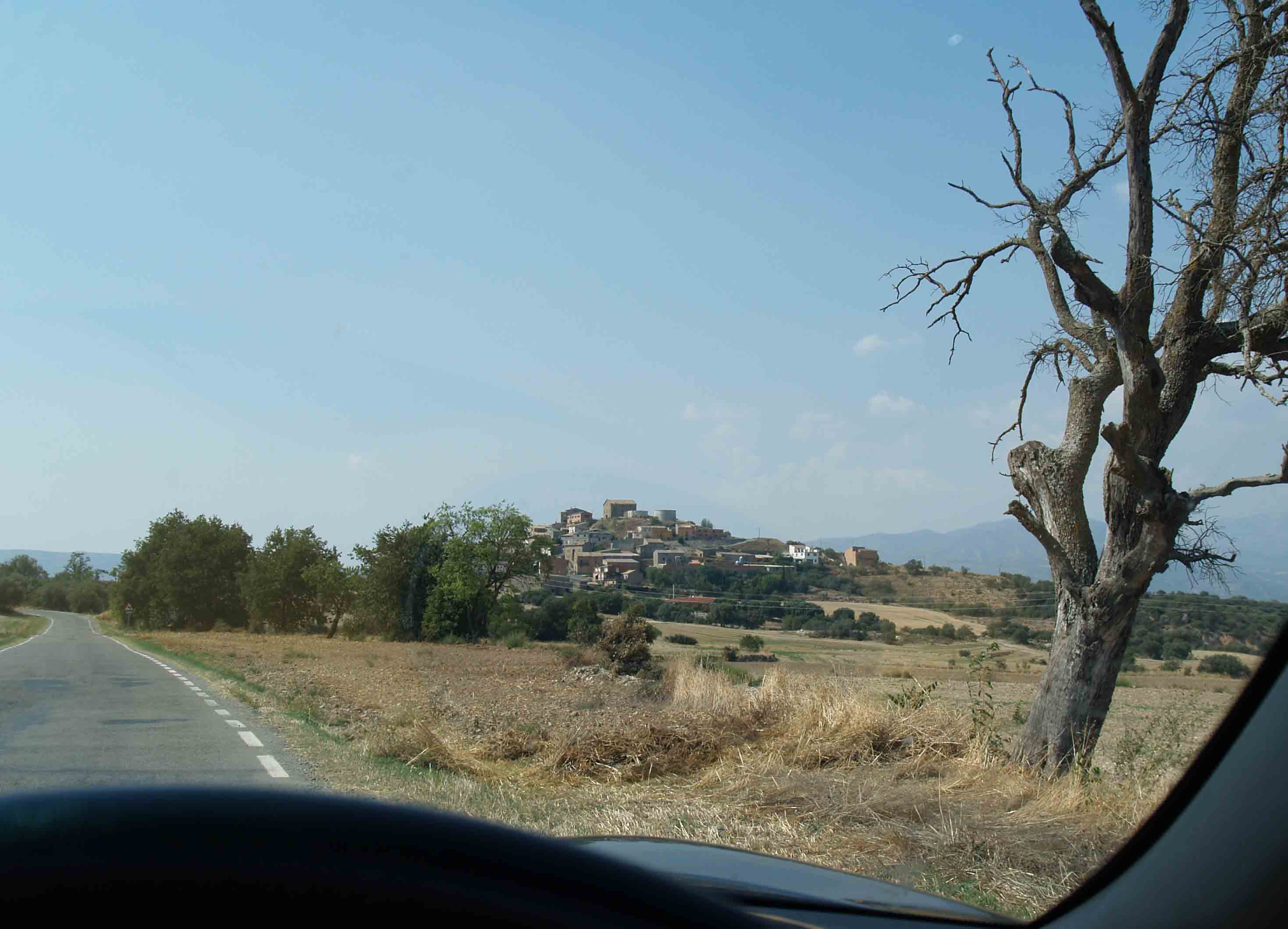
A Spainish road (from the C-14 in Catalunya).

A Spanish road (not far off the C-14 in Catalunya).

Spain could raise the motorway speed limit to 130kmh, two years after reducing it to save fuel.

The proposal, from the Spanish DfT (www.dgt.es), is part of an overhaul of speed limits and safety measures.

The current speed limit on motorways is 120kmh.

Speeds on secondary roads could be reduced to 90kmh or less on roads less than 6.5m wide.

Urban limits could be cut to 20kph in some cases.

Radar detectors would also be outlawed as would current exemptions from seatbelt laws (the disabled, taxis, emergency services, etc).

Children under 135cm would not be allowed in front seats.

Between March and June 2011, the motorway speed limit was cut to 110kph following the Arab Spring.

In September 2012 the Netherlands raised its speed limit to 130kmh (partly to raise more in fuel taxes).

The British government this week ruled out a similar move.

The C-14 a few hundred yards further on. We need to get some new Spanish roads pictures.

The same road a few hundred yards further on. We need to get some new Spanish roads pictures.

Meanwhile, plans to replace the famous San Pedro-Ronda road in southern Spain with a motorway have finally been shelved.

The A397, known as one of the best bikers’ roads in Europe, runs north from San Pedro de Alcantara near Marbella to Ronda in the mountains.

The view includes the coast, Gibraltar and the mountains of North Africa from along the Genal Valley and its famous white villages.

Because of its popularity, and the risk of rock falls, the A397 is the most dangerous road in the region.

The motorway plans were ditched due to austerity and protests from environmental groups.

Is it worth buying the French automatic toll tag? 20,000 UK drivers think it is.

We look at the ‘Liber-T’ automatic toll payment tag to ask, is it worth it?

Along the A89 between Bordeaux and Lyon

Along the A89 between Bordeaux and Lyon

‘French motorways – fast, smooth, uncrowded. Just a shame you have to queue for twenty minutes at the toll booths…’ tweeted Daily Telegraph travel editor Nick Trend (@TravellingTrend) on his way to Val Thorens at the weekend.

We said he should have bought the ‘Liber-T’ tag which allows you to use the faster automatic payment lanes.

He replied, ‘Is it worth it just for using a couple of times a year?’

That’s the $64m question, or rather the €19.14 question, the maximum cost of maintaining the tag for a year.

Admittedly there’s a €39.14 upfront fee but €20 of that is a returnable deposit. €10 is a one-off application fee.

The tag costs €5 for each month it is used, capped at €10 per year (plus French VAT).

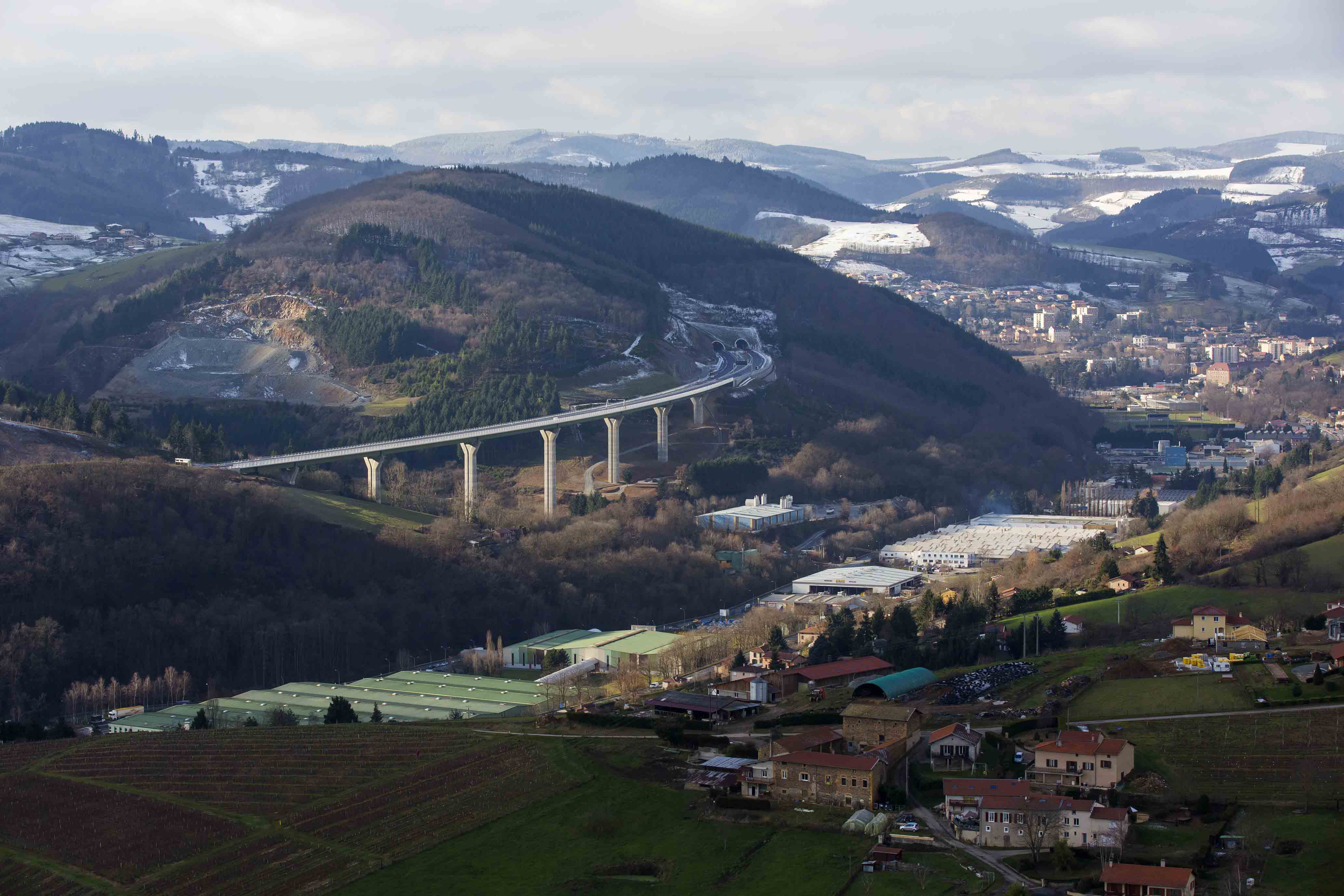
A89-Secteur Rhône et Loire-Photographies Aériennes-Décembre2012- France

There isn’t any discount on the – painfully expensive – tolls themselves but apart from using the fast lanes (some of which are barrier-less and can be taken at 30kmh) there are other benefits. No fiddling with change, wallet or debit cards, or leaning over to pay through the passenger window.

Disabled blue badge holders with a tag pay the same toll rates as motorbikes (that’s €19.20 toll Paris to Lyon by bike versus €32.30 by car).

The tag won’t let you pay automatically at the Frejus or Monte Blanc Tunnels but it does work on the spectacular Millau Viaduct, and at the hundreds of Vinci car parks around France too. In the near future it might be possible to use Liber-T on the Dartford Tunnel.

Despite the scheme being run by Sanef Tolling, a UK subsidiary of one of the Autoroute operating companies (there are over twenty in total) the Liber-T tag works on the whole network.

A89-Secteur Rhône et Loire-Photographies Aériennes-Décembre2012- France

If the tags are so great, why haven’t we got one? Because we’re not that organised and there’s always better things to do with a spare £40.

(It’s interesting to know Sanef says it turns applications round in 1-2 working days).

We’d forgive someone for thinking because it already costs €80 in road tolls to cross France they were entitled to a jam-free journey.

Also, its not unknown for the Liber-T lanes to be busy – and the manual payment lanes quiet – because most of the locals have tags.

But for families particularly, on holidays during peak times – summer or winter – on long drives to the South, the cumulative effect of delays at Peage can add significant time to the journey.

In one sense, Nick Trend was lucky to get stuck for only twenty minutes each time.

We’re not surprised that since Sanef UK opened in June 2011 (all accounts are administered from the UK) it has found 20,000 customers and, it tells us today, is growing ‘exponentially’.

It ultimately comes down to how much your holiday time is worth. In that context, €20 a year (less if you only use it within one calendar month) doesn’t seem too high a price to pay.

For more information see www.SanefTolling.co.uk

update 23 July 2014: some auto-toll booths may overcharge cars with roof boxes or bikes. But it easy to tell if it’s happened to you and full refunds are given says Sanef. See more here.

.

Was it politics or the pension funds that did for UK road tolls?

It’s official. According to Transport Secretary Patrick McLoughlin, the government will not bring forward plans to toll UK roads in this parliament.

Difficult politics is the obvious reason but the private investment needed to make it happen wasn’t there either.

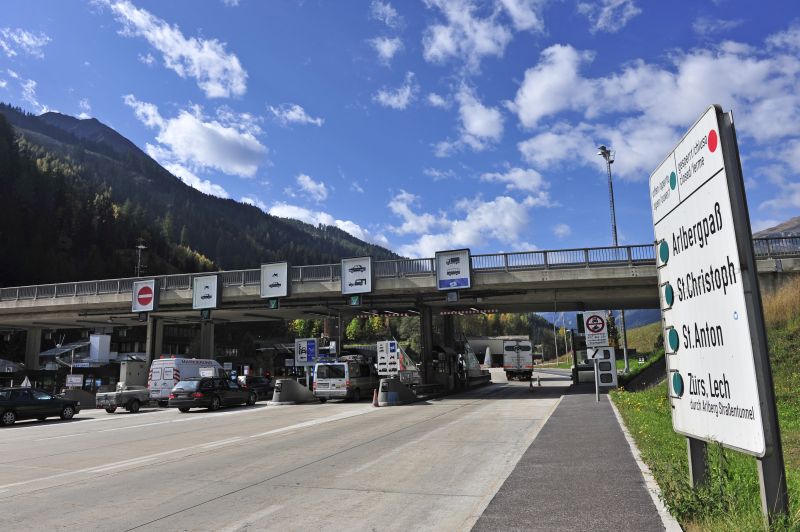
Arlberg, Austria

Arlberg, Austria

The man in the hot seat is Lord Deighton. Former CEO of the London Organising Committee for the 2012 Olympic Games – and before that a partner at Goldman Sachs – Deighton was recently appointed Commercial Secretary to HM Treasury.

His job is to entice private finance into the £330bn National Infrastructure Plan, 85% of which needs to come from private sources.

The idea is that revenues from the infrastructure – like tolls from roads for example – is paid back to the investors in the steady, inflation linked way they like it.

But in an interview with Construction News last week, Deighton admitted that, ‘getting traction on the ground in some projects is proving incredibly challenging.’

Anberg, Austria

Anberg, Austria

In November 2011, a year after the NIP was launched, the government said it was looking for up to £20bn of investment from two groups particularly – the Pension Investment Platform and a separate group of insurance companies.

An update published alongside the Budget last week however says the ten members of the PIP have so far pledged only £1bn. Meanwhile the insurance group is ‘continuing to explore… the issues’.

The lack of direct experience of operating infrastructure projects is one factor holding UK investors back, as are long delays during the planning process. According to the FT however, the major factor is because they don’t want to take the risk on new build projects.

The public woes of the so-far disastrous M42 toll road last summer cannot have helped.

Arlberg, Austria

Arlberg, Austria

Introducing road tolls in the UK would be controversial. We’ve consistently argued though that public opposition cannot be taken for granted (and apparently George Osborne agrees).

But there would be little point fighting the battle if there was no money to build the roads anyway.

What is not in doubt is Lord Deighton’s commitment to tolls. He also told Construction News tolls were the way to go in the ‘medium to long term’.

One thing is absolutely certain. The issue of road tolls in the UK is not going to go away.