On the Poo-Deck: Taking a Dog on an Overnight Ferry

For first-timers, taking the dog on the Brittany Ferries’ crossing from Spain was a bit overwhelming. Having got the hang of it however we’re keen to give it another go.

.

UP ON THE POO-DECK: DOGS ON FERRIES

Too much for first-timers but happy to have another go.

1

Cap Finistere, one of three Brittany Ferries boats with pet-friendly cabins.

It’s immediately clear why most ferry operators shy away from allowing dogs up on deck.

Apart from shutting off precious space to regular passengers, concentrating canine waste products in one small area is just revolting for all concerned.

If the pools of pee, or piles of poo don’t get you the eye-watering smell of disinfectant surely will.

Confronted with the glassed-in stretch of ‘promenade deck’ reserved for dogs – it’s obviously vital this area is operational whatever the weather conditions – our Labrador didn’t know what to do at first, and neither did his owner.

Thankfully the other owners, many of whom use this service on a regular basis, were happy to show us the ropes.

’Make sure he goes as close to the hose as possible,’ said one woman as mine strained in the opposite direction.

.

All this was perfectly predictable had we stopped to think about it. But the only part of taking the dog on holiday we were focused on was getting him in and out of the country.

Taking him out via Eurotunnel was easy, too easy maybe. There were no checks whatsoever; we didn’t even need to show his passport, much less demonstrate he’d had rabies jabs.

Consequently we weren’t totally confident his paperwork was in order for the way back.

It was hugely helpful then when Brittany Ferries sent us a text a couple of days out to say the dog needed ‘a tapeworm treatment between one and five days before he was due back in the UK and that the vet should fill in all the details including the time, date, product used plus the vet’s official stamp and a signature’.

Our hotel pointed us in the direction of the local airport vet who efficiently completed the paperwork for €60.

In the end it took check-in at Santander ferry port exactly ten seconds to examine our documents and hand them back with a reassuring ‘everything is fine’.

.

The idea had been to settle the pooch in our ‘pet-friendly cabin’ before making a break for Brittany Ferries’ well-regarded on-board dining facilities.

If there’s one thing overnight sailings are good for it’s a proper dinner with copious amounts of alcohol.

Not driving until late the next day means being able to indulge in a way you normally can’t on a driving holiday.

Brittany Ferries’ restaurants are said to be the best in the business.

But once on-board we were told the dog would have to stay in the car until all the other pets were on the ship. They would then be brought up to the cabins in one go, supervised by Brittany Ferries’ staff.

Since it took almost two hours to load, and we were among the first to board, the dog was in the car for longer than an entire Dover-Calais sailing. This was disappointing since we’d booked with Brittany Ferries because we understood the dog wouldn’t have to stay in the car on his own.

By the time we were all in the cabin the restaurant tables had gone (complicated on this occasion by a private party which block-booked the early sitting).

Instead we dined on beef stew from the distinctly insalubrious café on the top deck with wine from a plastic beaker and a can of lager.

Not too bad actually or – at €26 all in – too expensive either but hardly the slap-up final night celebration we’d been looking forward to. The dog enjoyed it though.

.

Waking up the next morning the immediate worry was how to keep our active, seven stone Labrador occupied for the remaining twelve hours of the sailing.

But breakfast, lunch and dinner, regular visits to the poo-deck and an afternoon kip all-round soaked up the time easily enough.

Cabin fever was never an issue though we did eye the rear sun deck enviously.

Considering the fine late September weather it would have been great to chill out staring at the waves like the other passengers – whale and dolphin spotting – but it was off-limits to dogs.

.

After all that, would we use this service again? More than likely.

In the immediate aftermath we swore never again. After a two week full-on driving holiday, coping with the process as first timers was a bit much.

Then there’s the inescapable fact that, since our last stop before the ferry was just over the French border in Biarritz – from where it’s perfectly possible to drive to Calais in a day –  it would have been quicker and cheaper to drive home (considering the 24 hour sailing cost £595).

A couple of weeks later, with time to recover, we look back much more fondly.

The benefits of the enforced rest on an overnight ferry cannot be overestimated, especially at the end of a long trip with the return to work looming. 

Had we boarded later, booked a restaurant table in advance, and not worn flip-flops the first time on the poo-deck, our experience would have been radically different.

.

For: a good break on a very long drive. ‘Pet-friendly cabins’ means you stay with your pet for the trip, for most of the time. Reliable information takes the stress out of bringing your pet in and out of the country.

Against: not cheap. Your pet can still be stuck in the car for a considerable time. Limited exercise and toileting areas. Limited availability of pet-friendly cabins.

.

2

The Poo-Deck. A hose on a reel, free poo bags and a brush to help clean up after your pet. The ‘pet-friendly cabins’ are handily located one deck below.

Turn up early at the Santander ferry terminal and leave the car in a secure area while you explore the nearby, not unattractive city centre. Handy to give the dog a run before the long crossing. Santander is, not surprisingly, the original home of Santander bank.

Turn up early at the Santander ferry terminal and leave the car in a secure area while you explore the nearby, not-unattractive city centre. Handy to give the dog a run before the long crossing. Santander is, not surprisingly, the original home of Santander bank.

Whatever indignities were involved early on during the ferry crossing, it was a price worth paying for being able to take the dog on his first ever foreign holiday (and avoid too-long days in the car). Here in the French Alps above Saint Veran.

Whatever indignities were involved early on during the ferry crossing, it was a price worth paying for being able to take the dog on his first ever foreign holiday (and avoid too-long days in the car). Here in the Pyrenees above Grau Roig, Andorra.

.

Intelligent Transport Systems: Not Driven By You

A conference last week in Bordeaux on so-called Intelligent Transport Systems brought together every possible public and private player – apart from the end users – as the industry is criticised for wasting tens of billions of dollars on applications consumers do not want.

.

INTELLIGENT TRANSPORT SYSTEMS: NOT DRIVEN BY YOU

Tens of billions wasted on ‘Intelligent’ Transport Systems consumers don’t want.

TecDay Mercedes-Benz S500 Inteligent Drive/TecDay Autonomous Mobility Sunnyvale 2014

Photo @Mercedes-Benz

Policymakers, ministers, ambassadors, cities, NGOs, car makers, telecoms, infrastructure builders, road operators, academics and students gathered in Bordeaux last week for the latest Intelligent Transport Systems (ITS) conference.

Now in its twenty second year – rotating between Europe, the US and Asia – the Congress brought players up to speed with the latest developments in an industry aiming to make transport safer, more efficient and cleaner using data.

Much less in evidence were consumers. Out of the 12,000 people who attended just 800 were members of the public.

Therein lies the perennial weakness of ITS according to a paper from Nokia’s map-making unit HERE.

A common cause of failure for ITS initiatives is the deployment of services that simply do not resonate with the needs of consumers,’ it says.

A disproportionate emphasis is placed on disparate academic studies and engineering-focused pilots, and insufficient time is spent on the last-mile effort to develop clear business and deployment models.’

In other words, ITS is not something consumers are clamouring for. The real drivers are national and international authorities keen to reduce congestion and improve road safety, and companies eager to make the most out of new possibilities thrown up by the internet.

The European Commission also highlights the carbon-saving inherent in more efficient transport, particularly ahead of the landmark COP21 climate conference in Paris next month.

Admittedly, some ITS will be useful. Particularly interesting is the ‘Amsterdam Group’ project on the succession of motorways between Rotterdam and Vienna via Frankfurt.

The idea is to share data between the vehicles on the road and the road operators.

This so-called Co-operative ITS (C-ITS), also known as V2X communication (vehicle to vehicle or vehicle to infrastructure communication), is the next step on from the oft-criticised roadside information systems already in use across Europe.

Using real-time, accurate data it will be possible to alert drivers to hazards – weather, accidents – and regulate speeds to overcome sheer-weight-of-traffic ‘ghost jams’ thereby making journeys more reliable and safer.

Meanwhile, autonomous ‘self-driving’ cars made a big show in Bordeaux.

However, despite news last week that Toyota will have autonomous cars on the market in 2020, Volvo declaring it would accept liability for its autonomous cars involved in crashes – a crucial legal hurdle – and a Citroen C4 Picasso driving to the Congress from Paris on its own, French transport minister Alain Vidalies told delegates such vehicles will not be on the road before 2030.

This leaves the formation of the first ‘Mobility as a Service’ Alliance as the really big news from the Congress .

Described as ‘the biggest paradigm change in transport since affordable cars came into the market’ this product of reductive industrial logic says the value of a car, for instance, is not its big shiny wheels and ability to get to sixty miles per hour in five seconds, but solely its ability to transport you from one place to another.

Therefore, if governments and companies can together offer comparable ‘mobility’ – by a theoretically seamless combination of bikes, cars, shared taxis and buses, powered by a mega-IT platform – then everyone will be happy.

Some may baulk at the projected price of ‘Mobility as a Service’ at €1200 per month for a family. Some may wonder how to pack all these fifteen minute response times into their already full schedules.

Others may be surprised that the Federation Internationale de l’Automobile (FIA), and the International Road Transport Union (IRU), have both signed up to this new alliance, the other members of which include the usual universities, telecoms and local and regional authorities (but no user groups).

Whether Mobility as a Service makes it, or adds to the $89 billion already wasted on ‘failed, delayed and unrealised’ ITS projects in the past five years (according to HERE), remains to be seen.

.

Wrong-way Brits Drive 25km in Austria

A pair of Brits are fortunate to escape without injury after a wrong-way driving incident in Austria.

Also, a – very – quick look at Bugatti’s Grand Tour, and the ADAC publishes next year’s German ‘jam calendar’.

.

WRONG-WAY BRITS DRIVE 25KM IN AUSTRIA

Pair stopped after four tunnels and 25km on autobahn near Graz.

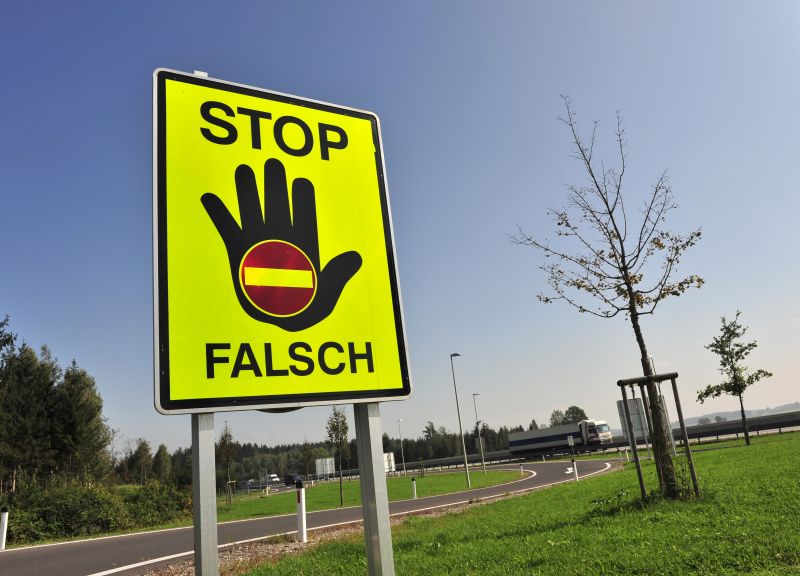
The wrong-way warning sign as used in Austria and Germany. Photo @ASFINAG

The wrong-way warning sign as used in Austria and Germany. Photo @ASFINAG

A pair of Brits managed to drive 25km the wrong way along an autobahn in southern Austria this morning.

The two – aged 61 and 56 according to local reports – drove through four tunnels on the A9 just south of Graz.

They were only stopped as they approached the fifth tunnel after the wrong-way alert system was activated. Fortunately no-one was injured.

The driver faces a charge of endangering safety on the road. An alcohol breath test was negative.

It is believed the incident occurred after refuelling, a classic scenario for driving on the wrong side of the road, according to received wisdom, following a short stop.

Wrong-way driving, or Ghost Driving (Geisterfahren) is a big problem on the Continent. Ironically it is rarely caused British drivers who are of course used to driving on the other side of the road.

The phenomenon is known as Conducteur Phantome in France and Spookrijders in the Netherlands.

Around seven incidents each day are recorded in Germany resulting in more than twenty deaths each year.

Last year the federal government announced a new research project into better ways to tackle the problem.

Currently the only preventative measure is a neon yellow ‘Falsch’ sign on slip roads.

The advice from the Belgian authorities when confronted with a wrong-way driver is to slow down, turn on headlights and hazard lights and move into the slow lane.

Scarily, ghost drivers apparently tend to veer to the right.

.

Scenic drives. Amazing journeys. Unique destinations. The Grand Tour’s organized by Bugatti are always special and outstanding. This year’s drive took place in a picturesque scenery around Croatia and Montenegro discovering breathtaking views between the mountains and the sea.

Scant details from Bugatti about its Grand Tour last week, except: ‘Scenic drives. Amazing journeys. Unique destinations. The Grand Tours organized by Bugatti are always special and outstanding. This year’s drive took place in a picturesque scenery around Croatia and Montenegro discovering breathtaking views between the mountains and the sea.’ See more.

.

roundup: GERMANY. Motoring organisation ADAC has published its 2016 ‘jam calendar’, marking the days next year expected to have the heaviest traffic. It works on a scale of white-yellow-orange-red with the latter being the busiest. With traffic being generally very heavy by European standards, even on regular days, driving should be avoided on the worst days if possible. The first jam-fest will be Thursday 24 March followed by Wednesday 4 May and Friday 13 May. The summer season kicks off on Friday 15 July and lasts for every Friday and Saturday until Saturday 6 August. All goes quiet then until Friday 30 September, and from then until Friday 23 December. See more here.

.

Rome’s Great Pedestrianiser Half Resigns

The serially controversial, car-banning Rome mayor resigns. Is it time for all-electric Formula E racing to come home? And what about the city’s swingeing new coach tax?

Also, as Germany rejects 60t super trucks, a 104t log truck is under trial in Finland. And, a roundup of the latest situation on the borders of south east Europe: more checks for the Czech Republic, joint patrols in Hungary and even more delays likely Austria-Germany.


.

ROME’S GREAT PEDESTRIANISER HALF RESIGNS

Brought down by one too many scandals, but might live to fight another day yet.

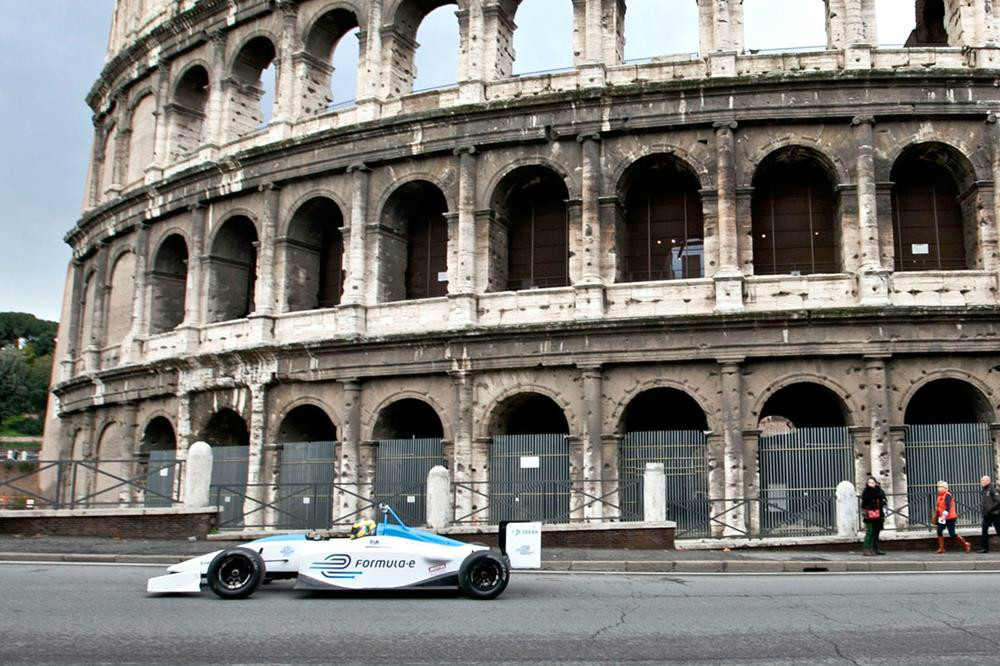
The car-banning mayor of Rome has (half) resigned in an expenses scandal. Does this mean the all-electric racing series Formula E will finally return to the place it was launched in December 2012? More later.

Formula E debuts beside the Colosseum in December 2012. Photo FIAFormulaE.com

The great pedestrianiser, Rome mayor Ignazio Marino, has – provisionally – resigned in an expenses scandal.

The former surgeon and keen cyclist – dubbed ‘Mayorino’ – banned vehicles from Via dei Fori Imperiali between the Colosseum and Piazza Venezia, among other places, in an effort to realise Rome as a huge open air museum.

The Italian capital also recently unveiled a plan to tax coaches €1000 per day. The move was denounced as ‘intolerable discrimination’ by the International Road Transport Union.

However, Marino is not going quietly and clings to hopes his great project may yet be completed.

He said in a statement (via ANSA.it), ‘I submit my resignation, knowing that it can be lawfully withdrawn within 20 days. This is not cunning on my part: it is the search for a serious verification as to whether it is still possible to rebuild these political conditions.’

‘Systemic corruption has been uncovered, the tentacles have been cut, large-scale reforms are underway, the budget is no longer in the red, the city has resumed attracting investments and investing. The results, therefore, are beginning to become visible.’

‘I cannot conceal a serious fear that past mind sets will return to govern the city.’

Marino won a landslide election in June 2013, a few months after the all-electric Formula E racing series was launched in a high-profile event alongside the Colosseum.

Nothing was ever made public, but soon after he took the reins Rome was quietly dropped as a Formula E venue. The series now races in ten other major cities around the world.

Throughout his time Marino was dogged by controversy, ironically including accusations he dodged traffic fines.

A few weeks ago he annoyed the Pope after tagging along uninvited to the Pontiff’s tour of the United States.

In this latest episode, Marino is accused of submitting ‘questionable’ expenses claims.

.

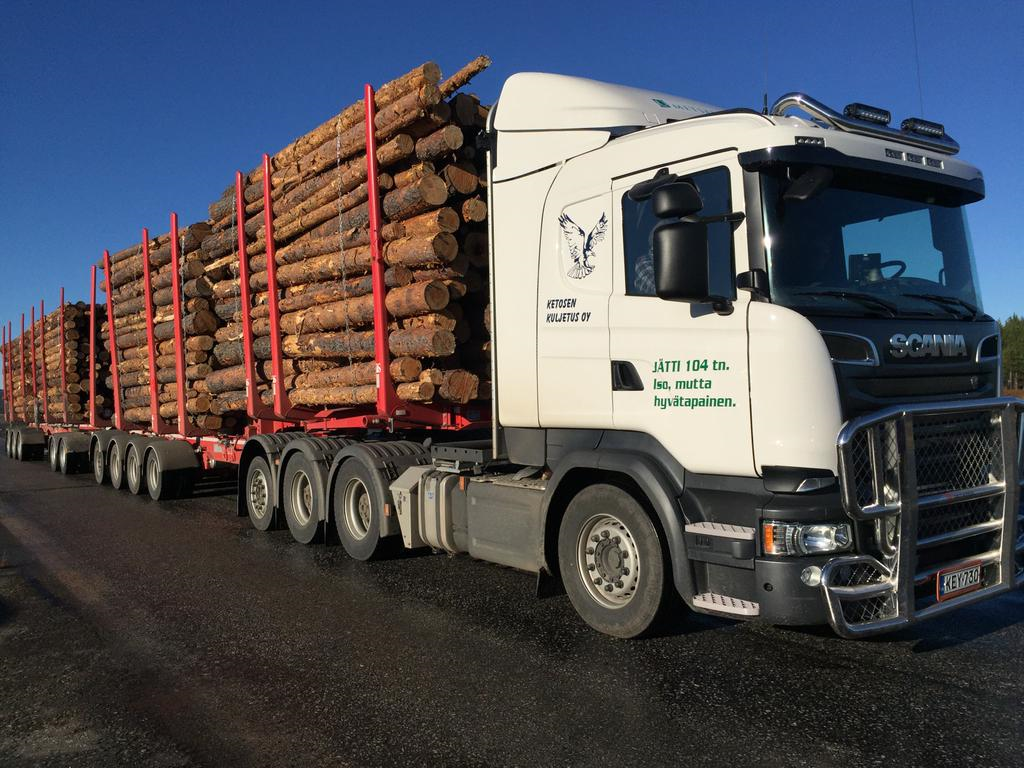
In the week that German junior transport minister Dorothee Bar told a conference that 60t trucks would not be allowed in Germany, Scania reveals a 104t log truck on test in Finland. Despite lower emissions per unit of weight carried due to larger permitted loads, and long-term use in Scandinavia and the Netherlands, so-called eco-Combis – currently limited to 25.25m and 60t - remain controversial in many parts of Europe over safety concerns in the event of an accident. The European Commission reaffirmed recently that their use, particularly cross-border, is a matter for the countries concerned. Belgium and Luxembourg are both currently evaluating trials.

In the week that German junior transport minister Dorothee Bar told a conference that 60t trucks would not be allowed in Germany, Scania reveals a 104t log truck on test in Finland. Despite lower emissions per unit of weight carried due to larger permitted loads, and long-term use in Scandinavia and the Netherlands, so-called eco-Combis – currently limited to 25.25m and 60t – remain controversial in many parts of Europe over safety concerns in the event of an accident. The European Commission reaffirmed recently that their use, particularly cross-border, is a matter for the countries concerned. Belgium and Luxembourg are both currently evaluating trials.

.

roundup: BORDERS. The Czech Republic will step up border controls, probably tomorrow (Saturday 10 October) says Prague Post. Like Germany, the Czechs started to keep a closer eye on border crossings with Austria on 13 September, but only on a random basis and only at fourteen border points. These will now be expanded to all twenty crossings, including the very smallest. The fear is that as Hungary finishes its frontier fencing, migrants may be tempted to detour via the Czech Republic on their way to Germany.

Meanwhile, the so-called ‘Visegrad 4’ countries – Czech Republic, Hungary, Poland and Slovakia – agreed today to jointly patrol the EU’s outer border in southern Hungary reports Daily News Hungary. Operations could start next week.

Since the Czech controls were reinstated there has been little sign of the regular significant delays seen at the Austria-Germany frontier, specifically the three motorways crossings (A12/A93 Innsbruck-Munich, A10 westbound from Salzburg and A8/A3 to Passau). These delays may be about to increase again. State president Horst Seehofer said today the Bavarian government was about to launch a new package of ‘self-defence’ measures against migrants according to Deutsche Welle. In response, the Austrian Interior minister said her country ‘would have to implement more and more border controls.’

.

Big Fall In Road Deaths In France

After a torrid eighteen months for road safety in France road deaths fall significantly in September – but the number of car drivers killed rises sharply.

.

BIG FALL IN ROAD DEATHS IN FRANCE

Great news overall masks sharp rise in number of car drivers killed.

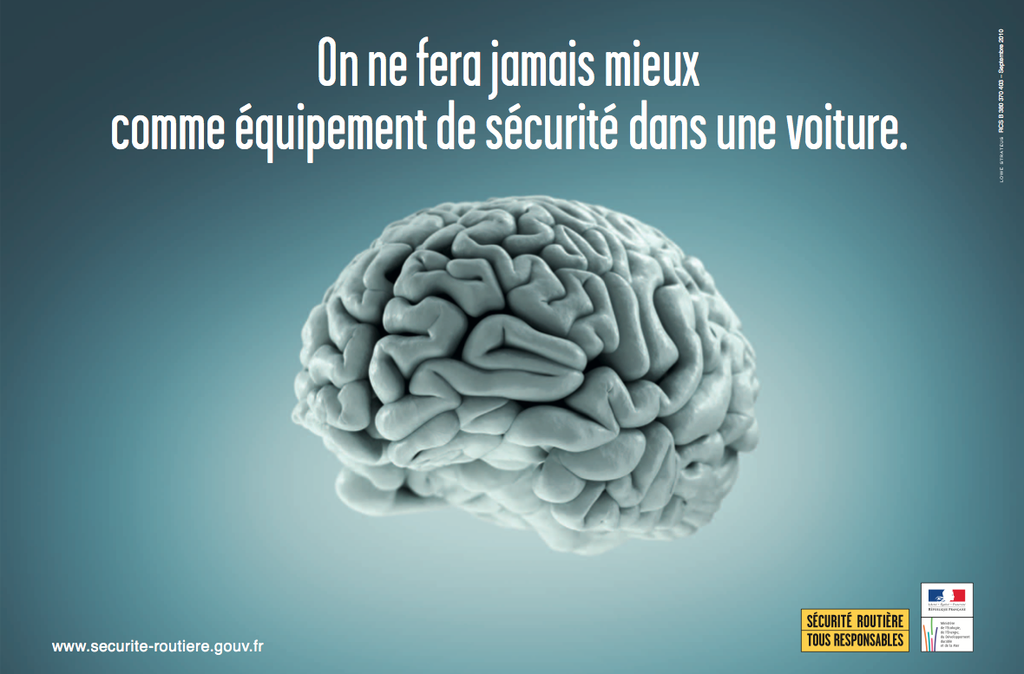
'You never will do better as a safety device in a car' - one of anumber of striking road safety ads published in France as it tackles road safety head on.

‘You never will do better as a safety device in a car’ – one of a number of striking road safety ads published in France as it tackles road safety head-on.

Just a few days after the Prime Minister chaired an emergency road safety council there has been some rare good news for road safety in France.

The number of road deaths fell by a significant 17.4% in September compared to the same month last year it was revealed today.

It comes after rises of 19.2% in July and 9.5% in August and follows an overall increase in road deaths of 3.4% in 2014, the first uptick in more than a decade.

Unsurprisingly, Interior Minister Bernard Cazeneuve, responsible for road safety in France, welcomed the news, but warned of complacency and said all services remain ‘fully mobilised’.

Today’s news means the 4.6% rise in road deaths up until the end of August has now been cut to 1.8%.

However, while the number of pedestrians killed was sharply down, and tailed off for cyclists, moped riders and bikers, the number of drivers killed rose by 9% last month compared to September 2014.

The figures for truck drivers, the only category to have seen decreasing fatalities in recent months, are yet to be published.

Last week’s inter-ministerial council on road safety, the first such meeting in five years, came up with a raft of 22 new measures to tackle what has been described as a crisis of road safety in France.

As well as 500 new fixed radar traps and 10,000 decoys, drones to monitor driver behaviour and compulsory helmets for cyclists under the age of twelve, a new system of ‘virtual licences’ for foreign drivers was announced.

Under the new scheme, drivers from abroad will have points deducted – from a total of twelve – for traffic offences, including speeding.

If zero points are reached the driver will be barred from French roads. Further details are expected soon.

.

Spectacular dams have been on the agenda since Chris Pointon’s adventures at the ‘Goldeneye’ Moiry Dam earlier this summer (see the video). Just an hour’s drive west of Moiry, in south west Switzerland, is Grande Dixence. It may lack the James Bond heritage but it has an equally interesting road winding up to its north east corner, with the added bonus of the keenly priced Hotel du Barrage at the top. Photo Grande-Dixence.ch

Spectacular dams have been on the agenda since Chris Pointon’s adventures at the ‘Goldeneye’ Moiry Dam earlier this summer (see the video). Just an hour’s drive west of Moiry, in south west Switzerland, is Grande Dixence. It may lack the James Bond heritage but it has an equally interesting road winding up to its north east corner, with the added bonus of the keenly priced Hotel du Barrage at the top. Photo Grande-Dixence.ch

.

Autumn Weather Causes Chaos Across Europe

Every accident a rear-ender in Madrid on Monday as the first real autumn weather sees record traffic jams in Paris today, and a near-miss in the Netherlands.

.

AUTUMN WEATHER SPARKS CHAOS ACROSS EUROPE

First full week of October evidently a hotspot for European traffic jams.

Peak traffic in Paris this morning, via @RFTrafic

Peak traffic in Paris this morning, via @RFTrafic

A new report questions whether the weather is responsible for the increasing number of road traffic accidents in the UK (and by implication in the rest of Europe too).

It certainly had a major role to play in the huge traffic jams plaguing Europe so far this week.

In Madrid yesterday, the first major rainfall of the season saw jams lasting five hours in total and tailbacks of 30km.

Tellingly every accident was a rear-end collision reports El Pais, a classic scenario when the first rain after a dry patch brings oils back to the surface, making the roads – evidently – dangerously slippery.

Meanwhile the Paris region saw record queues this morning as a rain storm washed across northern France.

Cumulative jams reached an incredible 483km at 09:03, according to traffic monitor Sytadin, a little under half of what the entire country can expect on one of its notorious summer Black Saturdays.

Interestingly, the previous record of 450km was set almost exactly a year ago, on 7 October 2014.

That was a Tuesday too suggesting that the second day of the first full week of October is when the Continent really gets back into the swing after the summer.

(The date for next year is 4 October, by the way.)

Meanwhile, over in the Netherlands this year’s jam record was under threat as rain, and fog, saw combined jams total 428km at 08:17 according to traffic service VID.

That’s not far off this year’s peak of 472km, set in February during a snow storm.

.

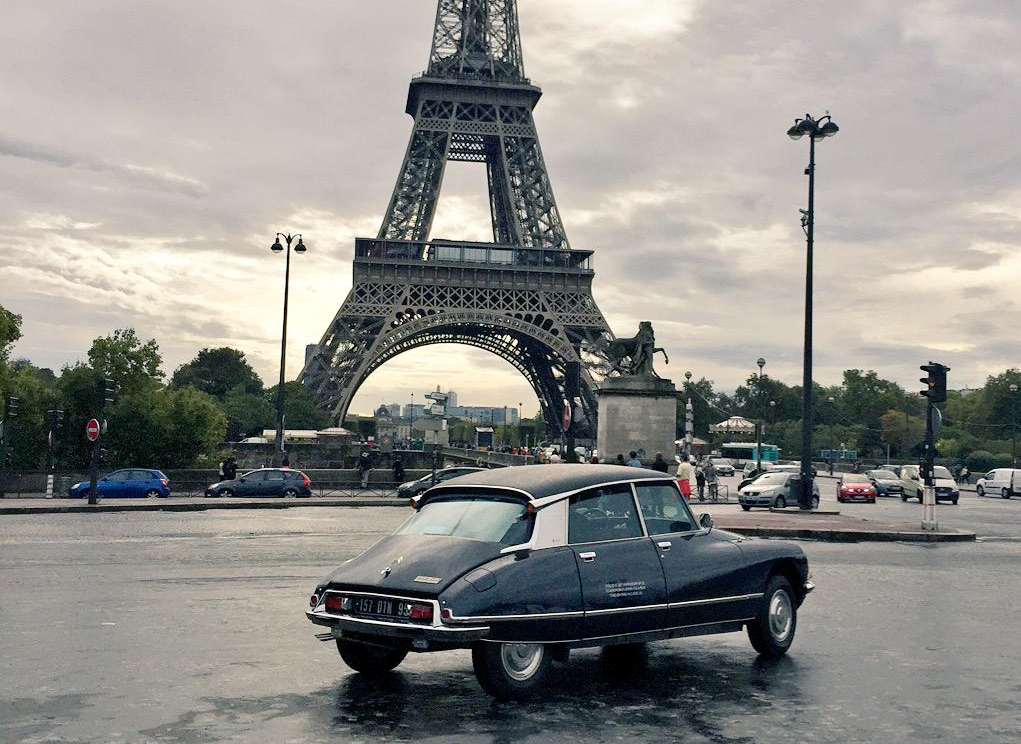
To mark sixty years to the day since the iconic DS was launched, at the Paris motor show, Citroen is offering free rides around the city. On a first-come-first-served basis, from 10-18:00, fifteen DSs will treat the lucky few to a 30 minute tour of the city centre, picking up from the Trocadero fountain opposite the Eiffel Tower via the Champs Elysee and Grand Palais to DS World at 33 rue François 1er.

To mark sixty years to the day since the iconic DS was launched, at the Paris motor show, Citroen is offering free rides around the city. On a first-come-first-served basis, from 10-18:00, fifteen DSs will treat the lucky few to a 30 minute tour of the city centre, picking up from the Trocadero fountain opposite the Eiffel Tower via the Champs Elysee and Grand Palais to the nearby DS World at 33 rue François 1er.

.

Major Flood Disruption French Riviera

Major roads reopen fairly quickly, and now most regional roads too, devastating floods hit the French Riviera overnight.

Last updated 18:00 Monday 5 October, see below.

.

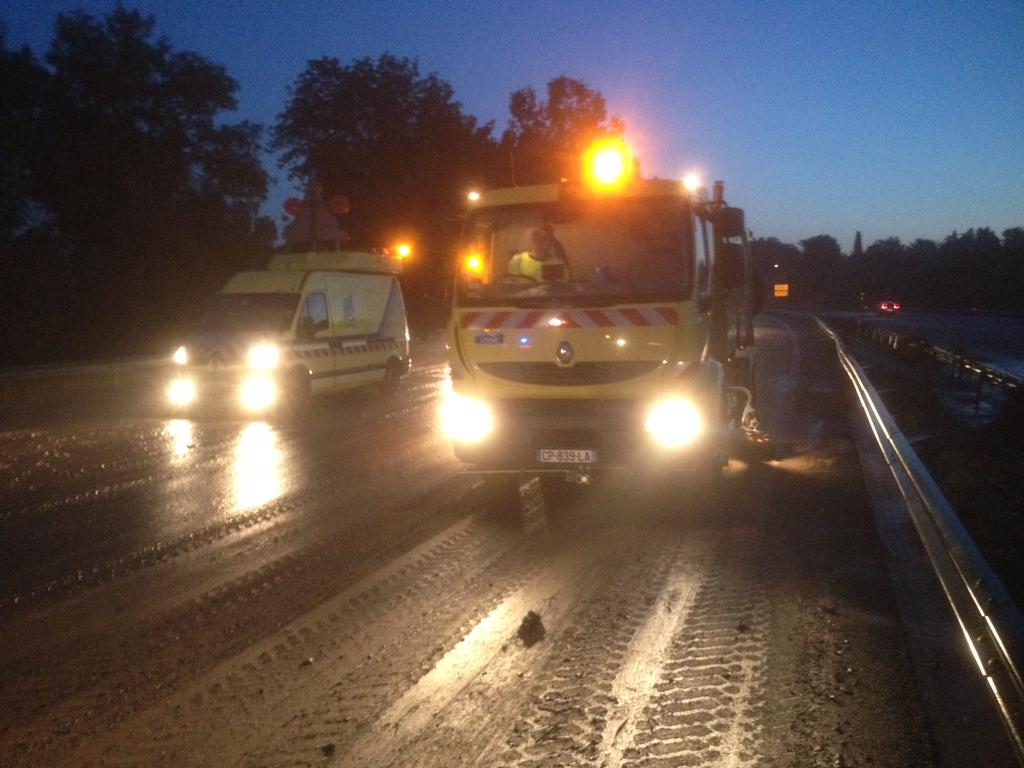
Clearing mud and debris from the A8 autoroute this morning. Photo @VinciAutoroutes

Clearing mud and debris from the A8 autoroute this morning. Photo @VinciAutoroutes

Catastophic mudslides and floods in south east France overnight have left at least sixteen people dead and closed many roads in the region.

Up to 180mm of rain fell in Cannes in three hours and 160mm in Mandelieu-la-Napoule just to the west, according to the Interior Ministry. The affected area stretches between Cannes and Nice.

The region had been under amber Meteoalarm for heavy rain but, as Jeremy Crunchant from Protection Civile told France24, ‘Heavy rains were expected, authorities were on alert, but no one expected such destruction.’

Five people drowned in an underground car park in Mandelieu and three others in a tunnel near Cannes.

The region is under a (downgraded) yellow alert for high winds today but drivers should be extremely cautious taking to the road, especially minor roads in the Nice, Cannes, Antibes and Grasse areas.

Many local roads remain closed according to the latest update, including the RD6185 (Mougins-Cannes), RD135 (Vallauris-Golfe-Juan), RD704 (at Antibes under the A8), RD635 (Antibes), the Cap Estel tunnel (Nice-Monaco) and the D23 at Gorbio says the Prefecture des Alpes-Maritimes. (see below for updated list).

The A8 motorway has been particularly affected between J40 Mandelieu and J50 Nice Promenade.

A lane in the direction of Italy was opened at 05:30 this morning according to Vinci Autoroutes. The road is now fully open eastbound with two lanes open westbound. Delays are considerably reduced but the area is still best avoided. 

Several junctions remain closed, and the Monaco Tunnel (now reopened), though the situation is improving all the time.

Meanwhile, trucks are being advised to travel between France and Italy via the Mont Blanc or Frejus Tunnels and avoid the A8 overnight.

Vinci says ‘it is essential to be well informed before taking to the road and defer any departure if possible’.

.

Update 18:00 Monday 5 October: most regional roads have now reopened according to the latest update from the Prefecture des Alpes-Maritime, except: the RD23 (Gorbio) is closed to traffic indefinitely because of a landslide, as is DR 635 (Antibes) due to subsidence. Traffic on the La Brague, Biot / Antibes, RD 4, RD 504, RD 704 remains difficult.

Update 09:45 Monday 5 October: several county roads have reopened according to the latest from Prefecture des Alpes-Maritimes including RD435 in Vallauris and RD 809 (Le Cannet/Cannes). Biot traffic remains very difficult, and access to Sophia Antipolis from Antibes. A further update is due after 10:30BST.

Vinci Autoroutes said traffic remains difficult on the A8 in both directions between Antibes and Nice.


.

‘Last Ditch’ Migrant Attack on Eurotunnel

Eurotunnel says this morning’s ‘massive invasion’ by migrants is a final push before new security measures are completed rather than a resumption of this summer’s repeated disruption.

.

‘LAST DITCH’ MIGRANT ATTACK ON EUROTUNNEL

Renewed disruption raises fears on fresh bout of regular delays.

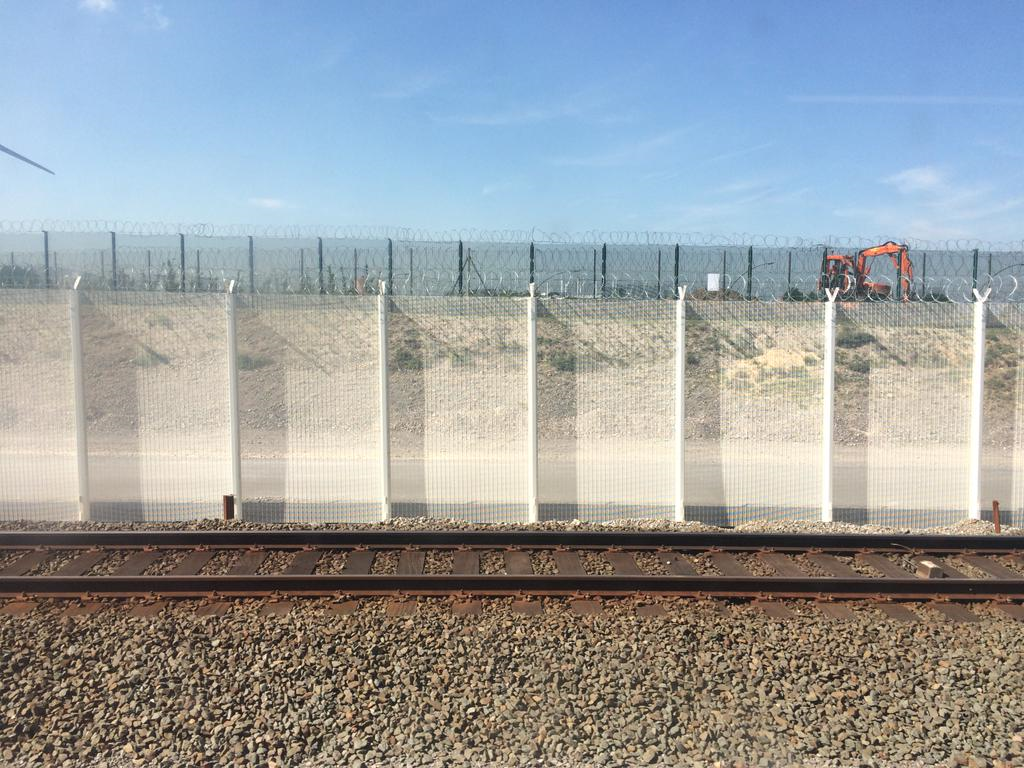
New layers of security fencing currently being installed at Eurotunnel in France. Photo @DriveEurope

Security fencing currently being installed at Eurotunnel in France. Photo @DriveEurope

A ‘carefully co-ordinated’ attack by migrants on Eurotunnel in France saw services suspended overnight and only resume mid-morning.

The incident follows a long period of relative calm since security was significantly bolstered at the Channel Tunnel after a high-profile meeting between the British and French Home Secretaries in late August.

It raises fears passengers again face the regular long delays seen in the summer.

However, a Eurotunnel spokesman told the Daily Mail today, ‘This looks like quite a carefully co-ordinated and organised attack, possibly to raise the profile of their situation or as a last-ditch attempt before the new fences are up.’

A group of more than one hundred migrants attacked the terminal in what even The Guardian described as a ‘massive invasion’ shortly after midnight.

Several Eurotunnel staff, police and migrants were injured.

Some of the migrant group managed to reach up to 15km inside the tunnel, almost a third of its length.

A police source told Paris journalist Peter Allen that, ‘Hard left political activists were seen coordinating ‘invasion’ of Channel Tunnel by UK-bound refugees today.’

Soon after the situation calmed at Eurotunnel the focus shifted to the nearby Calais port with access from the A16 and A26 motorways blocked.

Traffic was routed through the town due to ‘high number of clandestines trying to enter port area’ said DFDS Freight but the roads soon reopened.

.

After two days on torrential rain, flooding, collapsed roads and cancelled stages, the sun returns for the final day of the Tour de Corse World Rally

After two days of torrential rain, flooding, collapsed roads and cancelled stages, the sun returns for the second day of the Tour de Corse World Rally event in Corsica. Check out this great overview of the stunning roads on today’s event. Photo @Tuthill_Porsche

.

New ‘Virtual Licences’ For Foreign Drivers In France

French Prime Minister announces another raft of new measures to tackle worsening road safety, including three directed at foreign drivers.

.

Top government ministers arrive for today's 'Inter-ministerial Council on Road safety'. Photo @Matignon

Ministers arrive for today’s ‘Inter-ministerial Council on Road Safety’. Photo @Matignon

Foreign drivers in France will soon have a ‘virtual driving licence’ as the government seeks to reverse worsening road safety figures.

The virtual licence is one of three measures directed at foreign drivers announced today, among 22 in total, following an ‘Inter-ministerial Council on Road Safety’ (CISR), chaired by Prime Minister Manuel Valls, the first such meeting held in four years.

The other two measures are a new file to be created for each foreign driver with outstanding traffic fines, and a push to allow the mutual recognition of driving licence endorsements among European Union Member States.

A statement published after the meeting said, ‘Foreign vehicles on the French road network are subject the rules of the Highway Code. But in the case of infringements they may, in particular in the event of excess speed, be subject to treatment different from that of French users in the same situation, since no points can be withdrawn. It should be remedied.’

Unlike in the UK, French driving licences have a ‘points capital’ – of twelve points – from which points are deducted for each offence. Eight points for the same offence means automatic suspension, for at least six months.

According to the government’s figures, foreign drivers committed 3.13m traffic offences in France in 2014, or 12.5% of the total.

This is much less in fact than the previously oft-quoted statistics on foreign drivers of ‘25% of offences overall rising to 50% in the summer months’.

One British MEP claimed earlier this year that 500,000 UK drivers got away with speeding fines in France each year.

The rest of the measures announced today include 500 new fixed radar traps and 10,000 decoys; drones to monitor driver behaviour; and, the wearing of gloves to be made mandatory for motorbike riders to prevent injury, and helmets for cyclists under the age of twelve.

This is on top of 26 new measures announced in January in response to the first rise in annual road deaths in France for twelve years.

Today’s CISR meeting was triggered following a rise of 19.2% in road deaths in July compared to the same month last year, followed by a further rise of 9.5% in August.

Overall this year, road deaths are up by 4.5% compared to the same period in 2013.

.

Migrant Crisis Cancels German ‘Speed Blitz’

Germany: the overwhelming number of migrants mean next year’s ‘Speed Blitz’ 24 hour anti-speed campaign has been cancelled already – and what about the pan-European event held on the same day?

Also, trucks 7.5t and above are now included in the electronic toll system. Chronic delays dog the border with Austria, and there’s no end in sight. Busy roads this weekend for the first autumn holidays. The first ‘autonomous’ truck takes to the A8 near Stuttgart.

.

MIGRANT CRISIS CANCELS GERMAN SPEED BLITZ

Reassigned police officers mean not enough to run anti-speed day.

blitz

An overstretched police service means next spring’s ‘Blitz Marathon’ 24 hour anti speed campaign has been cancelled already.

With 280,000 refugee migrants having arrived so far this month alone, traffic officers are being reassigned to manage the influx, and maintain order in temporary housing.

A letter from several state’s Interior Ministers seen by n-tv (via Breitbart.com) says, ‘Due to the unpredictable evolution of the refugee situation and the resulting duties of the police, it was unanimously decided by all members that preparations for the next transnational speed ​​control event should be halted.’

Meanwhile, the head of the German police union also told Deutsche Wirtschafts Nachrichten this week that, because of the manning issues, a general increase in traffic offences was to be expected.

Germany is one of a number of European countries already struggling with worsening road safety.

This year’s ‘Speed Blitz’ (aka ‘Blitz Marathon’), held in April, was the first time the concept was expanded beyond Germany. It started in western state Nord Rhein Westphalia in 2012.

The idea is to hold a well-publicised, all-hands-on-deck one day blitz on speeding drivers using handheld and fixed speed cameras.

Co-ordinated by European police federation TISPOL, and taking place in 22 EU countries, of the 122,581 drivers fined this year, just over 91,000 of those were in Germany.

TISPOL did not immediately respond to an enquiry about whether the cancelled German operation would affect plans for next year’s pan-Europe campaign.

.

As of today (1 October), trucks 7.5t+ are now included in the German electronic toll system. Up until now the system has just applied to vehicles 12t and over. Also, as of 1 July this year a further 1100km of federal roads was added to the scheme meaning. The official website is Mauttabelle.de but further information in English, including a map of tolled roads and ordering the on-board unit (OBU), can be found at Toll-Collect.de

As of today (1 October), trucks 7.5t+ are now included in the German electronic toll system. Up until now the system has just applied to vehicles 12t and over. Also, as of 1 July this year a further 1100km of roads was added to the scheme which covers motorways and most federal highways. The official website is Mauttabelle.de but further information in English, including a map of tolled roads and how to order the on-board unit (OBU), can be found at Toll-Collect.de

.

roundup: BORDERS. There are no signs yet that the recently reinstated border controls with Austria are being scaled down, nor is there any published date for their removal. Under the border-free Schengen Zone rules, Germany can reinstate checks during a ‘serious threat to public policy or internal security’ for up to thirty days; they were first restarted on 13 September. So far this week, chronic delays of around thirty minutes have built up at the A1-A10/A8 border crossing near Salzburg towards Munich, and A8/A3 towards Passau, rising to more than one hour at peak times. The A12/A93 Innsbruck-Munich motorway has also seen regular queues at Kufstein. Less affected has been the A14/A96 border at Bregenz-Lindau though freight traffic is reduced here during the maintenance closure of the Arlberg Tunnel. As far as we can tell, the minor crossings such as the B179 Fernpass and B187/B2 at Garmisch Partenkirchen have not been affected. TRAFFIC. The fortnight autumn holiday kicking off in Nord Rhien Westphalia in the west, and Thuringia in central Germany – and the national day ‘Day of German Unity’ celebrations on Saturday – will see the first raised traffic levels after the summer this weekend says ADAC. Queues will not reach summer proportions but with dry and sunny weather expected over the weekend, popular destinations such as the Harz and Sauerland mountains, around the Baltic coast and south to Italy and Austria are sure to be busy. TRUCKS. Mercedes-Benz tested a ‘series production’ autonomous truck on public roads for the first time today, along nine miles of the A8 between Stuttgart and Daimler headquarters at Denkendorf, in Baden-Wurttemburg south west Germany. The standard Actros was equipped with the ‘Highway Pilot’ which works via front-mounted radar, and a stereo camera which reads road markings, alongside adaptive cruise control. It is able to steer itself, and stop if warning signals are ignored, but the driver retains full responsibility and must be able to intervene at any time. Mercedes has special permission from Baden-Wurttemburg to drive ‘autonomously’ at up to 80kmh. For further tests elsewhere in Germany or the EU, regulations which currently limit speeds to 10kmh will have to be amended. See here for more information or here for the live webcast of the event.

.