Spa Not Far – Sognefjellet – Tesla Trip – No Kidding

Rounding up the picture captions from the Bank Holiday weekend: a quick look at Sognefjellet, Scandinavia’s highest mountain pass, as it opens for the summer; not-far Spa-Francorchamps is rapidly becoming Brit’s favourite race away from home; Tesla Model S drivers enjoy a free German road trip; and, will Jodie Kidd replicate last year’s success on this month’s Mille Miglia?

.

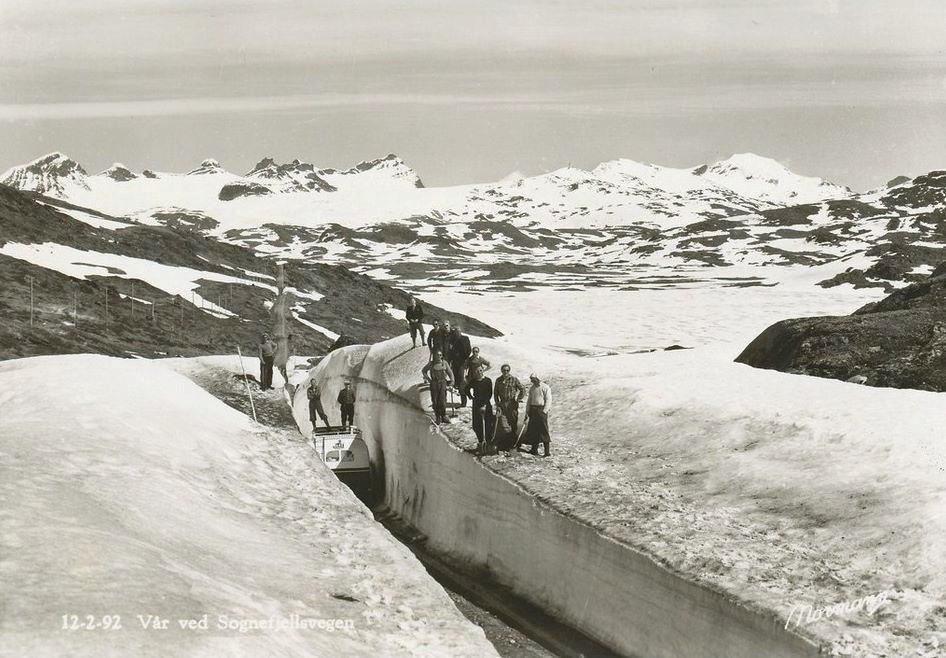
Spring along Sognefjellsvegen, Scandinavia's highest mountain pass, circa. 1950. Photo via @Elusive_Moose

Spring on Sognefjellet, Scandinavia’s highest mountain pass, circa. 1950 (despite the date stamp). The pass (national road 55) stretches 106km between Lom and Gaupne, topping out at 1434m – i.e. not that high by Alps standards – in south central Norway. It runs from ‘verdant meadows’, past ‘untamed mountains’ and ends alongside ‘crystal clear’ Sognefjord. Sognefjellet is one of eighteen National Tourist Routes, most of which are open already (the latest opens in June). Photo via @Elusive_Moose. See more mountain roads at PassFinder.

Exciting World Endurance Championship race at Spa-Francorchamps yesterday. More later.

‘Amazing number of British registered cars around. This race is now established as a pre-Le Mans warm-up for a lot of UK fans,’ tweeted motorsport journalist @AdamCooperF1 from the World Endurance Championship race at Spa-Francorchamps in eastern Belgium on Saturday. At less than 450 miles from Birmingham, or 325 miles from London – and €31 for a three day pass – why wouldn’t it be? The big question is how to get there: E40 via busy Brussels, A25-E42 Lille-Liege or, our favourite, N90 from Mons. Fans who made the trip this time were treated to a keen battle between Porsche and eventual victors Audi. Meanwhile, Aston Martin won both GTE classes. Roll on the Le Mans 24 Hours in June (and the Belgian Grand Prix in August). Photo via @AndyatAston

Siegestor War and Peace monument, Leopoldstrasse, northern Munich: Tesla Model S drivers near the end of a 1200km road trip from Hamburg to Feldkirchen near the Austrian border, ‘refuelling’ only by newly installed superchargers. Tesla now has 37 of the quick chargers around Germany which, it says, will always be free to use for Model S owners. Photo @TeslaMotors

Siegestor War and Peace monument, Leopoldstrasse, northern Munich: Tesla Model S drivers near the end of a 1200km road trip from Hamburg to Feldkirchen near the Austrian border, ‘refuelling’ only by newly installed superchargers. Tesla now has 37 of the quick chargers around Germany which, it says, will always be free to use for Model S owners. Photo @TeslaMotors

Male supermodel David Gandy, and former female supermodel - now Classic Car Show presenter - Jodie Kidd drive this Jaguar XK120 on this month’s Mille Miglia re-enactment. The pair spent last Wednesday testing around Loch Lomond, Scotland. Will Gandy help or hinder handy wheelwoman Kidd who was memorably the first of the Jaguar finishers on the event last year? The 2015 re-run starts on 14 May. Photo @DGandyOfficial

Male supermodel David Gandy, and former female supermodel – now Classic Car Show presenter – Jodie Kidd drive this Jaguar XK120 on this month’s Mille Miglia re-enactment. The pair spent last Wednesday testing around Loch Lomond, Scotland. Will Gandy help or hinder handy wheelwoman Kidd who was memorably the first of the Jaguar finishers on the event last year? The 2015 re-run starts on 14 May. Photo @DGandyOfficial

.

Swiss Mountain Pass Openings – Lunada Pass

Catching up with the major mountain roads in Switzerland – and one in Spain – as the winter locks begin to wear off.

Plus, a roundup of truck news: A40 Duisburg bridge reopens, a new EU Road Safety Agency coming in June, a new secure truck park in Dunkirk, French mega haulier Norbert Dentressangle is taken over by a US firm and, the Calais-Bordeaux ‘rail freight motorway’ project is cancelled.

.

SWISS MOUNTAIN PASS OPENINGS

Switzerland’s major mountain roads throw off their winter locks from now until mid-June.

Photo @DriveEurope.

Photo @DriveEurope.

With winter – almost – out of the way, there’s more certainty now about the opening dates of Switzerland’s major mountain passes.

The excellent east-west H19 Oberalppass in central Switzerland is already ready to drive.

Meanwhile, along with Austria’s Grossglockner High Alpine Road, Splugen Pass – the dividing line between the Eastern and Western Alps – and Fluela Pass, near Davos in eastern Switzerland, both opened yesterday (1 May).

(Actually, either the message is slow in getting through to the traffic sites or, according to TomTom, Fluela is still closed eastbound.)

The next major opening won’t be for a couple of weeks. The fabulous Albula Pass, star of On Her Majesty’s Secret Service – between Davos and St Moritz – opens on Wednesday 13 May according to Touring Club Schweiz (TCS), as does the famous H13 San Bernardino between Bellinzona and Chur in the south.

A week later – Friday 22 May – the H2 Gotthard Pass, parallel (and a good alternative to) the A2 Gotthard Tunnel, handily lifts the barriers the day before a ‘Black Saturday’.

The awful Klausenpass between A3 Glarus and A2 Altdorf in central Switzerland should also be free on the same day.

A little while later, on Tuesday 26 May, come the terrible twosome of Forcola di Livigno – linking the always-open Bernina Pass across the Italian border towards Stelvio, basically between St Moritz and Bormio – shortly followed by Umbrail, between Ofenpass/Fluelapass and Stelvio.

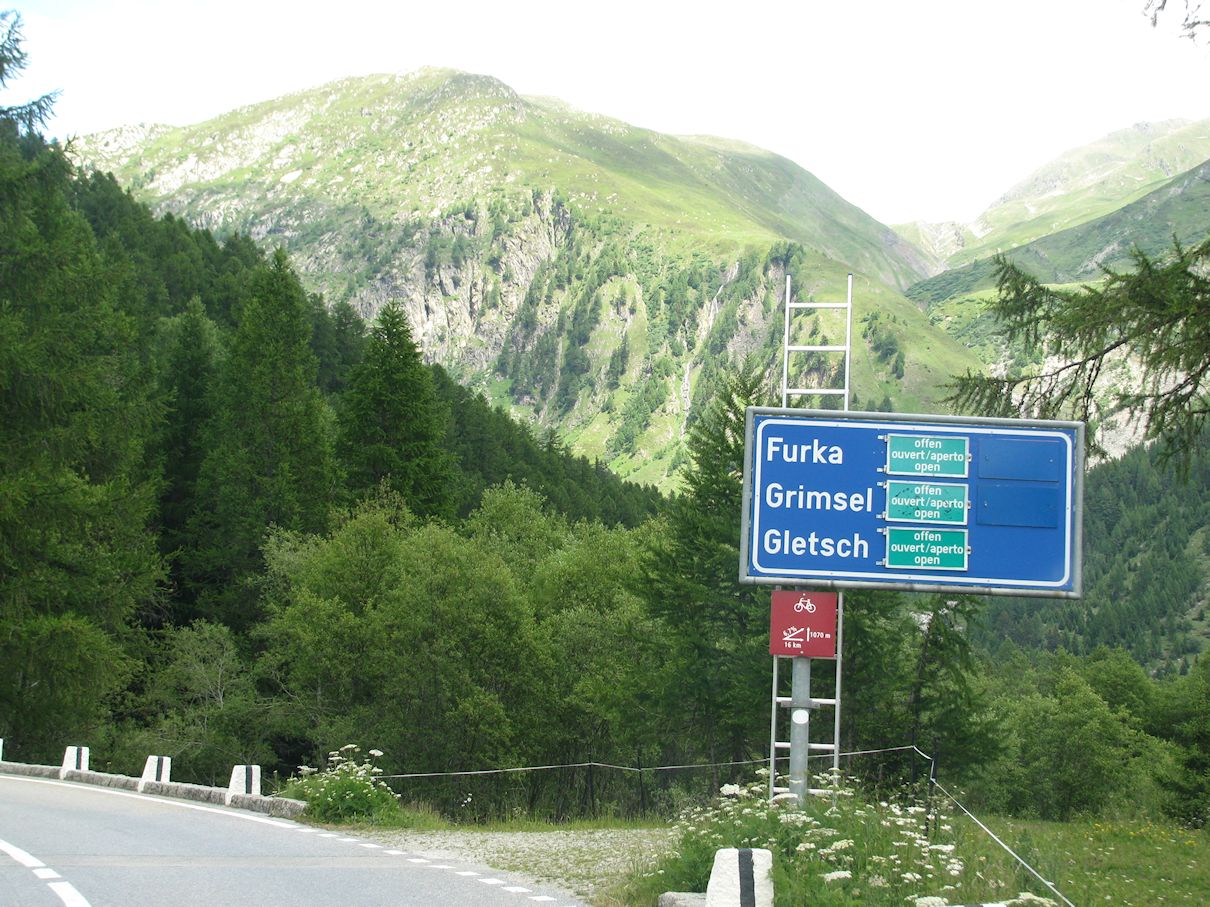
The beginning of June sees the nice-enough Nufenen – east-west from the bottom of Gotthard – and the amazing Grimsel Pass, which picks up from the east end of Nufenen, and the Great Saint Bernard Pass between Martigny and Aosta (Italy) in western Switzerland.

H19 Furka Pass – between Gotthard and Grimsel – opens on Wednesday 3 June. Whether it’s worth waiting for depends on whether you are excited to drive a road that has barely changed since James Bond was there in Goldfinger.

Finally, Das Loop – the six major passes centered around Andermatt and Gotthard – should be ready for business from Friday 12 June with the opening of Sustenpass. It connects the north end of Grimsel with the A2 just north of Gotthard.

For more information see the weekly updates from Touring Club Switzerland (German only but easy to understand) or, similarly, the Alpenstrassen page at ADAC for France, Switzerland, Austria and Italy. Opening dates can only be approximate; passes can and do close at short notice due to the weather, even at the height of summer. See our PassFinder page for alternatives nearby.

.

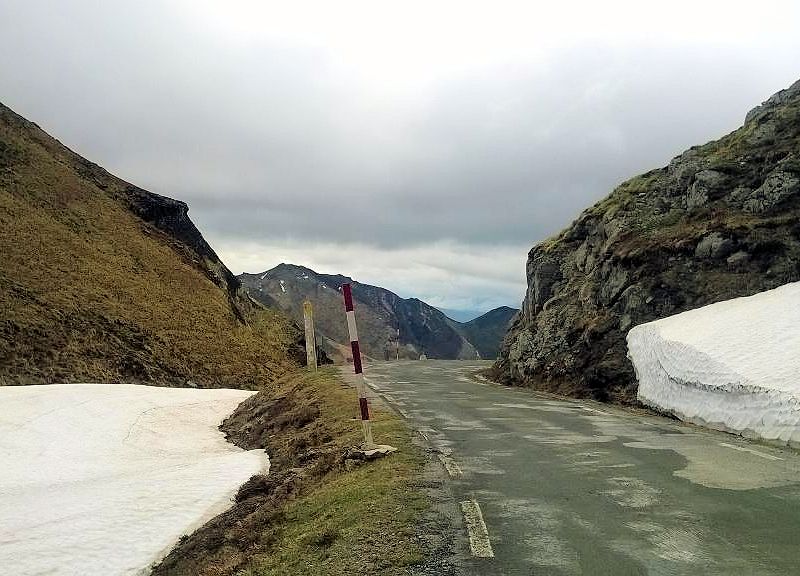
'Nothing like entering Cantabria over the Lunada Pass, even in the cloud!' says @RatonCantabria.

Spain: ‘Nothing like entering Cantabria over the Lunada Pass, even in the cloud!’ says @RatonCantabria. Portillo de Lunada (1316m) connects Espinoza de los Monteros with San Roque de Riomiera, south to north across the Castile & Leon – Cantabria border, BU-570/572-CA643. Lunada closes for the winter too but is normally open by April.

.

roundup: GERMANY. The A40 Neuenkamp Bridge – shut to 3.5t+ trucks eastbound to Duisburg for the past two months – has re-opened to heavy vehicles cutting an hour-long detour. Thousands of drivers were fined after missing the signs. Work is due to start on the westbound carriageway next week according to Strassen NRW but it’s not clear yet if that will now be barred for trucks. UPDATE 12 May: the westbound carriageway is now closed to trucks with one lane open for cars for the next five weeks according to local reports though it is still open to express buses. HAULAGE. Ask and you will be given is the lesson. Recent heavy lobbying on ‘social dumping’ from industry groups – especially in Italy and France – and tightening of driver’s hours rules by Germany, Belgium and France has resulted (according to a scoop today from Brussels-upstart POLITICO Europe) in a new EU ‘Road Safety Agency’ to police the transport sector, particularly remote working laws. Full plans are expected to be revealed in June. See the latest herePARKING. A new €2.5m truck park has opened on the N316 into Dunkirk Port, just off J53 of the A16 Calais-Dunkirk reports Lloyd’s Loading List. Priced at €2.70 per hour – up to €27 for 24 hours – the secure site, ring fenced and policed by 40 CCTV cameras, can accommodate 250 vehicles. It also has a 24/7 restaurant, toilets and showers, self-serve launderette and free wi-fi access. See DK Trucks Park for more. HAULAGE. Lyon-based mega haulier Norbert Dentressangle, with its 7,700-strong fleet of distinctive, red liveried trucks, has been bought by American firm XPO Logistics. The €3.24bn deal is subject only to US and German antitrust clearances; financing is already in place says the statement. According to Commercial Motor, the vehicles will be re-branded XPO whose own livery, in the US, is predominantly white. Meanwhile, the French government will reportedly today cancel plans for the Pas-de-Calais-Landes ‘rail freight motorway’. The line was intended to carry 85,000 trucks each year between north France and the south west. Transport minister Alain Vidal says the project is too expensive, uneconomic and would be too disruptive according to France Bleu.

.

€14bn Road Regen Germany – Grossglockner Open

A vast new road building and regeneration project has been announced in Germany using private capital, but how will investors earn their returns?

Plus, Denmark’s Fehmarn Link gets the final go-ahead. Austria’s Grossglockner kicks off the mountain pass season. Speed cameras turned off in Antwerp. A new Low Emission Zone for Rotterdam. And, no new 150kmh speed limit on Czech motorways.

.

€14bn ROADS REGEN GERMANY

Private capital to address ‘decades of underinvestment’.

.

A new generation of ‘Public Private Partnerships’ – PPPs – is to pay for a significant overhaul of the autobahn network.

Exactly like the European Commission’s €315bn Juncker Plan, the authorities in Berlin want to use private investment to build or refurbish 600km of new roads.

Transport minister Alexander Dobrindt said today (Friday), ‘With the new generation PPPs we will activate fresh private capital for investment in major road projects in Germany and create a new market for institutional investors. They can invest capital stable and secure for the long term in German transport infrastructure projects’.

The obvious question is, how exactly will these investors earn their returns?

Unlike the European Commission’s plans in which private capital will make profits through road tolls, for instance, the German government will pay directly in a system known as ‘shadow tolling’.

The ‘next generation’ aspect of the new PPPs refers to the payments varying depending on performance. Road works or reduced speed limits for example will earn the government discounts.

Meanwhile, the projects should go some way in tackling the ‘decades of underinvestment’ in the motorway network.

The entire stretch of the A3 between Wurzburg and Nuremberg will be widened to six lanes, as will the A6 Heilbronn-Nuremberg between the A81 and A7, the A8 between the A93 Innsbruck junction and the Austrian border near Salzburg, and the A57 Cologne-Moers. The A24 and A10 Berlin ring will also be widened Neuruppin-Pankow.

Handy for those driving between the northern Netherlands and Germany will be the widening – to four lanes – of the E233 which continues the Dutch A37 at Emmen, all the way to the A1 between Osnabruck and Bremen.

Particularly exciting however is the work to the west of Hamburg.

The A20 Kustenautobahn (coastal motorway), which shadows the Baltic coast through Lubeck, Rostock and Stralsund, will be extended in the west (marked in red, above) via a new crossing of the River Elbe to Bremerhaven and Oldenburg.

The A20 extension is not part of the PPP works, but new sections of the A26 to connect the A20 to the A1 south of Hamburg are. The net effect will be to bypass bottleneck Hamburg between Western Europe and mainland Denmark.

No timescale was mentioned for any of the PPP projects.

Meanwhile, the Fehmarn Link project, a new tunnel between Denmark and Germany – marked in green, above – on the direct route between Hamburg and Copenhagen, got the final go-ahead in the Danish parliament this week.

The vast majority of the current €7.4bn price tag will be borne by Danish taxpayers though the Germans will widen the A1 all the way to the coast at Puttgarden at a cost of €800m.

Construction starts in 2017 with completion expected in 2024.

.

Grossglockner re-opens today More later.

The Grossglockner High Alpine Road – the B107 between Zell am See and Lienz in south central Austria – has reopened after winter. The rates remain the same as last year: €34.50 per car (with discount for EVs and bikes) but will be slightly lower until 7 May when the off-shoot roads up to Edelweiss Spitze – the highest point at 2571m, 8435ft – and the Kaiser-Franz-Josefs-Hohe, beside the Pasterze Glacier, also open. See more at Grossglockner.at

.

roundup: NETHERLANDS. Diesel cars registered before 2001 and petrol cars before 1992 will be banned from north central Rotterdam, inside the ring road, from 1 January 2016 reports DutchNews.nl. Meanwhile, a €90 penalty for breaking Utrecht’s Low Emission Zone, which started in January, comes into force today. It’s not clear whether the bans apply to foreign and/or classic cars. BELGIUM. Speed cameras on the major roads around Antwerp have been shut down for several weeks now as the authorities try to cope with a back log says Deredactie.be. New rules mean the drivers of lease cars must be identified not just the lease company causing a ‘considerable additional workload’. Cameras on local roads and mobile speed traps continue to operate. CZECH REPUBLIC. Controversial president Milos Zeman will veto a law raising the speed limit from 130kmh to 150kmh on selected stretches of motorway reports Ceske Noviny. MPs voted in favour this week but the move – inspired by delimited German autobahns – is yet to be debated in the upper house. The police say a raised limit would be risky; the transport minister says the roads are not designed for 150kmh. The then Czechoslovakia was among the pioneers of high speed roads in the 1930s, inspired in part by the innovative aerodynamics on streamlined Tatra cars.

.

Autoroute Bus Lanes Begin in Paris – Futa + Raticosa

The first of many reserved bus and taxi lanes on motorways into Paris starts tomorrow, a few days ahead of a tripling of parking charges for coaches.

Also, Mercedes looks ahead to next month’s Mille Miglia. MEPs finally make auto emergency alert in-car eCall devices mandatory. Night Wolves to re-attempt Polish border crossing. Passengers safe after Mediterranean ferry fire.

.

AUTOROUTE BUS LANES BEGIN IN PARIS

Southbound A1 first of many reserved lanes around the French capital.

Upcoming bus and taxi lanes in Paris. Graphic via Paris.fr

Upcoming bus and taxi lanes in Paris. Graphic via Paris.fr

As of tomorrow (Wednesday 29 April), the left most lane of the A1 autoroute southbound into Paris will be for buses and taxis only.

The new lane stretches for 5km from the A1-A86 interchange at La Courneuve to the four-lane Landy Tunnel, just after the Stade de France.

The aim is to speed up journeys for ‘HOV high occupancy vehicles’ from Charles de Gaulle airport. Initially at least, the lane is not open to car poolers and tourist coaches.

Restrictions apply from 06:30-10:00 working weekdays. The closed lane is marked with a red X on the overhead gantry.

Eventually there will be a €135 fine for using the lane illegally, but Paris authorities are allowing for a ‘long education period’ before penalties apply.

The new bus lane is the first of many due around the capital. From the end of the month a similar lane will be introduced northbound on the A6 from Orly airport in the south of the city. Over the next five years another twelve will appear around the capital.

As pointed out by campaign group ’40 Million Automobilistes’, this is the third attempt at a reserved lane on the Paris A1. Previous efforts in 1974 and 2009, both on the right hand lane, were withdrawn after a few months.

Paris Coach Parking: as of Friday 1 May, parking charges for coaches in the capital will triple. Recent protests by local operators have so far come to nothing. A morning pass previously costing €37.60 is now €107.30. Significant savings can be made by booking in advance on the internet – advance morning passes are €64.50. See the Pass Autocar Paris website for more details.

.

Mercedes-Benz on Futa and Raticosa for Mille MIglia tribute. More later.

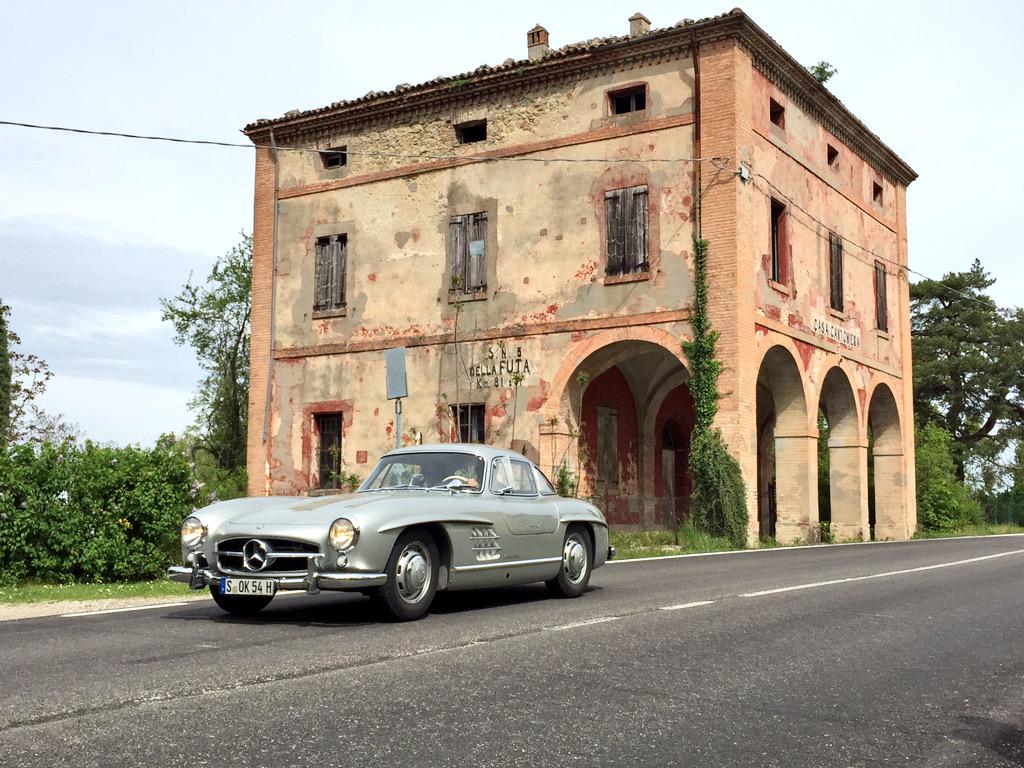
Most eyes were on Tour Auto last week but Mercedes-Benz also gave some historic racers a work out, on the Futa and Raticosa passes in northern Italy. The German manufacturer is a major sponsor of next month’s Mille Miglia re-enactment – starting 14 May – the sixtieth anniversary of Moss and Jenk’s record-breaking run. The pair completed the 1600km course between Brescia and Rome and back in ten hours at an average speed of almost 160kph. Futa and Raticosa are classic Mille Miglia roads, running concurrently along SP65, parallel to the A1 between Bologna and Florence, a few hundred yards east.

.

roundup: EU. After a very long gestation, MEPs decided today that from 31 March 2018 all passenger cars and light commercial vehicles must be fitted with an eCall device, used to summon emergency services automatically in the event of an accident. The system was first proposed in 1999. The rules were amended today to prevent vehicle tracking via the device. It will transmit the type of vehicle, the fuel used, time of the accident, exact location and number of passengers; the system also reportedly includes a microphone link. The rules will be reviewed in 2021 with a view to including buses, coaches and heavy trucks. Member states must have the IT infrastructure in place to process eCalls by 1 October 2017. NIGHT WOLVES. After a long wait at the Terespol border crossing from Belarus yesterday morning, ten Night Wolves bikers were refused entry into Poland. The Czech Republic and Germany have also both reportedly refused to allow the group on their territory. A large posse of Polish bikers had gathered to escort the Russian bikers on the next leg of the tour, a retracing of the bloody WW2 march from Moscow, ending in Berlin on Victory Day, 9 May. Night Wolves leader Alexander Zaldostanov vowed this morning that the group would try to cross again today reports TheNews.pl. Update: eight Russian bikers have been prevented form entering Lithuania according to Delphi Lithuania Tribune. SPAIN. All 160 passengers and crew were safely evacuated after the Acciona-Trasmediterranea MV Sorrento caught fire off the coast of Palma de Mallorca this afternoon according to El Pais English. One person is reportedly seriously injured due to smoke inhalation. A further three crew members suffered minor affects. The ship was on its way to Valencia. The captain gave the order to abandon ship an hour after the blaze was first spotted on the port side. No cause has been given.

.

Tour Auto D5: Pau-Biarritz

The drama is all in the mid-field on the final day as Tour Auto heads for the sea via the Pyrenees’ foothills.

.

Overall winners: Jean-Pierre Lajournade and Christophe Bouchet (Jaguar E-Type)

Overall winners: Jean Pierre Lajournade and Christophe Bouchet (Jaguar E-type). Photo @Morrissette_Rac (Morrissette racing).

The A64 guided the route on day four and it does so again on the fifth and final day.

This time however, drivers criss-cross ‘La Pyrénéenne’ before a last plunge down into the foothills ahead of the seaside finish in Biarritz.

At 212km, day five is by far the shortest of Tour Auto with a 07:30 start and expected 15:50 finish.

Racing laps were at the Circuit Pau Arnos, a relatively new track opened in the 1980s, between Pau and Orthez.

Unlike day four there are no famous mountain passes though good use is made of the tiniest back roads.

Picnic lunch stop La Bastide Clairence is officially one of the ‘Most Beautiful Villages of France’. Orthez is famous for its ancient ‘Pont Vieux’ fortified bridge (now closed to cars).

The afternoon’s special stage is on the tight, twisty and wooded D123 from Oregue.

Final Results:

After overcoming the mob of Cobra 289s on the second day, Jean-Pierre Lajournade and Christophe Bouchet (Jaguar E-type) held the lead for the rest of the competition to eventually win by 31s.

However, Ludovic Caron and Charles de Villaucourt (AC Cobra 289) in second cut the gap by a third on the final day.

This is the second overall victory for Lajournade and Bochet after winning in 2010 at the wheel of a Lotus Elan.

Meanwhile, final stage dramatics saw Philippe Vandromme and Frédéric Vivier (Ford GT40) overhaul a gap of more than a minute to take victory in the G1 + G2 Class over Arnaud Gauduel and Alexandre Delaye (BMW 2800 CS).

The H1, H2 + I Class had been expected to produce another nail biting finish but in the end – after a dead heat on day three, and one second gap on day four – Christophe Van Riet and Kristoffer Cartenian (Porsche 911 RS 3.0) ultimately beat Didier and Jerome Sirgue (De Tomaso Pantera) by 20s.

In the weighted Index classification, Frédéric Puren and Caroline Bertrand (Porsche 956) lead from the beginning and finished 1m57 ahead of the rest of the field on a corrected 1h00m38s, compared to the 1h33m33s of overall winner Lajournade.

Similarly, Jean-François Nicoules and François Nicoules lead every day of the Regularity competition.

.

For more information see the Tour Auto website, or follow @TourAuto. See Day One Paris-Vichy here, Day Two Vichy-Clermont Ferrand here, Day Three Clermont Ferrand-Toulouse here and Day Four Toulouse-Pau here.

.

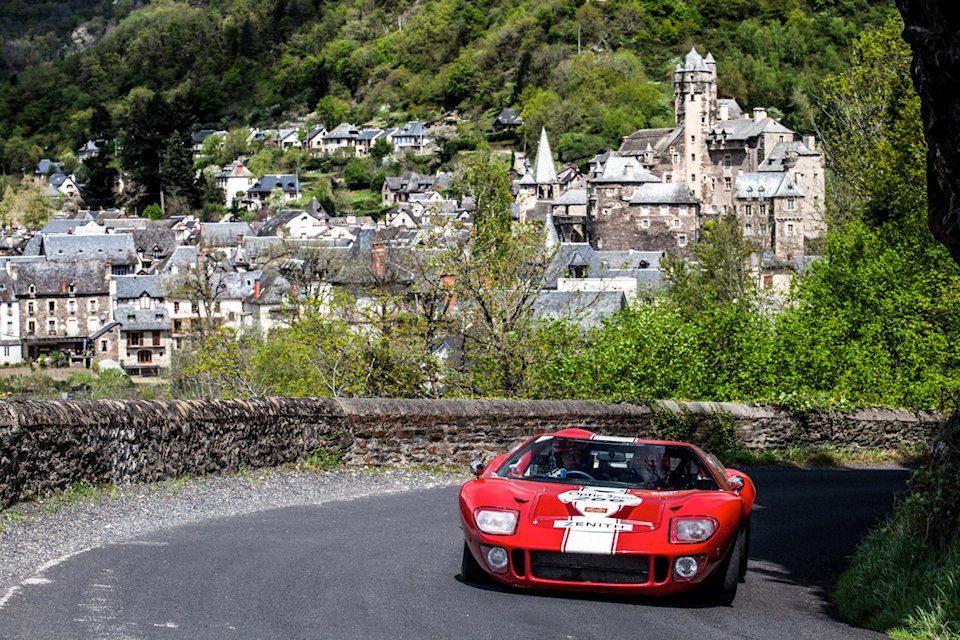
Group G: Philippe Vandromme and Frédéric Vivier (Ford GT40)

Group G: Philippe Vandromme and Frédéric Vivier (Ford GT40). All subsequent photos @TourAuto

Group H: Christophe Van Riet and Kristoffer Cartenian (Porsche 911 RS 3.0)

Group H: Christophe Van Riet and Kristoffer Cartenian (Porsche 911 RS 3.0)

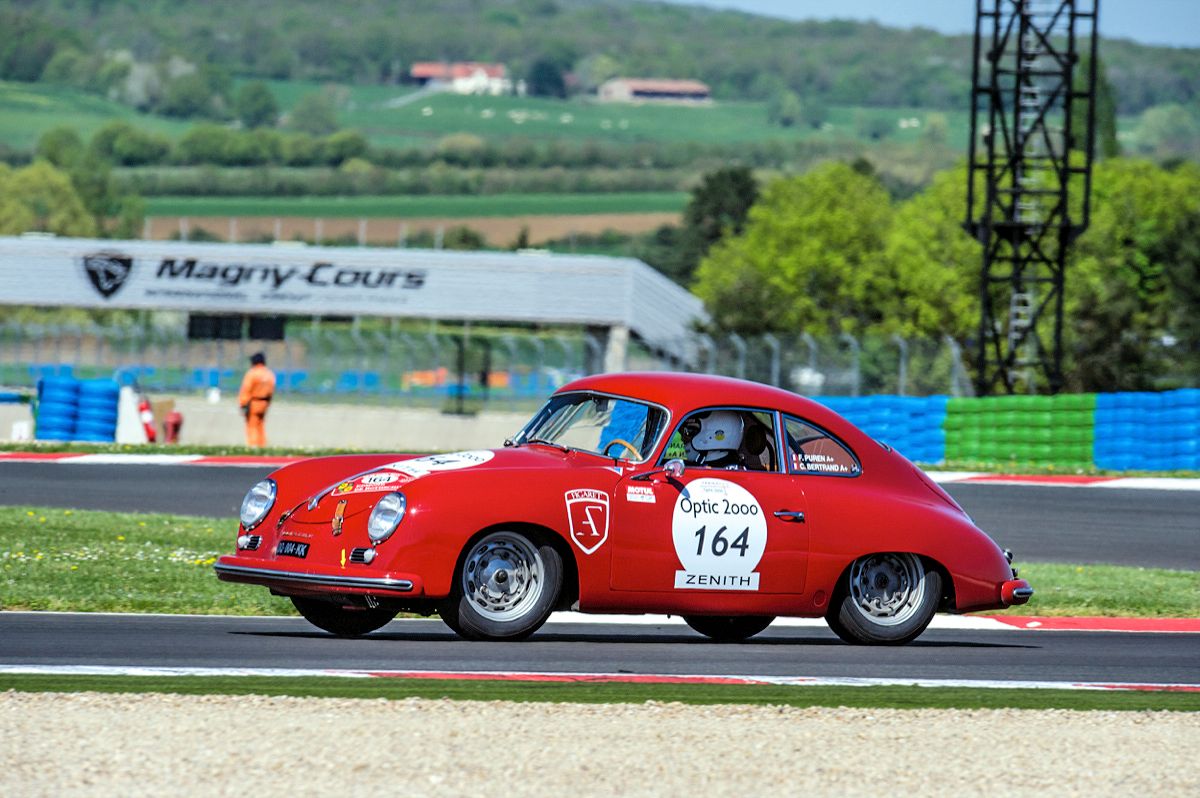
Index Classification: Frédéric Puren and Caroline Bertrand (Porsche 356)

Index Classification: Frédéric Puren and Caroline Bertrand (Porsche 356)

Regularity: Jean-François Nicoules and François Nicoules (Alpine A110 1600S)

Regularity: Jean-François Nicoules and François Nicoules (Alpine A110 1600S)

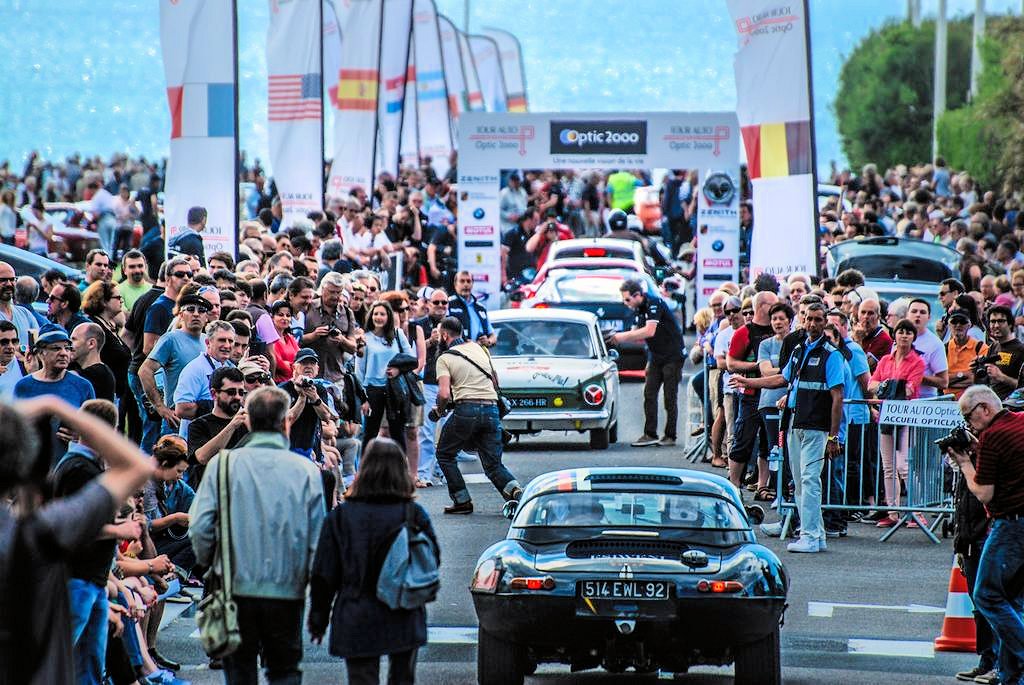
The Tour Auto finish at Cite de l'Ocean in Biarritz, in sight of the Atlantic.The Tour Auto finish at Cite de l'Ocean in Biarritz, in sight of the Atlantic.

The Tour Auto finish at Cite de l’Ocean in Biarritz, in sight of the Atlantic.

.

.

Tour Auto D4: Toulouse-Pau

Tour Auto drivers get their first taste of the mountains. Meanwhile, with the leader seemingly able to maintain a healthy gap over his nearest rival, attention shifts to the H1, H2 + I class where just one second separates the top two.

.

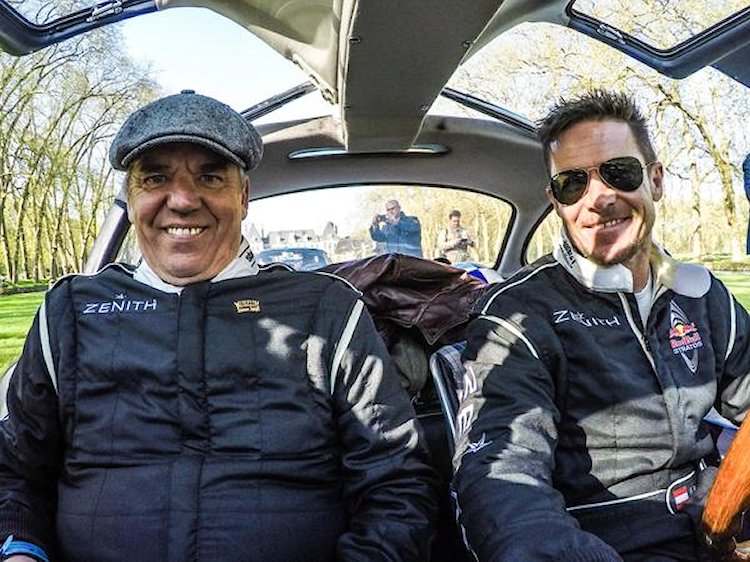
63: Red Bull daredevil Felix Baumgartner and Hermann Layher in a 1955 Mercedes-Bez 300 SL

63: Red Bull daredevil Felix Baumgartner and Hermann Layher in a 1955 Mercedes-Bez 300 SL

Today’s route might be much different if Tour Auto was held a little later.

Competitors would likely drive two particularly legendary mountain passes from the Tour de France, and the famous Pau Grand Prix circuit, run around the town almost every year since 1933.

As it is, cols du Tourmalet and d’Aubisque are still shut for the winter and the street race takes place next month.

Meanwhile the actual route shadows the arc of the east-west A64 ‘La Pyreneenne’ autoroute from Toulouse to Pau.

In fact, the first 60km of the day’s 370km is a blast down the A64 before the cars turn off at Cazeres and head up into the mountains.

From there to the lunch stop at Abbaye de l’Escaladieu – founded by monks in the 12th century, in a wooded valley at the confluence of the Arros and Luz rivers – the course does include two noted Tour passes, Col de Portet d’Aspet (D618) and Col de Mente (D44).

By coincidence @UndiscoverdPyr (Undiscovered Pyrenees) was cycling up Col de Mente at the time and told us, ‘What an impressive sight and sound, that number of classic cars heading up a col!’

After Bagneres di Bigorre, instead of heading south to D935 to pick up Col du Tourmalet (D918) at Sainte Marie de Campan, the drivers cut across to Lourdes on D26.

Similarly, following the Col du Soulor (D918) after Argeles Gasozt, the drivers then head north down to Pau instead of straight on to Col d’Ausbisque.

We’re not trying to imply the Tour Auto route is deficient – far from it – it’s just that drivers heading this way later in the year might want to include those roads.

Day Four results:

Jean Pierre Lajournade and Christophe Bouchet in the Jaguar E-Type 3.8 again extended their lead – to 42s – over the second placed Cobra 289 of Ludovic Caron and Charles de Villaucourt in the overall standings. However, Shaun Lynn and Kevin Kivlochan in a second Cobra 289 have closed up now to less than a minute from the lead.

After a consistent forty odd second gap between the two GHI Class, G1 + G2 front runners for the last couple of days, Arnaud Gauduel and Alexandre Delaye in their BMW 2800 CS finally managed to pull out an extra 12s over the second placed Ford GT 40 of Philippe Vandromme and Frederic Vivier today. They maintain their seven minute advantage over the rest of the field with Philippe Belin and Stephane Soulet in a Mini Cooper S 1300 now in third.

Meanwhile, after the extraordinary dead heat yesterday – between Christophe van Riet and Kristoffer Cartenian in the Porsche 911 RS 3.0 and Didier Sirgue and Jerome Sirgue’s De Tomaso Pantera, at the top of the H1, H2 and I Class – the former is now one second ahead. The third placed Ligier JS 2 DFV has slipped a further two seconds behind, to +1m22.

Finally, things have remained remarkably static in the overall weighted classification. Frederic Puren and Caroline Bertrand (Porsche 356) maintain their 1m39 lead over Alexis Raoux and Henri Teisserenc (Alfa Romeo Giulietta Sprint Veloce). The third placed 356 of Jean-Francois Penillard and Mathieu Verlaine is now 2s further behind at 4m25.

.

For more information see the Tour Auto website here, or follow @TourAuto. See Day One Paris-Vichy here, Day Two Vichy-Clermont Ferrand here, Day Three Clermont-Ferrand-Toulouse here or Day Five Pau-Biarritz here.

.

218: Ludovic Le Boeuf and Dimitri Le Boeuf in a 1962 Jaguar E-type 3.8. Photo @AlainFigaret

218: Ludovic Le Boeuf and Dimitri Le Boeuf in a 1962 Jaguar E-type 3.8. Photo @AlainFigaret

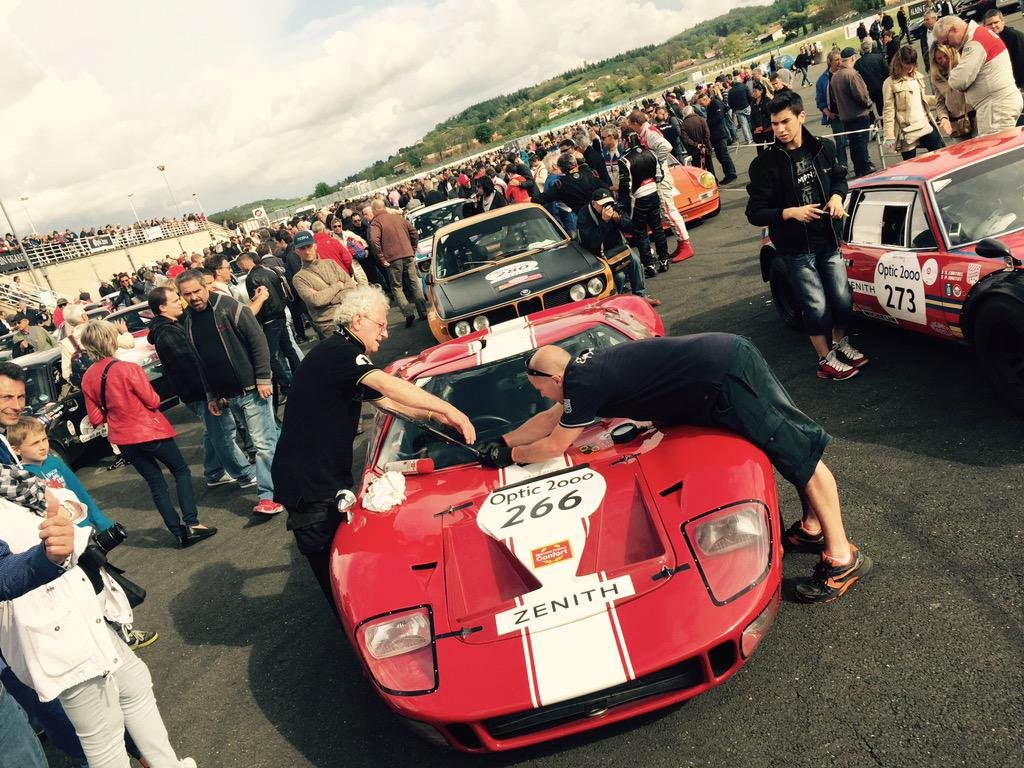
266: Philippe Vandrome and Frederic Vivier in a 1967 Ford GT 40

266: Philippe Vandrome and Frederic Vivier in a 1967 Ford GT 40

42: Francois Pourcher and Duran Duran singer Simon Le Bon in a 1950 Jaguar XK 120

42: Francois Pourcher and Duran Duran singer Simon Le Bon in a 1950 Jaguar XK 120

32: Dominique Jouvin and Claudine Jouvin in a Jaguar XK 120 Roadster pulling in to the Abbaye de l’Escaladieu. Photo Departement des Hautes-Pyrenees

32: Dominique Jouvin and Claudine Jouvin in a Jaguar XK 120 Roadster pulling in to the Abbaye de l’Escaladieu. Photo Departement des Hautes-Pyrenees

.

.

Tour Auto D3: Clermont Ferrand-Toulouse.

As the runners race south around the extinct volcanoes of Clermont Ferrand we catch up with the competition.

After a strong start, the group of Cobras at the top has started to thin out as the overall lead is taken, if not quite consolidated yet, by a Jaguar E-Type.

.
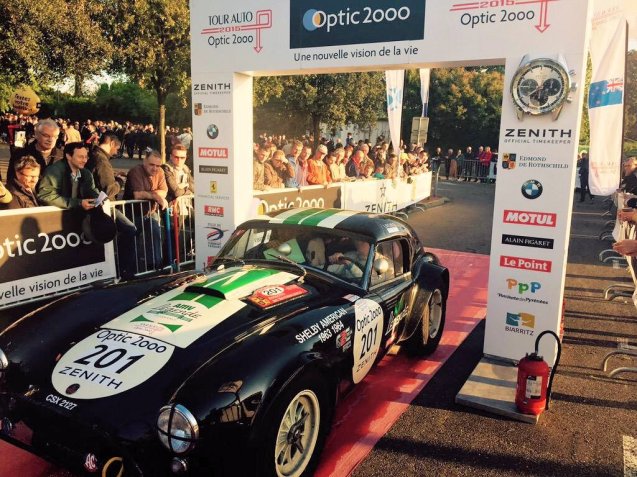
The 1963 Shelby Cobra 289 of second placed overall Ludovic Caron and Charles de Villaucourt at the finish in Toulouse.

The 1963 Shelby Cobra 289 of second placed overall Ludovic Caron and Charles de Villaucourt at the finish in Toulouse.

Today is the second longest leg at 463km between Clermont Ferrand and Toulouse with two special stages, lunch at the Domaine de la Goudalie and timed laps of the Circuit d’Albi.

In general, the route is much more on the beaten track than yesterday’s tiny back roads (except for one particularly intriguing stretch, the D317 between Saint-Jacques-des-Blats and Mandailles-Saint-Julien).

Having said that, there aren’t many ways through the Chaine des Puys, the 40km long string of dormant volcanoes south west of Clermont Ferrand where the cars started this morning.

From there it’s a gentle descent down from the Massif Central through Aurillac, Rodez and Albi.

Three days in and the competition is starting to take shape. It’s good time to recap events at the sharp end.

Day One results:

So far the Shelby Cobra 289s are making pretty much all the running, taking four of the top five positions in the overall standings after the first day.

Ludovic Caron and Charles de Villaucourt lead second placed Jean Pierre Lajournade and Christophe Bouchet (in a Jaguar E-Type 3.8) by 13s.

For the GHI class, for cars built 1966-81, in the G1 + G2 section Arnaud Gauduel and Alexandre Delaye in a BMW 2800 CS are 29s ahead of Lucien Guitteny and Jean-Francois Mace in an Alfa Romeo 1750GTAM, and 35 seconds ahead of Philippe Vandromme and Frederic Vivier in a Ford GT40.

In H1, H2 + I, Christophe van Riet and Kristoffer Cartenian in the Porsche 911 RS 3.0 lead Didier Sirgue and Jerome Sirgue’s de Tomaso Pantera by 9s, and third placed Porsche 911 RSR 2.8 of Michel Lecourt and Raymond Narac by 15s.

When weighting is applied the overall leaders turn out to be two Porsche 356s followed by two Alfa Romeos, a Giulietta Sprint Veloce and Giulia Sprint Veloce respectively. Frederic Puren and Caroline Bertrand lead Francois Penillard and Mathieu Verlaine by 28s.

Day Two results:

One Cobra dropped away from the pack today while first place was taken by Jean Pierre Lajournade and Christophe Bouchet’s Jaguar E-Type 3.8. They now lead the Cobra of Ludovic Caron and Charles de Villaucourt by 14s in the overall standings with the Lotus Elan of Damien Kohler and Sylvie Laboisne into fifth, albeit 1m44 behind the pace setters.

Meanwhile, in the GHI class, G1 + G2 is still lead by Arnaud Gauduel and Alexandre Delaye in their BMW 2800 CS. They have extended the gap to the second placed Ford GT 40 of Philippe Vandromme and Frederic Vivier to 41s. A further 29s behind are Lucien Guitteny and Jean-Francois Mace in the Alfa Romeo 1750GTAM. Clear blue water is starting to emerge now between the top three and the fourth placed Mini Cooper, 5m12 behind.

In H1, H2 + I, Christophe van Riet and Kristoffer Cartenian in the Porsche 911 RS 3.0 stay 9s ahead of Didier Sirgue and Jerome Sirgue’s De Tomaso Pantera. Lecourt and Narac have now dropped behind the third placed Ligier JS 2 DFV.

Frederic Puren and Caroline Bertrand in a Porsche 956 stay in the overall lead when performance weighting is applied but Alexis Raoux and Henri Teisserenc in the Alfa Romeo Giuletta Sprint Veloce have now edged into second. Previously second placed Francois Penillard and Mathieu Verlaine, also in a Porsche 956, are now in third. The top duo now also have a pretty hand 1m09 gap over their nearest rivals; 29s separates the next two.

Day Three results:

Jean Pierre Lajournade and Christophe Bouchet in the Jaguar E-Type 3.8 have eked out their lead over the second placed Cobra 289 of Ludovic Caron and Charles de Villaucourt to 31s in the overall standings. The fourth placed Cobra has dropped away completely leaving Shaun Lynn and Kevin Kivlochan in third, 1m20 behind the leader. The Lotus Elan of Damien Kohler and Sylvie Laboisne moves up into fourth though the gap to the front has now doubled, to 3m05.

In the GHI Class, the G1 + G2 two front runners – Arnaud Gauduel and Alexandre Delaye in their BMW 2800 CS, and the Ford GT 40 of Philippe Vandromme and Frederic Vivier – remain in the same positions with a barely-changed 44s between them, but a considerable 7m gap to the rest of the field. Lucien Guitteny and Jean-Francois Mace in the Alfa Romeo 1750GTAM, previously in third, are now nowhere to be seen.

It’s now a dead heat at the top of H1, H2 + I between Christophe van Riet and Kristoffer Cartenian in the Porsche 911 RS 3.0 and Didier Sirgue and Jerome Sirgue’s De Tomaso Pantera. The third placed Ligier JS 2 DFV is 1h20 behind with a further gap of 21s to the fourth placed 911 RSR 2.8 of Michel Lecourt and Raymond Narac.

The weighted classification is turning into a two-way battle between the Porsche 956 and Alfa Romeo Giulietta Sprint Veloce though Ferderic Puren and Caroline Bertrand have a handy 1m39 advantage over Alexis Raoux and Henri Teisserenc. The third placed 356 of Jean-Francois Penillard and Mathieu Verlaine is now 4m23 behind.

.

For more information see the Tour Auto website or follow @TourAuto. See Day One Paris-Vichy here, Day Two Vichy-Clermont Ferrand here or Day Four Toulouse-Pau here.

.

1966 Porsche 911 2.0 of Thierry Lafont and Jean-Claud Penicaud leaving Clermont Ferrand.

1966 Porsche 911 2.0 of Thierry Lafont and Jean-Claud Penicaud leaving Clermont Ferrand.

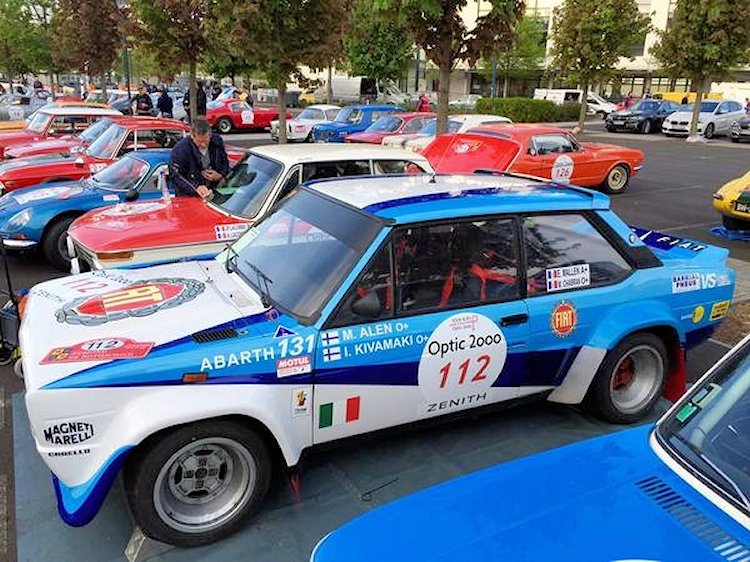
Michel Chabran and Eric Mallen in 1978 Fiat 131 Abarth

Michel Chabran and Eric Mallen in 1978 Fiat 131 Abarth in Clermont Ferrand. All photos @TourAuto
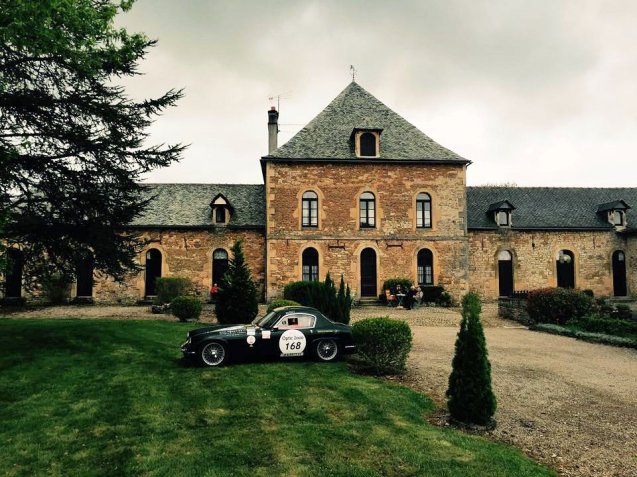
Jean-Luc Durand and Francois Marbeck in a 1961 Lotus Elite
Jean-Luc Durand and Francois Marbeck in a 1961 Lotus Elite

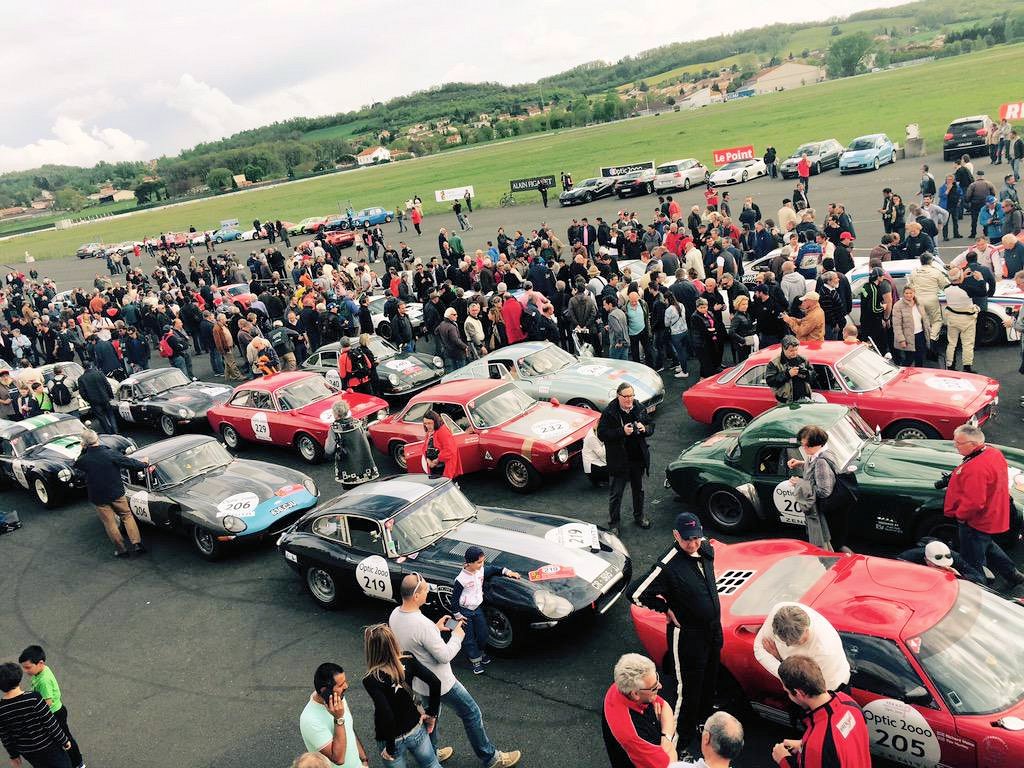
Lining up at Circuit d'Albi.

Lining up at Circuit d’Albi.

Pulling into Toulouse. Photo @AlainFigaret

Pulling into Toulouse. Photo @AlainFigaret

.

.

Tour Auto D2: Vichy-Clermont Ferrand.

Competitors make their way through the Auvergne with a lunch stop at a famous chateau and timed laps at ‘the most beautiful circuit in the world’.

.

No. 260 Jean-Paul Droit and Olivier Panis driving a 1983 Ferrari 308 Group IV Michelotto. Ex-F1 driver Panis is one of a number of celebrities at Tour Auto this year. So far we’ve spotted Duran Duran singer Simon Le Bon and Red Bull adventurer Felix Baumgartner. All photos @TourAuto.

No. 260 Jean-Paul Droit and Olivier Panis driving a 1983 Ferrari 308 Group IV Michelotto. Ex-F1 driver Panis is one of a number of celebrities at Tour Auto this year. So far we’ve spotted Duran Duran singer Simon Le Bon and Red Bull adventurer Felix Baumgartner. All photos @TourAuto

After the relatively flat but fast 499km from Paris to Vichy on day one, day two sees Tour Auto running 347km through the rolling hills, vast panoramas and forests of the Auvergne.

As always it’s an early call. The first runners left Vichy at 07:00 (and don’t expect to finish before 17:45).

Instead of hitting the brand new A719 autoroute west to Clermont Ferrand – the day’s final destination, just 72km away – the cars head straight up into the Massif Central by the nearest back road (see map notes below).

Mid-morning was the first Special Stage along the closed D101 north west from Montbrison above the Le Vizezy river.

(The special stage maps are not published until 17:00 the day beforehand.)

Lunch was at Chateau Parentignat outside Issoire, notable for housing the world’s largest collection of 17th and 18th century French masters.

It also features as a stop of the Route of Auvergne Chateaus.

The timed test this afternoon was on the Circuit de Charade, former host of the Grand Prix de France, last held there in 1972 and won by Jackie Stewart.

The hilly 4km track – cut down from its original 8km – has been described as ‘the most beautiful circuit in the world’. It was also the location for some of the filming for the movie Grand Prix, and gave its name to the Daihatsu Charade…

For more information see the Tour Auto website, or follow @TourAuto. See Day One Paris-Vichy here and Day Three Clermont Ferrand-Toulouse here.

.

IMG_2644

No. 7 Tomas Hinrichsen and Solange Mayo’s 1957 Maserati 200 Sport Internazionale (SI)

IMG_2642

No. 286 John Logan and Fred Hampton’s 1972 Porsche 911 911 2.5L ST

IMG_2641

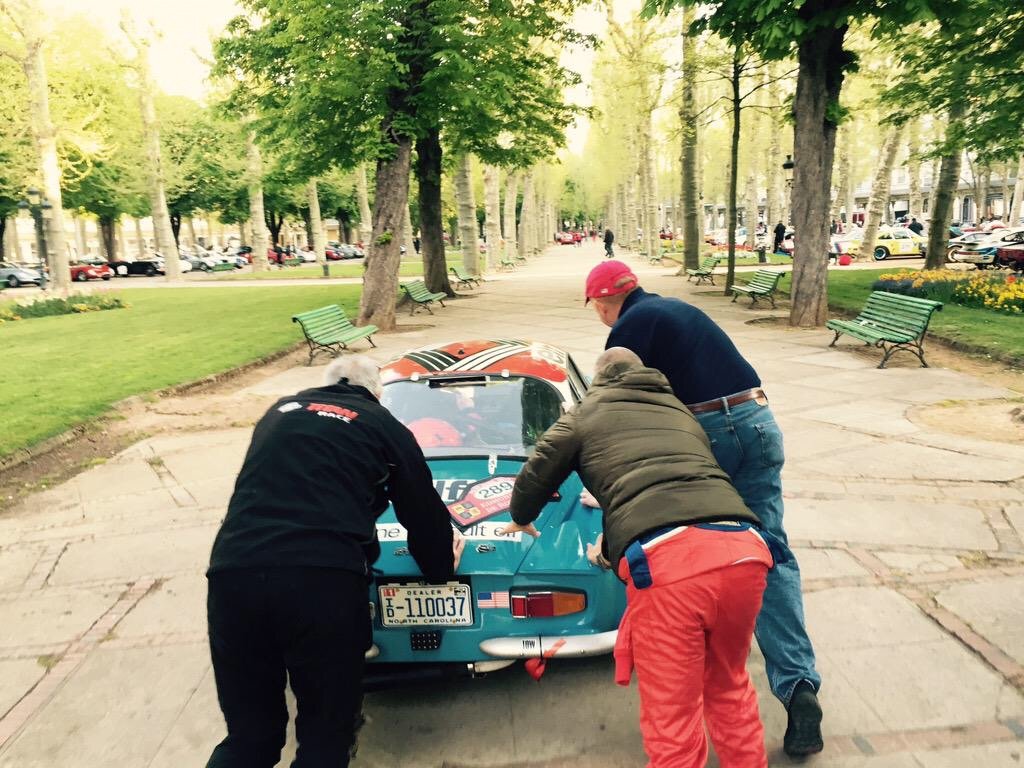
No. 289 Robert Kaufman and Mark Donaldson’s 1972 Alpine Renault A110 1800 Group IV

Chateau Parentignat

Chateau Parentignat

Circuit de Charade, Clermont Ferrand

Circuit de Charade, Clermont Ferrand

.

Hopefully the competitors are doing better than us at map reading. Maybe due to a difference in the road numbers between Google Maps and the local maps the organisers are using, the route doesn’t seem to quite match up in places today, particularly that outlying stretch down to Vollore Ville. It’s basically sound though. Meanwhile, we can absolutely vouch for the landscape of the Auvergne. Not spectacular like the Alps, but from the top of the Massif Central plateau the views stretch for miles. By coincidence, we stayed in Ambert once. Hotel cost €60, just across from the market square. The traders woke us up at 05:30 I recall and we had runny cheese for breakfast (and lunch):

.

Tour Auto D1: Paris-Vichy.

Introducing Tour Auto as the cars head south from Paris to Vichy via the Magny Cours race track.

Classic racers might not be your thing but the back road route probably is – plotted below, blow-by-blow.

.

Tour Auto: the official start is the Chateau Courances just south of Paris. The route today is 499km between Paris and Vichy with one special stage at Magny Cours race track. More later.

Tour Auto: run over five days and 1,905km between Paris and Biarritz.

The cars assembled over the weekend in the Grand Palais in central Paris but the official start of Tour Auto was at Chateau de Courances, 47Km (30 miles) south east of the capital.

Built in 1630, the chateau gardens are said to be among the finest in France.

The first car away this morning, at 07:30, was a 1960 Aston Martin DB4 GT driven by Ian Dalglish and Gordon McCulloch.

Ahead lies the longest of the event’s five legs, 499km to Vichy in central France via the Magny Cours race track.

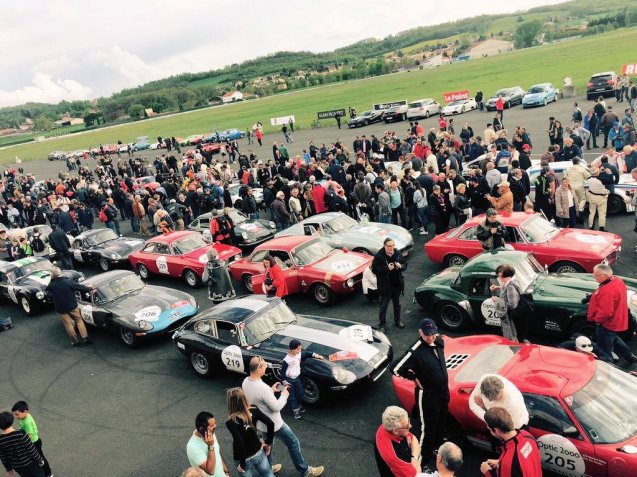
Almost three hundreds competitors have entered. The cars – which must be built between 1947 and 1981, be approved for road use and have FIA Historic Car papers – are split into five period classes (E to I) and six performance categories in four groups: Series Production Touring cars (T) and Competition Touring cars (TC); Standard Grand Touring cars (GT) and Competition Grand Touring Cars (GTS); Grand Touring Prototypes (GTP); and Sports Prototypes (TSRC).

The competition element takes two forms, both ‘special stage’ timed courses on race tracks or closed roads, and ‘regularity tests’ where entrants have a target time over a course and earn penalties for arriving too early or too late.

Aside from all the fabulous motors – Tour Auto is a best-of-the-best-of-the-best kind of event, see pictures below – particularly interesting is the route. It changes every year and is – mostly – confined to back roads.

Apart from a short stretch on the A6 and A77 first off, today’s route is on the tiniest roads on the map, roughly shadowing Route National 7 apart from a dogleg out to Auxerre.

The landscape is almost perfectly flat then, turning rolling later.

Vichy, on the River Allier, was the original glamorous spa town and attracted royalty from all over Europe. It lost its footing thanks to hosting the collaborationist government during WW2 but is now fighting its way back, helped by the very recently opened motorway link – A719 – to the A71 and Clermont Ferrand.

For more information see the Tour Auto website, or follow @TourAuto. See Day Two here.

.

5

Lucien Gardillou and Victor Gardillou in a 1956 Lotus XI 1500. Photo @Morrissette_Rac

1

Ian Dalglish and Gordon McCulloch in a 1960 Aston Martin DB4 GT. Photo @TourAuto

CDGQm3fW0AAmHLP

Georges Saier and Pascal Renaudat in a Porsche 1973 911 RSR 2.8 follwoed by Arnaud Gauduel and Alexandre Delaye in a 1970 BMW 2800 CS. Photo @CCourances

gto

Irvine Laidlaw and Peter Scott in a 1962 Ferrari 250 GTO. Photo @TourAuto

4

Magny Cours: Ben Gill and David Didcock in a 1960 Ferrari 250 GT Berlinetta flanked by (left) Arnaud Tenel and Christophe Thiboult in a 1963 MGB and (right) by Adrian Beecroft and Susan Roy, also in a 1960 Ferrari 250 GT Berlinetta. Photo @TourAuto

Richard Meins and Timothy Huxley 1966 Ford GT 40 under service in Vichy. Photo @TourAuto

Richard Meins and Timothy Huxley 1966 Ford GT 40 under service in Vichy. Photo @TourAuto

.

.

.

New Car Bans Amsterdam + Brussels – GT3 Col de Turini

Pedestrianisation: Brussels to unveil huge new ‘Comfort Zone’ before the summer as Amsterdam announces new traffic restrictions.

Also, Sara Nase and Porsche GT3 on Col de Turini. Foreign vehicles involved in a tiny proportion of fatal accidents in France. Gothenburg ignores voters to keep Congestion Charge. Diesel edges up in Luxembourg to compare quiet well with previously expensive Belgium.

.

NEW CAR BANS AMSTERDAM + BRUSSELS

New pedestrian zones announced in Low Country capitals.

.
Brussels is set to have the second largest* pedestrian zone in Europe.

The new ‘Comfort Zones’ were expected to be in place on 18 July but it was announced earlier today they will start on 29 June, before the summer holidays.

As well as extending further out from around the mediaeval Grand Place, a large part of the new zone – marked in mauve, above – runs along Anspachalaan (Boulevard Anspach), the main shopping street in the city centre.

It extends from just south of the Stock Exchange up to Brouckere Plein, at the junction of Boulevards Emile Jacqman and Adolphe Max out to the R20 Pentagon ring road.

Anspachlaan will have two crossing places for cars, at Rue du Fosse aux Loups and Rude de l’Ecuyer. Half of Boulevard Adolphe Max will be pedestrianised too.

There will also be car-free streets around Chapel Church near Sablon Square, and Place de Jeu de Balle in the south.

More streets will be reserved just for residents and deliveries, marked in dark purple above.

Cars will be allowed to circulate in a one-way loop around the ‘Comfort Zone’ with the express aim of directing them to parking as quickly as possible. New digital signs showing free spaces will be installed.

Central Brussels is already quite tricky to drive around (see here). However, by reducing the number of available routes, the possibility remains that the new arrangements could actually make it easier for drivers. There are however outstanding questions over access to hotels.

At the same time, to accommodate rising bike traffic, Amsterdam has announced new traffic restrictions.

In an experiment which, if successful, could be replicated in other parts of the city, the Nine Streets (Negen Straatjes) shopping district in the west of the city centre will be car-free on Saturdays. Speed limits will be reduced to 30kmh where cars and bikes mix.

However, eight new underground car parks will also be built and bikes themselves will be banned from parts of the Red Light district says DutchNews.nl.

The mayor announced a package of fifty new transport measures in total, including new bike lanes and bike parking, at a cost of up to €400m last Thursday.

* Several places claim to have the largest pedestrian zone in Europe, including Montpellier, York, Munich and Rome.

.

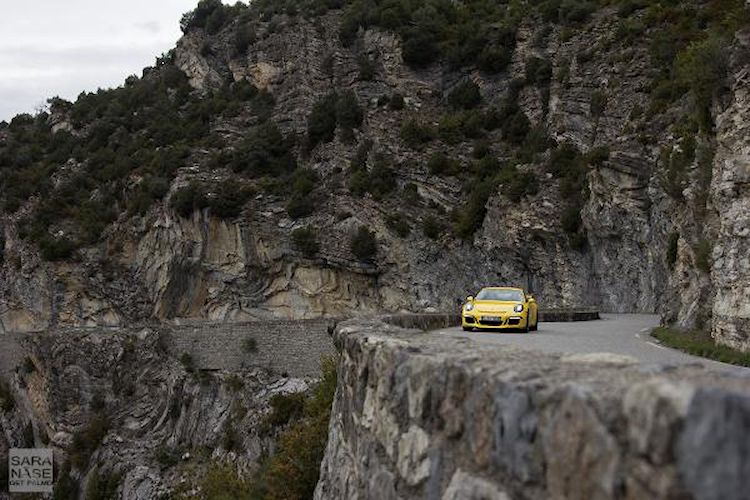
It's due back in Stuttgart on Wednesday so over the weekend Sara Nase (@getpalmd) took the new GT3 for almost a last blast along France's Col de Turini.

It’s due back in Stuttgart on Wednesday so over the weekend Sara Nase (@getpalmd) took the new GT3 for almost a last blast along France’s Col de Turini.

.

roundup: CROSS-BORDER PROSECUTION. Interesting new details emerge in a Telegraph story at the weekend on cross-border prosecution rules, due to include British, Irish and Danish drivers from 2017. Foreign vehicles account for 6.3% of traffic in France but are involved in only 2% of accidents and 4% of fatal crashes it says. At the same time, Autoroute.info says foreign vehicles account for 21% of those flashed by radar. SWEDEN. Gothenburg council has voted to keep the city’s congestion charge despite a referendum last year which saw 57% of voters against. Local political parties saw no other way to finance a new railway tunnel, part of the West Sweden Package (Vastsvenskapaketet) of public transport improvements paid for by the charge reports Transport & Environment. Referendum results are not binding in Sweden. The next local elections are in 2018. The Congestion charges in Gothenburg and Stockholm both now apply to foreign vehicles. See more here. LUXEMBOURG. The diesel price is edging up again reports Wort.lu. From lows of much less than €1/litre last year, the nationally regulated price now stands at €1.091. Petrol will remain at €1.247 for the time being. Incidentally, the Help for Heroes 4×4 European Rally recce last week found just 3c difference per litre in the price between Belgium and Luxembourg (€1.10 v €1.07). From being among the most expensive in Europe for most of last year, fuel in Belgium is now considerably more reasonable.

.