The Week Ahead: To Berlin! Tour Auto + Belgium Strike

Looking back at – and forward to – the Russian motorbike club road trip that has Eastern Europe so excited at the moment. Plus, the ‘Blitz Marathon’, Tour Auto, major road plugs in the Netherlands and Austria, a Belgian General Strike and new Rolls-Royce.

.

If the idea had been a dignified memorial to fallen comrades who fought a bloody battle between Moscow and Berlin then it seems to have failed.

On the other hand, if the idea was to ratchet up the tension still further in Eastern Europe, then the Russian motorbike club ‘To Berlin!’ road trip – accompanied by the notorious Night Wolves – has succeeded admirably, without even turning a wheel.

The rally was decried by Polish Prime Minister Ewa Kopacz as a ‘provocation’ on Wednesday and has been casing a huge kerfuffle throughout the region all week.

Berlin authorities said the group will not be allowed to ride in convoy through the city but may stage a ‘modest celebration’.

As expected, opinions are rather more conflicted in the Czech Republic. Some Polish bikers too are concerned about tit-for-tat reactions to their own annual ‘Katyn Raid’ motorcross tour to Smolensk to remember the 1940 massacre.

Meanwhile, authorities in Poland, Czech Republic and Germany all say they have not received visa applications from the group though, even if they did, it’s not clear on what grounds they could be refused.

Whatever happens on the trip, due to leave Moscow on Saturday (25 April), it has rather exposed an awkward split: thanks to his alleged involvement in Ukraine, Night Wolves’ leader Aleksandr Zaldostanov is already barred from the US.

Why wasn’t France involved the first ever pan-Europe ’24 hour Speed Marathon’ on Thursday?

It’s an intriguing question as the country struggles with yo-yoing road safety stats and last year recorded the first rise in road deaths for more than a decade.

It does rather imply a lack of commitment, especially as tackling speeding drivers is supposedly the bedrock of France’s – on and off successful – road safety strategy.

They missed out on strengthening ties with neighbouring police forces too.

Switzerland didn’t take part either, a place where police are known to be ‘flash happy’, and which has previously co-ordinated very successfully with TISPOL – the European traffic police network who co-ordinated the Blitz Marathon – notably on the now-defunct Cannonball 2000 run in August 2013.

Perhaps it’s a question of resources. Germany fielded 13,000 officers in 7,000 different locations and netted 91,262 fines, 75% of all those issued during the campaign. The next best was Italy where 5,561 drivers were caught.

.

The week ahead: the 24th edition of Tour Auto – France and probably Europe’s most prestigious classic racer tour – kicks off in Paris tomorrow (Monday). The list of blue-chip entrants runs to four densely packed pages. They assemble in the Grand Palais, above, as usual (entrance price €10) before setting off for Vichy on Tuesday, Clermont-Ferrand on Wednesday, Toulouse Thursday, Pau Friday with the Grand Finale in Biarritz on Saturday. Being as these people know, and have access to, all the best roads, we’ll be keeping a close eye on progress through the week. In the meantime see @TourAuto

The week ahead: the 24th edition of Tour Auto – France and probably Europe’s most prestigious classic racer tour – kicks off in Paris tomorrow (Monday). The list of blue-chip entrants runs to four densely packed pages. They assemble in the Grand Palais, above, as usual (entrance price €10) before setting off for Vichy on Tuesday, Clermont-Ferrand on Wednesday, Toulouse Thursday, Pau Friday with the Grand Finale in Biarritz on Saturday. Being as these people know, and have access to, all the best roads, we’ll be keeping a close eye on progress through the week. In the meantime see @TourAuto

Also, be prepared for major rush hour delays as re-surfacing work starts tomorrow (Monday) on the Galecopperbrug on the A12 south of Utrecht, the second busiest bridge in the Netherlands. Lanes have already been narrowed with speed restricted to 70kmh. On Tuesday, Austria’s S16 Arlberg Tunnel closes completely until November. For cars it’s a case of diverting to the Arlberg Pass. For trucks and trailers the detour is much more long-winded, see full details here. Also, a stretch of the E40, the motorway between the Channel ports and Brussels, will see major road works until Monday 11 May reports Verkeers Centrum. There will be just two narrow lanes in both directions between Aalter and Beernem (Bruges-Gent) from Tuesday morning. Overnight Monday-Tuesday, 20-21 April there will be just one lane in each direction 21:00-06:00. Late Tuesday, from 22:00 for 24 hours, sees a General Strike in Belgium. The impact is likely restricted to public services, including trains, trams and buses. P&O says its services will not be affected but inevitably there will be more traffic on the roads and in Belgium that is something to be feared. On Thursday, Rolls-Royce reveals a new car. It’s a bit too soon for a first look at the Continent-crushing SUV 4×4, so far called Project Cullinan, surely? On Friday, coach operators are planning more ‘Operation Escargot’ go-slows around Paris in protest at the tripling of parking charges from 1 May. Many say it will be cheaper to keep moving around the city while passengers sight-see rather set down and wait. More details to come.

.

‘Speed Blitz’ Nets 125,000 – Top Marques Toroidion

This week’s first 24hr Blitz Marathon nets a handy haul of drivers, though numbers were down in Germany, while Belgium boasted the highest proportion of speeders.

Plus, an impressive debut from Finnish EV specialist Toroidion at Top Marques in Monaco. Dacia workers won’t take the govt’s word on trans-Carpathian A1. The first east-west autoroute nears completion in France. Condor’s grip on Liberation loosens again.

.

ALMOST 125K DRIVERS CAUGHT IN ‘SPEED BLITZ’

Numbers down in Germany; highest proportion of speeders in Belgium.

The 24hr Blitz Marathon in Finland. Photo @RistoLammi

The 24hr Blitz Marathon in Finland. Photo @RistoLammi, Head of Road Safety, Finnish Police

Almost 125,000 drivers were caught speeding during this week’s first pan-Europe ’24 hour Blitz Marathon’.

Twenty two countries took part, coordinated by the European Transport Police Federation TISPOL.

Conspicuously absent were France and Switzerland.

According to TISPOL figures, 122,581 drivers were fined during the campaign which ran from 06:00 on Thursday until 06:00 this morning (Friday).

The vast majority of the penalties – 91,000 – were handed out in Germany. The numbers however were slightly down on last year when 93,000 drivers were fined compared to 83,000 in 2013.

The ‘Blitz Marathon’ concept was developed in Germany and has been held for the past three years. This year was the first time the controls have been run across the Continent.

According to Der Spiegel, of the 3.255m driver speeds measured, the average proportion of speeders was 2.8%. This varied from 0.5% in Hamburg to 6% in the Saarland.

Meanwhile, in Belgium, of the 30,000 vehicles checked, 1,700 were found to be speeding, a rate of 6%.

The European average according to Deredactie.be is three percent.

The campaign in neighbouring Luxembourg netted 350 fines, twenty one of which were for excessive seeding. Finland netted 3,800 speeders.

Numbers to be updated as results become available.

Meanwhile, Germany and the Czech Republic have announced an enhanced cross-border policing agreement, one of a number of ‘hot pursuit-style’ arrangements now in place across the Continent.

Currently, police are allowed to operate within a 30km zone each side of the border without permission though this is now due to be extended according to Prague Post.

.

Particularly eye-catching among the weird, wonderful and very, very expensive cars on show at this weekend’s Top Marques show in Monaco is this Toroidion. Called the 1MW, as in one megawatt – the equivalent of 1340bhp - this all-electric proof-of-concept car was built in Raasepori south west Finland. The company was established in 2011 to develop a new electric powertrain for the Le Mans 24-hour race. It is designed to be scalable for different applications while the high-capacity battery is said to be ‘as easily replaced in the pit-lane as it is in the home garage’.

Particularly eye-catching among the weird, wonderful and very, very expensive cars at this weekend’s Top Marques show in Monaco is this Toroidion. Called the 1MW, as in one megawatt – the equivalent of 1340bhp – this all-electric proof-of-concept car was built in Raasepori south west Finland. The company was established in 2011 to develop a new electric powertrain for the Le Mans 24-hour race. It is designed to be scalable for different applications while the high-capacity battery is said to be ‘as easily replaced in the pit-lane as it is in the home garage’.

.

roundup: ROMANIA. It seems Dacia employees are not prepared to take the government at its word on the A1 trans-Carpathian motorway. Around 7000 employees demonstrated in Pitesti again yesterday demanding that the govt prioritise the road reports Romania Insider. Last week we reported the boss of the firm saying he would have a hard decision to make in 2020 if the road was not built. The govt responded almost immediately to say work would start in two years. Apparently the European Commission is also pushing on the A1. A lukewarm response to the protestors from PM Ponta however is dispiriting. FRANCE. Cross-country drives across the centre of France should be that much smoother from today as the interchanges between the A89 and A20 just north of Brive-la-Gaillarde finally come on stream (after being inaugurated by President Hollande in early February). The two roads were previously connected by 5km single lane stretches. It means ‘l’Autoroute Européen’, France’s first east-west motorway, between Geneva and Lyon, is very almost complete, save for the connection in Lyon. CROSSING THE CHANNEL. Within minutes of us tweeting that Condor Ferries finally had a grip on its new £50m ferry, Liberation – after a torrid first two weeks the ship has operated to schedule this third week – the company announces that services are cancelled on Saturday due to the weather. Under normal circumstances Liberation would be able to sail but there’s a temporary wave height limit in place pending further sea trials later this year. @Pist0lpierre, who reported his first trip for us last week, is consequently having to return home a day early… ‘Disappointed!’ he tells us.

.

Hardcore Mountain: Klausenpass

Great caution and mountain experience are necessary on Klausenpass. It’s not just the narrow, lumpy road and vertical drops you have to worry about.

.

Rudolf Caracciola at the wheel of a Mercedes-Benz SSK on Klausenpass in August 1930. Photo via Daimler.com. More later.

Rudolf Caracciola at the wheel of a Mercedes-Benz SSK on Klausenpass in August 1930. Photo via Daimler.com. More later.

You know you are in serious Switzerland when all the Audis melt away in favour of Subarus.

The farmers-favourite Japanese manufacturer sells itself across the Continent as ‘Switzerland’s 4×4’ and this is the heartland.

There’s a Subaru dealer in Glarus, on the north end of H17, the road which stretches between the A3 and A2 motorways in central Switzerland. Klausenpass is in the middle.

A scenic shortcut it may be, through the Glarus Alps, but that shouldn’t imply a gentle waft through the mountains. As the ADAC says, ‘Great caution and mountain experience are necessary.’

Klausenpass is very narrow in places, and lumpy. Because of its motorsport heritage it attracts serious drivers.

When we were there a blacked out Porsche 911 – suspiciously missing its front number plate – blasted past us on the long climb from the east.

Coming down the other side, on an especially narrow stretch, flimsy guardrail separating us from the hundreds-of-feet vertical drop, a young lad coming towards us in a decal’d Subaru Impreza – naturally – was going so fast that when he jumped on the brakes the back end stepped out.

Not far behind him, around a blind bend, was a tractor pulling a hay cart. At least he looked apologetic as he squeezed past.

From 1922 to 1934 tens of thousands watched each year as the great drivers of the day tackled the Klausenrennen ‘Grossen Bergpreis der Schweiz’ the toughest, most dangerous hill climb in Europe.

The course ran east to west, 21.5km from the centre of Linthal – a few miles along from Glarus – to the top of the pass through 136 curves and 57 corners.

Then it all came to an end, thanks to the weather.

According to a 1934 issue of Motorsport magazine, ‘There is a mountain at Klausen called Kilchenstock, from which boulders and rocks constantly descend even in fine weather. The heavy rains loosened things considerably, and there was a constant roar as rocks and shale rumbled down the hillside. Above all, however, was a constant sound of rushing water, eerie, and not a little disturbing. The drivers stood about in a close group, cold and damp, most of them protected from the rain by umbrellas.’

This was in August.

The event went ahead anyway and, despite an avalanche across the road at one point, Rudolf Carracciola set the course record of 15:22.02 at the wheel of his 400hp Mercedes-Benz W25 Grand Prix car (an average speed of 84kmh).

But the spectators had either drifted home or failed to turn up. The event lost £3,000 and was never run again. By the next year, Switzerland’s premier motor racing event was the Swiss Grand Prix at the recently opened Bremgarten circuit near Bern.

Klausenrennen was revived in 1993 as a blue chip old timer event and has been run every five years or so since, the last time in September 2013.

.

Many thanks to @156Sharknose for solving the mystery over the demise of the original Klausenrennen.

.

.

Europe-wide 24 Hour Speed Marathon – Random Latvia

A heads up on tomorrow’s 24 hour ‘Speed Marathon’ around Europe.

Plus, a quick look at Latvia, east and west. Maintenance closures at Mont Blanc and Frejus tunnels this week, and an very inconvenient road closure in the French Alps. Portugal adopts the Swedish road safety model.

.

EUROPEWIDE 24HR ‘SPEED MARATHON’

Twenty two countries take part in large-scale anti-speeding campaign tomorrow.

Photo @PolitzeiMainz

Photo @PolitzeiMainz

An all-out police anti-speed campaign might seem a bit incongruous in Germany, the country where two thirds of the motorway network has no speed limit at all.

Nevertheless, from 06:00 tomorrow (Thursday) until 06:00 on Friday, 13,000 traffic officers will monitor traffic from 7,000 different locations around the country.

Germany is just one of twenty two European countries in all to hold ’24 hour Speed Marathons’ tomorrow, all co-ordinated by TISPOL, the European Traffic Police Network.

TISPOL President Aiden Reid says, ‘The speed marathon is all about prevention. We want drivers to think about the speeds they choose; speeds which are both legal and appropriate for the conditions. By doing so, they will be reducing the risks they face and the risks they pose to other road users.

That’s why we encourage participating countries and police forces to publish information about the precise locations of speed checkpoints in advance. We want to get into the heads of drivers, not their purses.’

Countries not taking part notably include France, Switzerland, Sweden, Denmark and the Czech Republic.

Spain is holding its own week long anti-speed campaign. TISPOL has also been holding a slightly lower key anti-speed campaign around Europe this week, until 19 April (see top of page).

Finland, Estonia, Latvia and Lithuania seem to be taking tomorrow’s event particularly seriously with joint speed checks and border controls along ‘Via Baltica’. Meanwhile, one thousand officers take part in Serbia and there will be ninety speed checks in Cyprus according to TISPOL.

The Speed – or Blitz – Marathon concept was pioneered in Nord Rhein Westphalia in 2008.

In an effort to engage drivers, not only are the sites of speed controls publicised but citizens can also nominate locations themselves. See this list of German locations from AutoBild.de.

This is the first pan-Europe Speed Marathon but the third in Germany where, last September, out of three million drivers monitored, 93,000 were caught speeding.

There seems to be an unofficial competition to bag the fastest driver. Last year the title was claimed by a driver in Reutlingen, Baden Wurttemburg, at 238kph in a 100kph zone says the ADAC.

.

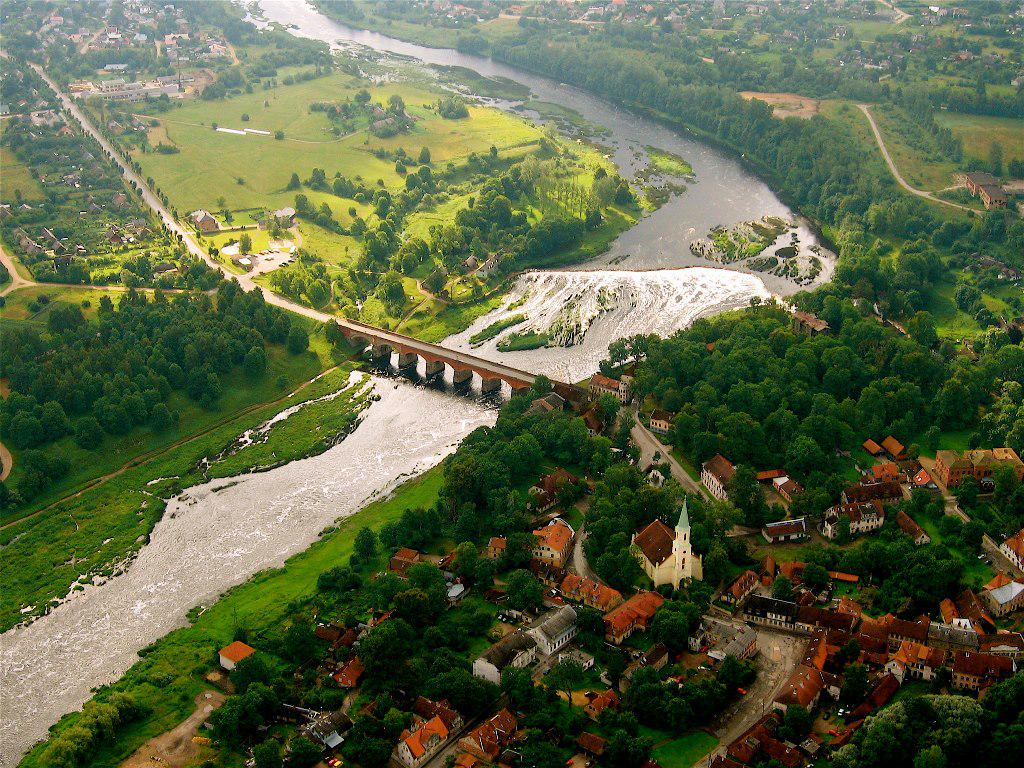
Random Latvia: Kuldīga is the pearl of Latvia - distinctive architecture, the River Venta with the widest waterfall ledge in Europe.

Random west and east Latvia: Kuldīga, in the west, is the pearl of Latvia – distinctive architecture and the River Venta with the widest waterfall ledge in Europe says @OttoOzols. Meanwhile, see this *really interesting* profile of Daugavpils in east Latvia, birthplace of abstract artist Mark Rothko, ‘A Complicated Latvian Future, Haunted by the Soviet Past’. Local writer Will Mawhood asserts the majority Russian-speaking city will not become the ‘Baltic Crimea’.

.

roundup: FRANCE. Due to maintenance work, the Mont Blanc tunnel will close overnight Thursday and Friday, 23:30-4:30 am. At the same time there is alternate traffic at the Fréjus Tunnel, 22:30-06:00. Meanwhile, the N1091 between Grenoble and Briancon in the Alps is shut both ways at Lake Chambon after cracks were discovered in the tunnel following a landslide. The detour is either the N85/N84 via Gap, or A43 Frejus Tunnel, either way a hefty extra mileage (both via autoroute.info). Chambon could be shut for three weeks – update: the tunnel is likely to be shut until 15 June according to local reports. The council is exploring a ferry across the lake and/or reduced tolls at Frejus but the area is probably best avoided for the time being, if possible. PORTUGAL is to adopt the Swedish ‘Vision Zero’ road safety model reports Radio Sweden. Road deaths dropped 3% in 2014 to 59 per million inhabitants (the road safety measure) but that is still above the EU average of 50.5. Vision Zero was conceived in 1994 and sets the target of no road deaths by 2020, mainly through the design of systems and infrastructure. Sweden traditionally leads the European (and world) road safety tables though last year road deaths increased by 3% to 29/mil, on a par with the UK.

.

Black Saturdays 2015 – Venturi Alps

Heavy traffic: listing the Black Saturdays (and other Black Days) on Europe’s roads this summer.

Plus, a ‘clean’ Artic sled has been testing at the top of the French Alps. Potentially good news for English passengers on the upcoming Ferry to Norway. New ‘no frills’ fuel goes on sale in Portugal this week, but will 98 octane still be available? A spate of collapsed roads in Italy sees the road boss resign.

.

BLACK SATURDAYS 2015

Days to avoid Europe’s roads this summer.

xxe

First the good news. There are only three Black Saturdays in France this year (compared to four last year).

A Black Saturday – Samedi Noir, or Zwarte Zaterdag (in Dutch) – is a big getaway day when everybody sets off – or returns – from their holidays (they happen in winter too, and Easter).

In France, delays can easily top five hours on the two main axis, A10 Paris-Bordeaux and A6-A7 Paris-Lyon-Avignon.

Saturdays 11 July and 1 August are the Black Saturdays this year, both heading south from Paris (basically). Many/most drivers will head back on Saturday 22 August.

Germany doesn’t have Black days, their busiest are a dark salmony pink (according to the ADAC), and they aren’t confined to Saturdays either.

As a way to soften the blow, pastel shades are wholly inadequate as German roads at their worst can be as bad as anywhere.

While the French head mainly south or north, the Germans head everywhere – north to the Baltic and Scandinavia, south west to France and Spain, south to Italy and south east to the Adriatic and Lake Balaton in Hungary. Mostly however they holiday internally.

Also unlike France there aren’t just a few busiest days but fourteen in total, kicking off on Wednesday 13 May, then Friday 22 May, Saturdays 27 June, 4 and 11 July and every Friday and Saturday in July and 7-8 August.

It quietens down after that however.

As the quintessential central European transit country, Switzerland suffers with heavy traffic throughout the summer. The action kicks off in mid-May and lasts right through until early September.

The classic pinch point is the Gotthard Tunnel. Multi-hour waits at both ends are inevitable.

Because many drivers are heading through the traffic moves predominantly between north and south.

Unfortunately, the bulk of the black days see heavy traffic moving both ways at the same time – on Saturdays 16 May and 27 June, every Saturday in July and August plus Saturday 5 September.

Otherwise, the black days heading south are Wednesday–Thursday 13-14 May, Saturday 23 May and Friday 24 July.

And for traffic heading north, Sundays 16, 23 and 30 August.

Austria gets busy over the summer – like Switzerland it’s a big transit country – but the jams are at least less long than they are in winter.

The busiest roads are the A13 Brennerbahn between Innsbruck and Verona, the A9 between Salzburg and Villach then Karawanke Tunnel across to Slovenia, and the A1-A4 Linz-Vienna-Hungary.

The busiest days are all Saturdays starting 23 May with a break until 11 July then right through until the end of August.

Also: these are just the busiest days. Other days will see heavy traffic, especially Fridays and other weekends. Click the links for each country to see a ‘Jam Calendar’ (Staukalender in German), or see our more detailed run downs for each week nearer the time. British drivers should also bear in mind equally long delays at the Channel ports on the busiest days (dates to be advised).

Coming up: the busiest days in Spain and Italy, plus, How to Avoid the Worst Jams on Black Saturdays.

.

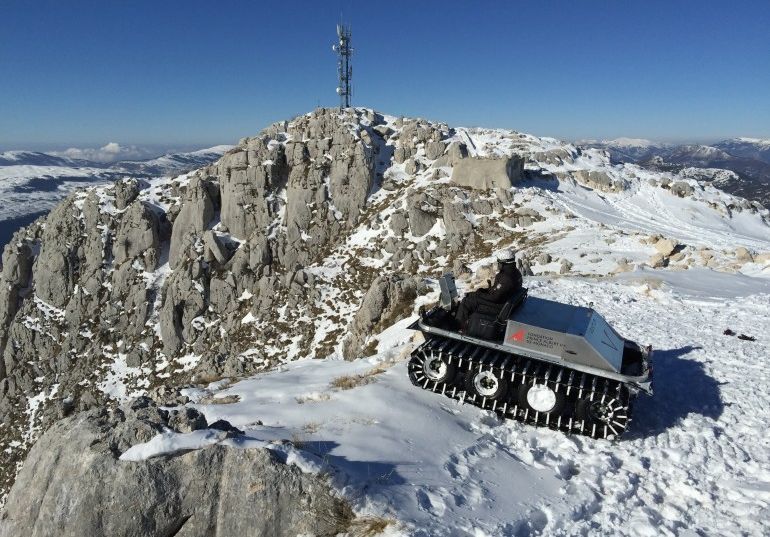
Prince Albert II of Monaco was among those testing the new prototype Venturi Antarctica in the French Alps. More later.

Keen arctic explorer Prince Albert II of Monaco was among those testing a new prototype sled in the French Alps on slopes up to 40%. Made by Venturi – those of the Formula E team – the electric-drive, emission-free ‘Antarctic’ will help prevent contamination of scientific samples. The tests went well; the next stage is to develop the sled to work in temperatures of below -40 degrees.

.

roundup: ITALY. Boss of the state owned road manager ANAS has paid the ultimate price after a spate of serious faults with roads emerged reports Trasporto Unito. Pietro Ciucci resigned last night, a few days after a pylon holding up part of the A19 between Palermo and Catania collapsed suddenly leaving the road way skewed. It might now have to be demolished. Last month, the A3 between Naples and Reggio Calabria was shut long term after a fatal construction accident severely damaged a viaduct. The SS121 between Agrigento and Palermo also suffered major cracks just six days after opening in January, injuring several drivers, and another road in Sardinia has reportedly shut recently under similar circumstances. CROSSING THE CHANNEL. Ports in the north of England (and in Scotland) have been linked to the upcoming Ferry to Norway so far but English ports are under consideration too as the company looks to launch services next March. Norwegian Seaways operations director Paul Woodbury let it be known on Twitter yesterday that, ‘We continue to consider a handful of UK ports as potentially serviceable options. Harwich remains one of those options.’ PORTUGAL. New ‘no frills’ fuel goes on sale on Thursday though drivers should manage their expectations about potential savings reports Portugal News. The new fuel, petrol and diesel, will be sold without additives. By law it will be widely available raising questions over whether 98 octane will still be sold as many stations are apparently draining premium tanks to make way for the new product. According to Fuel Prices Europe, the highest price currently charged for unleaded95 is €1.544/l while diesel is €1.284.

.

Geopolitical Road Trips – Shmee + Getpalmd Brescia

After the genius US ‘Dragoon Ride’ it’s the Russians’ turn to road trip through Eastern Europe.

Shmee and Getpalmd meet up at Cars and Coffee. A Royal bodyguard carries the can for controversially crossing Denmark’s Storebaelt Bridge in a storm. Electric ferries on the ‘threshold’ of Dover-Calais. Road pricing rears its head in the Netherlands, again.

.

GEOPOLITICAL ROAD TRIPS

After the Dragoon Ride masterstroke the Russians are now planning a road trip of their own.

The Night Wolves led by "Ночные Волки (1)" by www.volganet.ru. Licensed under CC BY-SA 3.0 via Wikimedia Commons

Aleksandr Zaldostanov leads the Night Wolves, from volganet.ru. Licensed under CC BY-SA 3.0 via Wikimedia Commons

The recent ‘Dragoon Ride’ road trip through Eastern Europe looks increasingly like a masterstroke.

Not only did it reassure people in the Baltic States that NATO stands behind them and, just as importantly, scout out the roads so an army could remain mobile if railway tracks were blown up, but – and this is the genius part – it may have also put the kibosh on the Czech Republic President’s plans to attend the upcoming Victory Day parade in Moscow.

Milos Zeman was one of only three EU leaders, the others being from Cyprus and Greece, who accepted invitations to the Russian event on 9 May.

Dragoon Ride was expected to spark demonstrations as it moved through the Czech Republic but in the end thousands of locals turned out to show their support.

That put pressure on Zeman who initially remained steadfast but he finally crumbled on Friday*.

Meanwhile, for every action there is an equal and opposite reaction. The Russians are now planning an Eastern European road trip of their own.

Between 25 April and 9 May a gang of bikers will ride from Moscow to Berlin via Belarus, Poland, Slovakia, Austria and the Czech Republic to mark the 70th anniversary of the victory over Nazi Germany.

The notorious Night Wolves are involved though it is being run by the Russian Federation of Motorcycle Tourism.

‘This action is not aimed at underscoring any political positions,’ organizer Andrei Bobrovsky told RFE/RL today. ‘It is aimed at developing the patriotic feelings of the participants and at attending various anniversary events.’

Night Wolves leader Aleksandr Zaldostanov, aka the Surgeon – reportedly a personal friend of Russian President Vladimir Putin – might attend. He is under personal sanctions from the US after Night Wolves’ alleged involvement in Ukraine but is free to travel to the EU.

The Russian road trip has caused uproar in Poland. A Facebook group with 9200 likes ‘Against the Russian biker gang in the EU’ (via Belsat.tv) says, ‘Wherever the Night Wolves show up, Russian aggression flares up. They had been to Crimea even before Russia annexed it. There were in Donbass, and now they are killing and committing robberies in cities occupied by Russians. Is their journey through Poland a warning to the Poles or the beginning of Russian aggression? We hope that the brotherhood of motorcyclists, regardless of affiliation to different clubs, show them where they belong.’

The Night Wolves are unlikely then to see a warm welcome in Poland. How they are received it the Czech Republic remains to be seen.

Update 14 April: border guards will decide whether to let the Night Wolves into the country reports Radio Poland. The group has not applied for Polish visas but may have obtained Schengen visas from another EU country.

Update 15 April: Zeman will now attend the V-Day commemoration in Moscow though not the military parade according to Ceske Noviny.

.

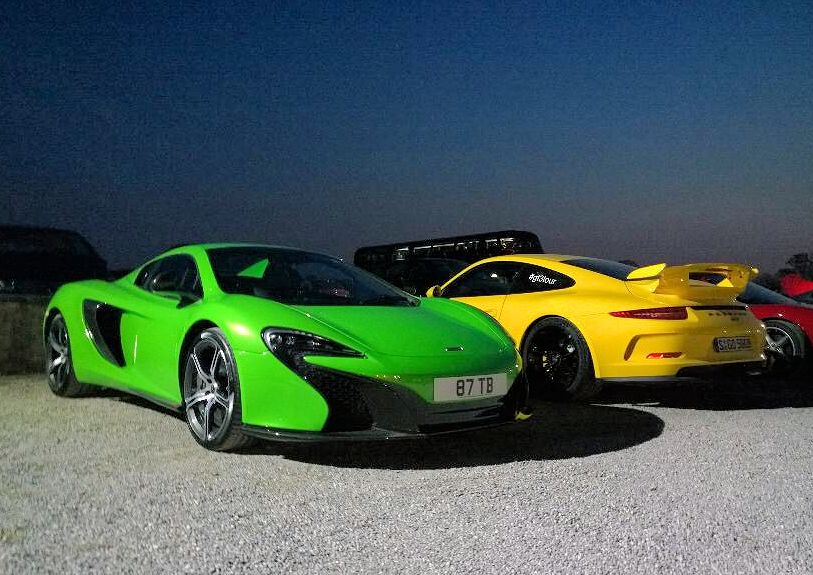
@Shmee150’s Mantis Green McLaren 650S Spider might not be to everybody’s taste but there’s no denying it makes a striking combination alongside @GetPalmd’s Racing Yellow Porsche 911GT3. The two met up at the weekend at the Cars and Coffee event in Brescia, northern Italy. Schmee is on the almost month long #WheresShmee tour, heading to Top Marques in Monaco next, whereas @Getpalmd is off down to near Sienna in Tuscany via the famous Passo della Futa.

@Shmee150’s Mantis Green McLaren 650S Spider might not be to everybody’s taste but there’s no denying it makes for a striking combination alongside @GetPalmd’s Racing Yellow Porsche 911GT3. The two met up at the weekend at the Cars and Coffee event in Brescia, northern Italy. Schmee is on the almost month long #WheresShmee tour, heading to Top Marques in Monaco next, whereas @Getpalmd is off down to near Sienna in Tuscany via the famous Passo della Futa. Photo @GetPalmd

.

roundup: DENMARK. One of Crown Prince Frederik’s bodyguards is to be charged for crossing the Storebaelt Bridge during Storm Egon in January reports Copenhagen Post. The 18km crossing, between Zealand (Copenhagen) and Fyn islands, was closed at the time. The incident caused outrage as it seemed the Royal’s thumbed noses a little people rules; some drivers had been stuck for hours. See the latest traffic and weather on Storebaelt Bridge here. CROSSING THE CHANNEL. It seems all-electric ferries will soon be plying their way between Dover and Calais if a report in The Times is to be believed (via Travel Weekly). Engineering company ABB tells the paper the technology is on the ‘threshold’ for routes less than two hours. Electric ferries currently run in various places around Scandinavia, but generally on very short runs. NETHERLANDS. The prospect of road pricing raises its head again with a new government-backed report says DutchNews.nl. There are pluses with all three options considered, from congestion charging to main road charging to pay-as-you-go types, but large negatives too with none emerging as the favourite. As in all other countries, the government is looking for ways to replace falling fuel tax revenues as average fuel consumption improves. The Netherlands has consistently rejected previous attempts to introduce road charges.

.

Week in Review: Rock Falls, Border Stress + Liberation

The Week in Review: border delays bother passengers on both sides of the Channel as a spate of rock falls trouble roads around the Continent, and watchers wonder if Condor will ever get it right with its new Liberation.

Plus, a look at the week ahead, to TISPOL’s ‘Speed Marathon’, DFDS’ new ship and the EU Transport Committee mulling the Commission’s White Paper.

.

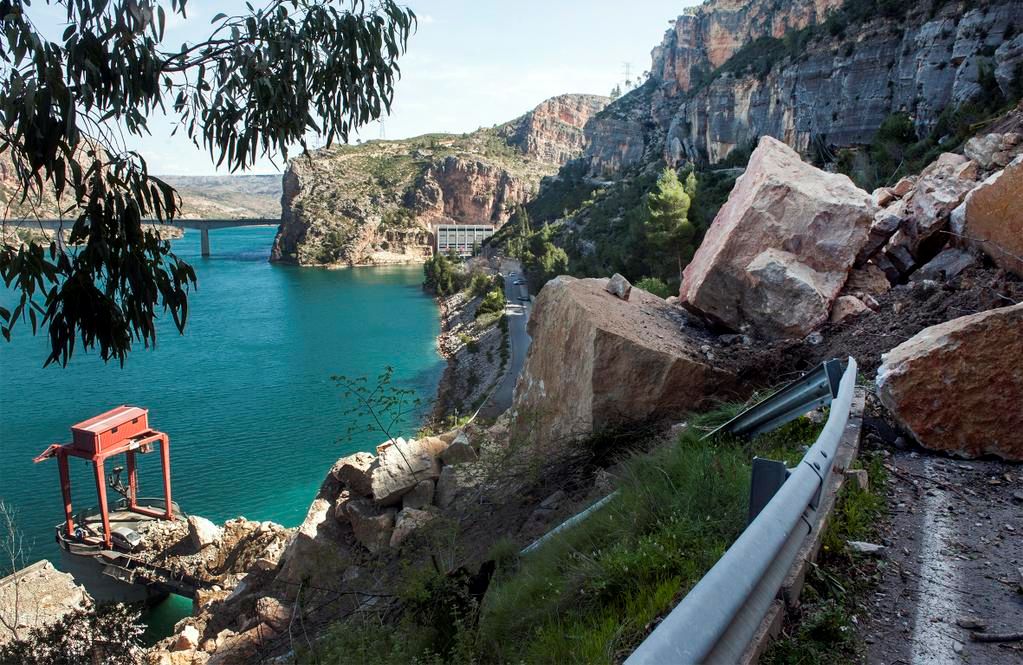
 Melting snow has seen a spate of road-blocking rock falls this week. The well-trod N90 down into Moutiers in the French Alps was blocked twice, on Wednesday and Saturday, though both were quickly cleared away, without injury. Worse was Serbia where heavy rain exacerbated the situation. Many roads in the west and south were cut off including the main Nis-Pirot road to the Bulgaria border in the south. None have seen quite as close a call as the CV-428 road at Corte de Pallas in the hills above Valencia last Monday. The regional forestry brigade passed through moments before a huge landslide engulfed the road entirely. More than a hundred locals were subsequently evacuated via forest tracks. Photo Diputacio de Valencia.

Melting snow has seen a spate of road-blocking rock falls this week. The well-trod N90 into Moutiers in the French Alps was blocked twice, on Wednesday and Saturday, though both were quickly cleared away, without injury. Worse was Serbia where many roads in the west and south were cut off including the main Nis-Pirot road to the Bulgaria border. None saw quite as close a call as the CV-428 road at Corte de Pallas in the hills above Valencia last Monday, above. The regional forestry brigade passed through moments before a huge landslide engulfed the road entirely. More than a hundred locals were subsequently evacuated via forest tracks. Photo Diputacio de Valencia.

Anything less than queues back to the Houses of Parliament would have been an anti-climax, and so it was on Wednesday that the introduction of Exit Checks at UK ports passed without notable incident.

That doesn’t mean they won’t be a problem in the future. Thanks to some hard ball lobbying from the operators, the government agreed to phase in the new identity checks. Their full force won’t become apparent until all passports are not only scanned but verified too and that won’t happen until mid-June, just in time for the summer holidays.

Meanwhile, the bigger headache for passengers this week has been border controls on the other side of the Channel, specifically for Flexiplus passengers at Eurotunnel in France.

Along with everybody else on the homeward Easter rush, these premium paying priority passengers waited for forty five minutes to get through UK Border Force yesterday with many expressing their displeasure on twitter.

Clearly, what happens at border control is out of the control of the operator. Eurotunnel’s advice has always been to use any check-in lane and any border booth then re-join Flexiplus afterwards, but that got lost in the melee yesterday.

The service does fall down rather when drivers who pay extra to avoid the hoi-polloi find themselves mixed back in at various points, not least the final filtering in to the boarding queue (which also tremendously irritates basic fare payers).

The company later said it was referring all the complaints to the ‘relevant team’ in such a way as to suggest the prospect of dedicated, full-fat extra staffed border controls for Flexiplus passengers in the future. We shall see.

The Channel claimed more than its fair share of headlines this week what with the one-thing-after-another issue strewn introduction of Condor’s new £50m ship, the Liberation.

Liberation was meant to liberate the Channel Islands operator from the weather vulnerability, harsh ride and unreliability of its ageing predecessors, but it hasn’t.

The quay crash, immediate weather cancellations, ridiculed safety video and engine problems during its first week of service were followed this week by more half-power, go-slow engine problems. Events culminated yesterday in a malfunctioning ‘hoistable vehicle deck’ which, according to ITV, left 60 passengers and 24 cars stranded in Jersey.

It leaves watchers wondering whether there’s a monumental cock up in progress.

A ferry industry insider told us this week it was all normal teething problems and should all be sorted out within a month. But he did add that Condor didn’t have the best contingency plans in place.

Meanwhile, @Pist0lpierre, on board Liberation yesterday, told us, ‘Obviously it’s a good vessel but the ride wasn’t great based on fairly average sea. The Guernsey to Jersey leg was quick and comfy.’ Ominously he adds, ‘Will try fly/hire next.’

Sympathy for Condor may be edging away at this end but it remains sky-high for the poor customer facing staff – at Eurotunnel too – who have to explain all the problems away, day after day.

Update Friday 17 April: it may still be too early to say, but Condor seems to have finally got a grip on its new ship. Not delays or technical hitches this week at all, Liberation even left early on a couple of occasions.

.

These are just three of the stories on Drive Europe this week. Others include the UK’s shock topping of the most-expensive diesel in Europe chart, date announced for new tighter France road rules – and no motorway toll rises this year – the road works season starts in the Netherlands, and Germany and the Romanian government reacts pretty sharpish to Dacia’s plea to build a motorway across the Carpathians.

.

The week ahead: traffic police forces across Europe engage in a Speed Blitz this week, with all resources concentrated on speeding drivers. Watch out. The really big operation will be in Germany on Thursday. The EU’s Transport and Tourism committee holds its monthly sessions on Monday and Tuesday. Items on the agenda include transport’s share of the massive €315bn Strategic Investment Fund, the on-going review of the Commission’s 2011 Transport White Paper and, on tourism, ‘keeping Europe at Number One’. At the same time, Malta debates why – despite having Europe’s safest roads in 2014 – it also seems to have the pothole-strewn worst. Maybe the two things are connected? Finally, so far, DFDS’ new Dover-Calais ship debuts on Wednesday.

.

Dacia Deadline for Romania A1 – Ile de Re Bridge

The Romanian government responds pretty sharpish to a plea/threat from Renault-owned Dacia Cars to finally build a motorway across the Carpathians to Western Europe.

Also, a quick look at the bridge to Ile de Re, France’s second longest. As series of major overnight road closures start in Germany next week as the A643 Mainz-Wiesbaden bridge re-opens. A split is revealed at the top of Dover-Calais operator MyFerryLink as it fights for its life in the appeal courts.

.

DACIA DEADLINE FOR ROMANIA A1

Hard decisions by 2020 if no trans-Carpathian motorway in place.

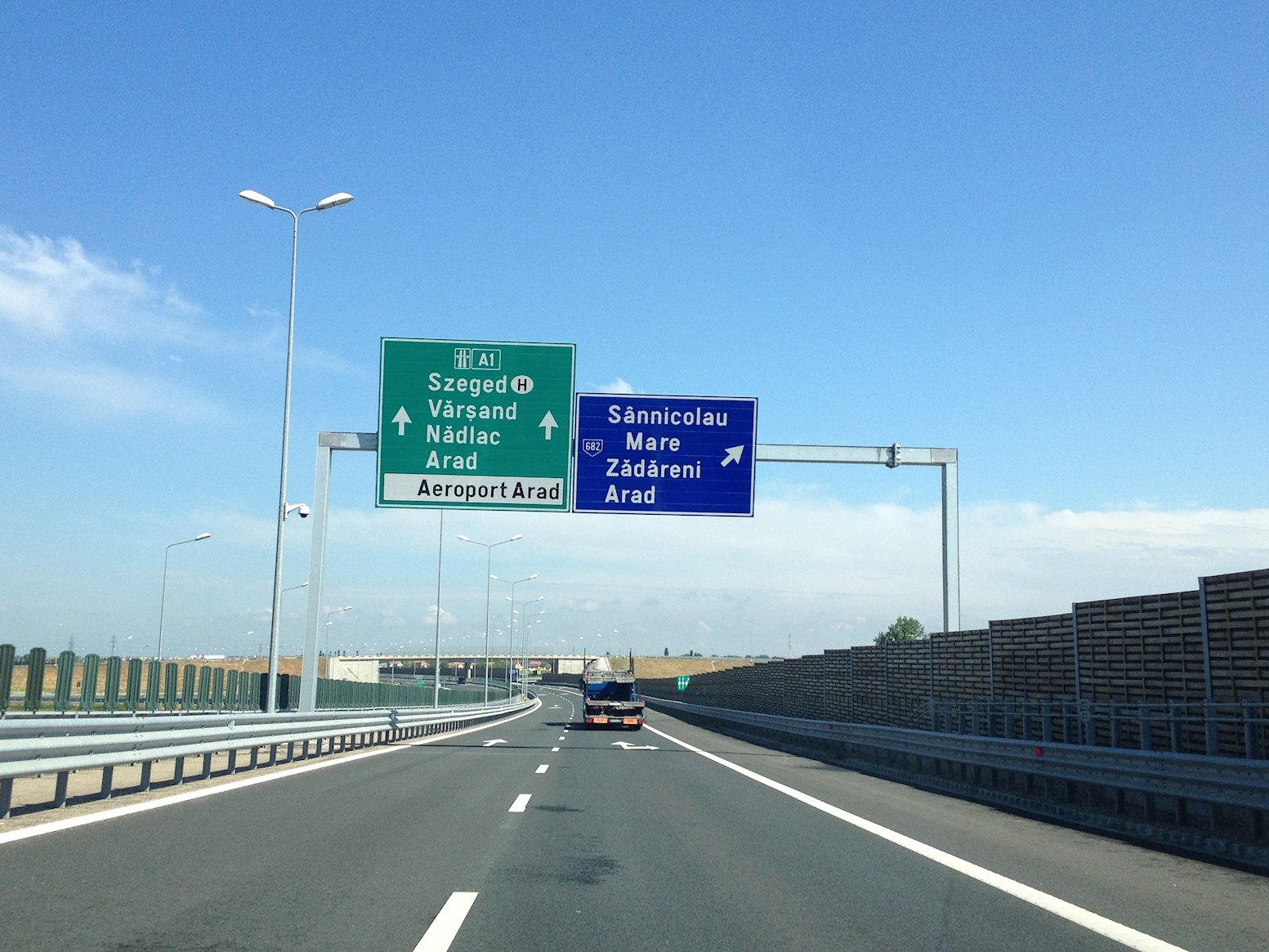
The A1 in western Romania, towards the Hungarian border at Arad. Photo @DriveEurope.

The A1 in western Romania, towards the Hungarian border at Nadlac. Photo @DriveEurope.

The future of the Renault-owned Dacia factory near Pitesti hangs on the still-unbuilt trans-Carpathian section of the A1 motorway.

Such a thing has been suggested before but this is the first time the threat has been made explicit.

In an interview this week with 0-100 Hotnews (via Romania-Insider.com), Dacia President Nicolas Maure says, ‘By 2020 if the section is not ready, I think we have to take some decisions. After then, nobody at Renault-Nissan will understand how there is no minimum highway system in Romania.’

The Pitesti factory is just south of the Carpathian mountain range, linked by existing stretches of the A1 to capital Bucharest and Black Sea port Constanta in the south.

The A1 in the north west of Romania, to the Hungarian border, is almost complete but the central stretch, across the mountains between Pitesti and Sibiu, is still on the drawing board.

It was included in the draft National Transport Plan published late last year as – cheaper and quicker to build – expressway but has since been restored to full motorway. Construction had been expected to start within two years but current plans are not clear.

Dacia workers held two demonstrations last year demanding the road be built and were supported by the now-ousted president.

The company itself distanced itself from the protests at the time but later said the lack of a direct motorway link to Western Europe cost €30 per car.

Last year the Pitesti factory manufactured 340,000 vehicles. It is currently the only place where Dacia builds cars from scratch but faces increasing competition from an assembly plant in Morocco and a Renault factory in Turkey.

According to Faure, two thousand trucks currently head across the mountains on the single lane road along the Olt River Valley towards Western Europe each week.

For whatever reason, Romania has consistently struggled to build fast roads, in marked contrast to neighbouring Bulgaria which now has an almost fully functioning basic, national motorway network.

The bright news for those wanting to drive the Transalpina and Transfagarasan mountain roads, either side of Sibiu, is that the western stretch of A1 should be completed this year.

Update 11 April: the stretch of A1 from Pitesti to Sibiu has ‘finally been designated as top priority’ reports the Independent Balkan News Agency today. A press release from the Ministry of Transport this week says the 120km section, including 20km through the mountains, will be built from 2017-20 at a cost of €1.6bn.

.

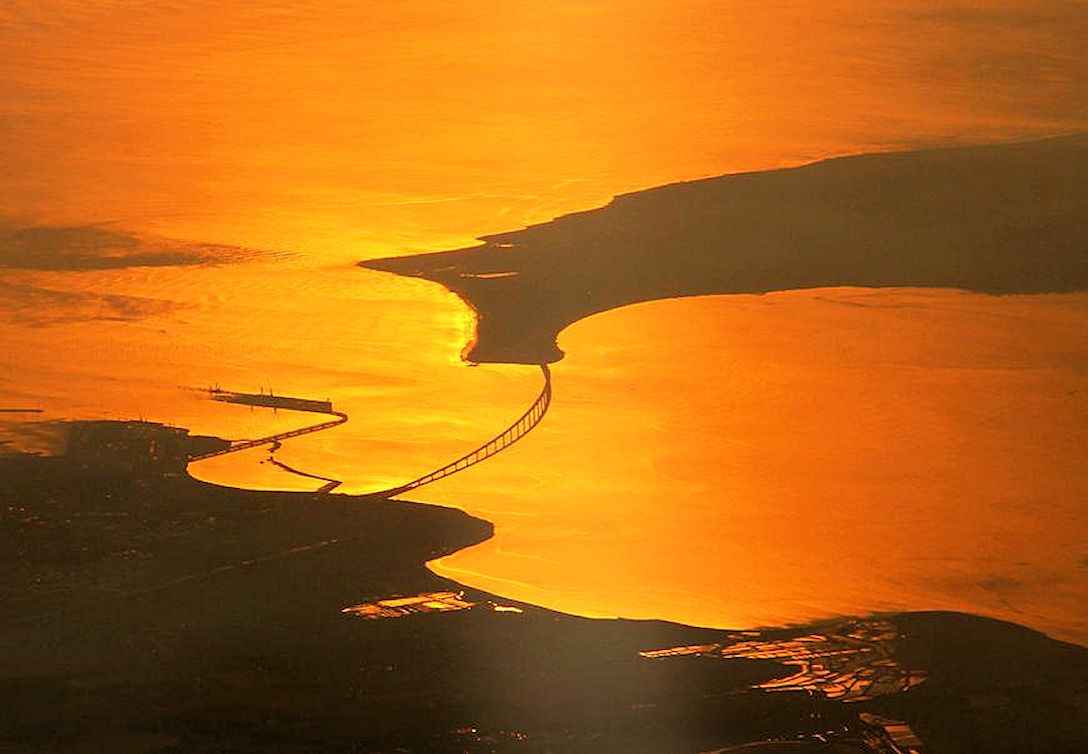
The D735 causeway road out to Ile de Re off the coast of La Rochelle in western France. Photo via @IledeRetourisme

The D735 curving Pont de Ile de Re Bridge out to Ile de Re off the coast of La Rochelle in western France. At 2.9km it is the second longest bridge in France after the 3.3km St Nazaire Bridge. For cars the toll varies €8-16 return between summer (June-September) and winter. Vehicles 3.5t+ pay €18-40 whatever the season, depending on axles and weight. Photo via @IledeReTourisme

.

roundup: CROSSING THE CHANNEL. As if overturning the repeated competition authority rulings barring it from the Dover-Calais route was not hard enough, a dispute between the management and supervisory board of MyFerryLink sees them in court in Boulogne today reports IHS Maritime 360. The board apparently wants to oust the management despite the latter having the rock solid backing of Eurotunnel, owner of the company’s three ships, with whom they signed the operating contract. It seems the firm could fall apart even before the (likely final) Court of Appeal decision due mid-month. GERMANY. The A643 Schiersteiner Bridge across the Rhine from Mainz to Wiesbaden re-opens on Monday (13 April) for all vehicles except those 3.5t+ reports ADAC. Also, there are a number of road closures starting next week, mainly overnight. A3 Frankfurt-Cologne in Cologne closes between Lohmar-Nord and Rösrath between 22:00-05:00 Monday to Thursday for the next two weeks; A4 Aachen>Cologne between Eschweiler-East and Düren from Friday 17 April until Sunday 19 April, 22:00-22:00 and in the other direction for the weekend of Friday 17 April until 05:00 Monday morning; and, A8 Luxembourg>Saarlouis between Perl-Borg and Merzig-Schwemlingen from 07:00 Monday 13 April until 20:00 Saturday 18 April and in the other direction from 07:00 Monday 20 April until 20:00 Saturday 25 April.

.

UK Dearest Diesel, Norway Petrol – Tour Auto Pyrenees

The UK has sneaked to the top of the most-expensive-diesel-in-Europe list.

Also, looking ahead to Tour Auto. Collector’s Millau Viaduct tickets on sale Saturday. Road works season kicks off in the Netherlands on Monday 20 April. It’s safe to swap back to summer tyres in Germany.

.

UK DEAREST DIESEL, NORWAY TOP FOR PETROL

Big savings for British drivers on the Continent generally, even better in Austria. Spain is noticeably cheap.

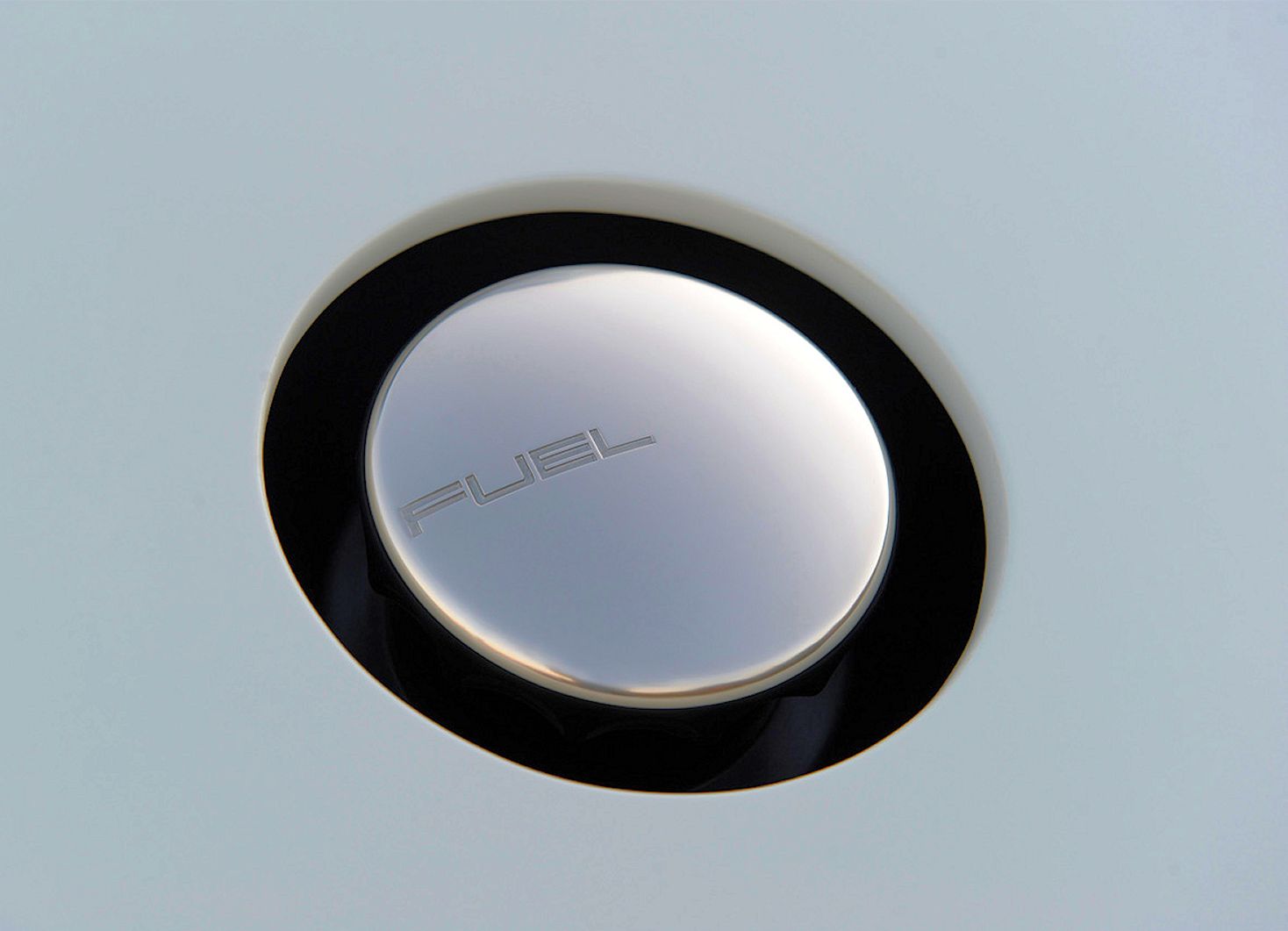
singer fuel 1

By filling up in France, a British driver could save an average €22.40 on a typical fifty litre tank of diesel this week.

(Only a slightly bigger tank would see a cross-Channel day return ticket pay for itself).

In neighbouring Luxembourg the saving stretches to €29.40, to €21.45 in Germany, €18.70 in Belgium and €14.65 in the Netherlands.

Thanks to the volatility of oil prices recently, after several years of hovering in the top five or so, the UK now has the most expensive diesel in Europe.

At an average of €1.638 per litre, British derv outstrips even Norway (€1.613) and Italy (€1.506), the two most regular chart toppers recently.

With unleaded95 petrol however, the UK – €1.555 per litre – slips down to sixth place behind Norway (€1.766), the Netherlands (€1.689), Italy (€1.647), Denmark (€1.588) and Turkey (€1.574).

On the notional fifty litre tank, a driver would save just €8.30 in France, €3.45 in Belgium, €6.30 in Germany but €16.60 in Luxembourg.

Other notable movements this month include unleaded95 in Austria at €1.180, cheaper than Albania and Romania.

Belarusian diesel is now up among the big boys at €1.380 while Spain has slipped far down the list at €1.159 (in Madrid).

All prices are indicative only, per litre, taken from fuel-prices-europe.info, updated daily, mainly averages except Belgium and Luxembourg where prices are nationally regulated.

.

In just over two weeks, the word's greatest classic racing cars will be in the Pyrenees on Tour Auto. Highlights include Cols Portet d'Aspet, de Mente and de Soulor. More nearer the time. Photo via @TourAuto

In just over two weeks, some of the world’s great classic racing cars will be in the Pyrenees on Tour Auto. Highlights this year include Cols Portet d’Aspet, de Mente and de Soulor. The route this year starts in the Grand Palais in Paris as usual but heads south west to Biarritz. More nearer the time. Photo via @TourAuto

.

roundup: FRANCE. The famous Millau Viaduct on the A75 in southern France – the world’s tallest bridge – is to release a commemorative ticket on Saturday in the design of a euro bank note (denomination €0). If that’s your thing better get down there for 11:00 when they go on sale, at €2, collectors are already in a ‘frenzy’ apparently. See more. NETHERLANDS. Come spring it’s time for the roads works to start. According to national roads manager Rijswaterstraat, the stretches likely to cause most delays are: narrowing and shifting lanes on the A12 at Galecopperbrug south of Utrecht starting Monday 20 April until the autumn; the closing of the A1 at Amersfoort east of Amsterdam at weekends in May between Bunschoten and Hoevelaken for widening; the A16 Brienenoordbrug south of Rotterdam closing two weekends in July and August for resurfacing plus a nine day closure of the outside taxi-way in July; the A44 Den Haag-Amsterdam closed at the Old Rhine bridge at Leiden for three weekends in July and August for refurbishment and resurfacing; and, the A13 Delft-Kleinpolderplein (Rotterdam) closing weekends in September for maintenance. GERMANY. Since the Easter is over, in tune with the saying ‘Octoker bis Ostern’ (October to Easter), it’s time to change winter tyres back to summer tyres confirms road safety council DVR. Germany, like Luxembourg and Austria, has a ‘situational obligation’ for winter tyres, i.e. they must be used in snow and ice conditions (including frost). With the temperature now consistently above threshold temperature 7⁰C – winters work best below that – it is considered safe to swap back now but, strictly, the rule applies whatever the time of year.

.

Exit Checks Start Today – Tractor Speed Record

The much feared Exit Checks start at UK ports and Eurotunnel today, but will they cause queue chaos, or will it all be a bit of a damp squib?

Also, rally legend Juha Kankkunen claims the tractor world land speed record in snowy Finland. French motorway tolls will not increase this year says the PM as new road safety website launches. Winter tyres finish in Bosnia next week. DFDS bolsters Dover-Calais route with an extra ship.

.

EXIT CHECKS START TODAY

All passports scanned but time-consuming ‘verification’ phased in.

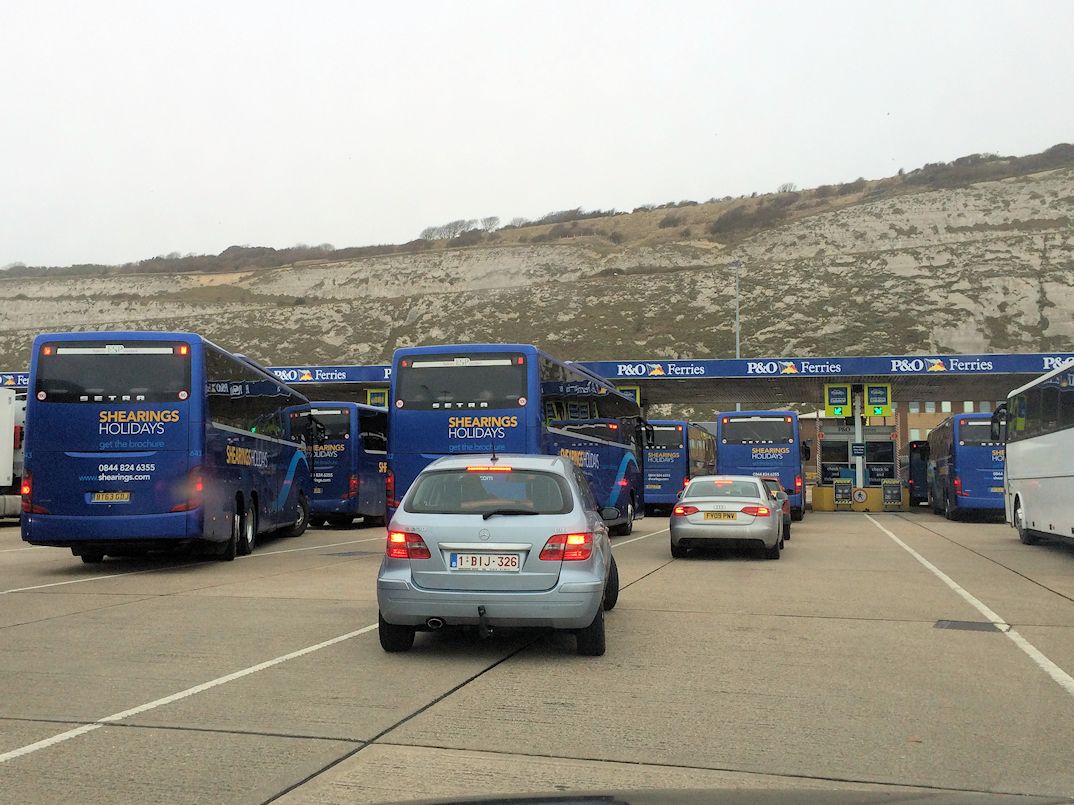
Check-in at Dover. Coach tour parties are exempt from new Exit Checks.

Check-in at Dover. Coach tour parties are exempt from new Exit Checks.

New Exit Checks are not expected to cause big delays initially* but warnings have been issued about peak holiday days.

From today, most drivers and passengers leaving the UK will be subject to identity checks at check-in, similar to those already in use by the airline industry.

The process varies by operator and type of passenger but essentially has two stages: scanning passports and then verifying the details.

The latter stage takes the time hence verification – checking the passport against the face of the passenger – will be phased in as the system beds down.

A P&O spokesman tells the Telegraph, ‘The actual scanning of passports is quick. It’s the verification that takes longer.’

According to a widely reported Home Office briefing last week, for the first month only 25% of passengers will have their details verified, rising then to 50% and 100% by mid-June.

In a letter to MPs on the Home Affairs Select Committee last month, Eurotunnel said, ‘Trials conducted at the year-end demonstrated that it is possible to conduct these checks at quiet periods, but that as traffic builds, so the risk of disruption and delay increase. Our principal concern is the likelihood of significant delays occurring on peak holiday departure days.’

Exit check trials in Dover found the time taken to check-in doubled to just under one and a half minutes per car.

The same trial found that for two ferry operators the extra time taken for freight customers was ‘negligible’ but the other – un-named – operator saw check-in times rise by a third to more than three minutes.

The only exceptions to Exit Checks, so far, are for passengers on ‘closed’ coach services, i.e. tour groups. Passengers on scheduled services will have the checks.

In an attempt to smooth the process Eurotunnel car shuttle customers are asked to provide Travel Document Information (TDI) in advance but this was found to be impractical for freight drivers.

Meanwhile, Brittany Ferries tells @DriveEurope it has already been collecting the information for the past two years at the request of the French authorities and does not expect the new checks to impact customers.

UPDATE: according to on-the-spot reporting from Kent Online, the first day of Exit Checks passed without disruption.

.

Four time World Rally champion Juha Kankkunen sets the new Guinness World Record for the fastest tractor, at 130.165kmh – 80.9mph – on the highway landing strip at Vuojarvi near Rovaniemi in Finland on 19 February, driving a 7.7t, six cylinder 250hp Valtra T234 tractor on Nokian Hakkapeliitta TRI ‘North Proof’ tyres:

.

roundup: FRANCE. Motorway tolls will not increase this year announced Prime Minister Manuel Valls earlier today. A planned rise of 0.57%, due to 1 February, fell victim to a row over the ‘excessive profits’ of the motorway operators though a committee of MPs later accepted profits should be judged over the life of the concession contract rather than the back-loaded later years. The government has also launched a new road safety website to answer driver queries (French only) on contentious aspects of the law. For instance, like Spain and Belgium recently, it makes the tolerances applied to potential speeding offences clear: 5kmh below 100kmh or 5% above, for regular cameras, and twice that for the new generation of mobile radars. BOSNIA. Winter tyres cease to be mandatory after 15 April reports Sarajevo Times. Summer tyres are also acceptable as long as they have at least 4mm of tread and the driver carries snow chains. CROSSING THE CHANNEL. The former Stena Nordica has been chartered by DFDS for its Dover-Calais route starting next Tuesday (15 April) according to lemarin.fr. The route has been operated by just one vessel for some months.

.