Teslas Drive Amsterdam to London Direct For Free But How Long Did It Take?

The electricity might have been free, but how long did it take?

.

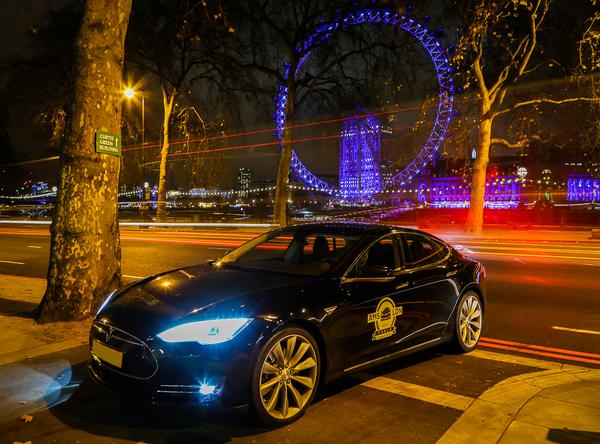
Tesla Model S in central London last night. Photo via @Tesla_Europe.

Tesla Model S in central London last night. Photo via @Tesla_Europe.

A group of Tesla Model S drove direct from Amsterdam to London yesterday to mark the opening of a new ‘Supercharger’ in Gent which now opens up the route.

They covered 505km and consumed 131KwH of electricity which, supplied by Tesla’s own charging points, cost the drivers nothing. 

The only metric not made explicit was how long the trip took.

Judging by the time the tweets were sent by @Tesla_Europe the total journey time was twelve hours via Eurotunnel.

That is significantly longer than you would expect in a conventional car: the driving time London-Amsterdam is 6h30 according to Google Maps, plus breaks and Channel crossing.

Including finding a hotel, and crossing on the DFDS Dover-Dunkirk boat, the same trip in the other direction took us nine hours in October 2012.

Superchargers give an 80% charge in forty minutes or 100% in seventy five minutes.

Tesla has pledged that, for Model S owners at least, the superchargers will always be free to use.

A considerable network of superchargers has now built up in Europe, see map below.

Model S start at £49,900 in the UK rising to £76,400 for the P85D which hits 0-60 in 3.2 seconds and boasts a 285 mile range at 65mph.

.

eu_supercharger_opennow_12192014

Open now: Tesla supercharger map. Early next year the network will expand into Spain. By the end of next year it will include eastern Europe and the route to Istanbul. See more at TeslaMotors.com

.

The Drive To Norway Is Not Tedious

The drive across Germany and up through Denmark has come in for far more than its fare share of criticism recently. In reality, many of the places along the way attract visitors in their thousands each year all looking for clean air, good food and wild nature. Just don’t expect many mountains.

.

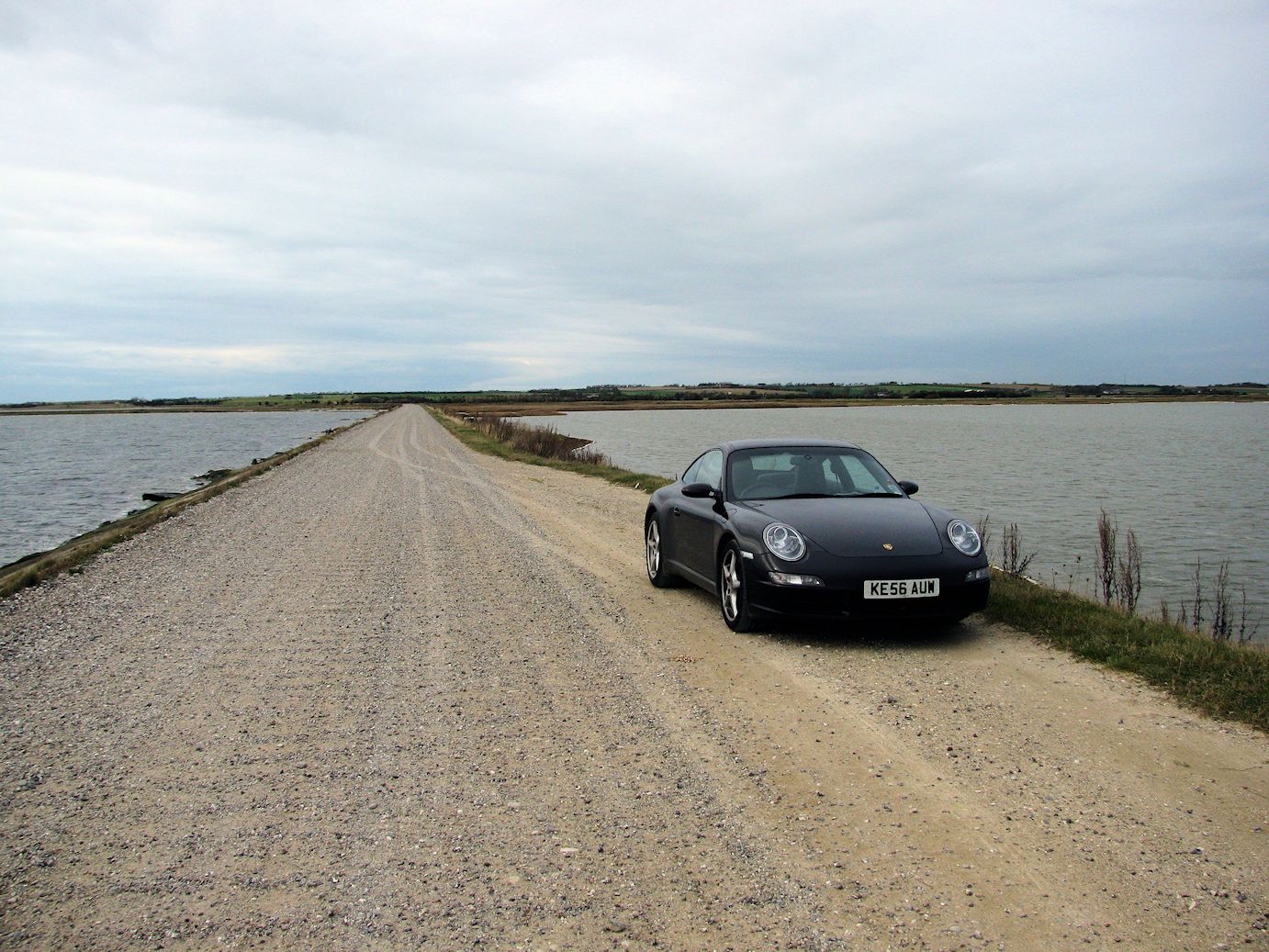
Lost in Limfjorden: drivers don't have to drive all the way to Norway to find gravel tracks criss-crossing fjords (though Limfjorden, despite the name, is not strictly speaking a fjord - it certainly isn't surrounded by towering cliffs - it's actually a long thin inlet which completely separates the top of the Jutland peninsula from the rest).

Lost in Limfjorden, northern Denmark. All photos by @DriveEurope. More photos, and map, below.

No-one is saying it isn’t essential to have a ferry link between the UK and Scandinavia.

It’s just a shame that a common argument for reinstating the UK-Norway ferry – for instance – is to avoid the ‘long and tedious’ drive across Germany and up through Denmark.

It is longish: 470 miles from Calais to Hamburg and another 320 miles to Hirtshals for the boat across the Skaggerak (the quickest of which takes 3h15 and costs about €75).

Alternatively, it is possible to drive the whole way there via Copenhagen and Gothenburg.

That’s 1,050 miles from Calais plus the extra expense of the Puttgarden-Rodby ferry, and the Oresund Link (a combined ticket costs from €77).

Either way it will take the best part of two days but the drive certainly isn’t – or needn’t be – tedious (as if driving yourself across the Continent can ever be that).

Okay, the Northern European Plain is not at first sight the most stimulating landscape.

It has been described as the land of endless silver birch trees, and not inaccurately.

But progress is swift on the derestricted A1 autobahn and it’s dotted at regular intervals with historic cities like Munster, Osnabruck and – not least – Hamburg.

For good reason, this coastal region attracts holidaymakers in their hundreds of thousands each year and features one of Europe’s most exclusive resorts.

The south east corner of the North Sea – aka the Wadden Sea – is home to the Frisian Islands which stretch from the north west of Holland all the way up to Denmark.

To varying degrees they cater to health and wealth types, those who enjoy bracing walks, good food and vigorously preserved wildlife and natural beauty.

The chain culminates in the ultra-chic hammerhead outcrop of Sylt, glamorised by dashing Opel heir – and former husband of Brigitte Bardot – Gunther Sachs in the 1960s.

Today it boasts three Michelin starred restaurants and an unbroken 40km stretch of wild beach.

Because most of the Frisian islands ban cars – even Sylt is only accessible by car train (€45) while the rest have secure parking on the mainland and regular ferry connections – on our flying visit we stayed at Husum, on the coast, ninety miles north west of Hamburg.

The bunker-like NordSeeHotel hunkers down a few feet from the water’s edge with faint salt stains on its massive plate glass windows.

Best of all it’s less than five minutes’ walk from the Wadden Sea Nature Park, an enormous reserve taking in land and sea, a popular stop for ninety million birds each year on the East Atlantic Flyway from the Arctic to South Africa.

Between Hamburg and Hirtshals there are plenty of other great places to see, many conveniently on the direct route.

Denmark’s oldest town, Ribe, is less than an hour from the German border.

We can recommend the restaurant at the olde worlde Hotel Ringkobing atop a miles long lagoon (though the town itself is spookily quiet).

The best thing we did in Denmark was to get lost around Limfjorden at the top of the Jutland Peninsula, driving gravel tracks in and around the craggy shoreline.

Meanwhile, those heading via Copenhagen and Sweden’s west coast should find time to stop at the glacially calm, quintessentially Swedish Laholm’s Bay at Bastad, if possible at the Skansen Hotel, one of the best we’ve ever stayed at.

Gothenburg, with its luxe-Moomin main square, canals and wood-built old town is worth a look too.

Of course it isn’t just child-free couples with all the time in the world who want to take their own cars to Norway. Those with rowdy kids are probably best off fly-driving (though Legoland is on the way).

Hardest hit by the complete lack of a UK-Scandinavia ferry are those with family links across the North Sea. Four days traveling out of the annual fortnight is a significant chunk of time, no two ways about it.

For everybody else, the only way to make the drive tedious is by not looking up from behind the steering wheel.

.

There's more to Hamburg than the Reeperbahn: you might not think you would enjoy walking around old docks (and warehouses) but Hamburg's restored Speicherstadt district, in the port area, is impressive in its scale, full of museums and - most importantly - interesting places to eat and drink.

There’s more to Hamburg than the Reeperbahn: the restored Speicherstadt warehouse district, in the port area, is impressive in its scale, full of museums and – most importantly – groovy places to eat and drink.

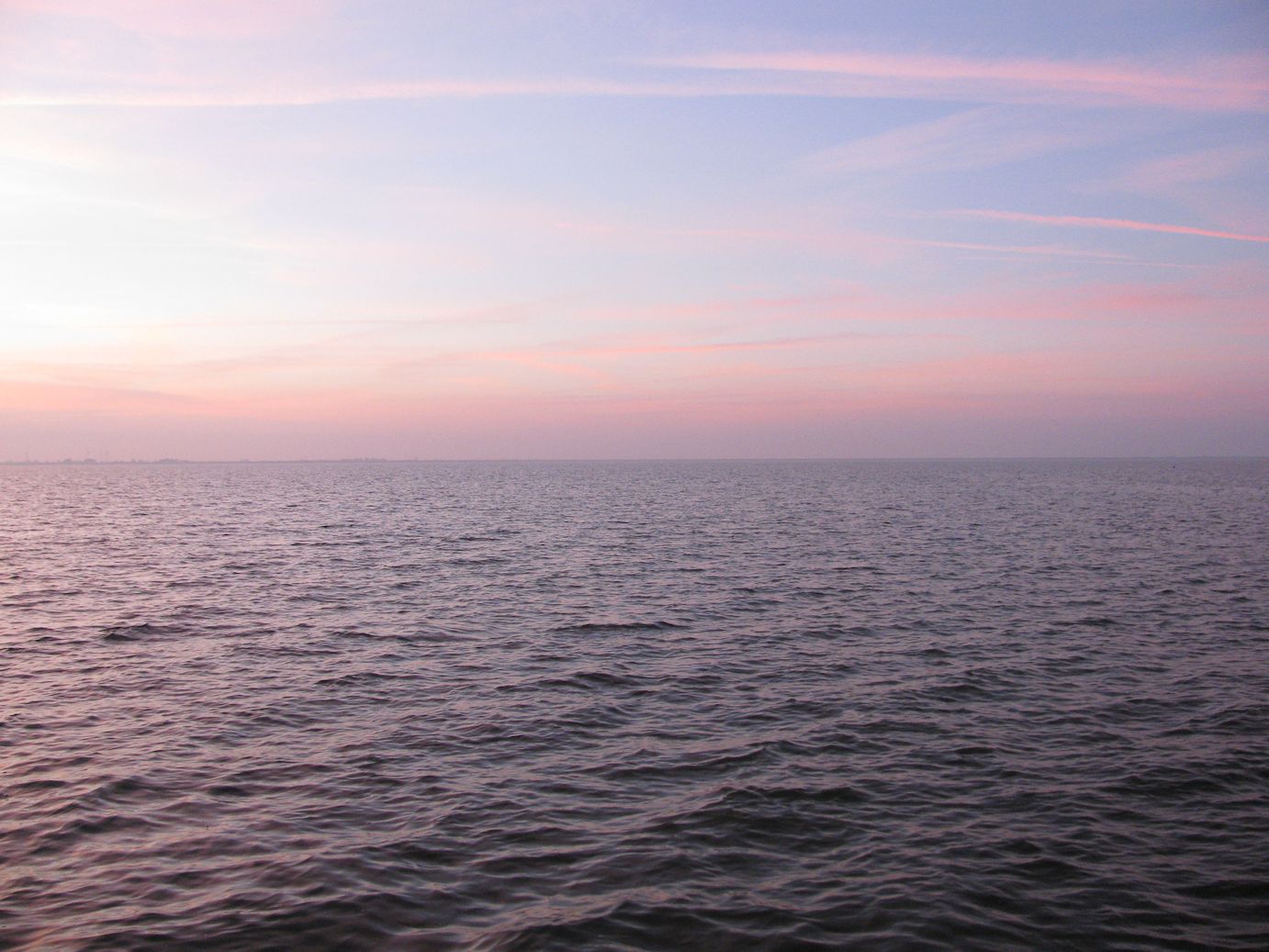
Looking out to Nordstrand - not technically a Frisian island since it is connected to the mainland - from the edge of the Wadden Sea nature reserve in Husum, north west Germany. The flat Frisians provide virtually no weather protection to the coastline - it was seriously bracing even in October - but then you wouldn't be heading to Norway in search of guaranteed sunshine, whatever the time of year.

Looking out to Nordstrand – not technically a Frisian island since it is connected to the mainland – from the edge of the Wadden Sea Nature Reserve in Husum, north west Germany. The flat Frisians provide virtually no protection from the weather – it was seriously bracing even in October – but then no-one heads to Norway in search of warm breezes and guaranteed sunshine. Do they?

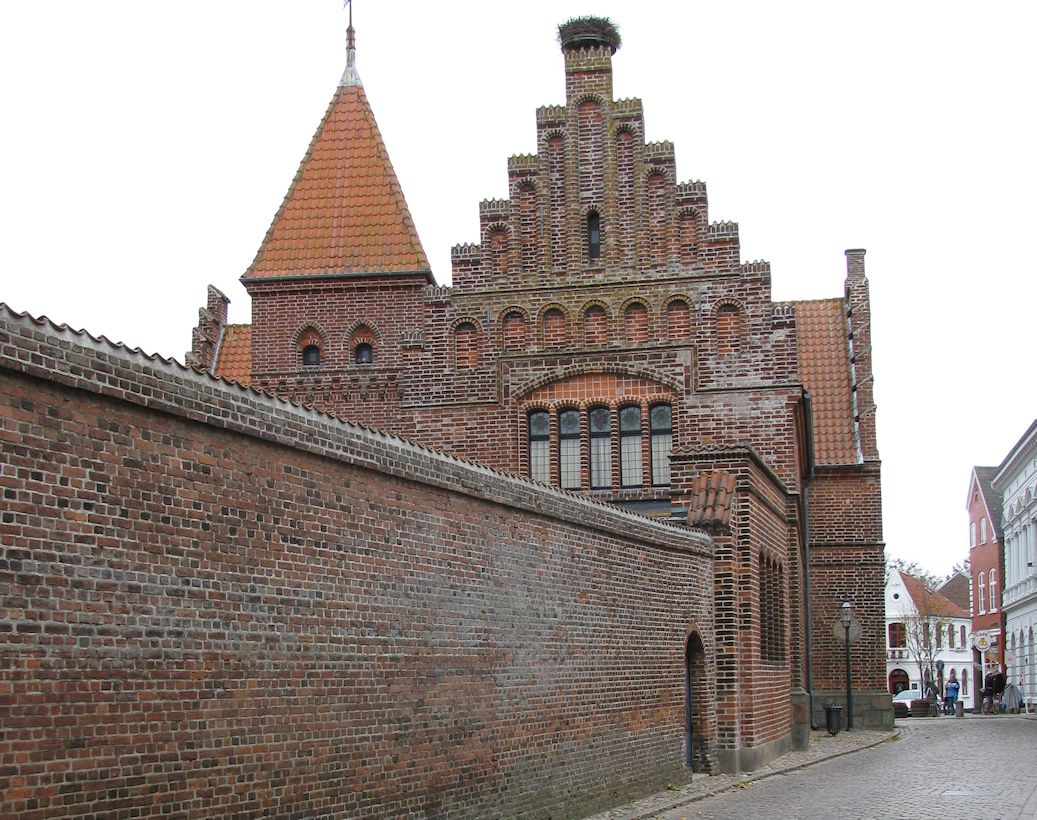
Ribe, Denmark's fastidiously preserved oldest town. This is the family friendly Den Gale Arrest Hotel - 'the old prison' - where rooms start at €77.

Ribe, Denmark’s fastidiously preserved oldest town (here caught mid re-pointing). This is the family friendly Den Gamle Arrest Hotel – ‘The Old Prison’ – where rooms start at €77.

The views from the Oresund Link are breath-taking, and so is the toll, currently €46. Scandlines passengers from Germany can buy a combined ticket for €77, a saving of at least €8. Drivers determined to go the lngest way possible can drive the entire way to Norway on the E20 via Kolding but must also contend with the €18 toll on the Storebaelt bridge as well as an extra 100 miles.

The views from the Oresund Link are breath-taking, and so is the toll, currently €46. Scandlines ferry passengers from Germany can buy a combined ticket from €77, a saving of at least €8. Tip: part pay Oresund tolls with the last of your Swedish or Danish currency. Drivers determined to go the longest way possible can drive almost every inch to Norway, on the E20 via Kolding in Denmark, but must also contend with the €18 toll on the Storebaelt bridge and an extra 85 miles.

.

.
Rat Poison Shuts A7 at Gottingen For Three Days

Major rescue operation on one of Germany’s busiest roads at the start of the Christmas getaway weekend.

.

One lane of the northbound A7 at Gottingen reopened this morning three days after one of Germany’s busiest motorways shut both ways due to a major chemical spill.

The carriageway on the southbound section has been re-laid and should re-open this evening (now fully open).

A truck carrying eighty barrels of aluminium phosphide (AIP) crashed through the central reservation on Friday morning.

A 25 year old car driver was killed in the incident. His female passenger, and the truck driver, were seriously injured.

Only six of the barrels were damaged but the escaped pesticide – commonly used as rat poison – reacted with rain water to release highly toxic phosphine gas.

Local residents were warned to stay inside and close all windows. No other injuries were reported.

In what has been described as ‘one of the largest and longest running fire-fighting operations in recent years’, it took 170 hazmat suited rescue workers until 17:00 on Saturday to bring the situation fully under control.

The timing could hardly have been worse. Friday was the first major getaway day for the Christmas holidays.

Under the circumstances – with few other alternative routes available, other than through the centre of the historic university city of Gottingen itself – the authorities, and drivers, will have been pleased to escape with maximum delays of 1h30 in each direction.

The A7 is the major north-south route through the centre of Germany. It stretches 598 miles from the Danish border in the north to the B179 Fernpass on the Austrian border in the south, near Neuschwanstein Castle, via Hamburg, Hannover, Kassel, Wurzburg and Ulm.

.

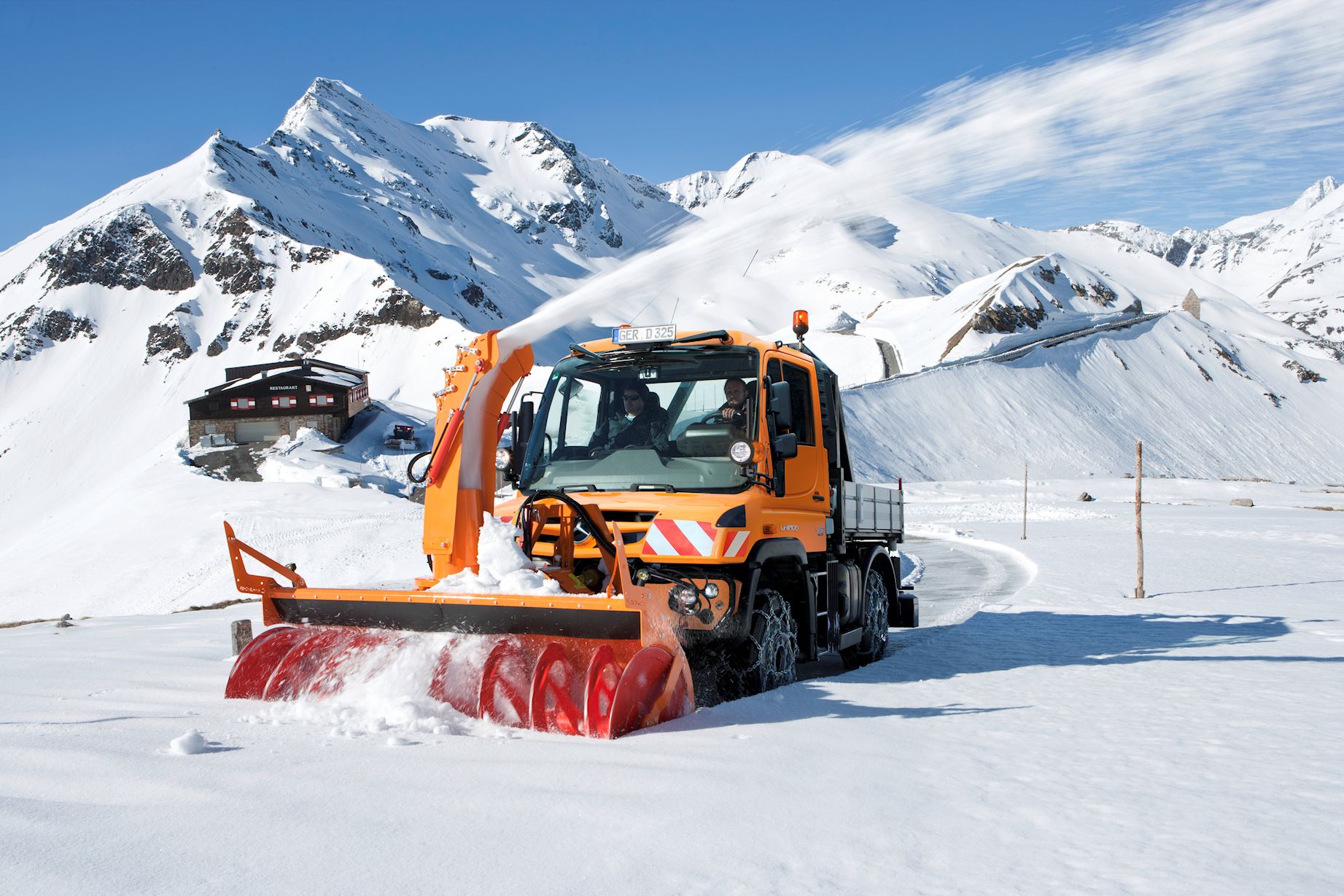
A Unimog clears snow from Grossglockner Hochalpstrasse in Austria. In June! A roundup of the week's pictures and news in brief coming up.

Random: a Mercedes-Benz Unimog clears snow from Austria’s 2504m Grossglockner Hochalpstrasse. In June!

.

Good News For Some Important Roads in Romania

The famous Transfagarasan, the vital A1 trans-Carpathia and Romania’s worst road – the little DN18 in the Rodna Mountains – all in line for work in 2015.

.

Romania's worst road. Sixty kilometres of patches and potholes. More later.

DN18: Romania’s worst road, 60km of patches and potholes, at Botos. Photo Romania-Insider.com

The worst road in Romania is to get a €92m makeover.

Stretching nearly 90km from Moisei to Iacobeni in the Rodna Mountains – part of the Eastern Carpathians in Northern Romania – DN18 accesses one of the most scenic parts of a scenic country.

However, it is lined with potholes and patches nearly the whole way according to locals.

‘Try at all cost to avoid the road Vatra Dornei – Iacobeni – Ciocanesti – Carlibaba,’ said Romania-Insider.com after a recent drive. ‘It does shorten your trip compared to going via Bistrita, but it is the worst road in Romania. We haven’t seen a road so bad: hole after hole, for 60 kilometers or more.’

The work will be financed by a loan from the European Investment Bank, topped up by the Romanian government, and is expected to take four years.

DN18 is one of a number of roads listed in next year’s upgrading plan, approved on 16 December. Also included is the highway from Targu Mures in central Romania to Iasi on the Moldova border, close to Chisinau, and Jeremy Clarkson’s favourite, the Transfagarasan high altitude road.

The work on Transfagarasan means it should open for longer than its current three/four month operating window.

Most importantly for the country as a whole, a tender will be issued in January for studies on the vital trans-Carpathian section of the A1.

Hugely successful budget car maker Dacia has long lobbied for the completion of the A1 across the mountains to give its factory in Pitesti direct access to markets in Western Europe.

Currently the bulk of its production is shipped from Constanta on the Black Sea. The rest struggles up the beautiful but overcrowded single lane DN7 Olt River Valley road.

Like almost all planned motorway projects in Romania, the A1 was downgraded to expressway specification in the national transport plan published in October to make it cheaper, easier and quicker to build.

Work should start in the next two years said new Transport Minister Ioan Rus on Tuesday.

When complete, along with on-going works on the A1 west to the Hungarian border, Bucharest and the Black Sea will be linked to the European motorway network for the first time. Bucharest is 1,475 miles from Calais.

For the record, potholes and poor surfaces were not a problem on our – admittedly brief – drive through Romania. The overwhelming issue is lack of dual carriageway fast roads.

.

.

UK Wins Reprieve From Cross-Border Fines – Gotthard II Referendum

The UK gets its two year transition period to new cross-border traffic fines rules despite opposition from MEPs – and the Commission – though there may be a few more hurdles to jump yet.

Meanwhile, Delecour will contest the Monte Carlo Rally in Tuthill’s unique Porsche 911. Campaigners against a second Gotthard road tunnel have forced a national referendum.

.

UK WINS REPRIEVE FROM CROSS-BORDER FINES RULES 

Two year transition despite opposition from MEPs (and the Commission).

cross broder

Did you know that Jean-Marie Le Pen – founder of France’s Front National party – was a member of the European Parliament’s Transport and Tourism Committee?

Disappointingly, he did not attend the recent session on the upcoming Cross-Border Exchange of Information on Road Traffic Offences directive. Meanwhile, the amendments put forward by his party – designed, they said, to shift the focus from ‘normal’ drivers to serious criminals – were all defeated.

Also voted down was an amendment to give the UK (and Ireland and Denmark) the same two year transition period given to the countries which adopted the original directive.

Jacqueline Foster, Conservative MEP for the North West, said the UK would need the time to change the law from the driver of the vehicle being liable for any fines to the keeper (see here 15:25).

This will mean primary legislation, i.e. the full parliamentary process including debates and votes in both houses and Select Committee(s) scrutiny.

The Commission proposed a compromise twelve month transition period. However, in a subsequent ‘Trilogue’ meeting between the Parliament, Council and Commission the two year period was restored and confirmed again on Wednesday by ‘the Permanent Representatives Committee of the Council of the European Union’.

This means all three countries have until 6 May 2017 to adopt the new law instead of 6 May 2015 when the original directive expires.

The deadlines anyway appear to be elastic. It wasn’t until last week that Luxembourg finally passed the first directive (which was supposed to come into force in November 2013).

Meanwhile, Bulgaria, Slovenia and Cyprus have only just been given two months to implement the rules under threat of legal action.

Under the directive, member states may access each other’s national vehicle registration data in order to track persons liable for eight traffic offences: speeding, not using a seatbelt, failing to stop at red lights, drink driving, driving under the influence of drugs, not wearing a safety helmet, using a forbidden lane, and illegally using a mobile phone, or any other communications device, while driving.

The new law still has to be formally approved first by the Parliament and then by the Council. Final adoption is expected to take place in the next few months (likely 10 March 2015) and will enter into force four days after it is published in the EU Official Journal.

.

Francois Delecour will drive Tuthill's privately entered Porsche 911 at next month's Monte Carlo Rally after a promising debut in the Rally of Germany early this year (pictured). The fans are very excited.

Wayward legend Francois Delecour will drive Tuthill’s privately entered Porsche 911 at next month’s Monte Carlo Rally it was announced last night. He made a promising debut in the car at the Rally of Germany in October (pictured). The fans are very excited.

.

SWITZERLAND. Voters will have their say on a plan to build a second, temporary Gotthard road tunnel according to SwissInfo.ch. Campaigners Nein zur 2. Gotthardrohre have collected enough signatures to force a referendum on the issue, probably in June 2015. Parliament approved the project earlier this year as a way to renovate the current single lane, 10.3 mile tunnel on the A2 in the south of the country, one of the main trans-Alp road routes. Building was to start in 2020 and take seven years ahead of a three year spruce of the existing tunnel. Opposition to any development at Gotthard has always been fierce on environmental grounds despite hour’s long queues at busy times. Similar moves have been rejected three times in the past twenty years.

.

Bridge Across The Danube: China’s First Big European Project Opens in Belgrade

New Belgrade bridge opened after major summit symbolises growing business links between China and the Balkans.

.

The first big infrastructure project in Europe built by a Chinese company is due to be opened today in Belgrade, Serbia,

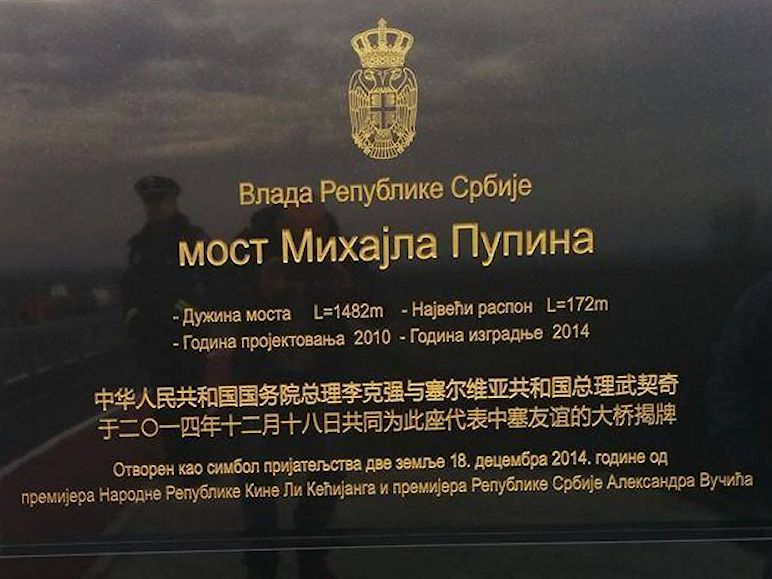
The Mihajlo Pupin bridge crosses the Danube to the west of the city centre and is the first bridge built across the river in the Serbian capital for 79 years. Photo Twitter.

The first new bridge built across the Danube in Belgrade for 79 years opened on schedule this afternoon.

Named after the physicist Mihajlo Pupin – the scientist and inventor and founder member of what became NASA – the 1.5km bridge crosses to the west of the city and will primarily divert transit trucks from the city centre.

Pupin’s Bridge is the first of many major infrastructure projects to be financed and built by Chinese companies in Europe.

China’s Prime Minister Li Keqiang cut the ribbon.

The ceremony also marked the end of The Third Summit of China and Central and Eastern European Countries held this week in Belgrade.

Sixteen regional heads of government and 5,000 delegates attended.

Headline news was the signing of contracts to build a new high speed rail line between Belgrade and Budapest but scores of other agreements were made including thirteen with Serbia alone.

The new contracts include telecommunications, agriculture and energy but many are for new roads.

The China Communications Construction Company (CCCC) is currently engaged on the Corridor XI motorway from Belgrade south towards the Montenegro border.

The Montenegrin government announced last week that CCCC will build the first and most difficult section of Bar-Boljare motorway – from the Adriatic coast to eventually connect with Corridor XI – starting next year.

As with Pupin’s Bridge, 85% of the finance will come from China’s Exim bank.

.

Aston on Ice has moved from St Moritz to Arvidsjaur in northern Sweden we are pleased to report.

Aston Martin’s ‘On Ice’ driving event has moved from its traditional base in St Moritz. After a disappointing – and horrifically expensive – stay in the summer, we say the gloss is long gone from one of Switzerland’s previously premier resorts. Instead, Aston’s adventurous customers will be travelling to Arvidsjaur in northern Sweden over February-March 2015 for four four-day advanced training courses with 15 hours behind the wheel on the 15km frozen lake track. Price: €6395 per person.

.

German Government Approves ‘Foreigner Toll’

Merkel’s cabinet backs controversial vignette payable only by visiting drivers.

.

B5DX9VzCcAIQbVI1

German Transport Minister Alexander Dobrindt: ‘the infrastructure levy is fair, reasonable and just’.

Despite saying on many occasions she couldn’t comment on the German ‘foreigner toll’ until the bill itself was published, the EU Transport Commissioner Violeta Bulc was widely reported to have sent a critical letter on the subject to the German transport ministry at the weekend.

If the timing of the letter was meant to influence events – a few days ahead of the new law being debated in the German cabinet – then unfortunately it failed.

As expected, the ‘foreigner toll’ was approved by the cabinet of ministers this morning.

The cabinet also adopted another law which offsets the toll for domestic drivers by reducing vehicle tax.

A triumphant transport minister Alexander Dobrindt said afterwards, ‘[the toll] is fair because it is practiced in many of our neighbouring countries in a similar way. It makes sense, because every euro flows into strengthening our transport infrastructure – about two billion euros in an election period – and it is just because the people who use the roads are the ones who will pay for them.’

He also insisted the law was in line with European rules.

Bulc’s letter apparently called the foreigner toll ‘indirectly discriminatory’. She also said the short term vignettes available for visiting drivers – €10 for ten days, €22 for two months – were disproportionately expensive. The annual charge is a maximum €130.

Dobrindt says the charges are in line with other countries. He has also reportedly guaranteed that prices will not rise before 2020.

Whereas German drivers will need to buy the vignette to use any state-owned road, visitors will only need it to use motorways.

The foreigner toll law now only has to be approved by the Bundestag before entering into force in 2016.

Austria and the Netherlands, among others, have previously said they will challenge the new charge in the European courts.

.

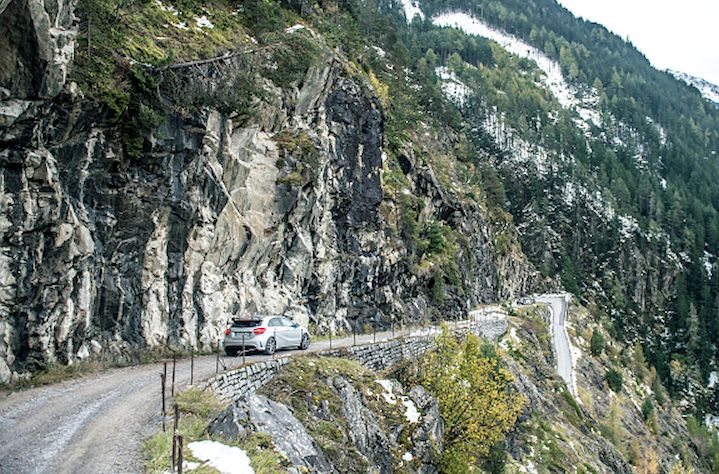
It’s normally really irritating when people post pictures of great roads and don’t say where they were taken. An exception can only be made in this case because a) it’s a particularly fantastic looking road and b) because the photographer really cannot remember where it was taken. We did ask. @GFWilliams took an A45 AMG on a twelve hour drive from Mercedes-Benz in Stuttgart to the Dolomites in northern Italy and back, via – obviously - Austria. All we can say is that this photo is from fairly early on in the trip so is likely somewhere west of Innsbruck. That narrows it down a bit…

It’s normally really irritating when people post pictures of great roads and don’t say where they were taken. An exception can only be made in this case because a) it’s a particularly fantastic looking road and b) because the photographer really cannot remember where it was taken. We did ask. @GFWilliams took an A45 AMG on a twelve hour drive from Mercedes-Benz in Stuttgart to the Dolomites in northern Italy and back via Austria. All we can say is that this photo is from fairly early on in the trip so is likely somewhere west of Innsbruck. That narrows it down a bit… See more at benz.me/1KwFoP/

.

Record Police Presence On French Roads For The Holidays

Major new initiatives to tackle worsening road safety, but France is not the only one to struggle this year.

.

Photo @Gendarmerie

Photo @Gendarmerie

Another significant rise in road deaths will see record numbers of police on the roads of France over the Christmas and New Year holiday.

Following an increase of 13.6% in October, fatal accidents rose by 10.7% in November (compared to the same months in 2013).

Big road safety gains made in 2013 have steadily unwound throughout this year. On current trends, road deaths look set to increase by 5% in 2014, the first rise in twelve years.

In response, Interior Minister Bernard Cazeneuve today announced a major new road safety initiative to be launched in January, ‘to fight against all the causes of road accidents: speed, alcohol, drugs, use of the phone to better protect all road users’.

Meanwhile, a new record of nearly 18,000 police will be on the roads during the school holidays and 22,000 during the night of New Year’s Eve.

Increased traffic police presence is common after disappointing accident stats in France. The previous high was 15,000 in July.

As in October, November’s increases almost all came from vulnerable road users. Pedestrian fatalities were up 15%, cyclists were up 5% and moped riders by 9%.

It will be scant consolation that other major countries in Europe are struggling with road safety.

According to the European Road Safety Council both the UK and Germany have seen a rise in deaths and serious injuries this year.

Campaigners blame the rise in the UK on government cuts. In France the situation has been attributed to a backlash against unmarked camera cars introduced in March 2013. It’s not clear what has caused the rise in Germany.

Last year, the only two European countries to see overall increases in fatal road accidents were Luxembourg and Ireland. We asked then if it was a blip or a harbinger. Both look set to rise again this year.

New transport commissioner Violeta Bulc has vowed to make road safety her top priority. After a decade of significant progress in Europe it had looked like she had more important things to worry about. Not anymore.

Also, the French national road safety council said last week it would trial reducing the speed limit to 80kmh on single lane main roads, and alcolock immobilisers, though it didn’t say which roads. Also announced was a three month experiment – starting last Friday, in the Rhone, Gironde and Alpes-Maritime – on new ‘double tap’ radar cameras to photograph the front and rear of vehicles to improve detection rates (which currently average only 62%). Intended to go live in 2016, drivers picked up during this first phase will not be prosecuted.

.

Fuel Price Roundup: Holland + UK Top Charts

Norwegian fuel displaced as Europe’s dearest. Italy still expensive + Swiss diesel. France and Spain cheap.

.

Fuel price roundup. Netherlands most expensive petrol; the UK most expensive diesel. More later.

Fuel price roundup. Netherlands most expensive petrol; the UK most expensive diesel. More later. Photo via @SingerVehicles

The difference in fuel prices between the Netherlands and Belgium and Germany is now so marked that a group of Dutch fuel retailers from border areas will take the government to court in January.

Relentless tax rises mean standard unleaded now sells for, on average, €1.639 compared to €1.369 in Germany and €1.277 in Belgium.

(The situation is less bad with diesel: €1.339 in Holland versus €1.219 in Germany and €1.277 in Belgium.)

Dutch petrol has now overtaken Norwegian (€1.593) as the most expensive in Europe, as has Italian (€1.635).

Meanwhile, the most expensive diesel in Europe is sold in the UK (€1.537) with Italy (€1.534) not far behind.

In general however, fuel prices are falling everywhere thanks to global wholesale prices at four/five year lows.

In Luxembourg diesel threatens to break through the €1 per litre barrier. After fresh falls on Friday, the – nationally regulated – price now stands at €1.046 with unleaded 95 at €1.115.

The Grand Duchy is always worth working into an itinerary if possible, especially so for performance car drivers heading for the Nurburgring: full-fat unleaded 98 currently costs €1.176.

Meanwhile in Portugal prices have fallen by over 11% since January, to €1.254 for diesel and €1.429 for petrol though there’s still a way to go to catch up with Spain where diesel is €1.139 and unleaded 95 €1.199.

Drivers heading that way should always try and divert through Andorra for Western Europe’s reliably cheapest fuel currently costing an hilarious €0.983 for diesel and €1.113 for unleaded 95.

Skiers off to Austria have traditionally eeked out fuel reserves until they cross the border but prices are much of a muchness with Germany at the moment: unleaded 95 at €1.370 and diesel for €1.220.

In Switzerland, unleaded 95 is both relatively and actually cheaper at €1.299 but diesel has crept up to an expensive €1.444.

Finally, France. For all the recent fuss over future rises in fuel taxation, for the time being at least prices are quite reasonable. Standard petrol – see below – comes in at €1.274 and diesel at €1.123.

.

All prices are per litre, taken from fuel-prices-europe.info. Indicative only, average prices (unless stated). Often considerably cheaper away from motorways. See French fuel prices in local detail at Prix Carburants.

Diesel drivers should be aware that Continental fuel has a lower freezing point, more suitable for overnight stays in ski regions, for example. Be careful to fully flush UK-supplied fuel through the system.

Most French and German standard fuel is now E10, i.e. ten percent bioethanol. Most cars built after 2002 are compatible. If in doubt use regular SP95 or SP98 though both will be (slightly) more expensive.

.

UK to Turkey in Three Days, Back in Two. By Campervan

Epic trip in new Ford Transit campervan, from Yorkshire to Istanbul and back in less than a week.

.

Wellhoue Leisure's Ford Terrier at the Ford Otosan factory in Istanbul, Turkey. Photo @WellhouseCamper

Wellhoue Leisure’s Ford Terrier at the Ford Otosan factory in Istanbul, Turkey. Photo @WellhouseCamper

‘It’s amazing how far you can go’ is our new tag line but few prove it as comprehensively as the crew from Wellhouse Leisure.

David Elliot and Layne Stuart drove their Ford Terrier campervan from Huddersfield to Istanbul in three days at the end of November.

If that wasn’t impressive enough they managed the return journey in just two days.

The idea was to demonstrate the comfort and hardiness of the firm’s brand new campervan conversion, and introduce it to the Ford Transit factory in Istanbul where the base vehicle is manufactured.

David Elliot said, ‘It was an amazing trip. We’ve seen some amazing sights, from remote parts of Europe we’re never likely to see again, and some we probably don’t want to see again!

Apart from getting lost in Bulgaria and thinking we weren’t going to survive the complete traffic chaos of the Istanbul rush hour, the trip went extremely well, and really proved that the Ford Terrier is designed and built to undertake long distances trips like this in its stride.’

Over the 4,500 miles the Terrier achieved an average of 33mpg from its 2.2 litre diesel engine. The range starts at £39,500. A review in The Guardian described the Terrier as a ‘glampervan’.

In all honesty when we heard what Wellhouse were up to we were sceptical. Having driven that way a couple of times ourselves we know the challenges: to keep up a decent average speed on often crowded, single lane roads in the Balkans, but also – crossing in and out of the EU and the Schengen Zone – dealing with potentially massive border queues.

They didn’t even go what we think is the quickest route, across Germany to Austria then down through Hungary to Serbia. Instead they headed into Slovenia from Austria then Croatia.

We underestimated them. It turns out David Elliot is no stranger to endurance sports. Last year he ran ten marathons in ten days and raised £34,000 for charity.

See here for more info on the Ford Terrier, or @WellhouseCamper for more photos of the trip.

.

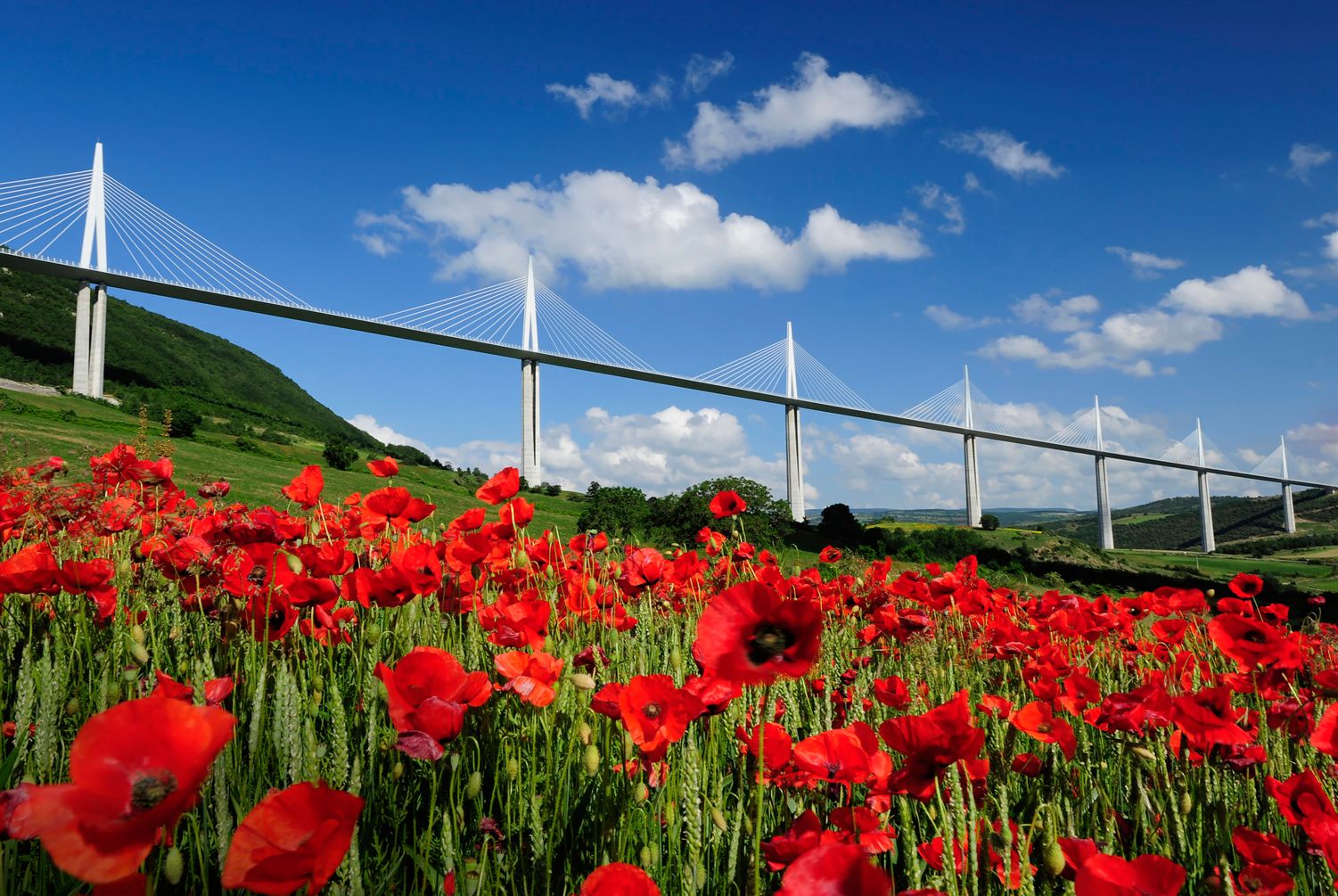
The Millau Viaduct, on the A75 between Clermont Ferrand and Beziers in southern France is ten years old today. The oaccssison will bemarked with a frework display at 18:00 toight. Unlikemost of the A75, the bridge is

The Millau Viaduct, on the A75 between Clermont Ferrand and Beziers in southern France, is ten years old today. Designed by Lord Norman Foster it is – at 1125ft above the ground at its highest – the world’s tallest bridge. It was inaugurated on 14 December 2004 by Jacques Chirac and opened to traffic two days later. The occasion will be marked with a firework display at 18:00 tonight. Unlike most of the A75, the bridge is tolled but it only costs €9.10 in the summer and €7.30 at other times. Drivers can pay with Sanef Liber-T auto toll tags.

.