Condor Scraps SUV Surcharge on ‘Condor 102’

No extra charge for outsize cars, and three passenger classes, on new Condor 102 sailings starting next March.

.

Condor 102: photo courtesy of manufacturer Austal.

Condor 102: photo courtesy of manufacturer Austal.

Condor Ferries will scrap surcharges for outsize cars and introduce three passenger classes on its brand new fast ferry.

The as yet un-named boat – currently called Condor 102 after its length in meters – sets sail between Poole and the Channel Islands next year.

‘From the end of March 2015, all journeys to the Channel Islands will be on the new Condor 102 from Poole,’ says Alicia Andrews, Executive Director – Commercial at Condor Ferries.

Most cross-Channel operators charge higher fares for large cars and vans, by as much as £50 more on some crossings. Standard sizes vary, generally up to 1.80m high and 5m long.

In a move hopefully picked up by other operators, Condor says all SUVs will be charged the same as regular cars, as will all non-commercial vehicles up to 5.5m long.

The company will also introduce three new passenger classes: Ocean Traveller with standard reclining seats; Ocean Traveller Plus with a private bar and reclining seats, or arranged around a table; and the Ocean Club private lounge with at-seat service and leather reclining seats with tables. 

The latter two have in-seat charging for mobile devices. There is also an outside deck and the usual restaurant, Bureau de Change and Duty Free shopping.

Journey times are unchanged – three hours from Poole to Guernsey, one hour inter-island – but the longer ship, 16m longer than Condor’s existing fast ferries, will avoid 90% of the weather related cancellations seen this year says the company, and make for a more comfortable ride.

‘Sick bag usage’ will fall by 70% says The Bailiwick Express Jersey Edition.

All trips until 2 November 2015 – between the UK, Channel Islands and France –  are available to book now at the Condor Ferries website. See more about Condor 102.

.

Europe’s Safest Motorways – Tank Jam

New figures shed surprising light on motorway safety in Western Europe.

Also, tank jam on the site of the notorious Stalag Luft III in Poland. Protestors block the A1 between Rome and Florence (finally re-opened). Good news on the MSP’s campaign to restore the UK-Scandinavia ferry link (coming up).

.

EUROPE’S SAFEST MOTORWAYS 

UK best. Belgium and Portugal worst. France good. Germany below average, especially for trucks.

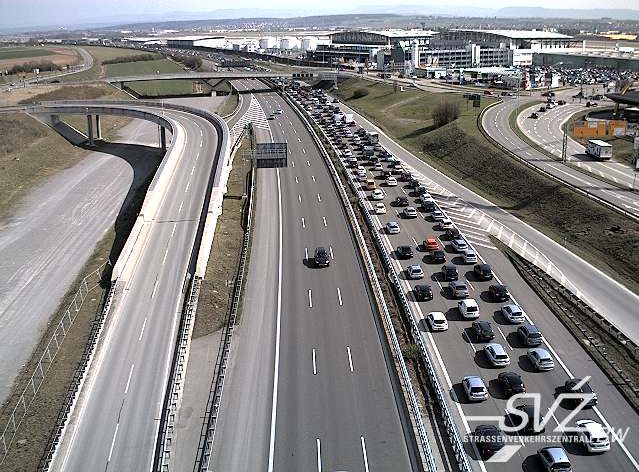
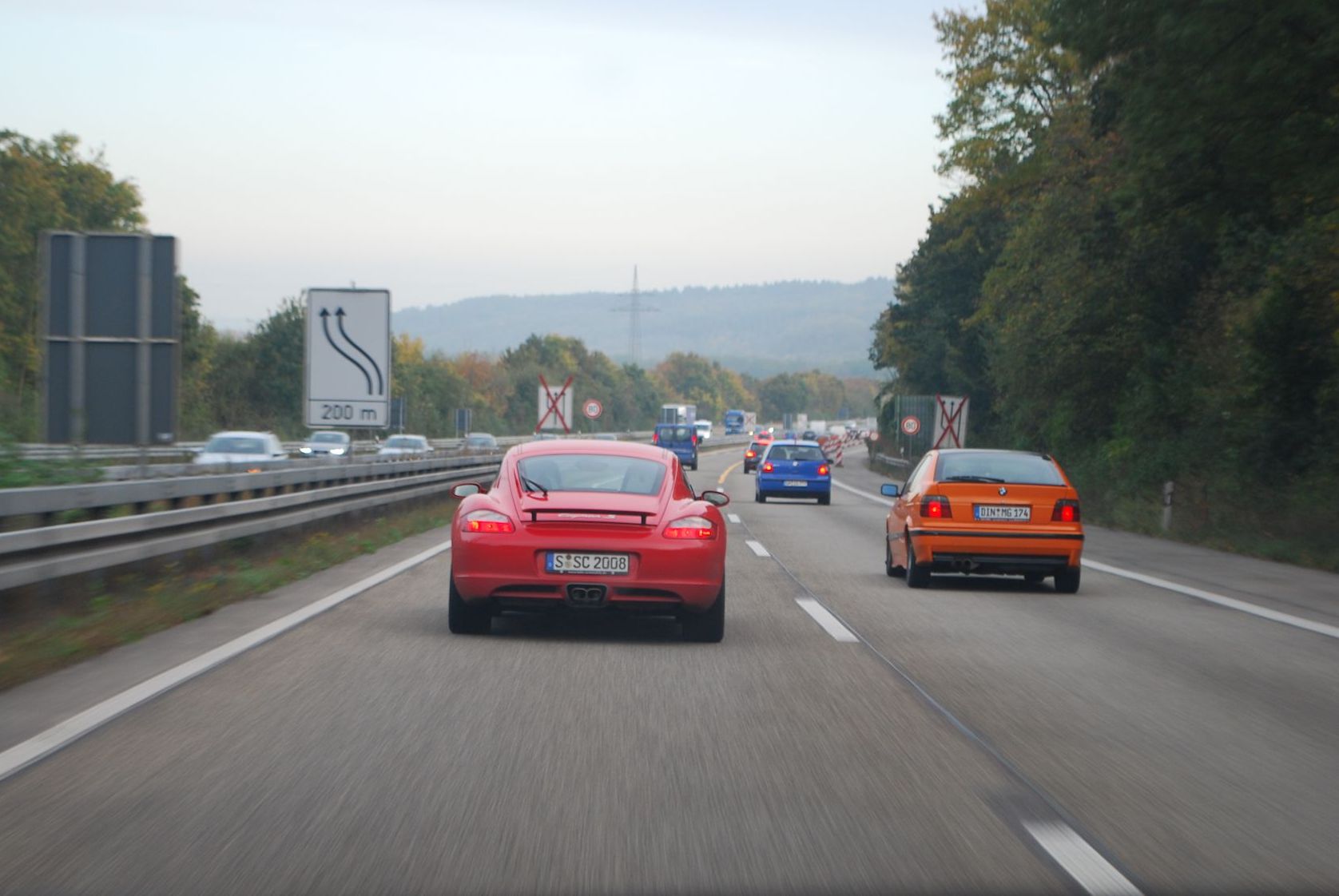
stuttgart flughafen1

New figures show that motorways in France are much safer than the wider network while the reverse is true in Germany.

The latter also sees the highest proportion of accidents involving trucks.

Researchers from the Belgian Road Safety Institute (L’Institut Belge pour la Sécurité Routière, IBSR) compiled motorway crash statistics from around the EU (see the interactive map).

Comparing just the countries with ‘mature’ motorway networks – Germany, Netherlands, Belgium, France, Austria, Italy, Spain, Portugal and the UK – shows the highest proportion of motorway fatalities (as a percentage of all road fatalities) is in Spain at 17%.

However, in terms of deaths per million inhabitants – the standard road safety measure – Portugal on 10.4 pips Belgium on 9.8. The European average according to IBSR is 4.7 (Spain is 9.1).

The UK, France and the Netherlands all tie on the lowest proportion of motorway deaths at 6%.

While the other two vie for having the safest roads in Europe overall – both around 30 deaths per million inhabitants – motorway deaths in France come in at 3.7 per million inhabitants compared to its overall road safety figure of 50 (against the European average of 52).

Meanwhile, Germany finds itself at the bottom of the list for the number of accidents that include trucks at 24% (next are Belgium and the UK, both on 19%).

Its proportion of fatal motorway accidents – 12% – and deaths per million inhabitants – 5.3 – are both below average too. Germany’s overall figure for road deaths was 41 in 2013.

(Germany’s autobahns are commonly said to be safer than other roads, the main argument against imposing speed limits).

The fewest number of trucks involved in motorway crashes are in the Netherlands, Austria and France, all at 7%.

.

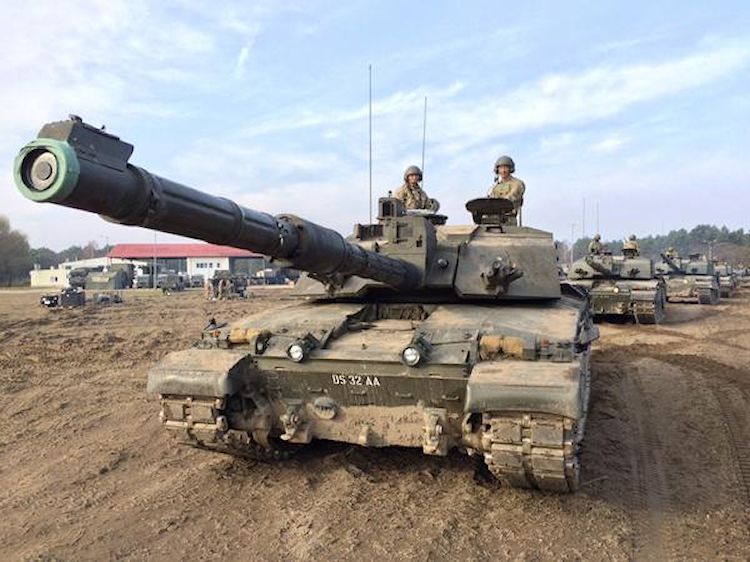
Tank Jam: the 3rd (UK) Division - aka The Iron Division - on exercises in Zagan, south west Poland, not far from Stalag Luft III, of The Wooden Horse and The Great Escape fame.

Tank Jam: the King’s Royal Hussars on exercise yesterday at the Zagan Training Area, south west Poland, part of ‘Operation Black Eagle’, a high profile response in Eastern Europe to the Ukraine Crisis. Very close to the modern German border, Zagan Garrison has been home to several armies since it was established in 1741: first the Prussian army, then the Wehrmacht, the Russian Red Army and now the Polish Army. Zagan was also home to Stalag Luft III, a prison camp for allied airman, best known for two famous prisoner breakouts, The Wooden Horse in October 1943 and The Great Escape in March 1944. The camp is now a museum, ‘Museum of Allied Prisoners of War Martyrdom’, open every day except Monday. Photo via @3rdUKDivision.

.

France Special: Tolls Cut, All Change South West, NYE Champs Elysee

FRANCE SPECIAL: ALL CHANGE IN THE SOUTH WEST

Major road works on the A63, A9 and A10 between France and Spain should see free-flowing roads by 2017. In the meantime, tolls may fall.

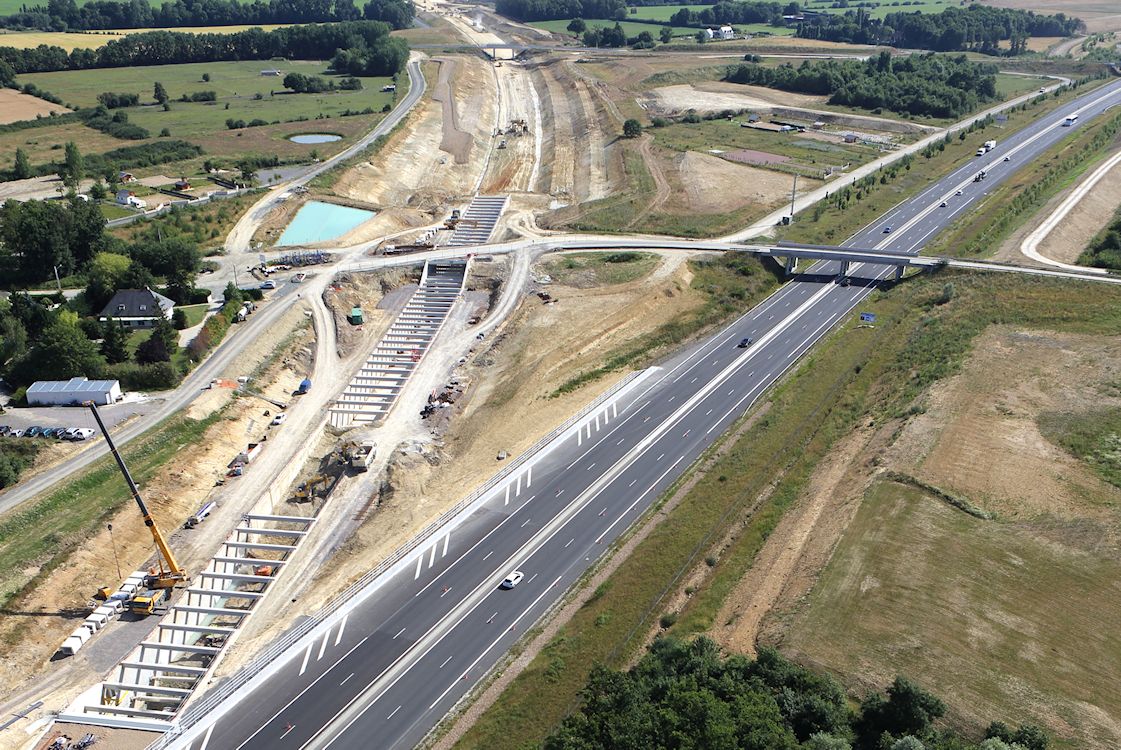
A10 Paris-Bordeaux: currently disrupted by works on the parallel LISEA high speed rail line but set to finish next year.

A10 Paris-Bordeaux: currently disrupted by works on the parallel LISEA high speed rail line but set to finish next year. Photo via @VINCIautoroutes

French motorway tolls may fall according to press reports yesterday.

The fallout from the competition authority report in September which found that road operator profits were excessive may see them taken under a new regulator.

Economy minister Emmanuel Macron was quoted saying, ‘We will keep the motorway companies under pressure to reduce prices and lower them whenever possible.’

The report found that operators made profits margins of around 25%. A final decision is due in December.

In the meantime, the definite good news on the autoroute network is that the two busiest roads in the south west, to and from Spain along the Atlantic and Mediterranean coasts, are undergoing, or about to undergo, major surgery.

The majority of the A63 ‘Route de la Cote Basque’ between Bordeaux and Spain – which sees 9,000 heavy trucks every day – underwent a major renovation in 2012/13.

The remaining 67km, in the south, has been split into three sections. The southernmost, from the border to Biarritz, is being widened at the moment, scheduled to finish by the third quarter 2017. The central section to Ondres is finished and open.

The awkward part is the remaining 27km. The public consultation is currently on-going. Work is not due to start until 2016.

Further north, the A10 from Bordeaux to Poitiers (Tours and Paris) is being disrupted by the new LISEA LGV Sud Europe Atlantique high speed railway line being built alongside.

LISEA crosses the A10 (and A85 at Tours) with other work to the north of Bordeaux but mainly between Poitiers and Tours. The railway should open in 2017, but the road works should be finished by the end of next year.

Meanwhile, on the other side of the Pyrenees, the A9 Orange-Montpellier-Perpignan-Spain – an incident as well as traffic blackspot – will be widened in the south and split into two new roads at Montpellier on the Mediterranean coast.

Like the A63, the 40km of A9 to be widened between Perpignan and the Spanish border – the final stretch of two lane A9, which typically sees 30,000 vehicles per day (7,500 HGVs) and 50,000 vehicles in the summer – will be widened in three stages.

The first 17km is ready to go – the new lane is currently coned off. The 15km to Le Boulou is due to open in 2016. The final 8km to the border is yet to have a date for work to start…

Putting all these traffic levels into context is the A9 around Montpelier. Around 100,000 vehicles use this stretch on a typical day rising to 160,000 in the summer.

From 2017, the summer holidays should be easier all round when the new A9b opens, a 25km stretch to relieve through traffic from the existing road which will be renamed A9a.

.

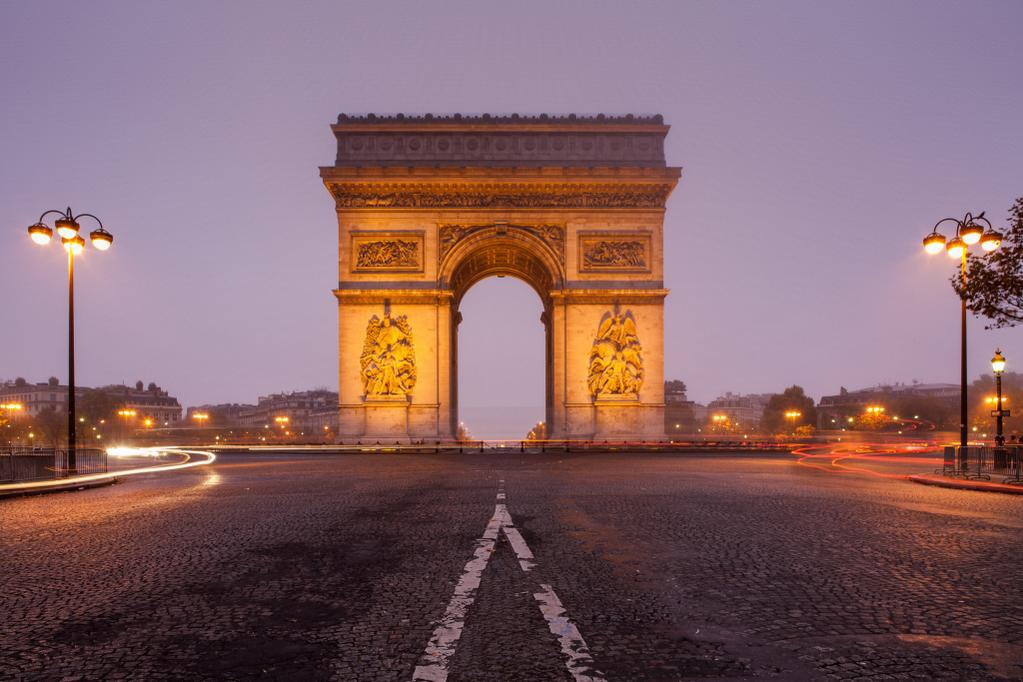
France Special: a huge party is planned for the Champs Elysee the New Year's Eve, car-free.

A huge party is planned for the Champs Elysee this New Year’s Eve. A major part of the festivities seems to be that Paris’ most famous street will be car-free. Surely France’s beleaguered national cars makers Citroen, Peugeot and Renault will be celebrating just as hard as anybody else. Photo/news via @Paris_by_Elodie

.

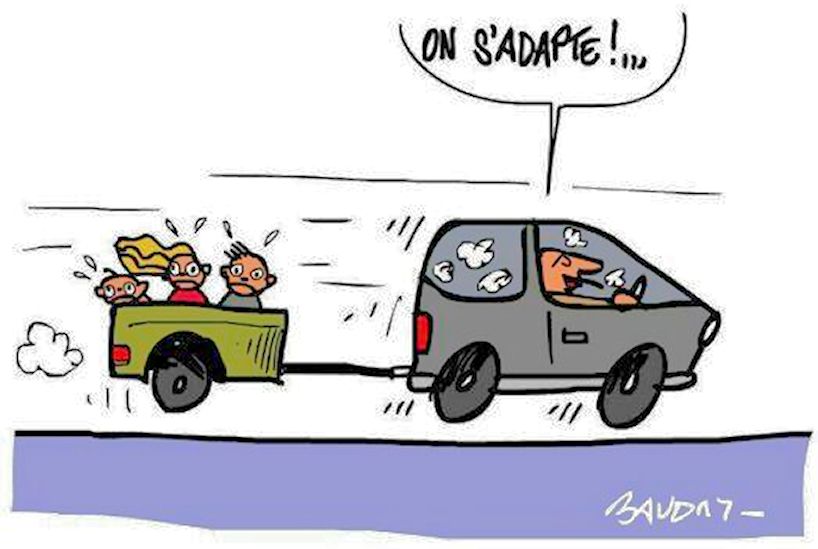
The French take on the upcoming ban on smoking in cars with children present. It is not law as yet but was proposed as part of a range of anti-smoking measures announced in September. A similar law was announced in the UK at the weekend, expected to come into force in October 2015. The only country in which it is currently illegal to smoke in a car with under-16s is Cyprus. Cartoon via @DriveLeMag

The French take on the upcoming ban on smoking in cars with children present. It is not law as yet but was proposed as part of a range of anti-smoking measures announced in September. A similar law was announced in the UK at the weekend, expected to come into force in October 2015. The only European country in which it is currently illegal to smoke in a car with under-16s is Cyprus. Cartoon via @DriveLeMag

.

A poignant and fascinating roadtrip – from Nottingham to Anoeullin in northern France, by Morgan 3 wheeler – to commemorate the life of Albert Ball, WW1 pilot, reluctant hero and owner of one of the original Morgan 3 wheelers, from Motorpunk/XCAR.

.

No Short Term Scottish Solution to Scandinavia Ferry Crisis – Austria’s Ice Activated Road Markings

An MSP’s campaign to restart the ferry link to Norway looks likely to gain wide support, but could take years to get off the ground.

Also, Austria expands experiment with temperature sensitive road markings. The latest on yesterday’s incident in Dover harbour. Moscow’s notorious ‘GTA Killers’ are – apparently – apprehended. A new border crossing opens between Romania and Serbia. Volvo Trucks races its FH against a Koenigsegg One:1 megacar.

.

NO SHORT TERM SCOTTISH SOLUTION TO SCANDINAVIA FERRY CRISIS

MSP asks government to support UK-Scandinavia ferry link but a short term solution looks increasingly unlikely.

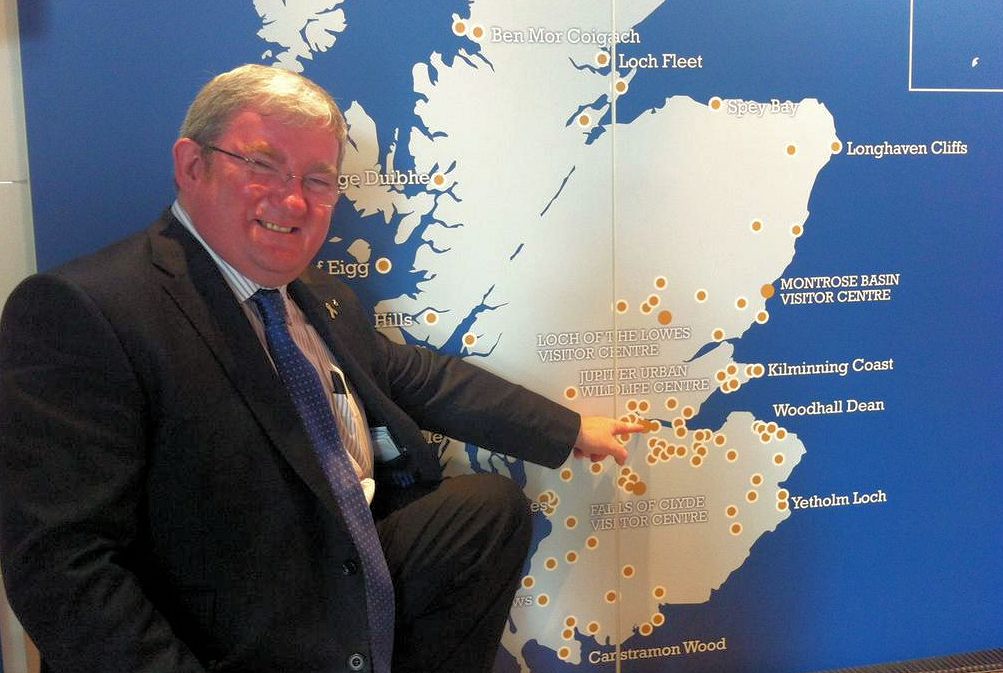
Falkirk East MSP Angus MacDonald pointing to Grangemouth in his constituency, one of several Scottish ports mentioned in connection with the proposed UK-Norway ferry service. Others include Aberdeen and Rosyth. Photo via @Angus4FalkirkE.

Falkirk East MSP Angus MacDonald pointing to Grangemouth in his constituency, one of several Scottish ports mentioned in connection with the proposed UK-Norway ferry service. Others include Aberdeen and Rosyth. Photo via @Angus4FalkirkE.

An MSP’s parliamentary motion to support the return of a UK-Scandinavia ferry link looks likely to gain the cross-party support it needs, but will still take years to come to fruition.

Colleagues from the Green Party and the Liberal Democrats have indicated they will back Scottish National Party MSP Angus MacDonald’s ‘members’ business’ motion calling for the Scottish government to investigate a new service, lodged last week.

In it, the member for the Falkirk East constituency ask the Sottish parliament to note that ‘there is no direct [ferry] service between the UK and Norway’ and that ‘a direct service between Scottish and Scandinavian ports would help to increase exports from the Falkirk East constituency and other parts of Scotland to northern Europe while simultaneously attracting tourists with high disposable incomes.’

MacDonald calls on the Scottish Government, the Scotland Office, Scottish Development International and ‘interested regional transport partnerships’ to work with port and ferry operators to investigate the feasibility of the route.

A spokesman for the MSP told @DriveEurope on Friday that the debate would probably be held in January.

After that, presuming the project was adopted by the government, a public consultation, new legislation and probably infrastructure investment mean the subsequent process would take some years.

He stressed the proposal was in the very earliest stages.

Meanwhile, the Scottish government has shown itself open to supporting ferry services. Figures released last week by transport charity Transform Scotland (@TransformScot) show spending on ferries has increased by 101% in the past five years (compared to 1% extra on buses and 15% on rail).

Last week an agreement was reached on subsidies for the DFDS Rosyth-Zeebrugge freight route, currently Scotland’s only roll-on, roll-off ferry link to continental Europe.

MacDonald’s motion is one of a number of new initiatives to support the return of a Scandinavia ferry. In addition to the Ferry to Norway campaign launched in October, @Britain2Norway – a group set up after the last Scotland-Scandinavia ferry was withdrawn in 2008 – is set to re-enter the fray.

In a twitter conversation with all three parties last week, Norwegian Seaways Operations Director Paul Woodbury – currently working to re-establish the Newcastle-Stavanger-Bergen route – said, ‘A new service including Scotland, England & Norway works but needs government commitment.’

.

Austria: the Dutch are not the only ones experimenting with temperature sensitive road markings. More later.

Austria: after trials last year on the A2 near Graz and Pinggau, an experiment with ‘thermochromic’ road markings is expanding to four new locations this winter and next. The A2 southbound at Waltersdorf and Warth/Seebenstein, the A6 westbound at Parndorf and the A21 Vienna outer ring at Alland are all having five metre long, 20cm wide test strips applied that turn various combinations of blue and red at freezing point. Above this temperature the markings are virtually transparent. Meanwhile, following an aborted first attempt in April, a ‘mature’ version of ‘photoluminescent’ road markings have been re-applied to the N329 at Oss, off the A50 Eindhoven-Nijmegen in Holland. The new version works well reportedly (the first was invisible during heavy rain). The markings ‘charge’ during the day and glow at night to do away with traditional street lighting. The plan now is to mark up the entire twenty mile long A20 Afsluitdijk causeway motorway in northwest Holland. Photo via @ASFINAG.

.

roundup: DOVER. DFDS Dover Seaways ‘made contact’ with Dover harbour wall at 08:00 yesterday morning as it departed for Dunkirk. Four people were taken to hospital with ‘bumps and bruises’ says the BBC; ‘broken bones’ says Dover Express (which also has pictures of the incident). The vessel was being handled by an ‘officer under training’ reports ShippingTV (not unusual apparently); others blame technical failure. A statement from DFDS confirmed the incident. @FerrymanThe says Dover Seaways is off to Rotterdam for repair this morning leaving two ships on the Dover-Dunkirk route today. Update: ship out of service until at least Friday 14 November, revised schedule until then. MOSCOW. A gang reportedly responsible for fourteen roadside murders in recent months were apparently apprehended at the weekend. Dubbed the ‘GTA Killers’ by an increasingly frenzied popular press, the gang stalked night-time drivers mainly along Moscow’s M4 Don highway. News that the perpetrators had been arrested came during a press briefing by President Putin says The Moscow Times. No other details were released other than dark hints about a possible terrorist link. ROMANIA-SERBIA. A new border crossing at Nakovo-Lunga, just west of Timisoara, was opened by the countries respective Prime Ministers on Saturday. The two also discussed a new Belgrade-Timisoara motorway says Inserbia Info.

.

Volvo Trucks races its 540bhp FH against the 1360bhp Koenigsegg One:1 megacar around the Ring Knutstorp in southern Sweden. The idea is to demonstrate the improved ‘performance, hill-climb performance, acceleration, but also driveability and comfort’ of its new dual-clutch transmission, the world’s first truck to be so equipped. Predictably the One:1 wins around the hilly 2km circuit though only just: it has to complete two laps against the FH’s one. As presenter Tiff Needell says, ‘At least we’ve proved that the Volvo truck is half as fast as the Koenigsegg One:1.’

Volvo Trucks races its 540bhp FH against the 1360bhp Koenigsegg One:1 megacar around the Ring Knutstorp in southern Sweden. The idea is to demonstrate the improved ‘performance, hill-climb performance, acceleration, but also driveability and comfort’ of the FH’s new dual-clutch transmission, the world’s first truck to be so equipped. Predictably the One:1 wins around the hilly 2km circuit though only just: it has to complete two laps against the FH’s one. As presenter Tiff Needell says, ‘At least we’ve proved that the Volvo truck is half as fast as the Koenigsegg One:1.’

.

Driving Across The Gibraltar Border

Our expectations of Gibraltar were confounded at every turn: no delays at the border and one of the best hotels we’ve ever stayed in.

.

1

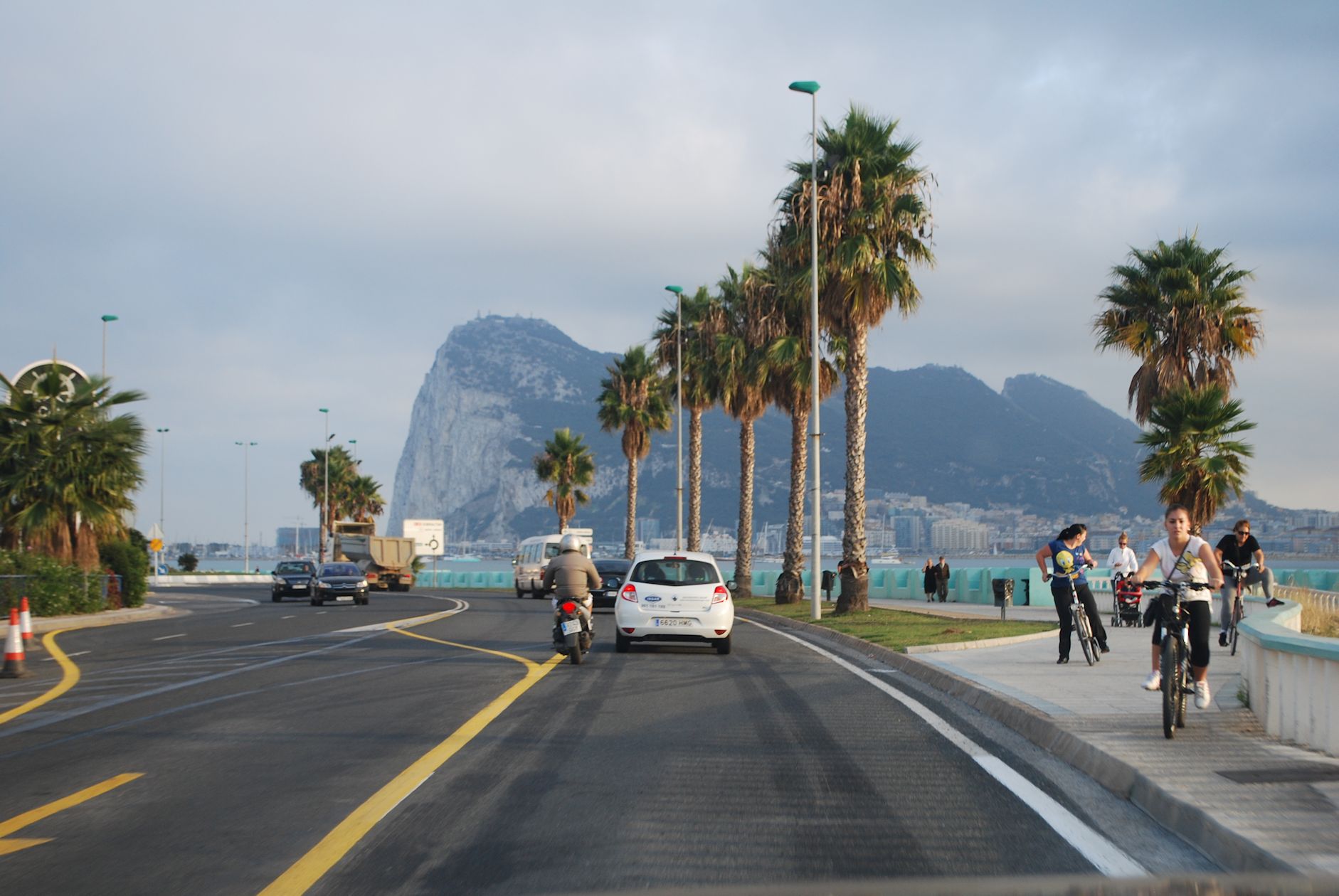
Approaching The Rock from La Linea, southern Spain. More photos, and a map, below.

David Cameron telling the Spanish prime minister there must be no repeat of previous year’s border queues was greeted by immediate three hour delays in July. In general however, summer 2014 has been quite quiet by recent standards.

Having said that we were lucky. Earlier on the day we crossed into Gibraltar delays reached fifty minutes, and again later that night. Last week, drivers waited well over two hours to cross.

Gibraltarians have become very adept at crossing when it’s quiet but wildcat ‘enhanced checks’, by definition, strike at any time and everybody knows it.

Queues build very quickly. For all the loops and multiple holding lanes on each side it’s strictly one at a time through the border itself.

Exactly like the UN ‘safe zone’ in Cyprus capital Nicosia there’s a tense, dangerous atmosphere with the protagonists stood just yards away from each other.

The Spanish Guardia Civil officer on the way in had a professionally neutral, just-doing-my-job demeanour but the one on the way out, the next day, was icily polite at best and made a point of not physically touching our passports.

We weren’t exactly waved through by the Gibraltar police either. Singled out in fact. For all the UK-style local number plates with their GBZ prefixes, at 1,500 miles from London (by the direct route) a UK-registered car must be a rarity in these parts.

After a brief moment of panic over which side of the road they drive on – the right – it was straight into the chaos of Gibraltar itself. There are almost as many cars here as there are people – 30,000 – reputedly the highest rate of car ownership in the world.

With just 31 miles of paved carriageway that makes for busy roads, especially during the early evening rush hour when we turned up.

Touring round looking for somewhere nice to stay was hopeless. The road was lined in all directions by apartment blocks. We couldn’t get anywhere near the waterfront – probably our fault – and soon reverted to good old hotels.com.

Where else in Gibraltar would you want to stay though other than at The Rock Hotel? A mile down Europa Road which rings the peninsula, and much quieter, the 1930s art deco ocean-liner style hotel look outs directly onto Algeciras Bay.

At €140 it’s not cheapy-cheap but the palm fronds everywhere, discrete good service – a glass of sherry on check-in – and pinkish southern light seeping through the glassy foyer gave it an exotic air of Singapore-style Colonial gin palace, in the best possible way.

The watchword in the recently refurbished room – with an enclosed balcony, cafetiere, and deep pile woollen rugs at the bed sides – was Parker Knoll: unflashy, high quality, comfortable and very British. Margaret Thatcher would have loved it.

The idea in Gibraltar had been to snuffle out some of the characters we’ve been hearing about. In the end there wasn’t time for that. After a quick whizz around the rest of Europa Road – including an abortive attempt on the Upper Rock road, see below, and staring off the end of Europa Point to catch a glimpse of Africa – it was time to chance the frontier again.

But thanks to the charms of The Rock Hotel – definitely worth the visit just in itself – it won’t be long before we’re back again.

To keep track of delays at the border see @GibraltarBorder on Twitter, or the Gibraltar Frontier webcam.

.
gib border small cover

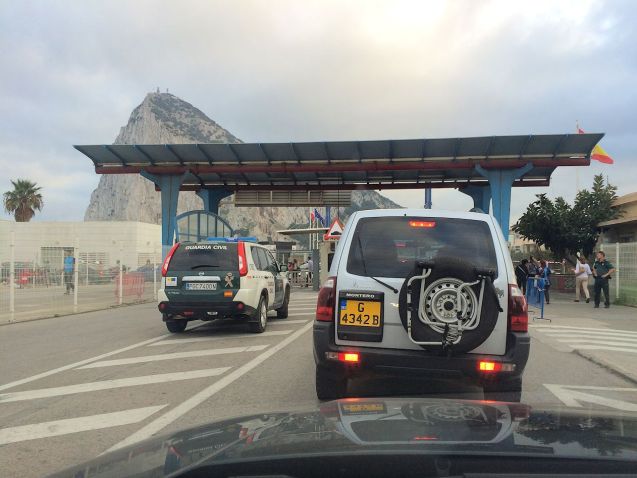
The Spain-Gibraltar frontier. Strictly one at a time.
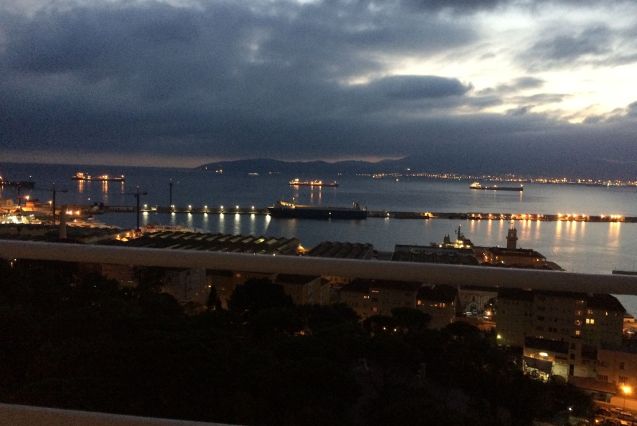
3

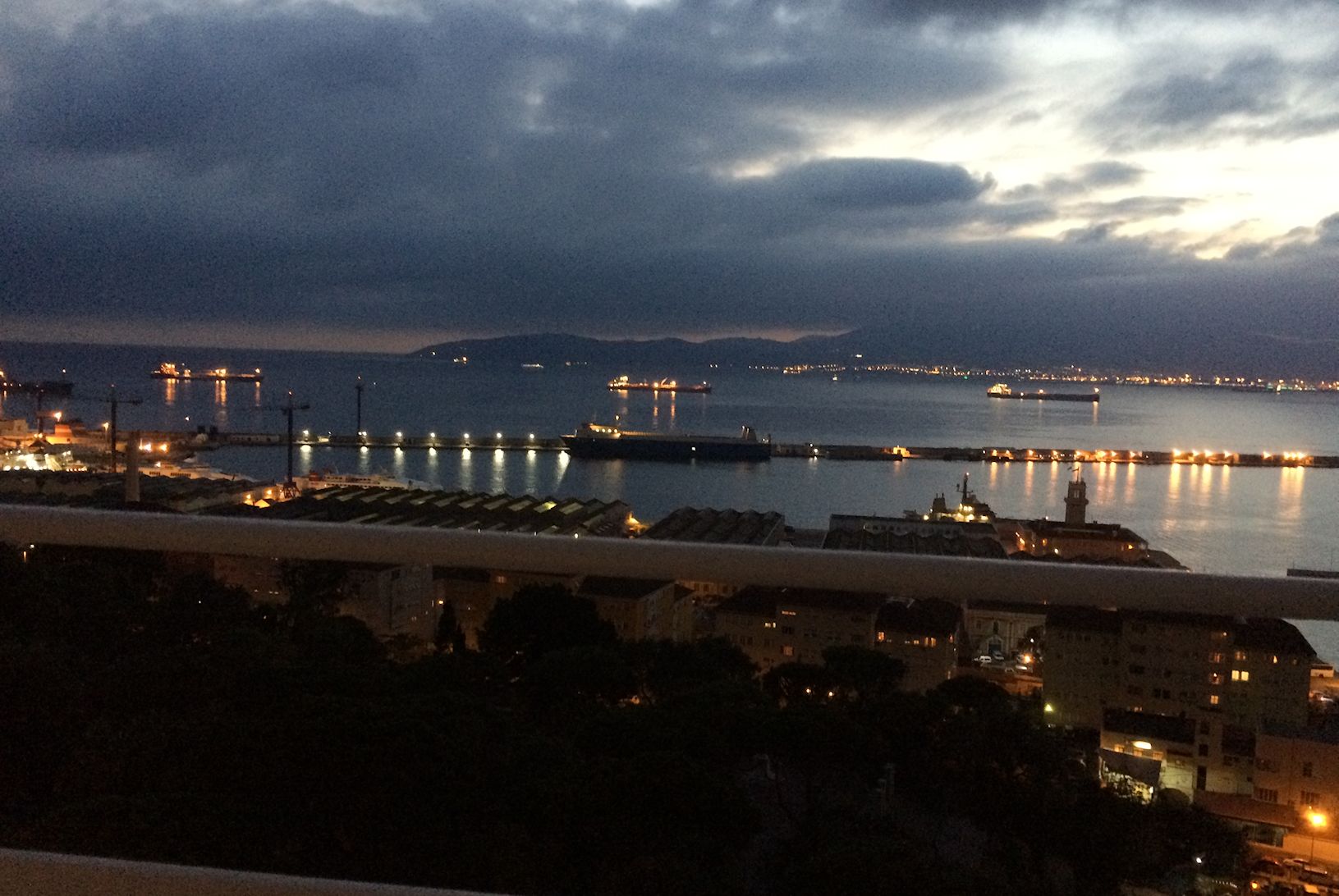
The British Naval Base, harbour and Bay of Algeciras from The Rock Hotel.
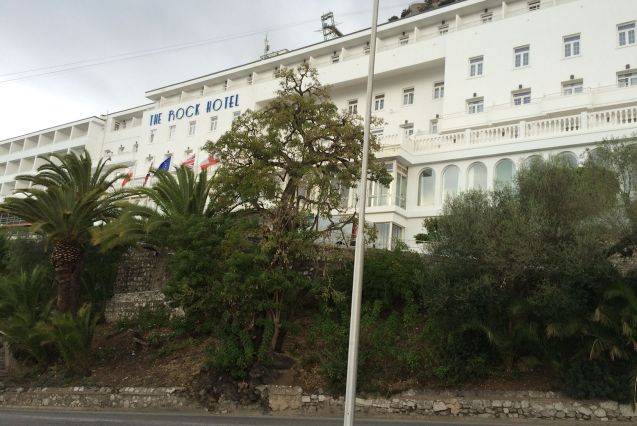
4

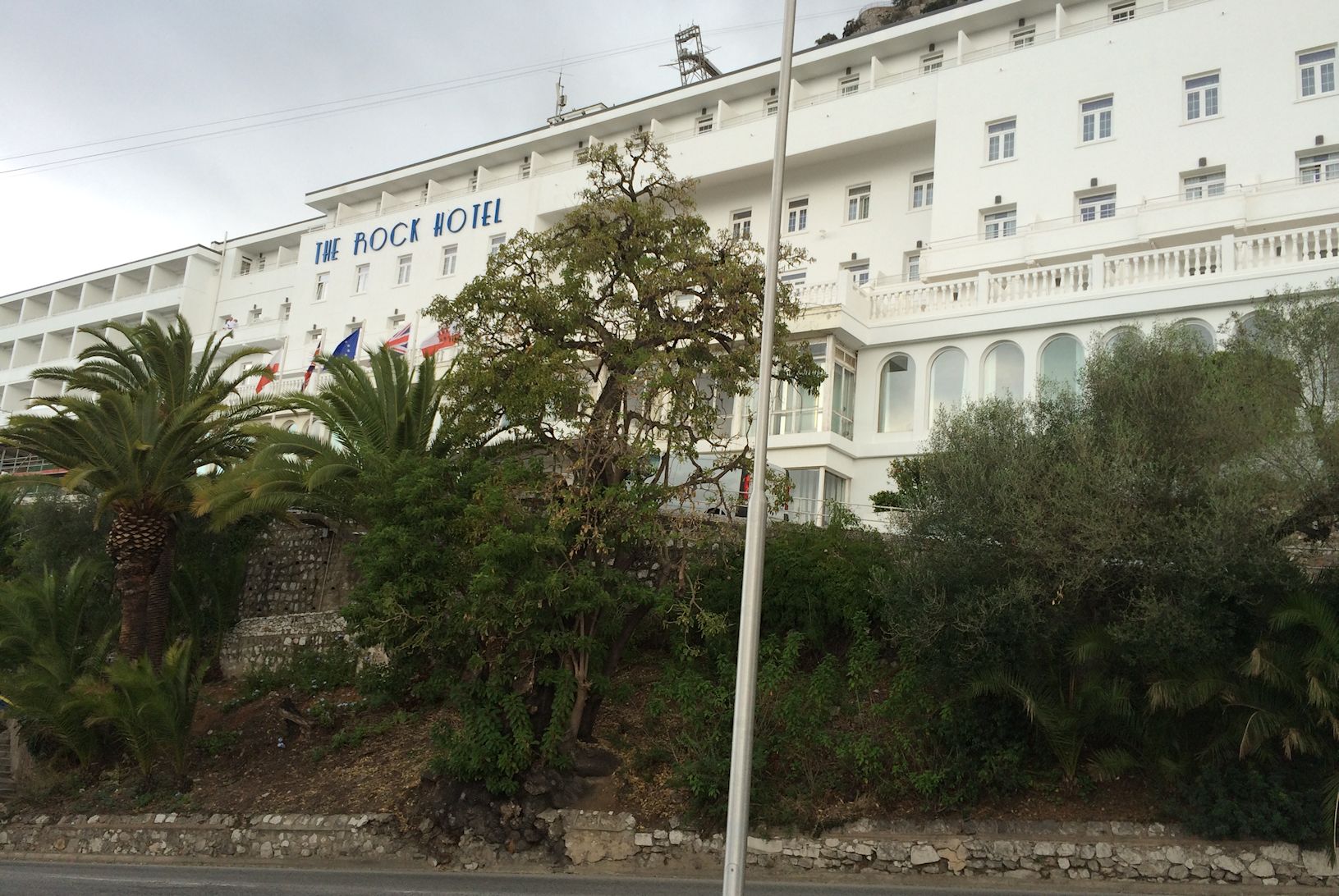
Built in 1932 by the Marquis of Bute, The Rock Hotel over looks the Botanic Gardens from beside the Gibraltar cable car. Famous guests include Winston Churchill, Dwight D. Eisenhower, Errol Flynn and Sean Connery. John Lennon and Yoko Ono were married there in 1969.
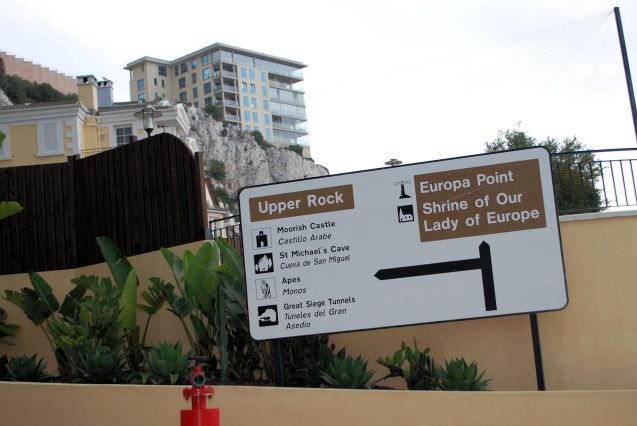
5

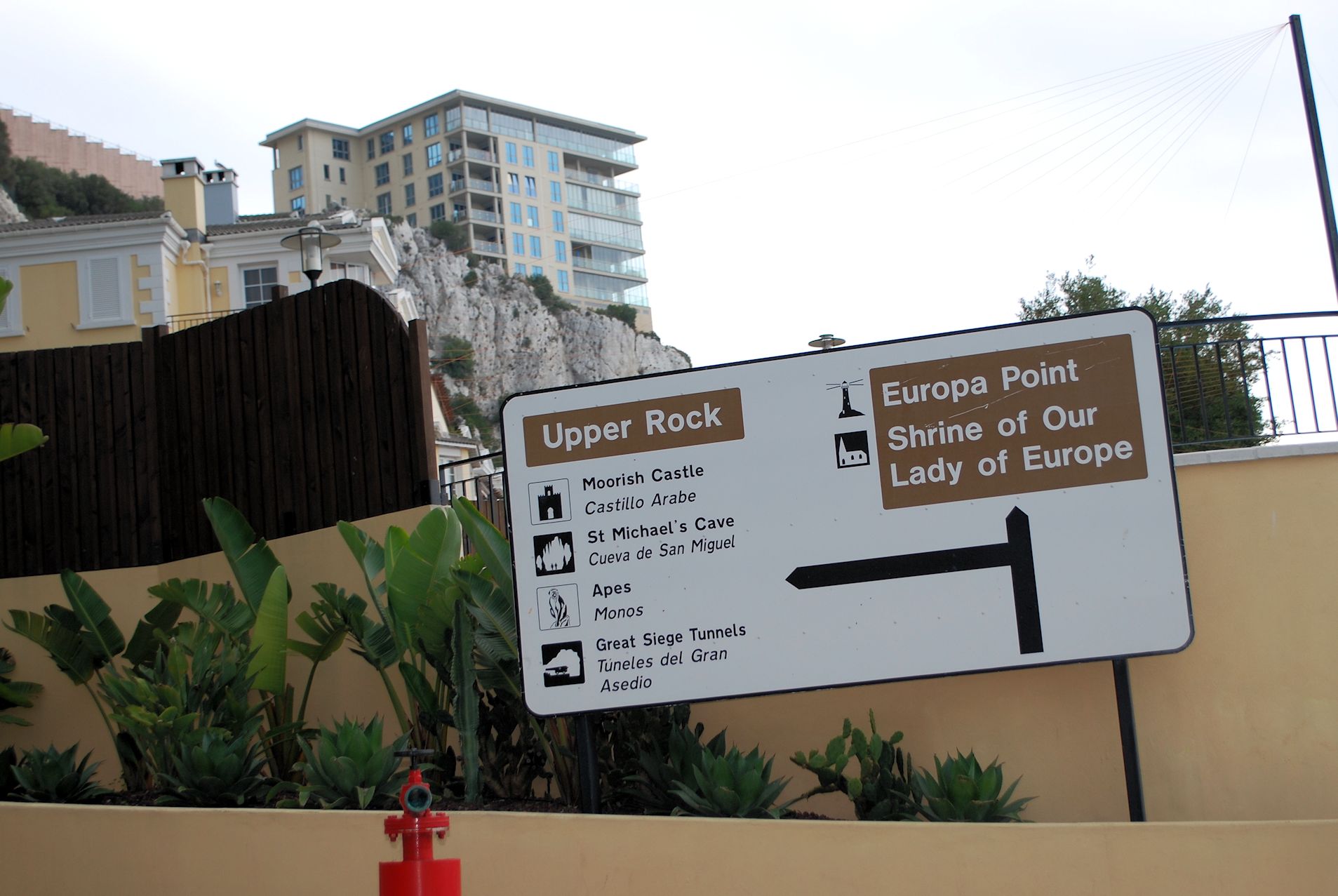
Austria’s Grossglockner and Silvretta mountain passes – and Denmark’s Oresund Bridge – have competition for Europe’s most expensive tolls from Gibraltar’s Upper Rock road: £10 per adult occupant. Pressed for time, we passed.
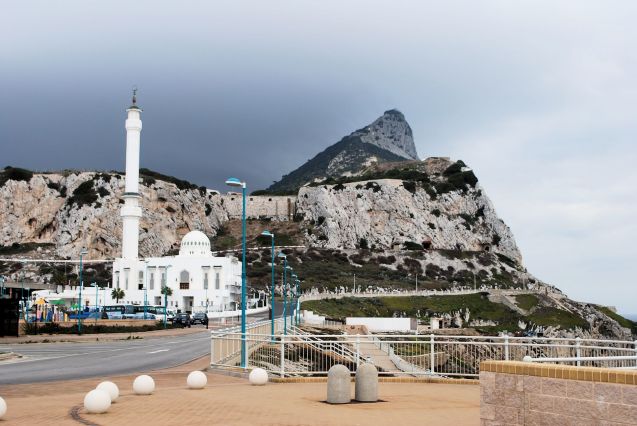
6

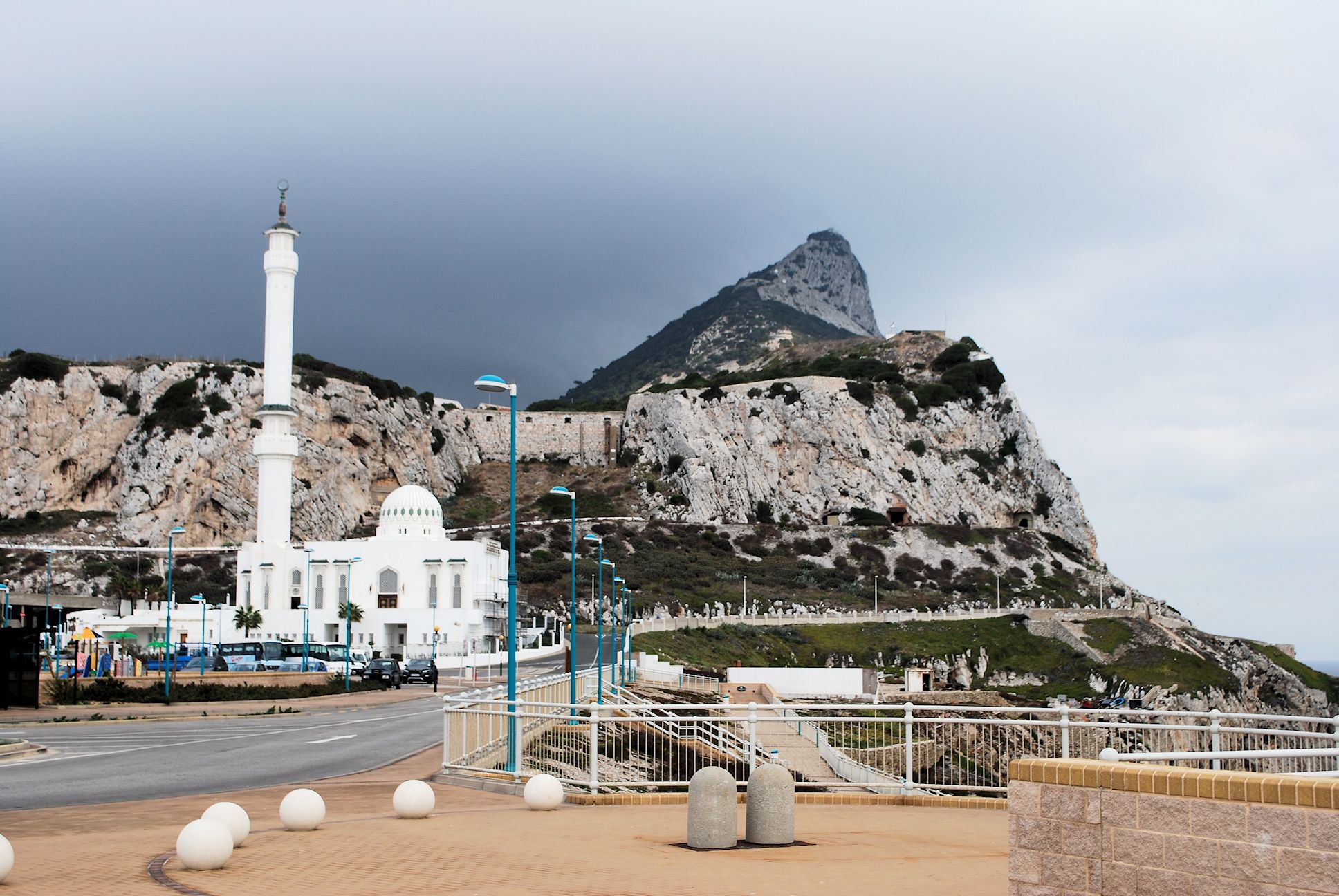
The southernmost mosque in Europe, and one of the largest outside a Muslim country, the Mosque of the Custodian of the Two Holy Mosques was built on Europa Point – right at the bottom of the peninsula – by King Fahd of Saudi Arabia in 1997 to serve Gibraltar’s one thousand Muslims. Europa Point apparently has views of Morocco, a few miles away across the Strait of Gibraltar, but – thanks to some haze – “not when we were there”.
7

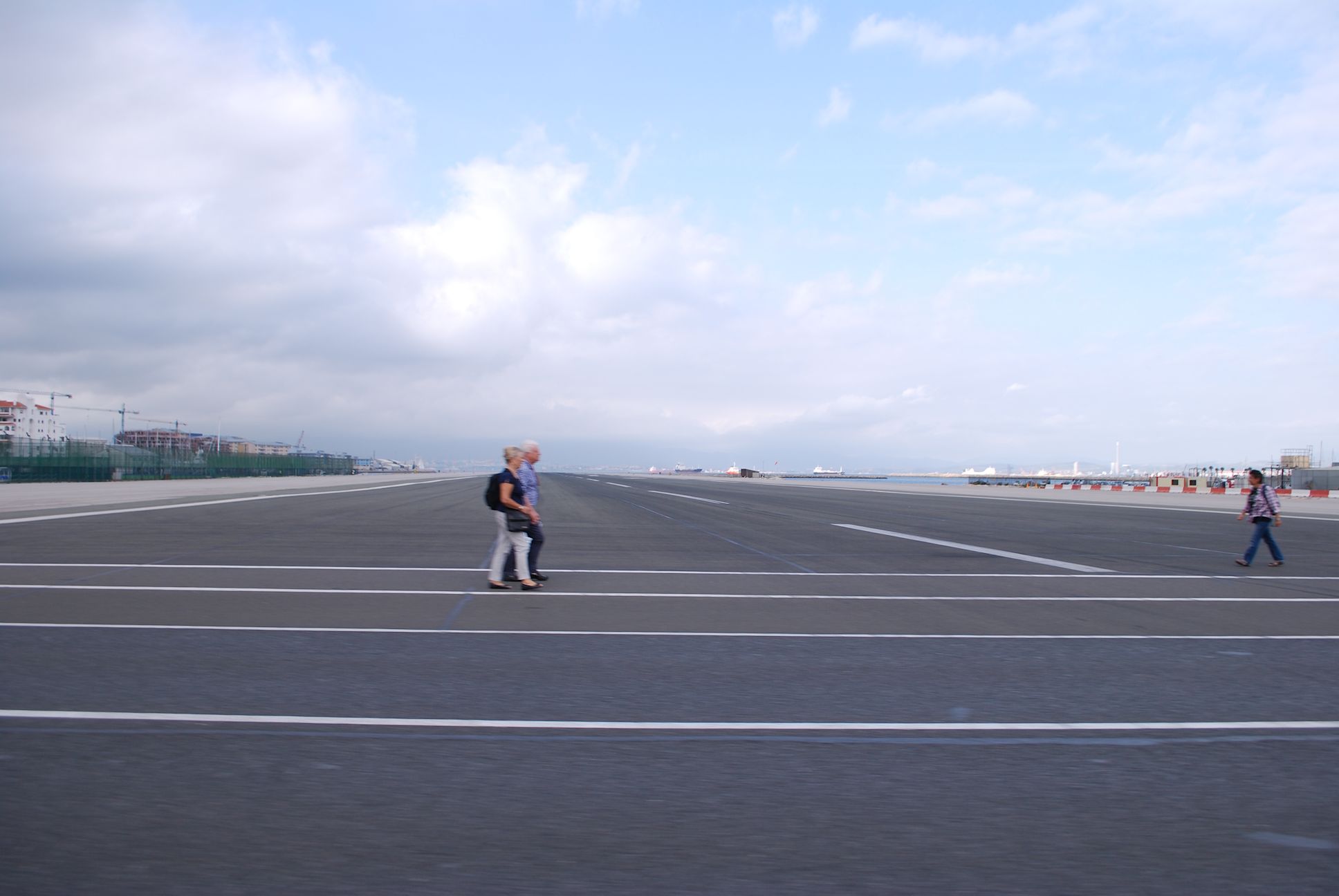
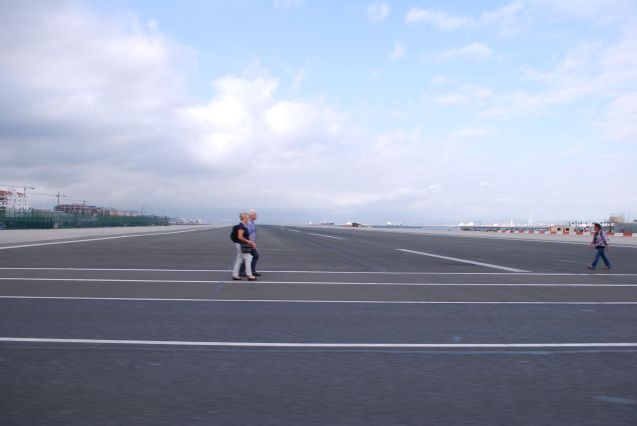
Like Paris’ Orly Airport from the A6, Amsterdam’s Schiphol from the A5 or Lisbon’s Aeroporto de Lisboa from the E1 circular road, but better. Planes from those other airports spectacularly land across major roads but planes in Gibraltar actually land on (albeit at ninety degrees) the road into town. There’s a level crossing and barriers where drivers wait for incoming flights. Another great reason to go back.
8

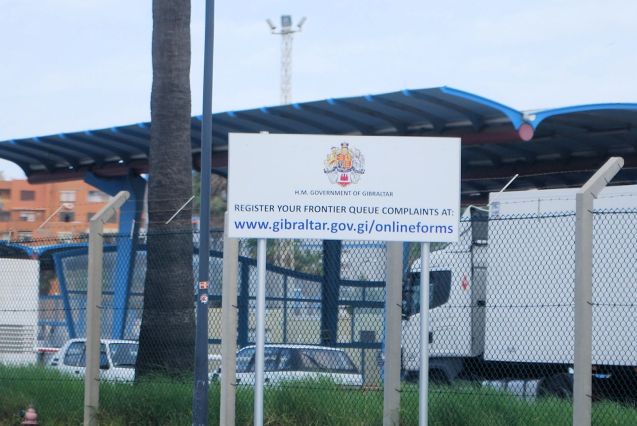
In the six months to May 2014 more than 500 formal complaints were made about border delays, mainly by people who live in Spain and work in Gibraltar. On most days in that period there were delays of at least one hour for traffic leaving with a peak of four hours. The longest waiting time for pedestrians was 90 minutes.

.

.

Coping With Portugal’s ‘EasyToll’ Motorways – The Montrachet Tour

Electronic road toll revenue from foreign cars soars in Portugal. Plus, how to cope with the country’s ‘Easytoll’ motorways.

Also, Rome’s anti-car mayor falls foul of Low Emission Zone fines. A winter check on trucks in Austria shows nearly full compliance. A car stolen in the UK is tracked in real-time to Poland thanks to Operation Trivium. Turkey to introduce congestion charging. The Czech Republic is the latest country to sign up to the EU’s ‘cross-border prosecution for traffic offences’ directive.

.

COPING WITH PORTUGAL’S ‘EASYTOLL’ MOTORWAYS

Eye-watering toll charges rake in revenue from foreign drivers.

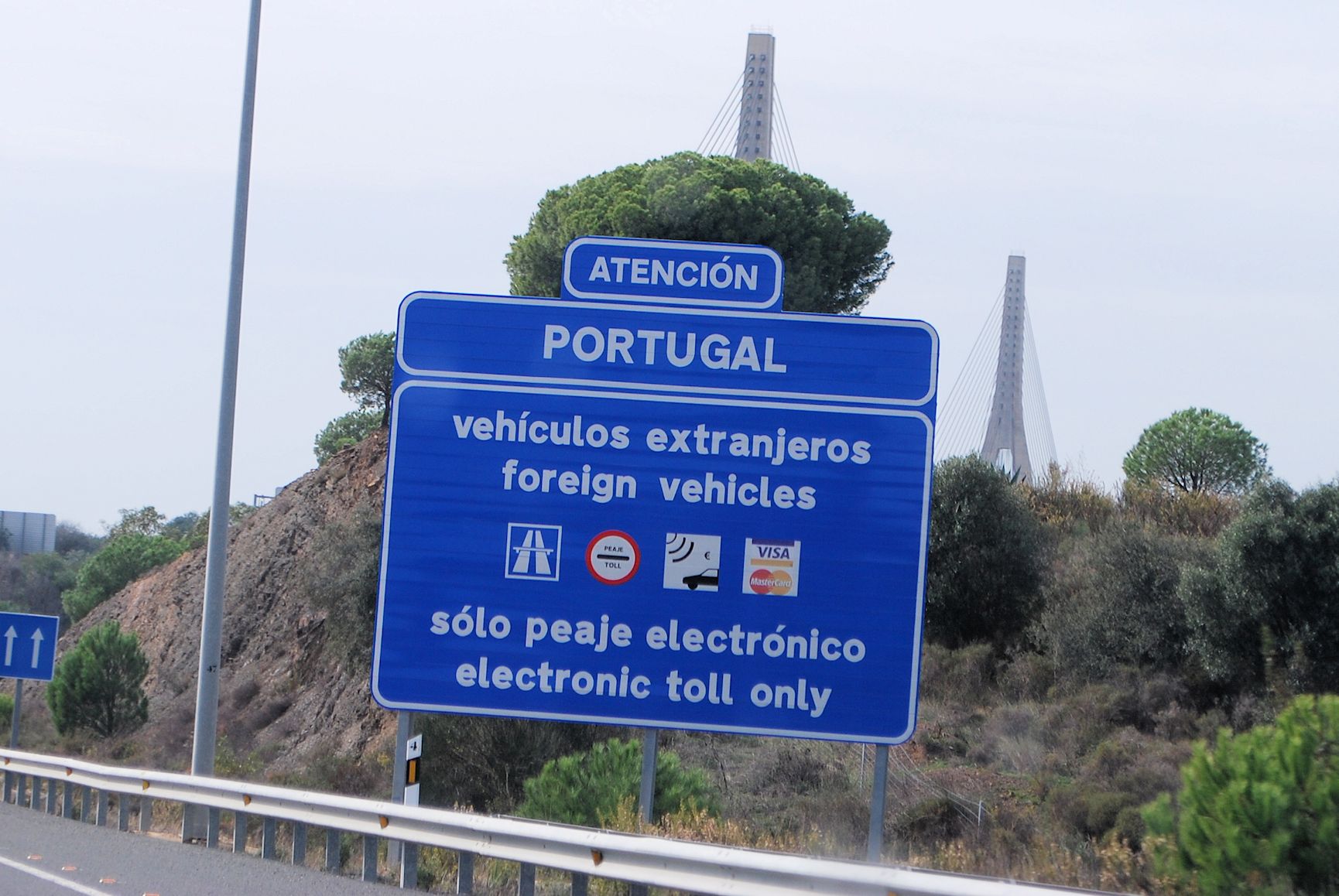
About to cross the Spain-Portugal border A-49/A22 at Vila Real de Santo Antonio. Photo @DriveEurope.

About to cross the Spain-Portugal border (A-49/A22) and Guadiana River at Vila Real de Santo Antonio, Algarve. Photo @DriveEurope.

Electronic toll charges collected from foreign cars are up 27% so far in 2014 compared to the same period last year.

The east-west A22 Via do Infante in the Algarve, southern Portugal, saw an increase of 32% according to The Portugal News today.

With total revenue topping just €5.4m it’s still relatively small beer and, as Portuguese road tolls are so expensive (see below), hardly represents a rush of tourist drivers.

Since four motorways were converted to electronic-only tolling at the end of 2011, special arrangements are in place for foreign-registered vehicles.

While the rest of the network works on the manual pay-as-you-go principle – exactly like France or neighbouring Spain – on the A22 in the south, and A23, A24 and A25 in the north, foreign drivers must register their vehicles and payment details.

It’s a very slick system. Drivers merely pull up at clearly-signed ‘foreign vehicle’ booths when first entering the ‘Easytoll’ network and insert a credit/debit card. The number plate is recorded via ANPR and matched to the car each time it passes a sensor (not a toll plaza as such but at gantries above the road). Toll charges are debited directly from the user’s bank account.

Drivers can also buy a three day, unlimited ‘TollService’ pass just for use on EasyToll roads for €20, or a pre-pay ‘TollCard’. Frequent visitors can rent a Via Verde auto toll transponder to use free-flow VVV lanes. For more information see the official Portugal Tolls website.

The charges themselves are very high by European standards. Our recent 765km drive, south to north via Lisbon – including €6.10 for the Vasco da Gama bridge into the capital – cost €94.65 (not including 90km of electronic charges yet to register).

So far that represents a minimum twelve cents per kilometre compared to an average seven cents on French motorways.

.

Seasoned, keen continental (Porsche 911) driver Jackal has posted what he's calling the 'Montrachet Tour' for next June. It's a clockwise circuit through France, east and south, ending with this very interesting passage through the Pyrenees. Prime driving country, favourite of the Tour de France. Much like the Alps, but much quieter. See the rest at @ParaboliqueUK

Seasoned continental (Porsche 911) driver Jackal has posted what he calls the ‘Montrachet Tour’ for next June. It’s a clockwise circuit through France, east and south, ending – so far – with this very interesting passage through the Pyrenees: prime driving country, favourite of the Tour de France; much like the Alps, but much quieter. See the rest at @ParaboliqueUK

.

roundup: the CZECH REPUBLIC is the 21st country to adopt the EU ‘Cross-border exchange of information on road safety related traffic offences’ directive. Police statistics say 10% of traffic offences were committed by foreign drivers last year according to the Prague Post. Just four countries, including Italy, apparently, are yet to adopt the new rules which allow drivers to be prosecuted at home for offences committed in other EU countries. See more here. POLICE say contacts made during Operation Trivium – the campaign to detect crime committed by foreign nationals on UK roads, last held in October – allowed officers to track a car stolen in the Midlands as it drove at high speed across the Continent. A Mercedes C200 hired at East Midlands Airport was stopped as it arrived in Lodz, Poland. The car has now been returned. TURKEY. Plans to introduce congestion charging in areas of Istanbul and capital Ankara were unveiled by PM Erdogan yesterday. No time frame was given. The proposals are already proving controversial says Hurriyet Daily. Meanwhile, Today’s Zaman calls it ‘the government’s new plan to restrict daily life in Istanbul’. ITALY. Anti-car Rome mayor Ignazio Marino – ‘Mayorino’ – is in trouble for not paying low emission zone fines. The Fiat Panda-driving, bike-mad former heart surgeon – who controversially pedestrianized the Colosseum and the Spanish Steps – has only paid two of ten €80 fines for crossing the ZTL boundary with an expired permit says thelocal.it. See more about Italy’s ZTL zones here. AUSTRIA. A spot check on the A21 in Vienna yesterday found 90% of trucks were complaint with winter rules. Unlike passenger cars, which only need winter tyres in wintry conditions, trucks 3.5t+ need winter tyres on at least drive axles from 1 November to 15 April (see more). Almost all the trucks had winter tyres, but 45 out of the 450 inspected lacked snow chains which drivers must also carry.

.

The Hanging Bridge of Cadiz

The amazing Hanging Bridge of Cadiz, Spain. White elephant, or desperately needed to relieve traffic through Spain’s oldest city? Hard to say. 

.

THE HANGING BRIDGE OF CADIZ

Is the spectacular new bridge across Cadiz Bay a white-elephant-in-waiting? A recent visit leaves us in two minds.

Puente de la

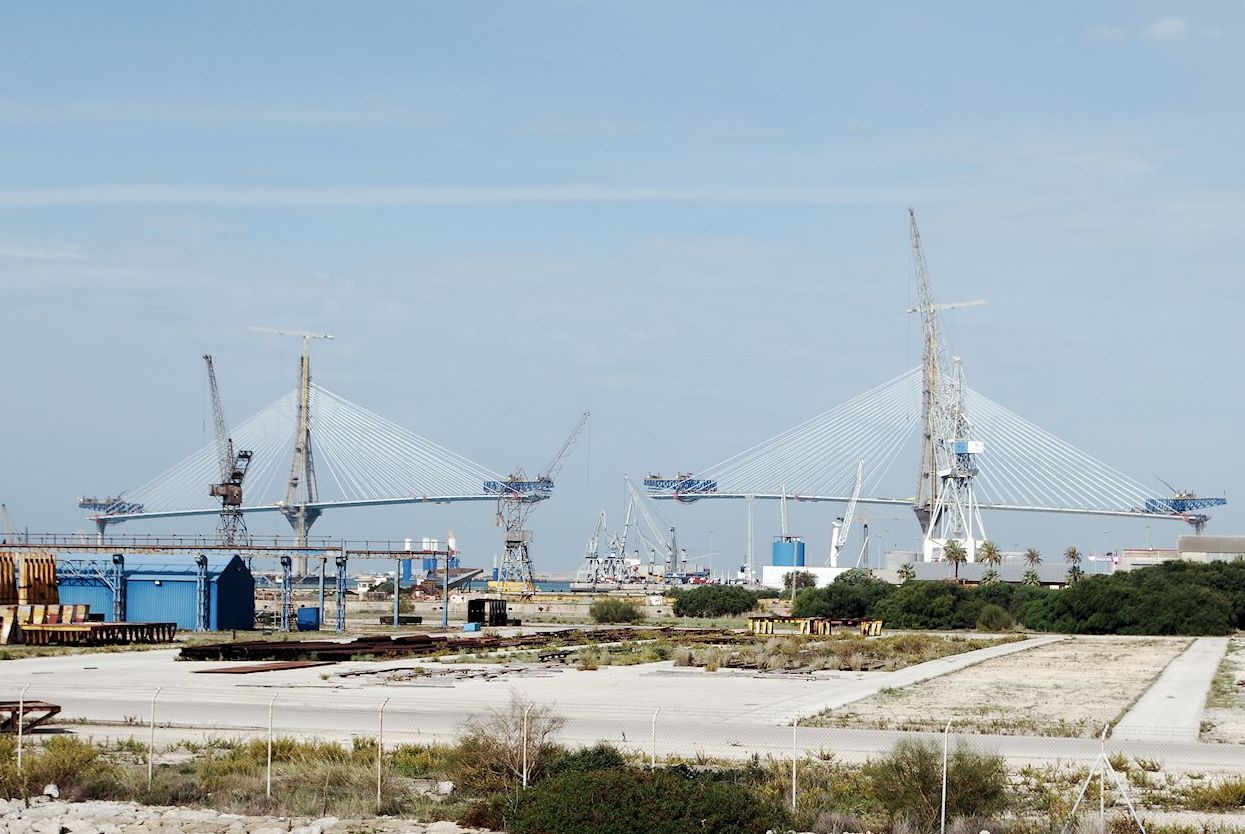
Puente de la Pepa, Cadiz, October 2014. Photo @DriveEurope.

The under-construction bridge out to the island city of Cadiz in Spain has become a symbol of both the massive overruns typical of big infrastructure projects and wasteful EU spending and corruption.

Actually, Puente de la Pepa is being paid for by the state but that hasn’t stopped the still unfinished, 5km long drawbridge – at 69m the highest in Europe – becoming the focus of a campaign to highlight ‘abusive’ redevelopment in Spain’s oldest city.

Andalusia, the southernmost Spanish province in which Cadiz sits, has reportedly sucked up €14bn in EU aid over the past seven years with apparently little to show for it.

Magdalena Álvarez Arza, the local minister of public works who signed the La Pepa contract in 2006, left her subsequent job as Vice-President at the European Investment Bank in June.

A statement from the EIB president said, ‘I sincerely hope that the ongoing investigation proceedings will lead to a positive outcome for her’. The EIB has loaned Andalusia €6.7bn since 2004.

According to Der Spiegel she personally posted a €30m bond to escape pre-trial detention. She denies all charges.

Meanwhile, the cost of the bridge has spiraled from an initial €288m to a current €506m and there is no end in sight. Work has been carried out in fits and starts with the most recent revival in early October.

There are also obvious doubts over whether the new bridge is needed at all. The 6km long island, population 123,000, is already connected to the mainland by the four lane 1.3km Carranza Bridge, and the dual carriageway CA-33 along an isthmus in the south.

La Pepe, across the north part of Cadiz Bay, is designed to relieve return traffic through the city, and serve a brand new, also under-construction half-kilometer-long quayside for cargo ships.

Since the 9 March 2014 edition of Top Gear it has become fashionable to criticise underused EU-funded infrastructure in Spain. In our recent experience however there is generally plenty of traffic on the roads. We missed a closer look at the country’s most historic old town after being stuck too long in a jam on Carranza Bridge.

.

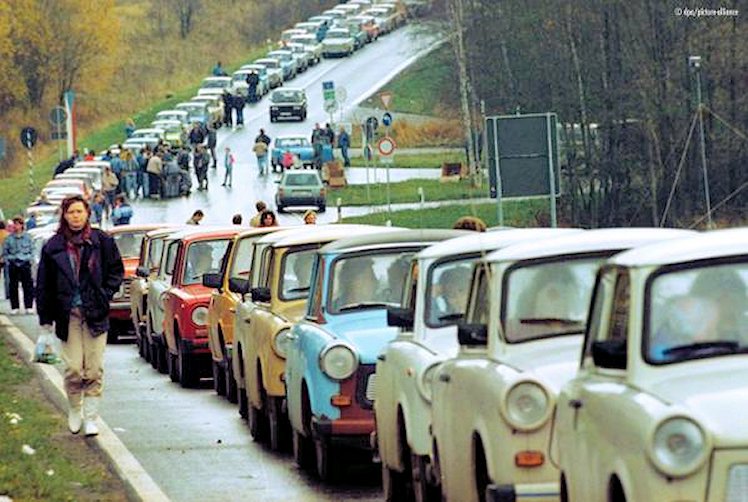
Twenty five years ago today: gaps start to open in the previous almost impregnable Iron Curtain - from Stettin (Sczcecin) in the Baltic to Trieste in the Adriatic - and immediately queues of Trabbies begin to form, many of them summarily abandoned on the other side. More later.

Twenty five years ago today: gaps start to open in the previous almost impregnable Iron Curtain – from Stettin (Sczcecin) in the Baltic to Trieste in the Adriatic – and immediately queues of Trabbies begin to form, many of them summarily abandoned on the other side. More later.

.

German Foreigner Toll: Doubly Discriminatory – Snow Ferrari

The upcoming German foreigner toll treats resident and non-resident drivers very differently while the maximum €130 charge will just not be enough to fix the country’s ailing road network.

Also, demonstrations by farmers on roads all around France.

.

GERMAN FOREIGNER TOLL: DOUBLY DISCRIMINATORY

Both resident and foreign drivers have axes to grind while the current €130 maximum charge per year must rise.

german mway

The German ‘foreigner toll’ has changed so frequently throughout its difficult gestation that the latest details should come with a caution.

Considering the law has yet to pass scrutiny by the German cabinet and parliament, and the European Commission – and any legal action brought by one of the many countries opposed – it may change again yet.

One consistent feature however is that resident and non-resident drivers will be treated differently. The extent of that only become really apparent when transport minister Alexander Dobrindt revealed the draft legislation at the end of last month.

Foreign drivers will only need the vignette to drive on motorways. German drivers will need one to drive on any federal roads, i.e. the A and B road network, but they will have the charge reimbursed through lower car tax.

National roads are included to give the government the option of adding select main roads if foreign drivers desert motorways en masse, especially in border regions.

The charge will vary, up to a maximum €130 per year for the most polluting cars which, strangely, will include a 2009 VW Golf 2.0TDi. A 2013 Euro 4 VW Polo 1.2 TSi will pay just €24 per year.

Short term vignettes will cost €10 for ten days or €22 for two months. Motorbikes are exempt. Penalties start at €150 and rise to €240 for repeat offenders.

The system will be run by nearly 500 new civil servants and policed by a network of number plate recognition cameras. Drivers will be able to buy in advance over the internet, or via outlets in border areas.

Meanwhile, there is an on-going dispute about the amount of revenue the new system will raise. Dobrindt says the entire scheme will bring in €3.7bn each year – all earmarked for road improvements and maintenance – of which €700m will come from foreign drivers, less €195m in set up and admin costs.

German motoring club ADAC says the toll will more likely bring in €262m each year with running costs of nearer €300m.

Either way, even on Dobrindt’s figures, the total revenue is well short of the (conservative estimate) €5bn per year Germany needs just to maintain the existing network, not including improvements.

The proposed toll is already significantly more expensive than the maximum €100 per year Dobrindt said he had in mind just a few months ago.

European Commission: a few weeks after out-going transport commissioner Siim Kallas tweeted that the foreigner toll was ‘going in the right direction,’ the Commission reverted to its usual non-committal line at a meeting with MEPs yesterday. During a Transport & Tourism Committee hearing on road tolls in Europe, a member of the European Commission’s Directorate for Mobility and Transport said he could not take a view on ‘draft or concepts’ and would have to wait until the new law went through to take a position.

Truck tolls: plans to extend the German truck toll system were implemented today. A further 1100km of motorways will be added to the scheme from 1 July 2015. From 1 October 2015 the weight limit for trucks covered by the tolls will be reduced from 12.5t to 7.5t. From 2018 the system will apply to all federal roads. Trucks 3.5t-7.5t will not be included in either tolling scheme.

.

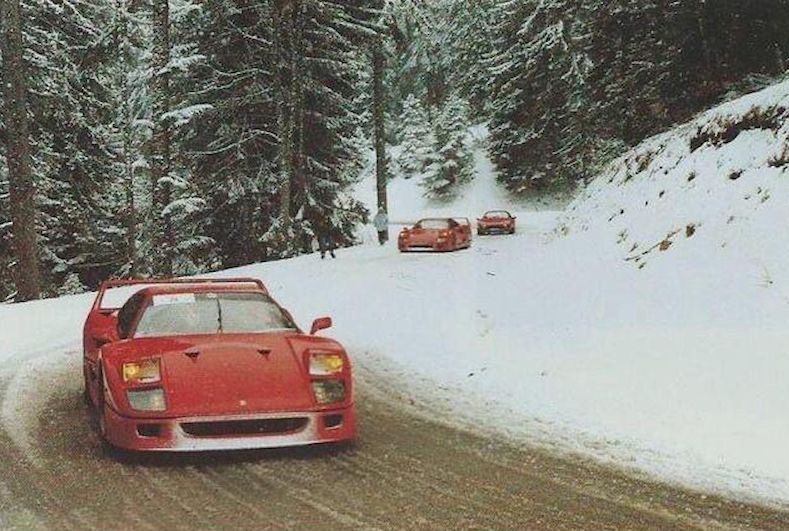
Random: priceless Ferraris in the snow, probably Col de Turini, south east France.

Random: priceless Ferraris in the snow, probably Col de Turini, south east France. Photo via @SeanCockram

.

roundup: FRANCE. Farmers angry over what they see as unfair competition from countries with lower standards picketed several toll stations on motorways in the north last night: on the A16 at Boulogne, the A1 at Fresnes and A26 at Reims. Protestors demanded to see certificates of origin from trucks carrying food. Police were in attendance and general traffic was not blocked. Similar protests apparently continue today (see more from thelocal.fr).

.

Jaguar’s new ad ‘Alive’ – about the company’s ‘Master Service Technicians’ – was filmed on the mean streets of late-night Ljubljana. For some reason it’s approved for use all around the world, apart from the UK. Shame, it’s good.

.

Two Years ‘Til Cross-Border Prosecution – Healy Pass

The UK, Ireland and Denmark will likely win a two year reprieve before drivers are liable for traffic fines in other EU countries.

Also, a look at Ireland’s ultimate drive: the Healy Pass. Turkey to privatise some major roads. Hungary to build two cross-border motorways to Slovakia. The focus in many European countries switches to Vulnerable Road Users.

.

TWO YEARS ‘TIL CROSS-BORDER PROSECUTION

Revised directive passes MEP scrutiny. UK, Ireland and Denmark likely win grace period.

cross border pro

Despite the EU’s reputation for slow decision making, MEPs spared little time yesterday afternoon in endorsing new rules on the ‘Cross-border exchange of information on road safety related traffic offences’.

The revised directive – now a transport measure applying to all EU states – passed the European Parliament Transport Committee with barely a murmur.

The only issues were regret over the need for the original regulation to be tested in the European Court of Justice – which changed the legal basis in May, effectively removing opt-outs from the UK, Denmark and Ireland – and concerns over data protection.

While MEPs did not discuss specifics, the EP Civil Liberties Committee apparently has no concerns. It has also been reviewed by the European Data Protection Supervisor.

An amendment tabled by Conservative MEP for the North West of England Jacqueline Foster asks that the UK be allowed the same two year transition period granted to member states included in the original directive. An official from the European Commission’s Directorate for Mobility and Transport said this would be taken into account.

The UK will need ‘primary legislation’ – including debates in parliament and select committee scrutiny – to adopt the directive as vehicle keepers (rather than drivers) will be liable for fines.

(Requests for more information on the UK timetable have so far gone unanswered by the DfT.)

The UK (Denmark and Ireland) otherwise have ‘no reservations’ according to the report submitted to the Transport and Tourism Committee, and are, ‘already considering how they might help improve the system the next time it comes up for review (due in November 2016).’

The report leaves open the possibility of harmonising traffic rules across the EU and standardisation of traffic cameras.

In any event, the two year grace period appears to calm fears that UK drivers would face fines for historic offences kept on file.

The way is now clear for the European Parliament itself to agree the new measure, expected by the end of the year, to give member states time to adopt the law before the deadline of 6 May 2015.

Cross-border prosecution for traffic offences was originally proposed during the French presidency in 2007 on concerns over ‘effective impunity’ from traffic offences for foreign drivers (i.e. impunity from remote detection; then as now, drivers caught ‘red handed’ can be fined).

So far, twenty out of twenty five member states have passed the original directive. It covers eight offences: speeding; not using a seatbelt; running a red light or other stop signal; drink driving; driving under the influence of drugs; not wearing a helmet (motorcyclists); using a forbidden lane (bus lane, emergency lane, etc); and using a mobile phone while driving.

.

R574 Healy Pass: crossing the border between Kerry and Cork in south west Ireland, across the Beara Peninsula and Caha Mountains. Tops out at 300m with panoramic views of Bantry Bay to the south. The ultimate Irish drive says @BMWIreland (via @flet_out).

R574 Healy Pass: crossing the border between Kerry and Cork in south west Ireland, across the Beara Peninsula and Caha Mountains. Tops out at 300m with panoramic views of Bantry Bay to the south and Kenmare Bay/River to the north. The ultimate Irish drive says @BMWIreland (via @flet_out).

.

roundup: HUNGARY. Two new cross-border motorways with Slovakia – between Rajka and Bratislava in the west, and Miskolc and Kosice in the east – will be built by 2020 says foreign minister Peter Szijjarto according to Budapest Business Journal. The number of border crossing points will also be doubled, to fifty. TURKEY. A second attempt to privatise a package of major roads will made early next year says Daily Hurriyet. The first came unstuck in 2013 after the winning bid was said to be too low. The roads include the Edirne-Istanbul-Ankara motorway and the two Bosphorus bridges. Most major roads are already tolled; it’s not clear what effect the new arrangements will have on users. BULGARIA. Around €40,000-work of cash – in leva, euros and pounds sterling, among others – was found at the home of the head of the Lesovo border crossing following Sunday’s raid. Four others are in custody and two more were arrested. The going rate for trucks was £60-100 and for private cars £5-10 says Balkan News Network. For the record, we did come up against corruption in Bulgaria but the border crossing was trouble-free.

.

VULNERABLE ROAD USERS: as driver and passenger fatalities continue to fall long term – more or less – the focus in many European countries switches to ‘vulnerable road user’ safety, i.e. pedestrians and cyclists. The poster above is from a current campaign in Luxembourg (Levez le pied! – raise the foot). Similar adverts are being rolled out in France as VRUs are the only sectors to report increases in road deaths and serious injuries recently. In Switzerland, pedestrian fatalities have returned to levels last seen a decade ago, especially among the elderly who are also seen to be particularly vulnerable in Bulgaria too. Late last month saw ‘National Visibility Day’ in Norway. It’s controversial among activists - who normally lionise Scandinavian transport policy – because, they say, drivers should be held automatically responsible for all incidents. Watch out.

VULNERABLE ROAD USERS: as driver and passenger fatalities continue to fall long term – more or less – the focus in many European countries switches to ‘Vulnerable Road User (VRU)’ safety, i.e. pedestrians and cyclists. The poster above is from a current campaign in Luxembourg (Levez le pied! – Raise the foot). Similar adverts are being rolled out in France as VRUs are the only sectors to report increases in road deaths and serious injuries recently. In Switzerland, pedestrian fatalities have returned to levels last seen a decade ago, especially among the elderly who are also seen to be particularly vulnerable in Bulgaria too. Late last month saw ‘National Visibility Day’ for pedestrians and cyclists in Norway. It’s controversial among activists – who normally lionise Scandinavian transport policy – because, they say, drivers should be held automatically responsible for all incidents. Watch out.

.