Alpine Roads Re-Opening – Maria + Mark

Austria’s Grossglockner kicks off the mountain pass season. Mark Webber takes Maria Sharapova for a spin in the Porsche 918 Hybrid targa.

.

ALPINE ROADS OPENING FOR THE SUMMER.

See ADAC’s guide to what’s open and what’s not.

Austria's Grossglockner High Alpine Road re-opens today, the first of many mountain passes over the next few days. More later.

Austria’s Grossglockner High Alpine Road re-opens today, the first of many mountain passes over the next few days.

Unexpected, if not freak, snow in south central Switzerland at the weekend raised the prospect of the famous mountain passes remaining closed for a while longer. But a milder winter in other parts of the Alps means many of Europe’s best high roads are now ready to raise the barriers for the summer.

Austria’s blue chip pass Grossglockner, topping out at 2,504m (8,215ft), about 50km east as the crow flies from Innsbruck, opens today.

Prices have risen slightly from last year, to €34 for a day pass for a car. Until 15 June it’s open from 06:00-20:00, then from 05:00-21:30. The Franz Josef Heights loop road however will be closed until at least the weekend.

Meanwhile, nearby Nockalm and Gerlos open tomorrow (Thursday) as does Fluelapass between Davos and St Moritz in Switzerland. Splugenpass, across the Swiss-Italy border, opens on Friday. Maltatal, off the A10 Tauernautobahn at Gmund in Austria, opens on 10 May.

(Note, Hahntenjoch in Austria, west of Innsbruck, and Oberalppass, between Andermatt and Sedrun in Switzerland, are already open.)

In general, most high roads will be open by mid-May with the exceptions at least of Timmelsjoch, south west of Innsbruck, and the Gaviapass between Bormio and Ponte di Legno in northern Italy, which are unlikely to be open before June.

As ever, drivers should not take mountain passes being open for granted. The mild winter means the risk of avalanche is higher. Mountain roads are vulnerable to the weather whatever the time of year. Very handily, German motoring club ADAC keeps up-to-date details of what’s open and what’s not. It’s in German only, but hopefully self-explanatory.

Source: ADAC.

.

Maria Sharapove and Mark Webber take the new Porsche 918 Hybrid out for a spin.

Maria Sharapove and Mark Webber take the targa-topped Porsche 918 Hybrid out for a spin following her third straight title win in the Porsche-sponsored Grand Prix tennis tournament in Stuttgart at the weekend. The week before, Webber piloted the 919 Hybrid to third place on its race debut at Silverstone. An impressive performance though the team will have been disappointed to be bested by two Toyotas and no doubt hoping for more at June’s all-important Le Mans 24 Hours. Before that however, it’s racing at Spa Francorchamps in Belgium this weekend..

.

Harwich-Esbjerg Ferry Axed – Visa-free Moldova

In a shock move, DFDS announces it will withdraw from the sole remaining UK-Scandinavia ferry route at the end of September. Visa-free travel has now started between Moldova and the EU.

.

DFDS CLOSES LAST UK-SCANDINAVIA FERRY ROUTE

Company blames new emissions rules

The DFDS Esbjerg-Harwich boat in Esbjerg last week.

The DFDS Esbjerg-Harwich boat in Esbjerg last week.

The last remaining ferry route between the UK and Scandinavia is to be axed.

The DFDS route between Harwich and Esbjerg in Denmark closes on 29 September.

The company blames the decision on new emissions rules, competition from budget airlines and declining freight volumes between the UK and Denmark.

A statement from DFDS CEO Niels Smedegaard today says, ‘Unfortunately, 29 September will mark the end of an era and the possibility of sailing directly from Harwich to Esbjerg, Denmark, on the historic ferry route that opened in 1875 with the inauguration of the port of Esbjerg. 

‘The loss of tax-free sales and increasing competition from low-cost airlines mean that passenger numbers have fallen from 300,000 to around 80,000. Transport of industrial cargo between the UK and Denmark has also declined.’

He goes on to say the new low sulphur fuel rules due in January 2015 will entail an additional £2m in costs. Freight will be switched to the Esbjerg-Immingham route. All of the ship’s crew have been offered alternative jobs.

Having used the route just last week, and had a great time on-board, it’s shocking, tragic news. The only sea connection between the UK and Scandinavia is now restricted places on-board the DFDS freight ships Tilburg/Immingham-Gothenburg/Brevik.

.

Moldovan citizens are able to visit the EU without a visa as of yesterday. Ergo, EU citizens (including those with an EU visa) can now visit Moldova without worrying about a visa anymore. Sandwiched between Romania and Ukraine, just cut off from the west Black Sea, Moldova featured on last year's Porsche Performance Drive.

Moldovan citizens are able to visit the EU without a visa as of yesterday. Ergo, EU nationals can now visit Moldova without worrying about a visa anymore. Sandwiched between Romania and Ukraine, just cut off from the western Black Sea, Moldova featured on last year’s Porsche Performance Drive.

.

.

May Day Weekend Traffic – CCCP

The May Day holiday weekend will see* busy roads but not major jams across the Continent. Meanwhile, long delays (have been) already forming on Day One of major road works on the E40/A10 at Gent, Belgium (and at the Turkey-Bulgaria border). Studded tyres are outlawed in Finland from tomorrow. Gibraltar queue watch: a normal day.

.

MAY DAY HOLIDAY TRAFFIC

Busy Wednesday afternoon and Sunday else not too bad

a65 rheinbrucke traffic

With May Day (Thursday, 1 May) being a public holiday in many European countries, especially in northern Europe, increased traffic is to be expected over what will be, for many, a long weekend.

In France – which has three public holidays this month, all on Thursdays – while traffic is expected to be busy generally on Wednesday, it isn’t expected to be heavy again until Sunday (4 May) as drivers return home, particularly to Paris, from the north west coasts says Bison Fute.

However, traffic forecasts in France have been rather over-estimated recently*. Not so in Germany however where the ADAC has been spookily accurate.

It says traffic will busy from Wednesday afternoon, dipping slightly Thursday-Saturday before peaking again on Sunday. Major jams are not expected though this might change depending on the weather. The north is likely to be busier than the south, particularly on Saturday, the focus generally being all the usual suspects – north-south A1, A5, A7, A9 and east west A3, A6, A8 – plus, no doubt, the A31 at Leer in the north west and A93 and A96 from the Austrian border.

Meanwhile, there will be some major road closures in Germany over the weekend: A9 Leipzig to Berlin, closed at Dessau 2-4 May; A59 Dinslaken to Duisburg closed at North Duisburg from 1 May until 13 July; and contraflow for 17km of A9 Munich-Nuremberg (Ingolstadt) at Holledau/Allershausen. Previous work on this stretch caused repeated accidents.

Carnage is not expected in Austria, certainly not on the scale of mid-winter or summer, though OAMTC warns it will be busy around Vienna, Graz and Linz – and the A1, A9 and A2/S6 which connect them – from Wednesday afternoon, and again on Sunday when the A4 to Vienna-Gyor-Budapest will also see heavier traffic than usual.

The Salzburg marathon on Sunday will see traffic restricted until 15:00. Also complicating matters is the closure of A2 into Vienna at Wiener Neudorf all weekend.

After the several ‘black’ days over the Easter holidays – with 12km+ queues on the A2 Gotthard Tunnel – traffic in Switzerland on May Day weekend will not be as bad.

Wednesday/Thursday and Saturday/Sunday will be busiest, especially the latter. With the exception of Thursday when traffic heads in both directions according to TCS, drivers will be predominantly heading south.

While there’s no central traffic prediction for Italy, the A22 Brenner motorway, Innsbruck-Bolzano-Verona is likely to be busy all weekend while the major motorways back from the coast, the A10 and A12 towards Genoa in the north west and, particularly, the A14 Rimini to Bologna in the east will doubtless be murderous on Sunday evening.

.

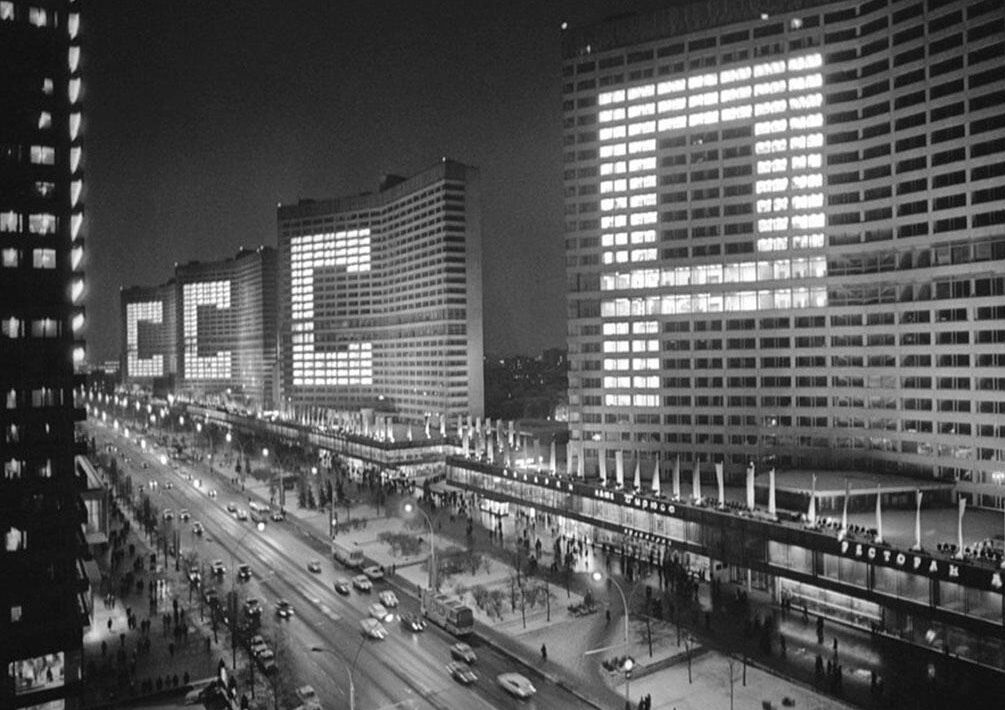
Random history photo from @EnglishRussia. Cool

Random history photo from @EnglishRussia, presumably Moscow. Cool.

.

roundup: BELGIUM. Road works starting today on the E40/A10 near Gent will hamper drivers until the end of May. Until 9 May one lane is closed in each direction J11-13 Aalter-Drongen. Already causing long delays today, and apparently also on the A14/A22 at the French border towards Lille as traffic diverts. FINLAND. Studded tyres are not allowed from tomorrow, even as fresh snow falls are seen in the north of the country. Non-studded winter tyres are okay. GIBRALTAR QUEUE WATCH. Delays to the Spanish frontier reached 2h00 this morning. BULGARIA-TURKEY. Truck queues reached up to 6km each side of the Kapitan Andreevo-Kapikule border crossing on the first day of reconstruction. Delays will last for the next ‘few months’.

.

Race Around The Baltic, P1

Can you drive around the Baltic? Would you want to? How long does it take? Does it require months of planning, and military-style execution?

Part One: Life in the Single Lane, UK to Gulf of Finland.

.
1

Polish drivers are soooo impatient! One tiny little mistake turning across lanes of traffic outside the SAS Radisson in Szczecin sets off a complete din of horns and shouting. Thankfully a kindly taxi driver makes a gap so we can escape onto the hotel forecourt.

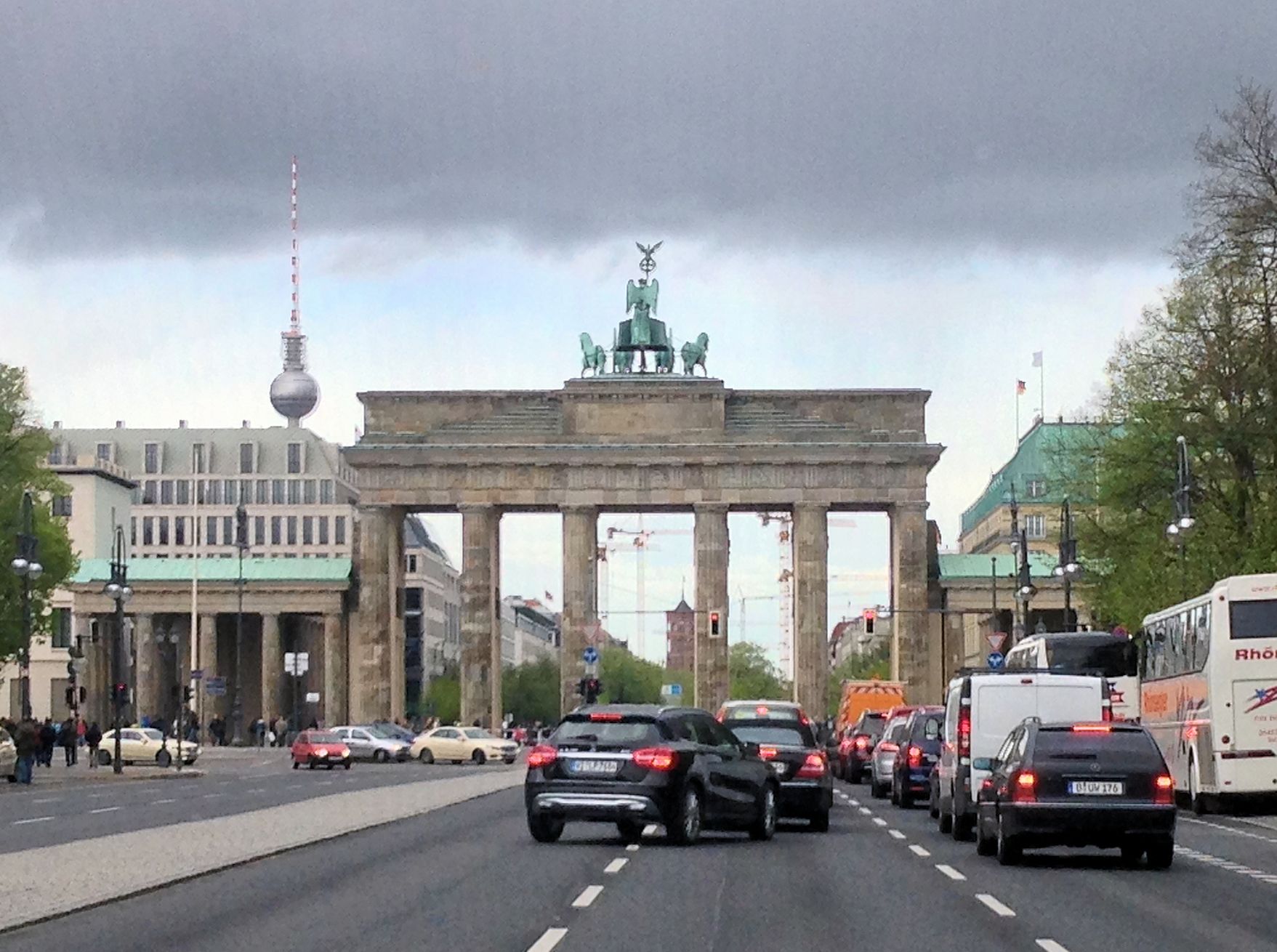
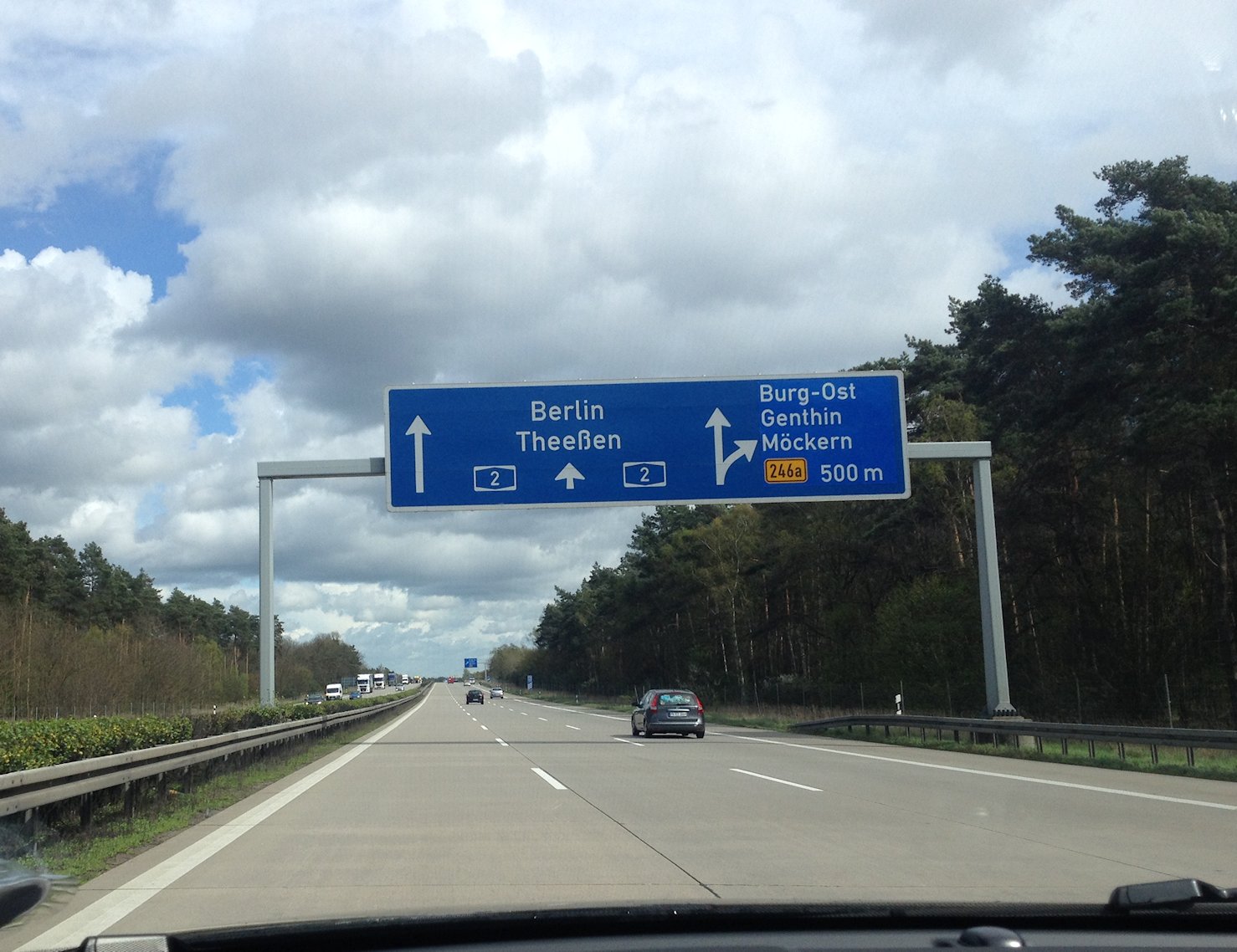
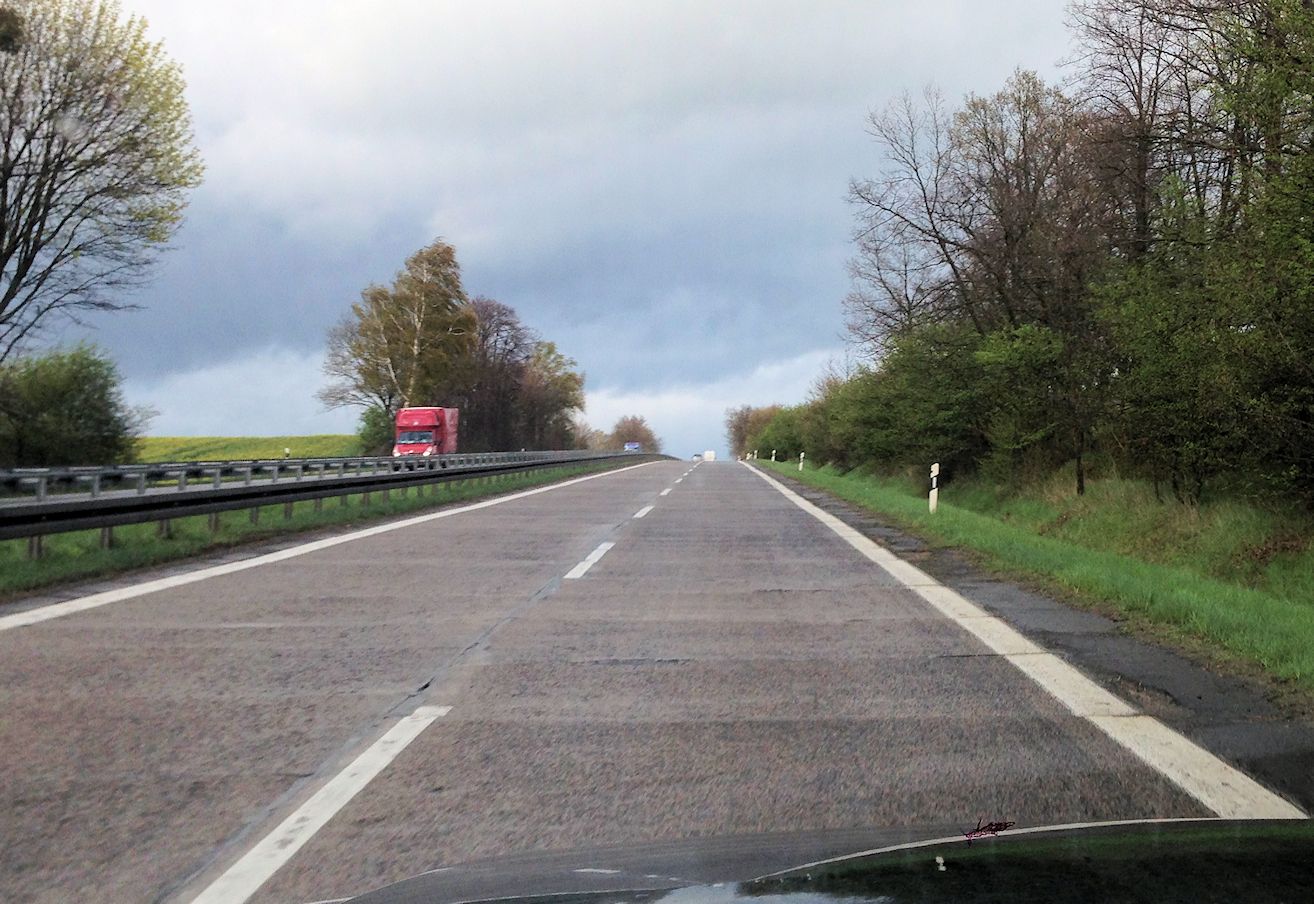
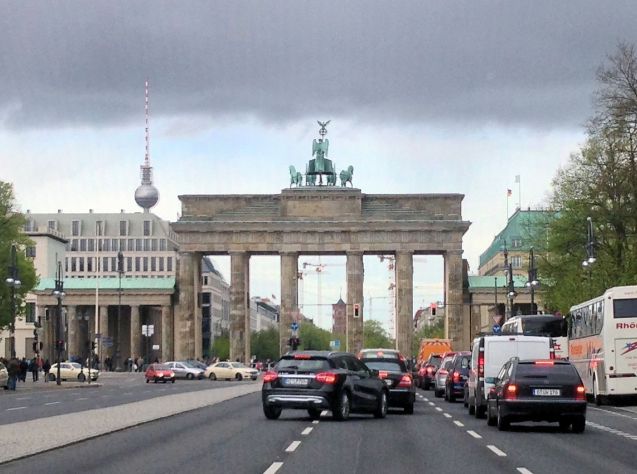
This is the end of day two, a trip which has already included a drive along the N90 beside the Meuse – a much nicer way to get to east Belgium than the crowded, fast motorways – a high speed run into Berlin on the quiet, wide and dead straight A2 from Magdeburg (and an easy detour through the centre for a photo of the Brandenburg gate through the windscreen, above), then a rumble along the last remaining stretch of original Hitlerbahn for ninety miles from Berlin.

Lured here after reading the place was designed by Paris-architect Georges-Eugene Haussmann, Szczecin – aka Stettin – is terrifically disappointing to start with: grey suburbs of decayed Commie grot, miserable-looking people shuffling along broken pavements and a horrific city centre spaghetti junction. Have we lost our touch?! The hotel too is a monument to the 1980s in glitzy mirrored glass, directly opposite a ‘panel’ block of flats complete with ground floor KFC.
2

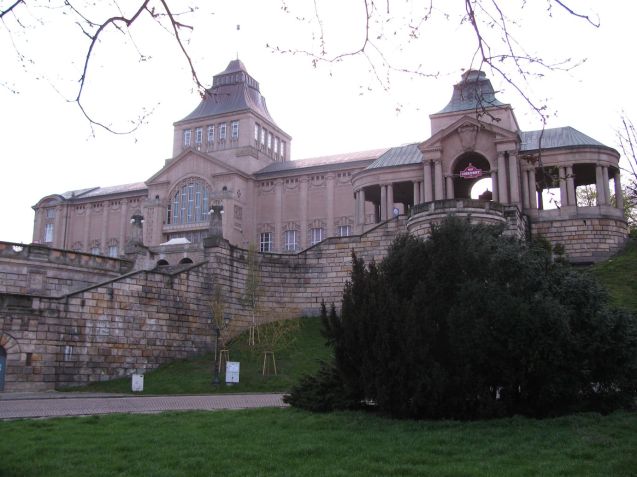
Actually it only takes a short walk, down to the Oder, to see influence of The Master. On the waterfront is the enormous Sea Museum complete with ribbed, leaded roof and matching gate houses atop a magnificent sweeping staircase down to the water. Next door is the equally big, brick Gothic Voivodeship (regional council) Office.

From there is a walking tour of the city’s architectural highlights, directions helpfully painted onto the kerb. These include a succession of churches with bizarre portcullis facades, wide, straight Paris-style boulevards but also simple, elegant buildings from the Communist era like the railway station (albeit it with a mosaic map mural). There’s a quiet dignity to Szczecin, industry and all, and it isn’t far below the scabby surface.

Fabulous though it is in its details we can’t afford to get waylaid. Because we missed the once-a-week boat, what had been planned as a gentle pre-Easter week around Spain, Gibraltar and Portugal has turned into a circumnavigation of the Baltic. Consequently it hasn’t been planned in any detail, we’re just hoping for the best..

4

The major theme of the entire trip imposes itself from the off the next morning. The fresh, smooth dual carriageway S10 east from Szczecin soon gives way to single-lane main road and it hardly lets up for the next 2,500 miles, right through all three Baltic States plus Finland, Sweden and even the UK. We (re)learn a few lessons in sustaining progress on narrow roads.

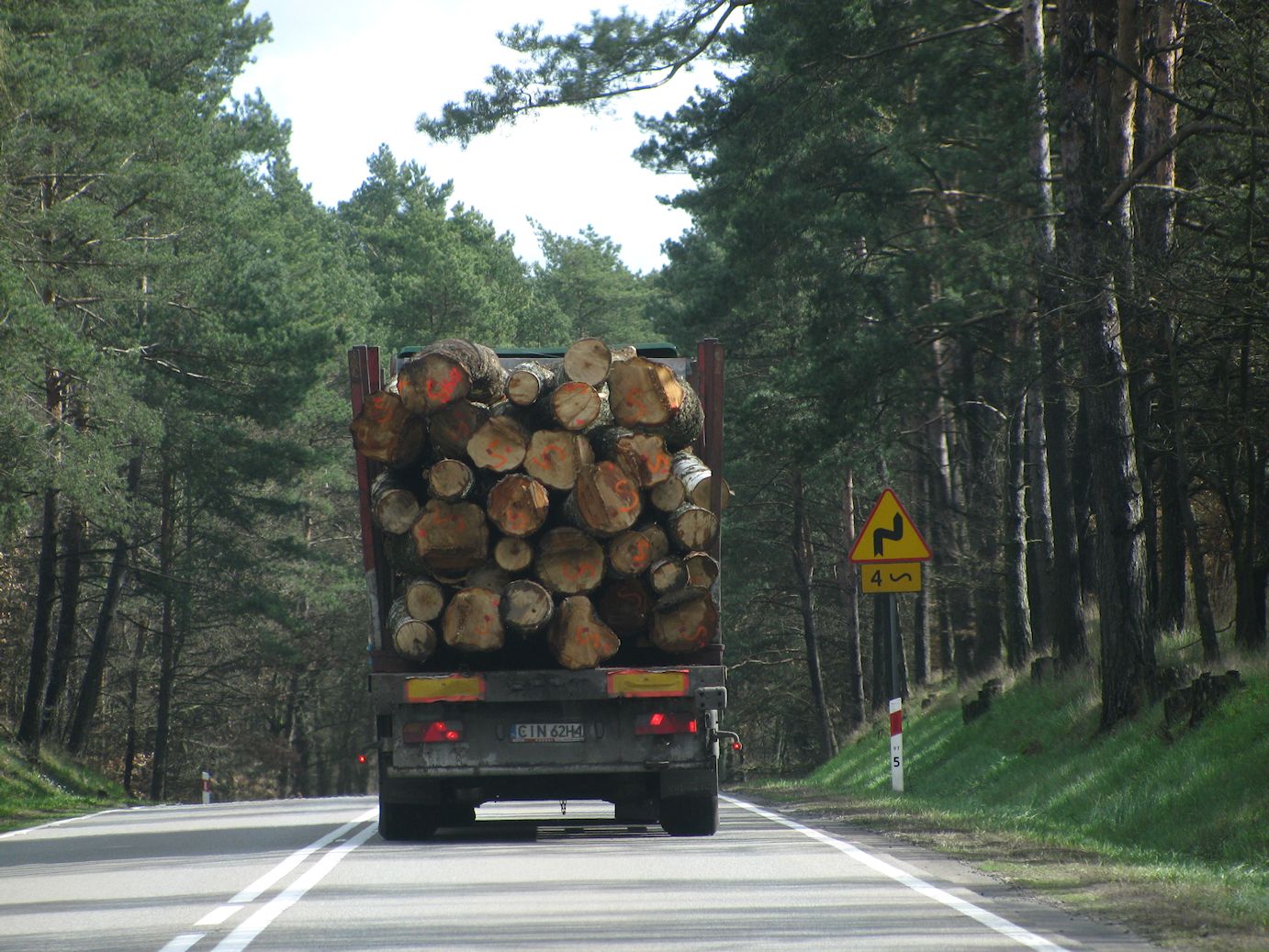
As for the scenery, the word alpine keeps springing to mind. Right across northern Poland is almost continuous lakes, forests and rolling hills culminating in the official Polish lake district, ‘Pojezierze Mazurskie’.

The problem is not traffic per se – though we and tens of others memorably spent 45 minutes behind a little black Toyota – more that the road goes through the centre of every town and village. It’s interesting to get a closer look at the ‘real’ Poland – every place has a, sometimes lovingly tended, speed camera – but we just can’t afford to spend another night here (though the castle Hotel Zamek looming over Ryn is a tempting option if we have to).

Ultimately you just have to chill out and be thankful to make any progress at all. By late afternoon we’re closely shadowing the border of Kaliningrad, the Russian enclave, the traffic has thinned out to nothing, there’s a fresh lake around every corner, the sun’s out and it looks like we’re going to make it. See more ‘Driving Across Poland’ here.
6a

By Kaunas we’re befuddled. Thank god it’s quiet in the city centre, dark and deserted. Having gained an hour over the Lithuanian border there’s no time to snuffle out a quirky, cheap hotel with great views. By chance we come close.

The best room in the Park Inn/SAS Radisson – a massive ‘business suite’ on the eighth floor with a view of roof tops and the Church of St Michael the Archangel – costs £72.

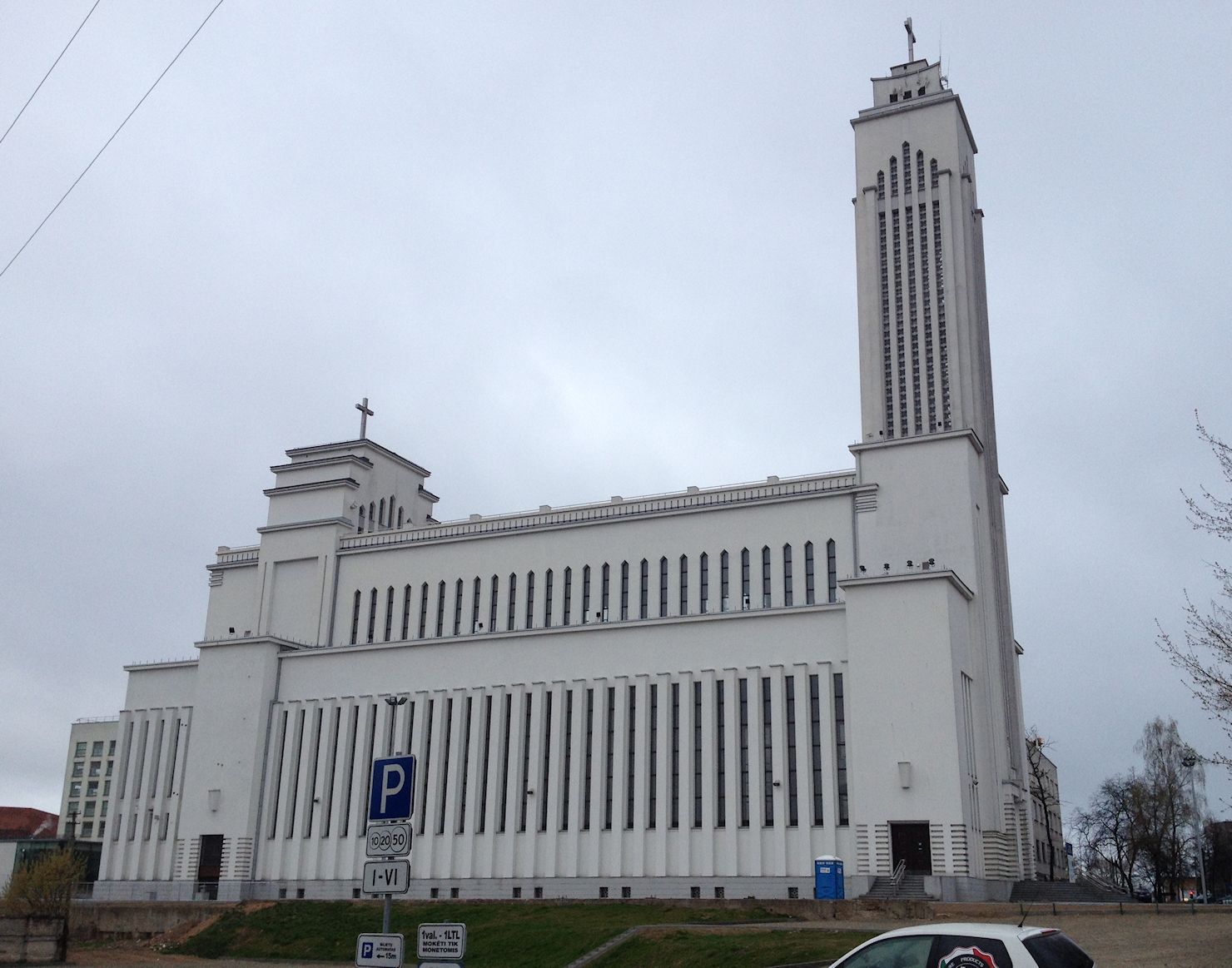
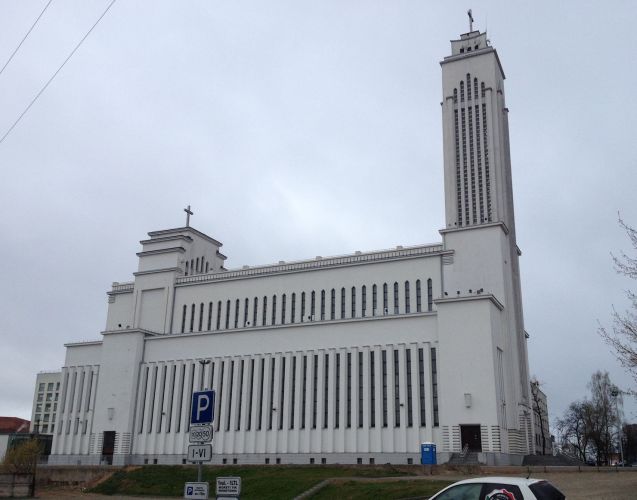
On a breakneck trip like this there’s no chance to linger but Kaunas clearly deserves a closer look, chiefly because of the monumental, stark white functionalist Christ’s Resurrection Church lit up on the hill to the north. We give ourselves one hour the next morning to at least set eyes on the major sights.

Work started on Christ’s Resurrection in the early thirties though the Catholic Church didn’t take possession until well after Lithuanian independence, in 2004. In the meantime it was used as a storehouse by the Nazis and as a radio factory by the Communists. From 12:00, for a nominal fee, you can climb up to the roof for apparently the best view of the city.

Also by Karolis Reisonas is the equally impressive Vytautas Great War Museum further down the hill. Between them is more 1930’s architecture than I’ve ever seen in one place – shops, offices, factories and houses – in various stages of repair/disrepair, all with a that Moominy Scandinavian ‘luxurious rigour’.

The limited time means we miss the especially notorious former Jewish ghetto in the west of the city centre, but also the mediaeval old town, and the confluence of the Neris and Nemunas, the two massive rivers around which the city is built. If you haven’t been, Kaunas is a must see.

7

Amazingly refreshed and rejuvenated it’s time to set off on the 350 mile Via Baltica, due north to Tallinn, the Estonian capital, via Riga, the Latvian capital. Very roughly, each country takes a third of that distance.

The road is still (mainly) single lane but much wider than before, with a thick margin at the edges. By convention it seems, vehicles – truck, cars and horse drawn carriages – hook their nearside wheels over the white line when somebody wants to pass. Regularly there are three abreast at any one time, sometimes four.

Quite a few of these countries claim to have the most dangerous roads in Europe. In truth they were all eclipsed last year by Romania on 92 deaths per million inhabitants (compared to the UK on 29). Poland dipped to 87, Lithuania to 85 and Estonia to an impressive 61. Latvia rose one point to 86.

The thing they have in common is an undeveloped – single lane – road network. You can imagine a bust headlamp bulb having disastrous consequences at night.

Quickly we learn there’s a dangerous similarity between the words go! and no! Also that rushing up behind every clump of traffic on a mission to overtake is the worst possible thing to do. Trucks are great but staring at the back of one the whole time ain’t my idea of a holiday.

A brief stretch of dual carriageway heading into Panevezys

A brief stretch of dual carriageway heading into Panevezys

As far as we can see Lithuania is totally flat with few trees (33% is forest; it tops out at 965ft in the east). Along with that comes an epically big sky.

Lithuania actually has two motorways, the 195 mile A1 from its major port Klaipeda in the west to Vilnius, the capital, near the Belarus border in the east. The A2 stretches 85 miles north west from Vilnius to Panevezys, the fifth biggest city and industrial centre.

Via Baltica passes through Panevezys too, 60 miles from Kaunas. Slatted-wood houses line the road. The impression is of a wilderness Scandinavian or Alaskan township, not a city of 100,000 people, like it only comes into its own under a thick layer of snow.

Latitude-wise we’re on a par with Newcastle in the UK but in winter it regularly reaches -20 degrees here. Further east in Lithuania, -45 degrees is not unknown.

We’re on a tight timetable. In a few years, maybe, there’ll be a bridge/tunnel between Tallinn and Helsinki. For the time being there’s a ferry service which takes two hours. To give ourselves a chance to find somewhere decent to stay in Helsinki we need to make the six o’clock boat.

Those with more time should check out the Curonian Spit, the sixty mile long thin strip of sand dunes south of Klaipeda, shared with Kaliningrad, a World Heritage Site, which cuts off the Curonian Lagoon. Fifteen miles north of Klaipeda is Palanga, summer-party central. Also, the Hill of a Thousand Crosses near Siauliai, fifty miles west of Panevezys, has been described as one of the world’s strangest monuments. Then there’s Vilnius itself with its medieval old town.
8

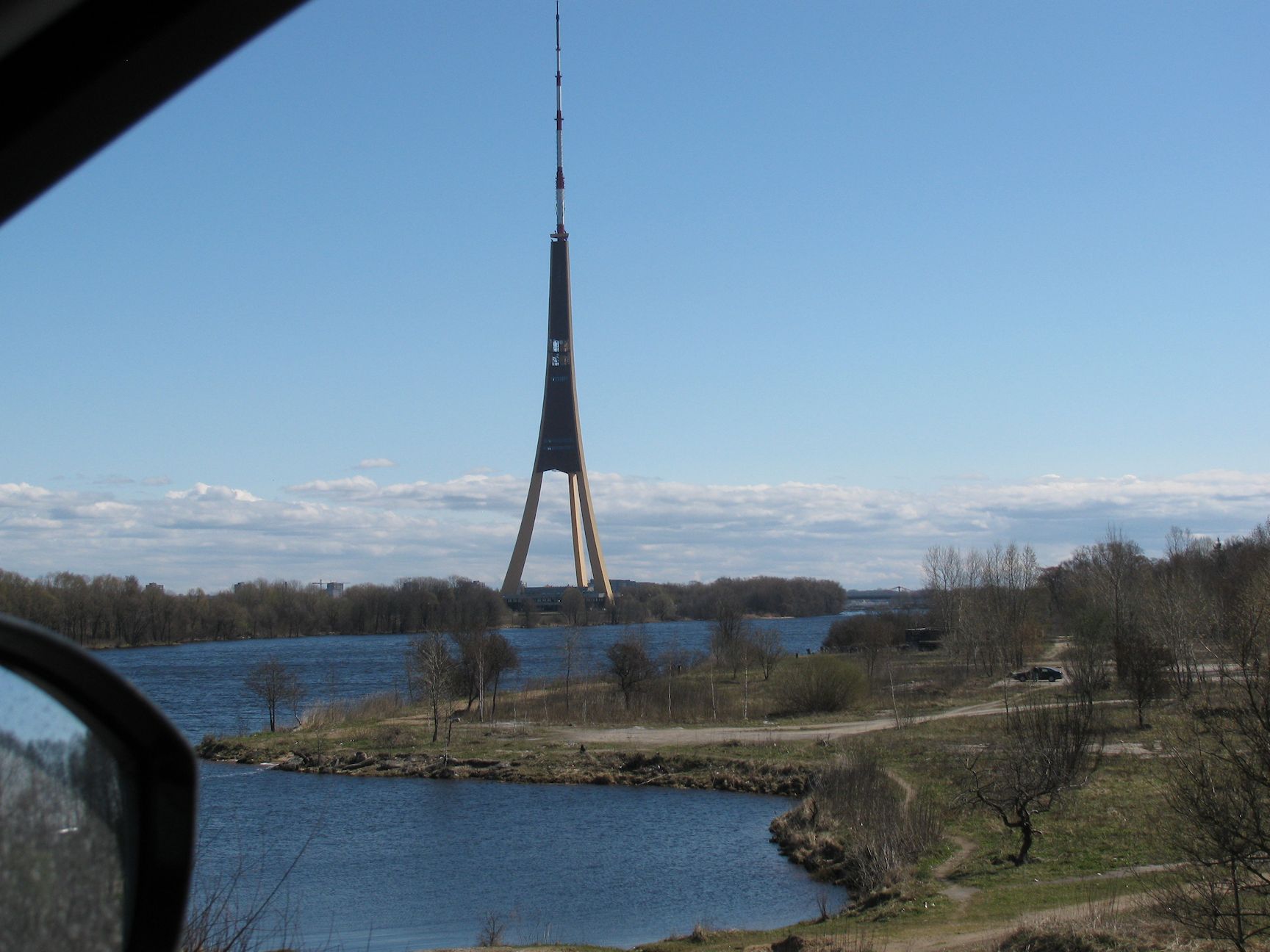
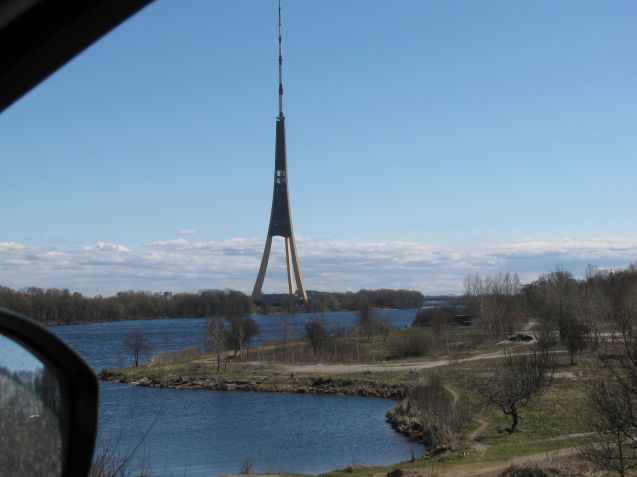
No way are we going to miss Riga, the unofficial capital of the Baltics. There’s a bypass but Via Baltica cuts through the east of the city centre, first on the super lumpy six lane Commie Salu Bridge over the Daugava, past the stupendous 1,209ft tripod Radio and TV tower.

Naturally there are only fleeting glimpses of this terminally hip city – the streets lined with posters from the recent Pet Shop Boys concert and Kate Moss-alikes in fur chubbies, bed hair and handbags looped over forearms – principally the sinister stacked tower of the Stalin-era Academy of Sciences. Also, just open to the public, is the former KGB headquarters, complete with ‘shooting room’.

Unlike the other former ‘eastern block’ countries like Slovakia, Poland, etc, the Baltics were Soviet Socialist Republics (SSRs), actually inside the USSR itself. That made leaving much more difficult – Russian troops eventually departed three years after independence in 1994. It also means that (apart from Lithuania) they have sizeable ethnic-Russian minorities: 29% in Latvia and 26% in Estonia, and much more, even majorities, in the major cities.

Understandably it made them all very nervous when President Putin vowed recently to protect all Russian-speakers ‘wherever they live’.

The original plan had been to stay the night in Jurmala, a beach resort just west of Riga with 21 miles of white quartz sand. It was a firm favourite of both Khrushchev and Brezhnev. We were hoping to bag a room in the concrete (but recently renovated) Baltic Beach Hotel.

Instead we bump through the northern suburbs of Riga on hilariously rutted roads.

batic

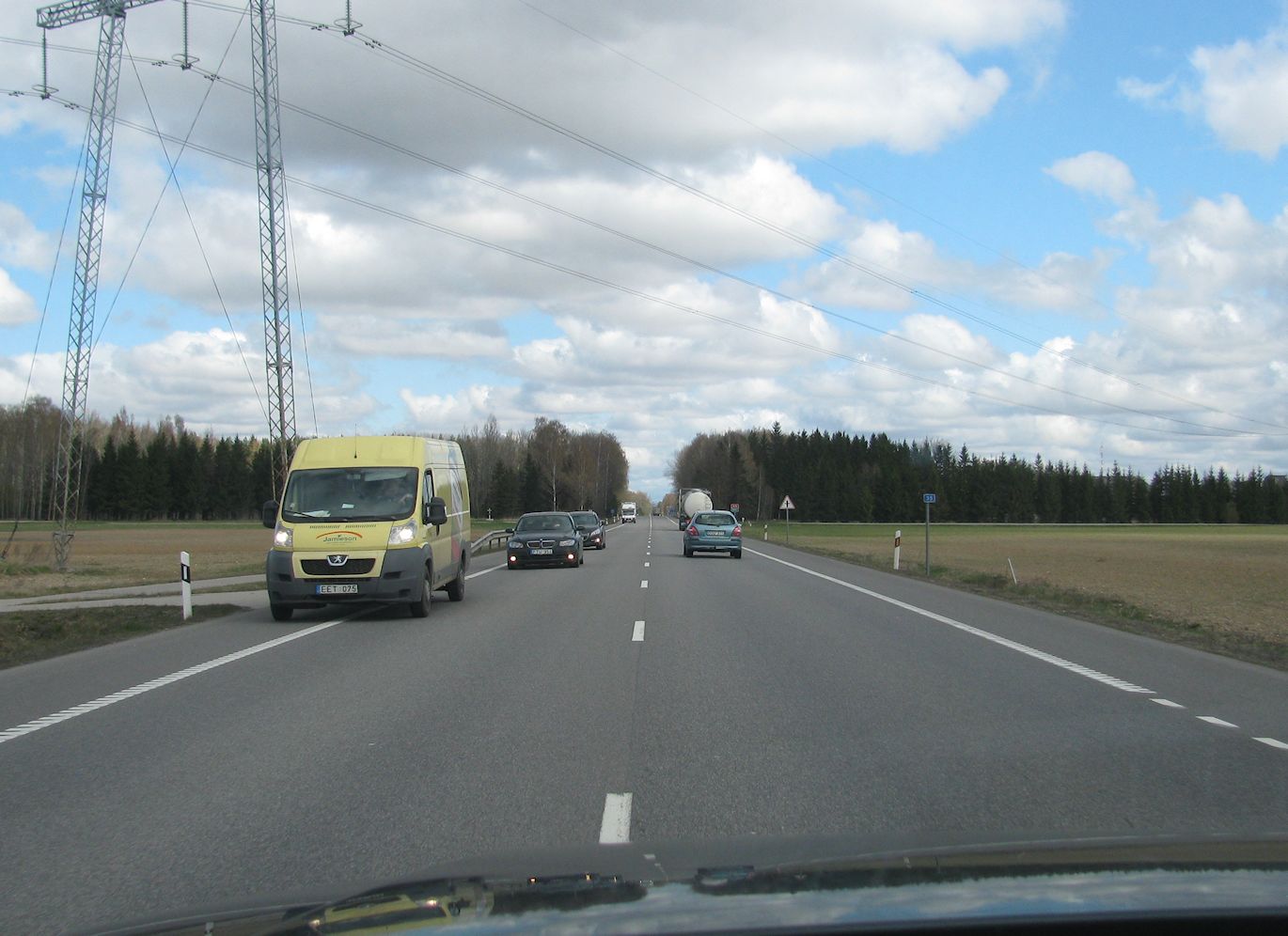
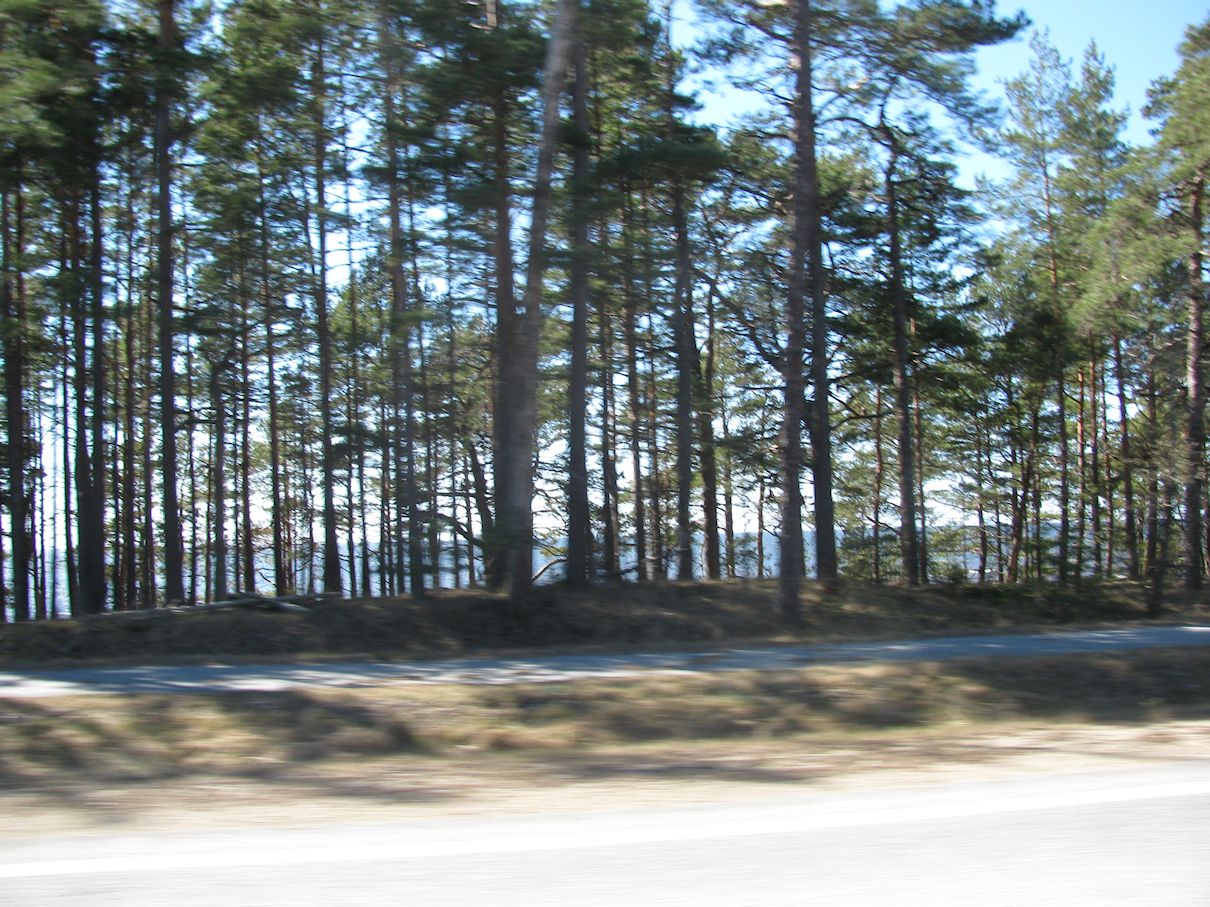
North of Riga, Via Baltica runs right along the coast. At various times we can see the sea through a thin border of trees. At one point we stop for a wee and hear the waves lapping. Time is marginal but doable, we just need to keep it above 100kph. Towns and villages are very sparse on this last stretch which helps a lot.

Incredibly, on 23 August 1989 – to mark the 50th anniversary of the Ribbentrop-Molotov Pact when the Baltics were taken under the Soviet ‘sphere of influence’ – two million people joined hands in a chain stretching 400 miles from Vilnius to Tallin via Riga (not actually following Via Baltica until this final approach to Tallinn). What I find almost as incredible is that I have no recollection of this happening at all.

I was also ignorant of the fact that Estonia has the world’s most comprehensive network of electric vehicle fast chargers. For €30 a month you can charge up as much as you like, to 80% in 30 minutes, at any of the 160 chargers in every corner of the country.

It’s all part of Estonia’s national plan to position itself at the cutting edge of technology. As well as a president who is very (inter)active on Twitter – @IlvesToomas – Estonian entrepreneurs also invented Skype and Kazaa and the whole country is a giant (free) wifi hotspot. They even vote online.

If we didn’t see much of Riga then we see virtually nothing of Tallinn at all, despite driving right through the city centre, so focused are we on catching the boat. In the end, after stop start traffic, we make it with minutes to spare.

There are two ferry terminals, one for Tallink in the east, the other for Viking Line, St Peter Line and Eckero Line in the west. After a few moments panic we brave the Viking Line check in booth. She shrugs her shoulders and flogs us a ticket. Less than five minutes after that we’re on board. It’s packed this random Wednesday in mid-April, possibly with Easter shoppers, and costs €97.

.

Also see Driving across Finland and Driving down Sweden’s east coast.

.

From the Channel to east Belgium: E40 v E42 v N90

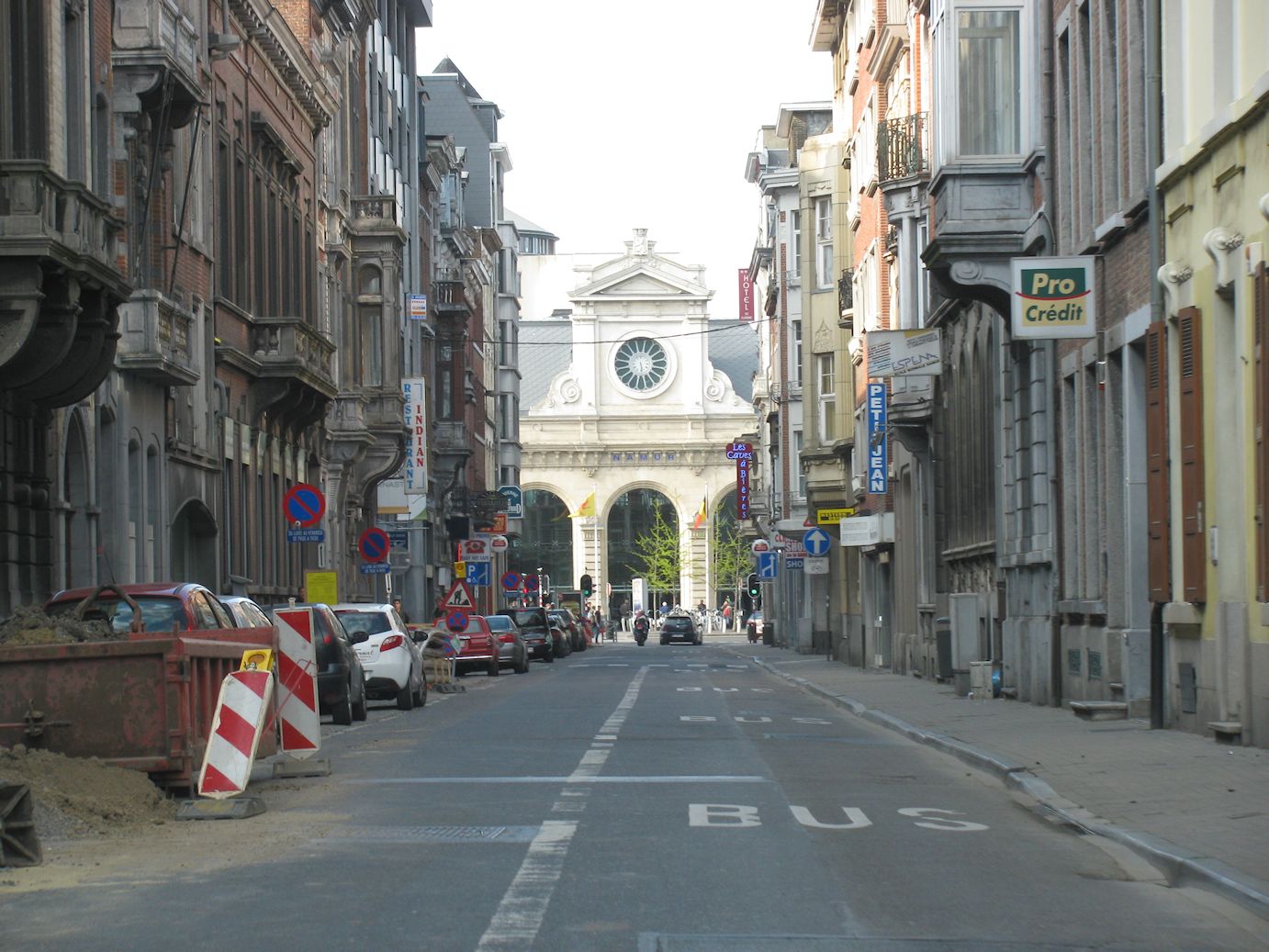
Comparing and contrasting routes to eastern Belgium from the Channel Ports, the E40 via Brussels, E42 via Charleroi, and the N90 along the Meuse.

.

N90 Mons to Liege on the way into Namur

N90 Mons to Liege on the way into Namur

We hear lots of complaints about Belgian motorways; specifically that they are crowded, fast and, well, a bit scruffy. Personally we love them but maybe that’s because we’re always buoyed by that ‘holiday!’ feeling. And we’ve driven them so often by now we’re fully acclimatised.

Drivers heading from the Channel ports to eastern Belgium – to Liege, the Ardennes forest, The Belgian Grand Prix track at Spa Francorchamps, or on to Maastricht, Aachen, Cologne, Trier or Luxembourg – basically have two motorway options.

Either the E40 via Bruges, Gent and Brussels. This carries the risk of congestion on the busy R0 Brussels Ring Road though E40 after Brussels is wide, flat, smooth, straight and much quieter.

The other way is the E42 via the (toll free) A25 to Lille and carrying on east via Tournai, Mons, Charleroi and Namur (for Luxembourg turn onto E411 at Namur).

N90 in central Namur

N90 in central Namur

SatNavs send you the Brussels way because it’s shorter, 184 miles v 201 miles between Calais and Liege. Of the two, to our mind, the E42 is better. It’s quieter (apart from Lille at rush hour) and, lined with trees, has much nicer scenery.

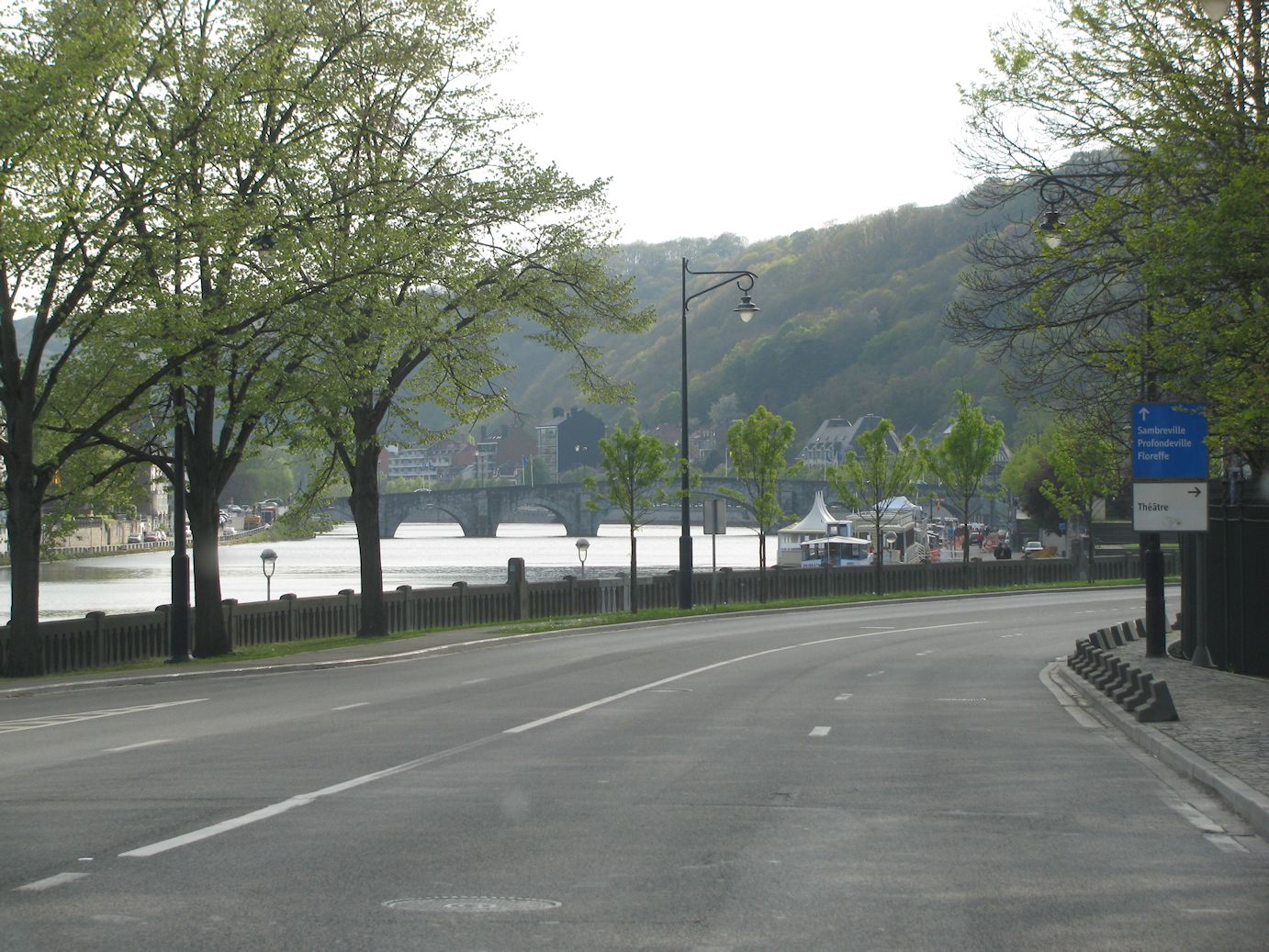
If speed is not of the absolute essence however consider the N90. It runs parallel to E42 for the ninety miles between Mons and Liege. The latter half especially runs right beside the vast River Meuse in a narrow valley. It’s even lined with sheer cliffs from time to time (yes cliffs, in Belgium!).

Okay N90 is not manicured perfection from one end to the other. There are occasional signs of industry, it’s mostly single lane and, of course, it goes right through all the towns along the way. With the bulk of traffic on the E42 however, N90 is not a main transit route.

It’s the best of both world’s: you get a head start on the motorway but are quite quickly on the kinds of roads that probably brought you over here in the first place. Definitely worth a try. If you don’t like it, the motorway is never more than a couple of miles away.

.

Dover Travel Centre Closing – Easy Max Autobahn

Dover presses on with plans to tidy up the port entrance, among other things. The A2 Magdeburg-Berlin is recommended for high speed autobahn runs. Italy flogs off its government cars, Rome blocks traffic to prepare for the Popes’ canonisation and Kosovo sets out plans to ensure fuel quality across the country.

.

DOVER TRAVEL CENTRE CLOSING

Ticket sales now at check in booths only; new large holding area for trucks

The Port of Dover Travel Centre highlighted. Photo via @Port_of_Dover

Photo via @Port_of_Dover

The Port of Dover Travel Centre closes permanently next week.

The thirty year old ticket hall, just in front of the A2 Jubilee Way flyover at the entrance to Eastern Docks, shuts its doors for the final time at 20:00 on Wednesday 30 April.

After Wednesday, all car ferry tickets must be bought direct from the check-in booths or in advance on-line.

The port reception, foot passenger ticket sales, toilets, café, etc, will be relocated to a new Arrivals Area, behind and to the right, under the flyover.

The Travel Centre is being demolished to tidy up the entrance, make way for more streamlined entrance and exit lanes, and a big new ‘temporary holding area’ for trucks during delays. This is phase five in a nine phase project to reorganise traffic flows in the port which should be finished by the end of next year. Read more here.

In February, Dover Harbour Board announced a more ambitious long term plan to relocate all cargo facilities to the Western Docks on the other side of town to free up more space for ferry services.

It is claimed that the ‘Western Docks Revival Scheme’ could create 600 new jobs, secure 140 existing jobs and spearhead a wider revival of Dover itself. The plans also include a new marina. DHB held a workshop event last week to discuss the plan with locals though the cost and timescale are still yet to be announced.

We say: while the Travel Centre is a monstrous carbuncle the opposing P&O and DFDS desks did allow for some quick comparison between the prices of last minute tickets (which we moaned about earlier this week). To avoid being ripped off it is now more important than ever, if possible, to buy tickets before arriving at the Port.

.

Easy Max Autobahn: there are plenty of places to test you and your car's performance on the derestricted German autobahn network, obviously. Our favourite is the east-west A2 between Hanover and Berlin, particularly the latter stretch Magdeburg-Berlin. It's so wide, flat and dead straight in many places even Grandma would feel comfortable with pedal to the metal to see what this baby can do.

Easy Max Autobahn: there are plenty of places to test you and your car’s performance on the derestricted German autobahn network, obviously. Our favourite is the east-west A2 between Hanover and Berlin, particularly the latter stretch Magdeburg-Berlin. It’s so wide, flat, smooth and dead straight in many places even Grandma would feel comfortable with pedal to the metal, seeing what that baby can do.

.

roundup: ITALY. All 52 official cars put up for auction on eBay last month have been sold. Another 100 – mostly prestige makes in fetching dark ‘Auto Blu’ – are due to go under the hammer, check ‘Le Auto Blu del Governo’. Meanwhile, Rome is best avoided this weekend and next week ahead of the Popes’ canonisation. Traffic restrictions are not lifted until 4 May at 19:00. KOSOVO. In an attempt to ensure consistent and high fuel quality central government will take over the regulation of petrol stations from local authorities. Unleaded 95 currently sells for (equivalent) €1.200, diesel €1.190.

.

The Last Hitlerbahn – Tesla Collection

The last remaining stretch of original autobahn in Germany will survive for a while longer. The world’s biggest single collection of Teslas is in Norway. The road safety rankings for Europe have now been published in full – did the Netherlands pip the UK? Not everybody is happy about Bulgaria building Europe’s longest road tunnel. Appeals after a bizarre road accident in Germany, and new benefits for EVs, plus an ongoing mobile phone operation in Ireland.

.

THE LAST HITLERBAHN GETS A STAY OF EXECUTION

History to be covered over eventually but not removed

The A11 Berlin-Szczecin northbound between J5-4. Photo @DriveEurope

The A11 Berlin-Szczecin northbound between J5-4. Photo @DriveEurope

Plans to renovate the last original autobahn in Germany have been postponed until 2017/18.

The stretch of the Berlin-Szczecin (Stettin) A11 between junctions five and four, Uckermark-Schmolln, is still the original concrete strip surface laid in 1936.

It was announced last year that this section would be renovated next year ‘if funds could be found’. The surface is now so rough speed is limited to 80kmh and, characteristically, there is no hard shoulder. There are also five original bridges in need of repair.

However, Helmut Schneider from the Arbeitsgemeinschaft Autobahngeschichte (Autobahn History Association) told @DriveEurope this week the work on the northbound lanes has been postponed until 2017 and on the opposite carriageway until the year after.

The surface will not be broken up and taken away. Like the rest of the A11 – and many other autobahns – the original road will be buried under a new layer of asphalt.

Opened in 1936, known as Berlinka, A11 was to connect Berlin and Konigsberg (now Russian Kaliningrad) though the Polish government objected to the road across its territory and it was never completed. Apart from some single lane sections in east Poland, the only four lane stretch is between Berlin and Stettin.

Outside of Germany, the A18 – between the Polish A4 (Wroclaw) and the German A15 at Cottbus – still has the original surface of the former Reichsautobahn 9 Berlin-Breslau (Wroclaw), but only the southbound carriageway.

Inside the German border the only other stretch of original autobahn is the A6 near Kaiserslautern though this section is now behind the perimeter of the US Ramstein Airforce base perimeter and off limits to the general public.

.

roundup: NETHERLANDS. Long awaited road safety stats put the Netherlands in third place in Europe, on 33 fatalities per million inhabitants, behind Sweden on 28 and the UK on 29. All other stats were published last month. BULGARIA. As expected, environmental groups are angry about plans to build one of Europe’s longest road tunnels through the Kresna Gorge on E79 between Sofia and the Greek border. GERMANY. An appeal for information after a man lying on a pedestrian crossing was run over and killed by a truck near Bad Oeynhausen in north central Germany. Meanwhile, electric cars will be able to use bus lanes it has been announced, possibly plug-in hybrids too. IRELAND. Police have already nabbed over 300 drivers on day one of a countrywide mobile phone operation. Continues tomorrow.

.

Meet Jens from Narvik, northern Norway, 125 miles inside the Arctic Circle and owner of the world’s largest collection of Teslas: six Roadsters and one Model S. He owns that many because each of his six adult children need a car when they visit rather than him needing spares for when the batteries run out a la FormulaE racing cars. Actually he extols the virtues of EV traction in snowy conditions, says the winter range is almost the same as the summer range and that the Roadster was able to cope on a recent visit to -40 Sweden when the trains couldn’t operate and the diesel in the buses froze.

Meet Jens from Narvik, northern Norway, 125 miles inside the Arctic Circle and owner of the world’s largest collection of Teslas: six Roadsters and one Model S. He owns that many because each of his six adult children need a car when they visit rather than him needing spares for when the batteries run out a la FormulaE racing cars. Actually he extols the virtues of EV traction in snowy conditions, says the winter range is almost the same as the summer range and that the Roadster was able to cope on a recent visit to -40 Sweden when the trains couldn’t operate and the diesel in the buses froze.

.

Last Minute Muggin(g)s – Via Baltica

LAST MINUTE MUGGIN(G)S.

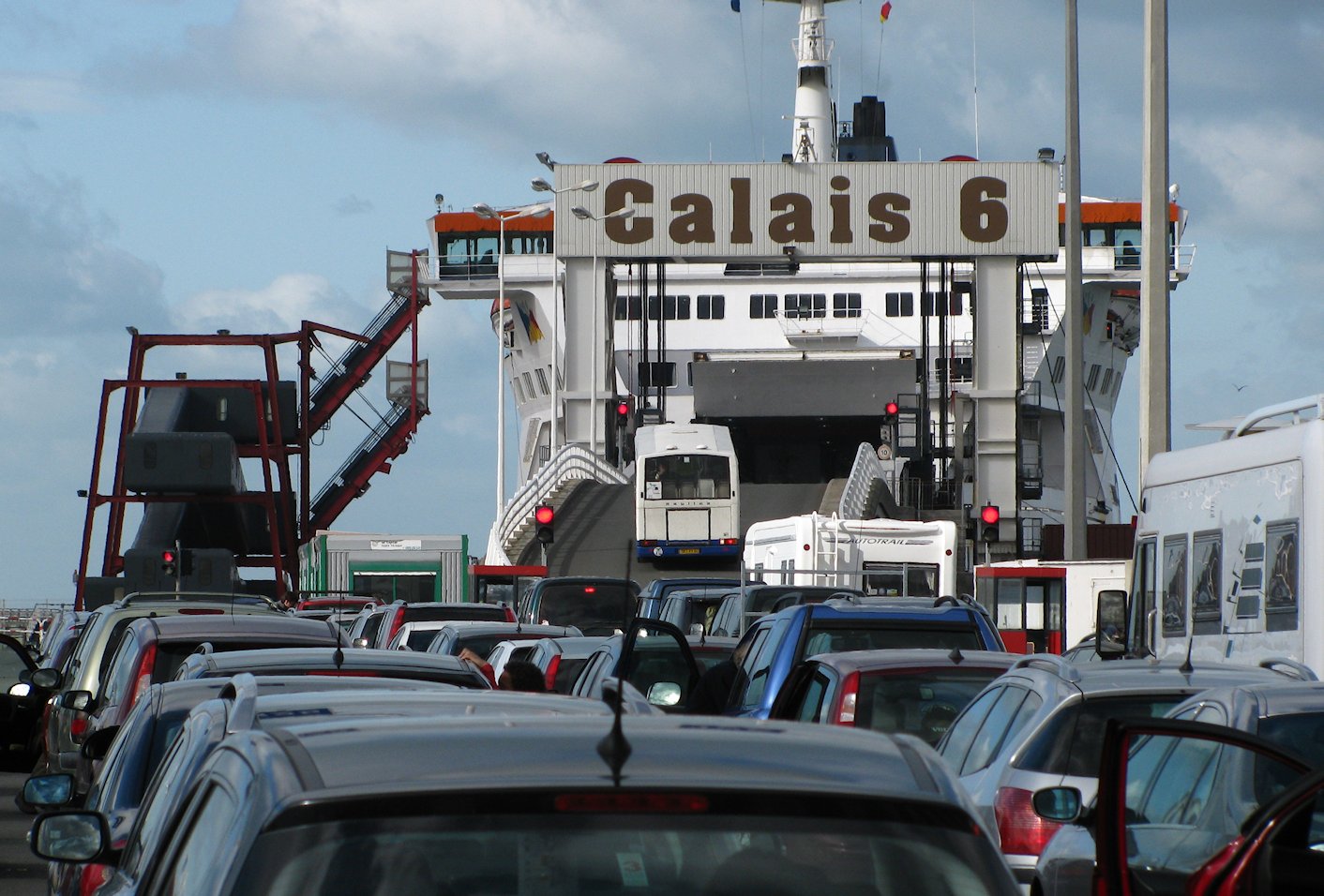
Cross Channel operators put the brakes on otherwise totally flexible driving holidays.

Photo @DriveEurope

Photo @DriveEurope

‘Book as early as possible to get the best prices.’ There’s a hardly an article written about crossing the Channel that doesn’t feature that dull, self-evident sentence.

Cliché or not it’s painfully true as we, who specialise in un-booked trips, know too well.

Pulling up out of the blue at the Eurotunnel terminal last Sunday lunchtime we were charged £159 to cross to France. Almost as bad, coming the other way last spring on the DFDS Dunkirk-Dover boat cost £115. The £165 we paid to come back from the Hook of Holland with Stena Line in autumn 2012 was £40 more than the same crossing the next day.

It won’t be news to the ‘demand management’ budget airline generation that the closer the departure the more the ticket costs. Passengers wanting to travel have deals thrown at them left right and centre (from £59 Eurotunnel, £29 DFDS). Passengers needing to travel are at the operator’s mercy.

The deep irony is that otherwise road trips are the most flexible kind of holiday imaginable. By imposing rigid start and finish times the cross-Channel industry finds itself sucking the spontaneity out of the entire enterprise – and charging customers through the nose for the privilege of soaking up their excess capacity.

It doesn’t have to be like this. We don’t book hotels in advance either. In ten year’s travelling we have yet to identify a single instance of being ripped off, even when stood at reception past ten o’clock in the evening.

Oh well. Until someone innovates a more sophisticated successor to demand management – like Groupon-style daily special offer add ons – we all just have to put up with it. Potential customers will continue to cower at home rather than chucking their bags in the car when the sun shines because they are fearful of the carnage at check-in. That’s in nobody’s interest.

To be fair some operators are building a kind of flexibility into their standard fares. Last year P&O for instance started allowing passengers to catch the boat before or after for no charge. That’s great as far as it goes.

Otherwise, try anything to avoid buying a ticket at the port. Even those bought just a few hours in advance are cheaper than those from over the counter, in our experience (though most operators won’t sell tickets less than two hours before departure). Our fare on the DFDS Esbjerg-Harwich boat last week, bought two days in advance, was the same as it had been the week previously.

.

Via Baltica:

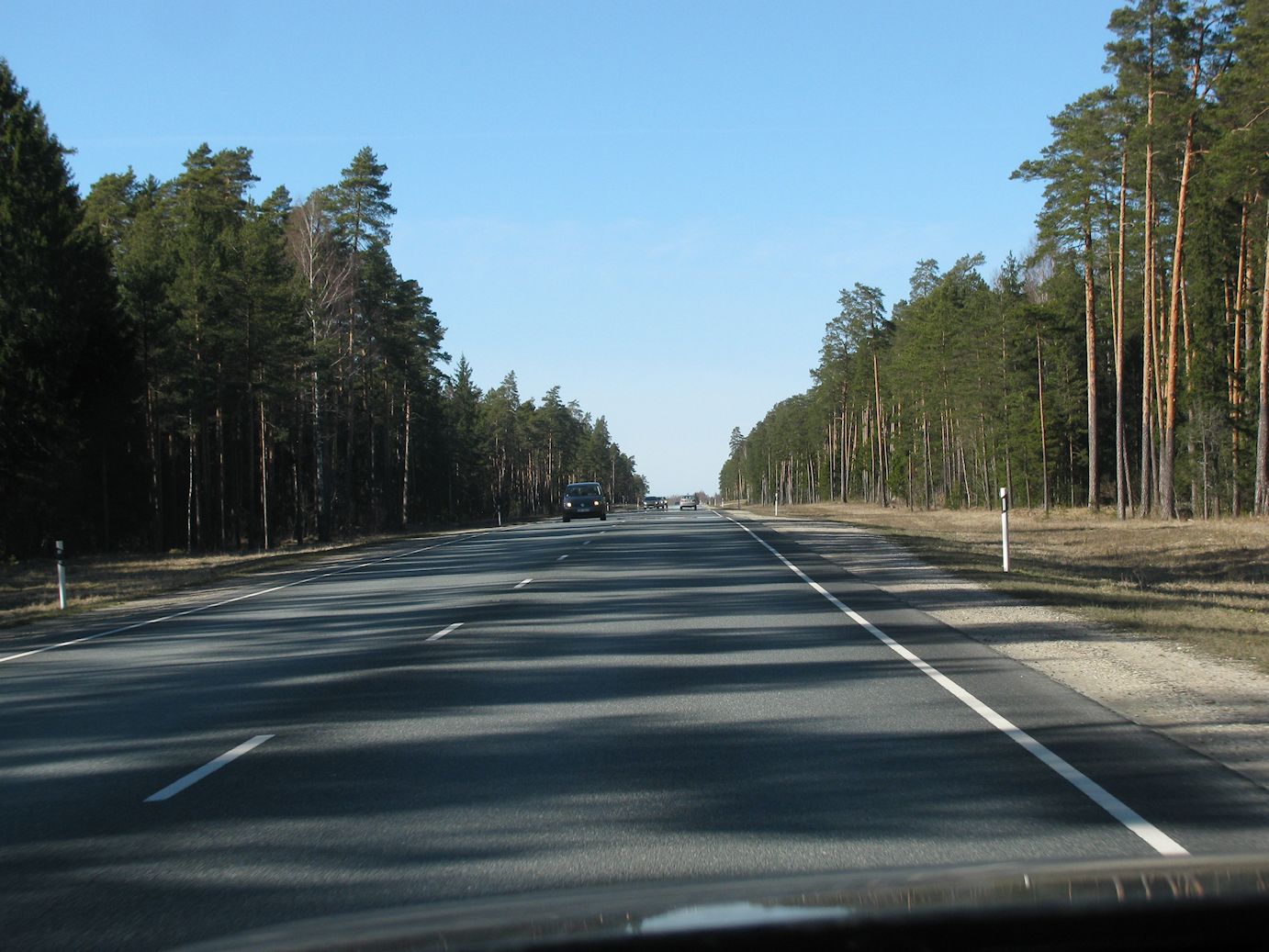
The 600 mile stretch of E67 between Warsaw and Tallinn (overall E67 runs 1,040 miles Prague-Helsinki) via Kaunas in Lithuania and Riga, capital of Latvia, is known as Via Baltica, a trade and tourist route that, north of Riga, runs right beside the Baltic Sea. It’s single lane main road almost all of the way but, after a recent EU grant, is in very good condition. The landscape, flat in the south, hillier in the north, is not spectacular, lined with forest mostly, but in the dappled sunshine, with some very interesting places to visit, it makes for a fine drive. Photo @DriveEurope.

.

France Road Deaths Rise 28% – Oresund Top Toll Tip

NEWS: The new French Prime Minister made a canny move just ahead of the latest road safety figures. Plus, a good way to lessen the pain of expensive Oresund Link tolls.

.

FRANCE ROAD DEATHS RISE BY 28% IN MARCH

Govt blames the weather and one-offs but the rise was predicted

Manuel Valls (r). What out Monsieur Le President, he's right behind you!

Killer moves: Manuel Valls (r). Watch out Monsieur Le President, he’s right behind you!

Manuel Valls jumped ship at exactly the right moment.

The former Interior Minister, responsible for road safety, was promoted to Prime Minister earlier this month after disastrous local election results for the ruling party.

The move came shortly before it was announced – at 16:30 on the day before Good Friday – that roads deaths had increased by a hefty 28% in March 2014 compared to March 2013.

The accompanying statement from Securite Routiere says, ‘This sudden increase in road accidents can be explained by a particularly mild cold weather which favoured travel compared to the snowfall and storms in March 2013. It is also linked to a cyclical factor: lower fuel prices which encourages more vehicle use. It’s finally down to some particularly serious accidents that have devastated some regions.’

It also makes the point that on a rolling annual basis road deaths are down 6.3% overall.

However, this large increase in road deaths was not unexpected. We predicted that the March results would be telling.

March 2013 saw the introduction of unmarked police speed camera cars which immediately led to large falls in road deaths, peaking at a cut of 29.5% in May 2013. However the effect fell away through the rest of the year. By this January and February road deaths had actually started to rise again compared to the same months in 2013. Assuming this trend continued a big increase in March was inevitable.

The question, as ever, is what the police and authorities will do next? The press may be prepared to treat last month’s figures as an unfortunate blip but the likely prospect is of even bigger rises in the months to come.

.

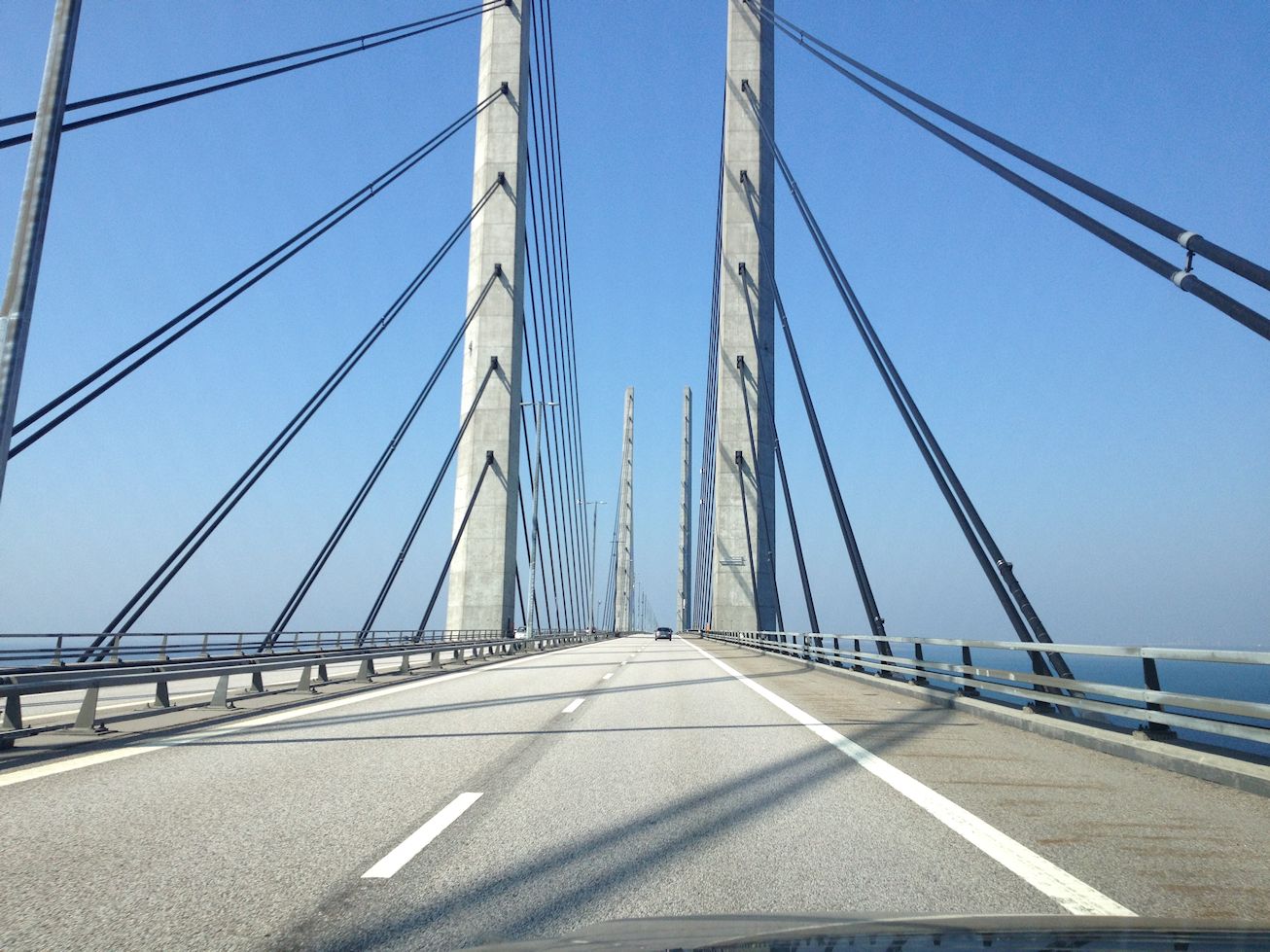
Oresund Top Toll Tip: the Oresund Link bridge/tunnel between Malmo in Sweden and Copenhagen in Denmark might be spectacular but it's also fearsomely expensive: €46. However, you can lessen the pain somewhat by part-paying the toll with whatever left over cash you have be it Swedish or Danish kronor.

Oresund Top Toll Tip: the Oresund Link bridge/tunnel between Malmo in Sweden and Copenhagen in Denmark might be spectacular but it’s also fearsomely expensive to cross: €46. However, you can lessen the pain somewhat by part-paying the toll with whatever left over cash you have be it Swedish or Danish kronor. Photo @DriveEurope

.

Holiday Traffic – Another Nordic Fart Joke

The predicted heavy holiday traffic failed to materialise in the main. We look at the differences between what was expected, and what actually happened. Plus, another childish joke about the use of the word Fart in Nordic traffic circles.

.

HOLIDAY TRAFFIC HOTSPOTS.

Busy day expected particularly Switzerland and Austria.

holiday traffic

Predicted.

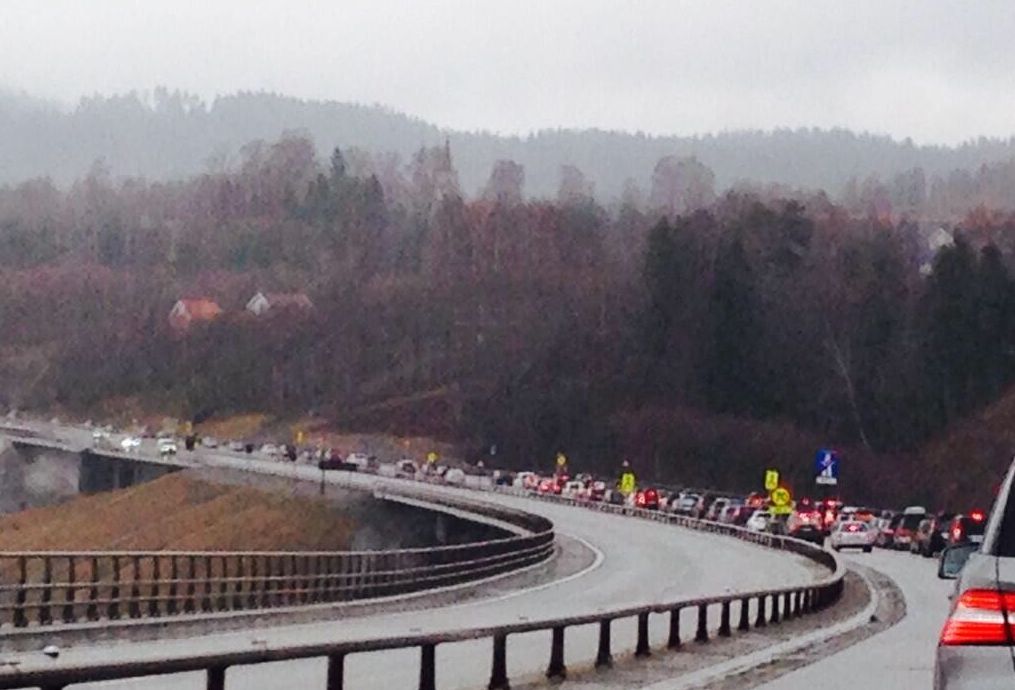
France is code orange today according to Bison Fute, one down from the heaviest traffic, as drivers return home from the Easter holidays. The busiest roads will be the ones from the coasts and the South towards Paris, particularly the A7 from Lyon.

Meanwhile, the busiest day of the holidays so far is expected in Belgium. The A10/E40 returning to Brussels from Ostend is bound to be crowded later. Serious jams were not expected but good weather means the coastal resorts have been busy this weekend.

The heaviest traffic in Germany was in the middle of last week. Today will not be as bad but as well as traffic coming back across the border from Austria, the ADAC says the busiest parts of the country will be across the north.

It’s a black day – the worst – in Switzerland for traffic heading north. Inevitably this means long queues and delays on the A2 at the Gotthard Tunnel, probably the A13 towards Zurich, A9 northbound to Lausanne via Montreux and A1 southbound to Geneva.

Similarly, today will see the bulk of holiday makers returning home from Austria. This means heavy traffic on the A12 Innsbruck to Munich via Kufstein border point, B179 Fernpass Reutte>Fussen and the S12/A14 to Bregenz/Lake Constance.

We’ll keep track of the traffic and update this page accordingly.

Reality.

There was a persistent delay of around half an hour on the A7 northbound from Avignon to Lyon in the late afternoon and early evening but otherwise French roads were remarkably clear all day.

The traffic predictions in Belgium however were spot on. The E40 from Ostend to Brussels has delays of an hour by the afternoon, much less than height of summer queues. Drivers had clearly diverted onto less obvious roads. The A2 eastbound to Namur saw delays of around thirty minutes while most other routes Brussels-bound from the coast were busy but not jammed.

The ADAC was also spot on about traffic in Germany. Roads across the north were fearsomely busy from late morning for the rest of the day. 

While the A2 northbound to the Gotthard Tunnel in Switzerland say the biggest delays on the Continent – an 11km queue, two hour delay formed by lunchtime and only started to recede by the evening – otherwise it was a normal day on Swiss roads.

Austria meanwhile was as dead as a door nail all day.

Quite what all this says about the popularity of Easter holidays in a post-recessionary EU – or how accurate traffic predictions for the coming supposedly busy weekend will prove to be – remain to be seen.

.

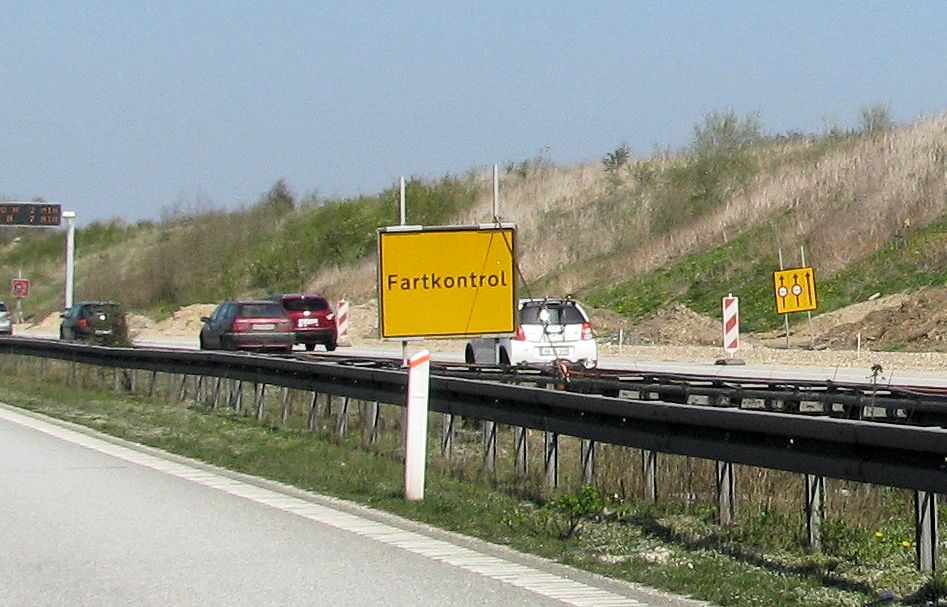
On the E20 south of Copenhagen, speed control during road works. Photo @DriveEurope

On the E20 south of Copenhagen, speed control during road works. These Danish emissions rules are getting really ridiculous. Photo @DriveEurope

.