Border Delays Return as EU Extends Controls

Border delays make a noticeable return as the EU authorises another six months of checks – but French controls are not included, and neither is the Brenner Pass.

Also, Brit seriously injured in wrong-way crash near the Nurburgring. Gumball arrives safely in Romania as next year’s route is announced. Formula E’s Moscow race cancelled over road closures and traffic management.

.

BORDER DELAYS RETURN AS EU EXTENDS CONTROLS

A further six months of possible border checks but France and Brenner not included.

bel

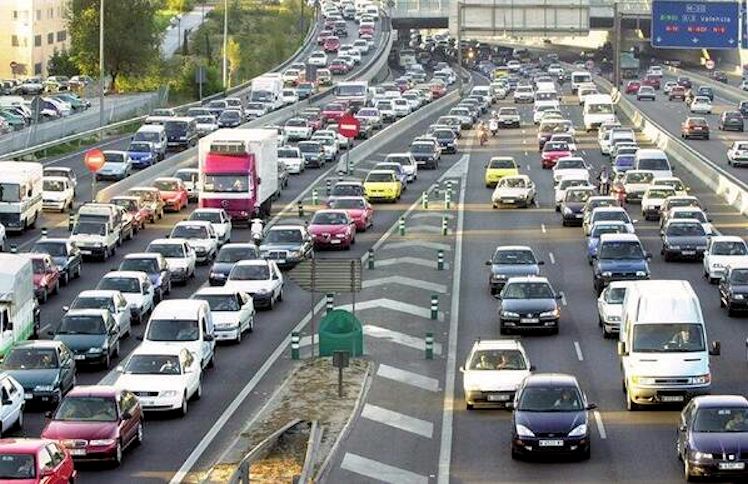
Border delays have not been an issue for some weeks, but as five countries are granted permission from the EU to extend checks, queues have magically reappeared.

They never completely went from the E17 Kortirijk-Lille border but have been noticeably present the past week with drivers waiting an average of around 20 minutes.

(A sudden border queue has been implicated in today’s coach and truck crash in which eight people were seriously injured.)

Most notably E19 Mons-Valenciennes, also in northern France, has seen long delays in the past couple of days, topping out at 60 minutes yesterday (Thursday).

The three motorway border crossings between Austria and Germany have been almost free flowing recently. But drivers at Salzburg, and on the A8-A3 towards Passau, have regularly been delayed for up to half an hour this week (and for 45 minutes at Salzburg today).

There has been no sign of queues on the Atlantic and Mediterranean motorway connections between France and Spain – but the Austrian border with Hungary has seen consistent new delays of 45 minutes.

On Wednesday, the EU authorised an extension of checks for a further six months, specifically at: the Austrian land borders with Hungary and Slovenia; German controls at the Austrian border; at Denmark’s ports and land border with Germany; at Swedish ports and the Oresund Bridge; and Norwegian ports.

French controls are in place – or have been – due to its national state of emergency, rather than a suspension of the borderless Schengen Zone code, at least until 26 May 2016.

The highly controversial proposed border checks at the Brenner Pass between Italy and Austria were not included in the Commission’s statement either.

The Commission says Brenner checks would have to be part of a separate notification, and would need to start the process from scratch. They had been due to start at the end of May.

update: EU Commission President Jean-Claude Juncker said on Saturday (7 May) that, ‘Everything that blocks the Brenner Pass will have not just serious economic consequences, but most importantly heavy political consequences,’ according to Euractiv.

At the same time, ‘No Borders’ protesters blocked the Brenner Pass road in the afternoon, and the railway line, in violent clashes with police which saw riot vans and tear gas deployed, the latest in several such scuffles.

.

bucharest

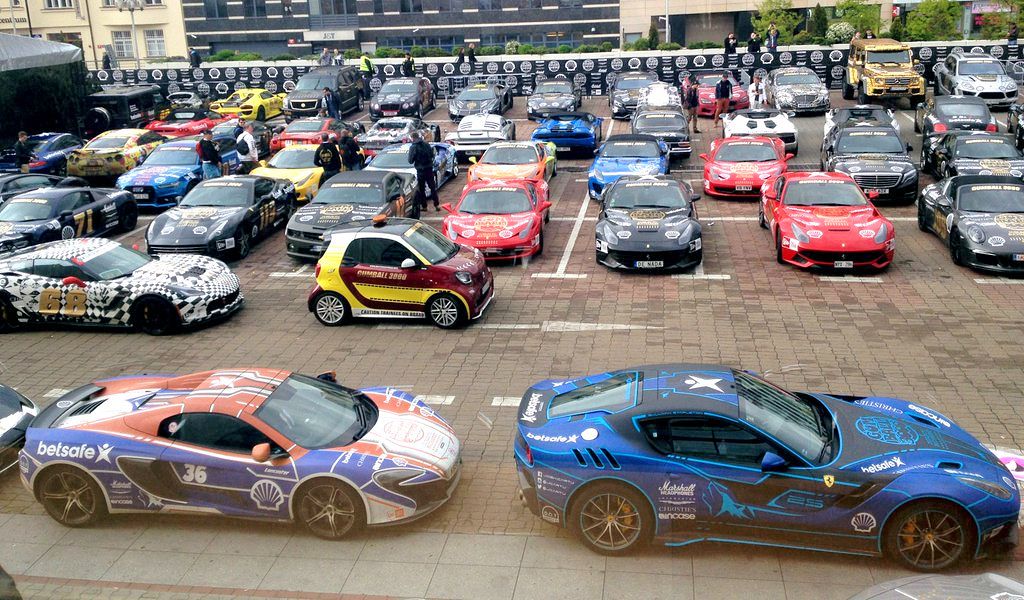
The Gumball 3000 arrives safely in Romania today – last stop Bucharest – after a fairly uneventful rally. Next year’s event has subsequently been announced – from Riga, capital of Latvia in the Baltic States, to the Greek island of Mykonos, just over 3000km in all. Photo @Betsafe

.

roundup: GERMANY. A British man suffered life threatening injuries in an apparent wrong-way accident near the Nurburgring this morning. The 38 year was airlifted to hospital after the head-on crash on the B412 at Kaltenborn, around 10km from the circuit reports The Local Germany. His silver BMW was pictured upturned at the scene. The other driver involved was taken to hospital with believed minor injuries. FORMULA E. The planned all-electric single seater race planned for Moscow on Saturday 4 June has been cancelled. The FIA says, ‘Together with the local authorities, Formula E has taken the decision not to race in the Russian capital due to recent and unforeseen circumstances related to road closures and traffic management.’ It’s not clear precisely what lies behind that statement – we’ve enquired with contacts in the Russian capital and will update as and when. Formula E tried unsuccessfully to replace the Moscow date with a race in Monaco, it says, meaning the season has been cut down to ten rounds including two races in London on 2-3 July and the next event in Berlin on 21 May.

.
Which is Worse: Gotthard or Mont Blanc?

Switzerland’s Gotthard comes out on top in the trans-Alp battle of the mega tunnels between the Channel and northern Italy – but there are other options too.

Also, deadly pile up after Belgian police shoot at smugglers on the A16 at Dunkirk. Gumballers rock up at the interesting Prague Hilton. Visiting drivers persistently ignore road closed signs in Iceland.

.

WHICH IS WORSE: MONT BLANC OR GOTTHARD?

Gotthard is cheaper and quicker but queues are more frequent if not as long.

Comparing and contrasting the Mont Blanc and Gotthard Tunnels, for queues and costs. More later.

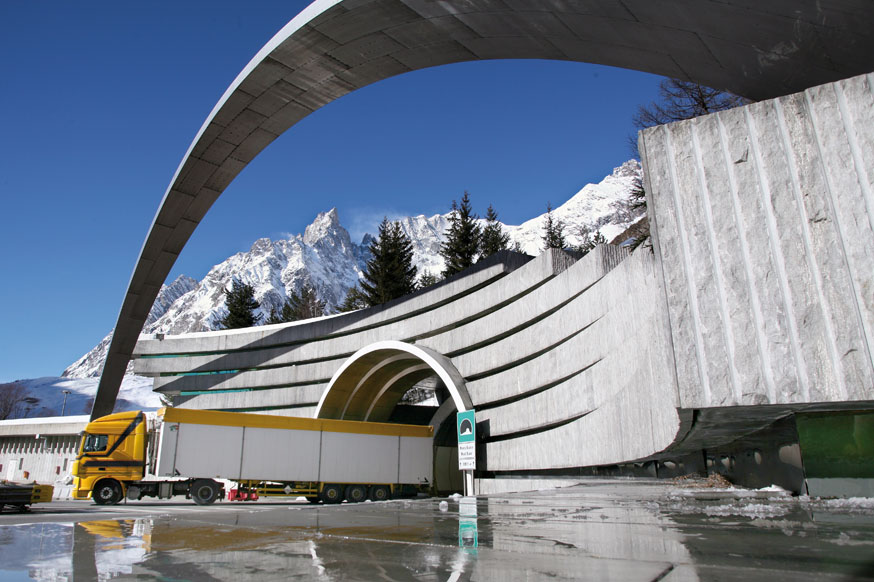
France-Italy Mont Blanc Tunnel, photo ATMB.com

On the 1000 kilometer journey between Calais and Milan, for instance, drivers have essentially two options to cross the Alps: the Mont Blanc Tunnel between France and Italy; or the Gotthard Tunnel in south central Switzerland.

The quickest way is actually through Gotthard – 1092km versus 1128km – but there is more to this than just mileage.

At busy times especially, a big consideration is delays: both are bottlenecks where two lanes funnel into one for the tunnel section. The queues at Mont Blanc are compounded by peage toll booths.

A one-way crossing of Mont Blanc comes in at €43.50 for a car (or €54.30 return within seven days).

Gotthard is free but to use Swiss motorways drivers need a vignette windscreen sticker which costs €40 – though that does last for the rest of the calendar year and the following January.

Meanwhile the road toll to reach Mont Blanc is €79.40 according to Autoroutes.fr compared to a relatively modest €50.60 to Gotthard via Strasbourg (or positively bargain €32 on the dual carriageway past Nancy).

So Gotthard wins hands down on costs, but which is more prone to delays?

Here the balance shifts back in the other direction. According to the Mont Blanc’s ‘jam calendar’ for spring 2016 – 23 March to 6 June – there are only four ‘black days’ heading from France to Italy, when traffic is at its worst, and only one in the other direction.

During the same period at Gotthard there are twelve black days (there is no specific Gotthard jam calendar but the busiest days in Switzerland always manifest as massive queues there).

You will have to take our word for it – Mont Blanc’s jam calendar is only published quarterly – but that same pattern is repeated through the rest of the year.

In terms of length of delay then Gotthard wins by a hair’s breadth. A 90 minute wait is typical on a bad day, but drivers often wait three hours at Mont Blanc.

There are other ways through the Alps and, anecdotally, all are less well trod than their headline counterparts, though of course they are not immune to queues.

The A43 Frejus Tunnel Lyon-Turin costs the same as Mont Blanc but may be a bit out of the way for some (and the one-way road toll from Calais is €75.30).

The Great Saint Bernard Tunnel in Switzerland, almost parallel to Mont Blanc, costs €29.30 (or €46.90 return with 30 days) and does not need the vignette.

East of Gotthard is the A13 San Bernardino Tunnel, the recommended detour when delays are more than one hour.

Update Sunday 8 May: queues today confirm and confound what we have been saying. The delay at Mont Blanc did indeed peak at three hours, this evening, before subsiding to 60 minutes at 23:00CET… It was much busier than usual at Gotthard however with a 14km queue which took 2h40 to drive through late afternoon, and was still 60 minutes at 00:40 on Monday morning. A13 San Bernardino topped out at 1h50. Meanwhile, queues at the Frejus and Great Saint Bernard tunnels peaked at 1h50 and 55 minutes respectively.

.

Gumballers stayed at the Prague Hilton last night, one of two Hilton hotels in the city (the other being in the old town). Overlooking the Vltava River and Stvanice island, the 11 story hotel built in 1989 has a roof top bar with views of the castle (and a large car park). Rooms start at around 2500CZK (€90) but can be double or triple that. Unusually, we really struggled to find a hotel in Prague when we rolled up last June, ending up at the comely Boscolo (with a live harpist at breakfast).

Gumballers stayed at the Prague Hilton last night, one of two Hilton hotels in the city (the other being in the old town). Overlooking the Vltava River and Stvanice island, the 11 story hotel built in 1989 has a roof top bar with views of the castle (and a large car park). Rooms start at around 2500CZK (€90) but can be double or triple that. Unusually, we really struggled to find a hotel in Prague when we rolled up last June, ending up at the comely Boscolo (with a live harpist at breakfast). Photo @HiltonPrague

.

roundup: FRANCE. Extraordinary scene on the A16 at Dunkirk first thing as Belgian police in hot pursuit of a UK-registered Audi fired twelve shots. The car lost control at 200kmh according to La Voix du Nord with two of the occupants – allegedly Iraqi smugglers – seriously injured. See pictures. There were also other injuries in the ensuing pileup involving six vehicles and a truck. Police has apparently been following the car since Bruges. A Dutch motorcyclist was reported killed after crashing into the back of the Dunkirk-bound queue. The westbound carriageway reopened mid-morning. DFDS had said delayed passengers would be accepted on the next available service without amendment fees, subject to availability. The eastbound carriageway has reopened. ICELAND. Roads authorities are at a loss on what to do about foreign drivers persistently ignoring road closed signs. Three tourist cars got stuck on the road to the picturesque Dettifoss waterfall this week alone reports Iceland Magazine despite a closed barrier (partially) across the road. A spokesman for the Icelandic Road and Coastal Authority said, ‘It seems to make no difference what kind of signs we put up, people still ignore them and drive around them if need be’. The climate in Iceland is not to be messed with – even in the spring – as this video of a motor home being blow over the top of a barrier this week proves. All info on Iceland roads is available in English, updated in real time at Road.is.

.

Gumball Across Germany On Manic Christi Himmelfart

Gumball 3000 could hardly have picked a worse day to drive through Germany (or the UK). But aside from traffic, it has been a relatively trouble free event, so far.

Also, Austria’s Grossglockner finally opens for the summer.

.

GUMBALL ACROSS GERMANY ON MANIC CHRISTI HIMMELFART

David Coulthard leads the charge sheet on Dublin-Bucharest rally.

They were hit by ‘disastrous’ bank holiday traffic on the way down to London and it looks like Gumballers will suffer the same problem in Germany. The ADAC warns of ‘very heavy traffic congestion’ today ahead of the Ascension Day holiday tomorrow. The only hope is to set off early as the worst queues start mid-afternoon. But with roughly 800km to cover between Europa Park and Prague via Bodensee, jams will be almost impossible to avoid - though Gumballers should be heading in the opposite direction. Normally participants can chose their own route. However, on their passage through Germany last year, drivers had to stick to a set route, and not exceed 130kmh. Traffic will also be heavy in France and Switzerland today, especially the Mont Blanc and Gotthard Tunnels. See more.

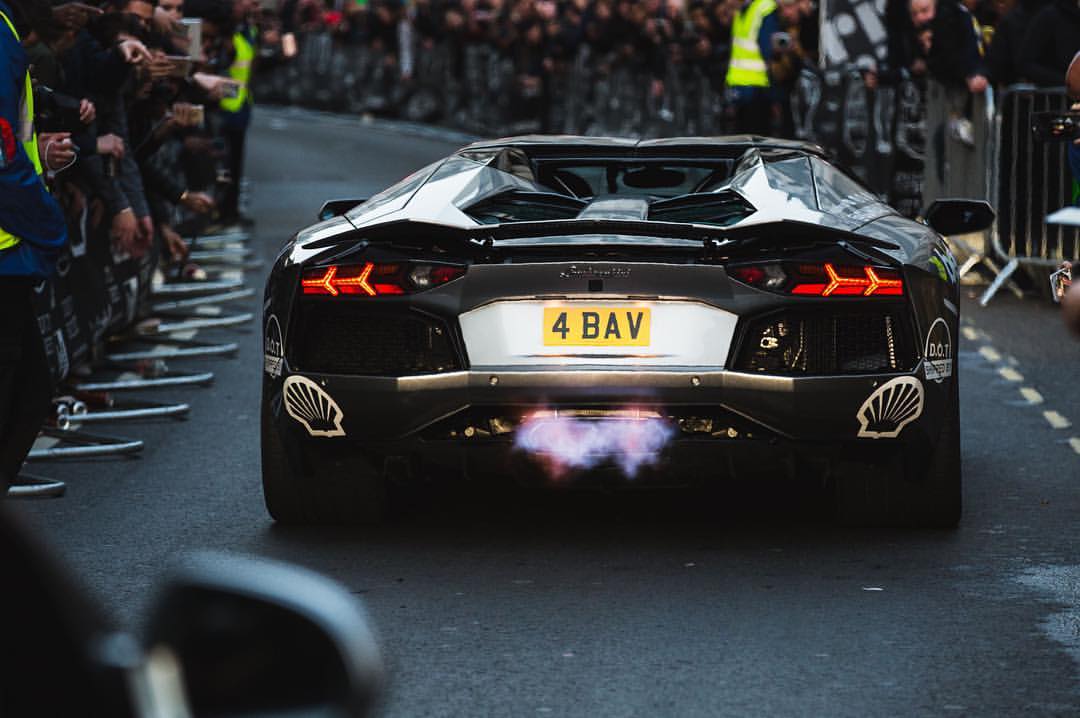
Gumball in London. Photo Gumball 3000 Facebook

They were hit bydisastrous’ bank holiday traffic on the way down to London and it looks like Gumballers will suffer the same fate in Germany.

The ADAC warns of ‘very heavy traffic congestion’ today ahead of the Ascension Day national holiday.

The only hope is to set off early as the worst queues start mid-afternoon.

But with roughly 800km to cover between Europa Park and Prague via Bodensee, jams will be almost impossible to avoid – though in theory Gumballers should be heading in the opposite direction.

Normally participants can chose their own route between checkpoints or overnight stops.

However on their passage through Germany last year, drivers had to stick to a set route, and not exceed 130kmh.

But according to the live tracking, participants are heading in a variety of directions – some through Nuremberg, some through Munich but most via Ulm (though one driver has been chased by police helicopter for using the ‘wrong route‘).

Traffic aside, it has been a relatively trouble free Gumball this year, so far.

A Gumpert Apollo crashed on the way to London but drivers were very well behaved on the M20 to Eurotunnel said Kent Police.

Former-F1 driver David Coulthard was caught in a speed trap on the A4 near Strasbourg yesterday, at 178kmh in a 130kmh zone.

Just 1kmh faster and he would have lost his licence said police. As it was he paid a €135 on-the-spot fine.

Coulthard was one of 46 drivers caught in the three hour operation including 15 Gumballers.

One of the organisers was apparently caught at 194kmh in a Mercedes. He paid a €750 fine and has been summoned to court.

Later in Luxembourg, a broken down competing Ferrrari 458 on the hard shoulder contributed – along with an unrelated accident – to gridlock in the Grand Duchy as fans converged on a service station to see the cars.

Meanwhile, Dutch DJ Afrojack was fined €10 in Germany for having his Lamborghini Aventador numberplate at the wrong angle.

Traffic will also be heavy in France and Switzerland today, especially the Mont Blanc and Gotthard Tunnels. See more.

.

Austria’s Grossglockner Hochalpenstrasse finally opened today, almost a week later than expected following heavy spring snow. However, there is a catch. The road is only passable between Fusch/ Ferleiten and Heiligenblut, north and south of the pass, with snow chains, and even then only to cars and buses. Since Grossglockner tops out at 2504m (8215ft) – and it’s quite foggy today according to the webcams – we’d be happy to sit it out until the weather clears a bit. Tickets start at €35 per car. See more at Grossglockner.at

Austria’s Grossglockner Hochalpenstrasse finally opened today, almost a week later than expected after heavy Spring Snow. However, there is a catch. The road is only passable between Fusch/ Ferleiten and Heiligenblut, north and south of the pass, with snow chains – and even then only to cars and buses. Since Grossglockner tops out at 2504m (8215ft) – and it’s quite foggy today according to the webcams – we’d be happy to sit it out until the weather clears a bit. Tickets start at €35 per car. See more at Grossglockner.at. Photo Grassl Bernhard via Grossglockner Facebook

.

Tempers Fray Over New Brussels Pedestrian Zone

For all the fuss about the new Brussels pedestrian zone, we found it easier to drive around than before.

Also, Maserati takes on Istanbul. Sweden set to have the word’s first Electric Highway, plus experiments with ‘inductive charging’.

.

TEMPERS FRAY OVER NEW BRUSSELS PEDESTRIAN ZONE

Controversy over new no-car zone not going away.

Brussels city centre no-car zone looking north up major thoroughfare Anspachlaan with the Beurs stock exchange on the right. Photo @DriveEurope

Brussels city centre no-car zone looking north up major thoroughfare Anspachlaan with the Beurs stock exchange on the right. Photo @DriveEurope

Brussels mayor of Yvan Muller was refused service at the Cecila restaurant recently in a spontaneous protest over the new pedestrian zone.

Many businesses complain of a ‘dramatic’ fall in business since the no-car zone was introduced last summer.

Cecila subsequently saw a ’spectacular’ rise in bookings according to Deredactie, proving support for the no-car zone is hardly universal.

One trader claims 99 percent of people are against it, though that is hotly disputed.

Meanwhile, as two roads reopen – Rue de Laeken to allow more access from the north, and Rue du Midi to help speed cars across the south – The Bulletin wonders whether the car-free zone is being steadily squeezed out anyway.

That comes after a road at the top of the zone was reopened to allow access to the storied Metropole hotel following complaints.

However, after struggling to drive around Brussels city centre previously, on a visit last month we were pleasantly surprised how easy it was to get around, even late on a weekday afternoon.

It was frustrating to be yards away from the Metropole at one point, yet had to go all around the houses to reach it, but it seemed logical and easy to drive anticlockwise around the pedestrian zone until we found the turning we wanted.

One thing not in dispute however is that Brussels is yet to make the most of the new car-free zone.

Flanders News reports the €3m budget to redevelop the new pedestrian zone was authorised several months ago but there is still little evidence of it on the ground and impatience is building.

Temporary concrete blocks bar vehicles, road markings are still legible, paving is jarringly inconsistent while building materials lay scattered about among seemingly abandoned works.

.

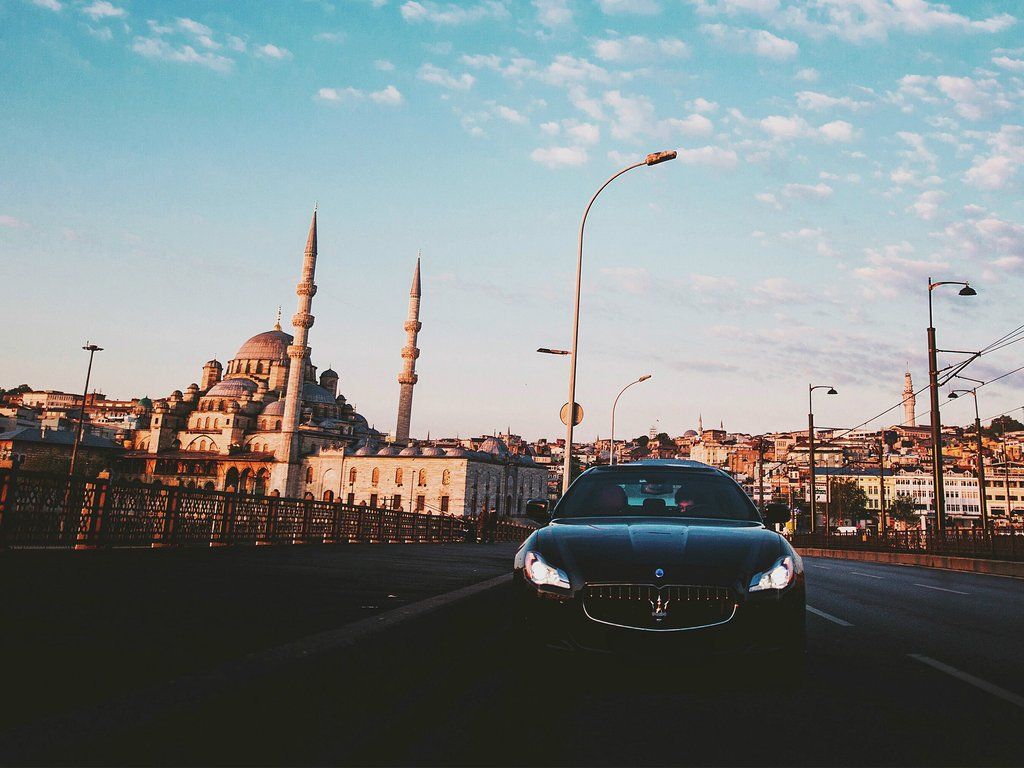
Maserati on the Bosphorus - see more at #Quattroporte. Photo @Maserati

Istanbul: Maserati on the Bosphorus – see more at #Quattroporte. Photo @Maserati_HQ

.

roundup: SWEDEN. A 2km stretch of the E16 motorway to the west of Gavle in central Sweden is set to become the world’s first electric highway. Overhead power lines have been installed for heavy trucks with the first vehicles set to roll this month. The two year experiment is financed by national roads manager Trafikverkert as part of the country’s goal to have fossil-fuel free road transport by 2030 (and the whole country by 2050). The Electric Roads Project will be formally launched on 22 June. Meanwhile, Scania is due to start a real-life test of wireless ‘inductive charging‘ of electric buses. Specially adapted bus stops have had charging equipment installed below the road surface in Sodertalje, the manufacturer’s home town near Stockholm.

.

A Super-Busy Fortnight Ahead on the Roads

Nine European countries mark Ascension Day on Thursday with bumper traffic expected from mid-week onwards.

Also, all the booze and the route sees Gumball stalwart cry off this year. Not clear if drivers will notice reorganisation of official France traffic information services.

.

SUPER-BUSY FORTNIGHT AHEAD ON THE ROADS

Extra busy in France and – particularly – Germany and Switzerland.

traffico

With Thursday a national holiday in nine countries, roads will be very busy from mid-week onwards.

Ascension Day is day off in Austria, Belgium, Denmark, Finland, France, Germany, Luxembourg, the Netherlands and Sweden.

It kicks off what will be a very busy first half of May.

Traffic will worst in Germany on Wednesday (4 May) as drivers take off ahead of a long weekend.

However, after a quieter than expected Maunday Thursday before Easter – which was the busiest day of the year on German roads last year – it’s not clear if any records will be broken.

Much depends on the weather. Fortunately it looks to be improving considerably after snow in many places last week.

The large area of low pressure currently across Italy and the Balkans starts to shift further east leaving sunshine behind in west and central Europe according to BBC Weather.

Of course that could encourage more people onto the roads.

Meanwhile, traffic is Code Red in all of France on Wednesday – one own from the worst, Black – as drivers head off before the big return on Sunday 8 May.

Delays of up to two hours are likely heading from France to Italy through the Mont Blanc Tunnel on Wednesday afternoon/evening, and on Thursday morning.

Wednesday and Thursday will also be extra busy in Switzerland heading south – manifesting mainly as enormous queues at the Gotthard Tunnel – with the same expected on Sunday though in the opposite direction.

Austria just has one busy day, on Ascension Day (Thursday) itself, known locally as Christi Himmelfahrt.

Thankfully there are no traffic warnings in Italy until Pentecost, next weekend, but that’s another story, in many of the same countries, all over again. Coming up.

.

A Gumball 3000 stalwart has cried off this year citing the drinking and the route. Speaking on his YouTube channel, the Swedish freestyle ski entrepreneur Jon Olsson - who normally takes part in an array of lary Audis, or his Rebellion R2K – says he has already visited many of the places on this year’s rally and has been on a health kick since last summer… meanwhile, the Gumball 3000 cars departed Dublin yesterday afternoon on the first leg of this year’s event, to Edinburgh. From there they call in at a further nine control points or overnight stops on their way across the Continent - via Luxembourg, Germany, Czech Republic and Hungary – before the finish in Bucharest on Friday 6 May marked, of course, with a huge party. Drivers are free to pick their own route between stops. Follow live tracking here, or see more at Gumball3000.com. Photo Jon-Olsson.com

A Gumball 3000 stalwart has cried off this year citing the drinking and the route. Speaking on his YouTube channel, the Swedish freestyle ski entrepreneur Jon Olsson – who normally takes part in an array of lairy Audis, or his Rebellion R2K – says he has already visited many of the places on this year’s rally and has been on a health kick since last summer… meanwhile, the Gumball 3000 cars departed Dublin yesterday afternoon on the first leg of this year’s event, to Edinburgh. From there they call in at a further nine control points or overnight stops on their way across the Continent – via Luxembourg, Germany, Czech Republic and Hungary – before the finish in Bucharest on Friday 6 May. Drivers are free to pick their own route between stops. Follow live tracking here, or see more at Gumball3000.com. Photo Jon-Olsson.com

.

roundup: FRANCE. Traffic information services have been reorganised with the closure of the regional CRICR Centre Régional d’Information et de Coordination Routière offices as of today. It’s not clear yet whether drivers will notice any difference. The Bison Fute website continues to operate, with its mix of real-time info, rules and regulations plus its all-important ‘Jam Calenders’ which warn about the busiest days on the roads. Otherwise, responsibility for feeding information to a new, slimmed-down team at La Defense, Paris has been passed to the eleven DIR interdepartmental road directorates. These websites are actually really handy – also backed up by departmental InfoRoute sites (format www.inforoute39.fr, etc) – especially for mountain road openings, for instance, and they often have roadcams for the main road network (autoroute info will continue to be supplied by the individual road operators). The eleven DIRs are as follows, including links: DIR Atlantique, DIR Centre-Est, DIR Centre-Ouest, DIR Est, DIR Ile-de-France (also Sytadin), DIR Massif Central, DIR Méditerranée, DIR Nord, DIR Nord-Ouest, DIR Ouest and DIR Sud-Ouest.

.

WEEKEND TRAFFIC: not expected to be generally busy on the roads – no dire warnings for France or Germany for instance – but May Day holidays will see long queues at Switzerland’s Gotthard Tunnel on Saturday; it will be busy at the Channel (leave 90mins to check-in says DFDS) and there is a second-degree ‘unfavourable’ traffic alert for departures on Friday-Saturday/returns on Monday for Spain. It is also Orthodox Easter in the Balkans. With well below average temperatures according to the BBC, and storms in Mediterranean, fine weather should not add extra loads, plus there could be more snow on the way in the Alps.

.

Spain Focuses on Main Roads, Vans and Bikers

Spain unveils a package of measures focused on main roads to get road safety back on its stellar upward trajectory.

Also, the Calais migrant crisis seems out of control again as more trouble is reported in Belgium, and Sweden. And, only full-on Winter Tyres in Germany from 2018, as Luxembourg issues a timely reminder on its winter tyres rules. Snow delays Grossglockner opening. A quick look at Turku, the drive-ferry alternative to Helsinki-Stockholm direct.

.

SPAIN FOCUSES ON MAIN ROADS, VANS AND BIKERS

New measures to tackle road deaths, mainly on main roads.

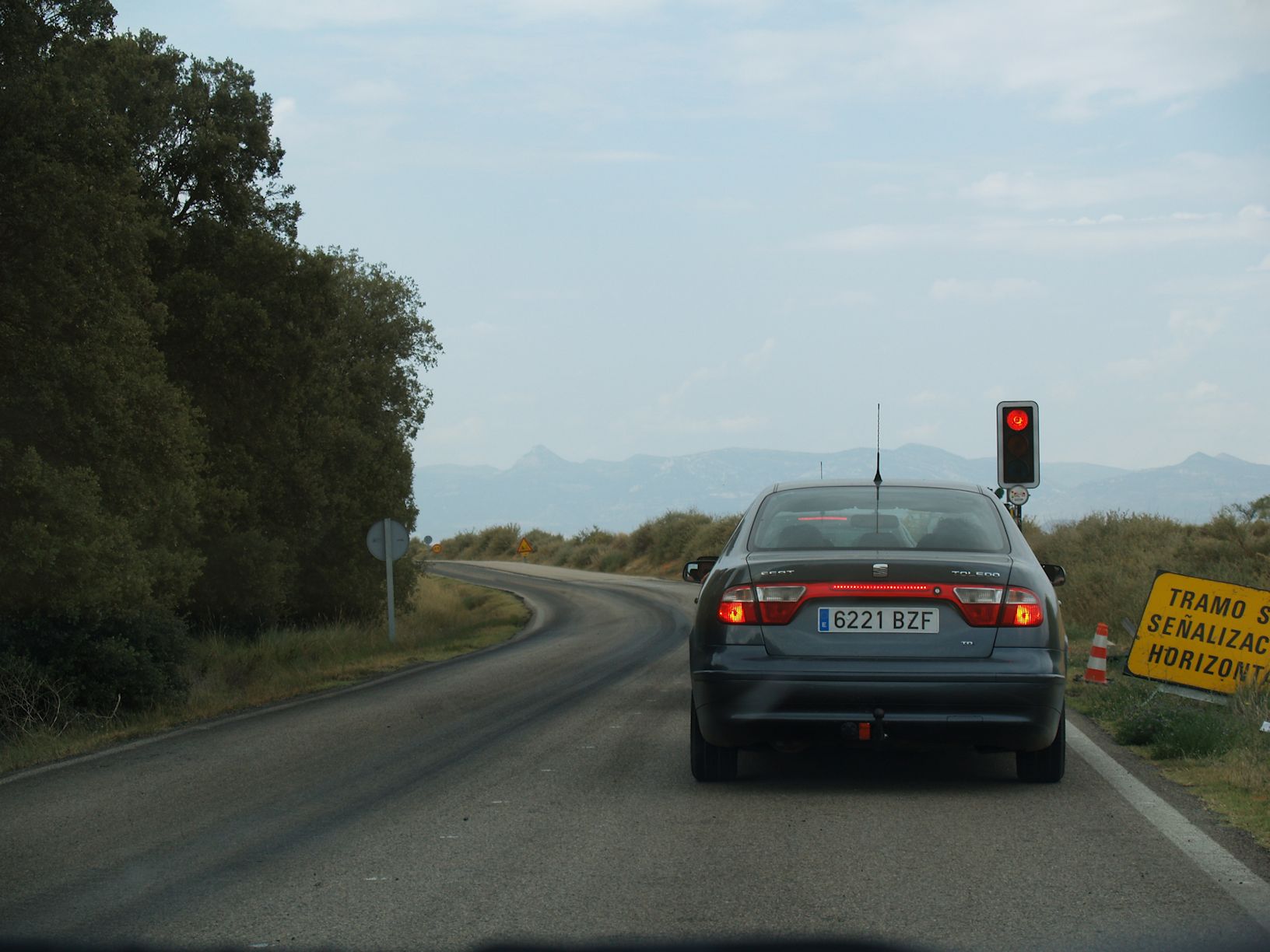
OLYMPUS DIGITAL CAMERA

Photo @DriveEurope

One of the most disappointing road safety results last year was Spain.

Having made huge advances in recent years – road deaths were cut by a third 2010-2014 – it was poised to join the very safest countries in Europe (and hence the world).

By late in the year it seemed Spain was about to do just that as the UK apparently struggled with rising fatalities, and Sweden with a long term downward trend.

In the end both the UK and Sweden managed a late resurgence. Spain stuck at 36 deaths per million inhabitants compared to Sweden’s now 27 and the UK’s 29.

One of Spain’s strengths in recent years has been the impressive organisation of its roads agency, DGT Direccion General de Trafico (Catalunya and Basque Country in the north east are autonomous on roads).

Having all the facts and figures at its fingertips means DGT can tightly target campaigns.

A culture of openness – it publishes the locations of all speed traps, and their tolerances, for instance – plus a recognition there’s more to road safety than enforcement, seems to achieve a healthy level of buy-in from the public.

Spain’s weakness is its secondary road network particularly because, by law, every tolled motorway must be shadowed by a free alternative (which are mainly single lane main roads).

Last year more than 80 percent of road deaths were on such secondary roads.

That’s why the bulk of the seven new measures announced this week concentrate on main roads, but also bikers and vans, two other problem categories.

Within the next five months, more than 3000km of the most dangerous single lane sections will be fitted with rumble strips, in the centre line and on the shoulders.

Nearly 220 people died in head-on accidents on main roads last year. This measure could cut accidents by 29 percent and fatalities by 67 percent according to research.

Another 1000km of no-overtaking solid white centre lines will save 20 lives they say.

Warning lights will be installed at dangerous intersections – where 20% of all accidents occur – to prevent particularly deadly side-on impacts.

Red triangle signs on a white background, with a light at each corner, will warn approaching motorists of an awkward junction ahead, and the speed limit.

Other red triangle pedestrian hazard signs will be installed at high frequency crossings on intercity roads, with flashing lights activated by the pedestrian.

Meanwhile, integrated night time controls – drugs and alcohol, documentation and speed – will be stepped up on routes frequented by vans with a target to cut deaths by ten this year, down from 68 last year.

And Pegasus traffic helicopters will focus on monitoring safe distances between vehicles on problem stretches, though they will fly at low altitude and there will be warning signs in place.

While overall motorway deaths fell by 20 percent last year, the number killed in multiple collisions grew. Drivers face fines of €200 for driving too close to the vehicle in front.

Finally, targeted technical inspections on bikes on known danger zones will also be increased. Nine percent of those killed on bikes last year lacked the ITV (MOT) certificate. That rose to 15% of bikes more than twenty years old.

.

Turku: the ferry shortcut between Stockholm and Helsinki.

On Race around the Baltic in 2014 we arrived in Helsinki exhausted and desperately looking for an alternative to the long drive around the Gulf of Bothnia. As it was, a good night’s sleep got us back on track but an interesting option had been a ferry from Turku on the west coast to Stockholm. Around 180km west of Helsinki, the trip would have combined seeing something of Finland while keeping us on our tight six day schedule. Turku is Finland’s oldest city, established in the 13th century, and the ferry sails out through the Archipelago Sea, the largest cluster of islands in the world. It takes about eight hours and cost around £150 one-way (the direct ferry Helsinki-Stockholm takes 16 hours and costs £250, see AFerry). Meanwhile, Turku hosts European Maritime Day next month. Photo @EU_MARE

.

roundup: WINTER TYRES. From January 2018, all new winter tyres in Germany must also have the 3PMSF Three Peak Mountain Snowflake symbol – in addition to the currently mandatory M+S markings – says the German experts association BVS (via TyrePress.com). It means that pure All-Season tyres – which have the M+S marks – will no longer be legal in wintry conditions, i.e. snow, ice or frost. Effectively it means anyone driving in Germany in winter will need a separate set of tyres. However, tyres manufactured before January 2018 will continue to be legal in wintry conditions until 30 September 2024. Meanwhile, the Luxembourg Department of Transport has reminded drivers it has the same ‘situational requirement’ for winter tyres as Germany – winter tyres marked at least M+S must be used in wintry conditions (via Wort.lu). CALAIS MIGRANT CRISIS. The situation ‘every night or almost’ on the N216/A216 Calais port access road, as migrants attempt to stop trucks, is ‘abnormal, dangerous and mind blowing’ says local paper La Voix du Nord. A journalist accompanied police overnight this week, confirming recent reports that migrants are again out of control. It comes as the UK is to spend a further £8 million on a new fence and wall along the road. Work starts next month and should be complete by the summer according to Euronews. Meanwhile, Eurotunnel is to deploy surveillance drones according to The Mirror, though it won’t say how many or when they will go into service. Also, in Antwerp today, authorities were forced to put out an alert on motorway gantries for refrigerated truck drivers to check their loads after eight migrants made an SOS call. The group were eventually found in a parking site on the E19 near Minderhout according to GVA.be. And, truck drivers heading to Sweden are warned to beware migrants secreting themselves on trucks. HH Ferries which runs services between Helsingor in Denmark and Helsingborg has written to customers about the issue reports The Local Sweden.

.

EU Acts Against British and German Foreigner Tolls

The UK and Germany have two months to justify their ‘discriminatory’ road tolls or face further action from the European Commission.

Also, police-escorted private drive through Florence for Bentley’s latest (bargain) Grand Drive. Two more foreigners killed on France’s ‘Route de la Mort’. Call to build agreed secure truck parking on Europe’s core network as some Kent space goes empty.

.

EU ACTS AGAINST GERMAN AND BRITISH FOREIGNER TOLLS

EU says British and German tolls discriminate against foreign drivers.

man wrth

The European Commission today starts infringement proceedings against the UK and Germany over unfair road tolls.

The German case regards the ‘foreigner toll’, a yet-to-be enacted road charge which will effectively only be paid by visitors. German drivers will have the exact amount deducted from road taxes.

The UK case concerns a similar charge levied only against foreign trucks. Since April 2014, the HGV Levy charges all trucks weighing more than 12 tonnes up to £10 per day to use UK roads. But domestic hauliers have the toll directly rebated via VED Vehicle Excise Duty.

Both countries have two months to justify the tolls or face further action.

In its April infringements package published today, the European Commission says, ‘Despite numerous exchanges with the German authorities since November 2014, and many suggestions by the Commission on how to render the German scheme compatible with EU law, the Commission’s fundamental concerns have not been addressed. In its Reasoned Opinion of today, the European Commission calls on Germany to bring its legislation into line with EU law within two months. Otherwise, the Commission may decide to refer the case to the Court of Justice of the EU.’

On the UK case the Commission says, ‘After thorough analysis, the Commission has today set out its concern that the HGV levy discriminates against non-UK hauliers. In its letter of formal notice – the first stage in infringement proceedings – the Commission has requested further explanations from the UK authorities. The United Kingdom has two months to respond to the concerns put forward by the Commission. Should the Commission consider the reply unsatisfactory in addressing these concerns it will consider moving to the next stage of infringement proceedings and sending a Reasoned Opinion to the UK.’

It was reported last week the Commission was considering bringing a case against the UK but including the German toll is a surprise. To be updated.

.

A police escort into Palazzo Vecchio in Florence for drivers on the latest Bentley Grand Drive. More later.

Bentley’s Grand Drive this week might be conspicuously good value beside February’s jaunt to Verbier – £13,000 per couple versus £15,000 – but they were clearly not skimping on the details. After six days around Lake Como, Milan and Monza – including laps of the circuit following the Blancpain GT Endurance race at the weekend – the Samuelson Wylie-organised trip culminated in a police-escorted private drive through Florence, and dinner at the Palazzo Vecchio. However, like everybody else, Bentley drivers still need a city council-issued permit to drive through Florence’s ZTL Zone Traffico Limitato. Photo @BentleyMotors.

.

roundup: FRANCE. A month after twelve Portuguese passengers died in a minibus crash on the notorious N79, two young German men were killed in another accident just 700 meters away early on Tuesday morning. The men aged 23 and 28 collided head on with a truck while allegedly on the wrong side of the road near Montbeugny according to reports. Two other truck drivers narrowly avoided the accident. Also known as RCEA Route Centre-Europe Atlantique, between Bordeaux and Geneva, the toll free N79 has gained an unenviable reputation as the country’s ‘Route de la Mort’ (Road of Death) after a succession of fatal accidents in the past five years. Soon after the minibus crash, Transport Minister Alain Vidalies announced accelerated redevelopment plans. The first public enquiry meeting had been held the day before. TRUCK PARKING. The IRU press release – ‘IRU calls for more secure parking areas as one way to address migration crisis’ – sparked derision at Brussels website POLITICO this morning. What it actually meant was, in the words of Michael Nielsen, ‘The more unsecured parking areas, the higher the potential boarding places for stowaways.’ He calls on Member States to make good on their legal commitment to build secure truck parking areas every 100km on the core TEN-T Trans-European Transport network, and on the EU to simplify the process for gaining grants. Reputedly one of the worst offenders is the UK. Earlier this week, Kent Police said they had ‘fined, moved on or immobilised’ 545 illegally parked HGVs between 6 February and 26 April – 494 of them from hard shoulders or motorway slip roads. The problem is often blamed on the lack of parking spaces – hence, partly, the proposed £250 million truck park on the M20 – but officers visited local truck parks and found some only half full. Also this week, TomTom teamed up with Truck Parking Europe to incorporate the latter’s parking finder app with its specialist truck navigation services. It means, for the first time, drivers can match up satnav, parking locations and TomTom’s RDT Remaining Driving Time app.

.

Mega Strike Rate for Speed Blitz Lithuania Police

The sheer scale of the Speed Blitz becomes apparent as German police plead enough – but their colleagues in Lithuania deploy a dastardly ruse to keep numbers up.

.

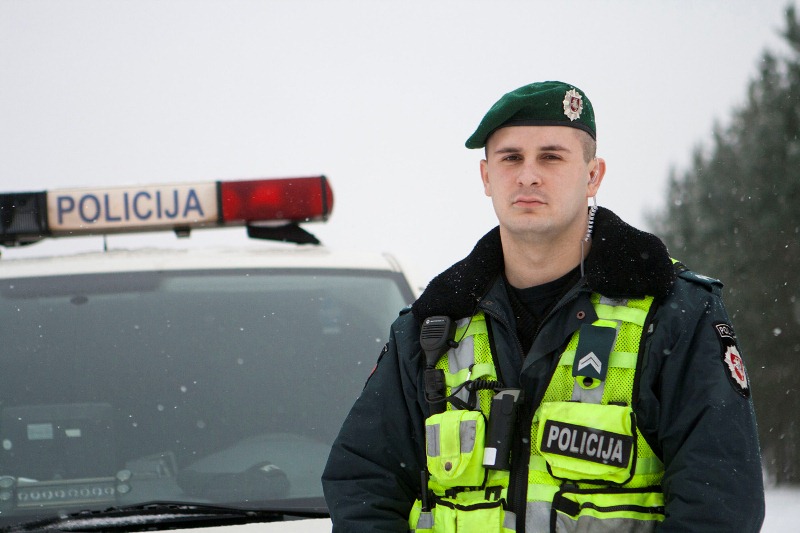
Lithuanian police had an amazing strike rate in last week's Speed Blitz. More later.

Lithuanian traffic police. Photo Kaunas.Policija.lt

As expected, the number of drivers caught out during last week’s ‘Speed Blitz’ in Germany was well down on last year.

Around two million drivers were tested and 72,063 tickets handed out.

But that is considerably less than the 3.255 million tested last year and the 91,000 offences detected (also down on the 93,000 tickets issued in 2014).

Nevertheless, the average proportion of drivers caught speeding rose to 3.6 percent this year, up from 2.8 percent in 2015. The highest was in Schleswig-Holstein in the north at 4.7 percent.

According to the ADAC, one driver concentrated so hard on his speedo he missed two red lights. A truck driver was caught on the phone to a dispatcher warning him about the anti-speed operation.

This year’s take in Germany was so paltry because six states refused to take part, apparently because they are too stretched by the migrant crisis.

That’s no surprise considering the substantial resources employed in the 16 hour campaign which ran from 6am until 10pm last Thursday.

More than 7100 officers set up nearly five thousand control points according to EU police federation TISPOL.

That was not matched by any of the other 21 countries also taking part though their commitment was still substantial.

Hungary deployed 857 officers at 613 sites who detected 3690 offences. Similarly there were 707 Belgian police on the job who picked up 4317 offences at 907 control points according to the Federal Police.

Meanwhile in Romania – which is currently struggling with the EU’s highest traffic fatality rate – 270 police caught a shocking 6601 speeders.

That’s a ticket-per-cop ratio of 24.4 (compared to 10 in Germany, 4.3 in Hungary and 6.1 in Belgium).

Meanwhile everyone was outdone by Lithuania which is also struggling with road safety. Just 100 police nabbed 4303 speeders, an incredible average strike rate of 43 each.

Controversially however, Lithuania employed a zero tolerance attitude to speeding for the operation. Even 1kmh over the limit was enough to warrant a fine according to Lithuania Tribune.

.

Zaha Hadid’s Fabulous New Ferry Terminal in Salerno

The first Zaha Hadid building unveiled since her untimely death last month is a striking ferry terminal in Italy.

Also, Alps snow not appearing to slow down pass openings. New plans for a direct fast road between Odessa and the EU.

.

ZAHA HADID’S FABULOUS NEW FERRY TERMINAL IN SALERNO

First project unveiled since starchitect’s untimely death.

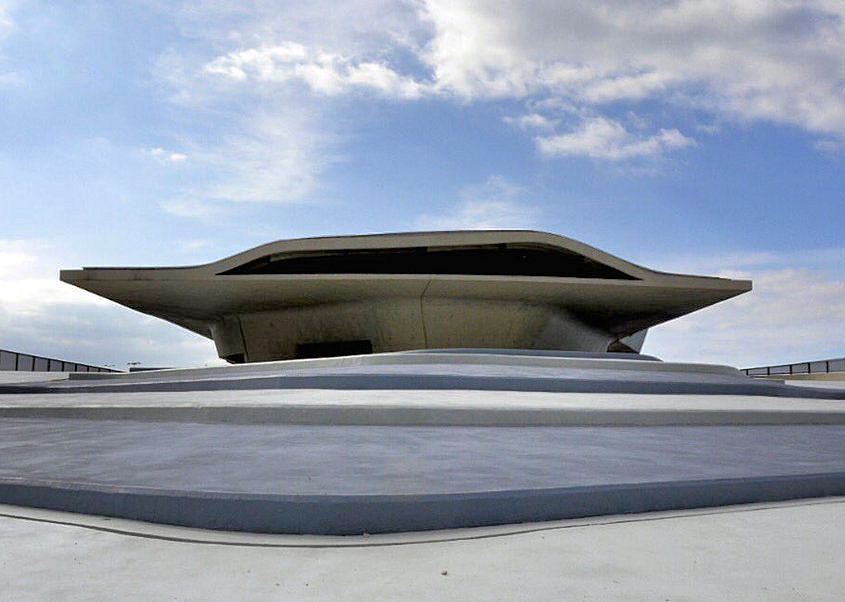
Zaha Hadid’s posthumous Stazione Marittima di Salerno. Photo Comune Salerno.

Zaha Hadid’s posthumous Stazione Marittima di Salerno. Photo Comune Salerno.

Salerno might not be the most attractive Italian place name but the destinations served from the ancient port, a few miles south of Naples, are some of the country’s most evocative: Capri, Amalfi, Positano and Messina.

As such it’s a fitting location for the first Zaha Hadid building to be unveiled since her untimely death last month.

Built mainly from concrete in the Anglo-Iraqi architect’s signature ‘organic futurist’ style, Salerno’s new ferry terminal has panoramic views of the city and mountainous coastline from continuous full height windows along the sides.

The concept is based around an oyster: a hard outer shell to protect passengers from the harsh Tyrrhenian sun and the ‘softer’ services inside like ticket sales, café, shops, baggage reclaim for cruise passengers and upper level boarding points.

Customers are ‘persuaded’ through the building via gentle slopes and staircases lit by classy recessed light bands.

As such, Stazione Marittima di Salerno is not just striking looking but thoughtfully functional too. It’s absolutely tragic she’s gone. Imagine what she could have done with Dover.

See more photos, the original designs at Zaha Hadid, a video or timetables and destinations at Aferry.com.

.

giau

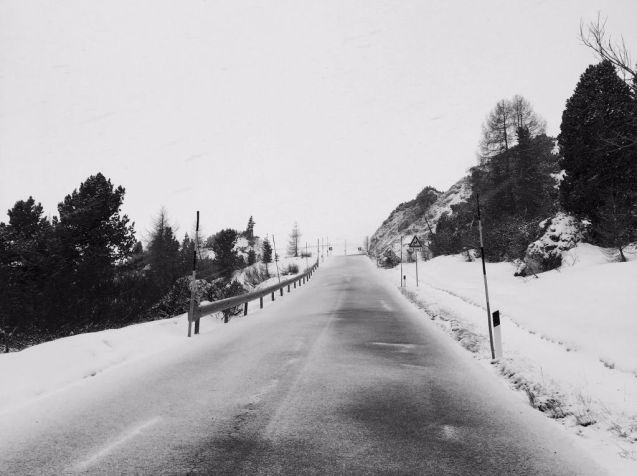
Like everywhere else in the Alps this week, the Dolomites’ Passo Giau has received a smattering of snow. However, 2236m Giau is one of those rare ‘surprisingly high mountain roads which stay open all year‘. Meanwhile, 2250m Col d’Allos in the French Alps opened today, a month ahead of usual. It was also announced that Austria’s Grossglockner will open this Friday, 29 April. Photo @HotelPassoGiau, right at the top. Rooms from €110. See PassoGiau.it

.

roundup: UKRAINE. Plans have been published for a new four lane expressway to run direct from Odessa in the south west to the Romanian border. Including a 6km bridge across the Dniester Estuary, and 4.5km bridge over the Danube, initial estimates price the 260km project at around €4.4 billion according to the respected Odessa Blogger Nikolai Holmov. Up to 22,000 vehicles are forecast to pass each day, around a fifth of that seen on the A9 Nuremberg-Munich autobahn, for instance. The existing single lane road is in poor condition. Also there is no way to drive from this part of Ukraine to Romania without driving through Moldova, in part due to the Danube Delta wildlife reserve. The new road will open up the region to tourism but, most importantly, link the Port of Odessa to the EU (though onward roads from Galati are also in poor condition and are not priority upgrades). Work is expected to start on the first 80km stretch from Odessa at the end of May. See pictures.

.

Austria Arlberg Tunnel Starts Summer Closure

Austria’s Arlberg Tunnel closes for the summer but, unlike last year, truck drivers are not forced on a long detour.

Also, winter makes a comeback and so should winter tyres in Germany. Brenner Pass border checks to start end of May. Transfagarasan drivers frustrated by ultra slow progress on Romanian motorways.

.

AUSTRIA ARLBERG TUNNEL STARTS SUMMER CLOSURE

Cars and trucks to detour via Arlberg Pass overnight.

The S16 Arlberg Tunnel in western Austria starts the second of its third summer maintenance closures today (Monday 25 April). Like last year, the alternative to the 13.9km tunnel between Innsbruck and Bregenz is the 1640m Arlberg Pass. However, unlike last year, the tunnel is only closed overnight - 20:00-05:00 – while all vehicles can use the pass (last year trucks were sent on a long detour). On the as-yet-unspecified 21 days when the tunnel is not closed overnight, an alternate traffic system will be in place with a maximum 30 minute waiting time. Also, the tunnel will not close in poor weather. Arlberg reopens for the winter on 31 October 2016. The next and final summer closure starts 18 April 2017. Photo ASFINAG

Arlberg Tunnel approach. Photo ASFINAG

The S16 Arlberg Tunnel in western Austria starts the second of its third summer maintenance closures today (Monday 25 April).

Like last year, the alternative to the 13.9km tunnel between Innsbruck and Bregenz is the 1640m Arlberg Pass.

However, unlike last year, the tunnel will only close overnight (20:00-05:00).

Also, as the press release for road manager ASFINAG makes clear, all vehicles can use the pass road.

Last year trucks were sent on a long detour.

On the as-yet-unspecified 21 days when the tunnel is not closed overnight, an alternate traffic system will be in place with a maximum 30 minute waiting time.

Also, the tunnel will not close in poor weather.

Arlberg reopens for the winter on 31 October 2016. The next and final summer closure starts 18 April 2017.

.

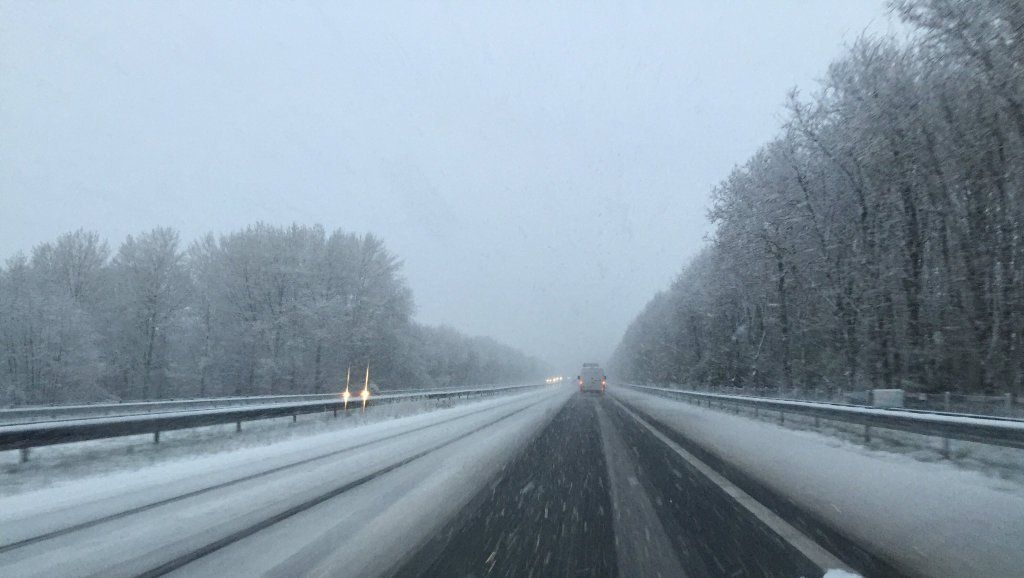
Only a week or so after most drivers swapped back to summer tyres, wintry weather makes a comeback today at many places around the Continent. In Germany particularly, it is important to remember that ‘winter tyres’ (marked M+S) are compulsory in ‘wintry conditions’, i.e. with snow or ice on the road. Photo northern Netherlands via @TeamVerkeer_NN

Only a week or so after most drivers swapped back to summer tyres, wintry weather makes a comeback today at many places around the Continent. In Germany particularly, it is important to remember that ‘winter tyres’ (marked M+S) are compulsory in ‘wintry conditions’, i.e. with snow or ice on the road. Photo northern Netherlands via @TeamVerkeer_NN

.

roundup: BORDERS. There is still no obvious sign of building work across the Brenner Pass border between Italy and Austria, but reports at the weekend say systematic checks will start at the end of May-beginning of June. The Local Austria quotes new Interior Minister Wolfgang Sobotka saying checks were needed to ‘continue to guarantee the security of Austria’. It seems the controls will go ahead whatever happens but ‘if there is no satisfactory co-operation’ from Italy says Sobotka, a fence will also be built thus adding to potential delays. Austria is concerned that the closure of the migrant ‘Balkan Route’ will see more make their way to Italy across the Mediterranean. See more. Austria has also reimposed border controls today with Hungary reports ANSA. ROMANIA. Just 64km of motorway was opened last year reports Balkan News Agency. It takes the total network length to 747km, up 9% on 2014, according to the INS National Statistics Agency. The current expectation is that 200km will open in 2016. Frustratingly for drivers heading to Transfagarasan, just east of Sibiu, the A1 motorway from the Hungarian border is still not complete. Substandard work has been detected on the remaining 73.5km gap Deva-Lugoj though the road itself will not have to be dug up reports Romania-Insider. A 200m section of the previously opened A1 between Sebes and Sibiu did have to be dug up last year but should be ready in June, putting the whole 22km stretch back into service. Adding further to its problems it was reported in March that, due to issues with public procurement systems, Romania missed out on €1.6 billion of the €4.2 billion transport funding it was due from the EU in the period 2007-2013.

.