The Most Jammed Roads in Germany

Cologne is still Germany’s jam capital though there are signs of improvement. Otherwise, avoid autobahns on Fridays, and the Thursday before Easter.

Also, a quick look at the 20 mile Afsluitdijk causeway motorway. New boats for DFDS and Brittany Ferries. Enhanced border  controls in the Netherlands. And, an official complaint over a destroyed truck load during last week’s farmer demos in France. 

.

THE MOST JAMMED ROADS IN GERMANY

Record congestion overall, probably a lot to do with road works.

8157

Total German traffic jams topped 1 million kilometres for the first time last year.

Queues grew by 17% compared to 2014 while the number of jams was up by 20% say new figures.

Motoring club ADAC which compiled the research says, ‘The increase in congestion in the past year shows that the motorway network is increasingly reaching its capacity limits. There is immense need for action to eliminate the many bottlenecks, but the expansion of highways lags significantly behind the growth in traffic.’ 

It says only about half of the priority projects identified in the 2001-2015 infrastructure plan have been completed. 

The condition of Germany’s roads has been the subject of much controversy.

The government has pledged to ramp up investment from €10 billion each year now to €14 billion by 2018. A new Federal Transport Infrastructure Plan will be published in March. 

Extra revenue has been raised with an expanded truck toll system though a new charge aimed just at foreign drivers is bogged with an EU legal challenge.

Meanwhile, the busiest roads in Germany last year were the east-west Cologne-Austria A3 and Karlsruhe-Austria A8 followed by the north-south Frankfurt-Basel A5.

The busiest day generally was Friday but peak jams of 8000km were recorded on Maunday Thursday, 2 April. This year that date falls on 24 March.

Comparing the top ten busiest stretches from 2015 and 2014 shows road works play a large part.

Congestion fell by almost a quarter on the A8 Stuttgart-Karlsruhe, for instance, which is nearing the end of a major realignment.

It dropped down to second place behind A3 Oberhausen-Cologne which saw queues rise by 50 percent thanks to new works around Leverkusen and Dusseldorf.

Similarly, A3 Frankfurt-Wurzburg jumped from fifth place to third last year thanks to major road works at Marktheidenfeld.

A5 Heidelberg-Karlsruhe did not even figure in 2014’s rankings but went straight in to fourth place in 2015 thanks to a succession of road works.

On a slightly more positive note, while Cologne figured in four of the top six most congested roads in 2014, it is now more evenly distributed throughout the top ten.

However, queues grew on the almost completely renovated A4 to Aachen, even as it slips down the list, though improvement should be seen this year as reconstruction ends.

Also, Insurance4CarHire.com has just published a very handy infographic on everything you need to know about autobahns. It makes the point that 60% of the network has an advisory limit and that insurance companies may refuse to pay out after accidents at higher speeds. Otherwise check out the A24 Hamburg-Berlin which has the longest derestricted stretch. And take some loo roll with you. See ‘The Autobahn Adventure’ here.

.

afsluitdijk

Opened in 1932, the A7 Amsterdam-Groningen runs for twenty miles across the giant Afsluitdijk causeway with the North Sea on one side and IJsselmeer, Western Europe’s largest lake, on the other. From the behind the wheel it looks like any other coastal motorway. The regular aires however, with footbridges to the other side, grant the opportunity to grasp the enormity of this project, part of the Zuidersee Works to reclaim land in the northwest Netherlands. It’s unlike any other motorway in the Continent and a must visit in this part of the world – even worth diverting to on the way from the Channel to Northern Europe. Photo HollandTradeandInvest.com

.

roundup: CROSSING THE CHANNEL. Stena Line’s amazing 100% reliability record is arguably still intact. Annual maintenance last weekend on Stena Britannica over-ran thanks to poor weather. It meant the ship was out of action this weekend too – the first cancellation for any reason in recent memory. The Harwich-Hook of Holland operator also revealed a 16% uptick in passengers last year, to 698,000, far outperforming an otherwise disappointing market reports Cruise & Ferry. Also, Brittany Ferries’ new Pelican has arrived safely in Bilbao ready to start a freight-only service to Poole on Thursday says @BFenthusiasts while DFDS’ new Cotes des Dunes starts work on the Dover-Calais route today. NETHERLANDS. Border checks with Belgium and Germany are being beefed up according to DutchNews.nl. Random controls have been in place since September but have not led to appreciable delays at border points. This might change now says a junior justice minister as police slow traffic to identify suspicious vehicles. SPAIN. The government has made an official complaint after a lorry load was destroyed by farmers at a road block last week. The vehicle from haulier Valero Ruiz carrying fruit and vegetables was stopped near Arles last Tuesday. ‘This attack is cause for great concern for the Government of Spain as it represents a flagrant violation of the principle of the free movement of goods between Member States of the European Union,’ says the statement from the Ministry of Foreign Affairs. Unlike during last year’s farmer protests, this is the only report so far of protestors destroying loads. The demonstrations rumble on at various places around the country.

.
Jam Dodging in the French Alps

Three hour mid-afternoon queues on the A43 Lyon-Chambery towards the French Alps at the weekend turns attention to jam-dodging short cuts, ahead of imminent Black Saturdays.

.

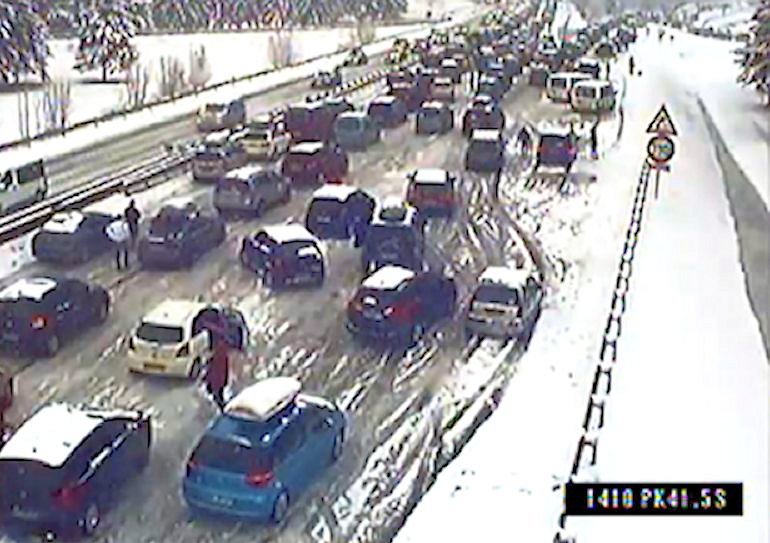
Alps' Black Saturday 2015, 23 February: massive queues on A43 as a snow dump coincided with heavy holiday traffic. Delays compounded as drivers pulled over to fit snow chains, blocking access to snow ploughs. See more.

Alps’ Black Saturday 2015, 23 February: huge queues on A43 as heavy snow coincided with holiday traffic. Delays compounded by drivers pulling over to fit snow chains, blocking access to snow ploughs. See more.

With three hour delays on the A43 from Lyon to Chambery mid-afternoon on Saturday, attention turns to ways to avoid the worst of Alpine traffic.

This was on a day that wasn’t expected to be that busy, and in decent weather.

The one coming up and the one after are both Black Saturdays when up to 50,000 drivers converge on the French Alps (up from around 36,000 last weekend).

The traditional way to avoid the A43 is via the D1504 cross-country from Amberieu to Chambery.

Take the A40 off the A6 southbound to Lyon at Macon, then A42 to Amberieu.

This avoids the busiest – and most vulnerable to snow – stretch of A40 between Nantua and Bellegarde, and is 35 miles shorter than the A43 route, albeit on single lane roads.

In clear weather, and relatively light traffic, drivers could stay on A40 until Geneva then cut down the A41 to Annecy.

From Annecy, run along the west shore of the lake on D1508 to Ugine then south on D1212 to Albertville (the really adventurous might note D1508 actually starts at J11 of A40).

Neither of these short cuts avoids the highly congested N90 Albertville-Moutiers-Bourg Saint Maurice road for drivers heading to Tarantaise resorts like Val d’Isere and Tignes.

However if this is the first jam sighted on Black Saturday in the Alps, drivers should count themselves very lucky indeed.

(Bear in mind it’s not currently possible to reach Albertville on the D1212 from the A40 past Geneva at Sallanches since it is closed by landslide south of Megeve).

Drivers heading for Grenoble can avoid mega-delays on the A43 Lyon-Chambery by staying on the A7 to Valence and doubling back on the A49.

All being well, this takes an extra hour over the direct route, 2h10 versus 1h15 according to Google Maps.

Meanwhile, for those heading up into the Alps from Aix-en-Provence and the Cote d’Azur, La Provence newspaper recommends an interesting dodge around the bottleneck end of the A51 at La Saulce (and subsequent queues on N94 to Briancon).

It’s not a route we’ve ever tried but drivers heading to Gap should come off at Sisteron for the D4075/D1075 then D994 at La Batie Montsaleon.

Drivers heading east leave the A51 at Peyrius for N85 via Digne then D900 towards Briancon or Barcelonnette.

It goes without saying that most roads into the mountains will be busy this weekend. Drivers should be prepared for icy conditions – i.e. snow chains and/or winter tyres – and lengthy hold ups, whichever road they take.

As well as radio station 107.7fm with traffic news in English, the best source on Alps’ roads is Savoie-Route.fr which also has info on conditions (centre icon top left).

.

.

Winter Alps Traffic Kicks Off This Weekend

School holidays in Austria, Germany and – particularly – France mean a challenging weekend on roads around the Alps, though the real action starts next weekend.

.

WINTER TRAFFIC KICKS OFF THIS WEEKEND

Be prepared for delays in the French and Austrian Alps.

pw fix

Zone B – most of northern France except Paris, plus Provence in the south east – starts the two week winter holiday today.

It means the major roads into the Alps will be busy tomorrow – though, thankfully, not as busy as it can get.

Inevitably the A40 to Chamonix, A43 Lyon-Chambery and then the N90 Albertville-Moutiers-Bourg will see delays all day until early evening.

Traffic will also head up the A51 towards Gap.

The saving graces are that snow is not due until Sunday, according to WeatherToSki.co.uk, and that next weekend is when the real action starts: the following two Saturdays are both Black Saturdays heading into in the French Alps.

Probably as bad will be western Austria which enters a particularly busy stretch now until 20 February.

B179 Fernpass has already seen two hour delays this season and tomorrow could be worse.

Other roads to watch are the S16/A12 eastbound to Innsbruck while the motorway border crossings with Germany will be very congested thanks to border controls, with the possible exception of the A8>A3 to Passau.

Much of the Austria traffic will be heading to Germany of course, particularly up through Munich to the north east where the holidays are already at an end. Most schools in southern Germany break up today.

The good news is that there are no especial traffic warnings for Switzerland, or the A22 Brennero from Verona, the main motorway up into the Italian Dolomites.

.

The Surprisingly Slight Benefit of Schengen

New figures suggest the borderless Schengen Zone isn’t as central to the European economy as sometimes supposed – plus a round up of recent border delays.

Also, a very lucky escape for two drivers in the French Alps. New 20mph zones for Northern Ireland, and lower blood alcohol limits for professional drivers. Some fresh road building for France. More consistent speed limits on Dutch motorways.

.

THE SURPRISINGLY SLIGHT BENEFIT OF SCHENGEN

Underwhelming figures on cross-border trade from France and Germany.

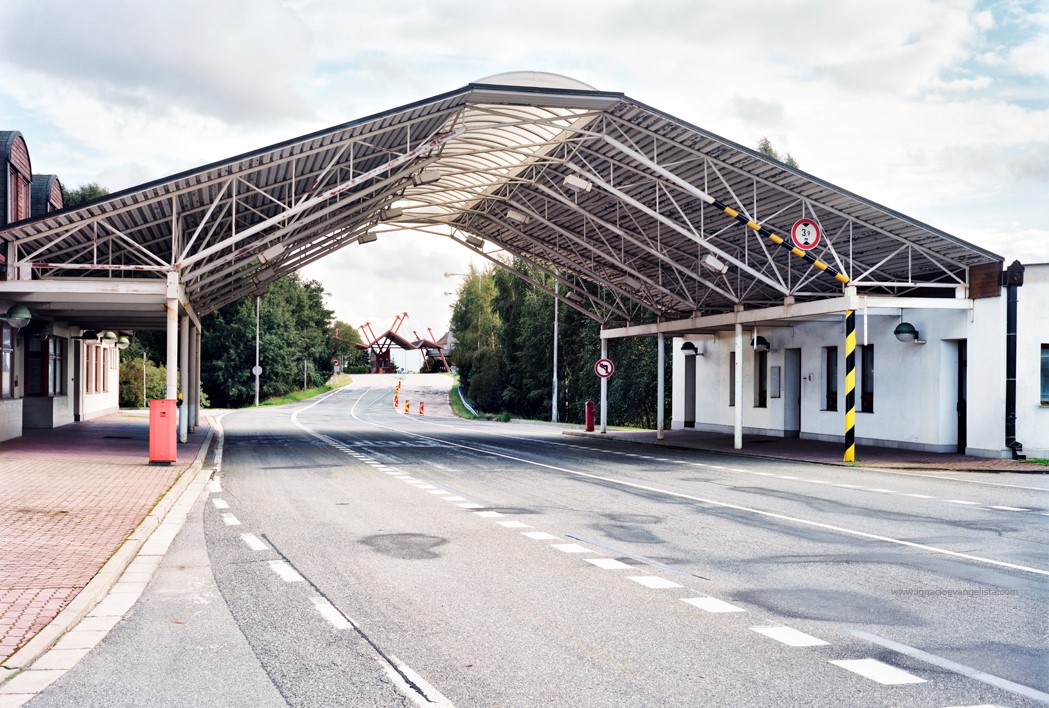
The Slavonice-Fratres border crossing from 'After Schengen' by Ignacio Evangelista.

The Slavonice-Fratres border crossing from ‘After Schengen’ by Ignacio Evangelista.

Considering it is the headline achievement of the EU, the borderless Schengen Zone seems to deliver remarkably little.

Estimated losses thanks to border controls might make big numbers, but as a percentage of GDP Gross Domestic Product they are actually tiny.

A study published yesterday by the France Strategie government think tank said reinstating borders would cost the 26 Schengen countries €110 billion over the next decade said Reuters.

The cost to France would be up to €2 billion in the short term and €10 billion over ten years, or 0.5 percent of GDP.

(However, that would also be equivalent to a 3 percent tax on trade and lead to a ‘structural decline’ in trade of up to 20 percent it said.)

Similar figures emerged from Germany at the end of January.

According to Handelsblatt, if each of the 57 million transnational freight trips in the EU each year was held up for an extra hour it would cost €55-60 per truck to total between €3-3.5 billion.

Meanwhile, despite border controls around France still officially being in place, queues recently have calmed considerably.

Drivers heading into Lille on the A14/A22 across the Belgian border face a regular 20 minute delay.

Traffic on the northbound A31 into Luxembourg from Metz/Thionville has been noticeably slow each morning for the past week.

There are also random, short delays crossing from Spain on the AP-7/A9 towards Perpignan.

Between Austria and Germany, the only significant queues – of around one hour – have been at weekends.

As with the four hour queues on the first return day in January, it seems to be tourists bearing the brunt of border queues so far rather than trade.

.

chevril

Two people survived a 80m plunge into Lac du Chevril in the French Alps yesterday afternoon. Their car came off the D902 between Val d’Isere and Bourg Saint Maurice after heavy snow and rolled down the embankment into the lake (see tracks above). Luckily, the ski patrol were already on the scene and helped the pair – described as a Danish man and woman aged 25 and 19 respectively – to the bank. They were said to be suffering from hypothermia plus other minor injuries and were taken to a local hospital reports @RadioValdIsere. The car meanwhile is still submerged.

.

roundup: NORTHERN IRELAND. A new 20mph zone has been rolled out in Belfast city centre, part of an experiment to cut down collisions says the BBC. The zone covers the main pedestrian area, plus front and back of the city hall. Meanwhile, the drink driver limit for professional drivers will be lowered to 20mg per 100ml of blood in 2018, down from 80mg now reports Commercial Motor. The change will bring the country into line with Scotland which has had a similar limit since December 2014. FRANCE. Strasbourg has inked a deal on a new bypass to relieve the existing A4-A35 which runs just west of the city centre. The four-lane 24km road will stretch from the A4-A35 junction in the north to the A352-A35 junction in the south and will be built by Vinci reports Construction Index. The work will take 56 months and is entirely self-financed. Vinci Autoroutes will operate the concession for 54 years. Meanwhile, SANEF will widen the north east A4 Metz bypass, between the A31 and A4/A315, and the A29 between the A26 (Saint Quentin) and A1, investing a total of around €100m. Both projects are part of the recently announced Highway Stimulus Plan and should be complete within five years. NETHERLANDS. From Friday (5 February) more sections of motorway will have the speed limit raised to 130kmh, taking the total to 61 percent of the network says a statement from roads manager Rijkswaterstaat. The eventual target is 77 percent. Since the upper limit started to be raised to 130kmh in March 2011 there has been controversy over inconsistent ratings on roads, especially from drivers caught speeding. The Netherlands also has sections of rods with different day time and overnight limits, marked by signs. The new permanent 130kmh stretches include the A1, A27, A2 and A58 – see map – with the A2 near Amsterdam and A12 past Arnhem to the German border to be added in May.

.

Will Customers Come Back to Calais?

Evidence mounts that the on-going Calais migrant crisis and strikes unsurprisingly put customers off the quickest and cheapest ferry route to the Continent last year. Will they come back?

Also, a Retromobile reminder about an historic road trip photo. And, fines for in-car smoking in Italy, and bent number plates in Spain. Fuel prices up in Luxembourg.

.

WILL CUSTOMERS COME BACK TO CALAIS?

Both trucks and cars both avoided the French port last year.

3689

Brittany Ferries has been one of the big winners from Calais’ troubles in the summer. Photo @DriveEurope 

The total number of passengers carried between Dover, Calais and Dunkirk topped 13 million last year but that was still a 2.2 percent fall on 2014.

Overall however, the number of people crossing between the UK and the Continent fell by only 1 percent – to 18.13 million – as passengers used other routes.

In a statement, Bill Gibbons, director of ferry industry association Discover Ferries said, ‘Despite the summer issues at Calais last year, P&O Ferries and DFDS adapted their capacity and sailings to great effect, and other continental ferry operators took up any car customers who were able to re-route.’

The western channel routes to France saw passengers increase by 3.4% to 2.94 million while the North Sea ferry routes stayed flat at 2.18 million.

Gibbons also said operators coped well with new ‘exit checks’ – identity checks for passengers leaving the country introduced in June – and the new low-emission fuel which became law last January.

As previously reported, tourist numbers through Dover definitely dipped over the summer, and there was some evidence to say truck traffic did too.

Whether they have recovered since is hard to tell since P&O and DFDS’s healthy 2015 results were bolstered by the withdrawal of MyFerryLink.

Clearly however, Dover-Calais operators have their work cut out to persuade customers the route is safe, especially after the recent strike action and a migrant occupation of a ferry in Calais port.

Since then it has been relatively quiet. There was a minor scuffle on Sunday afternoon. An attempt to slow trucks on the Calais N216 port road was quickly rebuffed by police said pro-migrant group @CalaisSolidarity.

Work is on-going to clear a 100m ‘no-man’s land’ between the port road and The Jungle migrant camp.

Meanwhile, Eurotunnel – whose site in France has been fully secure for some months now, though the A16 autoroute is inevitably still vulnerable – has appointed a former gendarme and solider as its new security chief.

Update: January bookings were up 23% year-on-year says comparison site Direct Ferries according to Travel Weekly. Routes from the UK to France, Ireland and Spain all saw significant increases – particularly France for the Euro 2016 football tournament in June and July.

.

The Retromobile show which kicks of the vintage car season in Paris today also features an exhibition by photographer and artist Jacques Henri Lartigue. His evocative ‘Mediterranean Sea, 12 September 1927’, above, certainly set off one fevered imagination with 2013’s ‘Amilcar and Bugatti. Tied in a fatal embrace.’

The Retromobile show, which kicks off the vintage car season in Paris today, features an exhibition by photographer Jacques Henri Lartigue. His evocative ‘Mediterranean Sea, 12 September 1927’, above, certainly set off our fevered imaginations, see ‘Amilcar and Bugatti. Tied in a fatal embrace.

.

roundup: ITALY. Drivers who smoke in cars with children or pregnant women present face a €650 fine reports The Local Italy. It’s one of a raft of new anti-smoking laws which take effect today and include a €300 fine for throwing cigarette butts on the floor (or, presumably, out of the car window). SPAIN. A young mother was ‘absolutely livid’ when police fined her €200 for having an allegedly illegible number plate reports The Olive Press. The plate itself was only ‘slightly bent’ says the paper but experts from the N332 English language driving in Spain website say registrations must be in ‘perfect condition’. LUXEMBOURG. After reporting yesterday on declining ‘fuel tourism’ in the Grand Duchy, today a rise in the cost of fuel. The nationally regulated price of unleaded95 is up to €1.061 per litre says Wort.lu with unleaded98 at €1.116. Diesel now at €0.874 narrows the gap to neighbouring Germany even more where it sells for an average €0.969 according to Fuel Prices Europe.

.

Winners and Losers 2015 Road Safety Europe

It’s not clear yet whether 2015 was a good or bad year for road safety in Europe but there are certainly some big winners, and big losers. Meanwhile, the UK has a good chance of beating struggling Sweden.

.

WINNERS AND LOSERS 2015 ROAD SAFETY EUROPE

First figures show a mixed picture after ‘disappointing’ 2014.

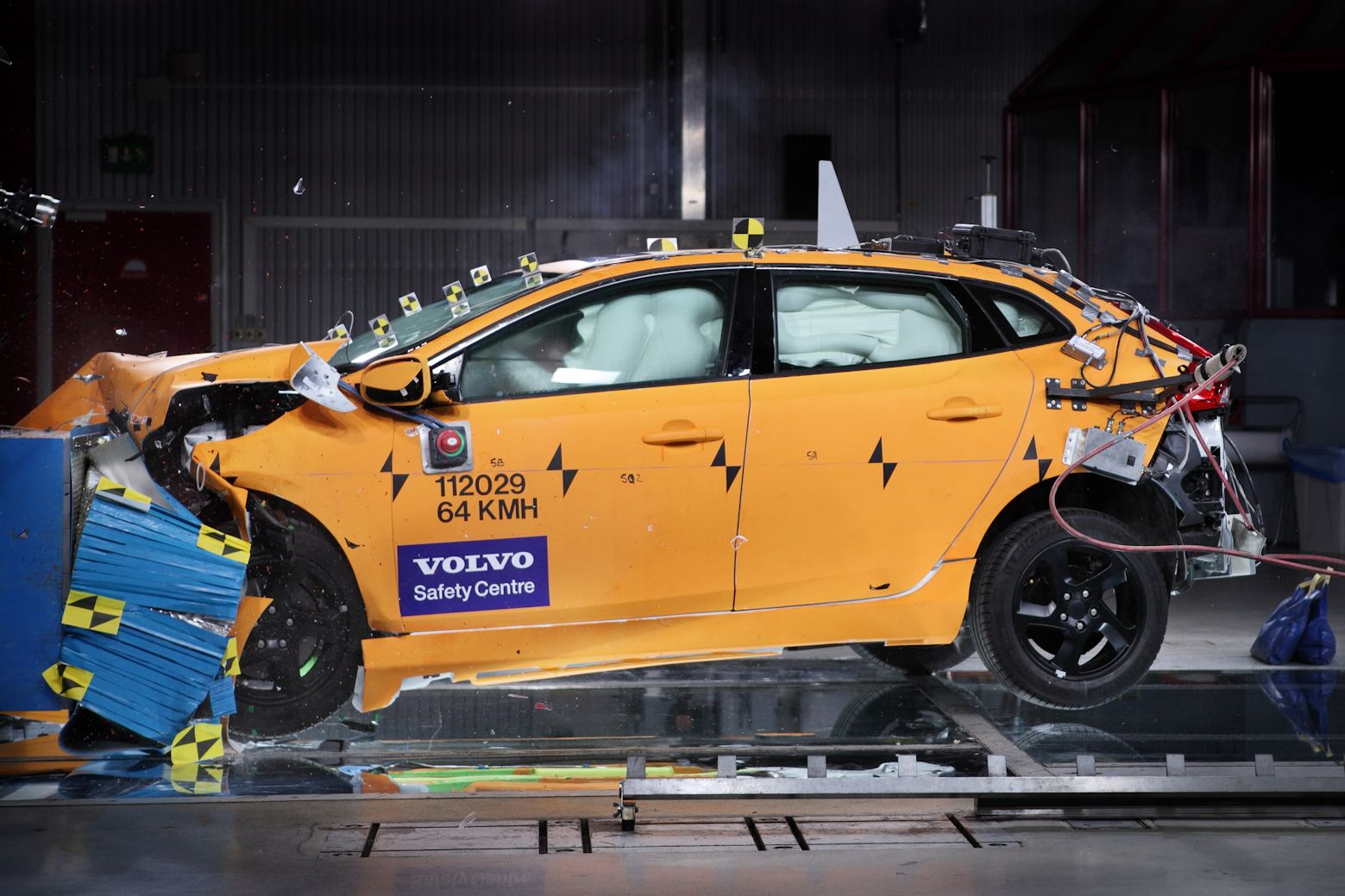
vlvo 2

The UNECE United Nations Economic Commission for Europe said last month that Spain, Denmark and the UK were the only EU countries to end 2015 with fewer road accident deaths than 2014.

That’s not strictly true. According to figures published around the Continent, several other countries saw improving road safety last year.

But there were quite a few big losses too. Meanwhile, the competition for the ‘safest roads in Europe’ looks fierce.

Final statistics won’t be ready until late March, including the all-important ‘fatalities per million inhabitants’ also known as the ‘road safety measure’.

Last year’s results were described as ’disappointing’. EU Transport Commissioner Violeta Bulc said the one percent cut in road deaths across Europe served as ‘a wakeup call’ as the rate of improvement slowed.

It’s not clear yet that she’ll have brighter tale to tell this year.

First the bad news. As reported last week, France saw its second successive year of rising road deaths in 2015 after more than a decade of falls.

The French may have some grounds for optimism but not the Belgians.

Along with Luxembourg, Belgium is already one of Western Europe’s outliers with a very below average 64 fatalities per million inhabitants in 2014.

The picture worsened in 2015 as road deaths increased by 4% reports Deredactie.

Harsher punishments for dangerous driving and a new zero tolerance drink driving regime for new drivers have already been announced.

Ironically, considering it is Bulc’s home country, Slovenia is also struggling. Road deaths were up by 11% last year says the Slovenia Times.

This year is off to a bad start too after a 56 vehicle pileup on Saturday afternoon in which at least five people died.

Fatalities were also up 4.4% in Bulgaria last year says Novinite and by 5.6% in the Czech Republic reports Ceske Noviny.

However there is plenty of good news around. Road deaths fell by 0.8% in Portugal according to The Portugal News.

Ireland saw 15% fewer fatalities says RTE, despite a last minute panic about apparent ‘carnage’ over Christmas. It’s the second lowest number since records began in 1959.

In Norway – not an EU member – fatalities fell by 15% to the lowest number since 1950 says national roads manager Vegvesen.

No full year figures are available yet for Greece but October’s numbers reported in December by Ekathimerini showed a year-on-year drop of 26.7%, and a monthly fall of 8.3%.

No final figures are available yet for Denmark either but before Christmas, The Local Denmark said the country was expecting a record low.

This is interesting because, at 33 fatalities per million inhabitants, Denmark is a contender for ‘safest roads in Europe (and the world)’, four points behind last year’s leader.

Similarly in Spain where road deaths hit an historic low in 2015, down one percent. It was the twelfth successive year of falls and lowest since records began in 1960.

The real battle however is between the UK and Sweden, both tied at 29 fatalities per million inhabitants in 2014. If the UK did see a decline in road deaths last year it is in a strong position.

Despite selling its ‘Vision Zero’ road safety message around the world – including, strangely, in the UK – Sweden has also struggled.

Road deaths actually increased by 3% between 2010-2014 according to EU figures, and by 6% in 2014.

.

Fuel Tourism Falling in Luxembourg

Record low fuel prices – and more fuel efficient vehicles – erode ‘fuel tourism’ in Luxembourg, but the savings are still substantial.

Also, DFDS badly-needed ships start on the Channel soon. And, new for February: road tolls increase in France; 2015 Swiss, Czech, Slovak, Bulgarian and Austrian annual vignettes invalid as of yesterday (also new electronic vignette Slovakia); and, new Low Emission Zone for Aachen.

.

FUEL TOURISM FALLING IN LUXEMBOURG

Sales down but savings still substantial.

Aire de Capellen, Luxembourg: the enormous services on the A6 a few miles from the Belgian border is reputedly one of the biggest in the world. According to BP, which just operates the south side, it sells more than 100 million litres of fuel each year with a shop turnover of €20 million.

Aire de Capellen, Luxembourg: the enormous services on the A6 a few miles from the Belgian border is reputedly one of the biggest in the world. According to BP, which just operates the south side, it sells more than 100 million litres of fuel each year with a shop turnover of €20 million. Photo Apple Maps

Luxembourg has some fine landscapes, notably the Ardennes in the north and Moselle region in the south east.

But most visitors are only interested in one thing: cheap fuel.

So-called ‘fuel tourism’ is big business. It rakes in more than €1 billion in tax plus €500 million in duty on the tobacco and alcohol sold alongside in the huge, hyper service stations and employs more than 2000 people.

Meanwhile, around 75 percent of the 2.6 billion litres sold each year are used outside the Grand Duchy borders, the majority of that by long-haul trucks.

But revenues are being steadily eroded by more fuel efficient vehicles and recent record low fuel prices generally.

Visits to filling stations have fallen by 10 percent in the past two years the boss of the Luxembourg Fuel Petrol Station Group said last week.

Buyers now tend to be cross-border workers and residents rather than driver who go out of their way reports Wort.lu.

All that said, fuel is still significantly cheaper than neighbouring countries. It is still worth working Luxembourg into your trans-Continental itinerary if possible.

According to Fuel Prices Europe yesterday, a litre of diesel sells for €0.847 in Luxembourg compared to €1.091 in Belgium, €0.969 in Germany and €1.015 in France.

The difference with unleaded95 petrol is even more marked: €1.036 in Luxembourg, €1.278 Belgium, €1.239 Germany and €1.258 France.

For the record, the gaps have narrowed with Germany and widened with Belgium since we last compared prices in October.

Indicative prices for the UK are €1.323 for diesel and €1.338 unleaded95.

.

Cannot come soon enough: the two former-MyFerryLink ships – now leased to DFDS by owner Eurotunnel – are due to start on the Dover-Calais route within the next week. According to DFDS’ last set of results, the renamed Cote des Dunes and Cote de Flandres will be deployed on the 6 and 9 of February respectively (Saturday and Tuesday). They were due to start in the last quarter 2015 but needed an extended overhaul in the Damen Shipyard Dunkirk after their occupation by MFL strikers in the summer. DFDS will then operate three ships apiece on its Dover-Dunkirk/Calais routes which should drastically reduce the chronic hours-long queues seen at all three Channel ports in recent months.

Cannot come soon enough: the two former-MyFerryLink ships – now leased to DFDS by owner Eurotunnel – are due to start on the Dover-Calais route within the week. According to DFDS’ last set of results, the renamed Cote des Dunes and Cote de Flandres will be deployed on the 6 and 9 of February respectively (Saturday and Tuesday). They were due to start in the last quarter 2015 but needed an extended overhaul in the Damen Shipyard Dunkirk after their occupation by MFL strikers in the summer. DFDS will then operate three ships apiece on its Dover-Dunkirk/Calais routes which should drastically reduce the chronic hours-long queues seen at all three Channel ports in recent months.

.

roundup: FRANCE. After rates were frozen last year, autoroute tolls rise by an average 1.12% from today – ranging from 0.86% in the north to 1.63% in the south west (see more). The rise will have, ‘Serious consequences on the purchasing power of households and on the safety of road users,’ says campaign group 40 Million Automobilistes, a reference to motorways being five times safer than regular roads. Prices have increased to 16.4% in the past ten years says RTL.fr. One-way Calais-Avignon now costs €82.10 according to Autoroutes.fr. See more on the free French motorway network. ROAD TOLLS. The 2015 annual vignettes from Austria, Switzerland, Sloveni, Bulgaria and the Czech Republic expired yesterday. The windscreen stickers allow drivers to use designated roads – usually motorways – and are valid from the start of December of the previous year until the end of January the following year (to allow for Christmas and New Year holidays). In addition, Slovakia has now switched to an electronic vignette system, i.e. no longer a windscreen sticker. It costs €50 per year, €14 for 30 days or €10 for 10 days for a standard car. See official Slovakia info, or more on road tolls in Europe. LOW EMISSION ZONES. As of today, the west German city of Aachen – near the Belgian and Dutch borders – has a new LEZ (known locally as Umweltzone) according to UrbanAccessRegulations.eu. Vehicles need a green sticker to enter, meaning a Euro 1 or above for petrol power, or Euro 4 for diesel. The zone surrounds the city centre, bordered to the north by the A4 autobahn and in other directions by the ring road, but doesn’t include the A544 access road from the north east. The stickers should be bought in advance, apply even to foreign cars and cost around €30, see Environmental-Badge.co.uk.

.

Car Drivers Spoil France 2015 Road Safety Record

The headline figures indicate another depressing year for road safety in France though the rising number of fatalities is all down to car drivers.

Also, a new entertainment for drivers stuck on the Paris Peripherique.

.

CAR DRIVERS SPOIL 2015 ROAD SAFETY RECORD IN FRANCE

Big jump in fatal car accidents as other categories stable, or fall.

Shock Wave: a new road safety film makes the point that the effect of road accidents are felt among the friends and family of those involved. Photo

Shock Wave: a new road safety film makes the point that the effect of road accidents are felt among the friends and family of those involved. Photo Route Plus Sure

Despite road deaths rising for the second year running – after more than a decade of falls – there are still grounds for optimism on road safety in France.

The increase in fatalities of 2.4 % last year is significantly down on the 3.6% rise registered in 2014.

While 80 more people died on the roads in 2015, this includes 43 people killed in the Puisseguin Disaster in October. Without them, the rise would have been just over 1%.

By mid-2015 the growth in fatalities in France was accelerating. This means the situation was recovered in the last part of the year, momentum which will hopefully continue into 2016 (though December 2015’s figures should sound a note of caution: deaths were up 7.7%).

Fatalities among vulnerable road users were significantly down according to figures from road safety body Securite Routiere – by 5% for cyclists, 7% for pedestrians and 10% for moped riders. Truck driver and biker deaths were stable.

Car drivers and passengers however saw fatalities rise by 8%. Without the extra 135 deaths this represents – fifty of them killed on autoroutes – the overall rate would have fallen by 1.6%.

.

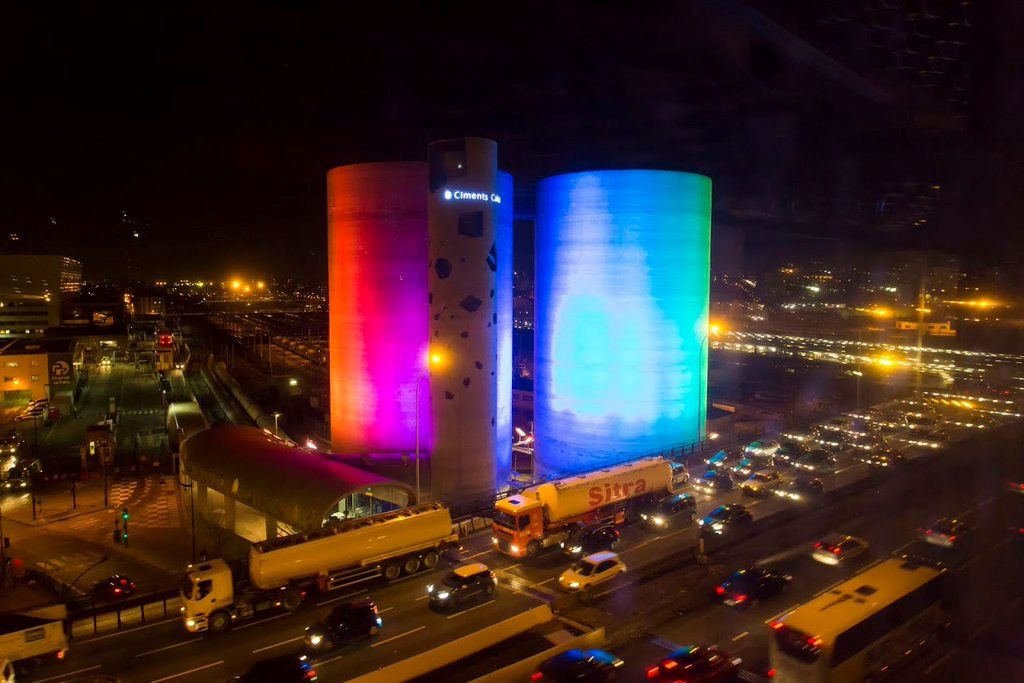
New 'Solar Wind' show beside the peripherique in south east Paris. More later.

Drivers stuck on the Paris peripherique in the new ‘Rive Gauche’ district south east of the city centre are being entertained by a new ‘Solar Wind’ light show. Designed by artist Laurent Grasso, and projected onto two 40 metre high concrete silos right next to the ring road, the installation uses real time data from the CNES National Space Agency to visualise solar activity, even meteorites. More at Paris.fr

.

Traffic: Thursday Worse than Friday

Monday morning rush hour is not the worst time to drive. New figures from Paris confirm experience in the Netherlands: aside from the Friday getaway, the times to avoid are Tuesdays and – particularly – Thursdays.

Also, a quick look at ‘best chef in the world’s’ restaurant in the shadow of the Millau Viaduct.

.

TRAFFIC: THURSDAY WORSE THAN FRIDAY

Rush-hour jams up in Paris, but the Peripherique is faster.

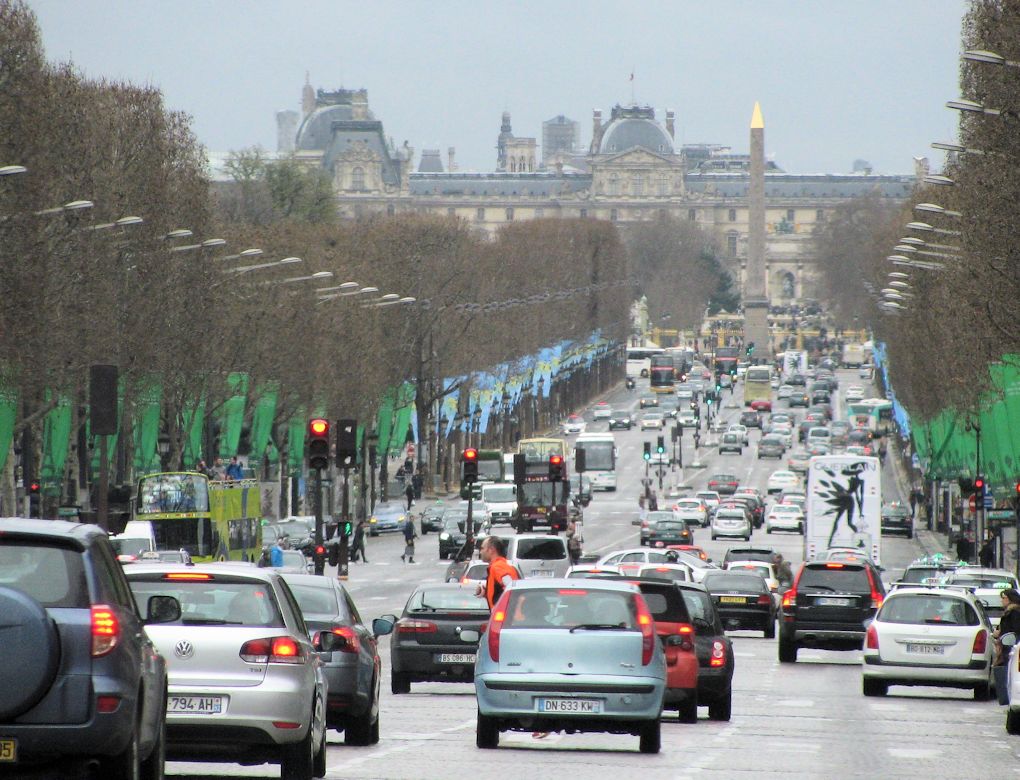
Paris traffic. Photo @DriveEurope

Paris traffic. Photo @DriveEurope

Thursday is the worst day on the roads overall while Tuesday morning and Friday evening are the other peak times for traffic says a new analysis by Paris road monitor V-Traffic.

These findings chime somewhat with traffic in the Netherlands too where, it was revealed last year, five of the top fifteen most congested days since 2010 were on Thursday evenings, and Tuesday mornings were not far behind.

Meanwhile in the French capital, rush hour jams grew by 10% in 2015, and by 22% in the past five years. The most congested road is the A6 autoroute to the south of the city centre.

Busiest of all was just after the Paris Attacks in November lending credence to the theory that Parisiens avoided public transport in the immediate aftermath.

But a graph from Instadrive shows traffic was already building up to that peak beforehand, again exactly like in the Netherlands which also saw record jams in November.

The other busiest day last year was during the June taxi strike, depressing as Paris looks forward to a re-run tomorrow.

The quietest rush hours were Monday evening and Friday morning. The quietest periods were during the winter holidays in February, and summer holidays in July and August.

Other data provided by V-Traffic bolsters the arguments of pro and anti-car campaigners alike.

Cutting the speed limit on the Peripherique ring road from 80kmh to 70kmh has improved journey times. A rush hour circumnavigation now takes 55mins at an average 38kmh compared to 63mins at 33kmh beforehand.

However, V-Traffic is concerned about new plans to pedestrianise the right bank of the Seine in the summer saying it will just increase congestion on other east-west axes in the city.

.

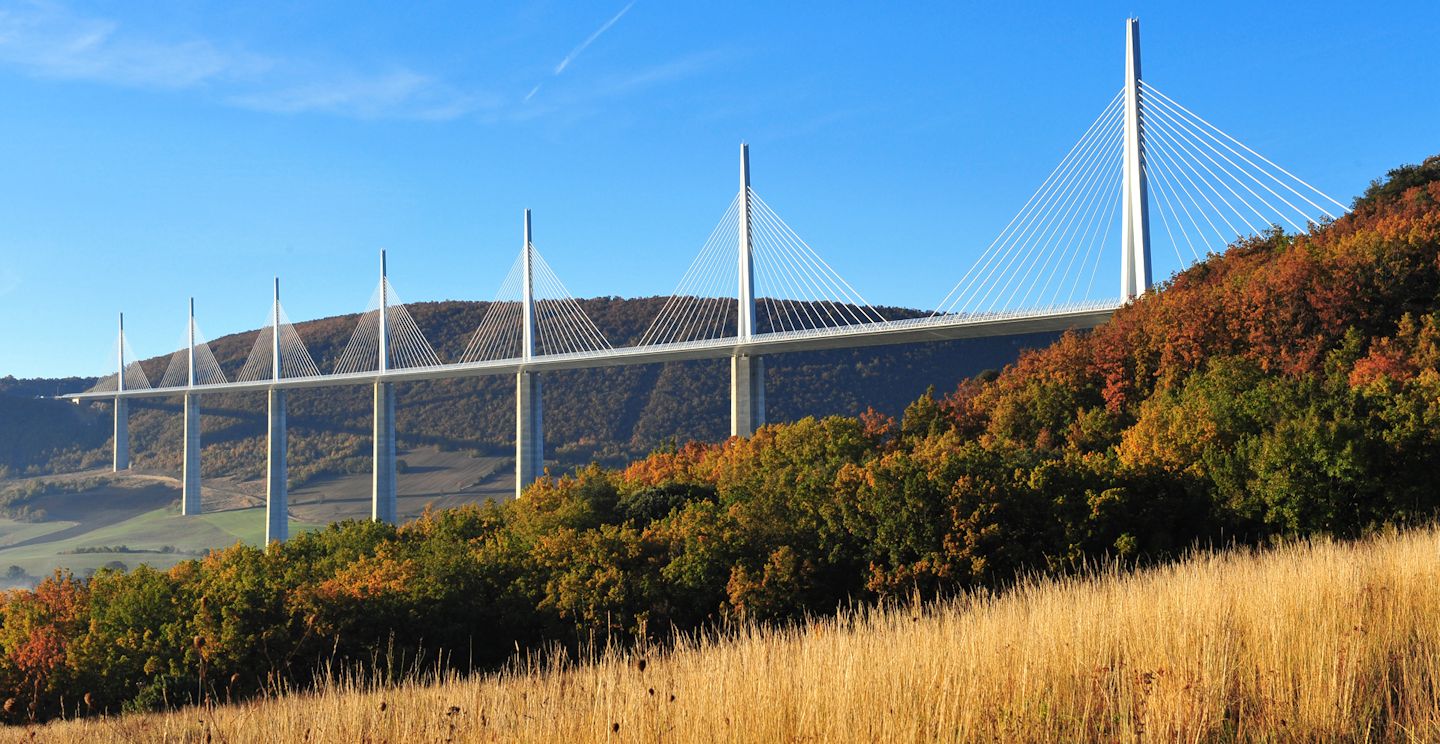
A restaurant from the man named best Chef in the World last week – Michel Bras – offers drivers a world class taste of the Aveyron region while drinking in views of the extraordinary Millau Viaduct in the South of France. With prices ranging from €5.90 to €15.70, Capucins is a great value too. The name comes from the local ‘Capuchins’, cones of bread filled with delicacies. From the north, come off the A75 at the ‘Aire du Viaduc’ just before the bridge. From the south, take J45 then follow signs to the aire along the D911. Open daily, all day April-November.

A restaurant from the man named best Chef in the World last week – Michel Bras – offers drivers a world class taste of the Aveyron region while drinking in this view of the extraordinary Millau Viaduct in the South of France. With prices ranging from €5.90 to €15.70, Capucins is great value too. The name comes from the local ‘Capuchins’, cones of bread filled with delicacies. From the north, come off the A75 at the ‘Aire du Viaduc’ just before the bridge. From the south, take J45 then follow signs to the aire along the D911. Open daily, all day April-November.

.

Week Ahead: Taxi + Farmer Demos, MEP Truck Report

THE WEEK AHEAD: more farmer demos in Brittany, western France. Presentation of report on ‘social dumping’ in the truck industry to MEPs. Major taxi strike in Paris and possibly other French cities.

Also, traffic, weather and truck bans.

.

Last June's Paris taxi strike.

Last June’s Paris taxi strike.

With migrants on the rampage, and MyFerryLink union boss Eric Vercoutre yet to extract his promised revenge on Eurotunnel, anything could happen in Calais.

But with a new meeting between the strikers and the French minister of transport now scheduled for next month – and the minister of the Interior promising to keep law and order at the port – hopefully it will be quieter this week.

Doubtless highly disruptive however will be the taxi strike in Paris on Tuesday (and possibly Bordeaux and Marseille).

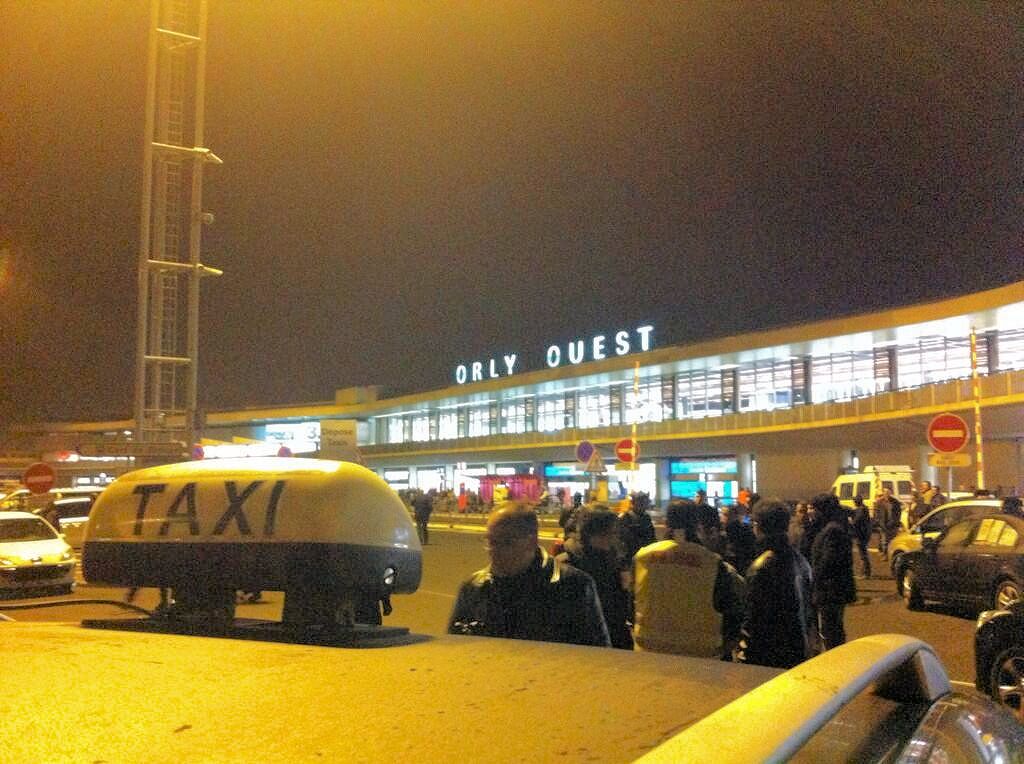
Like last June, drivers will gather from 06:00CET at Charles de Gaulle airport in the north, beside the A1, and Orly Airport in the south, near the A6.

They then head up to Port Maillot in the northwest of the Peripherique ring road according to details in Le Parisien.

Previous taxi strikes saw long delays behind slow moving road blocks. Better avoid central Paris on Tuesday if possible (read a heavily anti-taxi explainer here).

Before then, French farmers are also expected to continue their demonstrations on the N12 in Brittany.

Protestors blocked the road both ways west of Guingamp, and at least one lane west of Saint-Brieuc last week. The action was called off on Friday but is set to resume, possibly from Monday, according to autoroute.info.

Also on Monday, ‘shadow rapporteur’ MEP Jens Nilsson presents a draft opinion on ‘Social Dumping in the European Union’ to the European Parliament’s Transport & Tourism Committee (read it here).

Social rules governing truck drivers will be a hot topic this year ahead of a new EU ‘Roads Package’ due in June.

Most of the work is being done in the Committee on Employment & Social Affairs but transport MEPs want their say too.

The general direction of travel, as spelt out by Transport Commissioner Violeta Bulc last year, is to enforce existing rules better.

One suggestion, endorsed by Nilsson, is to create a ‘European Road Transport Agency’ to police the sector.

The item is last on the agenda of the meeting which takes place from 15-18:00 and is web-streamed here.

.

Weather: much milder weather this week making its way across the Continent from west to east with temperatures into the early teens. However, wet and windy weather to move in from mid-week says the BBC.

Traffic: no traffic alerts in France until early next month. Slightly busier than usual in Germany on Wednesday then the usual weekend rush – not major – on Friday and Saturday. It will be a little busier in winter-traffic-epicentre western Austria on Saturday thanks to a skiing competition at Seefeld near Innsbruck. No warnings for Switzerland or Italy.

Truck bans: no mid-week truck bans.

.