Roundup France Road News – Norway Antler Alert

Road deaths finally fall ahead of tighter new road rules in France this summer.

Also, Belgium follows Spain in publishing speeding tolerances. Norway’s new wildlife signs are working. Transplant organs are becoming rarer thanks to improving road safety in the Netherlands. Condor suffers two further setbacks with its brand new superferry.

.

ROUNDUP FRANCE ROAD NEWS

Road deaths finally fall ahead of new road rules this summer.

Interior minister Bernard Cazeneuve, right. Photo @Place_Beauvau

Interior minister Bernard Cazeneuve, right. Photo @Place_Beauvau

He didn’t look very happy but interior minister Bernard Cazeneuve must have been mighty relieved to announce on Saturday that road deaths fell by 11% last month compared to March 2014.

It was the first good news on road safety since it was revealed in January that road deaths rose in France in 2014 after many years of falls.

Speaking during a visit to the Fleury-en-Biere toll peage on the A6 south of Paris, Cazeneuve said the figures were ‘encouraging’ and ‘promising’ but added, ‘We must continue to act and we will act tirelessly with the desire to achieve our goals,’ referring to the national target to reduce road deaths to below 2000 by 2020 (from 3388 in 2014).

Last month marked two years since the advent of unmarked police radar cars which lead to an immediate 27% drop in the number of road deaths. The effect quickly wore off however meaning March 2014 saw a corresponding sharp rise, of 28%.

Compared to March 2012 however, last month’s figures show a healthy fall of just under eighteen percent.

Cazeneuve also said the twenty six new road rules announced alongside the annual road safety figures in January would come into effect from 30 June.

There is not much to affect visiting drivers. Head-set hands-free telephone kits are banned – though wireless Bluetooth connection is still allowed – while heavily tinted front side windows are outlawed, as is parking within five metres of pedestrian crossings, and the blood alcohol limit for drivers with less than three years of experience has been lowered from 0.5g/l to 0.2g/l.

However, the full implications of measure eighteen are yet to emerge, that a person is nominated on the registration certificate as liable for any fines*. Also, measure twenty six, on local ‘safety audits’, has campaign groups worried – despite previous denials – it could mean the end of France’s tree-lined avenues. Figures from 2013 show 326 people died after colliding with trees.

Also in June the government will announce the locations of ‘three to five’ accident prone stretches of main road where the speed limit will be cut from 90kmh to 80kmh, and the results of trials of new ‘double tap’ two-way (front and back) radar traps.

Meanwhile, according to The Connexion, on Friday parliament approved plans to ban smoking in cars carrying people under the age of eighteen though it is not clear yet when this new law will apply.

Incidentally, the man who presided over 2014’s rising road deaths has moved on. Jean-Robert Lopez, himself in the post for little more than a year, has been replaced as ‘Interministerial Delegate for Road Safety’ by former magistrate and diplomatic adviser Emmanuel Barbe.

* this measure turns out to be just for company drivers.

.

After research showed most drivers are oblivious to wildlife warning signs, the Norwegian Public Roads Administration decided to do something a little more eye catching to gain motorist's attention, hence the new dayglo antlers along the side of

After research showed most drivers are oblivious to wildlife warning signs, the Norwegian Public Roads Administration decided to do something a little more eye catching to gain motorist’s attention, hence the new dayglo antlers along the side of Highway 3 in Østerdalen – Eastern Valleys – along the Swedish border. On average there were four roads deaths and nearly 100 injuries, ten serious, each year after collisions with animals. New research, a year after the antlers were installed – there are now ninety hanging off the trees – shows the initiative is working says NPRA with 85% of drivers saying they were now aware of the potential danger. Photo vegvesen.no, @Presserom

.

BELGIUM. Publicising speeding tolerances is an emerging trend. Last month, Spain said all radar traps would allow 7kmh below 100kmh and seven percent above 100kmh. Now Belgium says all registered speeds will have 6kmh taken off after an investigation showed corrections of 11kmh in places reports Deredactie.be. It doesn’t say what allowance there is above the posted speed limit; presumably none. The overall policy is called ‘Zero Tolerance’. NETHERLANDS. An unfortunate by-product of improving road safety is a declining number of organs for transplant reports DutchNews.nl. Twenty years ago there were around 1500 fatalities compared to 500 these days. However the difference is made up with improved surgical techniques. CROSSING THE CHANNEL. Poor Condor really cannot get a break. The day after its brand new £50m Liberation re-entered service after a crash on its second sailing last week – one among many other issues – an engine fault saw it two hours late yesterday. The problem was fixed overnight but this afternoon, due to ‘staff being delayed to the vessel’ – whatever that means – it finds itself another forty five minutes behind schedule. The Channel Island operator’s customers are taking these fresh setbacks with continued good humour but really, how much longer can this catalogue of bad luck go on?!

.

Driving in Paris: Recreating Rendezvous

High speed touring: outrageously irresponsible, maybe, but C’était un rendez-vous is also an inspired guide to Paris.

.

Rendezvous is an outrageous film and becomes more so as time goes by in a city which welcomes cars less and less.

A man races through early morning Paris in 1976 to meet his beautiful blond lover on the steps of the Sacre Coeur.

The full title is actually C’était un rendez-vous (‘It was a date’).

Debate rages even today about many aspects of the film, from the identity of the driver to what he’s driving – likely a Mercedes 450SEL 6.9 with sound dubbed from a V12 Ferrari 275GTB – and whether it really was taken at the speed it appears to be.

One thing not in doubt is the route itself. It takes in many of the major landmarks and ends with a glorious view over Paris. With two notable exceptions it can still be driven today.

Rendezvous starts with our man roaring out of a tunnel on the Boulevard Peripherique at Porte Dauphine, beside the Bois de Boulogne in western Paris.

From there he heads up Avenue Foch to the Arc de Triomphe, the Champs Elysee and Place Concorde.

After skirting the Tuileries Garden our hero turns left across the front of the Louvre and into the city centre around the statute of Joan of Arc at Place des Pyramides – you can go either way – then up to Rue de l’Opera and head-on to the Palais Garnier.

This is where you must divert from the original route. Then as now, Rue de la Chaussee d’Antin is one-way. That didn’t bother our mysterious driver – surely because of the fantastic view of Sainte-Trinite – but these days you must drive around the Opera to Rue Mogador (beside the Galeries Lafayette department store) to Place d’Estienne d’Orvres, in front of the church, and turn left at the south east corner to get back on track.

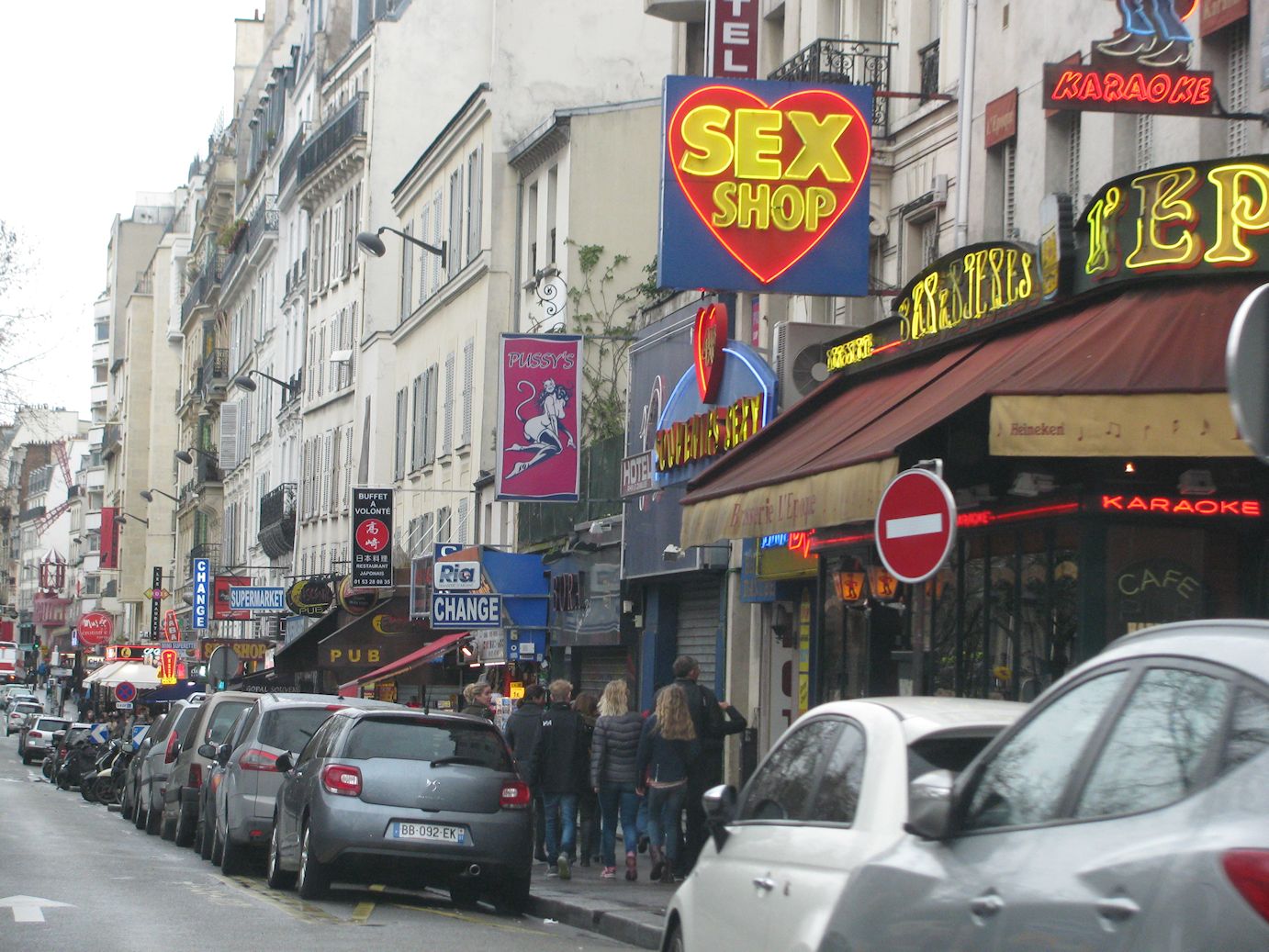
From there it’s a half right up to Pigalle and Boulevard de Clichy in the heart of the city’s infamous red light district.

(note: Boulevard Clichy is part of the Paris inner ring, inside the peripherique, which stretches from the Arc de Triomphe in the west right around the city and back to the Eiffel Tower on the opposite bank of the Seine, another handy route for driving tourists).

Not long after the Moulin Rouge, on the right, the route heads uphill to Montmartre on Rue Caulaincourt, across the cemetery to a fast right at the top after which you need to haul on the brakes.

This is where it went wrong for us, not least because of road closures this Sunday morning for a cycling event, and the one-way system.

In the film, the driver doubles back briefly on Avenue Juno before heading straight to Sacre Cour except for a sharp right-left after the Place du Tertre market square.

Nowadays you can’t do this thanks to a twenty meter one-way stretch on the original right-left (and a blind exit).

If only we had realised it at the time, but it is still possible to reach Sacre Cour by car, from Rue Lamarck further down Rue Caulaincourt. See below for a map.

.

C’était un rendez-vous was digitally remastered in 2013, now available from Spirit Level Films.

.

Rounding the Arc de Triomphe.

Rounding the Arc de Triomphe.

Place des Pyramides and the gold statue of Joan of Arc.

Place des Pyramides and the gold statue of Joan of Arc.

The Palais Garnier, home of the Paris Opera.

The Palais Garnier, home of the Paris Opera.

Saint

Eglise de la Sainte-Trinite on Place d’Estienne d’Orvres.

Rue de Jean-Baptiste Pigalle

Rue de Jean-Baptiste Pigalle, named after the sculptor, and a famous shot from the film.

Pigalle with the Moulin Rouge along tot he right.

Pigalle, with the Moulin Rouge along to the right.

Rue Norvins

The final stretch, Rue Norvins to Place du Tertre market square, another classic shot from the film.

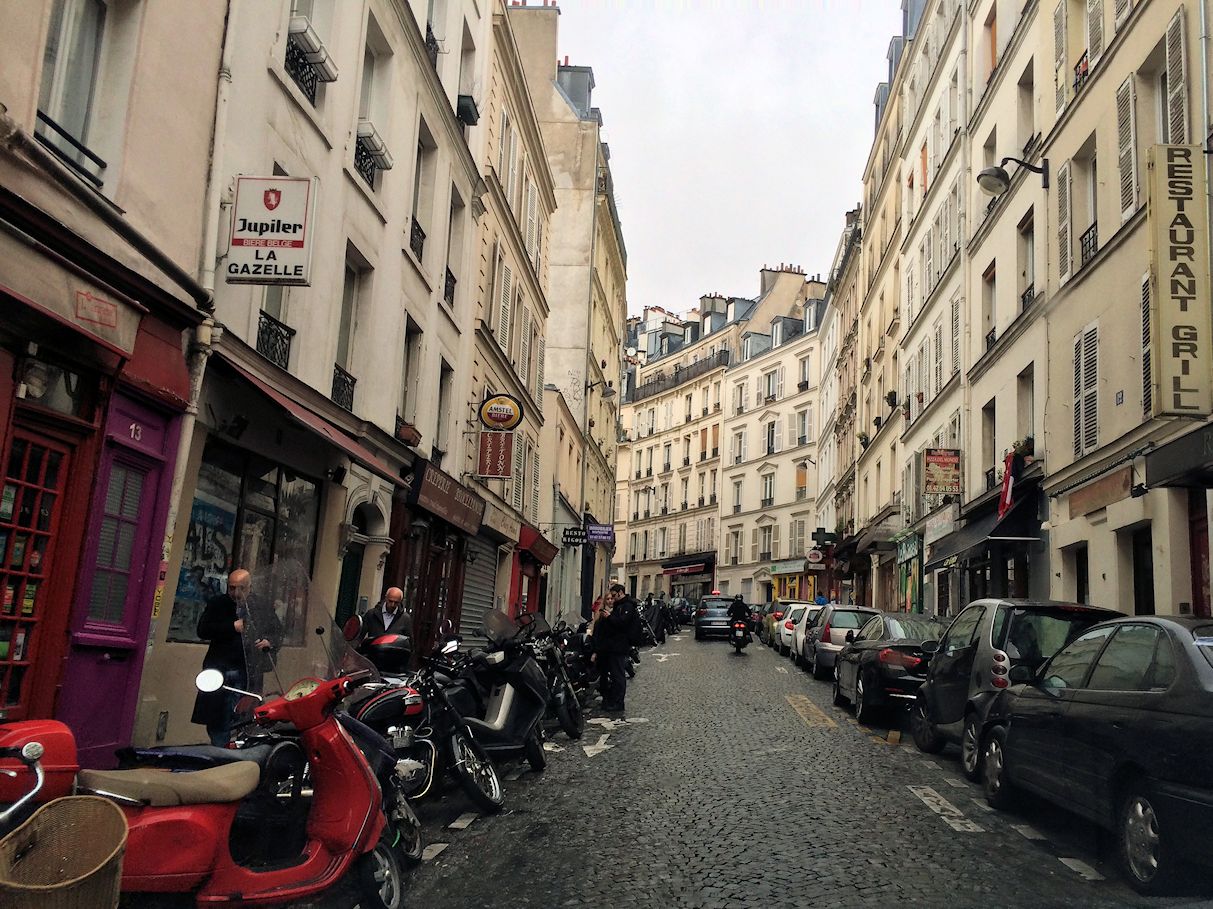
Lost in Montmartre.

now Lost in Montmartre.

.

Easter Traffic – Dragoon Ride Home

France will doubtless have its moments but the bulk of the holiday traffic this Easter will be in Germany today (Thursday), Austria on Saturday, Spain over the weekend and Switzerland throughout.

Also, the Dragoon Ride Strykers arrive back in Germany safe and sound.

.

EASTER TRAFFIC

Germany today, Austria on Saturday, Spain over the weekend and Switzerland throughout.

a65 rheinbrucke traffic3 (2)

France: particularly busy from Friday afternoon with traffic heading towards the Alps, and more generally Friday and Saturday as drivers set off for the holidays. Quiet on Sunday then busy again on Monday as drivers return home. Overall however, there are no major traffic warnings in France throughout Easter though Fridays and Saturdays for the rest of the month will see raised traffic levels.

Germany: today will be the busiest day of the month as drivers head mainly south to the Alps. Tomorrow (Friday) and Monday will also be busy but less so. Quiet on Sunday and back to normal on Wednesday before picking up again ahead of another heavy – but not manic – weekend before settling down for the rest of April.

Road closures: the A45 at Dortmund while the A643 Schiersteiner Bridge Mainz-Wiesbaden re-opens on 10 April.

Switzerland: today and tomorrow will be as bad as it gets on Swiss roads as drivers head south. Worst of all will be the Gotthard Tunnel; delays have peaked at two hours so far this week. From Saturday onwards drivers start to head north again peaking on Monday after a quieter Sunday.

Next week is busy too, heading north early on before a quiet Thursday then picking up southbound on Friday with another blackspot on Saturday. Thereafter traffic starts to calm down again until the middle of May.

Austria: surprisingly considering it has been traffic central at every possible opportunity so far this year, it will be quiet on the roads today before picking up tomorrow inbound ahead of a very busy Saturday. Traffic then dies down until a slight rush on Monday as drivers head home. After that, the rest of the month is clear.

Spain: the holiday days vary depending on the region but last overall from today (Thursday) until Monday. The good news is that Wednesday evening was the busiest time (of the entire year). For the first half of the Easter break drivers head to the coast then start to come back from Sunday lunchtime. Saturday will be quietest, generally, except around coastal resorts.

Crossing the Channel: Dover will be ‘extremely busy’ from midday Thursday until late afternoon Friday according to MyFerryLink. Since freight traffic will be heavy too, car drivers are advised to use the M2/A2 to get to and from the port. Meanwhile, Eurotunnel is testing new Exit Checks ahead of their formal introduction next week.

Weekend weather: unsettled North, fine South, especially Iberia. Rain moving from west to east across northern Europe with rain and snow in the Alps, particularly in the East.

.

The 'Dragoon Ride' Sryker vehicles arrive back at the Rose Barracks, Vilseck, Bavaraia, yesterday after their high profile 1,100 mile road trip through eastern Europe. More later.

The US Army’s 2nd Cavalry Regiment ‘Dragoon Ride’ Strykers arrive back at the Rose Barracks, Vilseck, Bavaria, yesterday, after a high profile 1,100 mile road trip through Eastern Europe. The exercise was mostly well received. Only in the Czech Republic – with its notably softer stance on Russia than in neighbouring countries – was there any opposition. In the event threatened mass demonstrations failed to materialise. In fact, according to reports, hundreds if not thousands of locals turned out in the wind and rain to show their support as the three convoys converged in Prague over the weekend before making their way to the German border. The focus has now shifted to whether Czech president Milos Zeman really should be the only other EU leader beside those from Cyprus and Greece at the 9 May Victory Day parade in Moscow…

.

Terrible Start for Condor Liberation – Top City Traffic

Poor Condor Ferries cannot get a break despite investing £50m in a new ship.

Also, Europe is probably over-represented in the world’s most congested cities. Avoid Monday and Tuesday rush hours in the Netherlands. Buyers line up for MyFerryLink, and Austria’s major Arlberg Tunnel shuts for the summer.

.

TERRIBLE START FOR CONDOR LIBERATION

A succession of unfortunate incidents spoil debut of Condor’s new ferry.

The €50m Liberation was supposed to mark a new beginning for Condor Ferries.

But self-inflicted delays on the maiden voyage, immediate weather cancellations, ridicule in the national newspapers – and a crash – must have left the Channel Islands operator wondering why it had bothered.

Captain Fran Collins, executive director operations, said, ‘No-one is more disappointed than we are that the combination of the very unfortunate incident at the weekend and some really severe weather has caused this disruption in Condor Liberation’s first week in service.’

The first sailing last Friday suffered a delayed departure of sixty minutes and eventually reached Poole two and a half hours behind schedule.

BBC South Transport Correspondent @PaulCliftonBBC, on board, said, ‘Staff seem confused how to load it in Guernsey.’

Even before then services on the Sunday had been cancelled owing to bad weather.

(In theory, Liberation is able to sail in much worse weather than its predecessors but has been restricted initially pending further sea trials later in the year.)

On Saturday’s return voyage the ship ‘landed hard’ on the berth in high winds and damaged a section of protective belting according to a statement.

Liberation had been expected to return to service ‘within a few days’ but, thanks to continued poor weather, the company is yet to announce when it will resume services.

In the meantime, predecessor fast ferry Express has been pressed back into service and another conventional ship has been chartered. Passengers have been refunded the cost of any upgrades and offered free food and drink during crossings.

Finally, attempts to ridicule Condor’s wacky new safety video, above, may have back fired.

It was described by the Daily Mail as ‘the worst safety demonstration of all time’ and by the Telegraph as ‘the most embarrassing thing you’ll ever watch’.

However, reader reactions to both articles was much more positive.

Broadly typical was TJ in the Daily Mail who said, ‘It may be corny but it made me chuckle’.

Update Saturday 4 April: Condor said today that repairs have been completed and that Liberation would return to service tomorrow (Sunday 5 April).

.

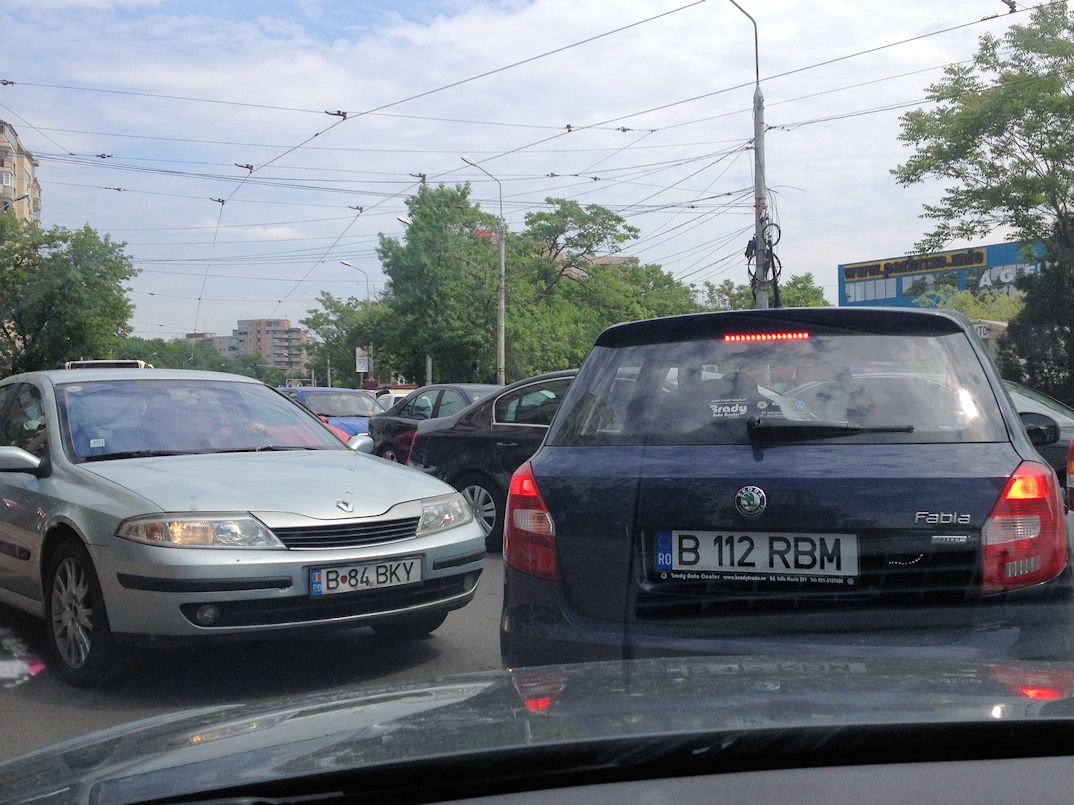
Moscow fell four places off the top of TomTom’s city traffic index for last year though whether that’s because of action from the city council on illegal parking, among other things, or down to the recession is the currently subject of hot debate in the Russian capital. Meanwhile, Bucharest – above – is a new entry at number seven while Istanbul is apparently now the world’s most congested city with drivers taking on average 58% longer to complete journeys compared to traffic-free roads. Five of the top ten were in Europe with St Petersburg in seventh place and Warsaw in ninth. Photo @DriveEurope.

Moscow fell four places off the top of TomTom’s city traffic index for last year though whether that’s because of action from the city council on illegal parking, among other things, or down to the recession is the currently subject of hot debate in the Russian capital. Meanwhile, Bucharest – above – is a new entry at number seven while Istanbul is apparently now the world’s most congested city with drivers taking on average 58% longer to complete journeys compared to traffic-free roads. Five of the top ten were in Europe with St Petersburg in seventh place and Warsaw in ninth. Brussels, often fingered as Europe’s most congested city, was in 32nd place. Photo @DriveEurope.

.

roundup: NETHERLANDS. The worst jams are during Monday and Tuesday’s morning rush hours according to a new survey reported by DutchNews.nl. Congestion jumped by 56% in 2014 after years of falls thanks to a recovering economy but traffic levels are yet to return to pre-recession levels. CROSSING THE CHANNEL. Four buyers have expressed ‘serious’ interest in buying MyFerryLink reports Dover Express. Eurotunnel has until 9 July to sell the firm to comply with a succession of competition authority judgements, finally confirmed earlier this year. MyFerryLink itself took the matter to the Court of Appeal last month. The verdict is expected within the next few weeks. AUSTRIA. The 14km Arlberg Tunnel on the S16 in the west of the country – between Innsbruck and Bregenz – shuts for refurbishment in both directions from 21 April to 14 November says roads manager ASFINAG. The detour is via the B197 Arlberg Pass, except for cars with trailer 750kg+ at weekends and public holidays, and trucks. They should detour via the B179 Fernpass and A7>A96 to Bregenz, or via Innsbruck and Munich. With the work set to complete in 2017 the same will happen again next April.

.

German ‘Foreigner Toll’ Now Law – Dover A20 Work

German MPs voted overwhelmingly in favour of the ‘foreigner toll’ today. So what happens now? 

Also, new traffic management on the A20 into Dover to prevent freight queues in the town centre. MEPs split on German minimum wage rules for truck drivers (as Spain considers same). And, weekend road works in Germany and Luxembourg, a stoppage Mont Blanc Tunnel tomorrow but good news on the Karawanke Tunnel. 

.

GERMAN ‘FOREIGNER TOLL’ BECOMES LAW

Last minute concessions smooth passage of foreigner toll but will they be enough for Austria, the Netherlands and the European Commission?

IMG_2175

It’s the moment the European Commission, Austria and the Netherlands say they have all been waiting for: when the ‘foreigner toll’ becomes law in Germany.

All three said previously they had to wait until the toll was on the statute books before they could start legal challenges.

This morning, MPs in the German Bundestag parliament voted for the new law: 433 for, 128 against and six abstentions.

Transport minister Alexander Dobrindt said, ‘Away from tax financing towards user financing. This is stability in the financing of infrastructure.’

The foreigner toll has had a long and difficult gestation since first appearing on the manifesto of the Christian Social Democrat party in Bavaria ahead of the general election in 2013.

It was made a deal breaker in subsequent coalition negotiations and as such has the full backing of Chancellor Angela Merkel.

All drivers will pay the toll but German motorists will have it rebated via their vehicle tax. It starts in January next year. Foreign drivers need the vignette to drive on autobahn motorways.

Apart from legal threats from both Austria and the Netherlands – alleging discrimination – the bill has faced sustained hostility from opposition parties, coalition partners, state administrations and even driver groups like the ADAC.

Earlier this week it was announced the price of the vignettes would be graduated against engine size and emissions – from €5-15 for the ten day vignette and €16-30 – to head off criticism from the European Commission that the short term tolls were disproportionately expensive compared to the annual cost.

The crucial point however is that linking the vignette to environmental performance gives the German government wriggle room vis a vis EU rules. More later.

.

Changes will be made to the traffic management of freight on the A20 into Dover to prevent congestion in the town centre. More later.

New traffic lights just ahead of the first roundabout on the A20 eastbound into Dover will hold trucks until space is available in the port at busy times. The idea is to reduce freight queues through the town centre. Traffic will be filtered on the approach to the Western Heights roundabout with trucks on the inside lane. The new arrangements will be in place by early April. In the meantime, while data is gathered, the speed limit will be reduced, two lay-bys shut, an HGV overtaking ban put in place and CCTV cameras installed. For more info see DoverPort.co.uk

.

roundup: GERMAN MINIMUM WAGE. In a debate on Wednesday, MEPs were evenly split on new German minimum wage truck driver rules according to a summary from the European Parliament. ‘Many speakers stressed the need to prevent social dumping and ensure fair competition among hauliers. Some suggested an EU-wide minimum wage and urged the Commission to table proposals to protect drivers’ social rights and working conditions, including blacklisting companies which break rules,’ it says. Others said imposing minimum wage rules for transit drivers obstructs the free movement of goods by adding to the costs and burdens on haulage firms. Transport commissioner Violeta Bulc said the Commission was still assessing the German measures but will address the issue of social standards and working conditions in transport in its next legislative ‘road package’ due next year. Euractiv has a blow by blow account here. Meanwhile, TrasportoUnito says the Spanish government is the latest to consider similar minimum wage rules.

ROAD WORKS. Germany: the A45 at Dortmund – between J8 Dortmund-Sud and J7 Witten – will be shut both ways for twelve days, from 05:00 Sunday 29 March until 05:00 Friday 10 April, to repair high voltage lines says ADAC. Luxembourg: the Croix de Gasperich interchange south of Luxembourg City, between the northbound A3, westbound A1 and eastbound A6 will be closed from this evening until 06:00 on Monday as will the A1 westbound to A3 southbound says Wort.lu. Austria: good news, the A11 Karawanken Tunnel from Villach across the Slovenia border has re-opened on schedule after a long-running refurbishment reports ADAC. There is still some work to do but dates are yet to be announced.

.

The Borderless Schengen Zone Twentieth Anniversary

The Schengen borderless zone celebrates its twentieth anniversary, but what chance another twenty years?

Meanwhile, the romance of frontiers may be gone but there are still unexpected delights to be had crossing borders these days. Also, spring holidays kick off this weekend.

.

THE BORDERLESS SCHENGEN ZONE AT TWENTY

Advantages to car drivers eroded by vignettes but still great for freight.

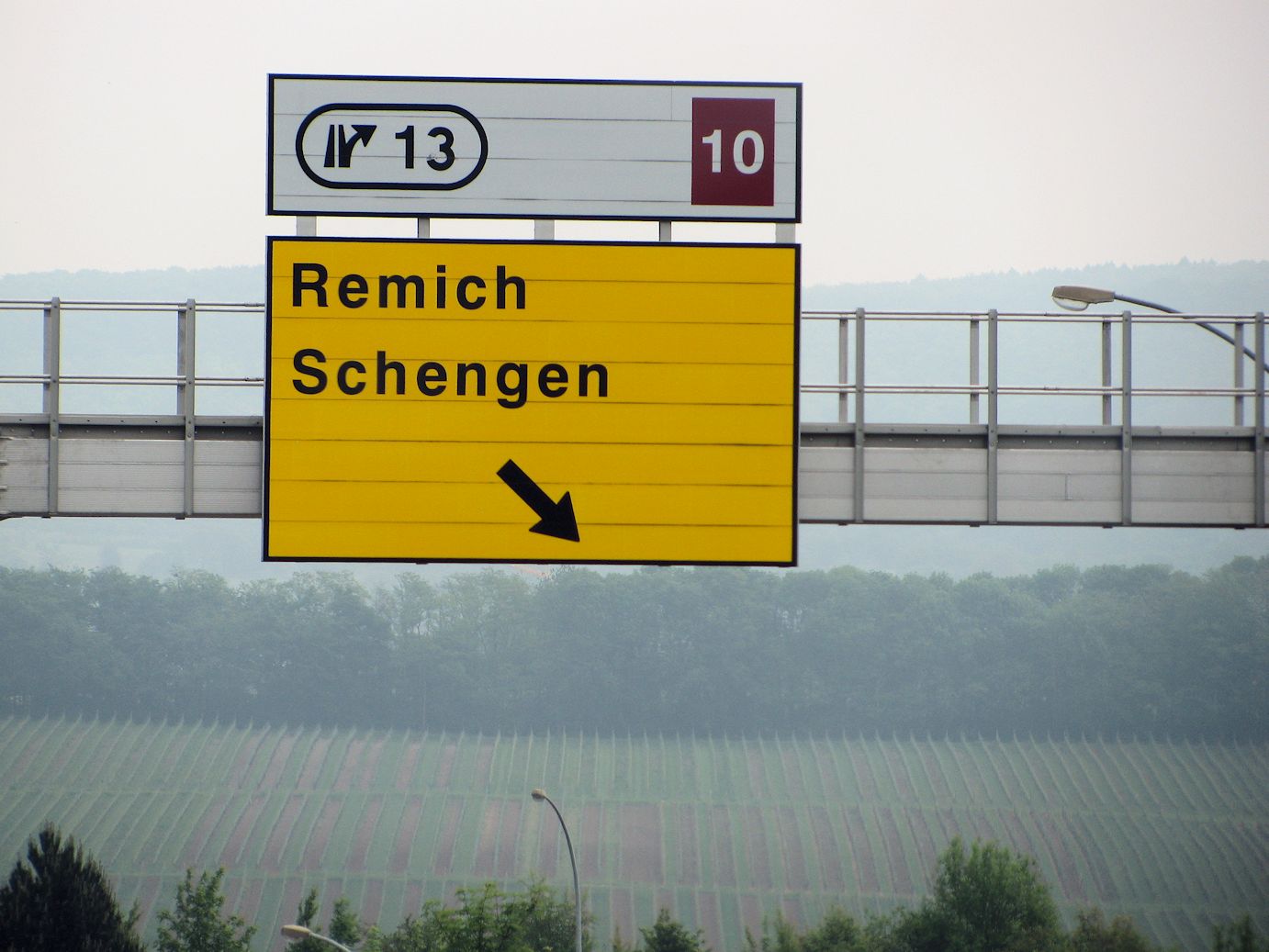
Schengen in south east Lxembourg, symbolically on the French and German borders where the

Schengen, the town in south east Luxembourg – symbolically on the French and German borders – where the borderless agreement was signed. Photo @DriveEurope.

Europe’s borderless Schengen Zone is twenty years old today.

It came into force on 26 March 1995, initially between Belgium, West Germany, France, the Netherlands and Luxembourg.

(The agreement was signed ten years previously in the Luxembourg town of Schengen, hence the name.)

Since then it has expanded to include all EU member states – except the UK, Ireland, Croatia, Bulgaria and Romania – plus Switzerland and Norway.

Being as time spent queuing at borders is money, the principle advantage to us all is in lower prices thanks to the efficient flow of freight round the Continent.

The well-trod 360 mile round trip between Calais and Eindhoven in the southern Netherlands, for example, would include four international borders without Schengen, plus crossing the Channel.

Anyone doubting the scale of border freight queues should note the frequent flare ups between Bulgaria and Turkey.

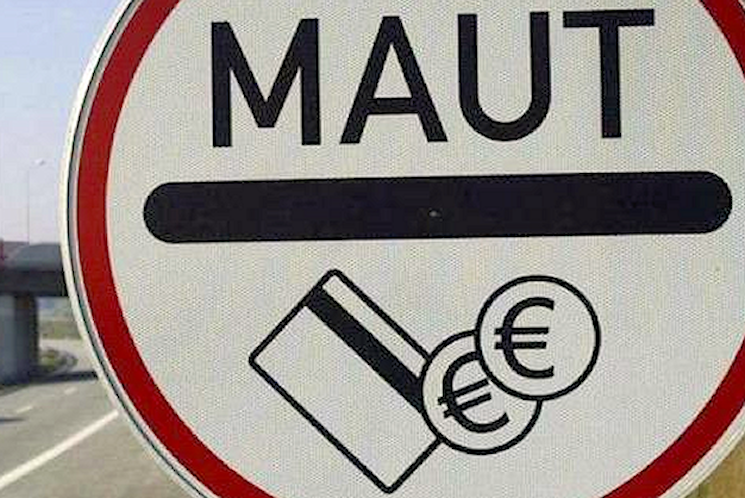
Car drivers increasingly miss out on seamless travel because they have to stop anyway to buy vignette road passes. The next one is due in Germany next year.

It’s debateable whether Margaret Thatcher’s statement of the bloomin’ obvious during her famous Bruges Speech in 1988 – ‘We cannot totally abolish frontier controls if we are also to protect our citizens from crime and stop the movement of drugs, of terrorists and of illegal immigrants’ – has come to pass.

The big threat to Schengen currently is France. Not only would Front National leader Marine Le Pen reinstate French borders the moment she takes power but presidential rival Nicolas Sarkozy is on the record many times saying he doesn’t like it either.

.

Throwback Thursday: talking of borders, one of our favourites if the Finland-Sweden border, Tornio-Haparanda, at the top of the Gulf of Bothnia. Not because there’s an IKEA right there but because the time zone change means you gain an hour. In our case – racing against time - it meant reaching Umea that night rather than Lula, Pitea or Skelleftea and getting our highly ambitious six day Baltic Circumnavigation back on track. The same thing happened coming back from Romania to Hungary. Obviously it ain’t so hot going the other way.

Throwback Thursday: talking of borders, one of our favourites is the Finland-Sweden border, Tornio-Haparanda, at the top of the Gulf of Bothnia. Not because there’s an IKEA but because the time zone change means you gain an hour. In our case – racing against time – it meant (unexpectedly) reaching Umea that night rather than Lula, Pitea or Skelleftea and getting our highly ambitious six day Baltic Circumnavigation back on track. The same thing happened coming back from Romania to Hungary the year before. Obviously it ain’t so hot going the other way.

.

Weekend traffic: there are no traffic warnings for France this weekend but elsewhere the spring holidays get underway. From Friday afternoon in Germany, traffic will be ‘significantly’ higher than usual, escaping the cities, and again on Saturday, heading to the Alps. However, chaos is not expected. Austria is likely busiest of all, clogging the usual suspect back way cross-borders roads. Switzerland has fewer schools breaking up but on Saturday roads will be crowded. There are likely to be the first jams of the year at the Gotthard Tunnel as drivers head south. Also, Dover-Calais and Eurotunnel are both expecting a busy weekend.

Weekend weather: Stormy weather in the central and east Mediterranean moving slowly eastwards over the weekend. High winds in the South of France and from the UK to Scandinavia. Meanwhile, fine and sunny in Iberia, especially south says the BBC. Mild temperatures generally except for the North and East.

.

June Deadline For Ferry To Norway – Route d’Espagne

Norwegian Seaways has three months to secure backing for its bid to restart ferry services between the UK and Scandinavia.

Also, new pictures from @GetPalmd’s coastal road trip from France to Spain. A blanket 19mph speed limit for Gent. The Mainz-Wiesbaden bridge will be back in action for Easter. Coach operators to hold Paris demo next week. MPs doubt Exit Check timetable.

.

THREE MONTH DEADLINE FOR FERRY TO NORWAY

Project Norse: start-up UK-Norway ferry operator enters final phase.

norway ferry

Photo via VisitNorway.com

Hot on the heels on last week’s Budget announcement of £300k in marketing funds to support a ferry link between the UK and Scandinavia, Norwegian Seaways says it has recently secured investment from private backers.

Half a million pounds has been committed to the project so far with a do or die deadline of mid-June to complete the deal. The start-up previously said it would launch the service in March next year.

Norwegian Seaways operations director Paul Woodbury says, ‘I am pleased with the progress made in past weeks and welcome the recent commitment made by private investors; it represents commercial and fiscal belief in our plans.

The work being carried out over the next three months is of fundamental importance to refining our business case, and the support of stakeholders and authorities in this process is key.

I am confident that we have a sound strategy, professional partners and an exemplary team of professionals in place that will give ‘Project Norse’ its best possible chance of success.’

According to the ‘International Ferry to Norway Campaign’, progress so far has included identifying two suitable vessels – only one of which will be used on the service – while negotiations with potential ports and local and regional authorities continue.

The firm has also engaged a marketing agency to build a brand identity and test the business case.

Further updates are promised in April.

In the meantime, potential customers should fill in the survey on the Ferry to Norway website.

.

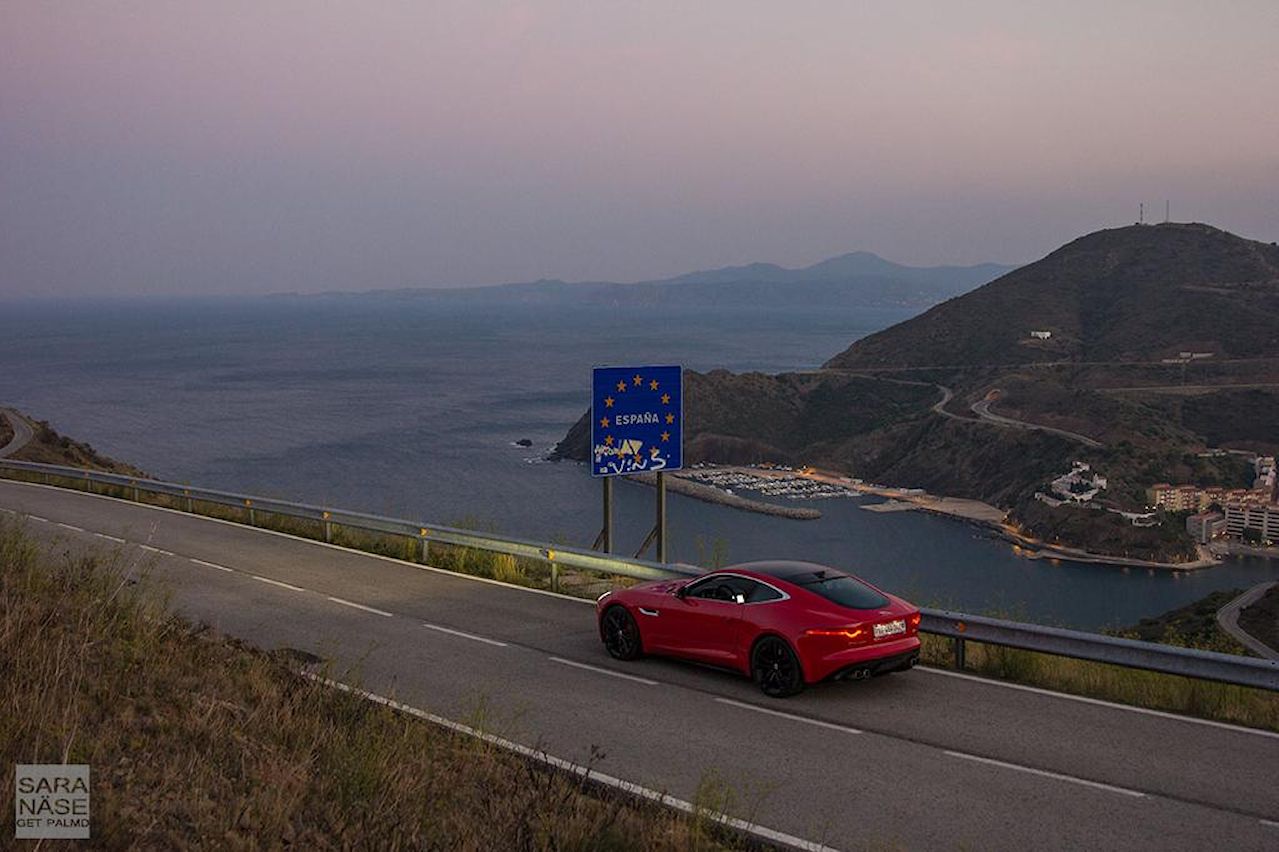
Adventurer Sara Nase crosses the Spanish border by D914 Route d'Espagne. See more at GetPalmd.com, or @GetPalmd

Sara Nase crosses the Spanish border by D914 Route d’Espagne on a road trip from Le Mas de Peint near Marseilles to Cap de Creus by Roses. See more at GetPalmd.com, or @GetPalmd

.

roundup: BELGIUM. As of 22 April, roads in Gent will be restricted to 30kmh (19mph) reports FlandersNews.be. The new speed limit will apply to all roads within the R40 ring road with the exception of the N430 and N422 according to local reports. GERMANY. The A643 Schiersteiner Bridge over the Rhine, the main thoroughfare between Mainz and Wiesbaden, will re-open for Easter reports ADAC. It closed suddenly on 10 February when serious structural defects were discovered. Major daily jams had been feared but in fact, apart from the odd occasion, traffic has flowed smoothly. FRANCE. Coach operators upset about the recent tripling of parking charges – to €96 per day – will hold an ‘operation escargot’ go-slow in Paris next Monday says the ORTE union. Vehicles assemble at Circuit Carole south of Charles de Gaulle airport early on then proceed slowly down the A1 to the peripherqiue then either Les Invalides or the Mairie de Paris city hall for 09:00. EXIT CHECKS. The UK MP’s Home Affairs Select Committee report on ‘The Work of the Immigration Directorates’, published yesterday, doubts whether Exit Checks can be in place by next month’s deadline. It says, ‘We do not see how the Government can fulfil its pledge to deliver 100% exit checks by 8 April 2015. To make it happen will require the Government conceding greater exemptions in addition to coachloads of under 16s. The Home Office must publish a definitive list of what is included in the scope of the programme by the time Parliament rises [27 March]’. Since the report was written it has emerged that Eurotunnel will only check 1 in 5 cars.

.

Road Safety in Europe: 2014 Results Announced

Annual figures out today say road safety improved only marginally in the EU last year.

Also, heavy rain caused severe problems on the roads around Valencia. Thousands of drivers fined during yesterday’s one-day anti-pollution traffic restrictions in Paris. More changes made to Germany’s ‘foreigner toll’. Polish truck drivers protest at German minimum wage rules. Long term major motorway closure in southern Italy.

.

ROAD SAFETY IN EUROPE: 2014 RESULTS ANNOUNCED

UK and Sweden now neck and neck at the top. Very bad year in Latvia. Road deaths continue to fall but rate slows.

EU infographic of road deaths in 2014 showing clear east-west

EU infographic of road deaths per million inhabitants in 2014 showing clear east-west split and Western Europe outliers Belgium and Luxembourg.

The UK and Sweden had the safest roads of the major countries in Europe last year according to new figures.

(The Netherlands, traditionally among the top countries, has yet to publish its 2014 results.)

Both Sweden and the UK saw 29 road deaths per million inhabitants in 2014, the ‘road safety measure’. Sweden was marginally ahead of the UK in 2013.

However, in common with many other countries, both saw rises in fatalities. Sweden was up 6% and the UK up 3%.

Announcing the annual road safety results in Brussels earlier today, EU Transport Commissioner Violeta Bulc said it had been a ‘very bad year’ for road safety.

A total of 25,700 people were killed on Europe’s roads, an average of 70 each day, down just one percent on 2013.

She did however acknowledge that the news was not all bad.

Malta had the lowest rate of road deaths at 26/million after a fall of nearly 40% last year (and 27% the year previously).

Luxembourg also reversed a three year trend of rising roads deaths with a twenty percent cut to 65/million. That is still well above the European average of 50.5/million but at least brings it into line with neighbouring Belgium (down 1% to 64/million).

Of the major countries, Spain remained steady at 36/million compared to France (53, up 4%) and Germany (42, up 1%). Italy saw the number of deaths fall six percent to 52/million.

At the other end of the scale, it was indeed a very bad year in Latvia which saw an eighteen percent rise to 106 deaths per million inhabitants.

Also at or above 90/million are now Bulgaria (90) and Romania (91) though that actually represents an improvement for the latter.

Meanwhile Poland, long dogged with the reputation for having Europe’s most dangerous roads, continues to improve, down 3% to 84 deaths per million.

Bulc said the Commission would publish an in depth analysis of the figures in May but added there was no direct correlation between a country’s economy and road safety.

To achieve the EU target of halving road deaths between 2010 and 2020, fatalities would have to fall an average eight percent each year until then, similar to the falls seen in 2012 and 2013.

See the 2014 results in full here. Read the Commission’s preliminary analysis here. Read our analysis of the latest road safety figures from France here.

.

Spain: persistent rain over the past few days saw the CV-175 road from Castellon up to Villahermosa del Rio completely collapse yesterday. With an amber Meteoalarm for more heavy rain today in the Valencia region, and flooding already reported

Spain: persistent rain over the past few days in the Valencia region saw the CV-175 road from Castellon to Villahermosa del Rio collapse yesterday. With an amber Meteoalarm for more heavy rain today, and flooding already reported in Valencia itself, police tell drivers to exercise ‘extreme caution’. Photo via @InfoEmerg 

.

roundup: FRANCE. 2,803 drivers were fined €22 for breaking the ‘alternee circulation’ rule introduced yesterday in Paris reports AutorouteInfo.fr. Despite the anti-pollution traffic control measures lasting just one day, again, mayor Anne Hidalgo claims a huge success saying jams in the outskirts were reduced by 25-40%. In future she wants control measures to be introduced automatically after two days of high pollution readings rather than needing permission from the government and police as now. GERMANY. More ‘refinements’ have been made to the ‘foreigner toll’ ahead of the parliamentary vote this week reports the Passauer Neue Presse (via thelocal.de). Ten day vignettes will now range from €5-15, and two month vignettes from €16-30, based on engine size and emissions in an apparent bid to link the vignettes with environmental performance as per EU rules. POLAND. Around 2,000 drivers blockaded the A4/E40 motorway yesterday afternoon, just over the border from Gorlitz, in protest at German rules that all drivers on its territory should be paid minimum wage reports TruckJournalist.nl. Enforcement of the new rules reportedly started last week though the requirement for transit drivers is suspended pending an EU investigation. ITALY. The A3 Naples-Reggio Calabria is closed indefinitely around Laino Borgo reports ADAC after a fatal accident on the Italia Viaduct. The 25km diversion is along tight and twisty local roads with long delays to be expected. Heavy traffic is diverted via the SS18 coast road between Lagonegro and Falerna which is, at least, 40km shorter than the 191km A3 route.

.

Watch Out for the Dragoon Ride – Winter Tyre Warnings

US and NATO troops set off on a high profile military road trip to check out the roads around north Eastern Europe, and reassure locals concerned about Russian aggression.

Also, drivers is Spain, Luxembourg and Finland are reminded that spring has not yet sprung. Arguments are polished ahead of the German foreigner toll’s all-important parliamentary session on Thursday. Tragedy strikes Turkey’s landmark Izmit Bay Bridge. More concessions reported on upcoming Exit Checks.

.

WATCH OUT FOR THE ‘DRAGOON RIDE’

High profile military manoeuvre designed to check out the roads and reassure Eastern Europe.

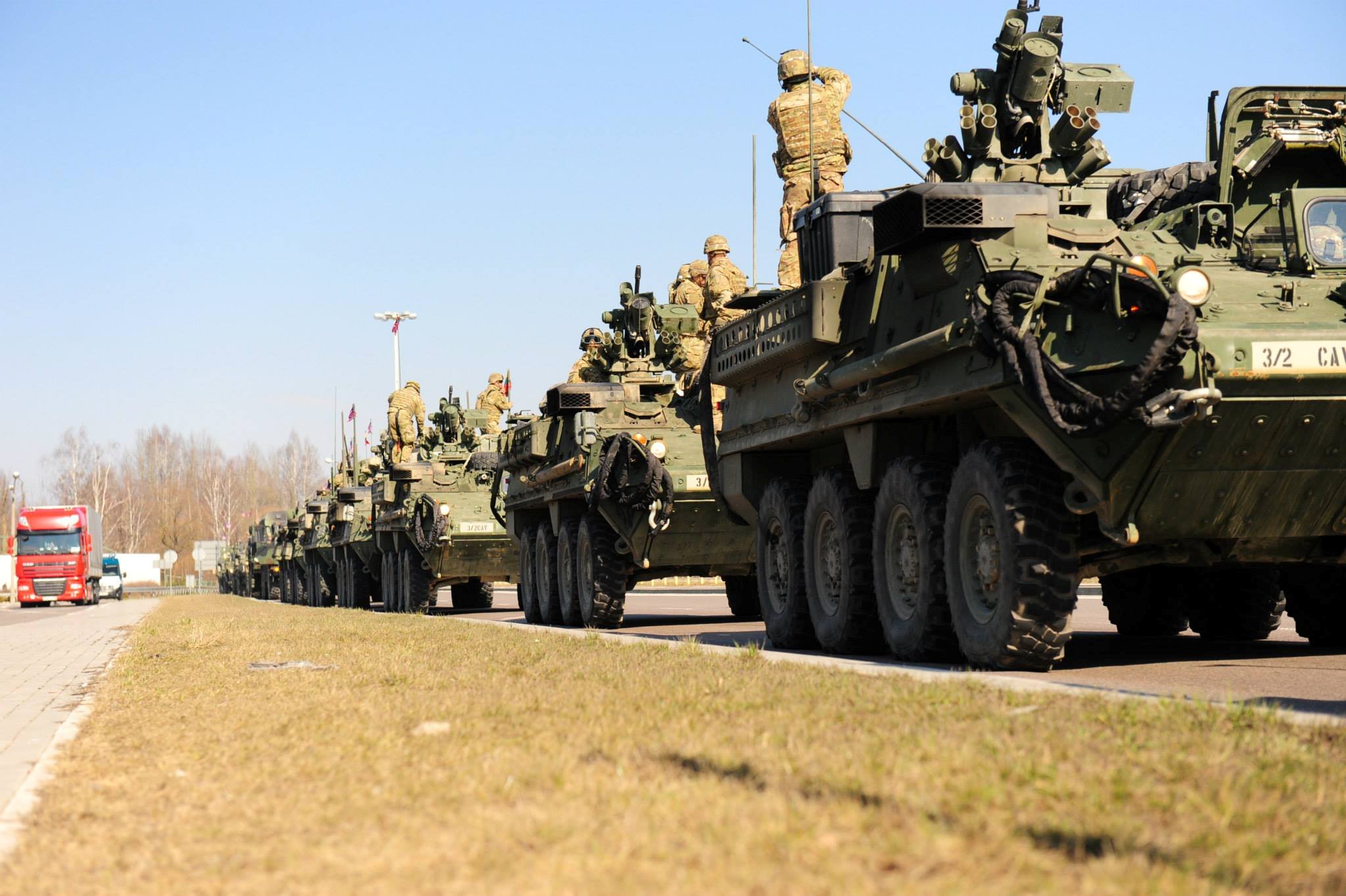
A column of Strykers heads towards the Chinook-supplied 'Fat Cow' refuelling stop in Lithuania today. Photo U.S. Army/Sgt. 1st Class Jacob A. McDonald

A column of Strykers heads towards the Chinook-supplied ‘Fat Cow’ refuelling stop in Lithuania today. Photo U.S. Army/Sgt. 1st Class Jacob A. McDonald

Three separate columns of mainly Stryker Armoured Fighting Vehicles (AFV) – with helicopter and jet fighter air support – converge in Prague next Monday after ten days and 1,100 miles through the Baltic States, Poland, Slovakia and the Czech Republic.

Called ‘Dragoon Ride’, the high profile military road trip is part of ‘Operation Atlantic Resolve’, a series of US Army-backed training exercises in Eastern Europe in response to the apparently Russia-backed fighting in Ukraine.

‘Dragoon Ride is a highly-visible demonstration of U.S. commitment to its NATO allies and demonstrates NATO’s ability to move military forces freely across allied borders in close cooperation,’ says the US Army.

Such armaments would normally be transported by rail but, as well as giving NATO forces the opportunity to mix with locals at stops along the way, sussing out the roads is an intrinsic part of the operation.

According to the US Defense Report, ‘The most impressive feature of the Stryker is its ability to use roads to safely transport a massive amount of infantry across vast distances in a relatively efficient manner rather than transport them via rail which can be susceptible to strategic long range missile attacks.’

Not everybody is enthusiastic. A group in Prague has set up a Facebook page called ‘Tanks no Thanks’ with some nattily designed road signs.

Meanwhile, the governor of South Moravia in the Czech Republic – a member of the ruling CSSD Social Democrat party – complained last week about American soldiers ‘blocking the roads’ after the government reportedly authorised the exercise without a debate in parliament.

Dragoon Ride is scheduled to end on Wednesday 1 April at the Rose Barracks in Vilseck northern Bavaria.

.

Unexpected but moderate snow in north east Spain this morning – pictured AP-68 Zaragoza-Bilbao via DGT.es - reminds that spring is not here yet. Up to 7cm of snow is expected over the next few days in the area, mainly above 1200m. Meanwhile, as Finnish police told drivers last week it is too early to change from winter tyres, their Luxembourg colleagues say exactly the same thing today. The law in the Duchy says winter tyres - or M&S marked all-season tyres - must be used in snow or ice conditions. In practice that means when temperatures are consistently above 7⁰C, in line with the O to O rule (October to Easter – Oktober bis Ostern). Already today there were ice warnings across northern France.

Unexpected snow in north east Spain this morning – pictured AP-68 Zaragoza-Bilbao via DGT.es – reminds that spring is not yet sprung. Up to 7cm is now predicted in the area over the next few days, mainly above 1200m. Meanwhile, as Finnish police told drivers last week it is too early to change from winter tyres, their Luxembourg colleagues say exactly the same thing today. The law in the Duchy says winter tyres – or M&S marked all-season tyres – must be used in snow or ice conditions. In practice that means when temperatures are consistently above 7⁰C, in line with the O to O rule (October to Easter – Oktober bis Ostern). Just this morning there were ice warnings across northern France.

.

roundup: GERMANY. Ahead of the parliamentary vote on the ‘foreigner toll’ this Thursday, transport minister Alexander Dobrindt told his party conference in Bavaria on Saturday that the toll ‘would finally grant fairness on German roads’ according to Dw.de. Dobrindt’s legislation is widely expected to pass. Opponents’ last hope is that the President will refuse to sign it into law. Meanwhile, motoring association ADAC, a staunch critic of the toll since the beginning, has set out its key objections: foreign drivers already pay for the roads via fuel and other taxes it says; it doubts the revenue will be high enough to pay for any improvements; the proceeds are not anyway ring-fenced for road maintenance; and, if the EU forces the government to withdraw the domestic rebate, German drivers will end up paying more. TURKEY. A Japanese engineer working on the Izmit Bay Bridge apparently commit suicide after holding himself responsible for a steel rope which snapped on Saturday. The 51 year old man’s body was found this morning says Hurriyet Daily News. The bridge, set to be the world’s fourth longest suspension bridge at 2.7km, is on the route of a new motorway between Istanbul and Izmir which will eventually cut the journey time from nine hours to just three and a half. EXIT CHECKS. Just one in five cars will be inspected at Eurotunnel reported The Times on Saturday, just a few days after Home Secretary Theresa May told MPs she was possibly considering an exemption for coach parties. The government’s new ‘count them all in, count them all out’ border regime, due to start on 8 April, seems to be unravelling fast, fully in line with operators’ predictions that the checks were too time consuming, and the introduction has been too rushed.

.

Traffic Restrictions in Paris on Monday

‘Circulation Alternee’ does not apply to foreign vehicles or trucks. Returning rental cars exempt.

UPDATE: ‘circulation alternee’ will not be applied on Tuesday 24 March. More later.

.

CAn-duyWQAA2Vzc

Despite pollution levels having returned to normal today, so far it seems Paris will press ahead with traffic restrictions tomorrow (Monday). Current forecasts say fine particle pollution will peak again tomorrow before dispersing.

After much too-ing and fro-ing last week, the Paris Prefecture of Police and the government finally agreed to ‘circulation alternee’ yesterday.

It means only vehicles with the three number grouping on the registration plate ending in an odd number will be allowed to drive in the city from 05:30 (followed by even numbers on Tuesday if conditions persist).

The restrictions do not apply to foreign registered vehicles, or any vehicles carrying three or more people, or the A86 super-peripherique ring road.

There are also no confirmed measures to divert transit trucks away from the Paris region.

Drivers returning even numbered rental vehicles inside the A86 are also exempt.

See here for the full list of exemptions see here (French only).

Public transport has been free throughout the Paris region all weekend and will continue on Monday.

.

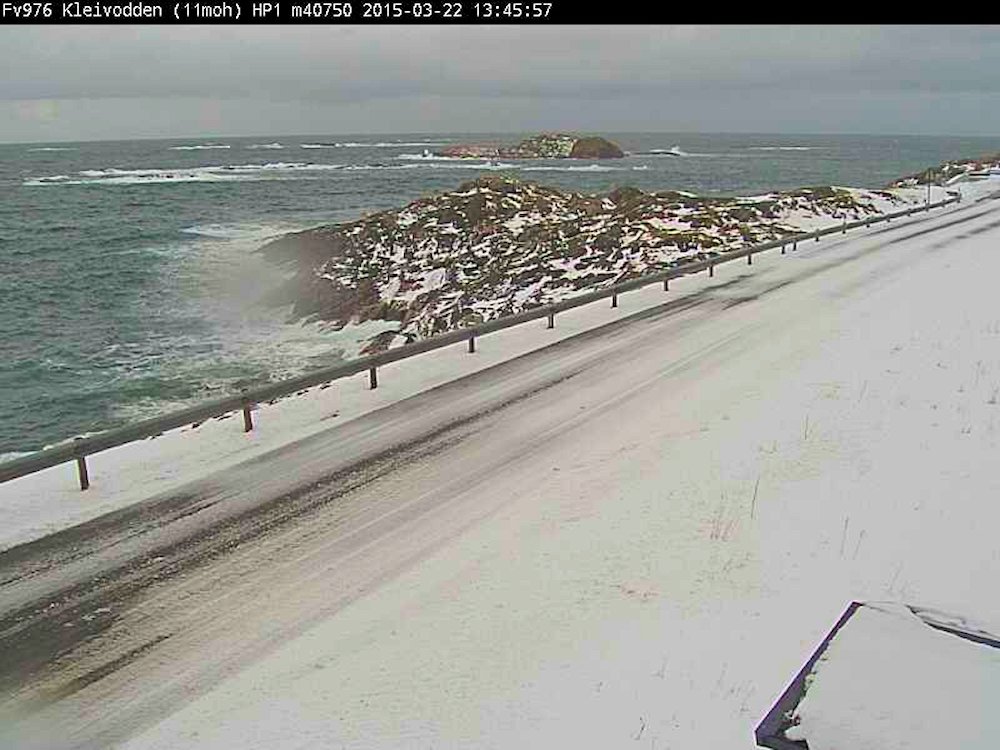
A bit of a racing line beginning to emerge on the Fv976 coast road on Andoya island in northern Norway this morning.

A racing line beginning to emerge on the Fv976 coast road on Andoya island in northern Norway this afternoon, not far from the NATO airbase at Andenes. Webcam photo via Vegvesen.no

.

Road closures Germany via ADAC: A46 Dusseldorf closed both directions Bilk-Holthausen from early Saturday to late Sunday. A1 northbound Cologne closed Saturday night and all day Sunday between Bocklemund and Cologne-North. A71 both directions Suhl-Erfurt between Ilmenau and Arnstadt all day Sunday until 15:00.

.