German road toll overhaul – Stress Test

A surprise announcement from the German Minister for Transport that the country’s truck toll system will expand, though there’s some good news too. Polish engineers carry out a heavy duty stress test on a bridge on the A1. Dutch truckers will hold more motorway go-slows, but won’t say when. Gibraltar queue misery watch. Kosovo road blocks, the EU invests in Stockholm’s inner city ferry port, plus more controversy for the North Marmara Highway.

.

GERMAN ROAD TOLL OVERHAUL.

Big changes for trucks, few new details about cars.

Alexander Dobrindt, German Federal Minister for Transport.

Alexander Dobrindt, German Federal Minister for Transport.

In his first public announcement since being appointed Federal Minister for Transport last December, Alexander Dobrindt has today given some concrete details about the upcoming overhaul of Germany’s road toll system.

Dobrindt was previously Secretary General of the ruling CSU party in Bavaria where the idea for road tolls for car drivers first originated.

However, the big news is that the existing truck toll system will be extended to all vehicles weighing 7.5t and over from the first half next year.

This will mean an extra 80,000 trucks paying the per kilometre charge.

By 2018, a further 1,000km of dual carriageway national roads will also brought into the toll network.

However, the tolls themselves will be reduced. This is because low interest rates mean the costs of maintaining roads is less which must be reflected in the toll charges.

The €2bn the lower tolls would cost each year meant the system had to be expanded to make up for the lost revenue.

Meanwhile, there were few new details about the upcoming toll for cars though Dobrindt did confirm that the government bill will be published before the summer recess, that the legislative procedure would be finished this year and the charge will be introduced in 2016.

However, an interview published on the ministry website says the toll (or vignette) will cost around €100 per annum and there will be discounts for one-off or infrequent users.

It is understood a similar pay-as-you-go electronic toll for cars was rejected over privacy concerns.

Watch the announcement here (German only).

.

Stress Test: 2,500t of truck perform a stress test on the A1 bridge at Mszanie in south west Poland.

Stress Test: 2,500t of trucks perform a stress test on the A1 bridge at Mszanie in south west Poland.

.

NETHERLANDS. Disgruntled Dutch truckers have decided the date(s) of their next nationwide motorway go-slow strike but won’t announce it beforehand to make it more effective according to local reports. They previously promised a ‘warm spring and hot summer’ of strike action. KOSOVO. ‘Hundreds of Serbs’ have today blocked the road north to the Serbian border between Mitrovica and Leposavic after a dispute with EULEX peacekeepers. GIBRALTAR QUEUE WATCH: delays topped out at two hours today with, at one point mid-afternoon, 22 cars crossing in 30mins. SWEDEN. A relatively substantial €14m is being invested by the EU into expanding capacity at Stockholm’s inner city Värta-Frihamnen (Vartahamnen) ferry port. Part of the Nordic Triangle road/rail/ship project. Eleven routes currently serve the port, only three to outside Scandinavia: Tallinn, Riga and St Petersburg. TURKEY. More controversy over the in-build North Marmara Highway, across the northern Bosphorus Strait near Istanbul, and the alleged archaeological and environmental damage. Also see this video from AFP:

.

.

Speed freak King Filip – Gran Canaria mishap

Belgium’s king falls foul of new cross border speeding fines. A bizarre bus accident in the mountains of Gran Canaria. Fatal accidents are down very slightly in France, but injuries and hospitalisations see big jumps.

.

SPEED FREAK KING FILIP

Belgian King caught out ‘dozens’ of times by cross border traffic fines.

Belgium's King Filip has been caught out by new registration plates which mostly start with 1.

Belgium’s King Filip has been caught out by new registration plates because they start mostly with 1.

Despite only having driven the royal BMW 7-series in France once since ascending the throne in July 2013, King Filip has received ‘dozens’ of traffic fines in recent months.

As of 7 November 2013, drivers from most European countries can be prosecuted for traffic offences committed in another EU country.

The offences include speeding, not using a seat belt, failing to stop at a red traffic light, driving under the influence, using a forbidden lane and using a mobile phone while driving.

The only countries not party to the agreement are the UK, Republic of Ireland and Denmark.

‘EU Directive (2011/82/EU) on the cross-border exchange of information on traffic offences’ is in addition to cross border fines for parking and entering restricted zone which can apply to drivers from all EU countries.

The problem for King Filip is that new registration plates in Belgium introduced in 2010 mostly start with a 1.

Senior Belgian royals have single number registration plates, in the case of King Filip just 1.

Many speeding cameras in France were unable to read the new plates and automatically defaulted to read the first number. The fines were all sent to the royal palace in Laeken, Brussels.

The good news for King Filip is that the fines have been quashed. The bad news for Belgian speeders is that the French cameras will be upgraded before the summer.

more: see a graphic of the major traffic laws around the EU here.

.

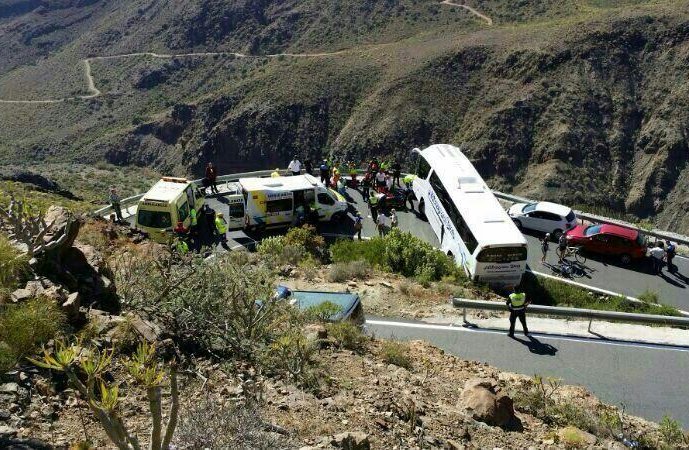
A tragic accident in Grand Canaria on Saturday after an Italian passenger was taken ill on a drive through San Bartolome de Tirajana in the centre of the island. The vehicle had to stop on a dangerous bend in the road. While the driver was manoeuvring, the man was run over and killed and nine others were injured, two seriously reports @AGI_Italy_News. Photo via @112Canarias.

A tragic accident in Grand Canaria on Saturday after an Italian passenger was taken ill on a drive through San Bartolome de Tirajana in the centre of the island. The vehicle had to stop on a dangerous bend in the road. While the driver was manoeuvring, the man was run over and killed and nine others were injured, two seriously reports @AGI_Italy_News. Photo via @112Canarias.

.

FRANCE. Fatalities dipped 1.4% compared to February 2013, but the number of people injured in road accidents jumped 11.3%, and those hospitalised by 15%, last month. Much depends on March’s figures, a year after the first significant drop in road deaths in 2013. If this trend continues we could see a very unhealthy rise in the number of fatal road accidents.

.

Road works season Germany

The German road works season kicks off with a major refurb of the A7 Elbtunnel in Hamburg but there’s plenty of work going on in other parts of the country this spring too (map).

.

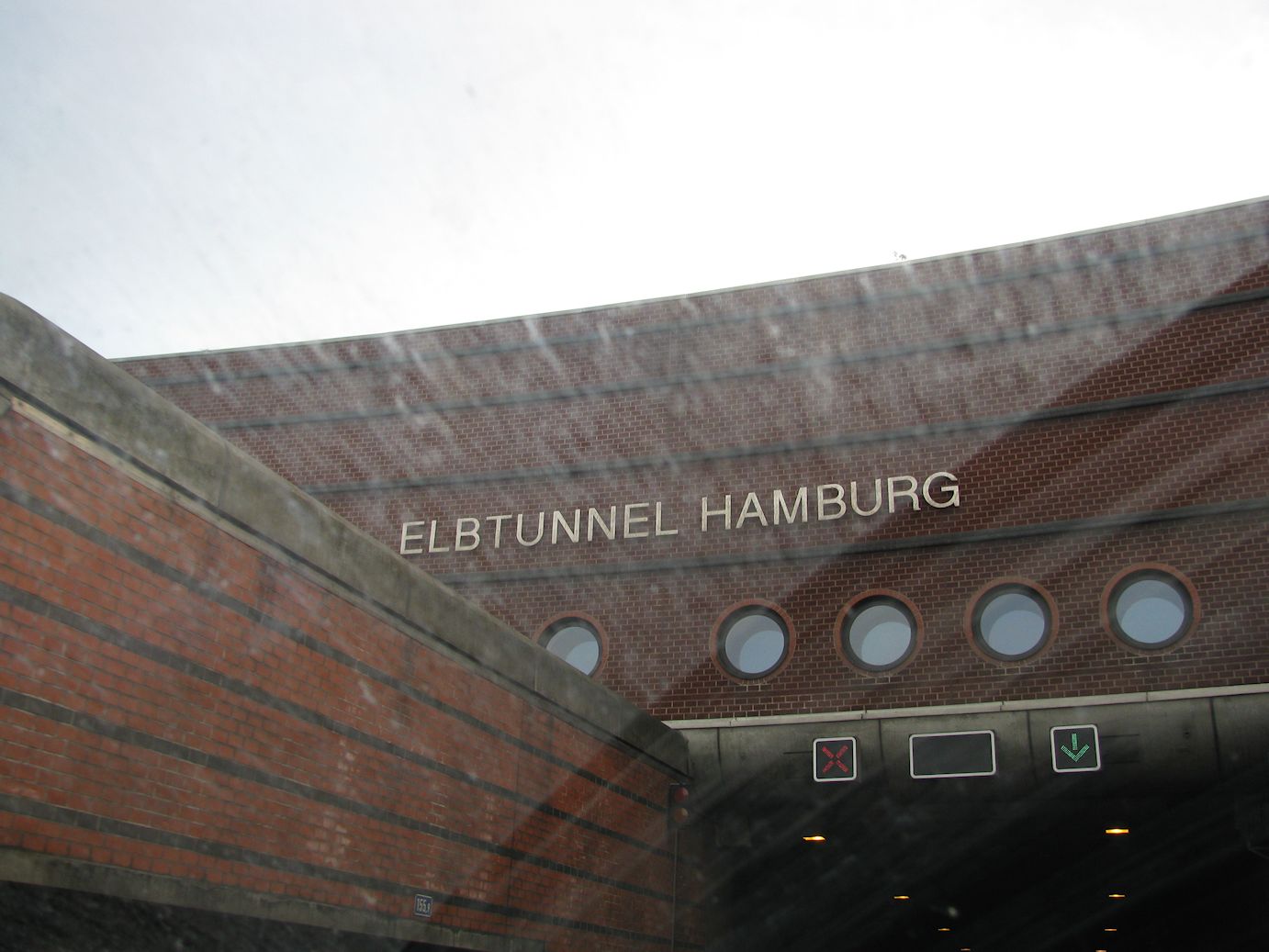
Long term road works on the Elbtunnel on the A7 in Hamburg starting today kick off road building season in Germany. More later. Photo @DriveEurope.

Long term road works on the Elbtunnel on the A7 in Hamburg starting today kick off road works season in Germany. Photo @DriveEurope.

The end of the school half term holidays across Europe at least means the roads will be quieter at the weekends – unless there’s a heat wave (or late snow).

However, now that winter’s over, it means road works can kick off in earnest. As ever, the major action takes place in Germany.

Today sees the start of a large scale refurbishment of the Elbtunnel on the A7 in Hamburg. Until Friday 11 July drivers should expect long delays as each of the tubes are closed in turn.

As well as being a very busy commuter road – the lanes switch direction for the morning and evening rush hours – the 2.6km, four bore, eight lane tunnel, under the River Elbe just to the west of the city centre, is on one of the main routes between Western Europe and Scandinavia.

For the time being, especially during peak times, the disruption probably tips the balance in favour of the A1 and the Puttgarden-Rodby ferry.

Work will be halted between 17 April and 9 May for Easter, and 5-9 June for Pentecost, but otherwise only five lanes will be open until 17 April, and then only four until 11 July.

Drivers elsewhere in Germany will hardly be spared however. According to motoring organisation ADAC, the following stretches will see the bulk of road works this spring:

North

A23 Hamburg–Heide, A7 Kassel-Hannover–Hamburg.

West

A1 Cologne–Dortmund, A4 Aachen–Cologne, A45 Giessen-Hagen–Dortmund and A61 Mönchengladbach–Koblenz.

East

A4 Erfurt–Chemnitz.

South

A3 Nuremberg–Würzburg, A5 Heidelberg–Darmstadt, A6 Heilbronn–Nuremberg, A7 Ulm–Würzburg and A8 Karlsruhe-Stuttgart–Munich.

The works are all scheduled to finish before the summer (German road works are good value, but they have the reputation for over-running). We’ll keep our eye on them to see how they affect journey times.

.

.

Security lockdown, Holland

The Nuclear Security Summit in The Hague, from Sunday to Wednesday, will cause major traffic disruption. The biggest impact will be concentrated in the south and west Netherlands but the effects will also be felt right across the country.

.

Large scale road closures accompany next week's Nuclear Security Summit in The Hague, starting tomorrow, all along the western side of Holland. Details later.

The A4 between Amsterdam and The Hague will be one of the roads most affected. Photo @DriveEurope

Disgruntled Dutch truckers have vowed a ‘warm spring and hot summer’ on the roads after collective talks between unions and management broke down on Thursday. This follows a successful go-slow on motorways around the country two weeks ago.

In the meantime Dutch motorists have to contend with this week’s Nuclear Security Summit at The Hague.

There hasn’t been much about it in the UK press but #NSS2014 is a big deal. The Summit aims to reduce nuclear stockpiles, improve security at nuclear installations and increase international cooperation.

The fifty eight world leaders, and 5,000 delegates, arriving Sunday and leaving Wednesday means extensive road closures and inevitably long delays in the area between Amsterdam, The Hague and Rotterdam. Heavy traffic is likely to affect drivers heading to and from Stena Line’s Hook of Holland ferry port.

Basically, from 16:00 Sunday until 17:00 Wednesday many roads around The Hague (Den Haag), and between there and Amsterdam, will either be shut, or have lanes closed:

A4 Amsterdam>The Hague: lanes closed until the Burgerveen junction with A44, and J3, J3a and J4 closed.

A5 west Amsterdam ring road shut in both directions between A9 and A4.

A44/N44 shut direction The Hague from the Burgerveen junction with A4.

The link roads between A4 and A44/N44 – N14 and N206 – will also be shut.

Apart from the N14, the roads will re-open from 15:00 Monday to 13:00 Tuesday but these times are subject to change. Unless you have essential business, the entire area is best avoided for the duration.

Meanwhile, drivers heading to either Amsterdam or The Hague/Rotterdam from around the rest of the country – including Alkmaar, Joure, Groningen, Arnhem and Nijmegen – will be diverted to avoid the black spots and smooth out traffic flow.

For more information see here, or for local road closures in The Hague itself, see here.

Map of the major roads affected:

.

Uncertainty continues for MyFerryLink

NEWS: Another day of legal drama on the English Channel sees the tide turn against Eurotunnel and MyFerryLink. The Competition Commission will not drop its merger inquiry while it seems Eurotunnel is running out of patience.

.

UNCERTAINTY CONTINUES FOR MYFERRYLINK.

Competition Commission will not drop case involving new Dover-Calais operator.

DFDS ‘very pleased’ – Eurotunnel ‘expresses incomprehension’.

Moment of truth: Dover-Calais ferry operator MyFerryLink finds out this morning if the Competition Commission will finally drop the case which has caused so much uncertainty for the new operator.

The Competition Commission will not drop its Eurotunnel/SeaFrance merger inquiry.

It means the uncertainty which has dogged Dover-Calais operator MyFerryLink since it opened for business in 2012 will continue until early May at the earliest.

A statement from the Competition Commission this morning says, ‘It is our provisional view that Eurotunnel in effect acquired a business that was already geared up to run a ferry service between Dover and Calais, using assets that had been proven in practice to be suitable for that activity. It would have faced a much longer, more expensive and riskier process to get the service up and running if it had tried to buy alternative assets in the market. We found that the commercial operability of the assets had not been greatly affected by SeaFrance’s liquidation.’

The now long running saga turns on a fine legal issue, whether – when Eurotunnel Group bought the former SeaFrance ferries and leased them to new operator MyFerryLink in 2012 – it had just bought assets, or had effectively acquired an ‘enterprise’.

In its original decision in June 2013, the Commission had found the latter and barred the ‘Eurotunnel ferries’ from Dover.

However, in December 2013, the Competition Appeals Tribunal said the Competition Commission had not proved the deal was effectively a merger between the two companies. It queried therefore whether the CC had jurisdiction.

On 8 January 2014, the Competition Commission announced it would re-examine the case and publish provisional findings in mid-March.

The interested parties now have an opportunity to argue their cases ahead of a final decision due in early May.

A statement from DFDS says: ‘We are very pleased with the provisional findings and look forward to the CC’s final decision,’ says Niels Smedegaard, CEO of DFDS. ‘DFDS remains committed to acting in the best interests of our customers, employees and shareholders. Our objectives can only be achieved if conditions for fair competition are re-established in the Channel market.’

A statement from Eurotunnel, ’emphasises that over the past two years the market has in no way been negatively affected by MyFerryLink. On the contrary statements by a competitor confirming that it would have to leave the short straits market are, in the light of the evidence from public statements about their financial strength and ambitions to expand, entirely incredible.

To conclude, if prior to its final decision the Competition Commission does not wish to review its perspective on the competition which exists across the Strait of Dover in the light of the current reality, and not based on suppositions from two years ago, Groupe Eurotunnel will withdraw its ferries from The Channel.’

.

EUROTUNNEL UNLIKELY TO APPEAL CC’s FINAL DECISION.

Competition Commision’s final decision could spell end of road for Eurotunnel and MyFerryLink.

etunnel

Eurotunnel is unlikely to appeal if the final decision of the Competition Commission due in May goes against the company.

The Competition Commission announced this morning it would continue its inquiry into the alleged merger between Eurotunnel and MyFerryLink, see below.

A spokesman for Eurotunnel told @DriveEurope this afternoon that the matter was coming to a ‘crux point’ and that the continued uncertainty for MyFerryLink was stretching out when the operation could start to make money.

MyFerryLink lost €22m in 2013 but doubled its market share over the year.

Eurotunnel’s last hope is that the Competition Commission will carry out a new review of the market as part of its deliberations and find that the situation has changed substantially since the investigation was first opened.

However, a spokesman for the Competition Commission subsequently told @DriveEurope the CC was not obliged to do this. Unless someone brought forward ‘dramatic’ evidence that the market had changed then a fresh review was unlikely he said.

SCOP, the company which leases the ferries from Eurotunnel and operates them as MyFerryLink, would then be left to pursue any appeal on its own, and lease new ships.

.

Road rules rejig Spain – Natural environment

Spain gives notice of a comprehensive overhaul of its rules of the road. Koenigsegg highlights a stunning corner of northern Europe, closer than you think. 

.

WHOLESALE ROAD RULES REJIG SPAIN

Spain’s yo-yo speed limits are on the move again, among many other things.

No more surprise road works in Spain. Photo @DriveEurope.

No more surprise road works in Spain. Photo @DriveEurope.

Law makers agreed today to restore the 130kmh motorway speed limit though they will decide later exactly when it will be re-introduced.

Motorway speeds were cut from 120kmh to 110kmh in early 2011 to save fuel during the Arab Spring but restored soon after. Since the first limit was introduced in 1973 it has varied incrementally, up and down, from 100kmh to 130kmh.

At the same time, the national speed limit on main roads will be cut from 100kmh to 90kmh.

The re-jigged limits are just one of a number of changes due to be made to driving laws in Spain.

There will be increased penalties for drink and drug driving. No children under 1.35m will be allowed in the front seat (unless the back seats are full of small children). Fines for using a speed camera detector will be raised to €200 (and to €6,000 for using a camera jammer). Foreign residents will have to register vehicles with local authorities to ensure fines can be collected. It will be illegal to drop anything on the road, and tow trucks will have the same priority as ambulances.

Interestingly, it will be considered a serious offence to dig up the road without permission.

One of the seemingly more minor changes is likely to have big implications. For the first time, authorities will be able to ban certain types of vehicles from specified areas depending on ‘environmental criteria’. Undoubtedly this means so-called Low Emission Zones.

Apart from France, likely to introduce them in the near future, Spain is currently one of the few major western European countries without any kind of LEZs.

The new rules will not come into force for some months. More when we have it.

UPDATE: new rules are due to come into force on 9 May 2014 – also see this roundup from The Olive Press.

.

SPOTLIGHT SOUTHERN SWEDEN.

Natural environment:

Natural environment: a Koenigsegg CCX on the road in southern Sweden. Photo by Oscar Bakke Photography. Of course the Koenigsegg factory is in this part of the world, at Angelholm Airport on the Bjare Peninsula, midway between Gothenburg and Malmo in the south west. We’ve been, it’s lovely, with the crystal clear, still Laholms Bay to the north and the wilder Skalderviken Bay to the south, and some of the smartest hospitality we’ve ever come across (see link above). Sweden should be on every road trip list because it’s not as far as you might think. At around 800 miles from London it’s two days gentle motoring via the amazing Oresund Link.

.

Porsche’s favourite roads

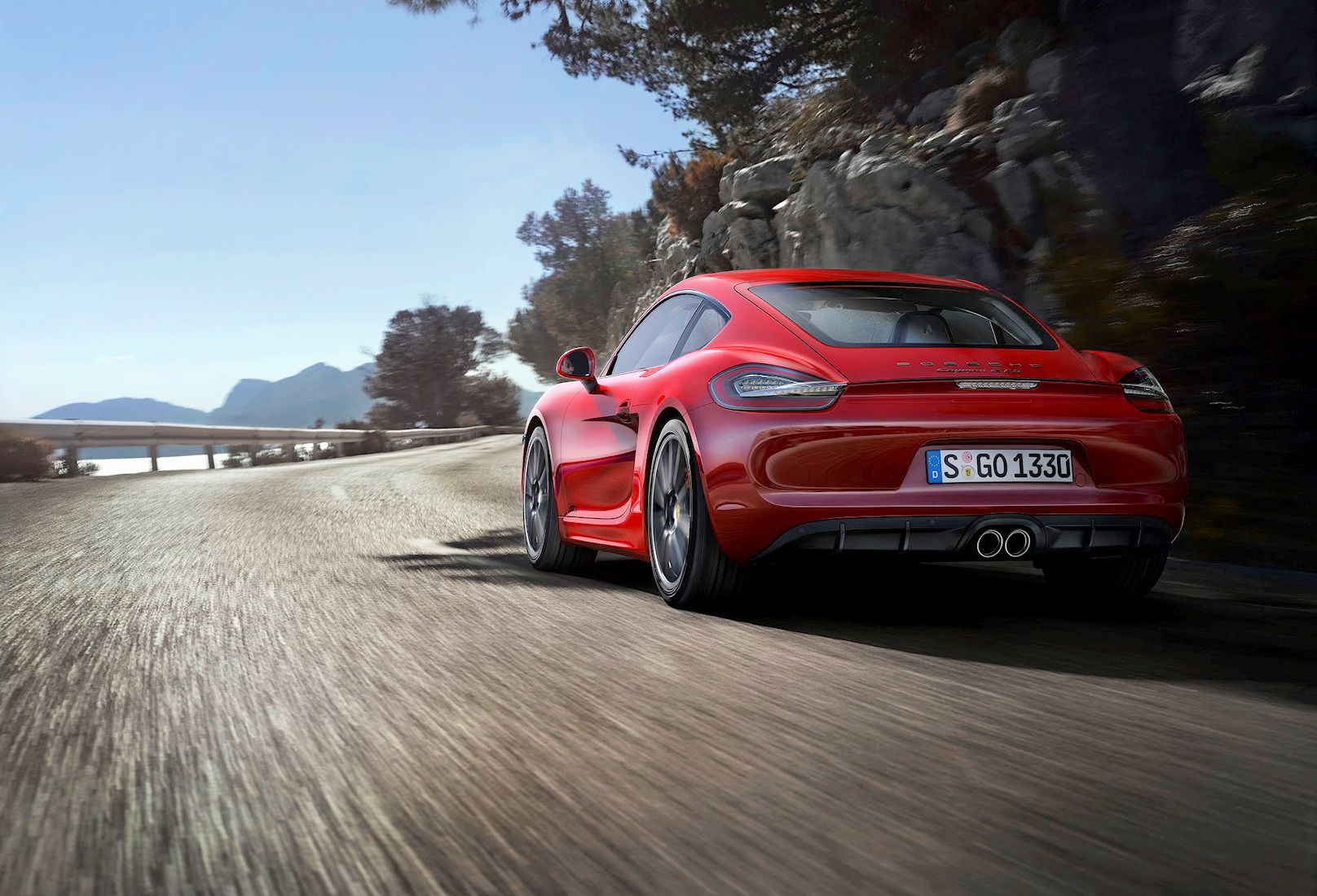
Porsche picks out its favourite European roads to mark the launch of the Boxster and Cayman GTS.

.

Porsche Boxster GTS: 0-62mph in 5secs, 330hp, top speed 174mph, 211 g/km CO2, £52,879.

Porsche Boxster GTS: 0-62mph in 5secs, 330hp, top speed 174mph, 211 g/km CO2, £52,879.

From its base in Stuttgart, south west Germany, Porsche has direct access to – many of – Europe’s finest roads. However, for the new GTS Route app which accompanies the launch of the Boxster and Cayman GTS models, the company has taken a much wider view.

The set routes shown here – there is also a feature to record and share your own great drives – contain some intriguing, and surprising, choices.

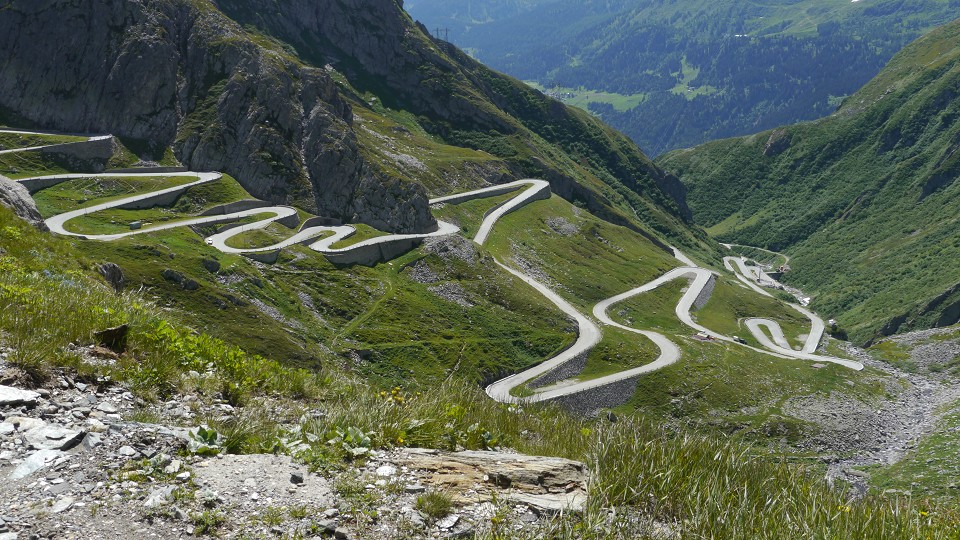
The Gotthard Pass.

The Gotthard Pass.

The Swiss Loop. As regular readers will know, Andermatt – just off the A2 motorway, just north of the Gotthard Tunnel in south central Switzerland – is the epicentre of some of Europe’s best known switchback mountain roads. Gotthard, Susten, Grimsel, Nufen and Furka are all with a few miles and can be connected together in a variety of ways.

Porsche’s version is a mix of the fast and twisty, heading north from Andermatt on the A2 to skirt the southern shore of Lake Lucerne. Switching to the A8 at Stans, the route turns south again as far as Lungernersee and the H8. This is where the corners start, past Sherlock Holmes’ Reichenbach Falls, before taking Sustenpass back to Andermatt.

The grand finale is an absolutely mad string of Gotthard, Nufen, Furka and Grimsel passes to finish beside Grimselsee. You might need the day off afterwards.

South west Iceland.

South west Iceland.

Best of Iceland. Interesting. Iceland’s most famous road is the 800 mile R1 which circumnavigates the entire island. Presumably in the name of brevity, Porsche has opted for the road between Keflavik Airport and capital Reykjavik. Direct it’s less than 30 miles – via the new troll road which had the locals out in force last year – but Porsche’s route is a circuitous 223 miles, an ‘Iceland’s Greatest Hits’ taking in lakes, forests and coastline with apparently no need of mountain passes and hairpin bends. We’re prepared to take their word for it (get your car to Iceland via the Smyril Line ferry from Denmark).

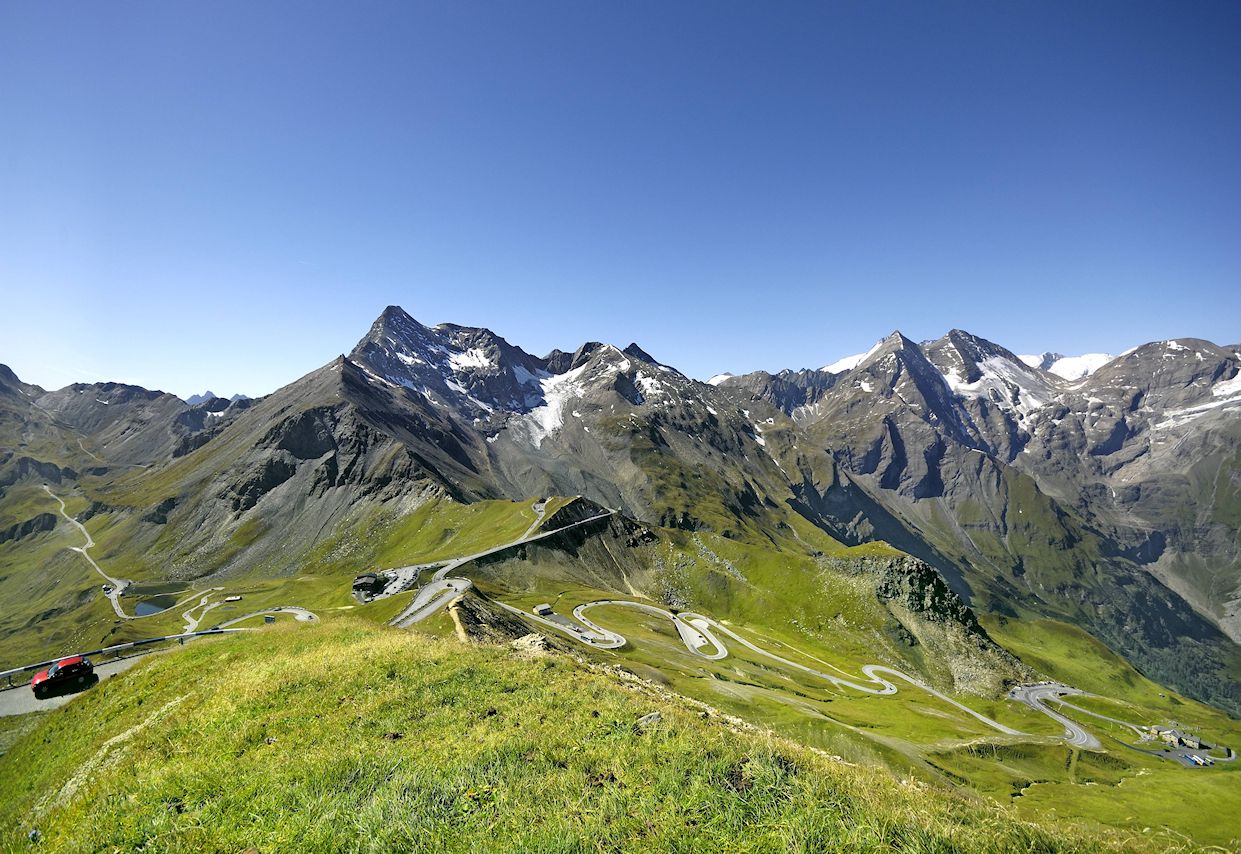
Grossglockner High Alpine Road from the top, 8,215 feet.

Grossglockner High Alpine Road from the top, 8,215 feet.

Grossglockner Pass. It’s surely no coincidence that one of Porsche’s favourite roads is the one between Zell-am-See (where the Porsche family come from) and Gmund (where the first factory was established). On the way is Grossglockner, Austria’s flagship alpine road.

From afar, G’glock might come off something like an asphalt theme park. It has its own website, t-shirts, opening times and admission price. Don’t be fooled. There’s something about the way the often cobbled corners rumble under tyres which makes the heart beat faster as the road snakes its way to a – literally – breath taking 8,215 feet.

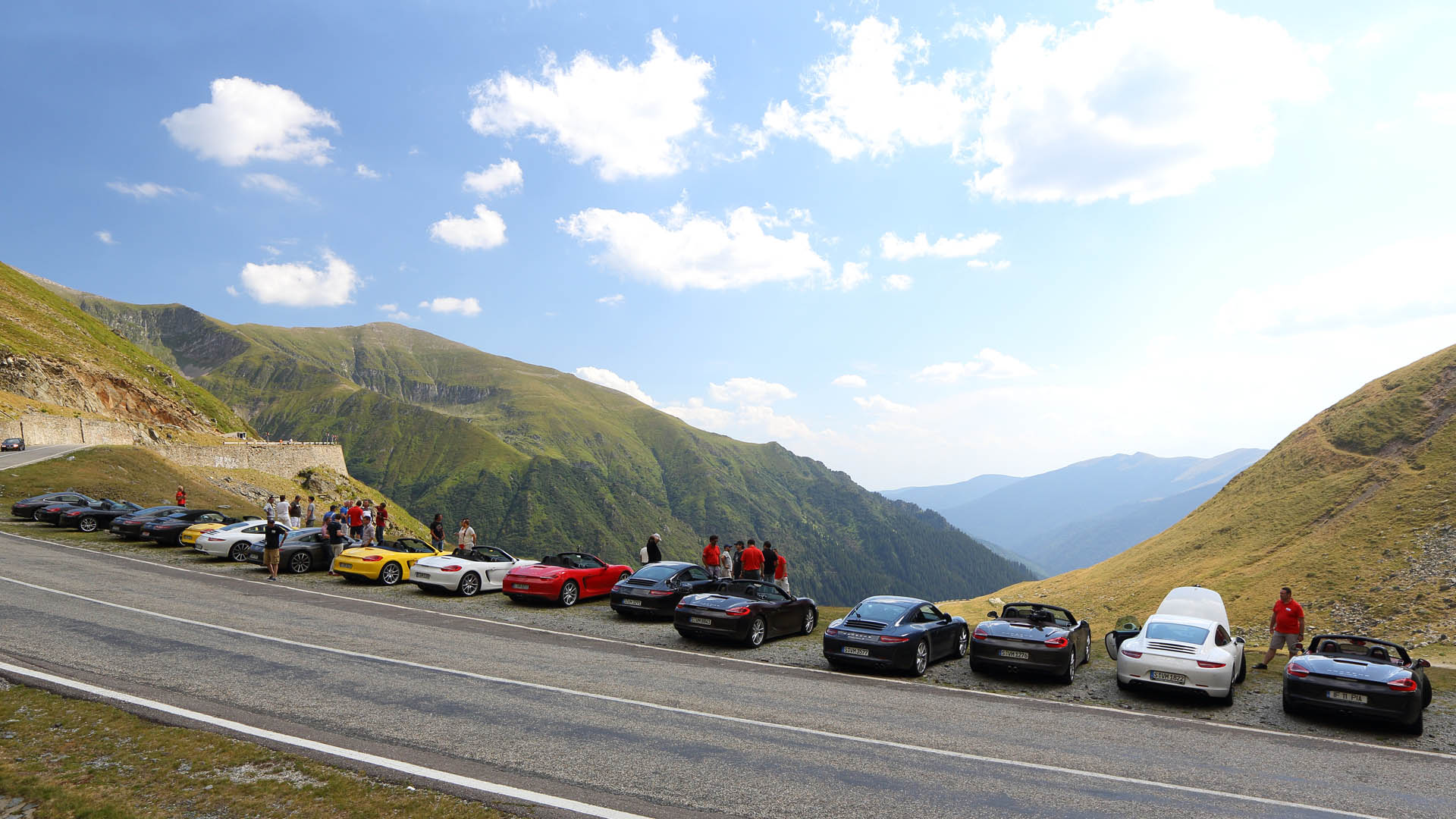
Where next? Last year's Porsche Performance drive was from Istanbul to Budapest, including the unsurpassable Transfagarasan in Romania (above). As for next year we've no idea. There are no clues on the website, performance-drive.porsche.com. Best try your local Porsche dealer.

The Porsche Performance Drive lines up at the top of Transfagarasan on its way from Istanbul to Budapest in 2012.

Transfagarasan. ‘The world’s best road’, ‘Road in the Clouds’, ‘Ceausescu’s Folly’. There are many ways to describe Romania’s 60 mile, A-grade, world class mountain road. Yes we’ve been, it was closed, in mid-May. Most people’s problem is getting there, it sounds so far away. Porsche made it a star feature of its 2012 Istanbul-Budapest Performance Drive. If that’s too much, bear in mind you can get there in a day from Vienna (start early mind) and camp at the top too. Far be it from us, but the Porsche route heads south to north, from Bucharest, while it’s generally said to be at its best the other way, from Sibiu. While you’re in the area check out Transalpina, and the brand-new Transbucegi.

This sign is too old to be part of modern health and safety culture.

This sign is too old to be part of modern health and safety culture.

Scottish Highlands. What the Scotland lacks for height it more than makes up for in sheer gradient. Cattle Pass winds up and around the Applecross Peninsula in Wester Ross and hits 20% in places, the steepest road in the United Kingdom. That’s just part of a 223 mile route Porsche has selected, a loop around the opposite coast to Aberdeen, exploring the raw, exposed beauty of the least populated part of the British Isles.

Am personally in no hurry to revisit Wester Ross. The overwhelming memory of a childhood holiday is the smell of clutch and brakes as the family Ford Anglia lunged around on roads you would think twice about walking on. Perhaps a set of decent Porsche stoppers would give it a fresh perspective.

Sylvensteinstausee, one of the many lakes on the German Alpine Road.

Sylvensteinstausee, one of the many lakes on the German Alpine Road.

German Alpine Road. Again, you might have expected Porsche to plump for the racetrack roads of the Black Forest where Andreas Preuninger put the finishing touches to the latest 911 GT3. Instead they’ve opted for a road that isn’t really a road, as such.

Back in the day the German Alpine Road was planned as a scenic autobahn, stretching 200 miles across the northern Alp foothills through southern Germany, from Lake Constance in the west to Lake Konigsee (and Berchtesgarden) in the east. It was never built but it’s possible these days to string the route together via the back roads, meandering occasionally up to and across the Austrian border.

The route takes in some fabulous scenery, the fairy tale Neuschwanstein Castle and Oberammergau. The biggest challenge however will be navigating.

.

Mont-Dore. Every Porsche fan’s favourite French road is the N85 Route Napoleon, 200 miles between Grenoble, Gap and Cannes. Intriguingly though Porsche has opted for a little known loop from Clermont Ferrand, in and out of the Auvergne and Massif Central.

Apart from the lakes, hills, mountains and stunning 360 degree high plateaus that make up the landscape in this part of south central France – a gentler, quieter (cheaper) version of the nearby Alps – the focus of this relatively short route, 60 miles, is the road used – still – for the classic Mont-Dore hill climb.

The original GTS – a racing version of the 904 coupe – competed here. Just don’t go in early August.

.

Porsche Cayman GTS: 0-62mph in 4.8secs, 340hp, top speed 177mph, 211 g/km CO2, £55,397.

Porsche Cayman GTS: 0-62mph in 4.8secs, 340hp, top speed 177mph, 211 g/km CO2, £55,397.

.

For more information – more maps and photos, detailed routes, and the best/only times to go – see the GTS Routes app in the Apple iStore. It’s free. You don’t have to be GTS – or Porsche – owner to use it. It automatically saves your best routes with a one touch button, allows you highlight the best bits, vote for your favourites and gain access to other users’ favourite routes too.

.

Diesel out of fashion in Paris – Late Break

The major loser in this weekend’s Paris mayoral election is likely to be diesel. Mercedes comes up with an interesting offer on its new GLA. NATO makes a strategic roads investment in Macedonia. Finns reject DUI murder rap. Trucks set to become safer. Dover is the biggest, the latest Gibraltar queue misery, and a Mini driver makes a massive mistake in the French Alps.

.

DIESEL’S DAYS ARE NUMBERED IN PARIS

Rival mayoral candidates agree on one thing: diesel is bad

Nathalie Kosciusko-Morizet, left, and Mayoral rival Anne Hidalgo apparently share a distaste for diesel.

Nathalie Kosciusko-Morizet, left, and Mayoral rival Anne Hidalgo apparently share a distaste for diesel.

As Paris approaches the sharp end of its mayoral election, the candidates at least agree on one thing: diesel is bad.

Despite yesterday’s vehicle ban being called off after just one day, and pollution levels peaking two days before the ban was introduced, the particulate matter emitted particularly by diesel engines has been fingered all round as the major culprit.

Favourite Anne Hidalgo, deputy of the current mayor Bertrand Delanoe, has vowed to ‘totally eradicate diesel from Paris, including coaches and buses,’ and promote electric cars if elected.

She calls her close rival Nathalie Kosciusko-Morizet ‘Minister of Diesel’ for apparently presiding over the rise of diesel cars when Morizet was environment minister in Nicolas Sarkozy’s government.

Sales hit 77% of the total in 2008 as the fuel duty gap between petrol and diesel grew. The gap still stands at nearly 20c per litre, €1.289 versus €1.479.

Mourizet hit back by calling the vehicle ban ‘window dressing’, and said that making the Autolib city bikes free merely meant, ‘Parisians can now get on their bikes to breathe in diesel fumes from buses, signed off by Hidalgo, which will be running on the city’s streets until 2027.’

Her own plan is for ZAPA zones (Priority Air Quality Action Zones) which will ban ‘polluting vehicles’ in favour of pure electric and LPG.

Whichever candidate wins on Sunday it seems diesel drivers are sure to be the losers.

.

update 21 March: in an interview today with thelocal.fr, Anne Hidalgo expands on her policy on diesel: ‘I would like to eliminate diesel emissions from the city by 2020. In fact, I’m particularly interested in reducing nitrogen oxides by 40 percent, fine particle pollution by 28 percent and very fine particles by 40 percent.’

The latest polls says Hidalgo is four points ahead of Kosciusko-Morizet though that is not enough to ensure outright victory on Sunday. A second round of voting, on 30 March, looks inevitable.

.

Try before you buy: pick up a brand new Mercedes-Benz GLA in Stuttgart. Drive it 225 miles south west to Kitzbuhel in Austria, spend a day skiing with a private 'Red Devil' instructor, stay at the five star Hotel Grand Tirola, take the car back to Stuttgart the next day. Price €499 for two sharing. A good deal? You have until 28 March to decide. Click the link above.

Try before you buy: pick up a brand new Mercedes-Benz GLA in Stuttgart. Drive it 225 miles south west to Kitzbuhel in Austria, spend a day skiing with a private ‘Red Devil’ instructor, stay at the five star Hotel Grand Tirola, take the car back to Stuttgart the next day. Price €499 for two sharing. A good deal? You have until 28 March to decide. Click the link above.

.

roundup: MACEDONIA. NATO, believe it or not, is paying to overhaul thirteen bridges on the A1/E75 Veles-Katlanovo highway, to the south east of capital Skopje. The work will cost €8.6m and be completed by next September. It’s phase three of a project that has previously fixed 51 bridges. FINLAND. Despite 80% of road deaths being down to drink driving, lawmakers are set to reject a 60,000 signature ‘citizen’s initiative’ to reclassify fatal DUIs as akin to murder. TRUCKS. Windows are mirrors are set to get bigger, and front ends more rounded, after the EU’s transport committee voted today to amend truck dimensions in a bid to improve safety. The measure still has to be approved by member states and MEPs. PORTS. Rotterdam is Europe’s biggest port for good handling but Dover is number one for passengers according to new figures. Calais is in fifth place. GIBRALTAR QUEUE WATCH. Pedestrians waited for up to an hour, bikers for 90 minutes and cars for two hours today. Worse than ever.

.

And finally, world-record hopeful Guerlain Chicherit emerged only slightly hurt after a spectacular practice crash this morning. The Frenchman is apparently still intending to jump a record-claiming 110m in his specially modified Mini at the Tignes ski resort in the Alps.

.

Ferry Fortnight Special Offers – Avtozhlobov

Ferry operators roll out their best offers for National Ferry Fortnight. Moscow drivers show old parking habits die hard. Belgium electronic truck tolls are on the way, the Slovakian truck strike is off for the time being, Bucharest sees a large demonstration against the hefty fuel tax rise while ferry safety is under scrutiny in Istanbul after a tragedy at the weekend.

.

SPECIAL OFFERS FOR NATIONAL FERRY FORTNIGHT.

Operators conjure up their best special offers for National Ferry Fortnight – especially good for families with children. Most sailings must be booked before the end of March.

Photo courtesy of DFDS.

Photo courtesy of DFDS.

Credit where credit is due, Condor Ferries was the first to come up with the ‘kids travel free’ offer. It must have worked because now both Stena Line and Brittany Ferries are in on the act too.

With Stena Line, book by 31 March and kids go free ‘on any sailing at any time this year’. We struggled to find any exclusions apart from kids meaning those aged under 16. This means two adults and two offspring, and car, can travel overnight both ways between Harwich and Hook of Holland in mid-July for £335.

No two ways about it that’s a good offer considering it includes two night’s accommodation (and that we paid £165 for a two-up, one-way day crossing – with no cabin – last year).

The Brittany Ferries version saves ‘up to £172’ and is available all year round too. The first two kids travel free, plus the cabin is free, as are any bikes on the back of your car.

The offer just applies to the operator’s day time conventional sailings, not high speed, and excludes the routes to Spain, and Saturday sailings from France in August. Book by 1 April.

Actually the kids-go-free offer might have worked all too well for Condor Ferries because this year it’s kids-go-half-price instead on its UK-Channel Islands-France routes.

However, the deal is available on all sailings until 24 March 2015 if you book by 31 March 2014. It applies to children 15 and under, has to be booked 60 days in advance, for a trip of six days or more, and with at least one fare paying adult plus car.

DFDS combines a 10% discount on all of its six routes between the UK and France, Netherlands and Denmark with a kids-eat-free offer. It’s available on selected dates until at least October though, on Newcastle-Amsterdam and Harwich-Esbjerg, kids only eat free on the outbound sailings, and only then if their parents buy dinner too. The 10% discount still applies either way. Book by 30 March.

Worth mentioning is DFDS’ Spring Offer: 20% off Dover-Calais and North Sea routes, available on selected dates until 18 December, if booked by 6 April.

To qualify for MyFerryLink’s ‘free child’s meal’, adults must order a three course dinner, and book a return crossing between 15-29 March and take it between 15 March and 21 April (is that clear?)

Much better are MyFerryLink’s short break fares from £19, and longer stay fares from £39, if booked by 29 March.

Finally, it’s either a lack of enthusiasm for National Ferry Fortnight, or because they just don’t need the business, but P&O’s ‘free family cinema tickets’ is hardly what we would call ‘unmissable’.

Mind you, when you consider how much it costs to take the family to the cinema these days…

Book from 15-29 March, for a trip longer than five days, on any of the company’s routes – between the UK, France, Belgium and the Netherlands – to get free tickets to any of a long list of participating cinemas.

Happily, P&O’s pretty amazing winter day trip special offer – £23 return Dover-Calais, Sunday-Friday, plus six free bottles of wine – lasts until the end of March.

.

Avtozhlobov: park where you like in Moscow and obscure the numberplate to escape the almost all seeing eyes of CCTV cameras. However, what used to be a widespread practice – with transgressors gaining the nickname Avtozhlobov (Auto Goons) - has suddenly died out reports parking activist  www.zyalt.livejournal.com City centre parking has got much more organised recently. It’s easier to find a ticket machine than something to cover the registration plate with says Zyalt. The penalties are much harsher too after a new fleet of recovery trucks hit the streets at the end of last year. Clearly though old habits die hard as this photo taken this week shows. Perhaps they just don’t carry any cash.

Avtozhlobov: park where you like in Moscow and obscure the numberplate to escape the almost all seeing eyes of CCTV cameras. However, what used to be a widespread practice – with transgressors gaining the nickname Avtozhlobov (Auto Goons) – has suddenly died out reports parking activist www.zyalt.livejournal.com City centre parking has got much more organised recently. It’s easier to find a ticket machine than something to cover the registration plate with says Zyalt. The penalties are much harsher too after a new fleet of recovery trucks hit the streets at the end of last year. Clearly though old habits die hard as this photo, taken this week, shows. Perhaps they just don’t carry cash.

.roundup: BELGIUM. In addition to the on-going GPS road tolling trial for cars, electronic tolling for trucks is on course to be introduced in 2016. Four companies have been short-listed. The system will replaces the Eurovignette scheme currently shared with the Netherlands, Luxembourg, Denmark and Sweden. ROMANIA. Up to 10,000 people protested in Bucharest at the weekend, the latest in a long line, over the 7c per litre fuel duty increase due on 1 April. Unleaded95 currently sells for €1.279, diesel for €1.293. SLOVAKIA. Nationwide roadblocks are on hold for the moment as hauliers wait to see how government promises over reform of the road tolling system pan out. TURKEY. A ferry pulled away from the quayside at Sirkeci Port, in European Istanbul, before the final car had finished boarding on Saturday. A young girl died after the car fell into the water. Update: watch a video here.

.


.

Paris pollution traffic restrictions

[updated] Paris announces traffic control measures for Monday 17 March. Vehicles strictly limited. Does not apply to foreign-registered cars and vans. Parking is free. Could be extended for the rest of the week.

UPDATE: ‘alternate number plate’ traffic restrictions will be lifted as of midnight tonight (Monday) as pollution levels have fallen. It’s not clear yet whether speed limits in the entire Ile de France region will be restored, see below.

.

Paris traffic. Photo Eric Rougier, www.FromParis.com

Paris traffic. Photo Eric Rougier, www.FromParis.com

The traffic control measures in Paris tomorrow do not apply to foreign registered cars and vans under 3.5t.

In a bid to control ‘dangerously high pollution’, from 05:30 tomorrow (Monday, 17 March), only vehicles with registration plates ending in odd numbers will be allowed into Paris and its suburbs.

Paris authorities say they will decide on Monday whether to extend the restrictions.

The areas covered extends to the ‘inner ring’ of the Ile de France region, namely Paris itself, Hauts de Seine (west), Val de Marne (south east) and Seine Saint Denis (north east).

According to AFP on Monday, 700 police officers will man 60 checkpoints around the city to enforce the rules. Parking is free.

The system ‘Circulation Alternee’ is already established in the city and was last used in 1997. It means that only vehicles ending in even numbers are allowed to drive on even dates, and odd numbers on odd dates.

So, Monday 17 March sees only odd numbered plates.

However, says the British Embassy, @UKinFrance, the rules do not apply to foreign registered vehicles. All vehicles over 3.5t are however prohibited.

Electric vehicles and those carrying three people or more are also exempt, as are some classed as essential.

These measures are in addition to those in place since last week in the whole Ile-de-France region.

Speed limits are reduced from 130>110kmh, 110>90kph, 90>70kph and 60kph on the Peripherique.

Trucks over 7.5t+ have been advised to avoid the region, or be ready to follow diversion signs.

Similar restrictions are possible in other parts of France – notably the north and east of the country – but also in cities Lyon, Marseilles, Lille, Caen, Rouen, Reims, Grenoble and probably others.

The arrangements could change. For the latest see @UKinFrance on Twitter – or see the website. For the latest news in English see www.thelocal.fr, @TheLocalFr or @AFP. Also see www.paris.fr (French only).

.