New Jag F-TYPE £58k here, £43k over there

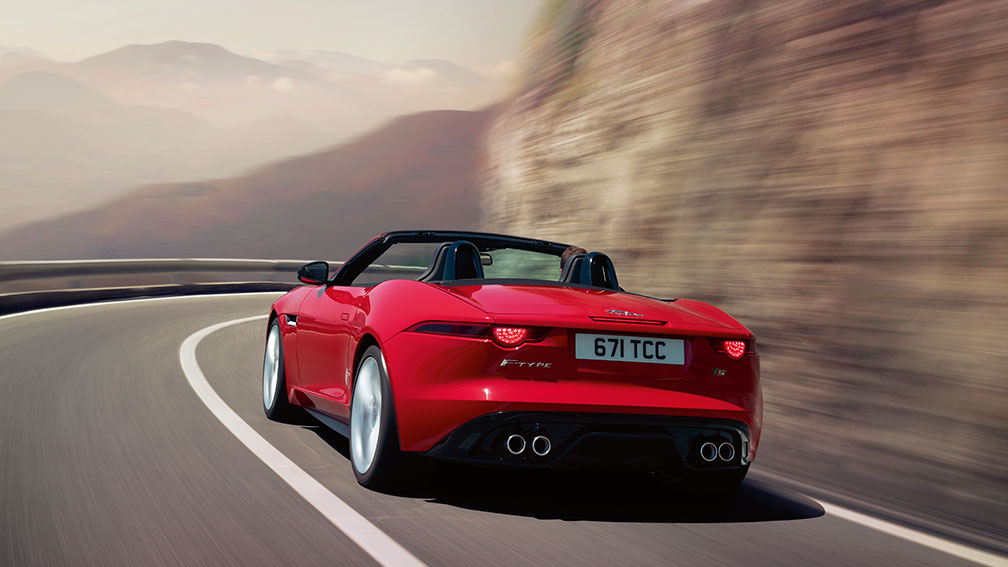
With five months still until it goes on sale – April 2013 – we find ourselves in the pit of a Jaguar F-TYPE obsession.
The haters say it’s too heavy (250kg more than a Porsche Boxster) and complain about it being automatic only (though Jaguar have let it be known the F-TYPE will be first in line for a new manual gearbox).

The biggest gripe though has been about the price. The 340bhp V6 base model starts at a hefty £58,500 rising to £79,950 for the 495bhp V8.

So it’s quite irritating to find out that in America the V6 will sell for $69,000 (£42,993) and the V8 at $92,000 (£57,330). That means the most expensive F-TYPE in America is cheaper than the cheapest UK car (currency conversions by www.xe.com).

Oh well, we’d still buy one if we could.

Parking: the hidden cost of motoring holidays

There was a narrow window in the middle of the twentieth century when drivers could blithely drive into towns and cities and park with nary a second thought. Otherwise ‘twas ever thus for independent travellers: before relaxing at the end of the day you have to make sure your steed is bedded down safely for the night.

There’s something quite nice about it. Walking away from your gently ticking, fly-splattered motor is a poignant part of the day. It‘s the moment you can really start to reflect on a successful day behind the wheel.

Increasingly though that warm fuzzy feeling comes at a significant cost, one that most people cannot afford to ignore.

Mike Rutherford moans about the £49 per day it costs to park in the Adam Street car park in Mayfair, but you can park in the central London for much less than that. The Abingdon Street car park, round the corner from the House of Commons, charges £30. Bargain.

The €90 it cost us to park in Amsterdam for 36 hours recently was however the regulated price set by the city council. The Dutch capital might revel in its expensive car parking but Rome is not far behind. We paid €42 per day in April 2010.

In Paris a year later our choice of hotel was largely dictated by the one with a free car park. This was after paying €22.50 per day in Maastricht, €23 in Trieste and €32 in Vienna.

Happily not everywhere is the same. Parking in Bruges city centre is a maximum €8.70 per 24 hours while you can stay at the end of Unter den Linden in Berlin for €18.

If you find anywhere half decent in Europe for much less than €20 a day then you’ve got yourself a bargain.

Newsround: Cop Ops 2013; new driving licence; Scottish independence; Wales road tolls +++

TISPOL, the European traffic police organisation has published the dates of its pan-European co-ordinated enforcement operations in 2013. They start in mid-February for one week periods and finish in mid-December. Each operation – on Truck & Bus, Seatbelts, Speed and Drugs & Alcohol – will take place twice. We will remind readers nearer the time. See here, page four, for the full list.

Driving licences across the EU will be harmonized – and mutually recognised – in all member states from 19 January 2013. Non-professional drivers of medium sized Category C vehicles will no longer have to complete tests on tachographs, etc. It won’t have any practical impact in the UK; the govt has already announced plans for a new UK licence in 2015, incorporating a chip and Union Jack. Cyprus is the only country not to have completely integrated the new regulations though it had the fine reduced this week after making some progress.

Following our story last weekend – that England, Wales & Northern Ireland could find themselves also outside the EU if Scotland wins independence in 2014 – it was interesting to read Daily Telegraph columnist Peter Oborne this week: ‘It seems likely, for example, that European leaders would take a keen pleasure in punishing Britain by making it clear that an independent Scotland might be allowed to stay as part of the EU – in effect, a revival of the Auld Alliance between Paris and Edinburgh that used to cause English kings such torment in the Middle Ages. If so, our exit from Europe would coincide with the end of the United Kingdom.’

Live animal exports are under the microscope again after bad weather forced (freight) ferry Joline, carrying 700 sheep, to return to Ramsgate. Questions to be asked in parliament…

Finally, some late news. In a speech to the London School of Economics in early November, Welsh first minister Carwen Jones made the case for road user charging on the M4 in South Wales. It would fund improvements but also give the emergent Welsh Assembly a way to raise money for the first time. It wasn’t (apparently) a threat but he recalled the ‘Rebecca Riots’ in the 19th century when cross-dressing Welsh rioters attacked and burned toll booths.

An audacious plan, clever tactics and ambitious strategy sees Transport under fire

Building the Baltic-Adriatic Corridor 5c in Bosnia

Building the Baltic-Adriatic Corridor 5c in Bosnia

EU Budget summit

Herman van Rompuy might not have been surprised as he sat down for talks with David Cameron yesterday, but DriveEuropeNews certainly was.

After a promise to all European voters to contain spending, rather than angry tub thumping Cameron presented a fully-costed plan for how the EU’s next budget could be reduced.

For starters, £4.85bn would be slashed from the pay and perks of EU employees by upping the retirement age to 68 and cutting pension contributions.

The major target though is the Connecting Europe Facility (CEF). The €36bn project to build integrated infrastructure across the continent would be cut by €20bn.

Read more on Cameron’s strategy here.

The thinking is because CEF hasn’t started yet people won’t miss the money. That €36bn neatly bridges the gap between the UK and the European Commission on the budget.

But unavoidably CEF is one of the practical manifestations of the United States of Europe idea. Any delay in its implementation puts off the time when the EU to all intents and purposes physically becomes one country. The ‘project bonds’ issued to leverage private investment alongside CEF are also a prototypical way for the EU to raise funds in its own right for the first time.

Apart from all that, the benefits to the UK from CEF are unclear.

Transport will take 60% of the budget. The remainder splits evenly between energy and telecommunications. Roads make up a tiny percentage, the lion’s share of the cash goes to rail, sea and air – so called core projects – but still, the overall budget will be a huge increase on the €8bn allocated to Transport 2007-2013.

The latest report says Cameron has secured a €4.5bn reduction in CEF. As they head into the next meeting with agreement unlikely, it’ll be interesting to see if Cameron takes a fresh crack at CEF in January.

Spain’s roads in crisis.

© drive-europe.co.uk

Someone we know says he never pays Spanish road tolls. He pulls up to the booth with a cheery, ‘I’ve already paid love, I’m British.’

That’s a bit rich from someone who has lived in Spain for fifteen years, i.e. during the whole time the amazing motorway network was built, with a lot of help from the EU. And he’s not the kind of person you imagine diligently filling in his tax return each year either. Anyway, he swears they always let him through.

He’s not the only one not paying tolls. For one reason or another, few people do.

In Catalonia, of which Barcelona is the capital, a popular form of protest as it moves ever closer towards independence is ‘Bona Nit, no vull pagar!’ (‘Good evening, I will not pay’).

Josep Casadella became a minor internet sensation with this video of him saying just that. Hardline Catalans resent their toll money funding roads in the rest of the country. The region has three times the proportion of toll roads as Madrid, for instance, according to the Wall Street Journal.

Meanwhile, the Madrid motorways are in real trouble. The road to Toledo entered receivership in May, soon followed by five more major routes. Traffic levels are far below estimates and the heavily indebted operators are struggling.

There’s a big debate going on about whether to introduce a vignette toll system instead.

It’s not unknown for toll roads to get in trouble. Our own M6 toll road has had similar woes, though not as serious, and for exactly the same reason: there’s a free alternative. At the same time as the remarkable motorway network was built, the longest in Europe, so was a shadow system of main roads, none of which are tolled.

To make matters worse the local road network is in notoriously poor condition. The Spanish Roads Association issued an immediate call earlier this year for €5.5bn to get it up to scratch. Read an authoritative summary of the state of Spanish roads here.

The tolls are commonly thought to be expensive, but are significantly cheaper than in France. The 385 miles Madrid-Barcelona costs €25.50 while the 290 miles Paris-Lyon is €32.30 (see Spanish toll charges here).

At the end of the day, their loss is our gain. On Spain’s very quiet, modern roads through some of Europe’s most spectacular scenery, you get a lot of bang for your buck.

Great Roads: Port de Pailhères, Pyrenees

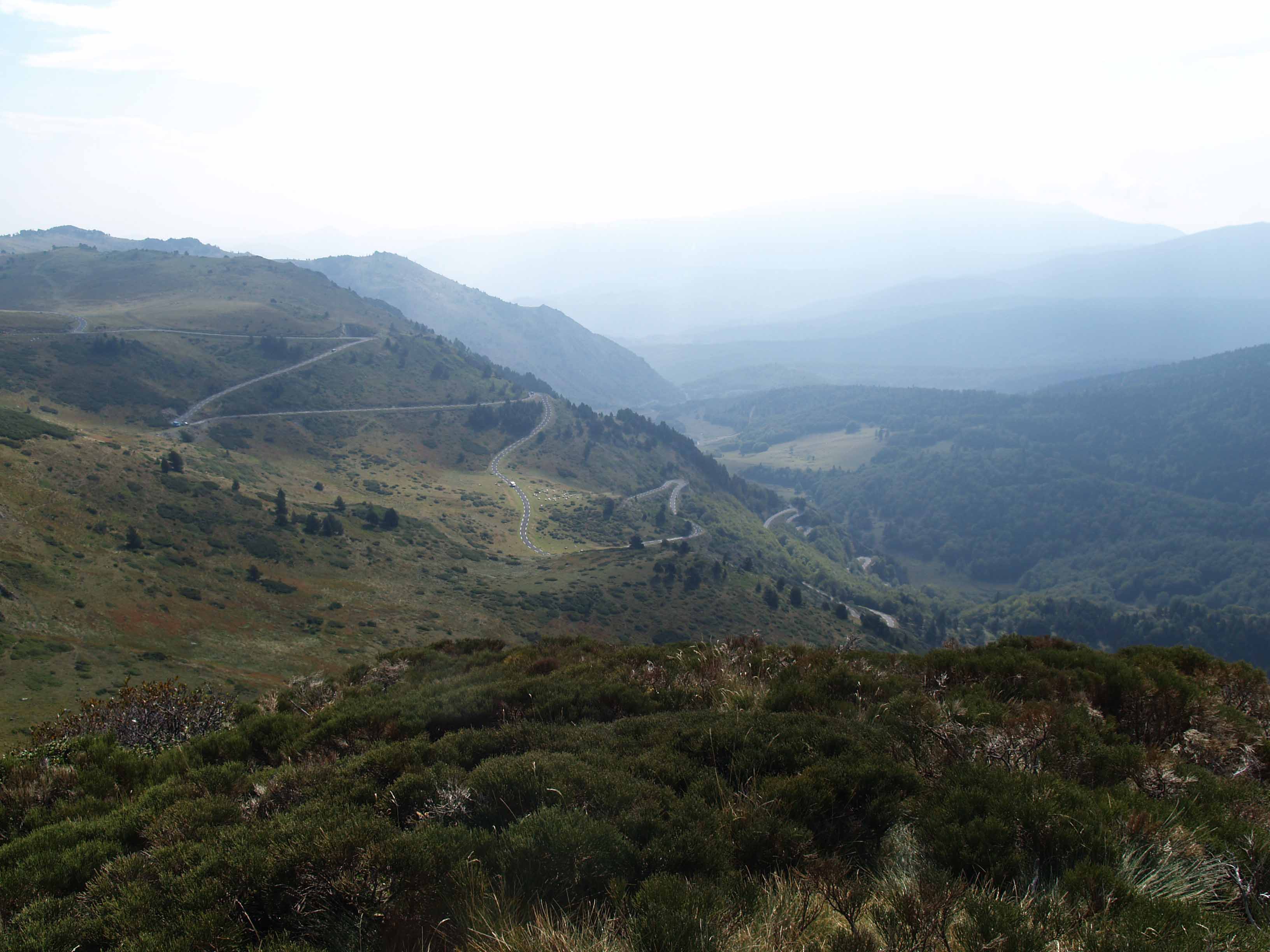
Due to be the 8th stage in the 2013 Tour de France, its fifth appearance, Port (or Col) de Pailhères climbs 1,281m (4,200ft) in nearly 12 miles, an average 6.9% with a maximum 10.4% at the summit.

Don’t be put off by that. There are no barriers but no dizzying falls either. It’s only terrifying on a bike.

Best of all it’s a normally quiet back road, between Ax-les-Thermes and Mijanès in the very south west of France. There are no cafés or carparks at the summit, just a sign saying 2,001m (6,564ft) and wide grassy verges to pull over and take it all in.

The night before we stayed in Ax-les-Thermes, on the edge of town, in a wooden chalet hotel (Le Roy René ) for €63.20 for two B&B (and prices haven‘t changed much since).

Port de Pailhères was a pure chance discovery. We were headed for nearby Andorra but heard it was ‘shut’ for its National Day, 8 September. It was annoying at first to have to come this way…

BMW’s winter sports roadtrip guide

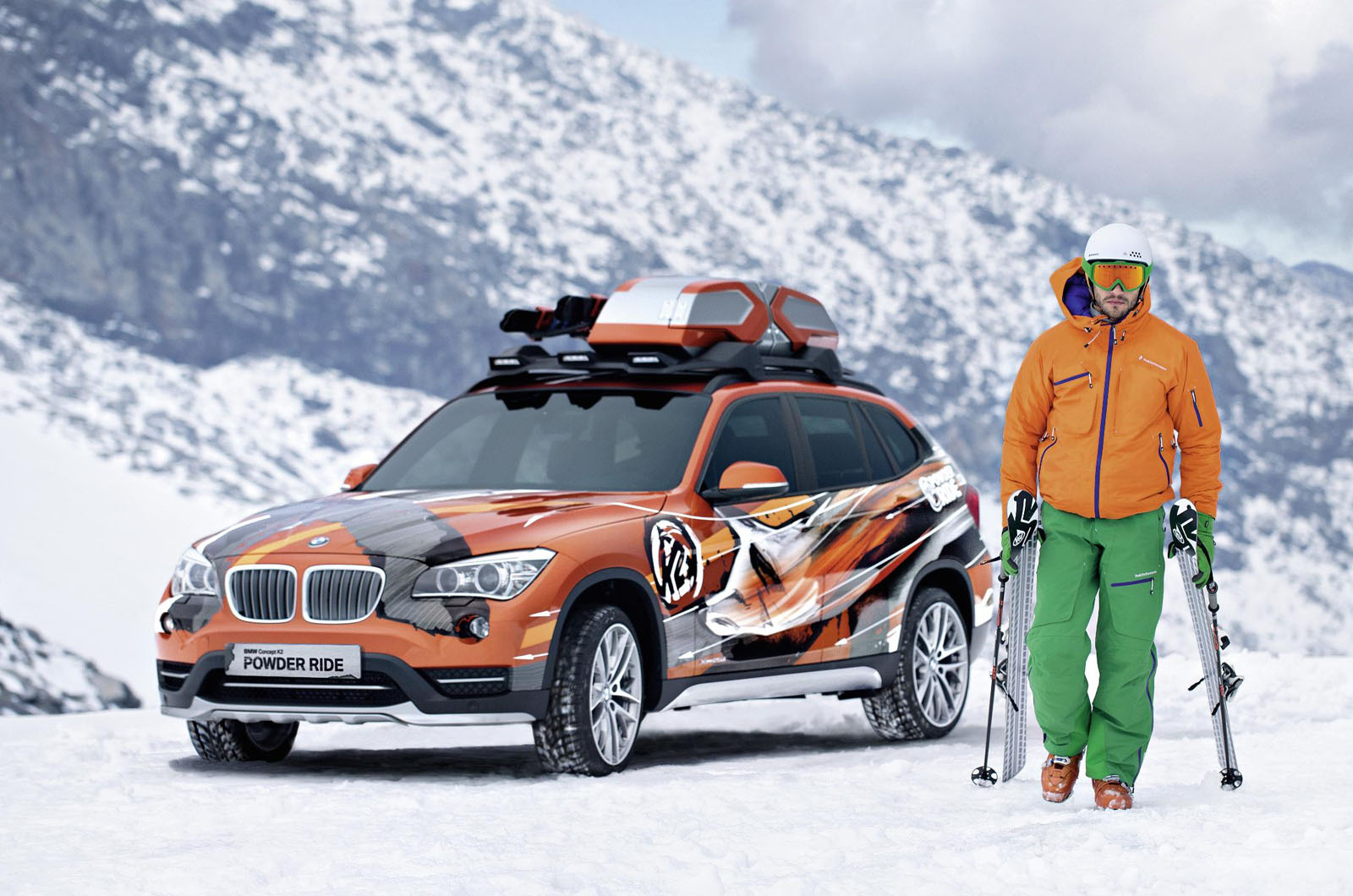
Ignore the car. The BMW X1 K2 Powder Ride is not on sale this side of The Pond anyway. The wrap might pick out the headlights nicely but that bulky item on the roof is a 320W speaker for impromptu mountain raves. Yeah.

Focus instead on BMW’s comprehensive web-guide for anybody considering a winter sports trip this season, largely built around driving.

There are three aspects – a destination guide to all the coolest continental ski resorts in the Alps (you have to admit Munich-based BMW probably have some insider knowledge).

Then there’s a series of X-Drive Live events cutting a swathe through central Europe (from Spain to the Czech Republic) where you can get expert tuition in winter driving techniques (arguably a bit late by this point).

Lastly there’s an amateur/ leisure skiing competition, with eight different categories, including a Touring badge for those driving from resort to resort. Now there’s a thought.

It’s not just downhill skiing, BMW sponsor cross country, biathlon and bobsleigh too. Check out the schedule here.

Incidentally, don’t automatically discount skiing resorts in the Czech Republic. Pec Pod Snézkou north east of Prague is not that much further, at 850 miles from London, than Megève in eastern France, 660 miles.

Lord McAlpine’s £375-a-night B&B

Generic image

It sounded very unlikely that ex-Tory treasurer Lord McAlpine was running a ‘mere’ B&B and so it proves. B&B doesn’t adequately describe Il Convento di Santa Maria di Costantinopoli’ (click for pictures).

It‘s actually a cloistered, court-yarded, eight roomed former convent decorated with the McAlpine family’s ‘museum-worthy private collection of extraordinary tribal artefacts and folk art’.

Double rooms start at £375 per night, singles from €335. Included is bed and breakfast plus lunch, laundry and unlimited, free access to the drinks cellar. Dinner is €45 extra. No TV or phones. Rooms can be booked through www.EssentialItaly.co.uk

The convent is just outside Diso, right on the very heel of Italy, in Puglia, thirty minutes from Lecce, a couple of miles from the coast, almost exactly 1,500 miles from London, due south east.

Ferry news: Haddock blockade; Condor rising; ferry fuel row ‘logjam’; DFDS dip – Stena up; Valletta

A protest over exhausted haddock quotas saw seven French trawlers attempt to blockade Brittany Ferries berths at Roscoff yesterday. The ship, inbound from Plymouth, diverted to Brest, 40 miles away. There were delays later but no cancellations. Roscoff is Brittany Ferries’ home port. Successful talks were held afterwards with more due later. French fishermen have been increasingly feisty recently. Last month saw a standoff between British and French ships further up the coast in the Baie de Seine near Le Havre, now subsided. There were threats that British ports could be blockaded. Brittany Ferries’ services were also disrupted by (internal) industrial action in late September.

From next July, Condor’s fast ferry services between Weymouth, Poole, the Channel Islands and St Malo, France, will increase substantially. Crossings to France will increase 19%. The day return trip to Guernsey or Jersey will be reintroduced. According to the BBC it’s because the end of the Brittany Ferries contract Cherbourg-Poole frees up additional ships. The popular Barfleur returns to Cherbourg-Poole next year.

Following last week’s warning from Brittany Ferries that higher costs due to new EU ferry fuel rules from 2015 will affect its services, the same row has erupted in Scotland over DFDS’ apparently marginal freight-only Rosyth-Zeebrugge, Belgium, route. The Herald has seen a secret report which says the costs associated with low sulphur fuel will make the already struggling route uneconomic. Both the Road Haulage Association and the Freight Transport Association warn the route’s closure could create log jam on the roads with trucks having to drive as far south as Dover.

A drop off in North Sea freight business dampened DFDS’ third quarter results. Pre-tax profits fell by 18% to $46.6m. Those freight volumes were down 7.7% while passenger numbers fell by 6.2% on the Newcastle-Amsterdam route due to the Dutch recession. Passenger numbers overall were up substantially due the company’s new Dover-Calais route. DFDS says service levels and timetable reliability Dover-Calais will be improved.

Meanwhile, Stena Line – which operates the 6.5h Harwich-Hook of Holland with two new superferries – has seen numbers of cars increase by 4.2% so far this year (total passengers by 1.4%). The bumper month was September when the operator celebrated its 50th anniversary, heavily promoted. Car numbers increased by a whopping 17.2%. We sailed on one of these new ships in September (£165 two+car, oneway standby ticket) and spent the voyage lolling on huge leather sofas. It was great.

Finally, Valletta, capital of Mediterranean island Malta, has been named European Capital of Culture 2018. Let’s hope they have fitted guardrails at the edge of the quays by then, and improved ferry standards generally. Valletta will share the accolade with an as-yet-to-be-named Dutch city.

Killers on the loose. Should we be worried?

It was like something out of a melodramatic TV series. The British Al-Hilli family – of Iraqi origin, with links to the hi-tech defence industry, allegedly embroiled in a dispute over a massive inheritance held in a Swiss bank account – gunned down in a remote, continental beauty spot.

The rear wheels of their car were still spinning when the grizzly incident was discovered.

A clear headed analysis of what is known about the murders appeared in The Independent on 25 October. In a telling detail, it says the body of the French cyclist also killed was dragged from where he was originally attacked and his arms ‘arranged’ around his body.

This backs up the latest police theory that it was a random attack from a stray psychopath. As do (unofficial) reports that the weapon was a WW1 Luger pistol, as issued to the Swiss Army and kept in soldiers’ homes. The Swiss border is just a few miles from the scene.

Judging by his TV performances chief inspector Eric Maillaud, in charge of the investigation, is a quick witted character, at pains to show he has an open mind. Even so, his latest contention – that if it was a professional assassination, it was a ’very badly done’ – looks shaky, if only because two months on there is still no definitive lead.

The BBC also said the body of the cyclist could have been run over by Mr Al-Hilli’s car as he tried to escape the scene. Further investigations centre on the family history in Iraq and on more ballistics tests.

In the absence of a specific threat it would be ridiculous to advise against travel to Annecy. Certainly no further incidents of this type have occurred. Early reports that ‘bandit style’ carjackings were rife in the area were later withdrawn. But until police make concrete progress, a question mark must hang above this normally quiet corner of eastern France.

Brussels shootings.

Exactly as with the Annecy shootings, feverish speculation greeted the news of a spookily similar incident in Brussels in October, especially after it emerged Belgian police had imposed a news blackout.

ExxonMobil executive Nicholas Mockford was shot four times shortly after leaving a restaurant in Neder-Over-Heembeek, a north Brussels suburb at 10pm on Sunday 14th October.

In fact, the incident was reported at the time. Like their French counterparts, Belgian prosecutors are very restricted in their dealings with the media. Often, as in this case, there is a complete ban on releasing any information at all.

The news only emerged in the UK when, two weeks after the shooting, police released a brief statement in an attempt to contact a potential witness. Since then the story has gone quiet again.

Mrs Mockford reportedly insisted it was a robbery gone wrong. The perpetrators apparently panicked after the couple fought back. ‘Carjacking’ is an issue in Belgium. There have been continuous reports from around the Channel Ports and motorways into Belgium, see here. The Foreign office further warns that ‘carjacking especially of up market vehicles remains a risk’.

Belgian Aston Villa striker Christian Benteke was implicated in an alleged carjacking in September, while a bizarre coincidence last year saw a couple from Liege, on holiday in Spain, reunited with the car ‘forcibly stolen’ from their driveway at home the month before. See here for official Belgian advice on avoiding carjacking.