An extraordinary paper says if Scotland has to leave the EU if it wins independence then so might the rest of the United Kingdom.
Author Archives: driveeuropenews
Dreaming About: The Caspian Sea, and major brand, five star hotel rooms-with-the-view from just £80 per night
 We learned this week that there are seventeen five star hotels in Baku, capital of Azerbaijan, on the western shore of the Caspian Sea. There’s another one due to open imminently. That’s a lot of posh hotels for a city with two million inhabitants.
Even so we were shocked to discover that these rooms – in major brand hotels, not the local equivalent, with all amenities including fabulous views – start at £80 per night.
This is in sharp contrast to other cities in Eastern Europe where major hotel room rates are almost the same as their western European counterparts.
The next three years are likely to be tough for the city as the local economy switches from oil and construction – Baku has been almost completely rebuilt – to the leisure market. Even these prices could go down.
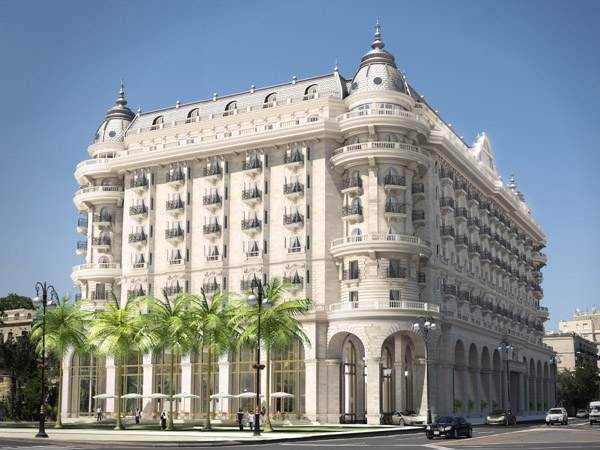
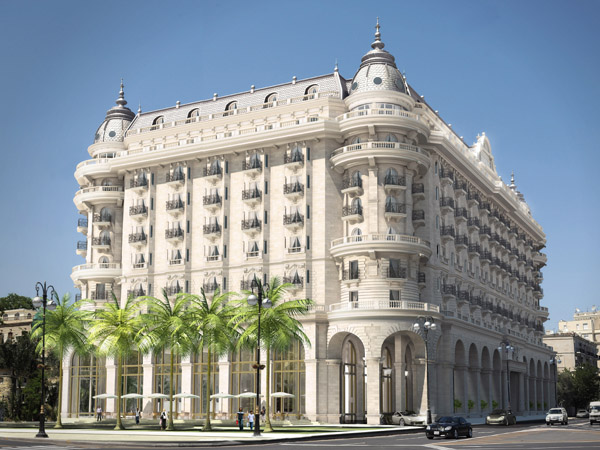
We were quoted £80 per night for a sea view room – and £140 for a twin balcony junior suite – at the Jumeirah Bilgah Beach Hotel next April. The city centre Four Seasons (below) was £240 per night (compared to £460 in Geneva).
 An ancient stop over on the Old Silk Road, linking Europe and the Far East – less than 200 miles from Tehran – Baku is 2,468 miles from London as the crow flies, via Ukraine or Turkey.
Neighbouring Georgia, along with Armenia, occupies the other half of this 400 mile wide strip of land, at the very edge of Europe, between the Black Sea and the Caspian Sea.
Georgia’s remarkable Customs Building at Sarpi, on the border with Turkey, right on the beach, has won numerous awards. The same architect is also building a chain of similarly wacky service stations along the country’s new motorways. Twenty are planned, three have been completed so far.
About 160 miles up the coast from Sarpi, in Russia, is Sochi, host of the 2014 Winter Olympics and, the same year, the first Russian Formula One Grand Prix. We can feel an itinerary coming on.
Quickish News: Ferry fuel rule threat; ferry bomb hoax jail; Swedes pitch for Malta roads; new M-way Moscow-St Petersburg; tyre labels
Brittany Ferries says new EU ship fuel rules will increase its costs by 60% and passenger fares by 20%. The sulphur content is due to fall from 1% to 0.1% in 2015. The operator warns the change will hit services and jobs and calls for a five year delay. The UK govt – who lead on the upcoming International Maritime Organisation’s sulphur limit of 0.5% – says it is looking at ways to help. The previous shipping minister Mike Penning was very outspoken on the subject but was moved to the Northern Ireland office in the last reshuffle.
Bomb Hoax – A man got a six month prison sentence this week after a bomb hoax at Dover ferry port on 22 September. Despite a warning the 45 year old from Cardiff, bound for Amsterdam by coach, repeated his claim causing ‘lengthy’ delays while the vehicle was searched.
New Roads – A Swedish road engineer gives an insight into his country’s Vision Zero – ’no loss of life is acceptable’ – in an op-ed piece for the Times of Malta, and reveals high level discussions about new road building on the virtually rail free Mediterranean island. Sweden vies with the UK for the world‘s safest roads… Meanwhile, construction is well underway on the first 43km section of the eventual 670km motorway between Moscow and St Petersburg, due to open May 2014. Any delays will cost the contactor, dealing with -35° temperatures, £10m per day penalty for the first month rising to £20m thereafter. The toll road, built with private finance by a US-French-Russian consortium, is due to open for the World Cup in 2018.
Tyre labels – The advantages of the new EU tyre label are starting to sink in. While it provides justification for premium brands higher prices, it also makes it easier for economy brand buyers to see exactly what they get for their money. ‘It’s a game changer’ says one exec. Japan, Korea, Brazil and the US are all due to follow suit.
Finally, it is worth noting that while planes and trains were seriously delayed or cancelled in Wednesday’s pan-European strike, cars, drivers and ferries were all working well. Just saying. Also, if you haven’t seen the October issue of Continental Correspondent, our monthly digest magazine, click here. Thanks, have a great weekend.
UK fuel price row focuses on retailers
 The Chancellor’s apparent promise this week that January’s 3p per litre fuel duty rise has been postponed has seen the focus increasingly narrow onto retailers.
Last month AA president Edmund King slammed retailers’ claim that they sold the cheapest fuel in Europe before tax.
The AA’s latest analysis published today says, ‘Last week, the average pre-tax price of petrol in Austria, Belgium, France, Germany, Italy, Holland and Spain had fallen 9% in three weeks. In the UK, the average petrol price charged by retailers before tax had fallen 5.5% in the same period.’
It says the situation mirrors that in the Spring when prices in seven continental countries fell by 6.1% against 3.16% in the UK.
With France and Austria having already taken action on fuel prices, and Germany reportedly consider it, King strengthened calls for the Coalition to intervene: ‘The government momentarily had a grip of this monster when the previous Transport Secretary called in the industry to agree wholesale price transparency. This initiative stalled when the Office of Fair Trading called for information on road fuel pricing – to which the industry has responded by pumping up wholesale prices and then not passing on cost savings in a timely fashion,’ he says.
The Spectator also said this week that UK fuel duty has declined by 14% in real terms since 2000 (following protests when prices broached 80p per litre). According to the AA the UK has the eighth highest petrol price in Europe and the second highest diesel price after tax. The UK average price in October was 135.08p petrol and 141.89p diesel.
McLaren P1 left hand drive full story exclusive
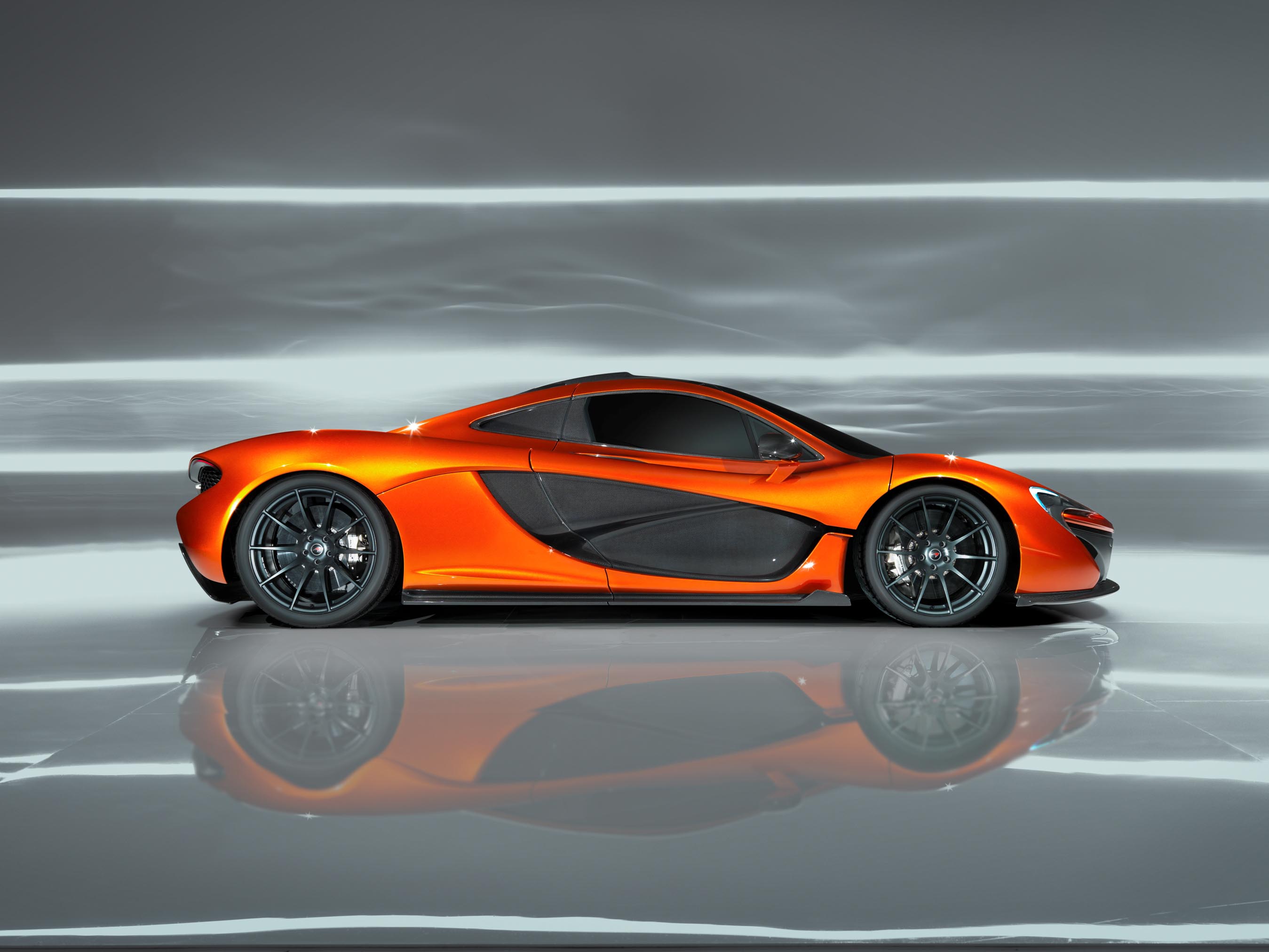
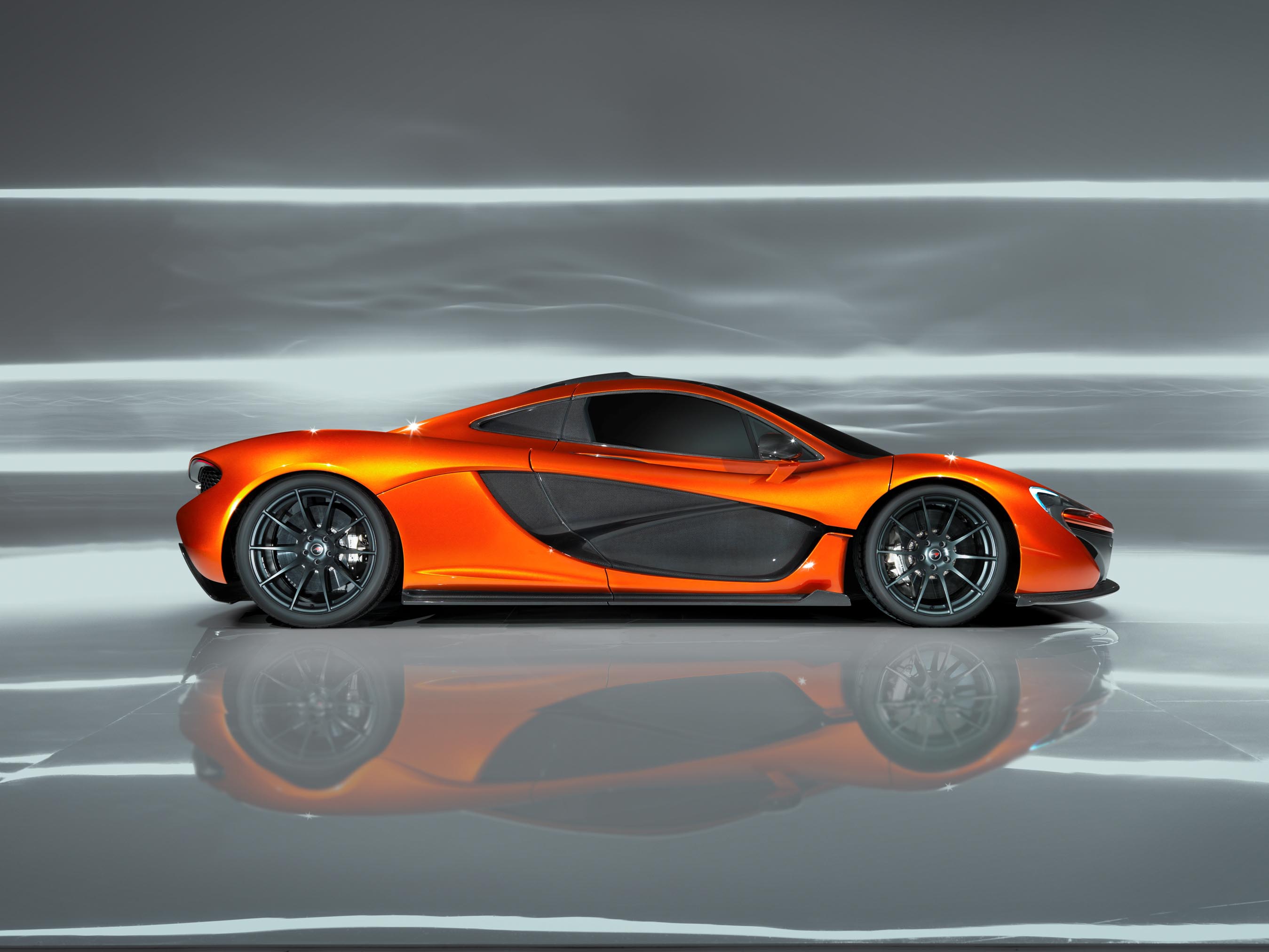
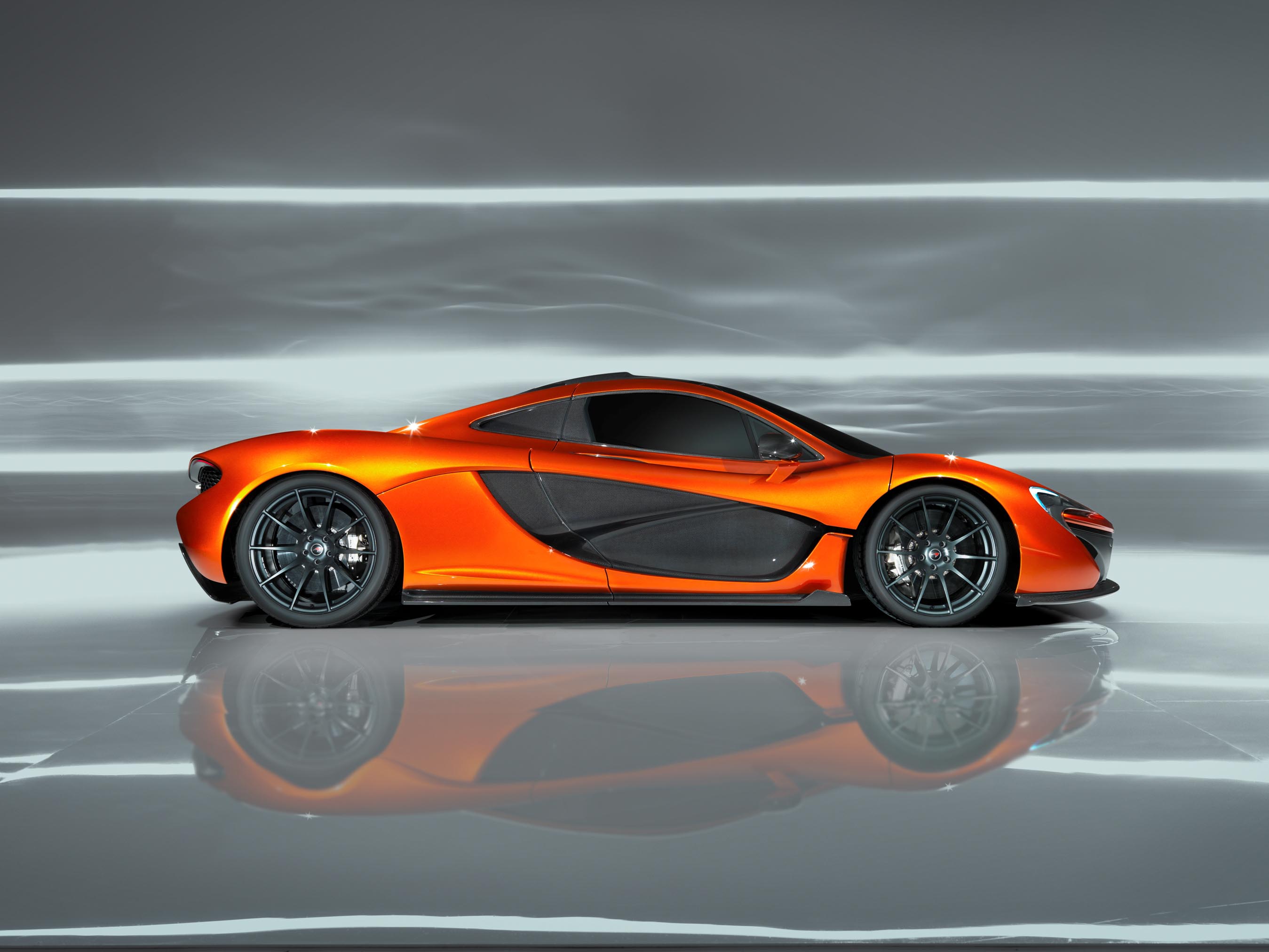
McLaren’s imminent P1 might well be the ‘best driver’s car ever’ – but only if you drive on the right.
The British sports car manufacturer has confirmed its megacar will be left hand drive only.
A McLaren spokesman told drive-europe.co.uk today, ‘It is common for models in this sector to be only offered left-hand drive. A business analysis was carried out, and the costs involved with producing the P1 in both configurations would have been prohibitive to the project, and it was decided that these costs would be better channelled into research and development. I am not aware of any resistance from customers who have viewed the car so far.’
The 800bhp, £800,000 sub 1300kg monster will be revealed next March at the Geneva Motor Show.
The P1 is the spiritual successor to the company’s first road car, the 240mph McLaren F1. That car was famously a three-seater with the driver in the middle, i.e. the rule of the road was irrelevant.
Eighty percent of the world’s land area drives on the right, but 30% of the world’s population drives on the left, including the UK, Australia, India and Malaysia.
The latest spy pictures of the P1 on test were published on the Autocar website earlier today.
The new £10,000 sunroof on the latest Ferrari FF makes total sense. But there’s a catch
 The star on Ferrari’s stand at the Paris Motor Show was the bare carbon fibre chassis of its upcoming ‘New Enzo’, a limited edition £800,000, 850bhp, 1100kg megacar to take on McLaren’s new P1 (also at the show and which will also cost £800,000, develop 800bhp and weigh ‘less than 1300kg’).
Back in the real world, tucked around the corner, was the 2013 model year FF, the vastly underrated Ferrari ‘estate’ with an important new feature: a full length panoramic sunroof.
 The new roof is a hefty £10,000 option, but in the context of a £227,100 list price it’s peanuts, and it turns an already practical car into a complete all-rounder.
To its four seats, four wheel drive, seven years’ free servicing and an enormous boot (at 450 litres it‘s only just less than an Audi A4, while fold down seats and a hatchback mean you can take the dog) the new roof adds the only missing element, a fabulous view. What else do you need a transcontinental touring car to do?
Pistonheads.com revisited the FF last week in a 2,300 mile drive and described it as ‘epic and effortless’.
The only problem is that the next skiing season will be over before you can get your hands on one. It’s available to order now but deliveries won’t start until Q2 next year. If you’re desperate, have a chat with the nice people at H.R. Owen tomorrow night. They will have one in their showroom at 125 Old Brompton Road, South Ken between 6-8pm. Maybe they can do you a rush job.
Paris: a Permanent Solution to a Temporary Problem
 Okay. Paris is steadily removing the internal combustion engine, particularly diesel power, the one that throws out those ultra fine particles that lodge far down in the lungs and are impossible to get rid of. Fine, it makes complete, contemporary sense.
The Daily Telegraph reported yesterday about the latest plans for further restrictions on cars and lorries within the Périphérique, click for more.
But before we take this seemingly sensible step – and it is we, the EU wants to ban fossil fuelled vehicles completely from cities by 2030, and all cars by 2050 – are we absolutely clear what we are about to throw away? Are we giving this apparent no-brainer decision the respect it deserves?
Personal, convenient, comfortable, efficient, flexible, affordable, on-demand, all-weather transport is one of humanity’s great achievements. Conversely, accepting that such a thing is no longer possible is by definition evidence that we’re on a downward slope.
It’s not the ranting of a fanatic to take some satisfaction in the amazing capability of the car. A machine, easily, democratically operated, able to drive around the entire planet probably without needing to change the oil or tyres, in comfort and style. Scott and Amundsen would be astounded.
But here’s the rub. Cars’ sophistication – and pace of development – largely depends on their economies of scale. But nearly 70% of EU citizens live in urban areas.
Ten people crammed into a lift is congestion, and possibly pollution too. The first traffic management scheme was allegedly introduced in Rome in 1300 for 200,000 pilgrims to the first Jubilee. We can safely say none of them were driving.
Getting rid of cars will not banish these twin evils from our world forever. At best it shifts the argument into another arena at an as yet unspecified date.
It’s also a conceit to image that what is bad for us now will also be bad for future generations. It’s perfectly possible that what currently looks chaotic will naturally settle down in time into a healthy, fully functioning system.
The car has only been around for a hundred years or so. Normal people have only been able to afford them for a third of that time. We are still getting to grips with them.
Already we’re told the young, urban generation is not showing as much interest in cars as their parents. People transport themselves via social media. Physical travel is no longer so important.
In this context it seems even more reasonable to curb the use of cars. Nobody wants them. But the next generation’s needs and desires is no guide to future generations’. We certainly shouldn’t be taking decisions that unthinkingly bind them. If anything it should make us more optimistic that the rebalancing we need is already occurring.
DFDS Harwich-Esbjerg winter timetable; special offer
DFDS’ four weekly trips Harwich-Esbjerg will be reduced to two over the winter rather than the usual three as the company manages costs according to local reports. There will be extra sailings over the Christmas period. The normal timetable resumes in February. DFDS’ latest newsletter is advertising current fares at car + 2 from £100 each way and car + 4 from £64 each way.
Border advances Kosovo and Montenegro
The picturesque south east European country Montenegro is moving ever closer to fully fledged statehood. Talks to legally establish the border between Montenegro and Kosovo have moved on a significant step. A protocol has now been agreed for the remaining stages with plenty of goodwill on both sides. Montenegro’s recognition of Kosovo sparked a breakdown in diplomatic relations with Serbia in 2008, now resolved. Montenegro’s border with Bosnia is now in the final stages of recognition.
Evoque convertible confirmed
 The Range Rover Evoque convertible has been confirmed for production according to Autocar. Is this all the car you will ever need?!
 DriveEuropeNews