Freight Booms but Tourists Down at Dover

Record freight volumes at Dover over the summer but the number of tourists drops by more than ten percent. Meanwhile, Eurotunnel was ‘almost stable’.

Also, to mark National Lorry Week, a quick look at Renault’s transcontinental Range T. A surprise leap in profits at Volvo Trucks. Hungary in trouble over truck-toll On Board Unit, and Luxembourg, Portugal and the Czech Republic over EU undertakings register.

.

DOVER: FREIGHT BOOMS BUT TOURISTS DOWN

Record freight at Dover but tourists down; Eurotunnel ‘almost stable’.
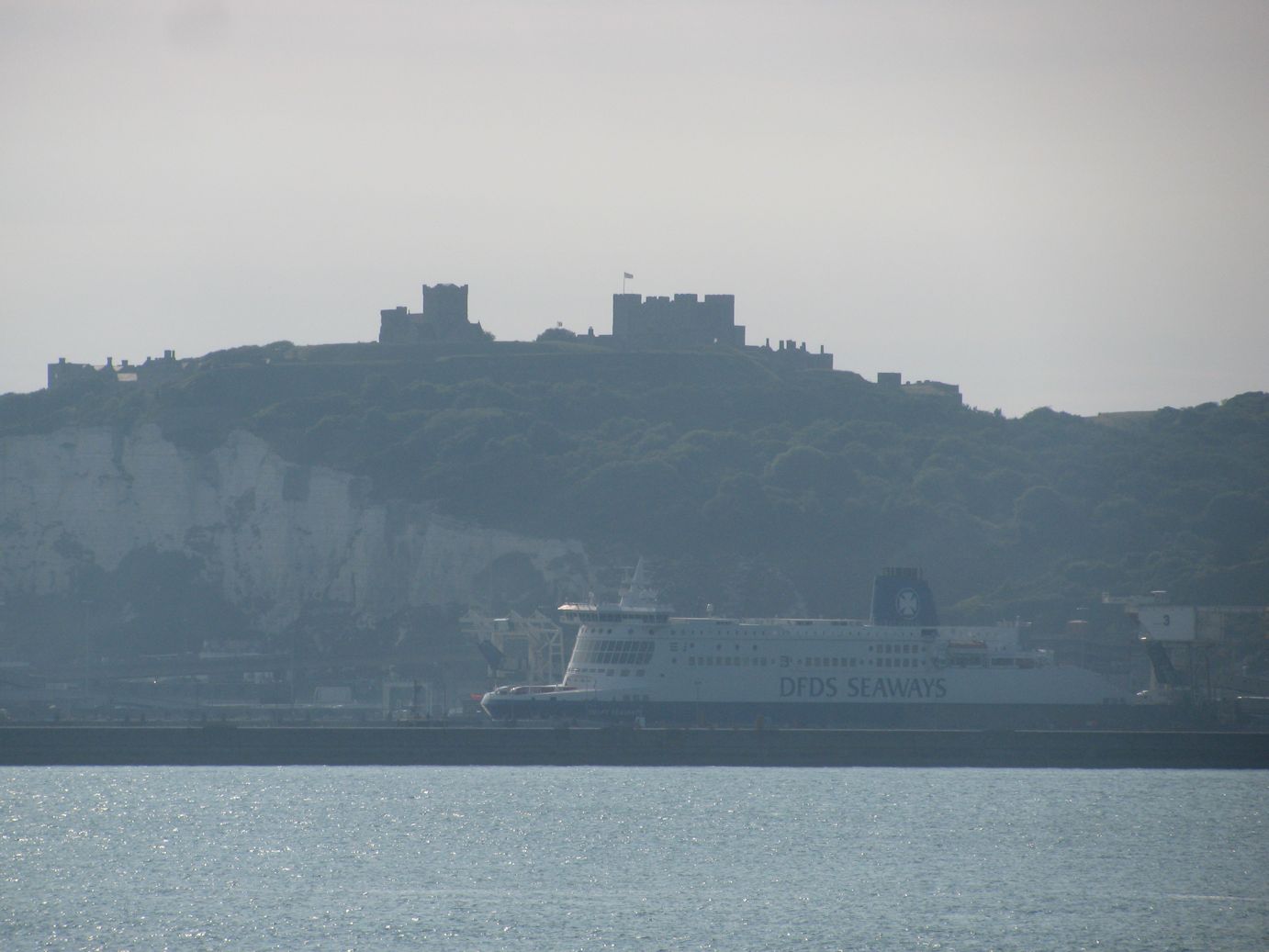
Port of Dover. Photo @DriveEurope

Port of Dover. Photo @DriveEurope

With unrestrained glee, Eurotunnel boss Jacques Gounon told Bloomberg TV last week that Port of Dover’s traffic fell by 10.5% between July and September this year.

The claim was repeated in a summary of the Channel Tunnel operator’s latest results published on Thursday.

However, Port of Dover tells us that the fall relates solely to the number of cars, not total traffic, and is the result of two big ships coming off the route following the closure of MyFerryLink.

Since then, it says, the remaining ferry operators have created more capacity with P&O reporting a growth in freight and passenger numbers.

DFDS will deploy one of the former MyFerryLink ships on the Dover-Calais route in January.

Last week Port of Dover reported ‘phenomenal’ freight volumes recently, up 6.4% over the past twelve months.

In early October, P&O said the period July-September was its best quarter for freight since 2003.

For August, P&O also said it carried ‘the highest monthly number of people across the Channel since August 2003’.

Meanwhile, Eurotunnel’s own revenues increased by 3% in the third quarter compared to the same period in 2014, despite the number of rail freight trains declining by a third.

Passenger and truck shuttle traffic was down one percent each, described as ‘almost stable’ by the firm. The number of coaches fell by 9%.

Over the first nine months of the year the number of trucks using the Channel Tunnel is up by 5% (compared to market growth of 5.2%), cars are up 2% (market down 1.5%) while the number of coaches has fallen by 6%.

.
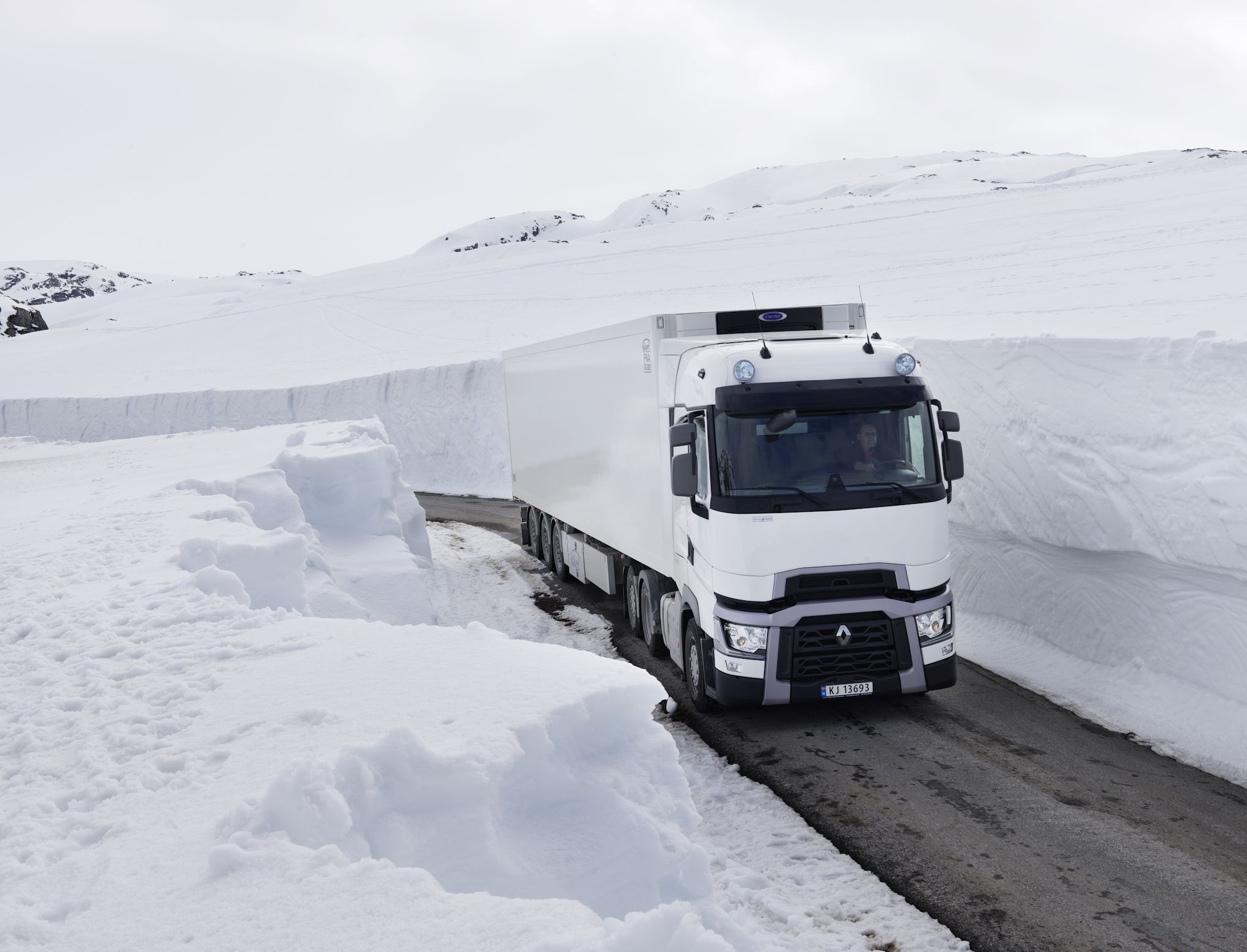
To mark National Lorry Week this week we will work our way through the main international trucks, starting with the Renault Trucks T. More later. Photo Renault Trucks.

To mark the Road Haulage Association’s National Lorry Week – which draws attention to an acute driver shortage in the UK thanks to the £3000+ cost of obtaining a licence – a look at the heavy hitting transcontinental trucks currently in service, starting with the Renault Trucks Range T. Successor to the iconic Magnum, and winner of the International Truck of the Year 2015, the T shares parts with sister brand Volvo Trucks though the its biggest engine – a 12.8 litre straight six – tops out at a ‘mere’ 520bhp, allied to a 12 speed automated ‘Optidriver’ gearbox as standard. The fuel tank can be as big as 1475 litres (324 gallons). For all that, drivers can expected just over 10mpg. Interestingly, truck drivers do not need an enhanced licence to drive on the Continent. Photo, Norway, Renault Trucks.

.

roundup: VOLVO TRUCKS. Profits unexpectedly jumped 75% over the past quarter to €545m reports The Local Sweden. Analysts had been expecting around two thirds of that. Sales jumped 9%, particularly in Europe (the latest ACEA figures show the market for heavy vehicles in Europe grew by 12% in the first nine months of the year). The news comes a few days after new CEO Martin Lundstedt, formerly of VW-owned Scania, took control of the company. HUNGARY is in trouble with the EU over the On-Board Unit (OBU) used to pay truck tolls. According to the October Infringements Package, ‘Hungary failed to put in place the necessary measures for the effective establishment of European Electronic Toll Service (EETS) providers’. These rules govern the inter-operability of OBUs in member states which have electronic tolling. Hungary has two months to comply or face the Court of Justice of the EU. For more info on Hungary truck tolls see HU-GO.hu. Meanwhile, LUXEMBOURG, PORTUGAL and the CZECH REPUBLIC are also being taken to task for ‘not having established national electronic registers of road transport undertakings and/or for not having connected them with the national electronic registers of the other EU Member States,’ says a statement from the European Commission. This case has already reach the Court of Justice stage.

.

France: Worst Traffic Accident In Thirty Years

Enormous shock in France after more than forty people die in a truck and bus crash on a quiet country road near Bordeaux.

.

FRANCE: WORST TRAFFIC ACCIDENT IN THIRTY YEARS

Only eight survive fire following coach and truck crash near Bordeaux.

Photo @Place_Beauvau

Photo @Place_Beauvau

At least forty three people died in a crash between a coach and a truck in south west France this morning.

The coach was just a few minutes into a pensioners’ day trip at 07:30 when it collided head on with a wood truck on a bend in the D17 near Puisseguin, sixty kilometres west of Bordeaux, according to a statement from the Interior Ministry.

Many of the victims were said to have died in the fire which immediately engulfed both vehicles.

It was the country’s worst traffic accident since fifty three people were killed, also in a coach crash, on the A6 near Beaune in 1982.

Transport minister Alain Vidalies was keen to emphasise that, despite this tragic incident, coach travel in France is still ten times safer than travel by car.

Contrary to initial reports Vidalies also said the road was in good condition, had not been reported as dangerous and there had been no accidents there in the past five years.

Just eight people survived including, miraculously, the coach driver. The truck driver and his young son both perished.

Naturally much speculation surrounds the cause of the accident. Overhead photos show both vehicles on the coach’s side of the road.

The coach driver reportedly told first responders he came upon the jack-knifed truck, without warning, in the middle of the road.

Aside from this, questions will undoubtedly be asked about why such a devastating fire took hold so quickly.

No details have been published about the truck but the coach was reportedly a modern 2010-2011 Mercedes-Benz Tourismo.

.

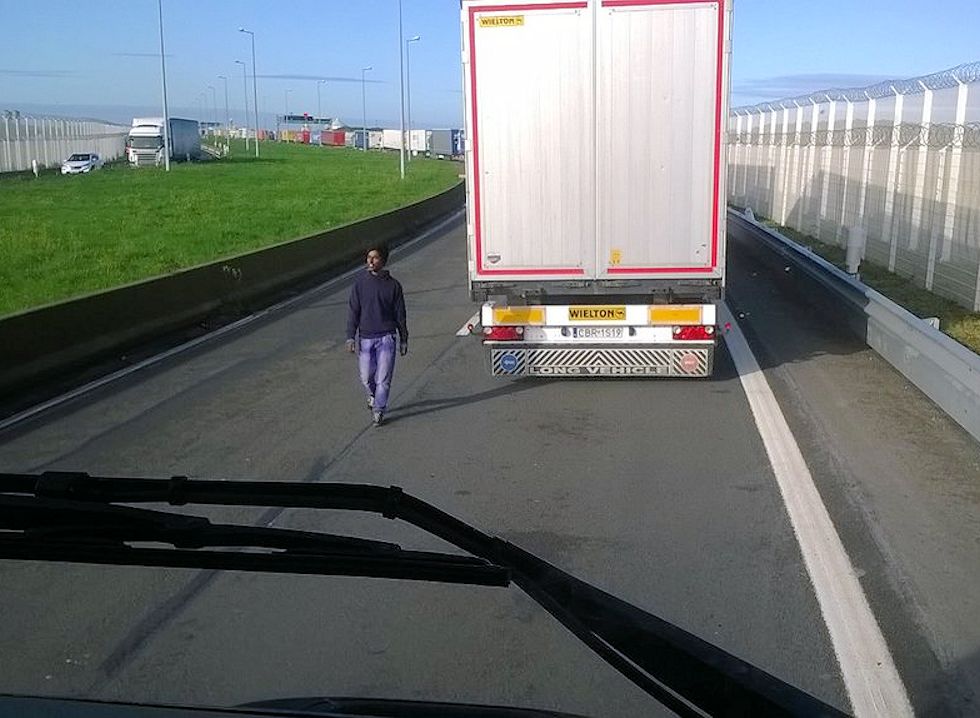
A call for ‘something to be done’ at Calais by the British Freight Transport Association this week was happily answered almost straight away as police reinforcements drafted in on Thursday put an immediate stop to the nightly migrant incursions plaguing Eurotunnel services recently. Most worrying was that the migrants had penetrated the secure zone at Calais port, above, an area thought to be impregnable for some months now and, unlike Eurotunnel, where newly beefed up security has been fully installed. We put a call into one of the Dover-Calais operators for more details but, as is routine these days, on these matters, are yet to receive a reply. Photo via FTA.

A call for ‘something to be done’ at Calais by the British Freight Transport Association this week was happily answered almost straight away as police reinforcements drafted in on Thursday put an immediate stop to the nightly migrant incursions plaguing Eurotunnel services recently. Most worrying was that the migrants had also penetrated the secure zone at Calais port, above, an area thought to be off-limits for some months now and, unlike Eurotunnel, where new security measures have been fully installed. We put a call into one of the Dover-Calais operators for more details but, as is routine these days, on these matters, are yet to receive a reply. Photo via @NewsFromFTA.

.

One of the World’s Classic Ferry Rides

Forget the fjords, the world’s best boat trip is in Albania.

.

ONE OF THE WORLD’S CLASSIC FERRY TRIPS

Lake Koman: outrageously cheap and world class beautiful.

'One of the World's Classic Ferry Trips', Lake Koman Albania. And ridiculously cheap too. More later.

Lake Koman, Albania. Photo by kind permission of Larissa Olenicoff, see below.

When it opened in 2013, the ‘Patriotic Highway’ took the pressure of what had been an overloaded section of the journey between Prishtina and Tirana, the capitals of Kosovo and Albania respectively.

As a result, the ferry which plied along the picturesque Koman Reservoir in northern Albania could be completely overhauled. It restarted the route in May this year reborn as the Alpin Ferry.

The Blonde Gypsy, aka Larissa Olenicoff, a California native now firmly embedded in the Balkans, recently made the trip from her new base across the border in Prishtina:

‘Man-made or not, it will still leave you in awe as you tug on through the narrow, rocky cliffs and mountains surrounded by nothing but untouched, wild beauty and as it widens, the occasional farmhouse or small village. The water is so glassy and reflective, at some points it was literally tripping me out. Swear it wasn’t just the breakfast beer.’

Created by former Communist dictator Enver Hoxha, by damming off the Drini River, the reservoir is part of a massive hydroelectric project. The two hour trip runs between two power stations, at Fierza in the north and Koman.

Says the Bradt Travel Guide, ‘The journey along Lake Koman deserves to be one of the world’s classic boat trips, up there with the Hurtigrut along the Norwegian coast or the ferry from Puerto Montt to Puerto Natales in Chile. Lake Koman is narrow and twisting, with sheer cliffs right down to the water in some stretches, complete with breathtakingly high waterfalls.’

Says The Blonde Gypsy, ‘Whether this is one of the best boat rides in Europe, I can’t say… but it is hands down one of the most beautiful things I’ve seen in the Balkans. And I’ve seen a lot of beautiful things in the Balkans.’

Almost best of all it is ridiculously cheap, just €4 per person each way and €9 per car.

Read more about the Lake Koman ferry at Blonde-Gypsy.com

.

First segment of new motorway Skopje-Pristina launching today. More later.

Speaking of new road openings in the region, the first segment of the new Route 6 Pristina-Skopje (Kosovo-Macedonia) motorway opens on Sunday says a tweet from Kosovan Foreign Minister Hashim Thaci. The new stretch is 15km and cuts around 30mins of the 2h30 journey The Blonde Gypsy tells us. The full length should open next year. Meanwhile the EIB is interested in funding a new Pristina-Nis (Kosovo-Serbia) motorway according to World Highways this week. Since Nis already has a motorway link to Belgrade (and then to Budapest, Vienna, etc), this new road would put the Kosovan capital on the European road network for the first time. Further details are yet to be announced.

.

The Ultimate Go Anywhere, Do Anything Car

Is the Evoque Cabriolet a mere fashion accessory, or a rugged jack of all trades? We will find out next year.

Also, an autumnal road scape from Slovenia. Spain to follow France with traffic drones.

.

THE ULTIMATE GO ANYWHERE, DO ANYTHING CAR

High hopes all round for Range Rover’s upcoming convertible SUV.

Land Rover aren't doing the Evoque Cabriolet any favours by

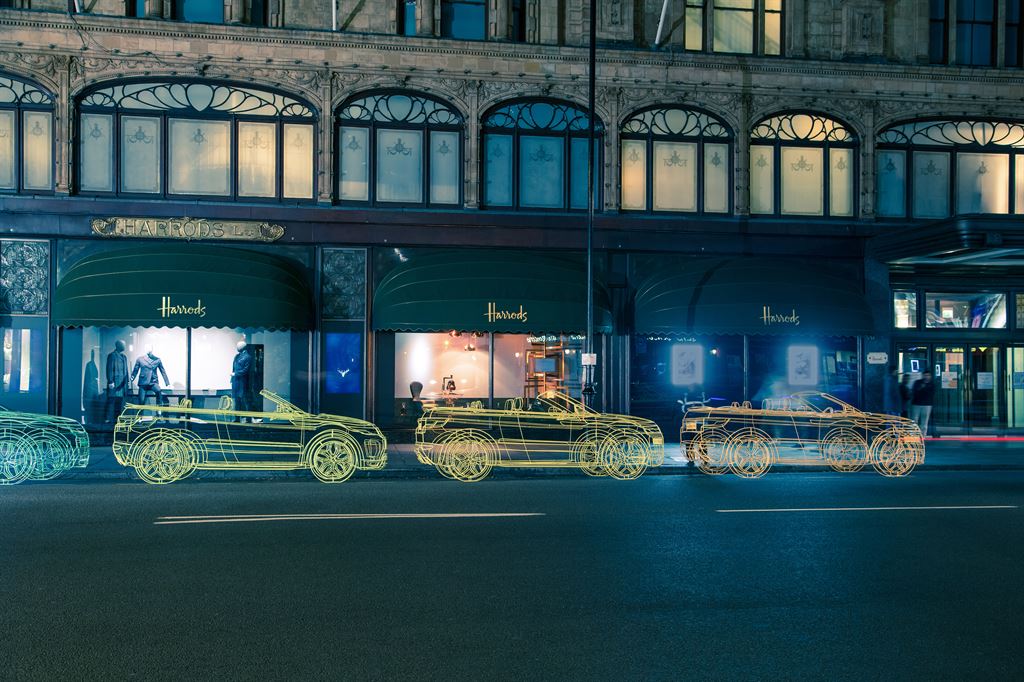
Land Rover aren’t doing the Evoque Cabriolet any favours by placing confected wire models outside Harrods as part of its pre-lunch hype. Photo @LandRover

Unbowed by the abject failure of the Nissan Murano convertible SUV in America last year, Land Rover is about to launch the Evoque Cabriolet.

We’ve already ordered one.

Rarely has there been such a despised car. The original hard top Evoque lost all credibility with enthusiasts when Land Rover asked Victoria Beckham to ‘design’ the special debut edition.

The convertible version has reinforced its footballers’ wives credentials almost exponentially.

However, we are concentrating on this car’s capabilities rather than its image.

In essence it’s a (very) compact, comfy, high-riding 4×4 with real off-road ability, and the added benefit of being completely open to the incredible views we intend to drive it to.

(Our current Evoque does have the corner-to-corner glass roof but it doesn’t really cut it.)

Okay it’s no sports car. But the basic Evoque is very suited to the ultra long-distance driving we like to do (ours has covered more than 50,000 miles in eighteen months). It’s a proper junior Range Rover in fact. 

Along with the smart badge on the bonnet – see we do care about image a little bit – the Evoque Cabriolet should be the ultimate go-anywhere, do anything car.

Nevertheless, having placed a £1,000 deposit, for delivery next May, we are nervous.

At least it seems Land Rover won’t have to worry about sales. Our dealer has already sold seventy EvoCabs, including seventeen last weekend off the back of the wire model publicity stunt in London, above.

Next up: meeting other prospective owners at the dealer preview next month.

.

Nice autumn picture: 'on the way to the Vrsic Pass', Slovenia. Photo EJ Cheberle via @IGSlovenia

Nice autumn picture: ‘On the way to the Vrsic Pass’, Slovenia. See more on Slovenia’s mountain roads. Photo EJ Cheberle via @IGSlovenia

.

roundup: SPAIN. Like France, Spain will deploy drones to monitor drivers and traffic reports The Local Spain. A prototype should go on trial next year though full-time deployment would mean a change in the law. Spain currently has a fleet of twelve helicopters equipped with radar and high-resolution cameras which can spot drivers without seatbelts, for instance.

.

A Lot More Cops For Calais

Lots more police to be drafted into Calais as recent doubling of migrant numbers apparently behind resurgence of disruption at Eurotunnel.

Also, high mountain roads have been closing on and off for the past few weeks but the first permanent winter closure is now confirmed. Less than half of drivers prosecuted for drink driving in Ireland are convicted. As DFDS confirms a new ship Dover-Calais next January, Dover reveals ‘phenomenal’ growth in freight volumes. Cycling surprised by 2016 Tour de France route.

.

LOTS MORE COPS FOR CALAIS

More police to strengthen security at Eurotunnel.

Interior Minister Bernard Cazeneuve and Calais mayor Natacha Bouchart.

Interior Minister Bernard Cazeneuve and Calais mayor Natacha Bouchart. Photo @Place_Beauvau

Amid now-daily incursions by migrants at the Eurotunnel terminal, and febrile rumours the army will be sent in regain control of the situation, the French interior minister made a very sober statement this afternoon (Tuesday).

No woman or child will be without shelter in coming months said Bernard Cazeneuve, adding that 710,000 migrants had entered the borderless Schengen Area since the start of the year, and that 291 trafficking rings involving 3000 people had been dismantled.

The state has spent €13m on running the camp in Calais and there are 1300 staff currently maintaining order (see below).

He said the resurgence of migrant activity around Eurotunnel was due to the numbers of migrants having doubled recently, to 6000.

However, Cazeneuve did also say that the area around Calais ‘cannot be a sustainable living space for migrants’.

He will make his seventh visit this year to Calais tomorrow when more announcements are promised.

Coincidentally, EU Transport Commissioner Violeta Bulc and Chairman of the European Parliament Transport Committee Michael Cramer visited Eurotunnel today though neither has yet commented.

Yesterday on twitter Calais mayor Natacha Bouchart said she had asked the Interior Minister to ‘study the possibility to involve the army on the site.’

Update 21 October: on the visit to Calais, Cazeneuve announced 300 new Gendarmes to bolster the 225 already on site, and another 160 CRS riot squad officers added to the existing 440, all to be on duty tomorrow (Thursday). Those hoping the camp will be cleared will be disappointed – heated tents are to be provided by the end of this week – but Cazeneuve did repeat that the site is ‘not appropriate for their stay’. He says the state has had some success in offering ‘respite’ to migrants in other parts of the country with 2,000 now having taken up this offer. Those that ‘reject this extended hand’ risk deportation or criminal penalties he said. Update 22 October:  

.

The first permanent winter closure this year is confirmed as the cross-border France-Italy Col Agnel, 2744m (9003ft). The summit is still open from the French side but the road is closed in both directions on the Italy side reports @TRAFSud. Expected to reopen on 26 May 2016. Find Agnel on PassFinder, or more information on high mountain roads that stay open through the winter. Photo @DriveEurope

The first permanent winter closure this year is confirmed as the cross-border France-Italy Col Agnel, 2744m (9003ft). The summit is still open from the French side but the road is closed in both directions on the Italy side reports @TRAFSud. Expected to reopen on 26 May 2016. Find Agnel on PassFinder, or more information on high mountain roads that stay open through the winter. Photo @DriveEurope

.

roundup: IRELAND. Just 40% of drink driving cases brought before the district courts result in a conviction, compared to 97% in England and Wales, reports RTE. The conviction rate varies between 29% in County Kerry and 68% in County Offaly. One solicitor likens a drink driving prosecution to a hurdle race where if any of the hurdles are hit then the case will collapse. The government closed a loophole in the law last month which required breath test results to be presented in both Irish and English. One or the other is now sufficient. CHANNEL. Freight volume has grown by 6.4% in the past twelve months said Port of Dover today. Peak freight units reached 9300 per day in the period since the summer’s industrial action compared to 9200 last year, and all that with only eleven vessels operating compared to thirteen in 2014. Chief exec Tim Waggott described the results as ‘phenomenal’, and took the opportunity to press the case for the so-called Lower Thames Crossing as daily demand is expected to reach up to 16,000 units per day in the next decade. Meanwhile, DFDS confirms it will operate a third ship on the Dover-Calais route from January 2016 boosting sailings by ten to 54 each day. Fares are available to book now from £39 each way. MOUNTAINS. From being billed as the most exciting non-event of the year – and bitching about ‘ignored climbs’ – the announcement of the 2016 Tour de France route seems to have stunned the cycling community into silence. Full details are not available yet. All we know is the tour follows the same basic trajectory as last year, starting in western France before heading to the Pyrenees then Mont Ventoux, the Alps and Switzerland. The best-named climb so far is Col de Pisseloup in the Jura, ‘the pass of the peeing wolf’, or ‘wolf-pee pass’ according to @CyclingAlps. More anon.

.

Some Surprisingly High Roads Stay Open All Year

Thanks to skiers, and the need for locals to get around in the winter, more mountain roads than you might think stay open all year, including the very highest of them all.

.

bernina winter

Thanks to it being one of the few roads across the Italian border in south east Switzerland – between St Moritz and Tirano – the spectacular Bernina Pass 2330m (7644ft) is kept open in the winter. This is another road with a James Bond connection (see Otztal below); it was the road Blofeld escaped along towards the end of On Her Majesty’s Secret Service (the book version).

For all the fuss made about winter closures of mountain passes the truth is vast majority of them stay open all year round.

In fact, drivers can go as high over winter as they can in the summer.

Austria’s 2750m Kaunertal and 2830m Otztal roads – the latter the highest paved road in the Alps, see below – are kept open over winter thanks to skiers.

In general, the rule of thumb is that roads above 2000m are likely to close while those higher than 2500m almost certainly will. Roads below 2000m however are much more often than not open all year.

Almost all of the big name French roads do close but Lautaret 2057m and Montgenevre 1850m handily remain open – great for dodging around the Frejus Tunnel if the queues are bad, especially if the Grenoble-Briancon road reopens before the winter, as planned – as do Larche 1991m (to the Italian border) and the highly recommended Vars 2108m (see below).

Meanwhile, it’s notable that all the roads higher than 2000m which stay open in Switzerland are all through-roads: Bernina Pass 2330m to Italy, see below, Julier Pass 2284m, between the Engadin Valley and Graubunden, and the Simplon Pass 2005m, also to Italy.

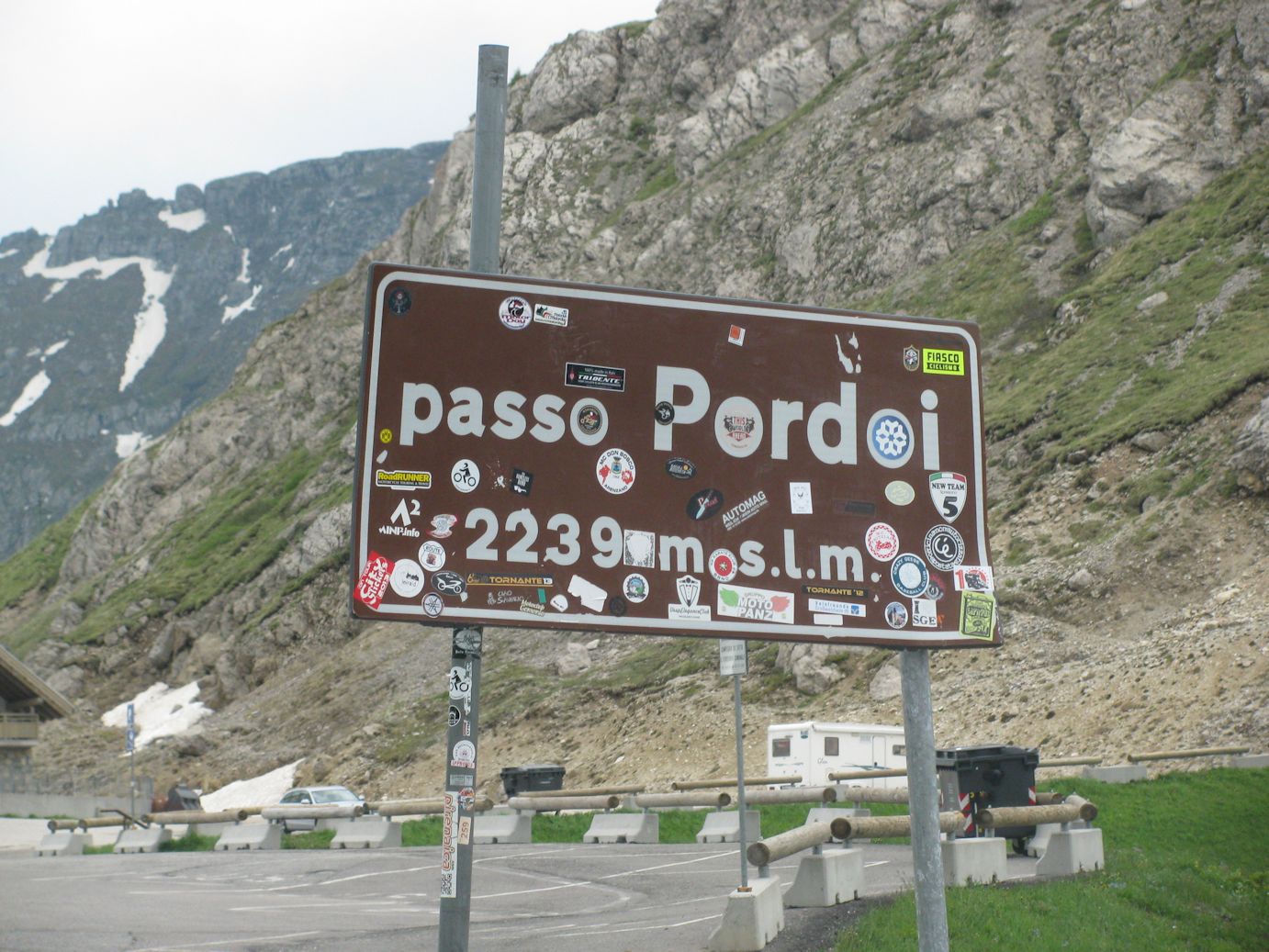
Italy has the best selection. Apart from Foscagno 2291m – just over the border from Bernina – they are all clustered to the east of Bolzano, around the famous ski resort of Cortina d’Ampezzo: Falzarego 2117m, Fedaia 2056m, Gardena 2137m, Pordoi 2239m, Sella 2240m and Valparola 2192m.

Of course there are no guarantees with high mountain roads. Sudden or even expected snow fall will take time to clear. It is also essential to prepare the car for wintry conditions, even without snow on the road, either winter tyres or snow chains, preferably both.

See the locations and vital statistics of all these roads on our PassFinder.

.

pordoi

In the summer, Passo Pordoi with its sixty-odd corners can get a bit nose-to-tail. However it shouldn’t be so bad in the winter. Fewer cyclists at least.

sella cover 3

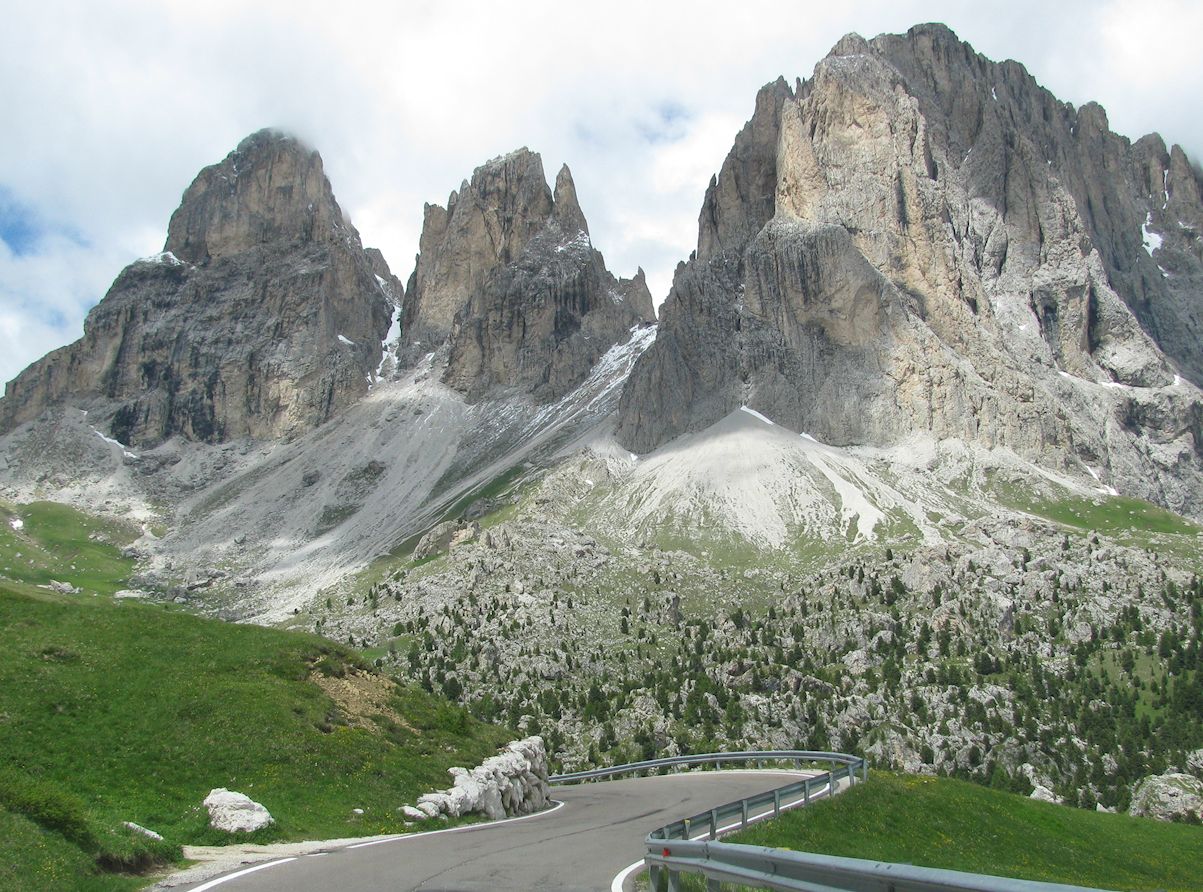
Sella is one of Europe’s most beautiful roads with its caramel crags and luminous green pastures. However, the narrow bumpy road way – with huge vertical drops down a substantial part of its 2240m (7350ft) height – is nerve wracking enough in summer. One for the brave in the winter.

B24_SU_04487_RT-DF2_LowRes

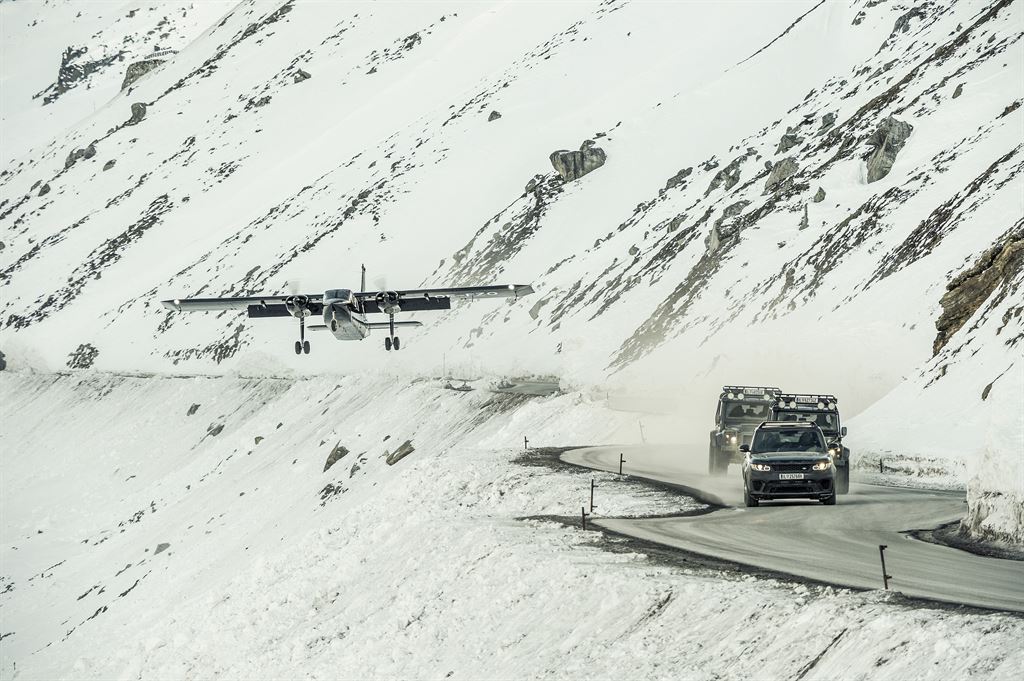
Otztal in south west Austria is not only the highest paved road in the Alps at 2830m (9285ft), but also one of the locations of the upcoming James Bond movie Spectre. Sequences were filmed over last Christmas and New Year. Meanwhile, the tolled Otztaler Gletscherstrasse – €18 for up to four people, free for skiers – is open to all vehicles, even full size buses, though the authorities warn ‘a drop in temperature and/or precipitation is always to be expected. It is therefore advisable to be equipped for such situations (winter tires, snow chains, etc.), especially in the autumn and winter months’. Otztal is 13km long up to the Rettenbach glacier, with a maximum gradient of 13%, while the Tiefenbach glacier is a further 3km via the 1.8km Rosi-Mitter Meier tunnel (the highest tunnel in the Alps).

vars winter 2

Vars in south east France may be overshadowed by the neighbours – Izoard, Agnel and, not least, Col de la Bonette – but 2108m (6916ft) is not to be sniffed at. Also, while the rest have fiddly sections crammed with hairpins, Vars is a fast flowing driver’s road. Even at the height of summer it is surrounded with jagged, snowy peaks plus there are fantastic views onto Guillestre at the north end.

.

Paris Car Bans Extended

The Paris mayor is emboldened to press ahead with her ‘most ambitious’ plans to extend car bans in the city, as Brussels gets unanimous backing for its controversial new pedestrian zone and Oslo announces plans to make the very centre free of private transport.

Also, rock fall blocks a major road in southern Norway. The A75 in the South of France has now – partially – reopened in both directions. Drivers in Finland advised to switch to winter tyres early as storage charges reach €100 in Helsinki.

.

PARIS CAR BANS EXTENDED

Mayor presses ahead with ‘most ambitious’ plans.

seine

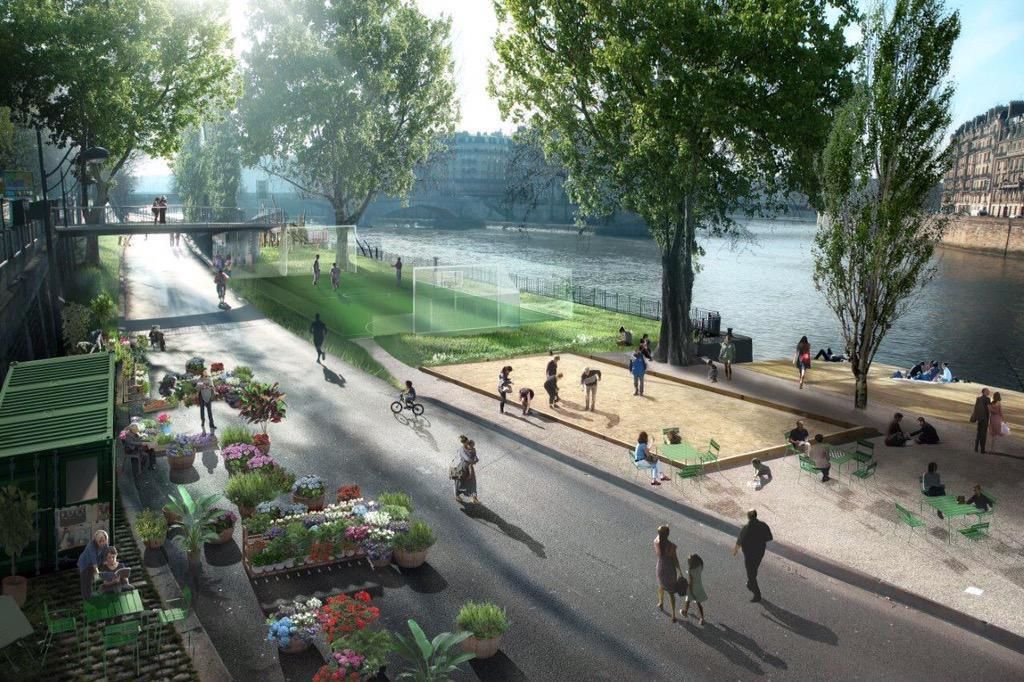
New no-car zone along Voie Georges Pompidou, Paris. Picture via @Anne_Hidalgo

The first long-term consequences of the on-going Volkswagen emissions scandal may be emerging already.

Paris mayor Anne Hidalgo – who previously vowed to rid the French capital of diesel powered vehicles by 2020 – says she will submit the ‘most ambitious’ of recent proposals to permanently ban cars from the banks of the Seine, and extend Car-Free Days in the city.

In an interview with Le Journal Dimanche today, Hidalgo says that after next summer, on the Voie Georges Pompidou on the ‘Right Bank’ of the Seine, ‘Cars will give way to a pedestrian area of 4.5 hectares, on the edge of the water.’

This is in addition to sections of river bank now traditionally given over to the pedestrianised Paris Plage beaches in the summer.

Voie Georges Pompidou was included in Paris Plage for the first time this year. A city hall study last month reportedly says closing it permanently to cars would triple journey times.

Hidalgo also says she will press ahead with plans for monthly car bans in the city, along the same lines as the first Paris Car-Free Day held at the end of September.

However, next year’s Car-Free Day will be extended to the whole urban area, except for the Peripherique, she says.

OSLO. The reality won’t quite match the ‘first city to ban cars’ headlines, but Oslo council has announced plans to make the very centre of the city private transport-free by 2019 according to AFP Nordic. The council wants to cut car use in the city as a whole by 20% by 2019, and 30% by 2030, in an effort to cut greenhouse gas emissions by 50% by 2020 compared to 1990.

BELGIUM. The controversial new pedestrian zone in central Brussels has received unanimous backing from the city’s ‘Consultative Committee’ says Deredactie.be, though traffic issues were not included in the brief. A large part of the major Anspachlaan thoroughfare across the central Pentagon region, plus surrounding streets, was made off-limits to cars in late June. The period following saw major disruption as vehicles were directed around a new one-way ring surrounding the new fifty acre no-go zone. A €20m scheme to fully embed the new arrangements is now due to go ahead.

.

telemark

An impressive rockfall – with boulders each weighing up to 20 tonnes – blocks the E134 road between Oslo and Haugesund in southern Norway. Engineers say it may take two weeks to repair the road completely at Vinje though the barriers will be removed to allow vehicles past. In the meantime read about a 2800 mile coastal road trip, from Oslo to Kirkenes on the Russian border, from CNN Traveller. Photo Vegvesen

.

roundup: FRANCE. One lane of the A75 autoroute southbound finally reopened at Lodeve yesterday reports Trafsud. The stretch between Millau and Beziers in the South of France was partially washed away in a severe storm last month. One lane of the northbound carriageway reopened within a few days. The authorities still advise caution in the affected area. The road is not expected to fully reopen for another three weeks. FINLAND. Winter tyres are not compulsory until 1 December but drivers are already being advised to switch over reports Yle News. The transition from autumn to winter is the most dangerous time say experts as overnight temperatures dip below zero leaving conditions potentially treacherous the next morning. Icy roads around Helsinki last Monday saw seven accidents in two hours. Yle also covers the interesting debate around winter v studded tyres. Finland is the only European country where winter tyres are compulsory in the winter months whatever the conditions though other countries – notably Italy, on the A5 autostrada south of the Mont Blanc Tunnel, from this week – mandate some form of winter preparedness. See more. Meanwhile, Finland Times reports on the scarcity of ‘tyre hotels’ in major cities where storage charges – up to €100 – are more than twice that in other parts of the country.

.

No End In Sight Eurotunnel Migrant Disruption

No comment from Eurotunnel as services disrupted by migrants on a daily basis, again, despite new security.

.

NO END IN SIGHT FOR EUROTUNNEL MIGRANT DISRUPTION

Now daily disruption at Eurotunnel despite new security.

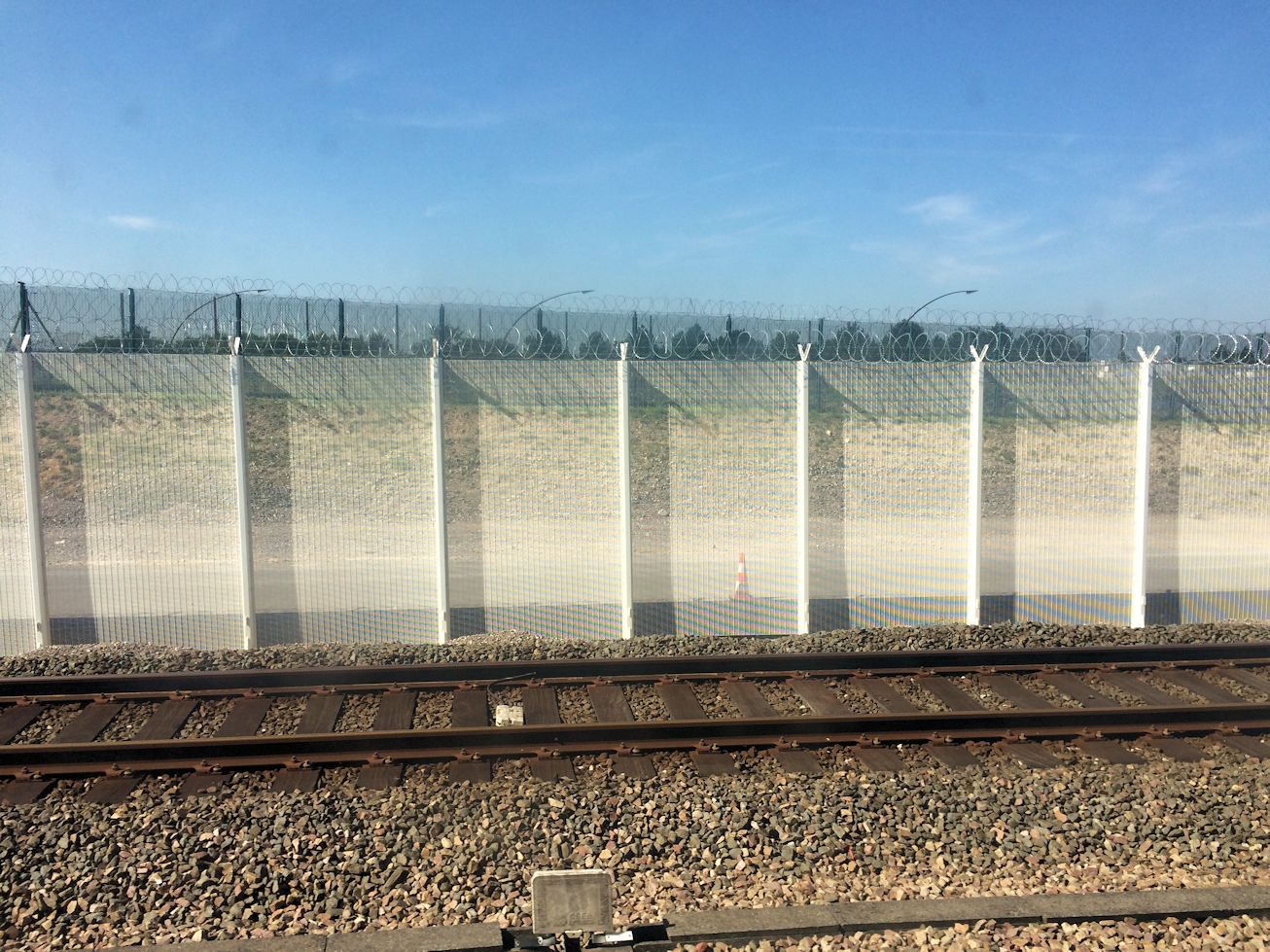
New security fencing at Eurotunnel in France is clearly not up to the task. Photo @DriveEurope.

New security fencing at Eurotunnel in France is clearly not up to the task. Photo @DriveEurope.

Another strike at Calais and repeated migrant actions at Eurotunnel’s French terminal this week saw Cross-channel traffic come uncomfortably close to a repeat of the summer’s chaos.

As it was, truck drivers waited for up to 36 hours at Calais when security staff went on a go-slow.

Meanwhile, Eurotunnel freight settled into a daily pattern of overnight cancellations followed by tunnel inspections and delays of up to ten hours in France. Regular services have rarely resumed before early afternoon.

Despite new security measures installed in recent months, migrants seemingly have access to the site at will.

Driver Alan Smith told us today (Friday), ‘Sitting in the secure freight zone at Eurotunnel beyond all the fences and gendarmes, there’s still immigrants walking around!!’

(It was a similar story on Thursday in Calais as the backlog of trucks was parked outside the secure zone in the East Port.

Driver Steve Brown told us, ‘We have been in the Hoverport 3 and half hrs now, moving to lanes but long queues into lanes to check in.. what makes it worse is the illegals are everywhere even inside the Hoverport.’)

Following the meeting in August between the UK and French home secretaries it was said new fencing at Eurotunnel would be finished ‘at the end of the month’.

Migrant activity subsequently fell away but resumed earlier this month.

A ‘mass invasion’ of migrants at the French terminal on Saturday 3 October was described by a Eurotunnel spokesperson at the time as a ‘last ditch attempt’ before new fencing was installed.

We asked Eurotunnel this week if there was any end in sight to the disruption, and whether the new security measures will be enough, but the company is yet to respond.

Update 20 October: Sunday 18 October was shaping up to be Eurotunnel’s first disruption-free day in a while. However, a technical fault overnight was followed by another migrant disturbance early on MOnday morning. The operator told us, ‘Service was disrupted and suspended this morning due to large scale migrant activity again. Not only on our French Terminal also at the Frethun [freight train] yard.’

.

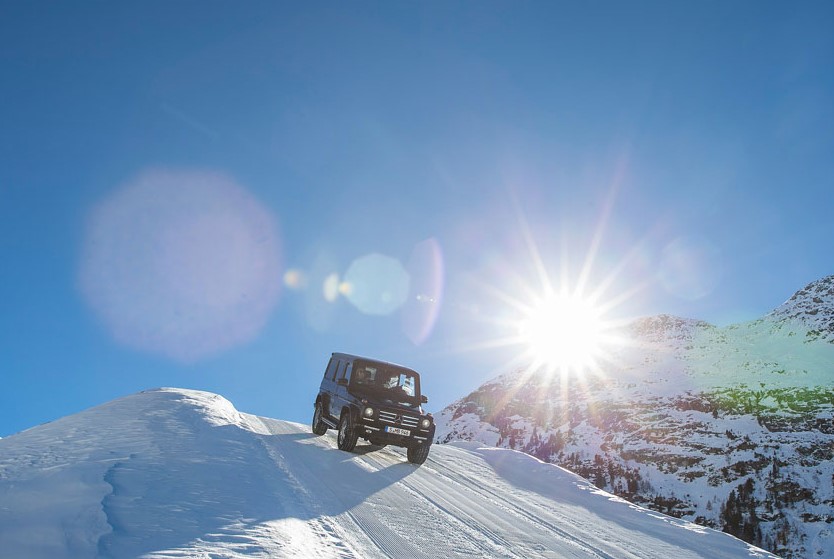
Off-roading in wintry Austria. More later.

Go winter off-roading in the Austrian Alps with Mercedes-Benz. The three day package costs €1345 per person including catering, accommodation, ski passes or spa session, and one day’s advanced off-roading near Kitzbuehel, between Innsbruck and Salzburg. See more.

.

Italy Kicks Off The Winter Tyre Season

Italy officially kicks off the winter tyre season with mandatory winter tyres – or snow chains – on the A5 Aosta-Turin, south of the Mont Blanc Tunnel.

.

WINTER TYRE DAY

The first mandatory winter wheel rules, on the Italian side of the Mont Blanc Tunnel.

winterreifen

Austria: snow chains 5km ahead ‘Ausgenommen PKW mit Winterreiffen – except light vehicle with winter tyres’. Photo @DriveEurope.

German drivers were advised at the start of the month to swap to winter tyres, in line with the phrase ‘Oktober bis Ostern’ (October to Easter).

It turned out to be good advice as this week saw first snow across the country, on high ground from west to east.

Like most Continental European countries – including Luxembourg, Austria and most of Scandinavia – cars in Germany need so-called ‘winter tyres’ (see below) – in ice, slippery frost or snow.

The only country where drivers have to fit winter tyres in the winter months, whatever the conditions, is Finland.

Meanwhile, today – Thursday 15 October – marks the first day in Italy when drivers have to adapt to potentially wintery conditions.

On the A5 south of the Mont Blanc Tunnel, drivers without winter tyres must carry a set of snow chains.

Other at risk roads have the same requirement from when the Italian winter officially starts on 15 November but roads in and around mountainous areas may require winter tyres/chains from 1 November.

Many high passes in the Dolomites require chains at any time of the year. See the official map from the Transport Ministry with the latest information.

While there are no winter tyre rules in France they can be an alternative to chains on mountain roads in snow, depending on whether road side signs include ‘pneus neige admis’ (snow tyres allowed).

Similarly in Switzerland, there is no law on winter tyres but ‘not adapting a car to the conditions’ will attract the attention of local police.

So-called ‘Winter Tyres’ – there is no agreed standard for a winter tyre. The commonly used snowflake symbol has no legal force. The only legal markings are M+S (mud and snow). Since these also feature on All-Weather tyres, it could make sense for drivers who don’t want to buy – and store – two sets of tyres to invest in these instead. Our All-Season tyres saw fuel consumption drop compared to the previous summer set but it improved, and then some, as the weather turned warmer again. However they have yet to be tested on snow. See more.

Also see more on Winter Tyre Rules Around Europe.

.

The Cheapest Fuel in Europe

Almost tax-free Andorra, fuel tourist hotspot Luxembourg and more-east-than-many-people-realise Austria vie to sell Europe’s cheapest fuel. Plus a round up of Europe’s most expensive petrol and diesel.

Also, early snow is likely to see many mountain roads close in the next couple of days. Germany border controls will be in place for at least another two weeks. Italy joins several other countries in banning smoking in cars carrying children. Highways bosses insist the new no-barrier M25 ‘Dart Charge’ is working.

.

THE CHEAPEST FUEL IN EUROPE

Andorra cheapest but Austria now undercuts Luxembourg.

Cheap high: the filling station at the top of Port de Envilira, Andorra (

Cheap high: the filling station at the top of Port d’Envalira, Andorra (2408m, 7900ft)

Andorra is well known for cheap fuel but, even so, it was still a shock to pay just 86c per litre for diesel last month.

This compares with €1.109 in neighbouring Spain and €1.115 in France.

Unleaded95 is a bit more expensive at €1.054 (Spain €1.189, France €1.309).

It’s so cheap because well-to-do Andorra doesn’t really do tax. It only got round to income tax for the first time earlier this year, for instance.

If only it was easier to get to. Sitting in the middle of the eastern Pyrenees, access is difficult. There are a couple of minor road border crossings in the east but otherwise the only ways in and out are the N20/N22 from France and the N-145 from Spain.

As well as the N20 Puymorens Tunnel being very inconveniently closed for refurbishment until November – meaning a spectacular but slow detour over a mountain – the N20 itself is being dug up at the moment too.

Aside from that, drivers have to contend with sometimes lengthy queues at the border. Andorra is not a member of the EU but is part of the Customs Union, albeit with restrictions on the amount of duty free goods tourists can take out.

When we were there the French border guards questioned every driver. Apparently it is the same on the Spanish side.

Meanwhile, further north, Luxembourg is so far successfully resisting pressure from the EU, the OECD and Greenpeace, among others, to raise fuel taxes.

The Grand Duchy currently takes up to €2bn each year from ‘fuel tourism’ (including alcohol and tobacco) in a sector which employs 2,400 people across 240 filling station hypermarkets.

Three quarters of the 2.6 billion litres of fuel it sells each year are used outside the country, mostly by truck drivers according to figures from Wort.lu.

Nevertheless the savings are not as big as they used to be compared to neighbouring countries. As of yesterday diesel increased to €0.991 per litre (Belgium €1.185, Germany €1.159) and unleaded95 at €1.131 (Belgium €1.369 and Germany €1.369).

It’s less clear why Austria has such consistently inexpensive fuel (except for it neighbouring traditionally-cheap countries like Hungary, Czech Republic, Slovakia and Slovenia).

In recent years Austria has level-pegged, give or take, with Luxembourg but at the moment – with diesel at €0.987 and unleaded on €1.069 – for the first time it is undercutting on both counts.

Most expensive diesel: UK, Norway, Iceland, Malta, Italy.

Switzerland still expensive but Netherlands slipped down to tenth place.

Most expensive unleaded95: Norway, Netherlands, Denmark, Italy, UK.

Greece and Portugal are both looking relatively expensive at the moment.

All prices are indicative only, per litre, taken from fuel-prices-europe.info, updated daily. Mainly averages except Andorra, Belgium and Luxembourg where prices are regulated.

.

nurbs2

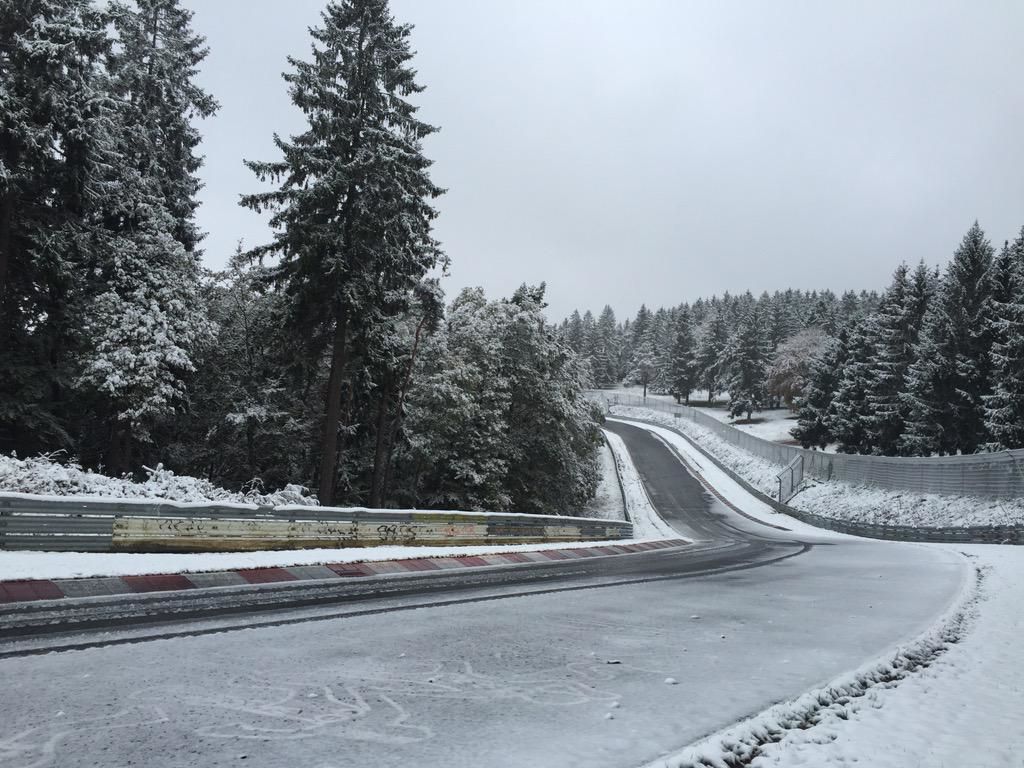
First snow fell on Germany overnight, on high ground in a thick band across the centre of the country. Luckily it was without the drama seen when first snow hit Finland on Monday. Cars in Germany need winter tyres in snow and ice. So far it has been hit and miss in the Alps. The super-high French roads like Galibier and Iseran have closed on and off for the past few weeks while Nufenen in Switzerland is now closed overnight until further notice. However, more snow is expected to fall in the next few days. Winter locks are expected to come early this year. Photo @Nurburgring

.

roundup: GERMANY. Border controls – mainly with Austria – have been renewed until 31 October reports AFP. ‘The situation at the border is such that we cannot do without them. We need to return to an orderly handling of refugee policy,’ said a govt spokesman. The borders were first reinstated on 13 September. Under the EU borderless Schengen Agreement, after an intial ten days controls can be renewed every twenty days for a maximum total of two months. Traffic delays reached up to an hour on the three motorway crossings between Austria and Bavaria last week but have calmed in recent days, except for last weekend. Borders are a bone of contention between the Bavarian state administration and the federal government. The former is threatening a package of measures to stem the flow of migrants. If so, Austria says it would respond with tighter controls of its own. The Slovenian foreign minister said today his country would follow suit too. ITALY. Smoking will be banned in cars carrying children and pregnant women reports The Local Italy. The new rules are due to take effect at the end of the year and bring Italy into line with Cyprus (banned in cars with children under the age of 16), France (under 12s), and England and Wales (under 18). Similar bans are being considered in Finland, Ireland and the Netherlands. DARTFORD CROSSING. Journey times are down by more than half since the introduction of free-flow tolls at the M25 Dartford Crossing insists Highways England (via Kent Online). The new charging arrangement, which replaced barriers with a number plate recognition system, apparently saves seven and a half minutes southbound and three and a half minutes northbound. The ‘Dart Charge’ needs to be paid by midnight of the following day, either by phone or internet. The new system has been severely criticised for poor administration, including fines sent out despite the charge having been paid, and poor recovery from foreign drivers. ‘We still have more work to do,’ admits Highways England Director Nigel Gray.

.